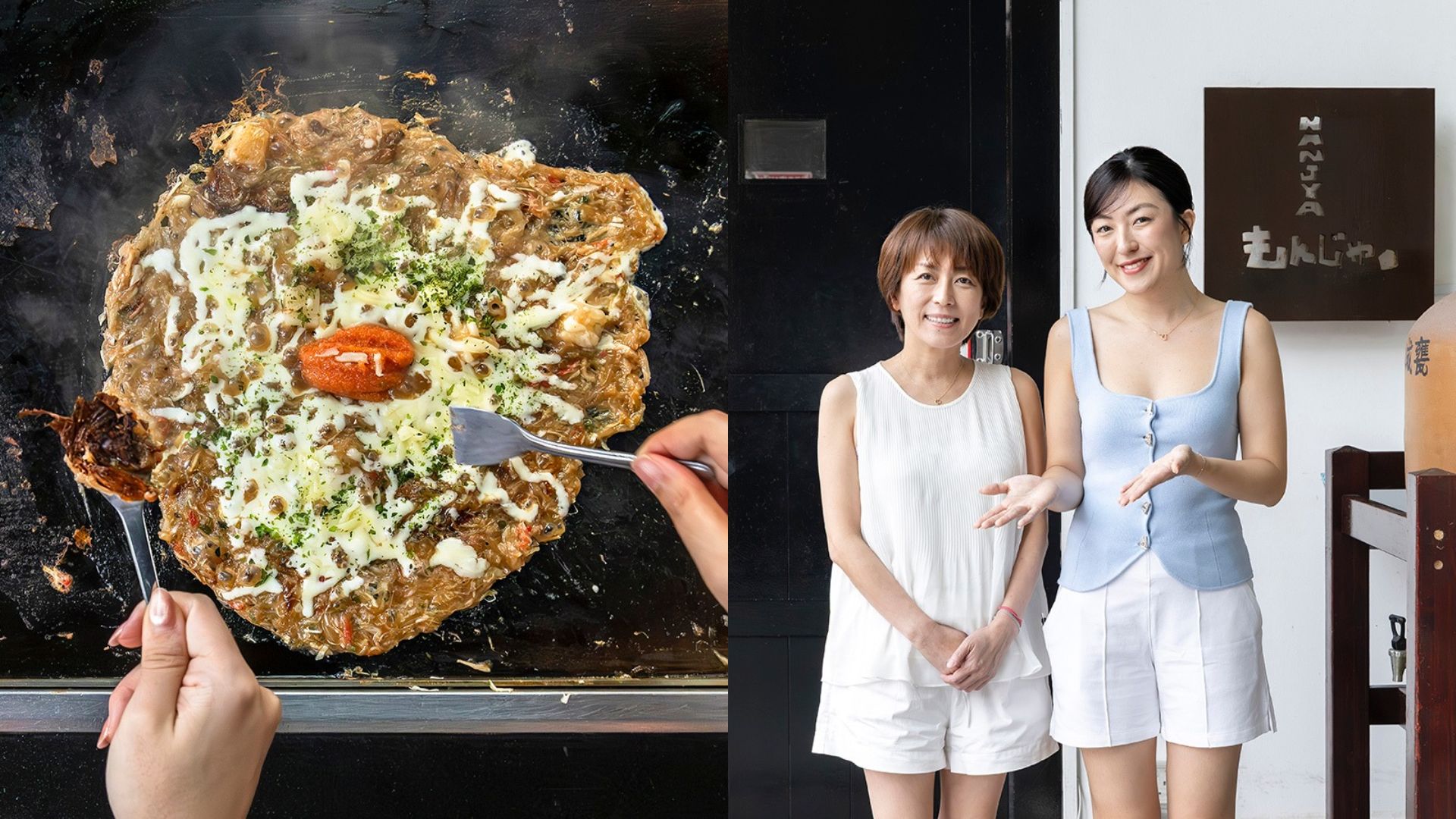
Nanjya Monjya: DIY monjayaki & okonomiyaki at this 27-year-old Japanese restaurant at Robertson Quay

In the face of a growing number of F&B closures, including several long-time brands such as Tom’s Palette (21 years) and Swedish cafe Fika (17 years), there are still a few names in Singapore that have kept the lights on for decades, fuelled by returning regulars and curious first-timers there by word of mouth.
Teppanyaki restaurant Nanjya Monjya Waterfront, located at Grand Copthorne Waterfront Hotel Singapore, is one such venue, having operated in Singapore for over a quarter of a century.
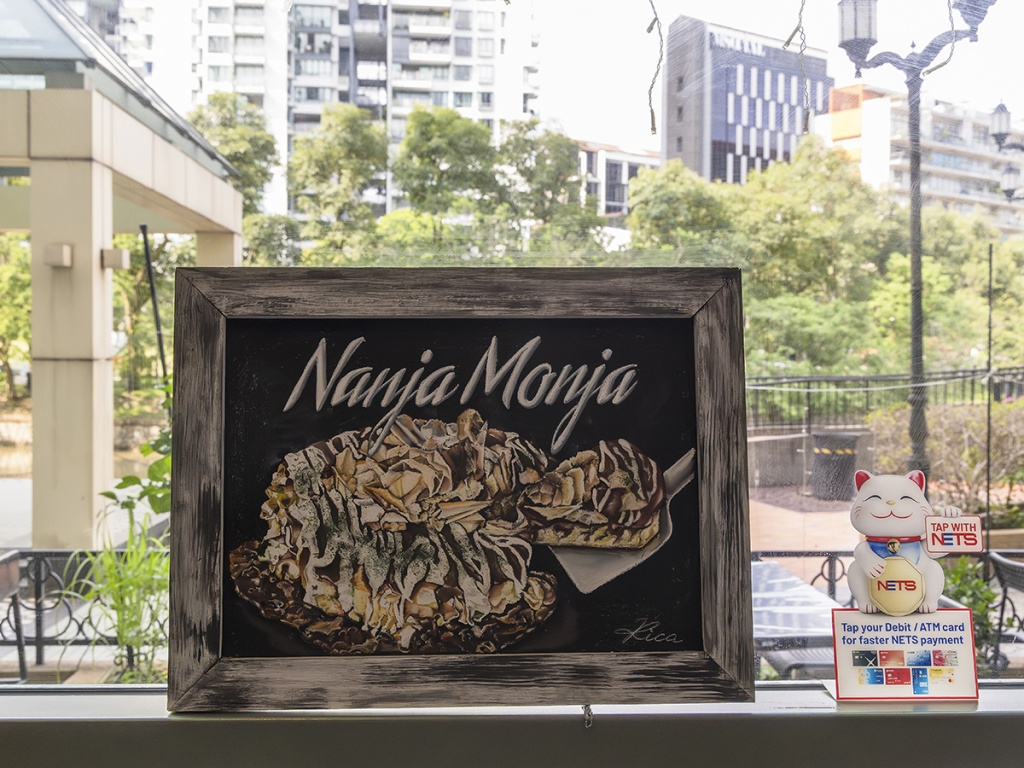
But its long history wasn’t what first caught our eye about this Robertson Quay restaurant.
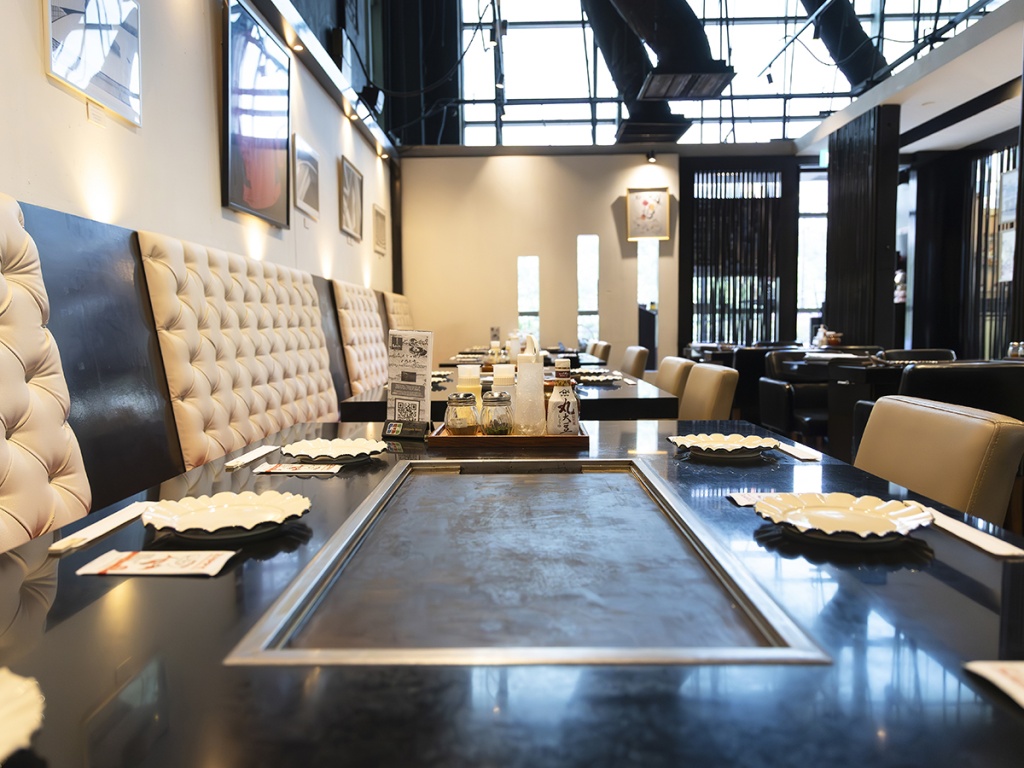
Rather, it’s that Nanjya Monjya is one of the few places you can enjoy monjayaki in Singapore, on top of okonomiyaki, on a hot griddle at your table.
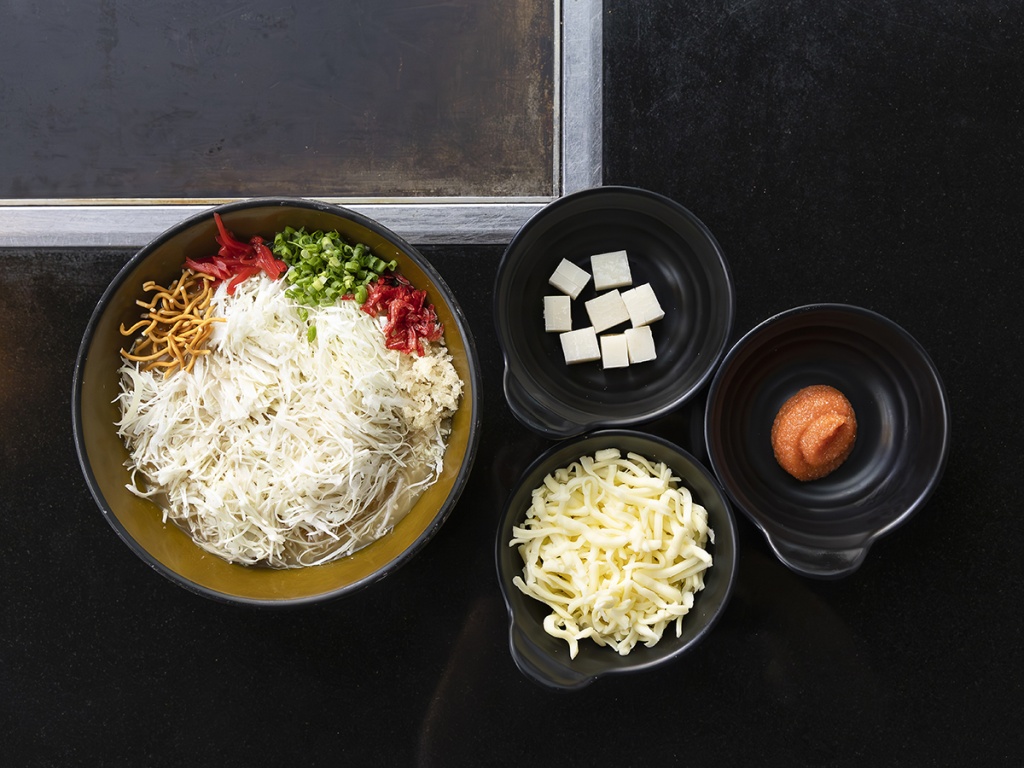
Nanjya Monjya gets part of its name from the monjayaki dish, a popular Tokyo street food that is often said to be a more watery version of the okonomiyaki pancake.
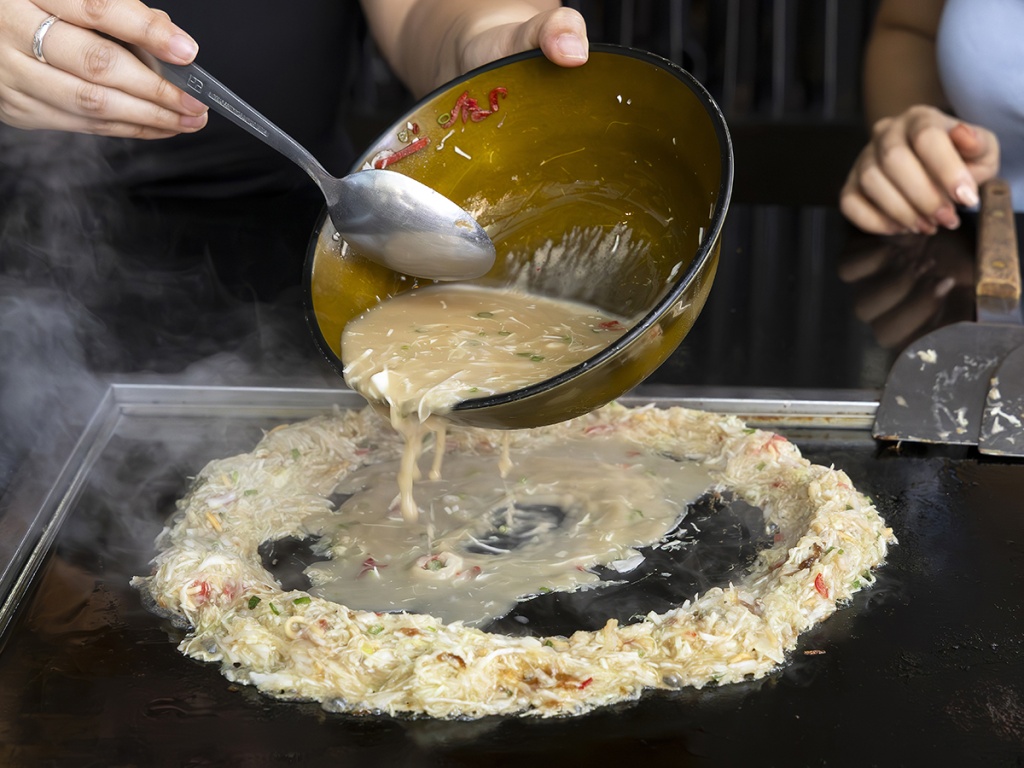
The ingredients used for both — chopped cabbage, flour, dashi broth, and meat or seafood — are nearly identical save for the amount of water in the batter, and monjayaki is also often eaten with a tiny spatula straight off the griddle.
How Nanjya Monya came about
Nanjya Monjya first arrived in Singapore in early 2000, at the former Allson Hotel (known today as Hotel Grand Pacific), after its Japanese founder took a liking to Singapore after visiting our island a few times on holiday.
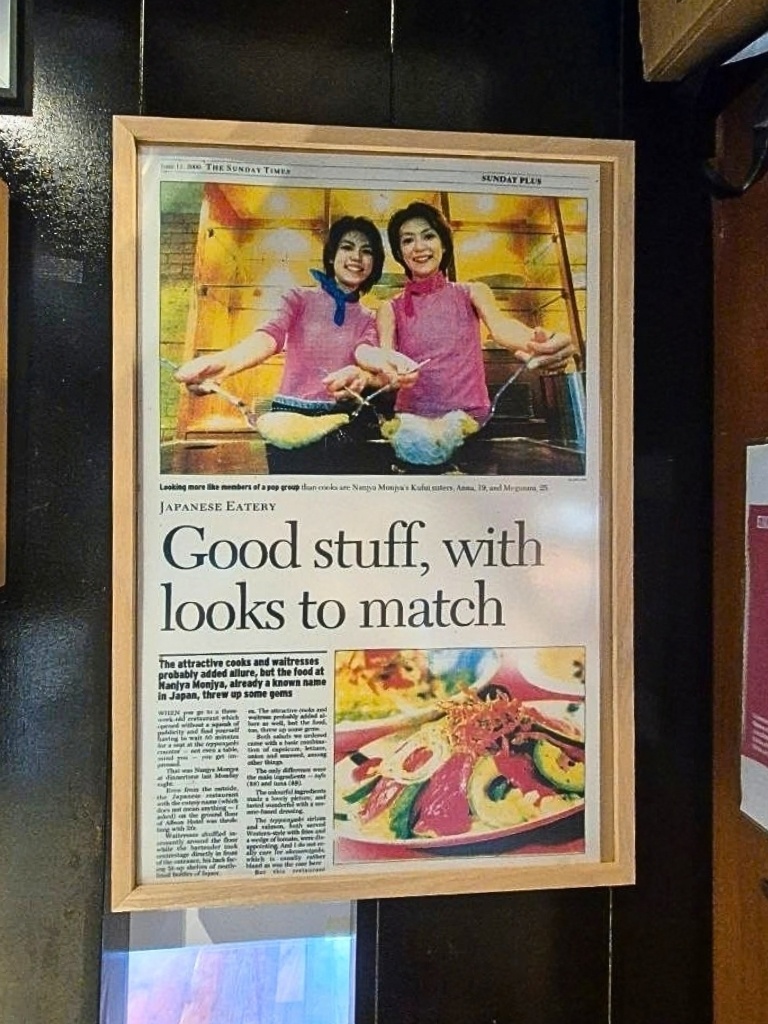
Riko’s grandmother, who also goes by Miwako, was running a monjayaki and okonomiyaki concept in Tokyo then, but when someone asked her if she was keen to set up a Japanese restaurant at the hotel back in the day, she uprooted her family and moved here.
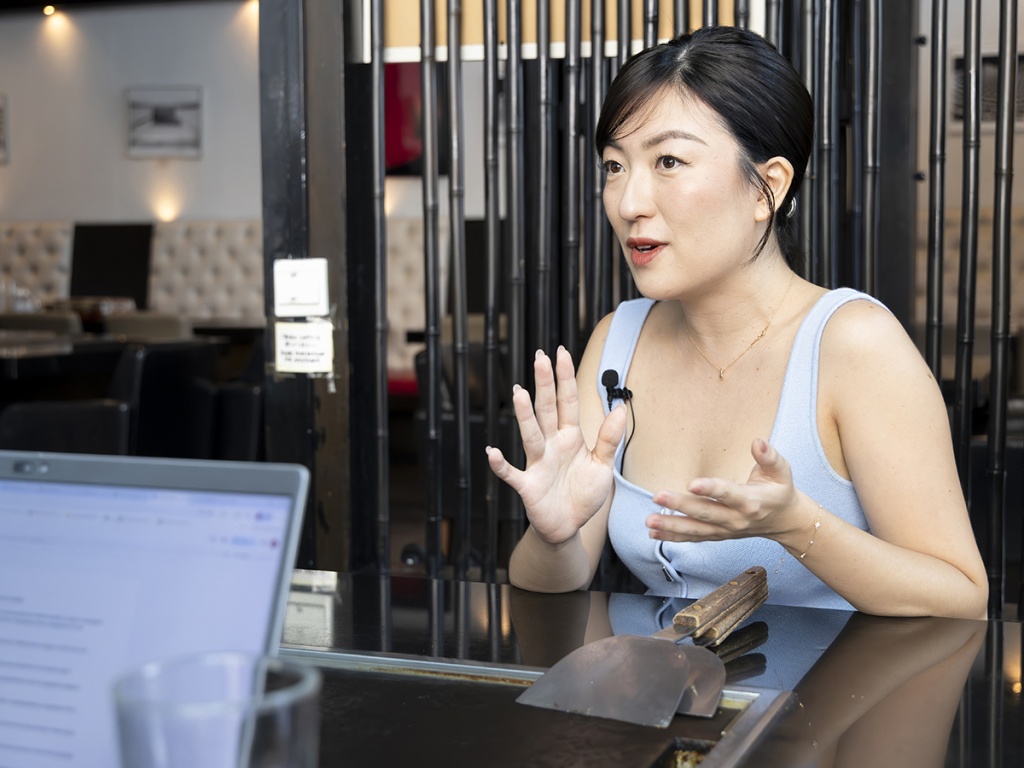
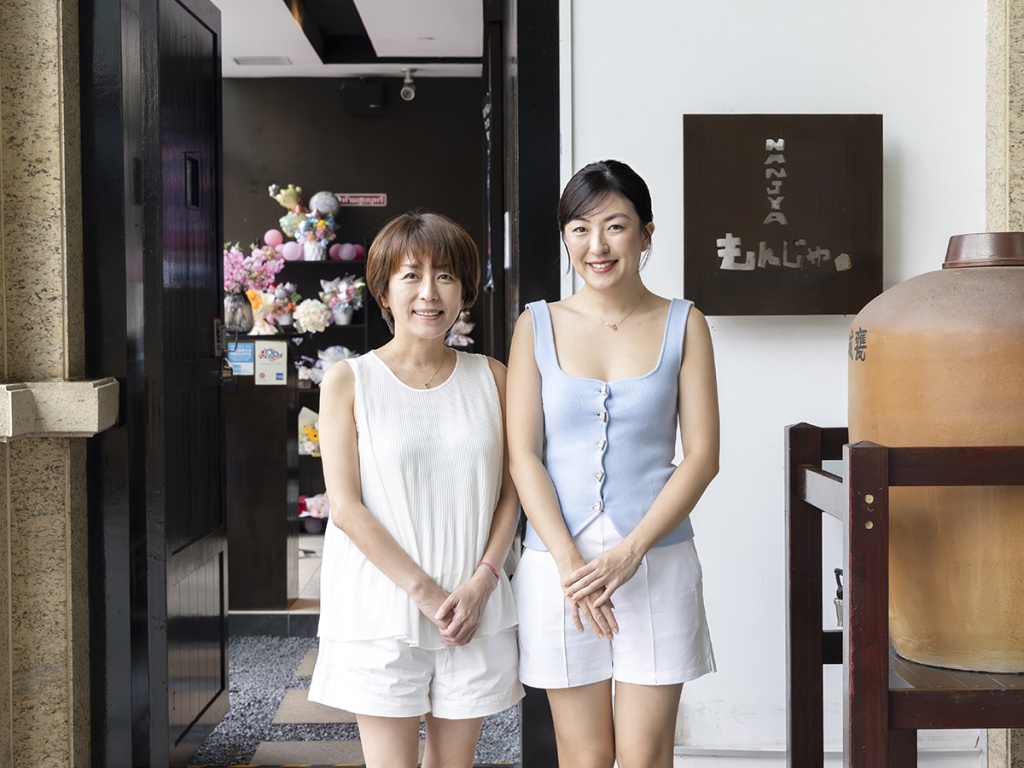
Riko Fukui, 28, the owner’s granddaughter and the third-generation owner, recounts: “My grandmother said she wanted to do this and told three of her daughters to come with her to Singapore.”
Riko’s father also came along, with his wife and a baby Riko.
The business operated at Allson Hotel for close to two years before they moved to their present-day location along the Singapore River.
“Did you know this space used to be the hotel’s stockroom?” Riko asks, adding that the family has seen the structures around the area evolve over the years, but the river and the otters have always been a mainstay.
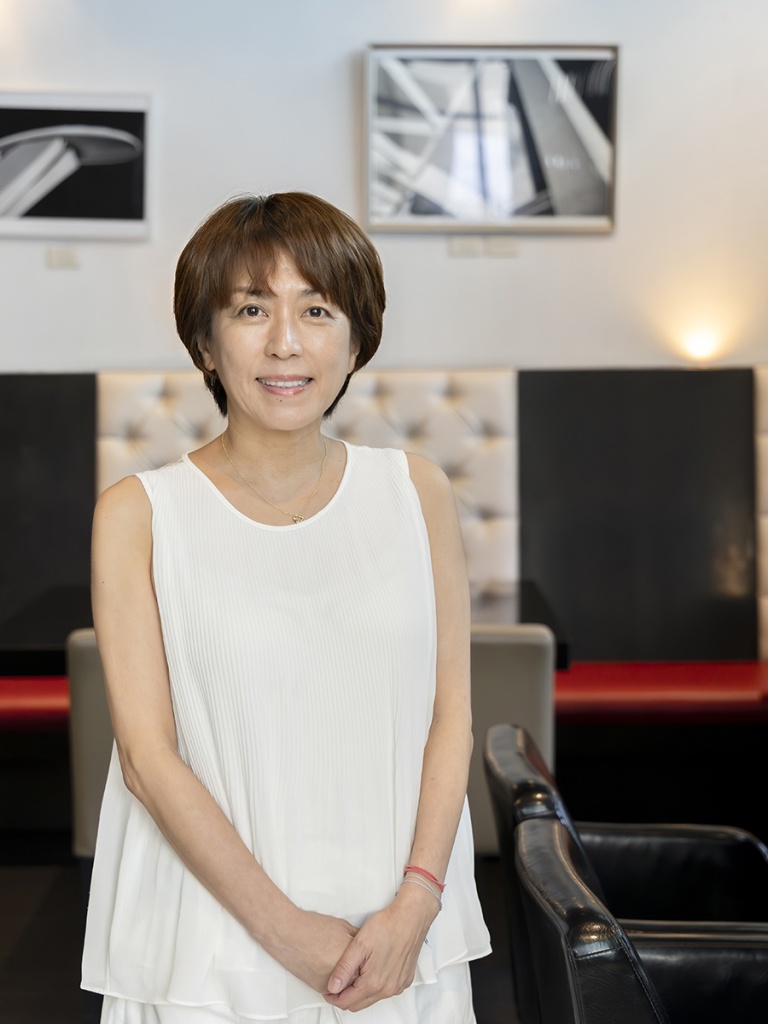
The 80-year-old grandmother Miwako has since taken a step back from the business, and it’s mainly run by Riko and her first aunt, Mai Fukui, 52, today.
Riko sat down with us to relay the brand’s long history with passion and gusto, as it was told to her by her grandmother, that is.
Seeing her enthusiasm now, we wouldn’t have guessed that there was actually a time in Riko’s life when she had not wanted to be involved with the business.
Her immediate family had relocated to Thailand when she was 15, and though Riko still spent time at Nanjya Monjya whenever she visited Singapore, it was mainly her aunt Mai who was holding the fort at the restaurant.
Her second aunt had moved to Malaysia — and is actually running a sister concept, Nanjya Monjya x Miseya, in Johor Bahru — while her third aunt went back to Japan.
When Riko was younger, she explored different roles, including corporate ones. Her most recent gig was as a musician with a live band in Bangkok.
However, as the years went by, the reality that there might not be anyone to continue Nanjya Monjya’s legacy started sinking in — her grandmother was getting on in years, and her aunt Mai didn’t have any children that they could pass the business to.
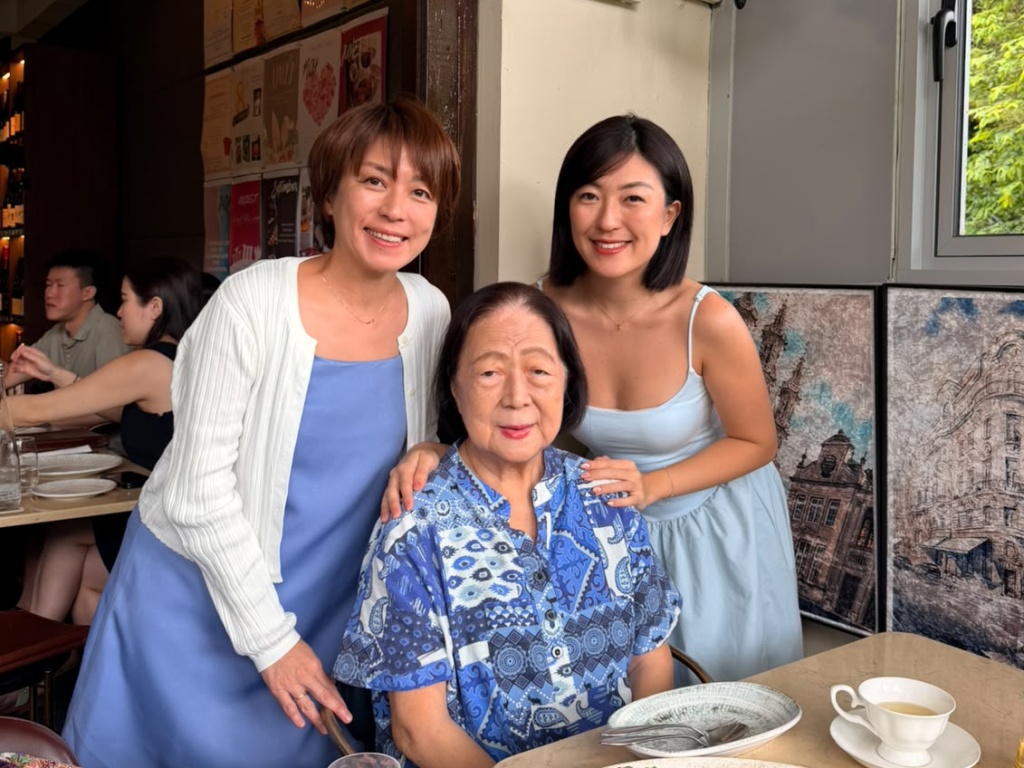
It was then that, as the next generation, Riko thought: “Maybe it’s time to protect and continue the legacy that my family has built.”
“I initially thought hospitality wasn’t for me,” she says. “But then I realised I liked to talk to people and make customers feel happy.”
Once that epiphany hit, Riko returned to Singapore in mid-2025, and has been knee-deep in the day-to-day running of Nanjya Monjya since. “I’m here every day,” she adds.
When Nanjya Monjya was in its infancy in Singapore in the early 2000s, Riko says her grandmother had difficulty securing the ingredients she needed from suppliers here, often having to shuttle back and forth to Japan just to get her hands on them.
It was also challenging to teach the local crowd what okonomiyaki or monjayaki was, and how to cook it themselves.
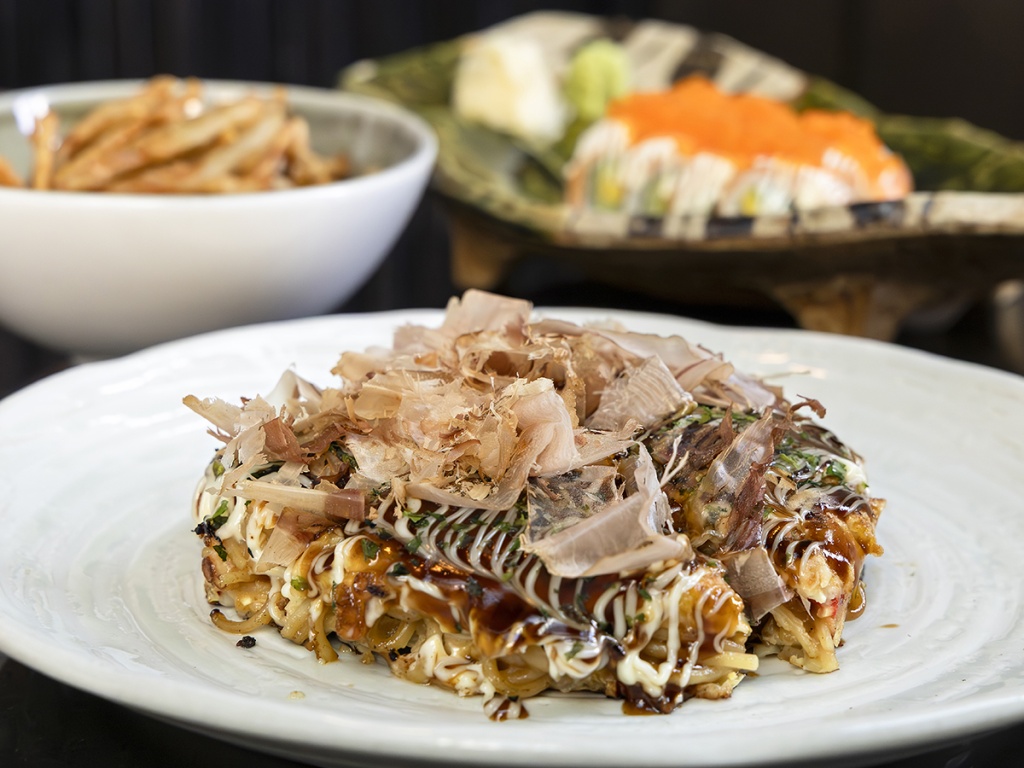
Today, its clientele — about two-thirds Japanese, with a good number of locals and other nationalities, such as Koreans who live in the area — are more than happy to cook it themselves at the table.
There are some — though only a minority — who come to Nanjya Monjya and do not realise what they have signed themselves up for, but if that’s the case, the crew are more than happy to assist.
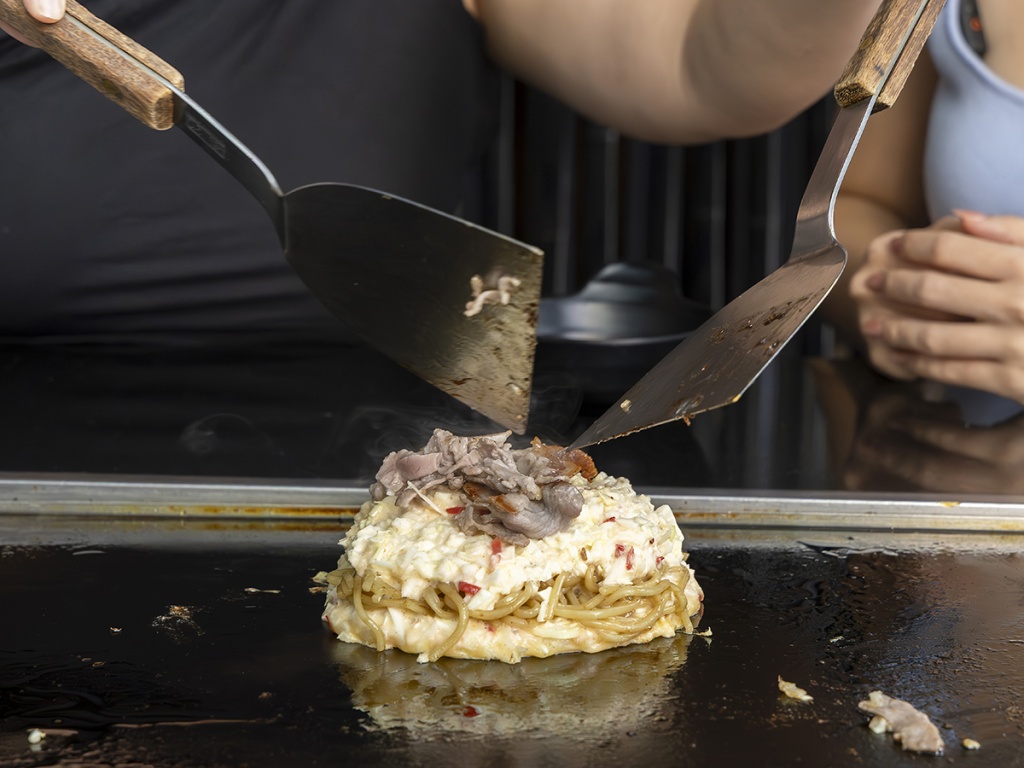
To Riko and her family, it is important that they share the meaning of the food they love with their customers, “so that they can enjoy it as much as we do”.
I myself was introduced to Nanjya Monjya about six years ago, through a Japanese friend based in Singapore who found that the food quality, spread of dishes, and the entire experience here really made her feel like she was back home.
As someone who’s been back to the restaurant thrice since that initial introduction, and also visited a couple of okonomiyaki and monjayaki restaurants in Japan, I wholeheartedly agree.
Trying the hearty izakaya-style fare
Riko tells us all the recipes were from her late grandfather, and barely anything has changed since they opened.
“My grandmother’s the backbone of the business, but my grandfather was the one who dealt with the taste and quality of our dishes,” she says. “We believe in preserving what matters, which is why the classics have never left our menu.”
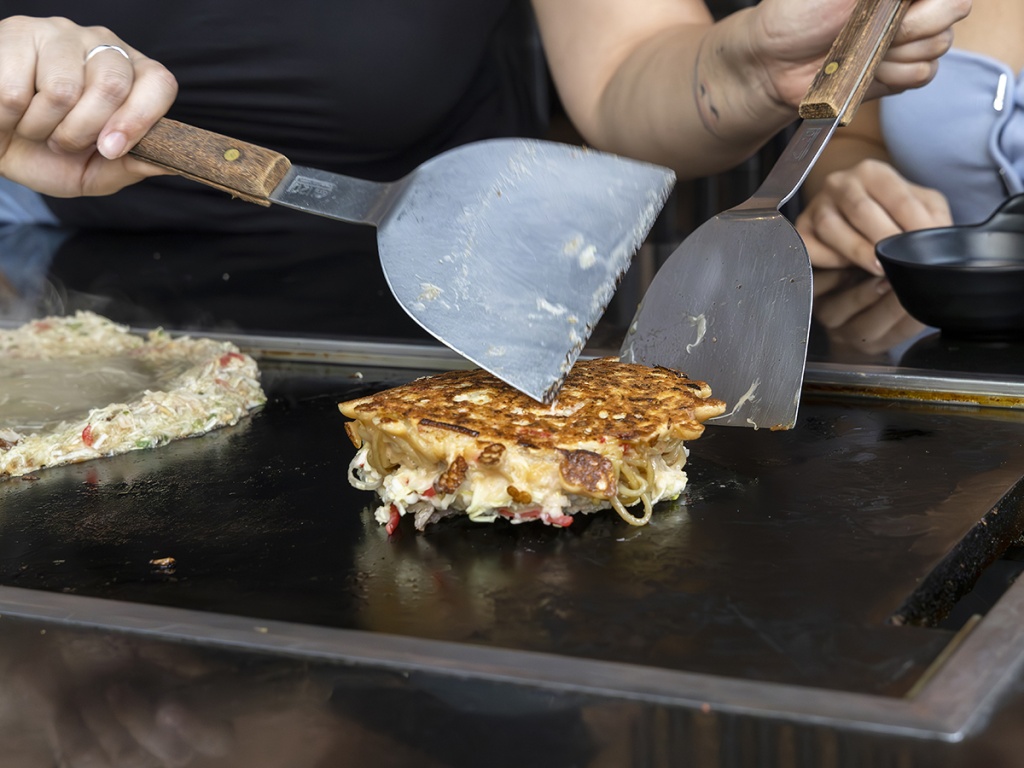
In fact, Nanjya Monjya’s two main menu highlights — monjayaki (from S$19) and okonomiyaki (from S$21) — also feel like a poignant memory of the founding duo.
Her grandfather hailed from Osaka, which is known for its okonomiyaki, while her grandmother moved to Tokyo when she turned 20 and had lived there until her move to Singapore. Monjayaki is a Tokyo speciality.
Her grandparents met in Tokyo at Miwako’s shop, where he would visit regularly.
Ordering either dish at Nanjya Monjya is relatively straightforward, though it can seem quite intimidating at first given the wide range of options.
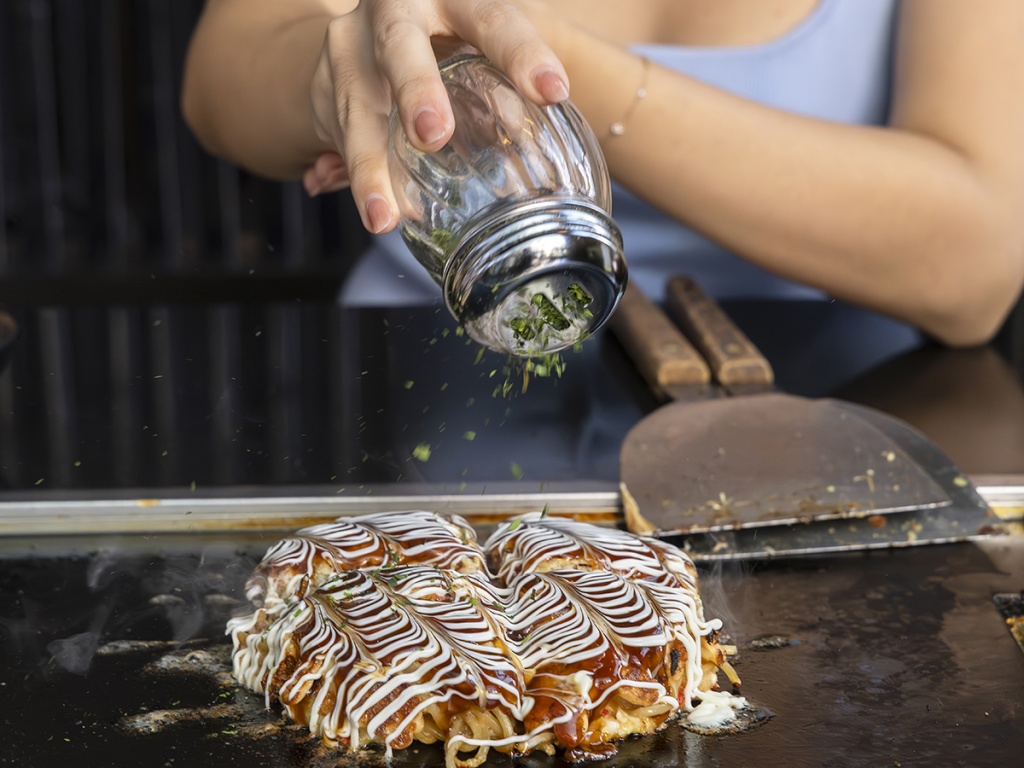
Simply pick a main flavour — we chose mentai mochi (spicy cod roe and rice cake, S$27) for our monjayaki and buta modan (pork belly, S$23) for our okonomiyaki — then choose toppings if you’d like to jazz up your respective dishes.
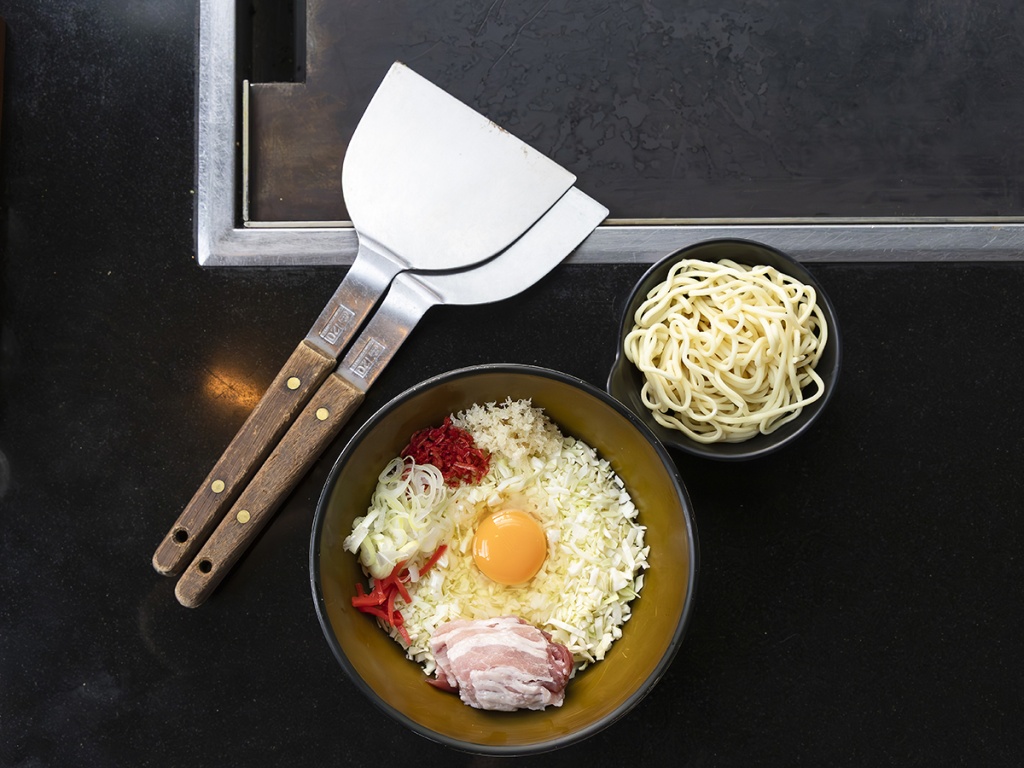
We added cheese (S$6) to the monjayaki and soba (egg noodles, S$4) to the okonomiyaki.
Between the two, I’d say the monjayaki is a little tougher to cook, though the thick okonomiyaki pancake isn’t without its challenges.
Since we are all less familiar with the monjayaki, I found myself second-guessing the readiness of the item one too many times.
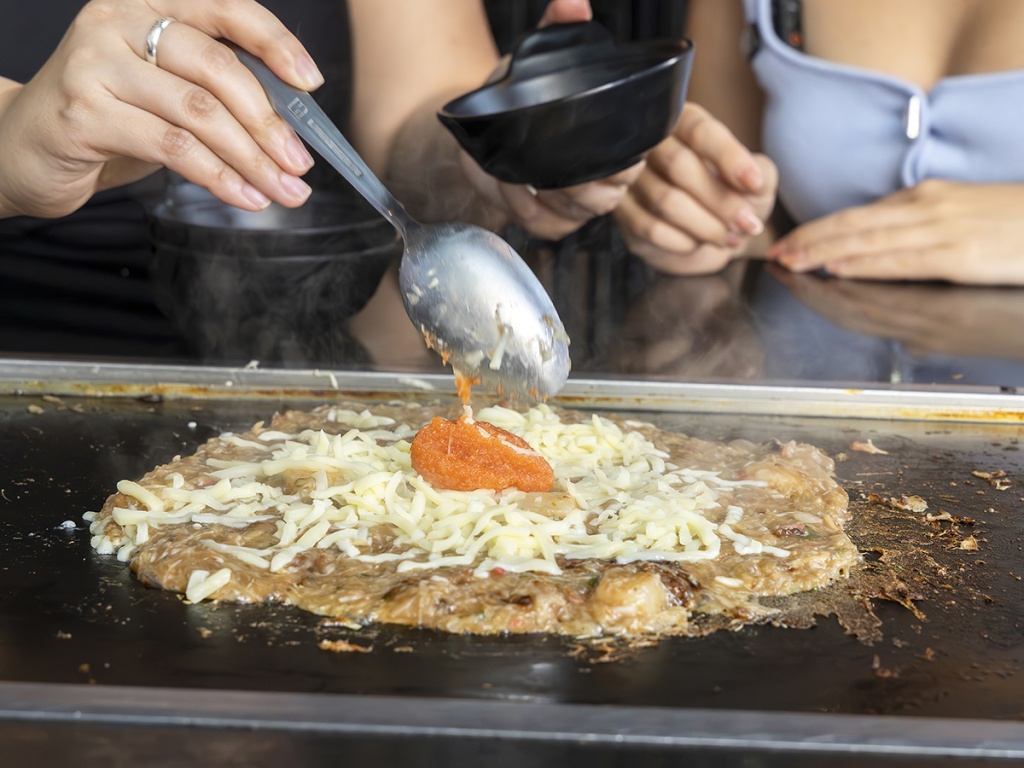
In fact, when Riko told me that it was finally ready and handed me a mini spatula to eat off the pan, I have to admit there was a small moment of doubt.
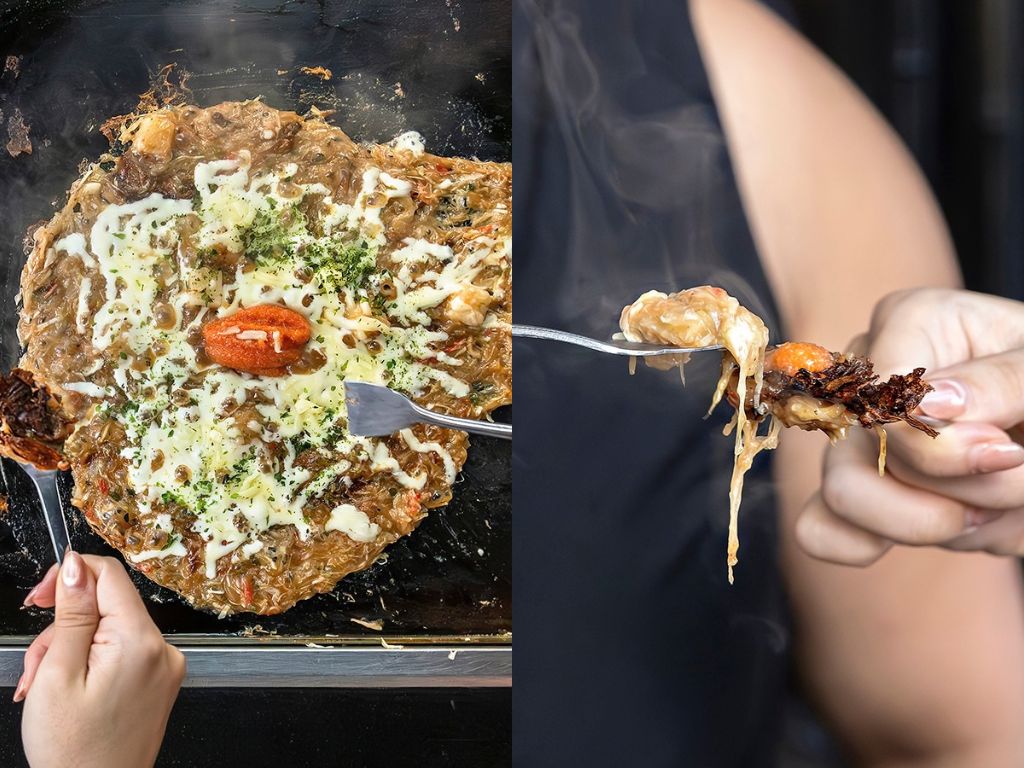
It’s not as filling or as cloying as a whole okonomiyaki, but the gooey scoop is deeply savoury and comforting, especially if you’ve managed to get some crispy, burnt bits with it, too.
I reckon this dish would taste especially great towards the end of a gathering when you’re just nibbling at whatever’s left on the table, to punctuate your sips of alcohol.
By contrast, Nanjya Monjya’s okonomiyaki is what you’d want to have at the start of the meal, when you’re famished and raring to go, considering how thick, fluffy, and loaded you can customise your pancake to be.
Besides the main menu highlights, there is one dish that reminds Riko of her grandmother specifically — the tofu mentai cheese yaki (S$20), which is grilled tofu with spicy cod roe and cheese.
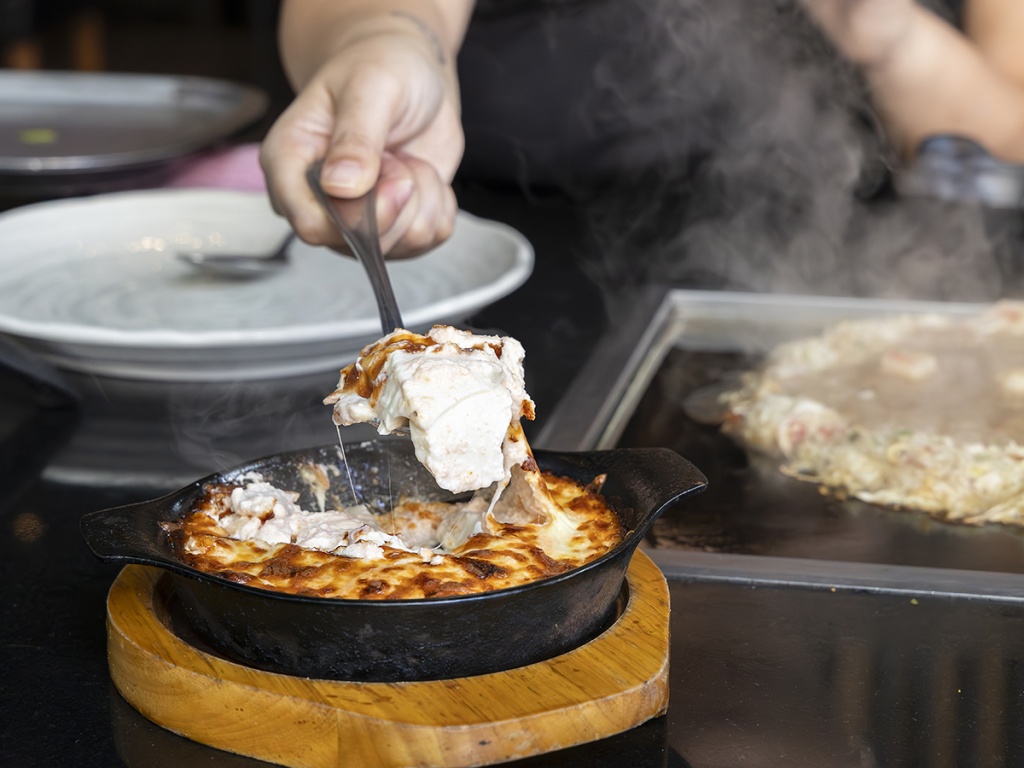
Growing up in the small town of Shimabara in Nagasaki, grandmother Miwako would have this popular and comforting dish often.
Even today, Riko finds herself turning to this during the service rush for a quick, reliable, and satisfying bite.
Admittedly, she says that it’s really hard to name a strong crowd favourite out of the hundred-plus dishes they serve.
Still, some dishes that have gotten customers to do a double-take recently include the gobo kara age (deep-fried burdock, S$14).
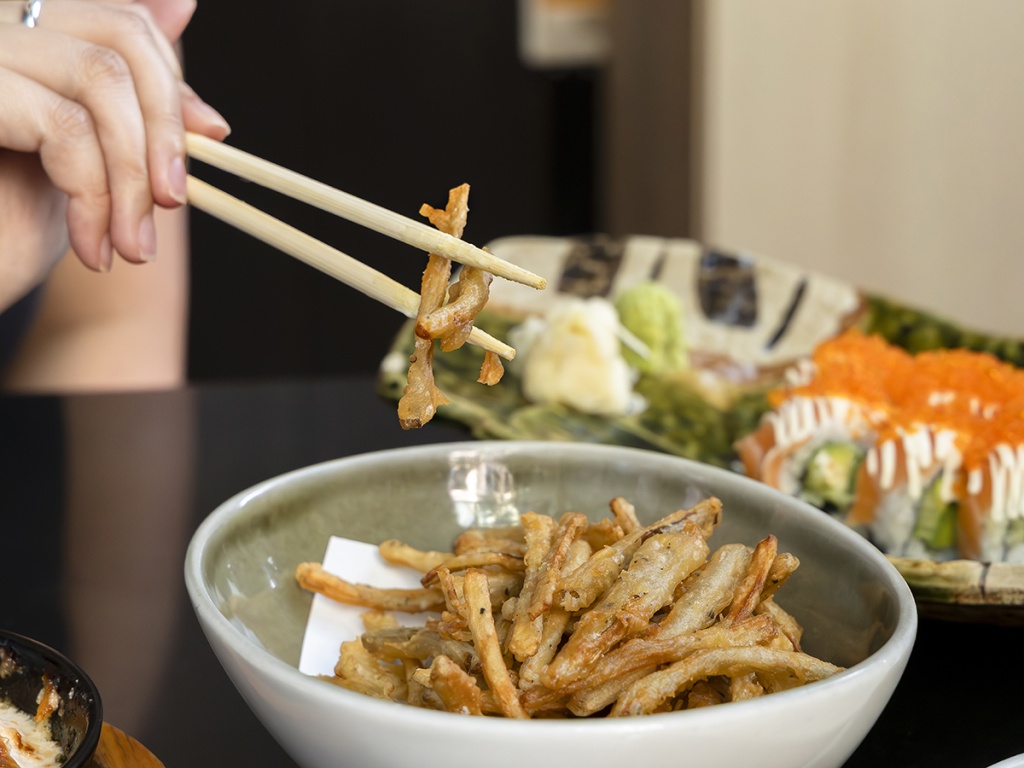
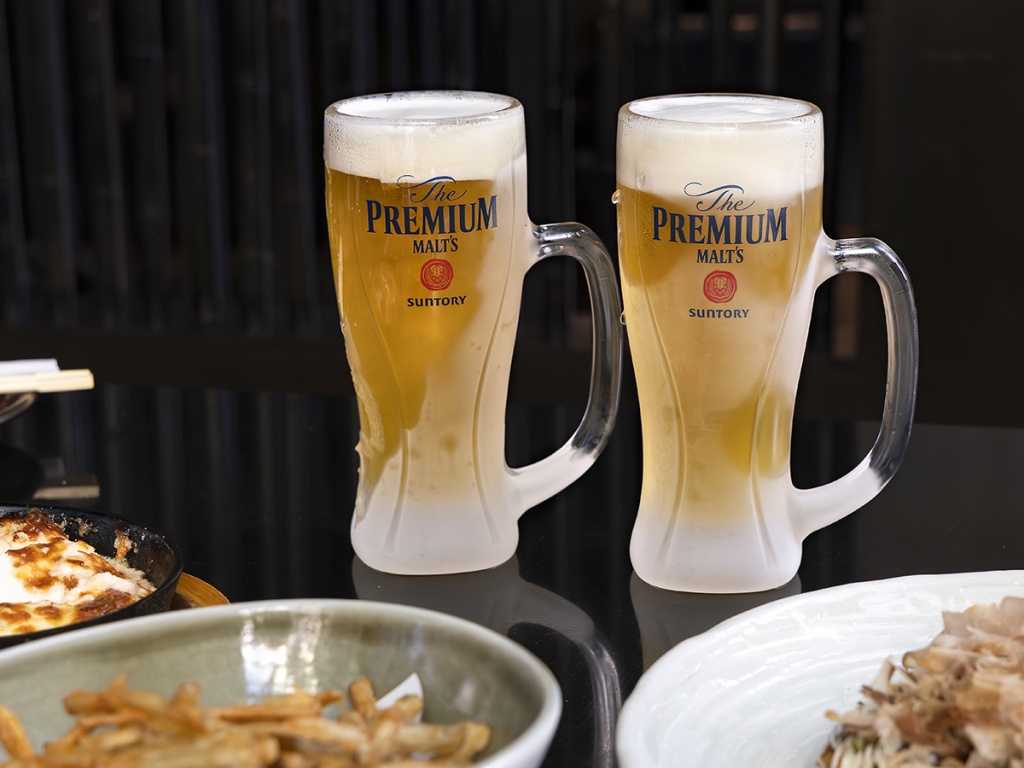
When deep-fried, these matchstick-sized cuts of burdock turn into an addictive, moreish snack that goes great with the Suntory premium malt beer (from S$14), which you can also get in a frozen glass, at the restaurant.
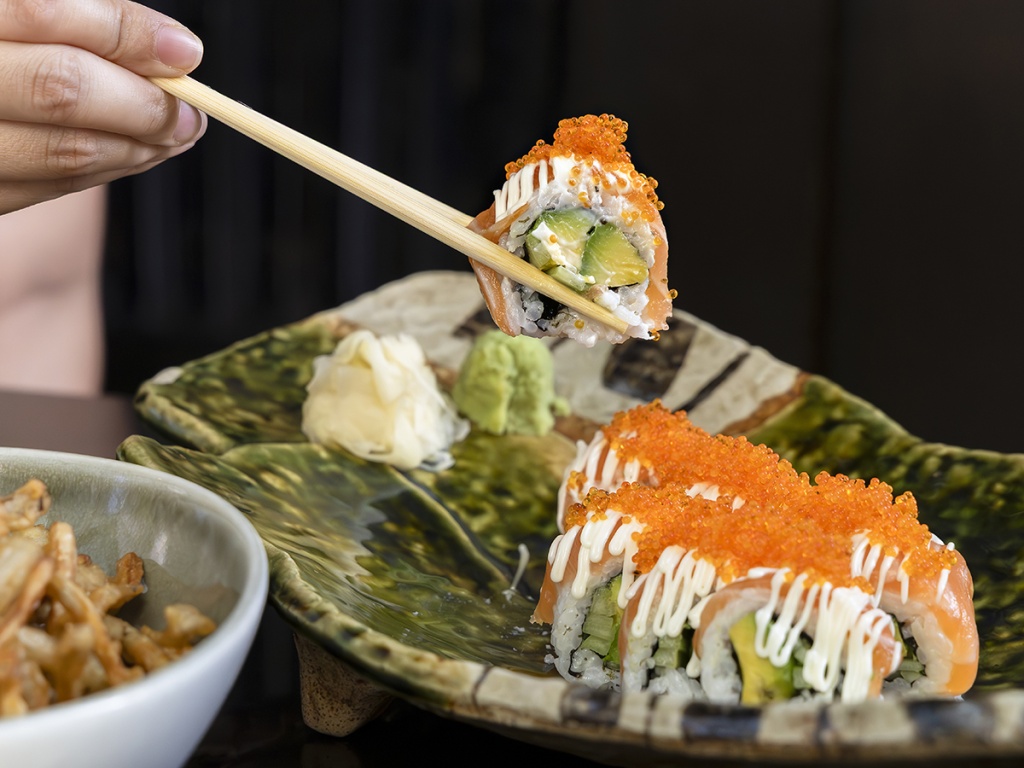
If okonomiyaki or monjayaki isn’t quite your thing, there are also more mainstream Japanese dishes, such as a salmon avocado roll (S$32) or spicy tuna roll (S$45) that you can order for sharing.
As our interview draws to a close, Riko lets on that there was a time — during the Covid-19 pandemic — that the family thought they were almost going to have to shutter. Thankfully, their regulars supported them through dining restrictions and safe-distancing measures.
“I don’t want our restaurant to just end here — I have a dream to keep Nanjya Monjya going. My grandfather is already gone, and my grandmother is already 80,” she says. “I thought the only thing we could still have to remember them, and the family’s hard work, was the flavours of the food.”
Despite being at the restaurant every day, Riko says it’s worth it when she gets good feedback from customers, or sees the satisfied expressions on their faces.
“We really love it when our customers tell us they feel like they’ve jumped back in time when they visit us,” she says with a smile.
Her aunt, Mai, who has been a part of Nanjya Monjya since it began, echoes that sentiment.
In the more than two decades that it’s been around, it’s clear that the restaurant has become more than just a place serving monjayaki and okonomiyaki.
For generations of Japanese diners in Singapore, it has been somewhere to gather, eat familiar food, and briefly reconnect with a taste of home.
And for Singaporeans like myself, places like these remind us of how important it is to keep something meaningful alive, even if the people behind them, such as Riko’s grandfather, are no longer around.
It’s also a little reminder that even as we gripe about the state of our dining scene, there are still gems like these, which have marched to the beat of their own drums for decades, found their own audience, and continue to thrive on their own terms.
For more Japanese eats around Singapore, check out the new Matsuya Singapore outlet at Suntec City and Rolls, a CBD izakaya that serves up handrolls.
Tue 5.30pm - 11.30pm
Wed 5.30pm - 11.30pm
Thu 5.30pm - 11.30pm
Fri 5.30pm - 12am
Sat 5.30pm - 12am
Sun 5.30pm - 11.30pm
- Havelock




Sarah is constantly seeking out new coffee spots and cocktail bars around the world, and should probably drink more water while at it.
Read more stories from this writer.
