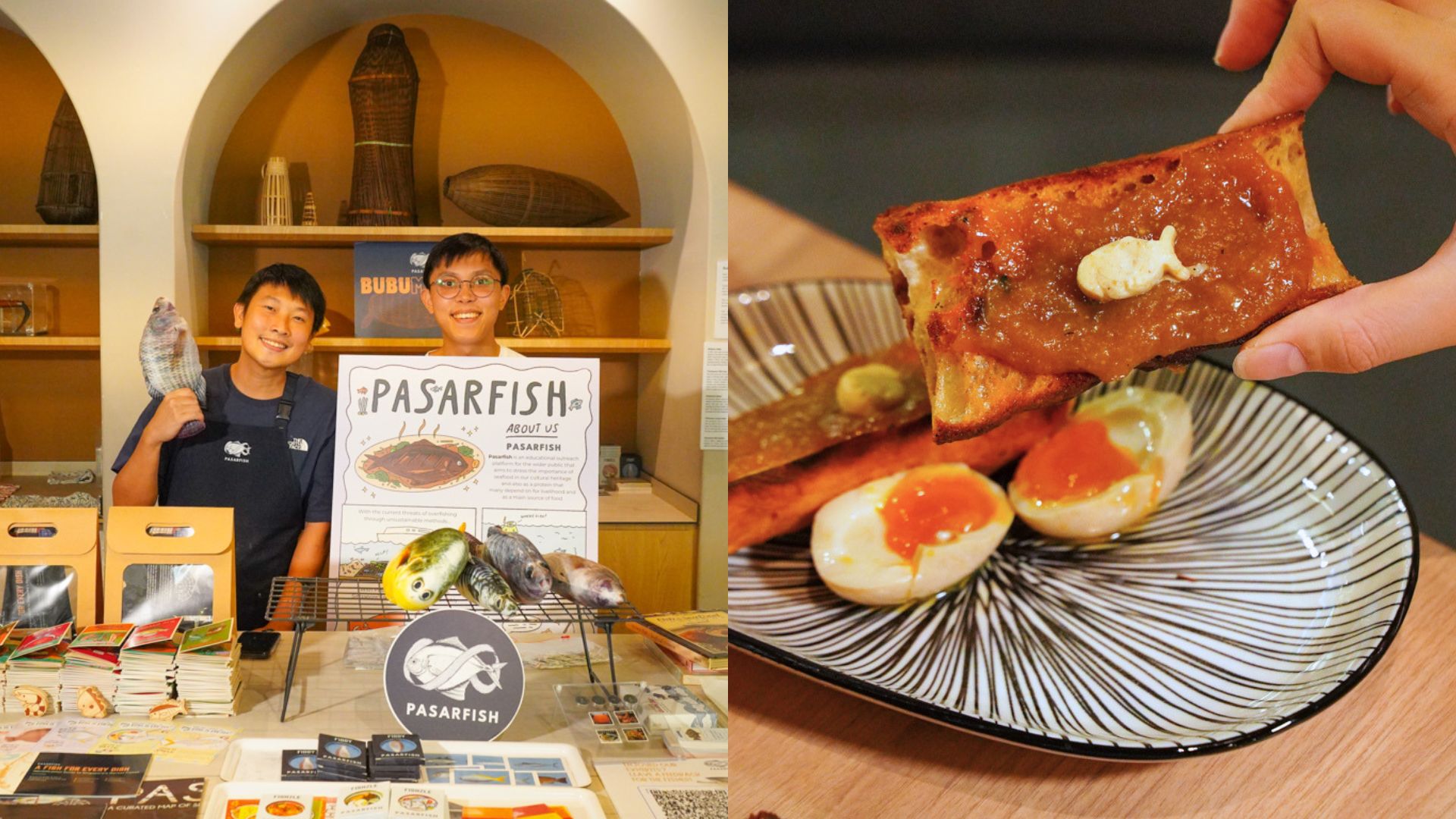
It’s fishy business with Pasarfish at Chef X: We try the infamous tobiko tiramisu, and other fun dishes

- Pasarfish is an organisation started by two local fish researchers focusing on local fish and sustainability
- It has recently took up residence as a F&B pop-up at Clarke Quay Central’s Chef X
- The pop-up introduces sustainable alternatives to overfished seafood, as well as unique fish dishes
- Items worth a try include the tobiko tiramisu and fish sauce kaya toast dishes!
How much do you know about the fish you eat? For most of us, the answer is most probably “not much”.
We Singaporeans love our fish — on average, each of us will consume around 22kg of seafood a year.
The ocean’s harvests are deeply embedded into Asian cuisine, but understanding what we’re eating requires a lot more work.
Thankfully, for those who are eager to learn, we have two Singaporeans doing the legwork for us: Kenny Lek, 34, and Elliott James Ong, 30, who run Pasarfish.
Pasarfish at Chef X
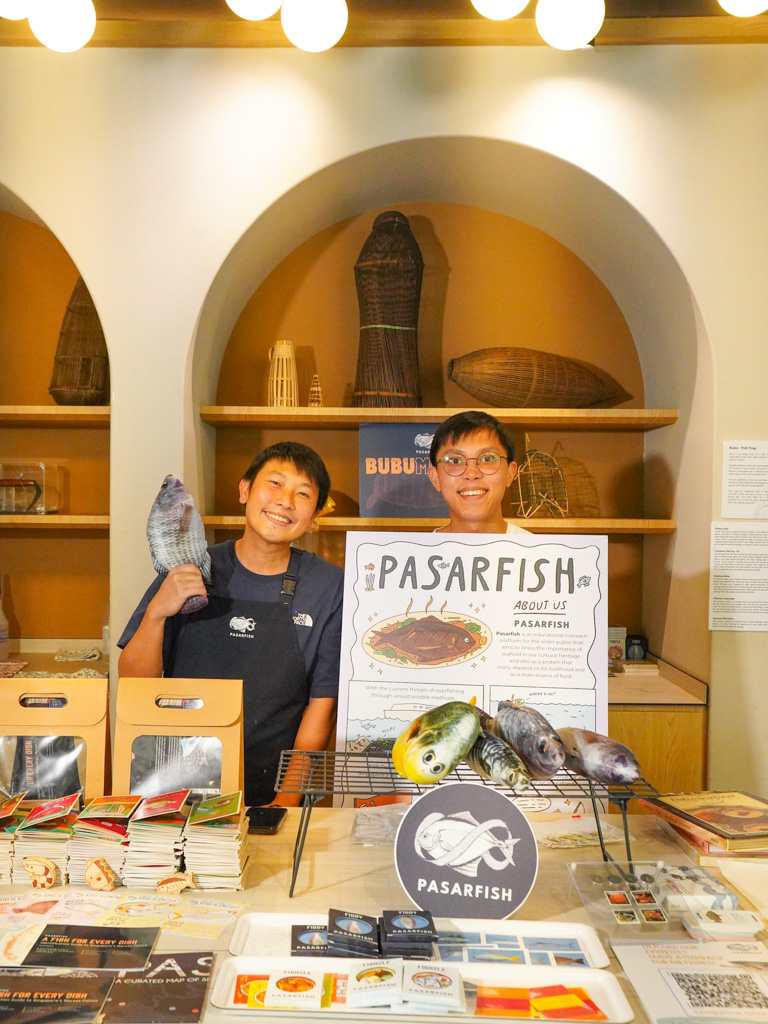
Pasarfish focuses on education and research of local fish, and how they intertwine with our rich and diverse culinary heritage — yes, all your favourite Teochew steamed pomfrets, sambal stingrays, and sliced fish soups.
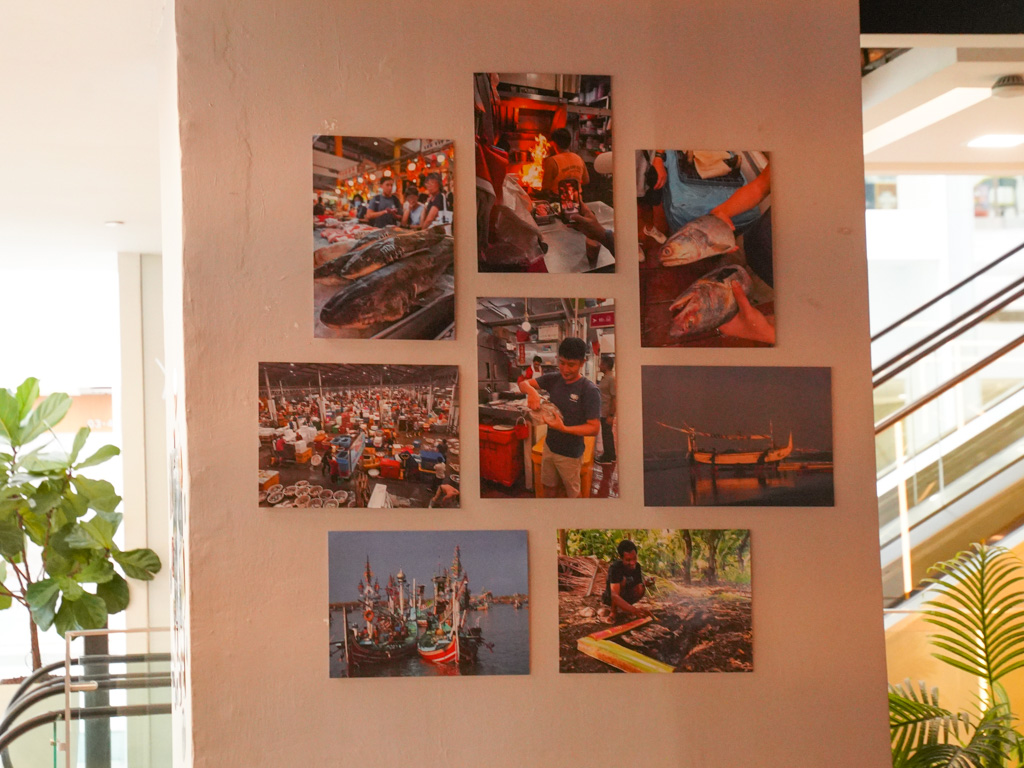
Pasarfish is perhaps most known for its tours, where the founders guide groups through places of interest, such as Jurong Fishery Port and Tekka Market, as well as culinary workshops.
It is on these tours that they deliver fillets of knowledge about all the fish our little-but-food-obsessed island eats on a daily basis.
This includes anatomical and ecological tidbits, and sometimes a peek into the supply chain behind our fish industry.
After years of research, community outreach, and guided tours, the founders have decided to take a bold leap into new waters: A restaurant pop-up at incubation space Chef X.
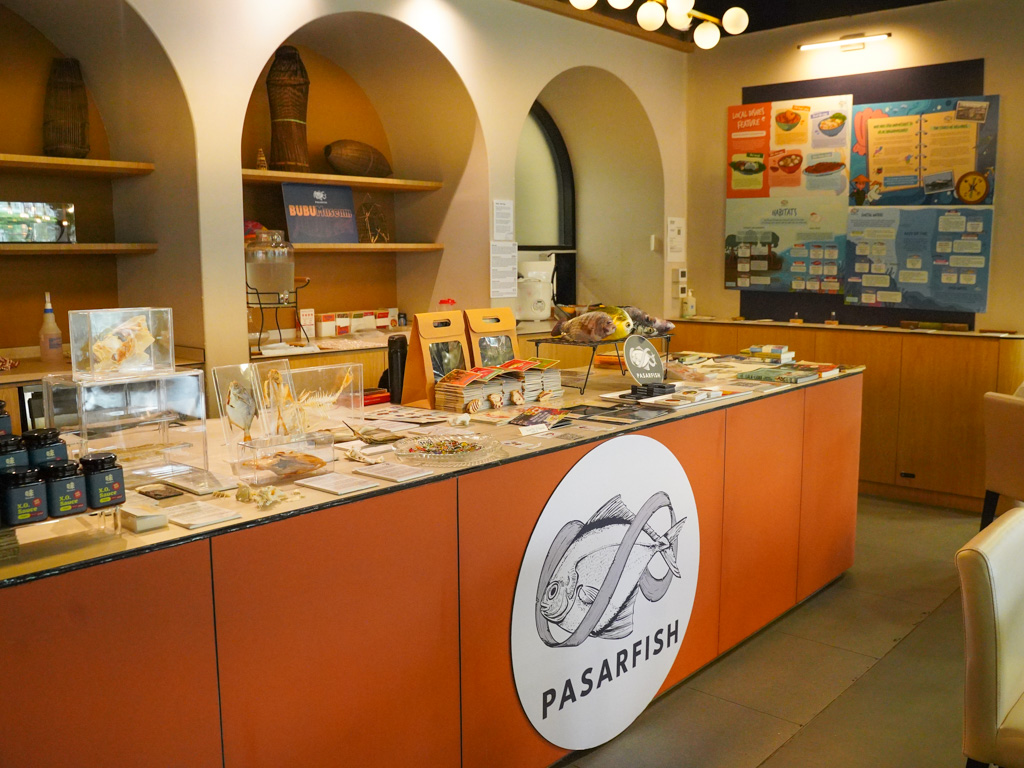
The Pasarfish pop-up at Chef X is not just a restaurant, though — it’s set up with a coastal theme, and a “counter museum” that’s inundated with fish-related displays, trinkets, and educational content.
The anglers’ angle
Given Pasarfish’s origins, its Chef X pop-up naturally goes beyond the same ol’, everyday seafood dishes that can be found in any hawker stall or restaurant.
Pasarfish has the added benefit of data from research and talking to the suppliers, many of whom they have built a strong rapport with.
There is intentionality to the fish in its dishes, as part of the duo’s sustainability endeavours, with them opting for varieties that are less taxing on the ecosystem.
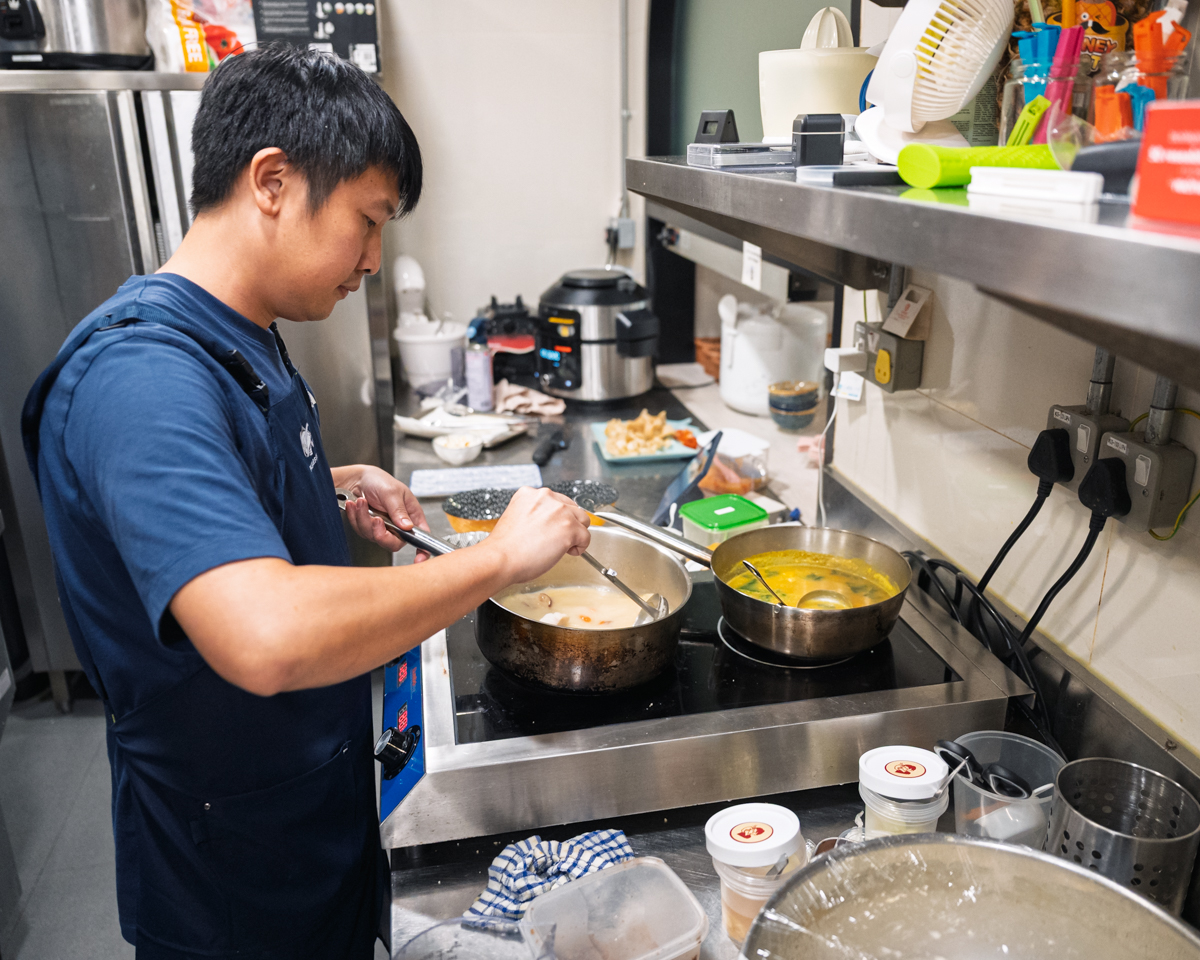
“Not many people are aware of this, but there are a lot of fish that we eat regularly that are endangered or near-threatened,” Elliott explains.
He lists some surprising examples: “For example, most species of stingray we use in our sambal stingray is actually endangered. The Spanish mackerel — commonly referred to as batang — its population is also at near-threatened levels.”
This phenomenon is a by-product of how fish is procured for consumption in Singapore, where most of the fish in our supply chain are wild-caught and not sustainably farmed.
Inevitably, it puts a strain on our marine ecosystem and will not be sustainable in the long run — and our favourite heritage dishes will eventually cease to exist.
Plenty of fish in the sea?
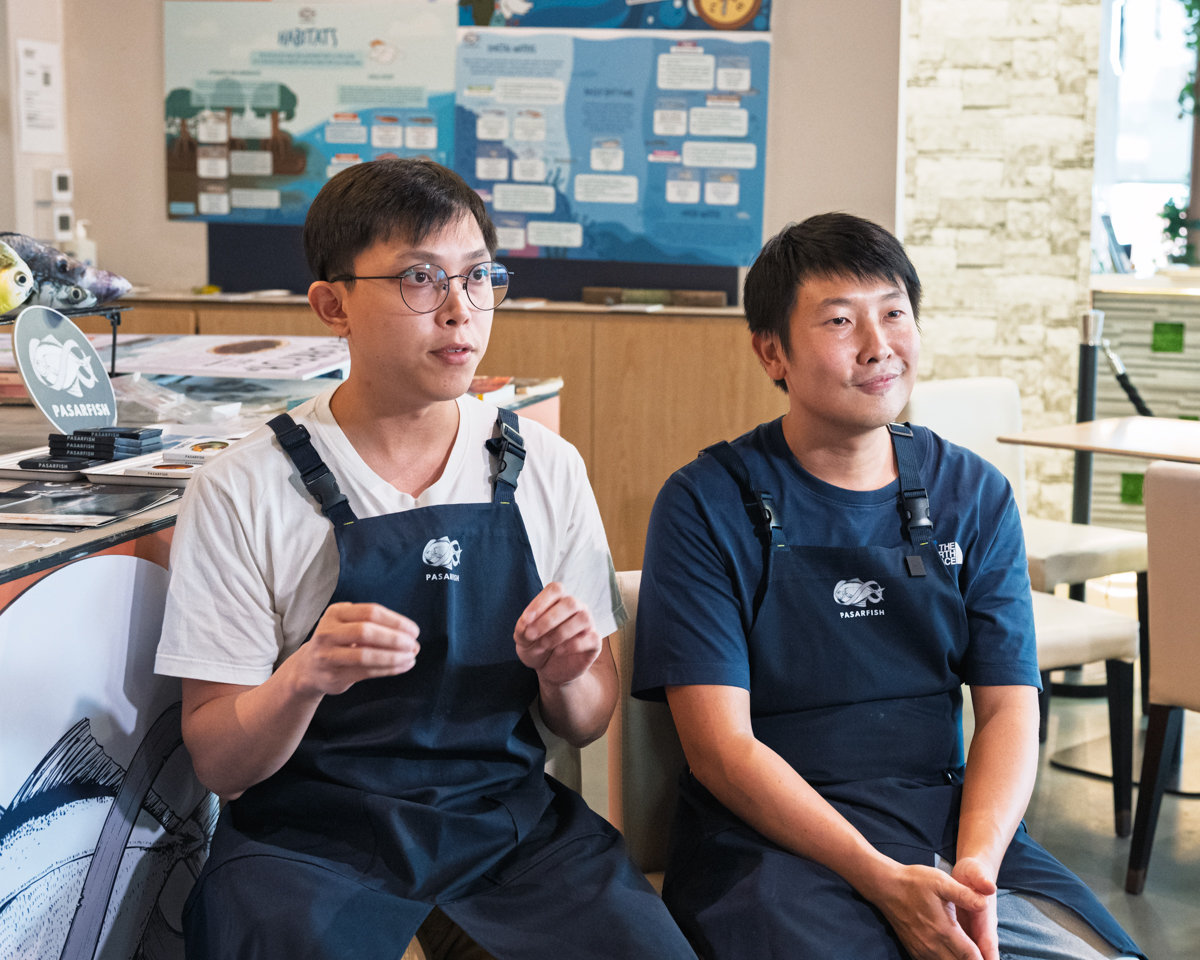
With all that said, it has to be stressed that Pasarfish is not looking to wage a war against those who eat fish.
The situation in the kitchen is actually the opposite. Kenny and Elliott — who are Teochew and Eurasian respectively — have grown up in food-loving families that relish seafood dishes.
It goes without saying that the pair understand the crucial role seafood plays in our culture, as well as how important the industry is to many livelihoods.
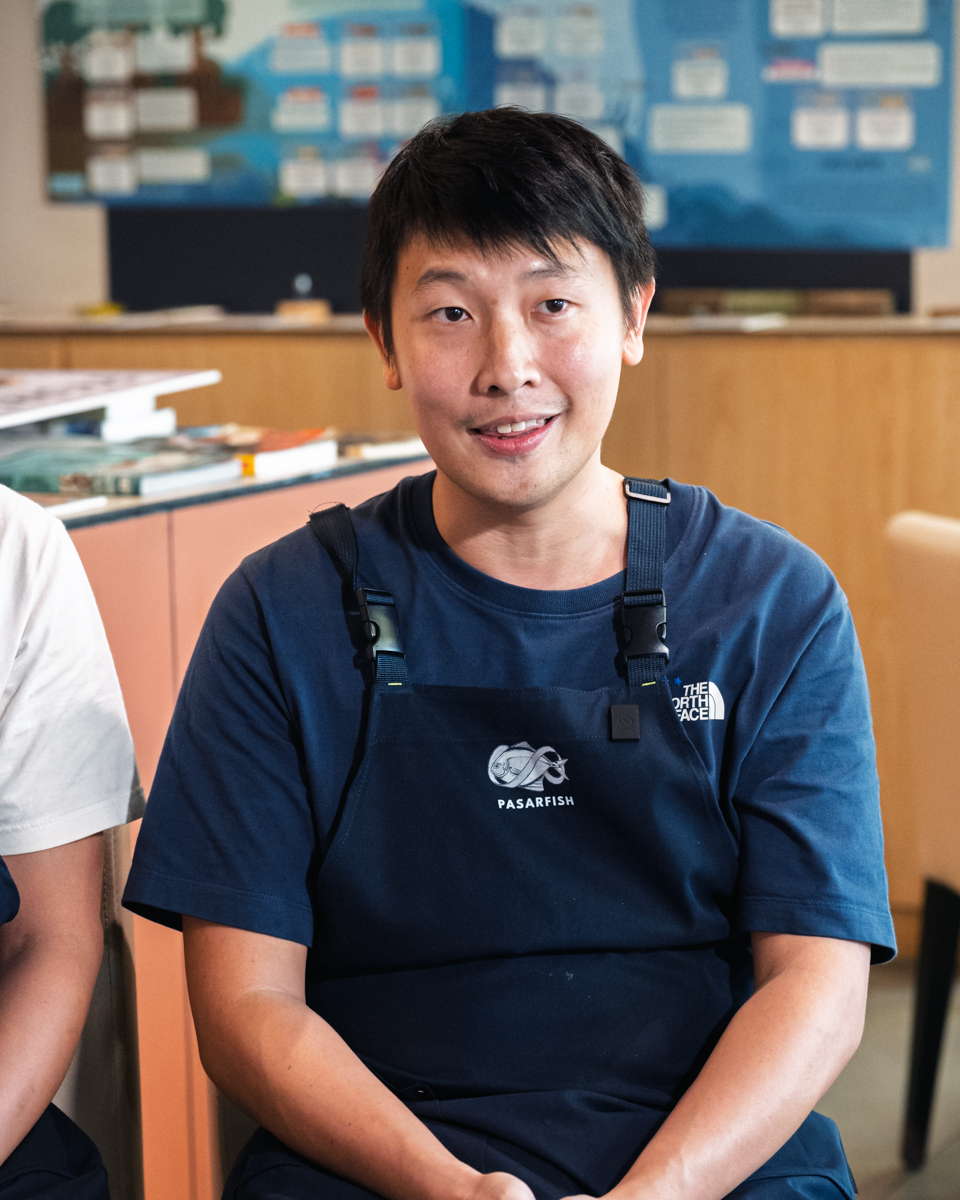
Their end-goal is to raise awareness about sustainability, to ensure long-term survivability, and not outright abolition.
The Pasarfish co-founders humbly admit that they do not have the final solution to balancing consumption needs with sustainability goals, but they want to expose the public to this uncomfortable, but very imminent dilemma.
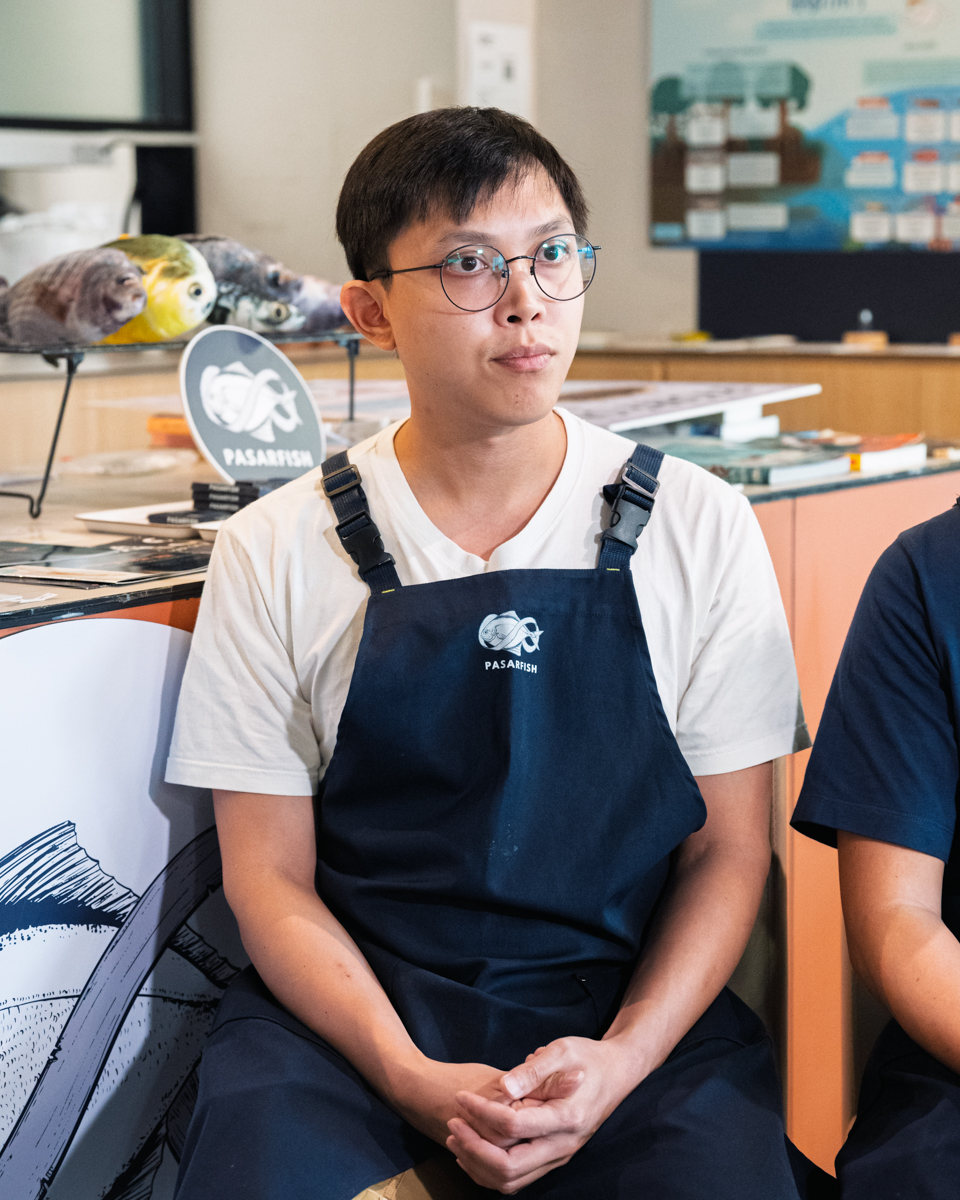
“We always tell people we are not serving a solution to the problem, but rather a mid-point to that solution,” Elliott explains.
Kenny adds: “One avenue we are looking towards is the advocacy of local fish farms.”
“To Singaporeans, price is important, but we need to showcase the value of fresher — and sometimes better — locally farmed fish and food security.”
The duo also strives to use each fish, from head to tail, to minimise wastage.
In many ways, this pop-up brings Pasarfish’s ideals to life — one that illustrates how other consumers and F&B operators can rethink how seafood is used.
Pasarfish pop-up dishes
So, how exactly do all these considerations shape what Pasarfish is dishing out at Chef X?
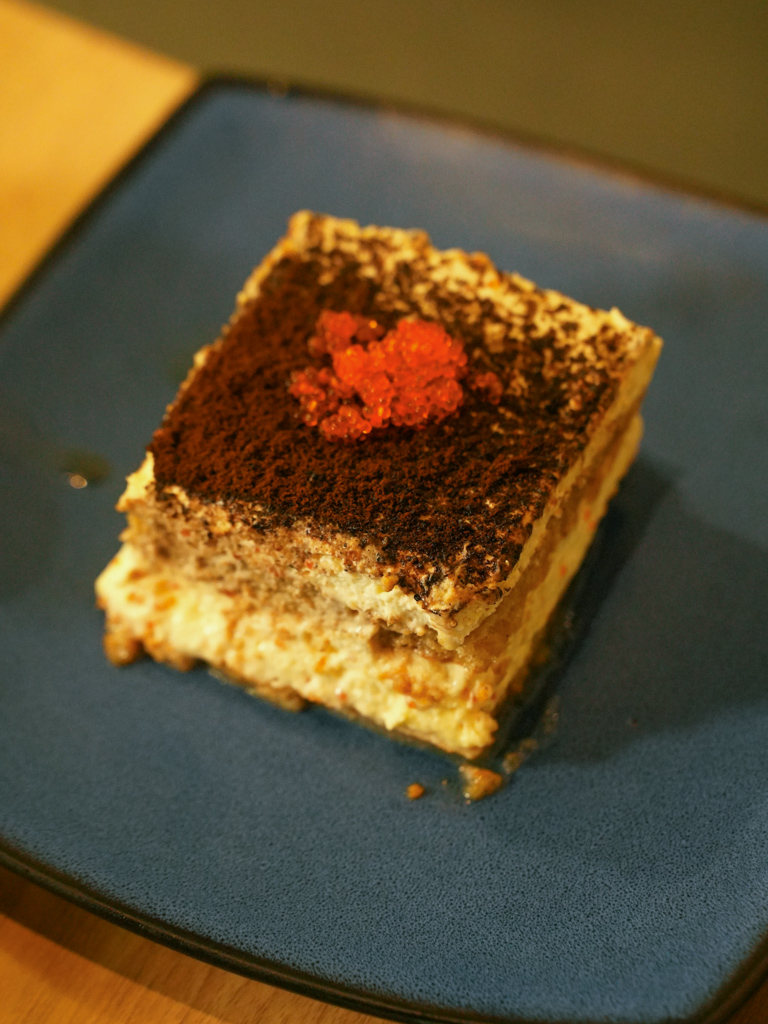
One controversial dish that has materialised is the tobimisu (S$12) — the name being a portmanteau of tobiko (flying fish roe) and tiramisu, drawing on the duo’s fish-to-tail ethos.
No typos here. Pasarfish includes unused fish roe in a riff off the classic Italian dessert.
And you know what? It works.
Folding a conservative amount of tobiko into the mascarpone, Pasarfish builds mouthfeel into the mascarpone, as each bite is punctuated by popping tobiko — not too obtrusive, but adds some style points.
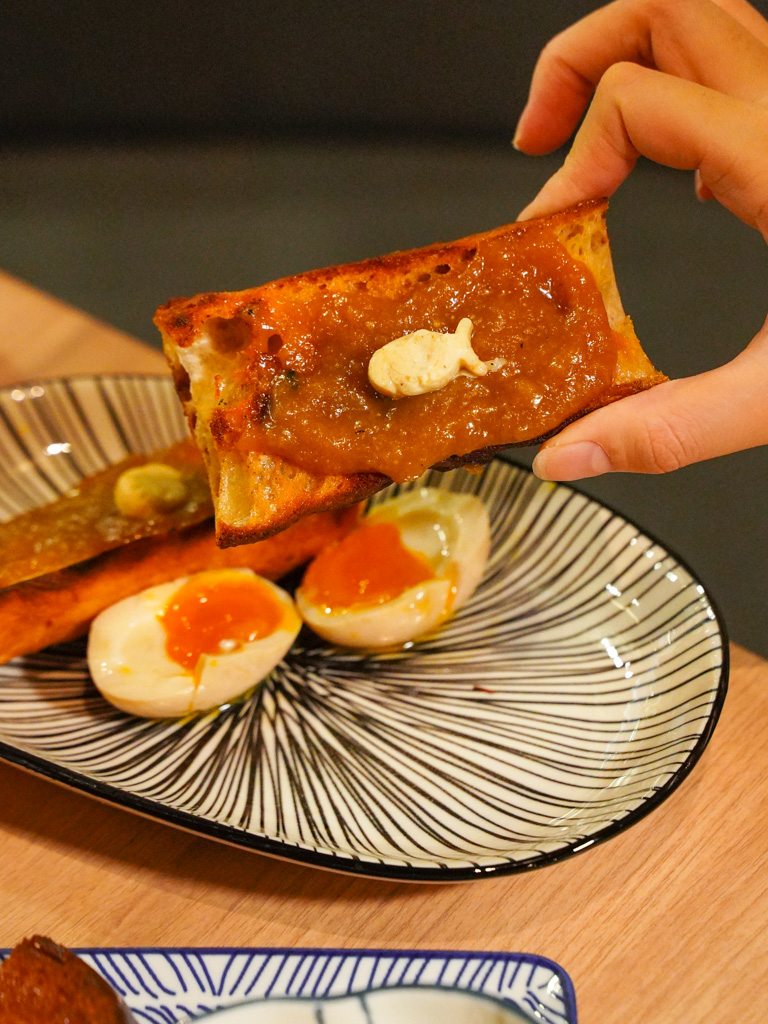
Since the team is judicious with the balance, the roe also gives just enough of a salinity to complement the richness of the coffee and honey whisky.
And it’s not just us. According to Kenny: “It has been very well received and we have not had a single bad comment about our tiramisu so far.”
That isn’t the only out-of-the-box take on classic dishes at Pasarfish’s Chef X pop-up, though. We also find ourselves adoring Pasarfish’s U-yummy (S$13).
In this dish, we see local kaya toast jazzed up through two unexpected elements. First, the homemade toast is slathered with a fish-sauce kaya, then topped with a dollop of fish-shaped teepoh (sole fish) butter.
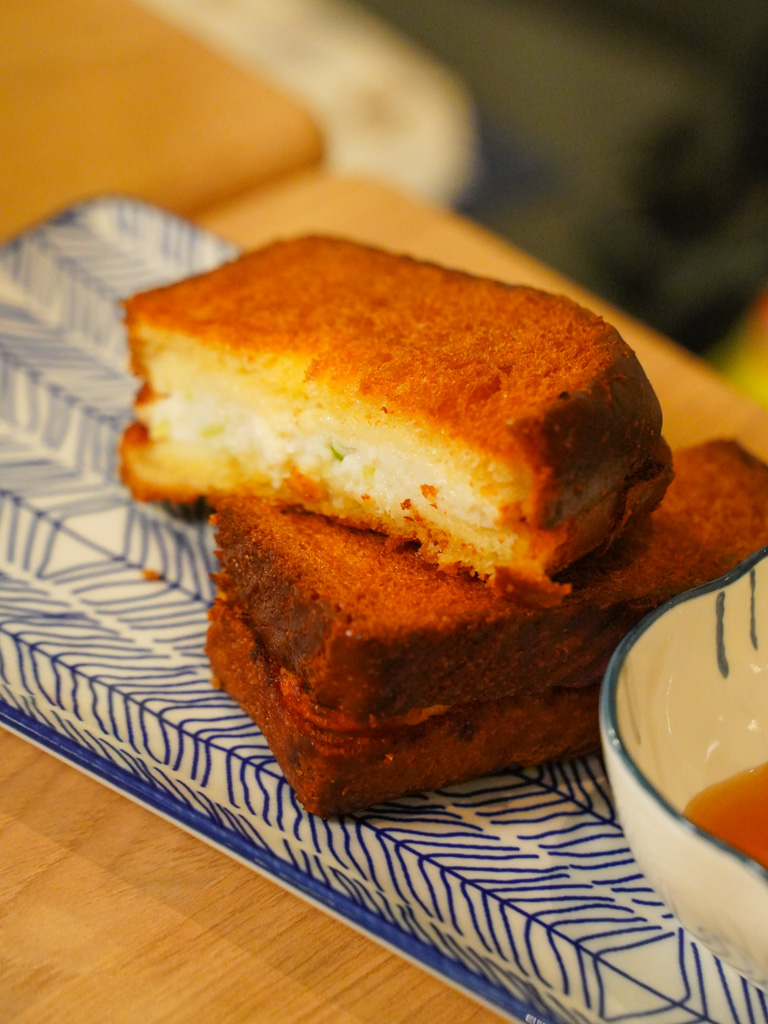
Kaya toast is a dish that works well with a bit of salinity, so that additional fish-sauce kick actually gave it quite an enjoyable edge, which is basically the same principles behind salted caramel!
Pasarfish also has more conventional and easy-to-understand dishes such as the Menboyu (S$14), a fish-paste spin on the menbosha, a shrimp-paste sandwich.
We suspect most diners would appreciate how well the buttery and fluffy brioche buns combined with the silky and bouncy fish paste, while the dash of honey lemon sauce nicely accentuates the fish paste’s mellow sweetness.
Sustainable spotlight
What about the founders’ sustainable fishing focus? How does that work into this project?
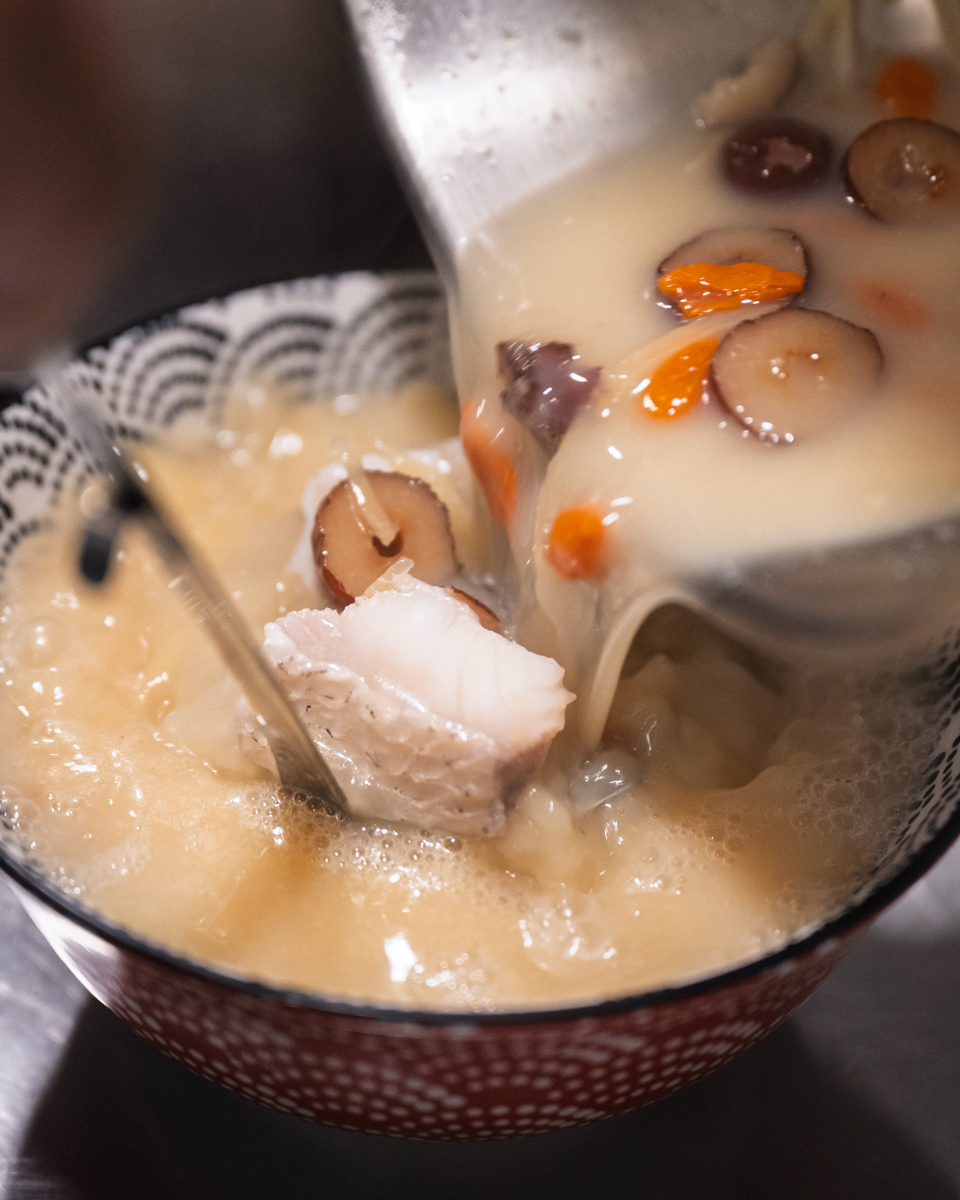
The Souper fish (S$14) is a shining example of Pasarfish’s ethos — it uses threadfin instead of batang, the de facto fish of choice for most sliced fish soup stalls, and an unfortunate victim of overfishing.
Does the dish suffer from the swap? Not at all. The fish is firm and meaty, but not tough, and the soup itself tastes supremely nourishing, as it is based on the popular recipes used during the post-pregnancy confinement period.
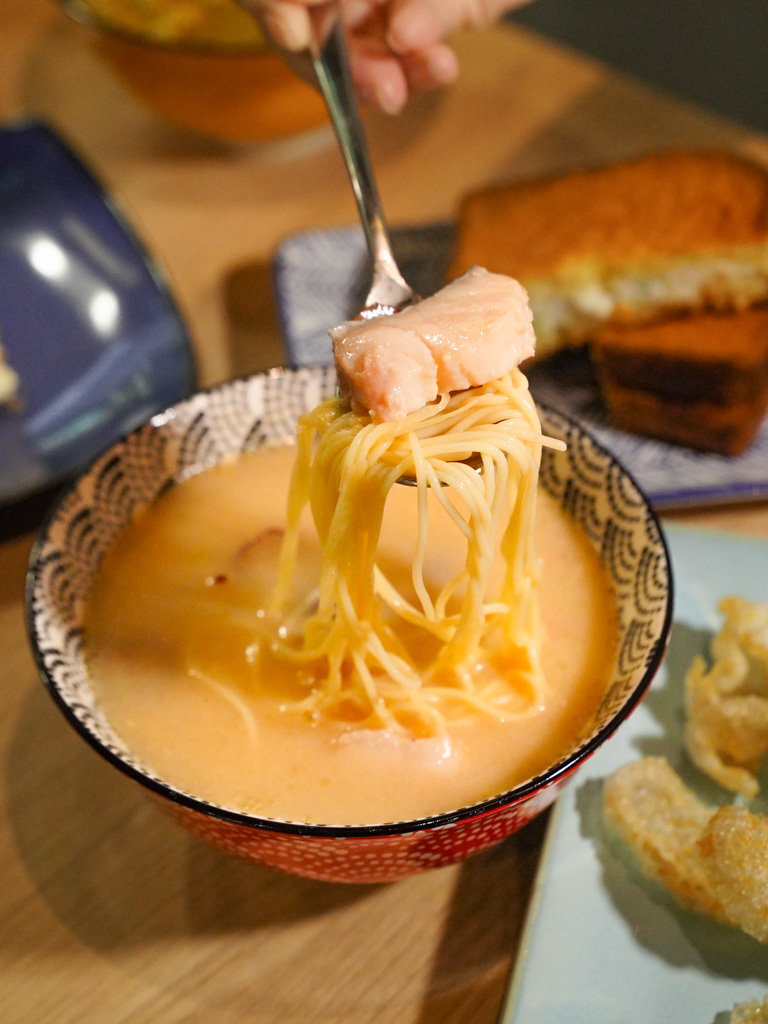
The profile is creamy and hearty, with a good dose of sweetness and gentle tang from the potpourri of green papaya, red dates, and goji berries.
In fact, there is a conscious push for these alternatives, and only two dishes feature the same fish every day: The threadfin in the aforementioned Souper Fish and the mullet in Catch A Cold (S$10).
For the rest of the items with fish meat in them, Pasarfish has a fish of the week, which is then used in the rest of the dishes, and a weekly special.
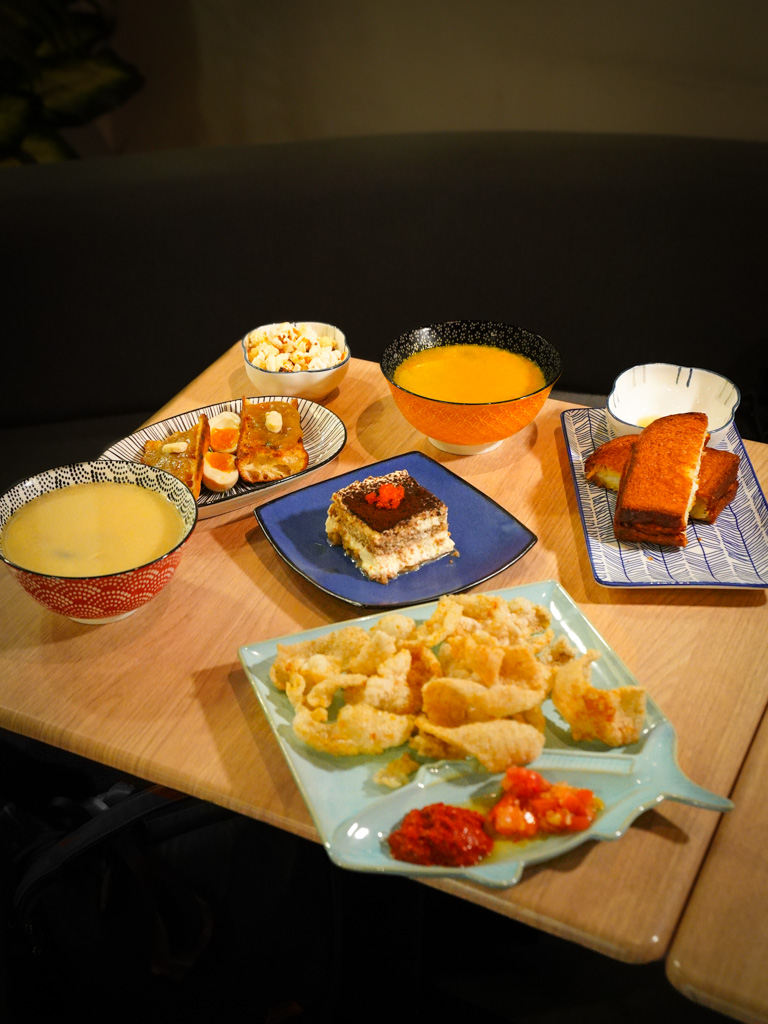
These specials include the Sambal Notstingray, which swaps out the overfished stingray for a much more sustainable unicorn leatherjack.
Essentially, these dishes are a way to explore environmentally friendly alternatives, so that we can continue enjoying some of these beloved seafood recipes for the years to come.
Pasarfish is telling its diners: “Hey, there is no need to persist with unsustainable fish simply because it’s always been done this way — many of the dishes work just as well with alternatives!”
Fishing for attention
We admit that, even if the food looks well-thought-out, it might still look like a confounding move for a research outfit to open a restaurant pop-up — but Kenny doesn’t agree.
“Although we get a good response for our tours, most attendees already understand the significance of what we do,” he explains.
“We try a lot of things and F&B is our latest attempt. We also find that trying to connect through more relatable things, such as food, makes it a lot more engaging.”
It’s often said that the way to someone’s heart is through the stomach, which is why the Pasarfish owners decided to expand its reach through food.
This pop-up isn’t a simple restaurant concept, but essentially a two-pronged approach to spreading the word about conservation.
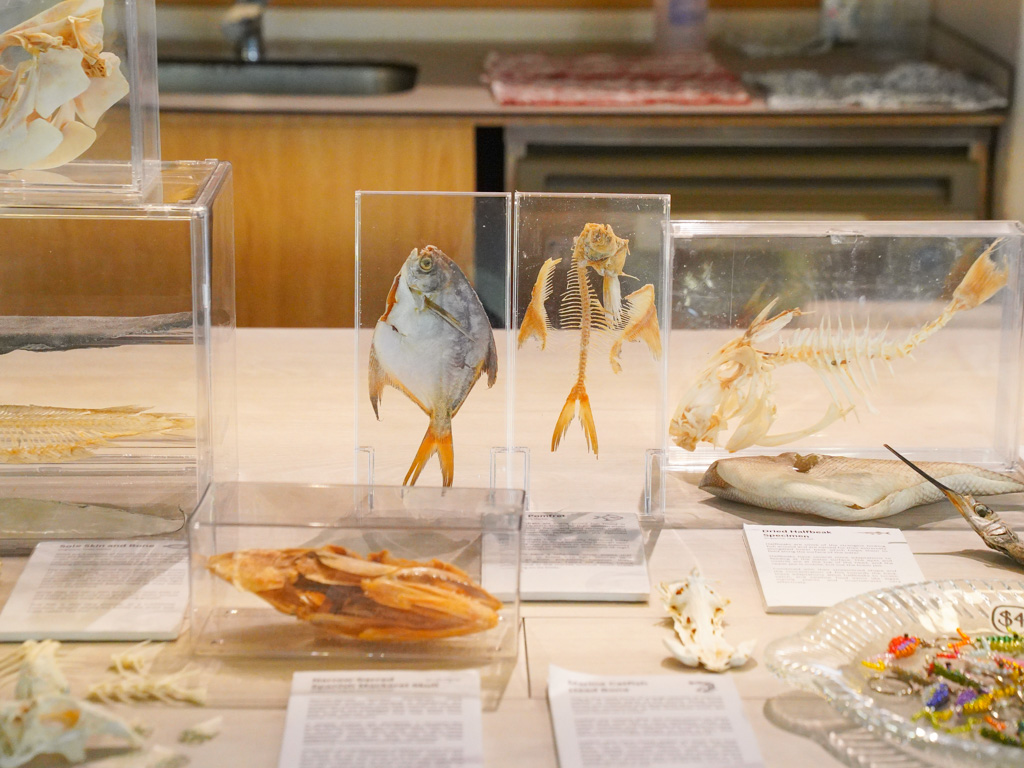
Although the food is the main highlight here, Pasarfish’s Chef X pop-up space also doubles as a museum of sorts.
Visitors are welcome to browse through handicrafts, such as preserved fish skeleton specimens, as well as peruse through fish-themed wares made by local artists for sale.
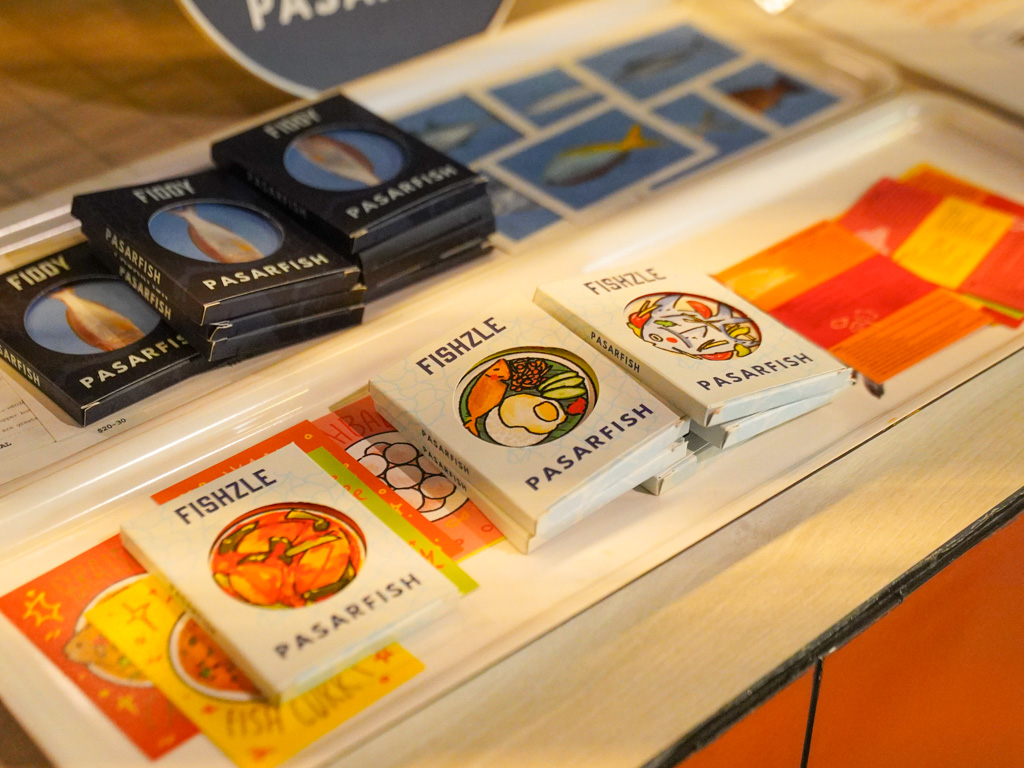
The crowning jewel here is undoubtedly Pasarfish’s Identification Guide to Singapore’s Market Fishes.
Published after a year of market surveys at Tekka Market by NUS research assistants, Pasarfish’s magnum opus dives into the colloquial names, cooking methods, and sustainability recommendations of a whopping 60 local fish.
One little tidbit we learnt was that “ngor her”, as its referred to by the Chinese, is also known as “kurau” in Malay, while its official name is Indian threadfin.
The guide is available for free online, but guests can purchase a physical copy at Chef X!
After browsing through the museum and tasting the dishes, we can say that what Kenny and Elliott are doing shows great dedication to preventing a crisis that not many of us were even aware of.
It turns out that it’s not exactly true that there are plenty of fish in the sea — and it’s high time we consider what we’re fishing out of it!
This was a hosted tasting.
For more ideas on what to eat, read our stories on the enchanting new cave-inspired K-BBQ spot and our guide to the best grub that Funan can offer!
Wed 11am - 10pm
Thu 11am - 10pm
Fri 11am - 10pm
Sat 11am - 10pm
Sun 12pm - 10pm
- Clarke Quay



Evan started off writing about food on Instagram, before joining outlets such as Buro and Confirm Good to pursue his passion. His best work usually comes after his first whisky shot in the morning.
Read more stories from this writer.