Shabestan’s S$38 Sunday-only brunch delivers Silk Road cuisine as a weekend treat

Long before “fusion” became a buzzword on menus, the Silk Road was doing it the slow way. For some 1,500 years, caravans hauling silk, spices, and the odd sack of pistachios crossed roughly 6,400km of land and sea routes between China and the Mediterranean, trading recipes as readily as they traded goods.
Persia sat right in the middle of all that traffic.
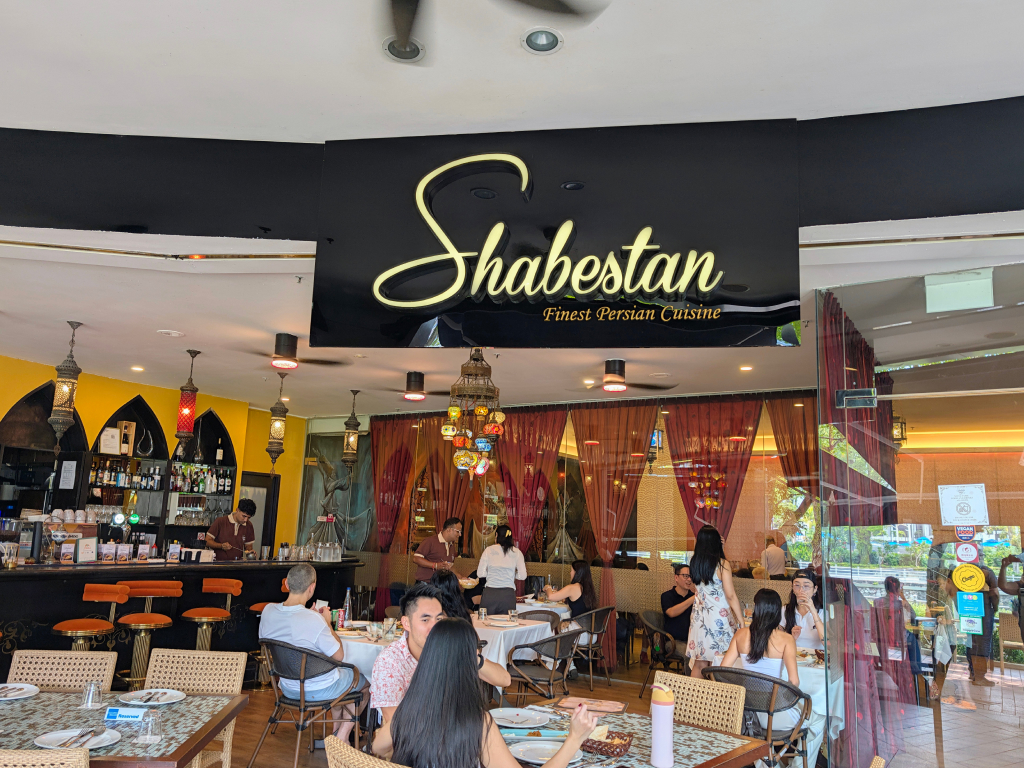
That’s the premise of The Silk Road Caravan brunch, Shabestan’s new Sunday-only spread on the Robertson Quay waterfront.
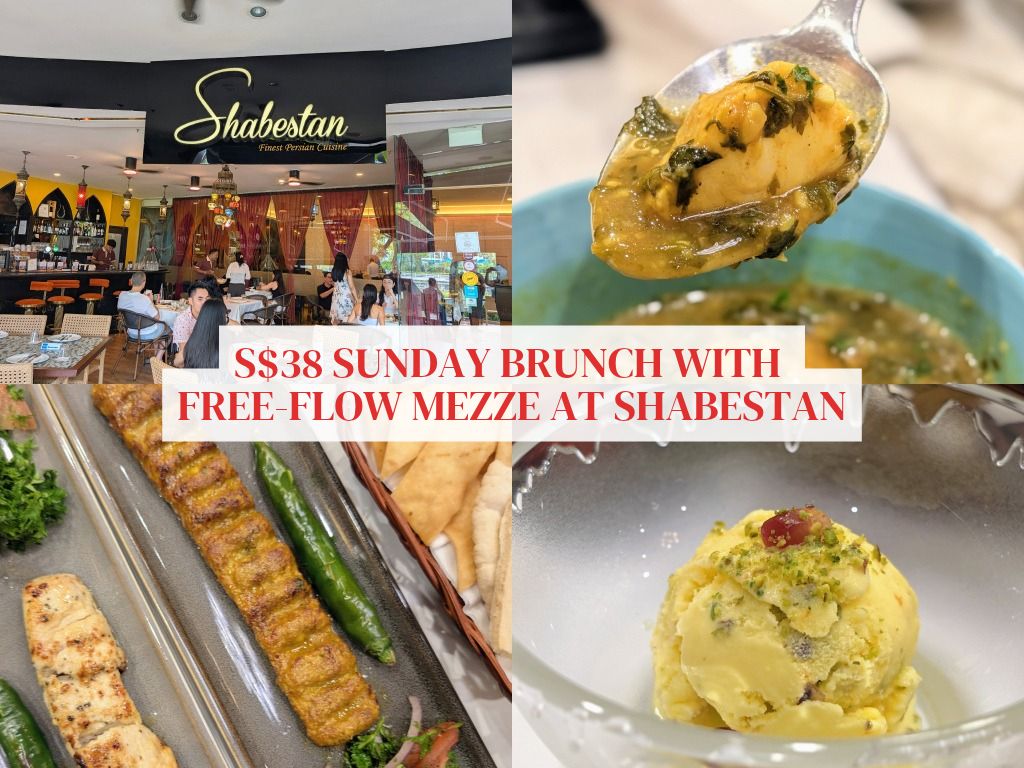
From 11.30am to 3pm, S$38 gets you any two dishes from a curated menu of over 20 items that range from the Levant to the Caspian, plus free-flow mezze, pita bread, saffron rice, and ice cream.
A calm retreat by the river
In traditional Persian architecture, a shabestan is a cool, quiet room set below ground, where people retreated from the midday heat. That idea fits a slow Sunday brunch by the river, and it has guided the restaurant since 2013.
Over 13 years, Shabestan has become one of Singapore’s go-to spots for Persian food, with more than 20 kebabs on its regular menu. The kitchen is led by head chef Hany Moustafa, who previously cooked for a Middle Eastern royal household.
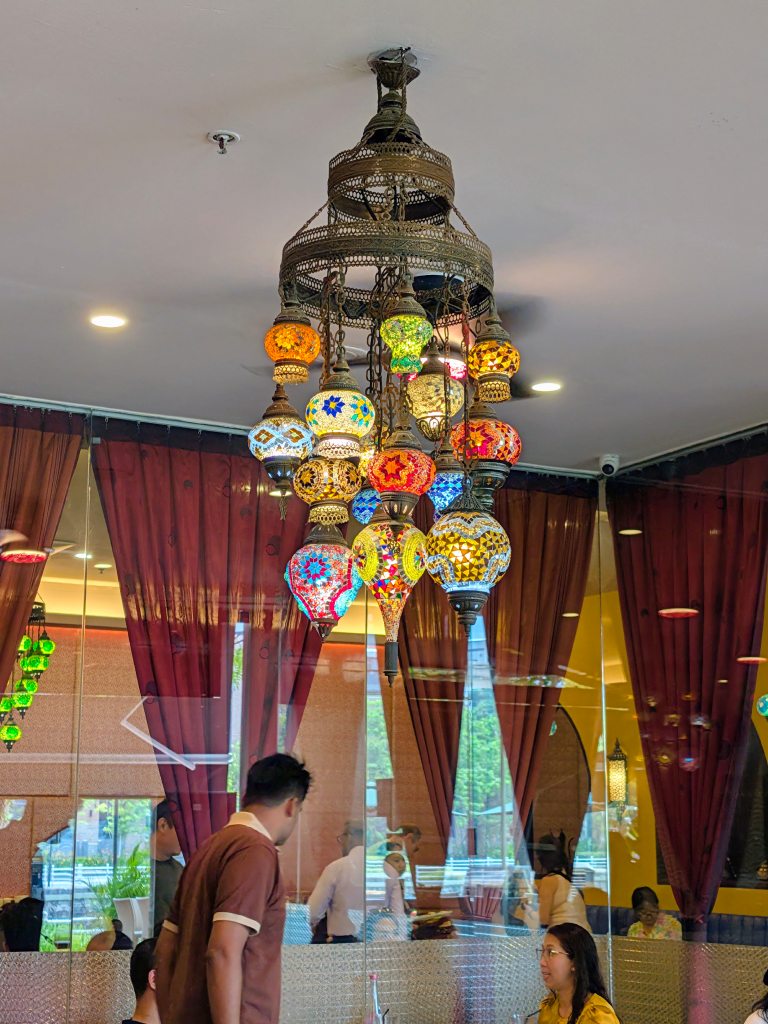
One thing worth knowing: All meat served is halal-certified, but the restaurant itself isn’t, because it serves alcohol.
So, what is Silk Road cuisine? At its core, it’s Persian, with fragrant saffron rice, meat grilled over charcoal, and stews braised for hours. Herbs are used by the handful, and sometimes, a gentle sourness comes from dried lime, sumac, and pomegranate.
Centuries of traders passing through added flavours from the Levant, Central Asia, and the Mediterranean. Shabestan’s brunch menu shows that range; za’atar (Middle Eastern spice blend) eggs and garlic prawns sit alongside sumac-dusted lamb kubideh (minced meat kebab), while halim bademjan, a braise of lamb, lentils, and aubergine, is finished with kashk, a fermented whey that tastes like a funkier, saltier yoghurt.
Mezze, skewers, and slow-cooked stews
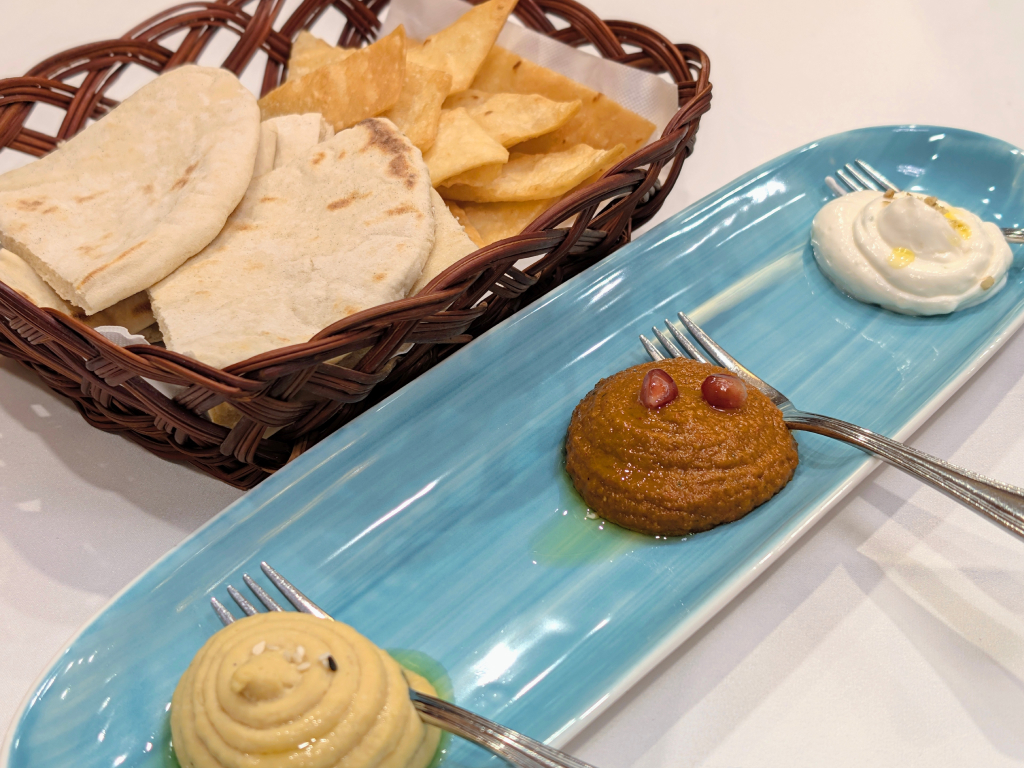
As we settled in, the mezze promptly arrived: A trio of hummus, muhammara, and Shabestan’s housemade cheese dip, with pita bread, pita chips, and Persian bread for scooping.
Of the three, we kept going back to the muhammara, a Middle Eastern dip of walnuts and roasted red peppers that gets its addictive tang from pomegranate molasses, with a fresh, herbaceous finish.
The Persian bread is made by hand at the open-kitchen window throughout service, and it reaches the table warm and pillowy. Paired with the dips, it’s a hard starter to put down, so remember to pace yourself — it’s free-flow, after all.
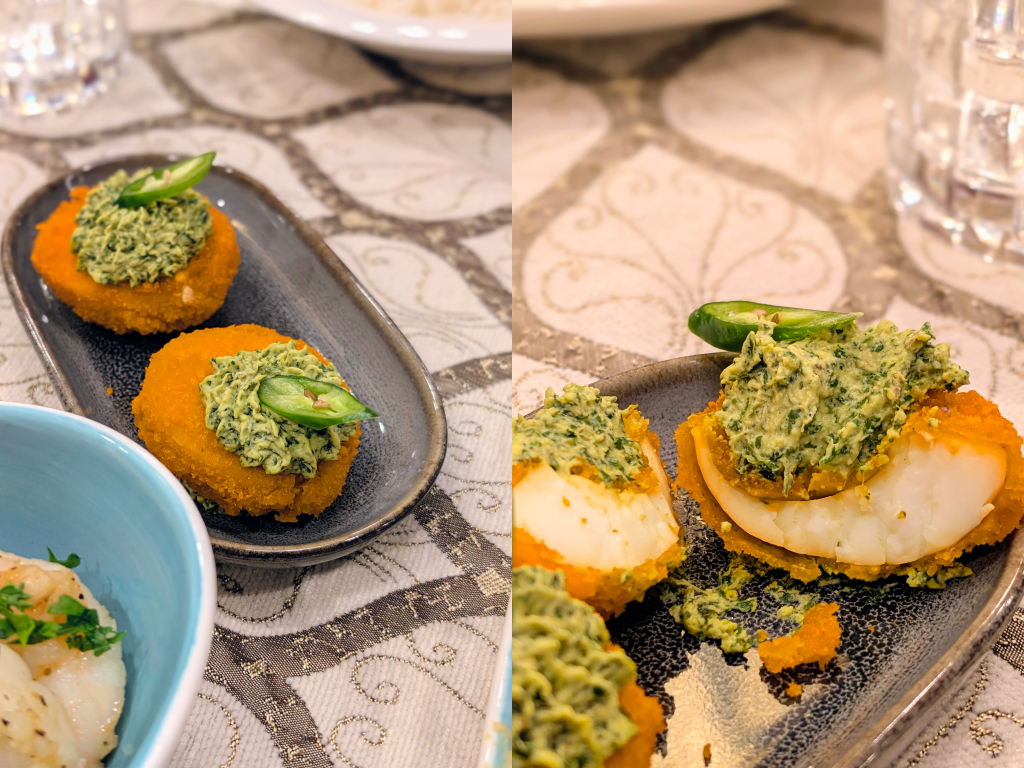
The lightest way into Shabestan’s brunch menu is through the Egg Favourites, which has six options. We tried the fried eggs, a name that undersells the work involved. The kitchen breads and deep-fries the whites of boiled eggs, then whips the yolks with butter and herbs into a silky mousse that goes back on top.
You get a crisp shell that gives way to bouncy egg white, followed by a creamy, herby hit of mousse. Take your time with this one; the texture is worth savouring.
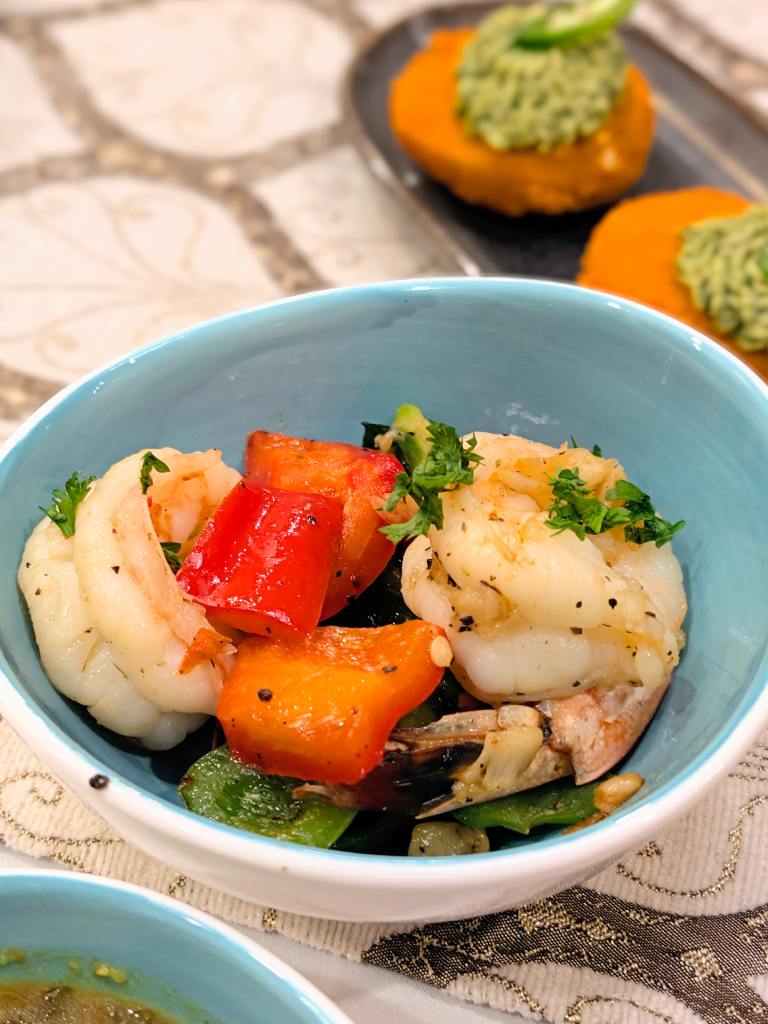
If you’d rather start bolder, the garlic shrimp from the Caravan Classics section is the way to go. Plump tiger prawns arrive tossed with crushed garlic and bell pepper. Visually, it doesn’t inspire much confidence, but the first bite proved us wrong.
It’s garlicky and savoury, and the prawns are cooked to just the right tenderness. Have it with a side of Persian bread to mop up the rest.
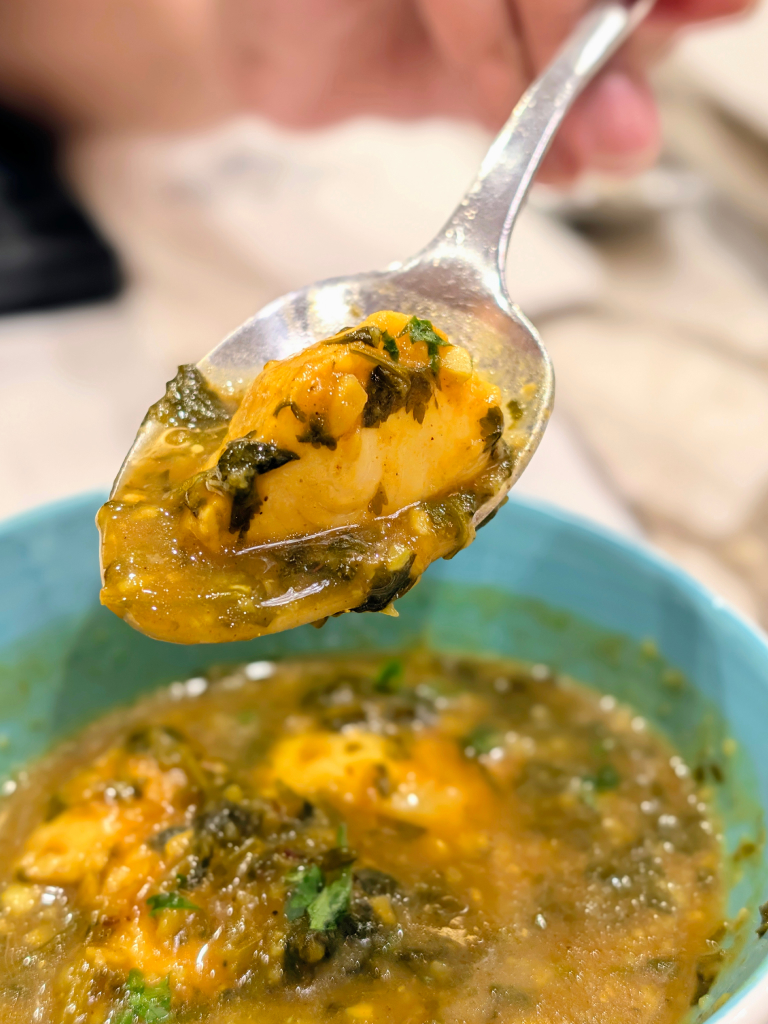
Looking for something more comforting? There are seven slow-braised stews to choose from, and ours was the ghalieh mahi from southern Iran.
It’s a fish stew simmered with coriander, garlic, and tamarind until it turns tangy and aromatic, served with fragrant saffron rice and more of that Persian bread. The first spoonful of the broth is robust and sharp, but it mellows quickly once you take a bite of fish.
The whole thing is thoroughly satisfying and tastes very homely, like brunch at an elder’s home. Eat it with a generous helping of the free-flow saffron rice. If you’re only coming by once for this Sunday menu, this is the dish we’d recommend.
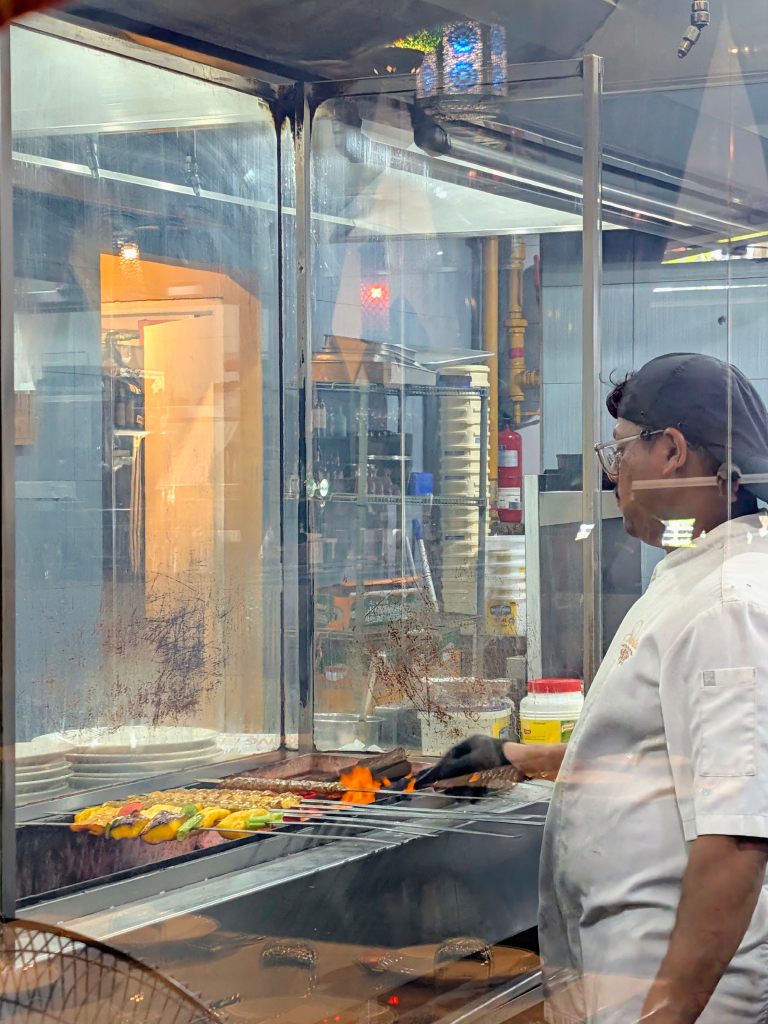
The charcoal grill, of course, is where Shabestan has always been strongest. The full menu has seven grill options covering fish, chicken, lamb, and vegetarian, and the two kebabs we tried show different sides of it.
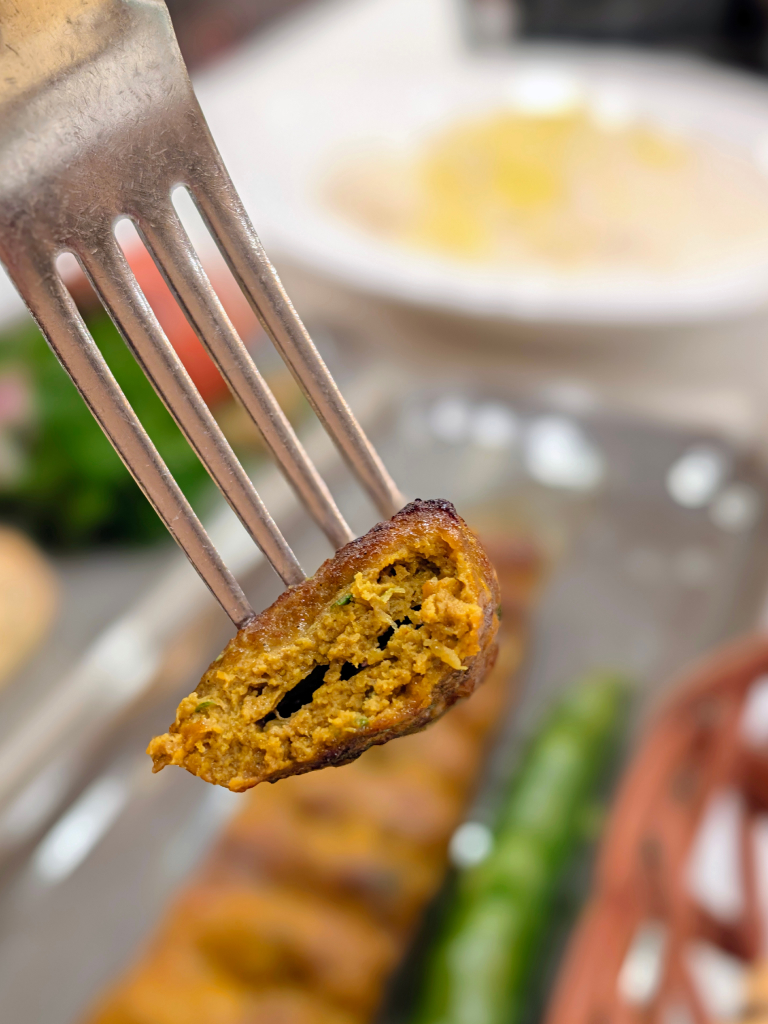
The halabi kebab, also known as Aleppo kebab, is a skewer of minced lamb brightened with fresh parsley. It’s incredibly rich, juicy and tender, with a pronounced gaminess that could prove divisive. If you love the flavour of lamb, you’ll fall for this one quickly, as we did.
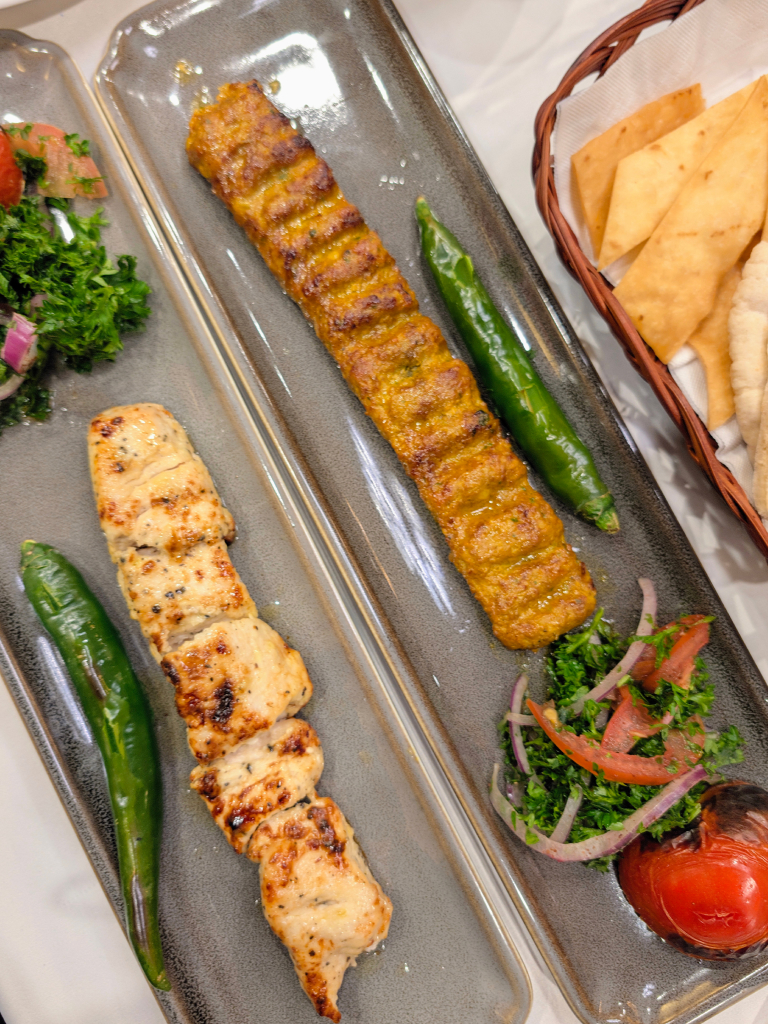
If that’s not your thing, the jujeh masti is gentler: Chicken breast marinated in thick yoghurt and saffron, then grilled over moderate coals to keep it tender. It doesn’t have the impact of the lamb, but with chicken this tender and fragrant, it’s hard to go wrong.
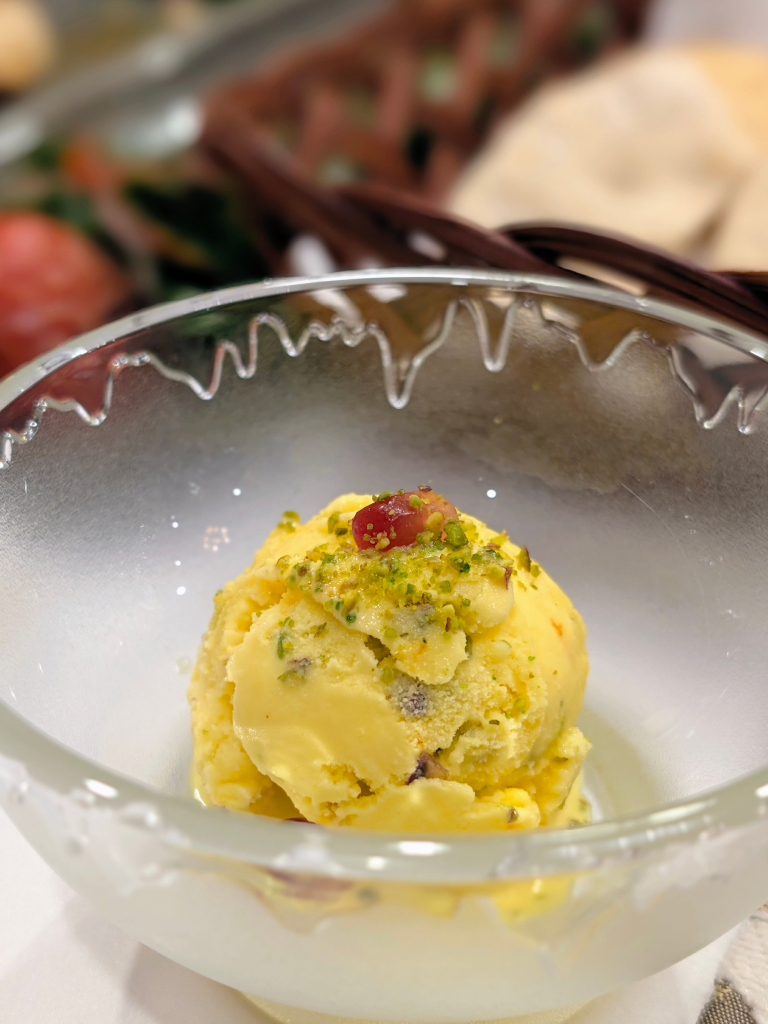
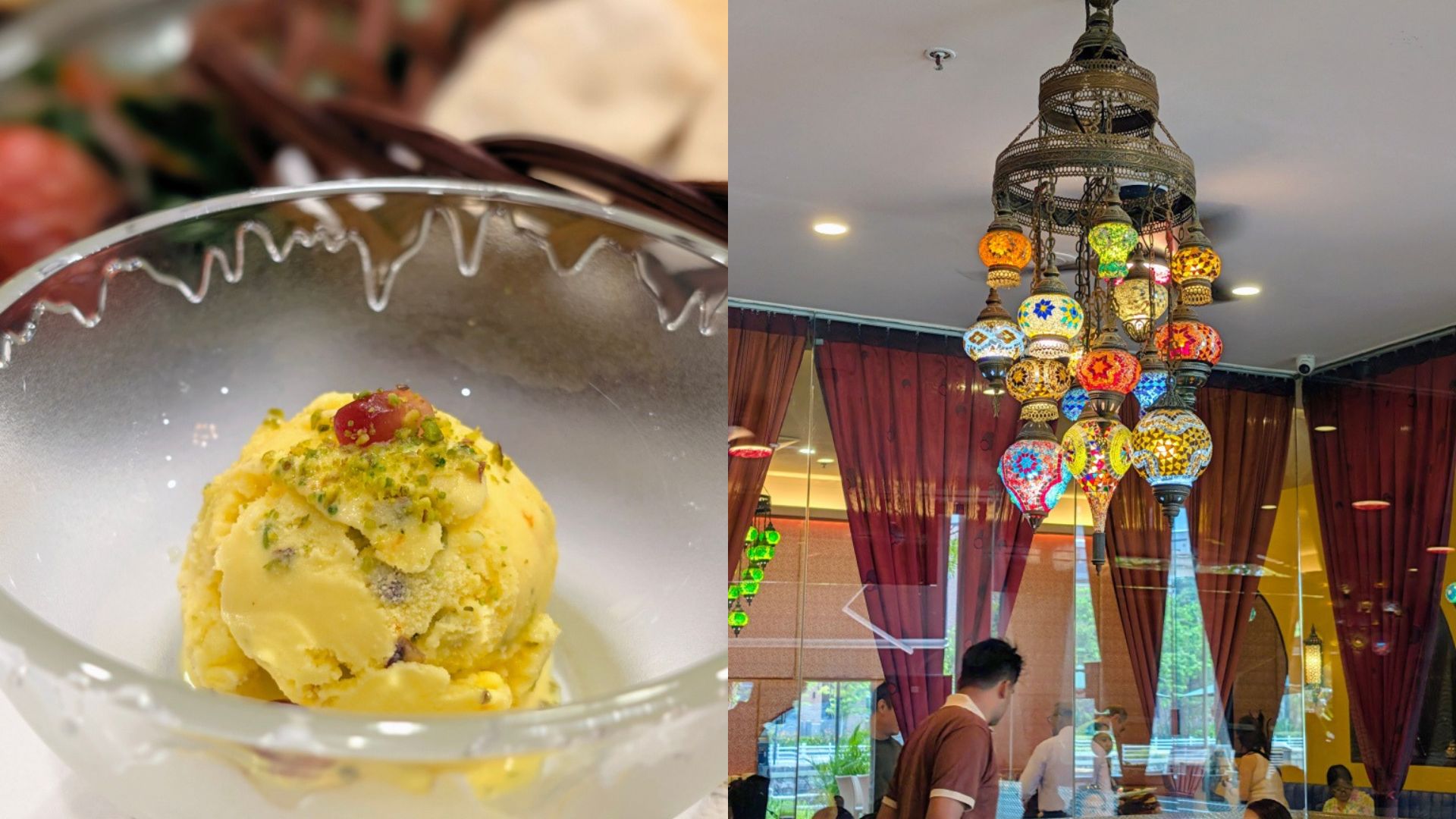
To finish, there’s free-flow ice cream in three flavours: saffron, vanilla, and chocolate. We went for the least common option, saffron, and it turned out to be the best of the three. It’s milky and floral, with a distinctly nutty note from the sprinkling of pistachios.
As a palate cleanser, it rounds off the meal nicely.
Drinks aren’t included in Shabestan’s brunch menu, so you’ll need to choose from the a la carte list. Options range from Shabestan signatures such as the saffron negroni (S$20), made with saffron-infused gin and a splash of saffron water, to zero-proof thirst-quenchers such as the Persian doogh (S$12), a savoury yoghurt drink with soda, dried mint, and rose petals.
Brunch, by way of Persia
Free-flow bread, rice, mezze, and ice cream mean nobody leaves hungry, and having only two picks does make you think about what you order. Shabestan’s brunch aims to replicate a meal closer to what Persian cooking has always been: A meal built from everything that passed through, made to be shared and eaten slowly.
Pair the ghalieh mahi with the halabi kebab, top up the mezze and ice cream, and you’ll have spent a Sunday afternoon well by the river.
This was a hosted tasting.
For more ideas on what to eat, check out Cranki Patisserie, a playful patisserie in Bukit Timah opened by a Gen-Z duo, and our Farrer Park cafe guide.
Tue 12pm - 11pm
Wed 12pm - 11pm
Thu 12pm - 11pm
Fri 12pm - 11pm
Sat 12pm - 11pm
Sun 11.30am - 11pm
- Fort Canning






Wani is a cat lady who loves a good sweat session in the gym, and is still tracking the lead to the elusive cure for wanderlust.
Read more stories from this writer.