HanBroth: Sip and savour Busan-style pork soup at Beauty World by MasterChef SG winner Derek Cheong

It’s been a whirlwind year for Derek Cheong. The 29-year-old winner of MasterChef Singapore Season 2 has welcomed his first child in November 2025, opened Berempah Bros, expanded the hawker brand into several heartland outlets, and even ventured into Western hawker fare, all while managing his private-dining outfit Twelve Flavours.
Despite his hectic schedule, the Gen-Z chef is also competing in local reality TV cooking competition King of Culinary‘s sixth season on Mediacorp’s Channel 8, where he is paired with a fellow hawker and a restaurant chef against other trios.
What’s more impressive, however, is that he is opening a new hawker concept, too.

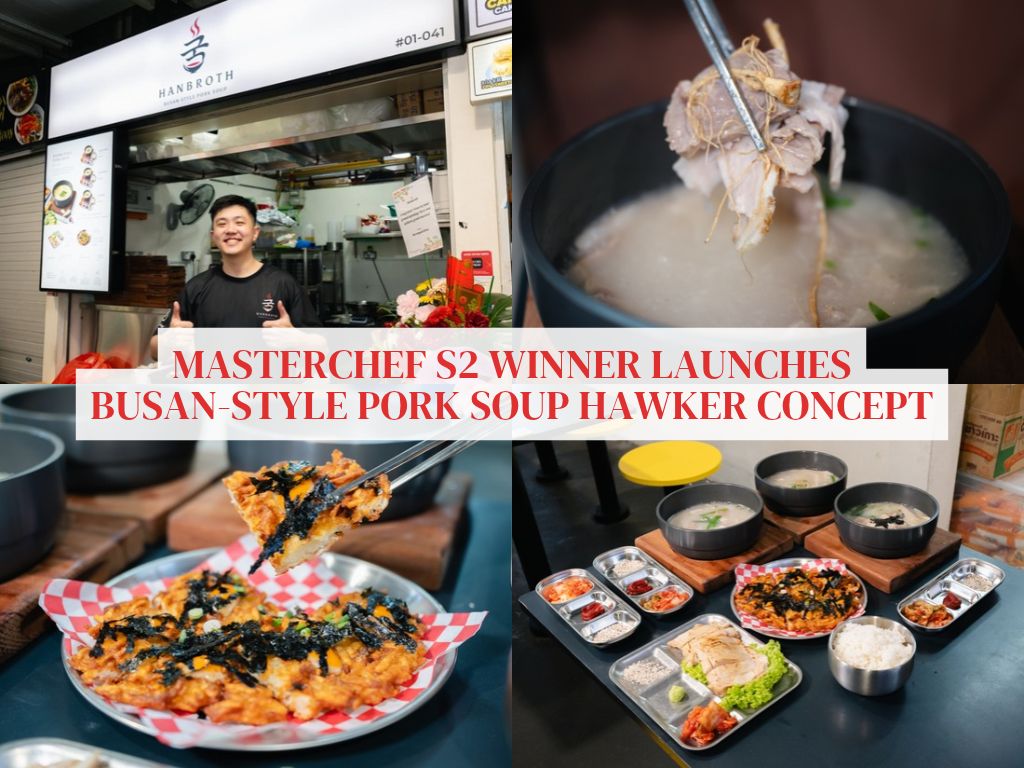
Located in Bukit Timah Interim Market & Food Centre at Beauty World, his latest venture is HanBroth, a Busan-style pork soup stall, specialising in the Korean comfort dish dwaeji gukbap (pork and rice soup).
It officially opens today (November 7).
Joining him is business partner and fellow Gen-Z Ong Zhen Ning, 28, who also has a rather impressive F&B portfolio.
A former co-founder of popular tornado egg-fried rice stall Dan Lao, he has since moved on to other ventures, including Bronzo Pasta Bar, which he currently runs in the same hawker centre.
The pair already co-own Berempah Bros and Reuben’s, a Western hawker concept launched in collaboration with Reuben Koh.

According to Derek, he and his partners have opened around 13 F&B outlets this year alone. How does he manage them all?
“I don’t. I just hope that there are maybe 30 hours a day or eight days a week,” he quips, crediting his business partners for making the expansion possible.
Related Articles:
Travelled to Busan for market research

The idea for HanBroth came from an observation about Singapore’s growing appetite for Korean soup dishes.
While samgyetang, or Korean ginseng chicken soup, has become increasingly commonplace here, Derek noticed that its pork-based cousin from Busan remained relatively uncommon.

The duo, who are also fond of local pork soups such as bak kut teh, saw an opportunity.
Rather than simply recreating something they’d eaten, they flew to Busan for a four-day, three-night research trip, eating their way through different versions of the dish.
“We flew to Busan in September to do our R&D. We wanted to learn from the best and create our very own take on dwaeji gukbap,” Derek explains.

Like any social media-savvy Gen-Z, Derek documented their eating adventures online, sharing both praise and gripes about the pork soups they sampled. Among their stops were Michelin Bib Gourmand-awarded Anmok, casual dwaeji gukbap chain 1953 Hyunjie Dwaeji Gukbap, and Miryangjip Dwaeji Gukbap.
HanBroth took just two months, from conceptualisation to opening.
Invested $50K, including a $10K mistake

HanBroth has three staffers keeping the stall running, with Derek overseeing marketing and R&D, while Zhen Ning handles operations and logistics. Both drop by occasionally to check on things, though with their growing collection of F&B businesses, being in several kitchens at once is a skill they have yet to master.

According to Derek, he and his team invested around $50,000 into HanBroth, of which Derek claims to have spent $10,000 to fix an error.
Derek, who admits his Mandarin isn’t particularly strong, had ordered the bowls from China via sea freight, unaware that there was an additional step required — consolidating the shipment at the warehouse and having it shipped out.

The bowls ended up sitting in a warehouse for two weeks. With opening day approaching, the partners had little choice but to arrange another shipment by air, at considerable expense. It was an expensive lesson in logistics for someone who has otherwise become rather adept at opening F&B businesses.

Derek is quick to debunk rumours of having angel investors supporting him and his team. “We did all these ventures on our own. They are self-funded,” he says.

Even so, Derek is cognisant of the risks of expanding at a time when F&B entrepreneurs are struggling more than ever. He tells us that careful market research and understanding customer demand can help minimise the chances of failure.
“Knowledge is king,” he says.
What to expect at HanBroth

At HanBroth, the spotlight is on a pork broth boiled vigorously using five different pork components — including high-fat and marrow-rich pork femur bones, flavourful pork shank, and collagen-rich pork trotters, to list a few — and vegetables, producing a creamy soup with the richness of pork bones and gelatin.

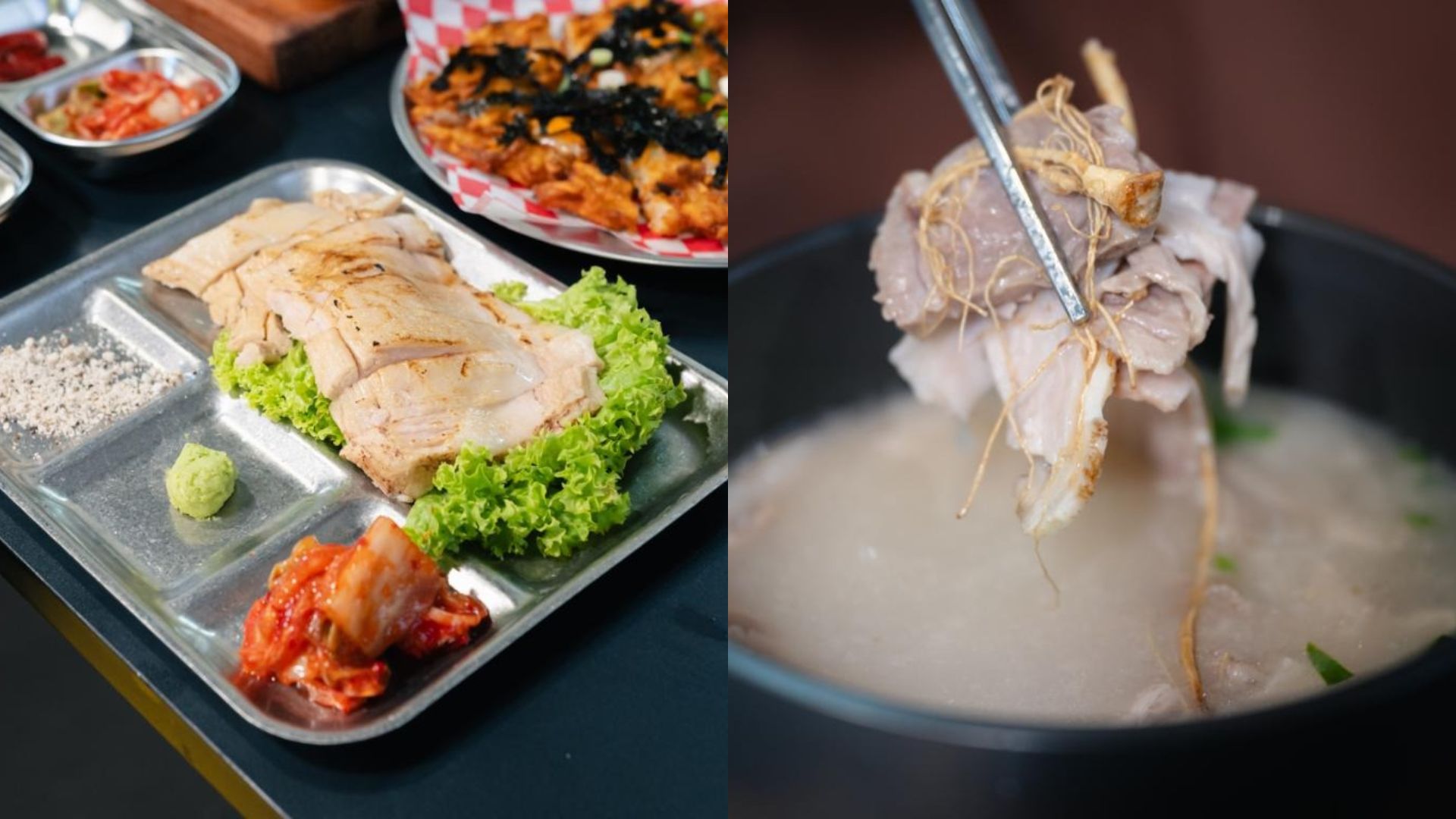
The pork, sourced from Sarawak, includes belly and collar cuts. These are cooked in the same broth, then removed and chilled before being sliced against the grain for tenderness. Each order of dwaeji gukbap comes with steamed rice, kimchi, ssamjang paste, house dadaegi (chilli paste made with traditional chilli powder, garlic and yes, pork broth), and a salt-and-pepper mix.

Diners can start with the original Busan-style pork soup (S$9.90), which Derek recommends for first-timers. The milky broth has pleasant porky richness, with much of its body coming from the bones and gelatin. Tender slices of pork belly and collar offer good meaty heft.

Derek says that the versions he tried in Busan were mostly muted and wanted to tailor something that befit the local palate. You can doctor the broth further by adding the accompanying condiments.

A smear of house dadaegi goes a long way, transforming the creamy broth into a pale pink and adding savoury spice kick to the velvety base.

A slice of kimchi draped over the protein, followed by a spoonful of short-grain rice, makes for a lovely mouthful — the sharp, lively tang of kimchi against the sweetness of pork and the soft bed of rice.


Feeling lethargic? Then perhaps herbal Busan-style pork soup (S$11.90) might perk you up. This variation calls to mind samgyetang, with the familiar medicinal notes of ginseng and Chinese angelica root (better known as dang gui).

He explains that the team boils down ginseng to extract its essence before adding it to the broth, though you’ll still find the actual roots bobbing about in your bowl. It’s the sweetest of the three soups, though a few more pieces of Korean jujubes wouldn’t hurt.

If the herbal Busan-style soup is all about its medicinal punch, the seaweed Busan-style pork soup (S$11.90) is all about the pleasures of umami. Derek is particularly proud of the “premium” Korean seaweed, which is freeze-dried before being added to the soup. A drizzle of perilla oil brings a lovely nuttiness to the broth, while the seaweed offers a briny sweetness that makes this the most savoury of the three.

Those wanting something to accompany their meal can order pork bossam (S$9.90) or potato pancake (S$9.90). The former features slices of pork jowl, given a quick blast with a blowtorch for smokiness, and served with wasabi, salt-and-pepper mix, and ssamjang.

Our favourite pairing for the luscious protein is with the salt-and-pepper, which boasts fine Sarawak black and white pepper, perilla seed, and Korean sea salt.

A crispy number, the potato pancake is something of a cross between a Korean pancake and a Swiss rosti, made with shredded russet potatoes and drizzled with gochujang mayo. It’s an interesting marriage of the two, though I must confess I’d rather have my spuds with a generous dollop of sour cream. Some relationships are best left undisturbed.

Derek’s baby boy recently turned one-year-old and has begun learning to take his first steps. The young father says he makes it a point to spend time with his son when he gets home, with his wife sharing the parenting responsibilities.
And with more F&B openings reportedly in the pipeline before the year ends, he might soon find himself wishing for that eighth day of the week again.
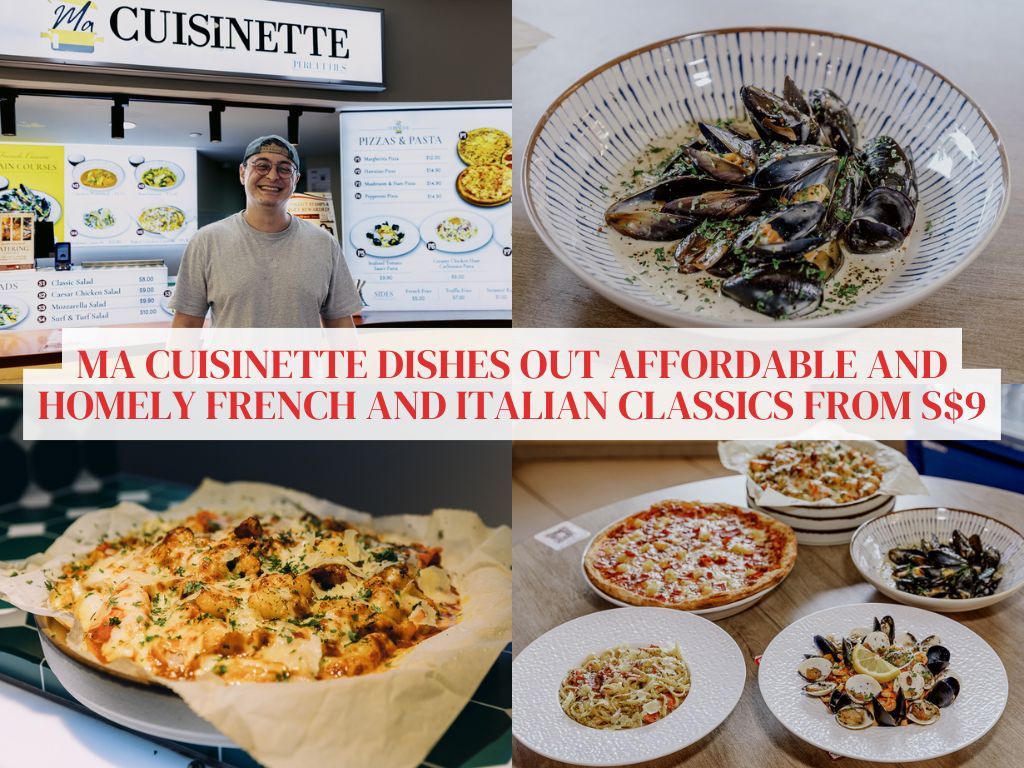
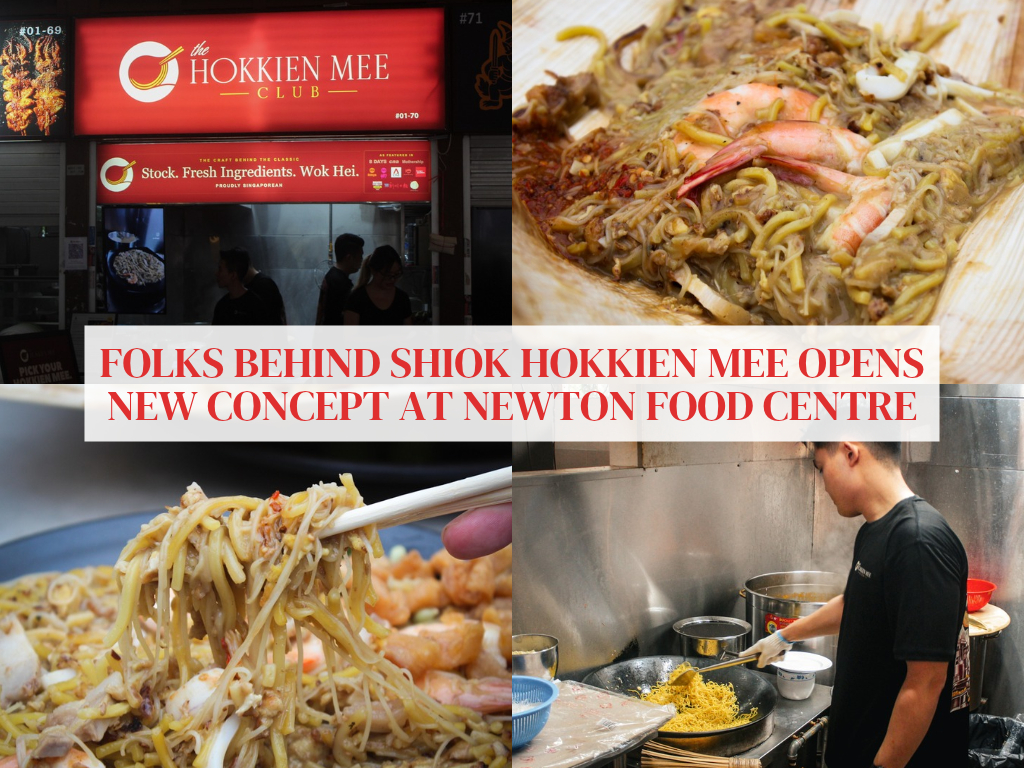
For more ideas on what to eat, check out Ma Cuisinette, which serves up affordable French and Italian fare, or Hokkien Mee Club at Newton Food Centre.
Tue 11am - 8.30pm
Wed 11am - 8.30pm
Thu 11am - 8.30pm
Fri 11am - 8.30pm
Sat 11am - 8.30pm
Sun 11am - 8.30pm
- Beauty World



Ler Jun chases "good" food the way some people chase flight deals. He writes about hawker legends, neighbourhood favourites, and the occasional fancy feast. His stomach is as curious as his pen.
Read more stories from this writer.