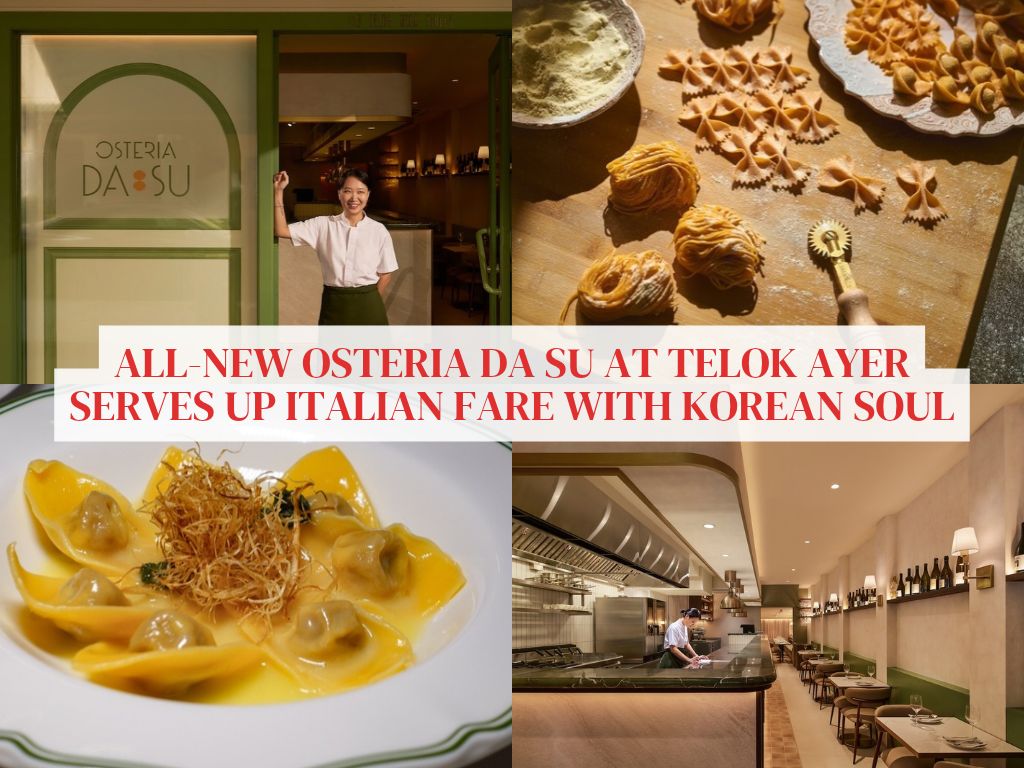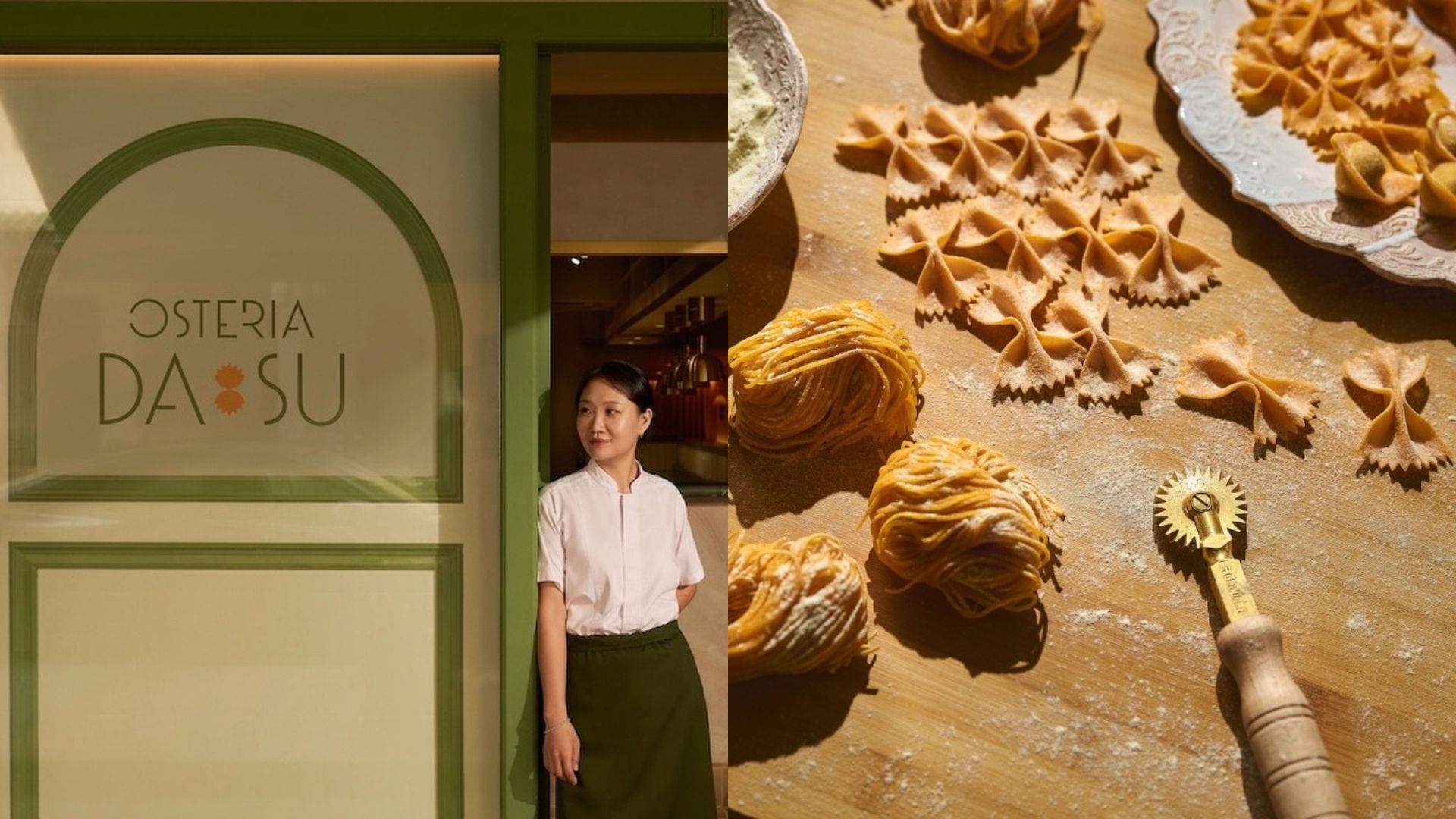
Osteria Da Su by Nae:um Group opens at Telok Ayer serving Italian fare with a Korean soul

After watching Netflix’s Culinary Class Wars and seeing the sheer number of Korean chefs who excelled at Italian fare take part, and even go on to win on the show, I’d developed a really niche Korean-Italian food craving that hasn’t been satiated till now.
That was until I visited the new Osteria Da Su, a concept by the Nae:um Group, which also sits right next to Nae:um along Telok Ayer Street.
Even before knowing about what it served up, the name had intrigued me plenty.
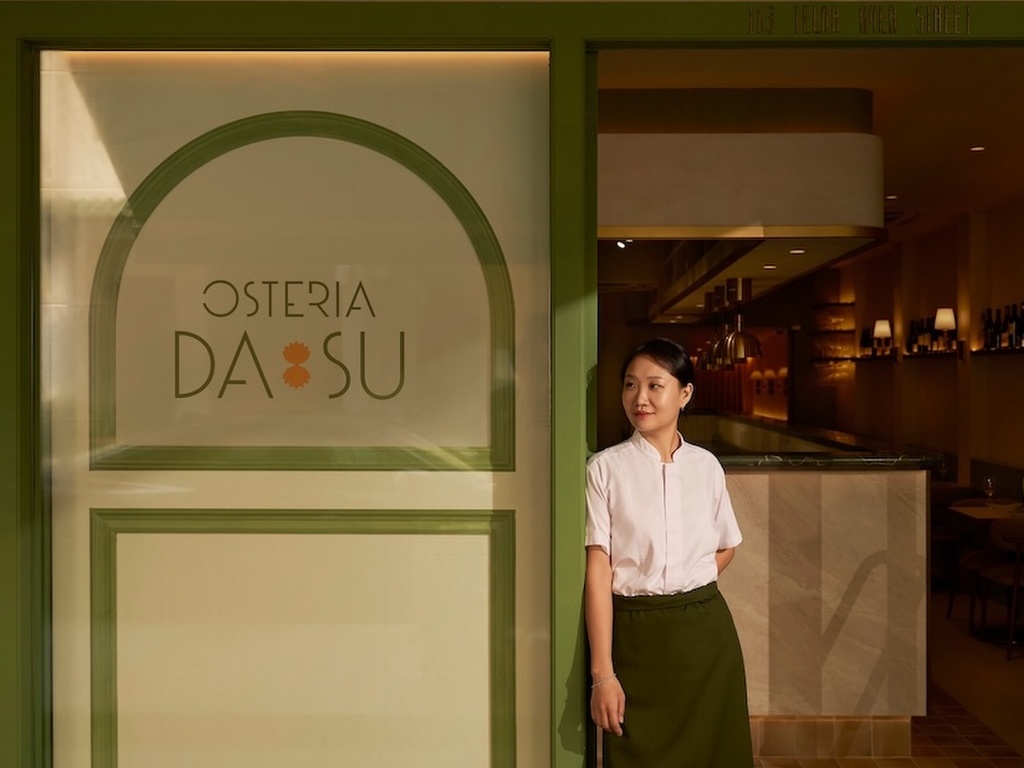
The first part is a nod to the neighbourhood eateries in Italy, known for their comforting, authentic fare, while “Da Su” means “from Su” in Italian.
And the Su in question is none other than Korea-born chef Suji Park, 38, who has spent close to a decade working in kitchens in Italy, even clocking a three-year stint at Da Vittorio, a three-starred restaurant in Brusaporto.
Chef Suji had first met Nae:um’s chef-founder Louis Han back when they were both studying at the Korea Tourism College in Gyeonggi-do, Korea.
Having kept in touch since their school days, the duo had talked about chef Suji’s next culinary move. When the shop space next to Nae:um was up for lease, the duo put pen to paper and decided to work together on this new concept.
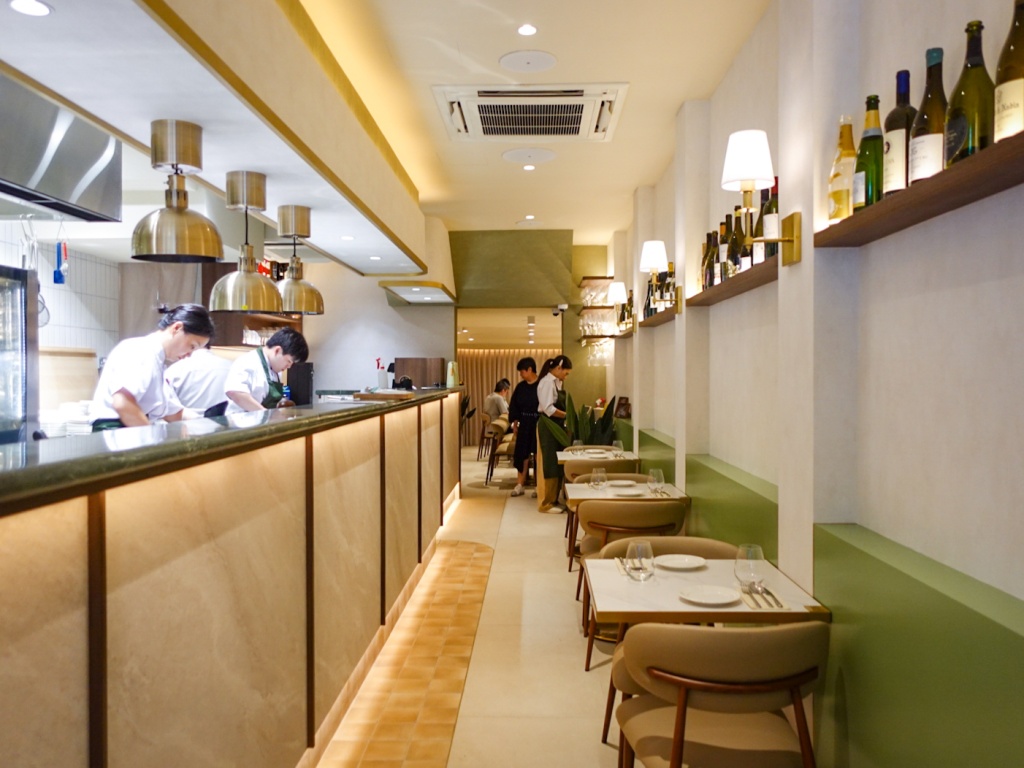
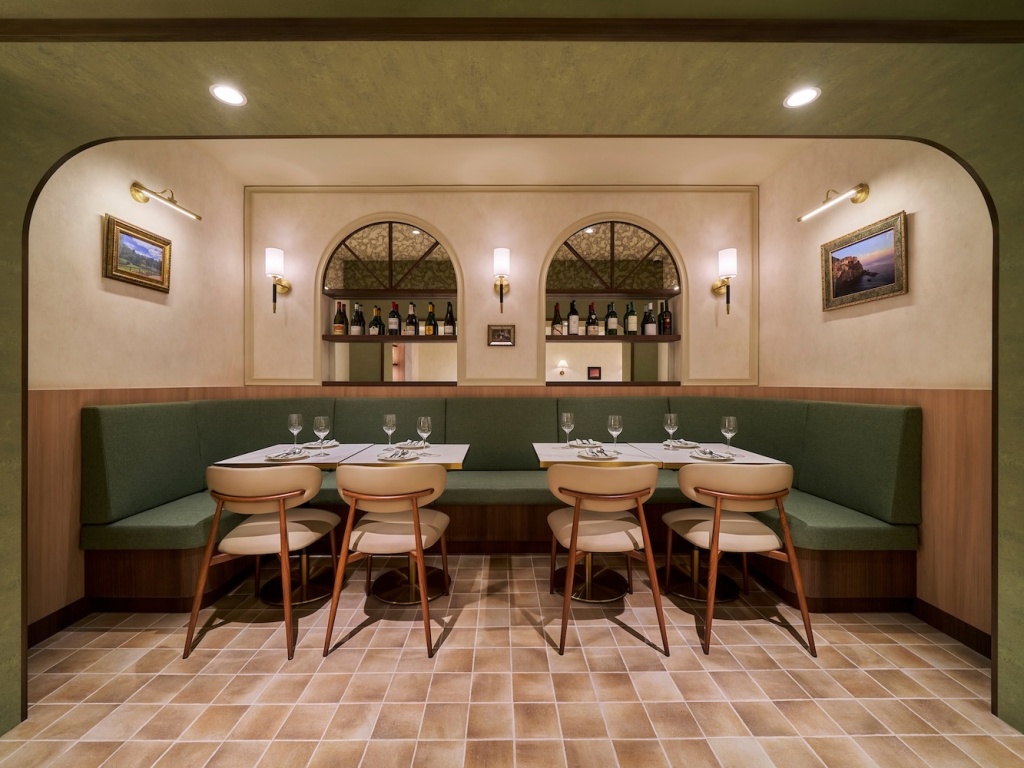
“Da su” also means “many people” in Korean, which probably explains Suji’s philosophy of welcoming as many people as possible to stop in to enjoy her fare, and the convivial, warm vibe of the restaurant’s small but welcoming space.
At its core, Osteria Da Su’s menu is Italian, with a range of dishes from aperitivi (light bites) to primi (pasta-focused first course), and a small selection of secondi (second course, usually proteins).
But look closer and you’ll notice a sprinkling of Korean elements, such as marinated eggs, soybean-paste (doenjang) mayonnaise, and even a Korean braised pork tortelli.
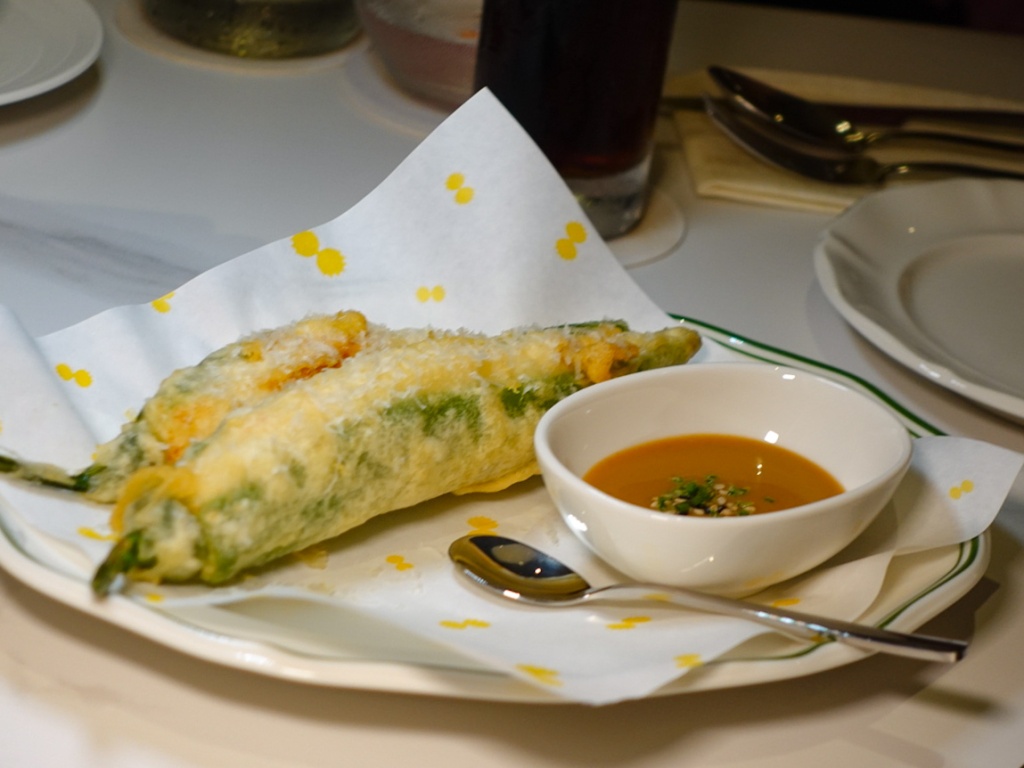
I can appreciate that these touches are just that: a light nudge with a bit of warmth. The resulting dishes are representative of chef Suji’s years in the kitchen — primarily Italian-focused, weaved in with snippets of her heritage.
She puts it best: “Osteria Da Su is me and I am Osteria Da Su.”
What’s on Osteria Da Su’s menu
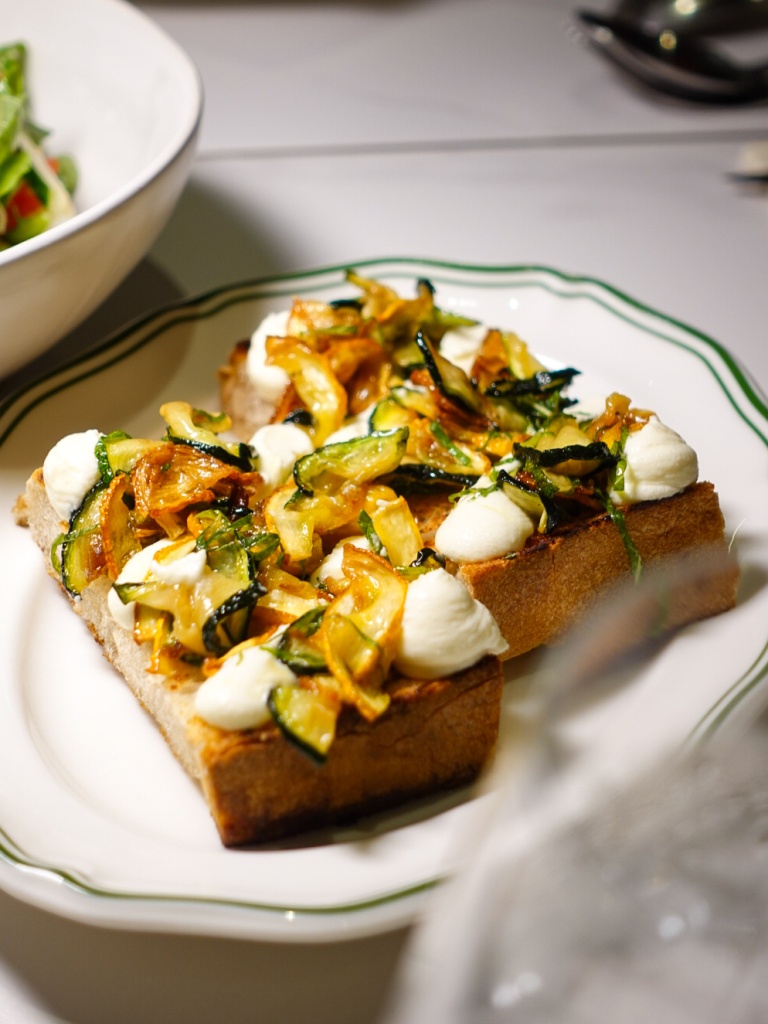
We start our meal there with the zucchini bruschetta (S$12), a grilled sourdough with homemade ricotta and neapolitan-style zucchini. It’s simple and comfortably eases you into the evening, especially if you have a drink in hand.
The suppli di riso (S$14), a crispy rice croquette with kimchi, guanciale, and seaweed mayo also catches my eye, but I make a mental note to try it on my next visit,
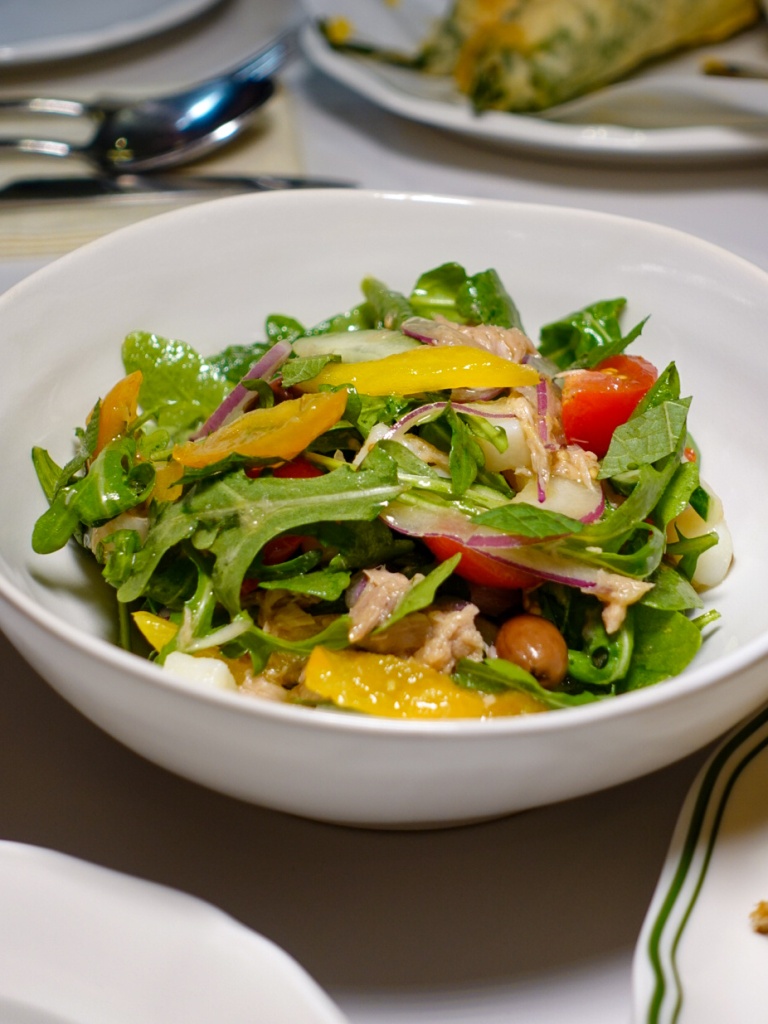
The insalata condiglione (S$18), a traditional summer vegetable salad from Liguria, Italy, appears unassuming, but has me wiping my portion clean, perhaps thanks to the additional savouriness from a Korean-style, soy-sauce marinated egg and flakes of tuna within.
Even at this point it’s clear that Suji has a lot of delicate restraint on her plates, but this doesn’t get in the way of a flavourful experience.
Onto the pastas, the tortelli di galbi jjim (S$30) is probably the more Korean-sounding dish of the evening, featuring handmade tortelli stuffed with a Korean braised pork filling.
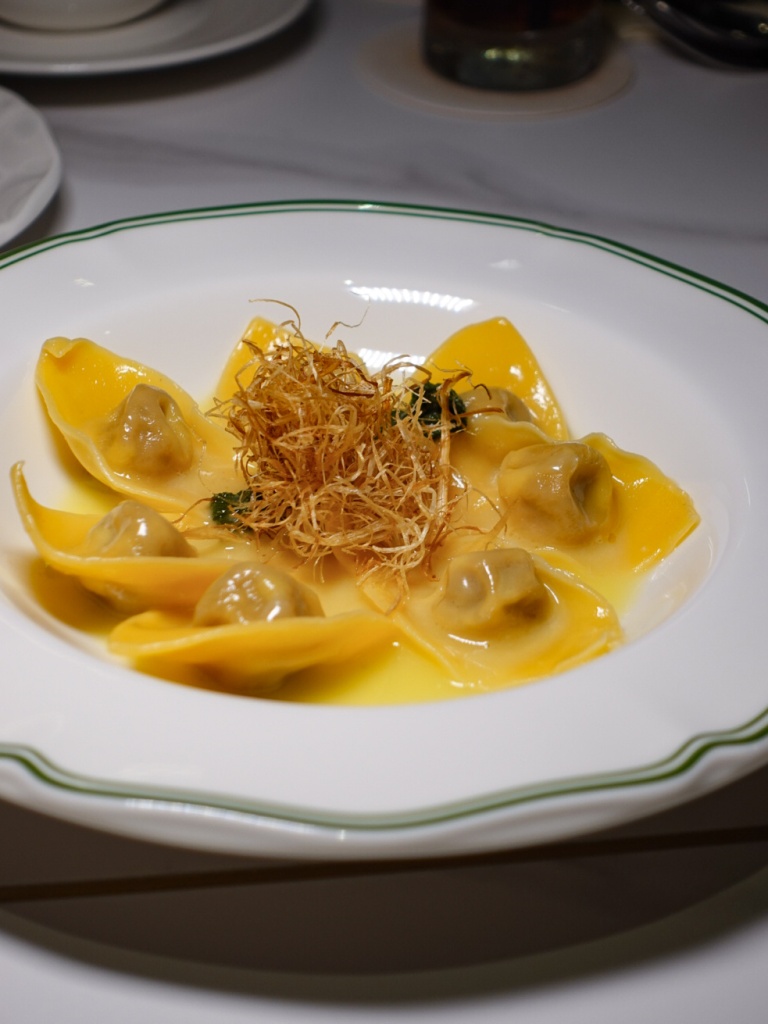
While the original dish — dwaeji galbi jjim, a popular Korean dish of pork ribs marinated in sweet-and-savoury soy sauce or spicy chilli paste — is usually quite cloying with its deeply savoury braises, Suji keeps things light with a classic sage butter sauce.
If you enjoyed this, you’d want to follow it up with the spaghetti alle vongole (S$28), a take on chef’s favourite pasta, but also one with distinctly Asian touches.
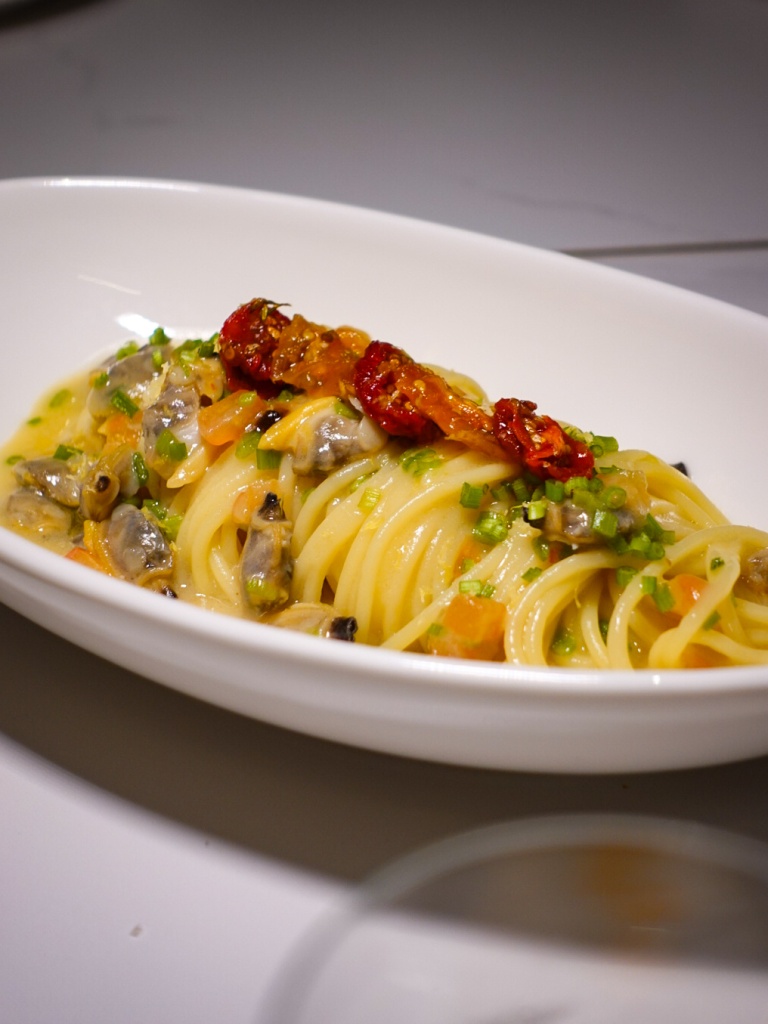
Here, Suji uses asari clams but removes the shells for fuss-free dining, and tops it with minari (Korean water parsley) in place of Italian parsley and a cherry-tomato confit, which leans towards the Sicilian style.
It’s briny and savoury for sure, but the brightness from the minari and tang from the cherry tomatoes keeps everything in check.
The farfalle all’amatriciana (S$24), Suji’s take on a traditional Italian pasta dish with guanciale, tomato, and pecorino romano, will satisfy fans of red-sauce-based pasta.
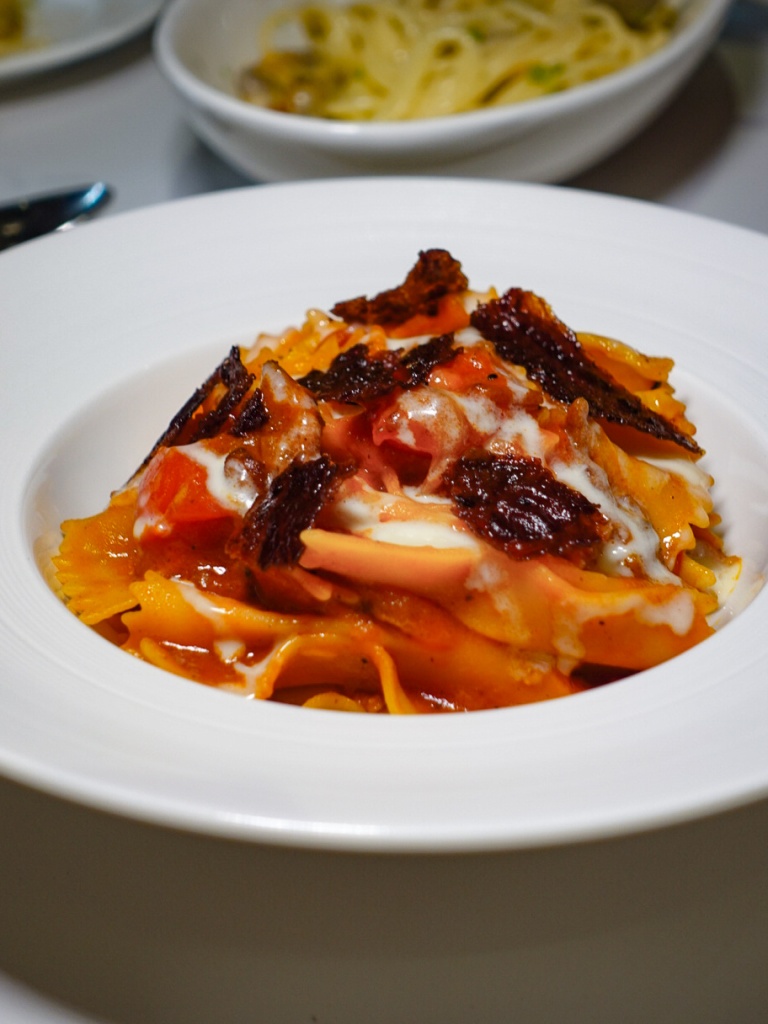
It features guanciale chips brushed with a gochujang-bulgogi sauce, and also incorporates sesame oil and plum sauce for a deeper flavour. The finishing touch of pecorino cream, in lieu of a grated version, also adds a welcome heft to the tangy-sweet sauce base.
If you’re not thoroughly stuffed by now and find it in you to order something from the secondi section, make it the iberico cutlet alla valdostana (S$42), a pork tomahawk cutlet that’s been butterflied, topped with prosciutto cotto and fontina cheese, served with a side of Korean slaw.
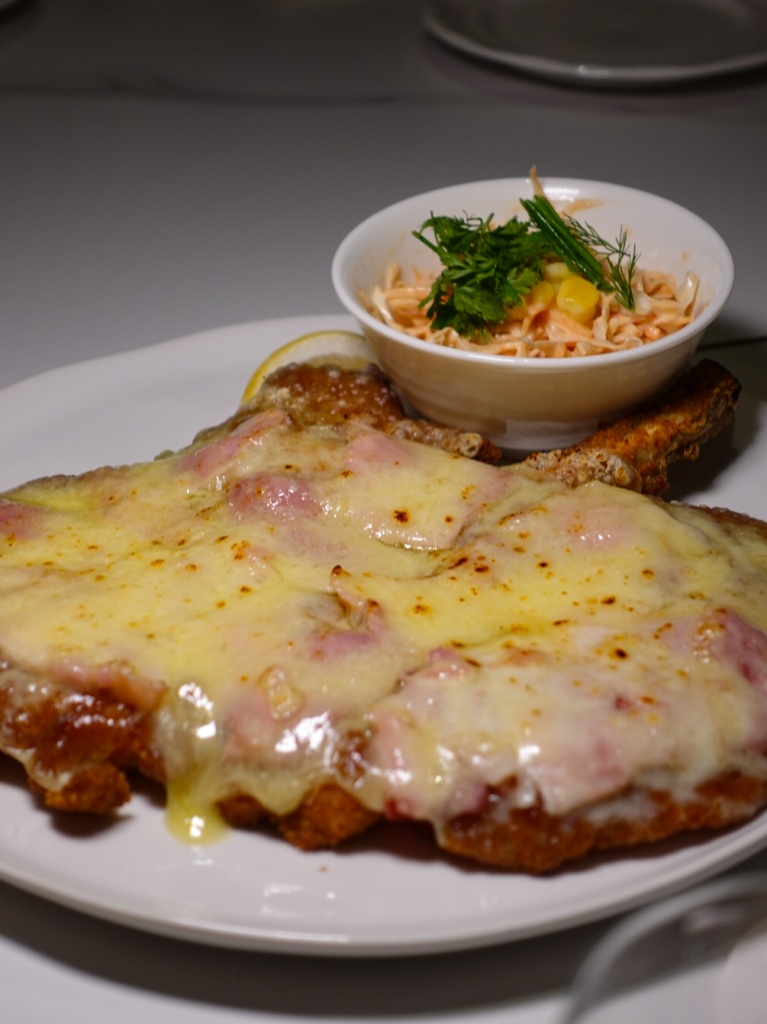
A word of caution: The fontina arrives smelling strong — somewhat musty and moist — and had me questioning my allegiance to cheeses. But that dissipated once I tucked into the dish.
While this dish is inspired by the Italian cotoletta (a breaded cutlet that typically uses veal), Suji puts a Korean spin by using pork — a la Korean tonkatsu — and adding a tangy slaw to cut through the richness of the plate.
The tender breaded cutlet retains a light crunch, while the ham prosciutto and fontina give the otherwise plain cutlet a lot of character. The earlier pungency? None of it at all when you bite into the pork.
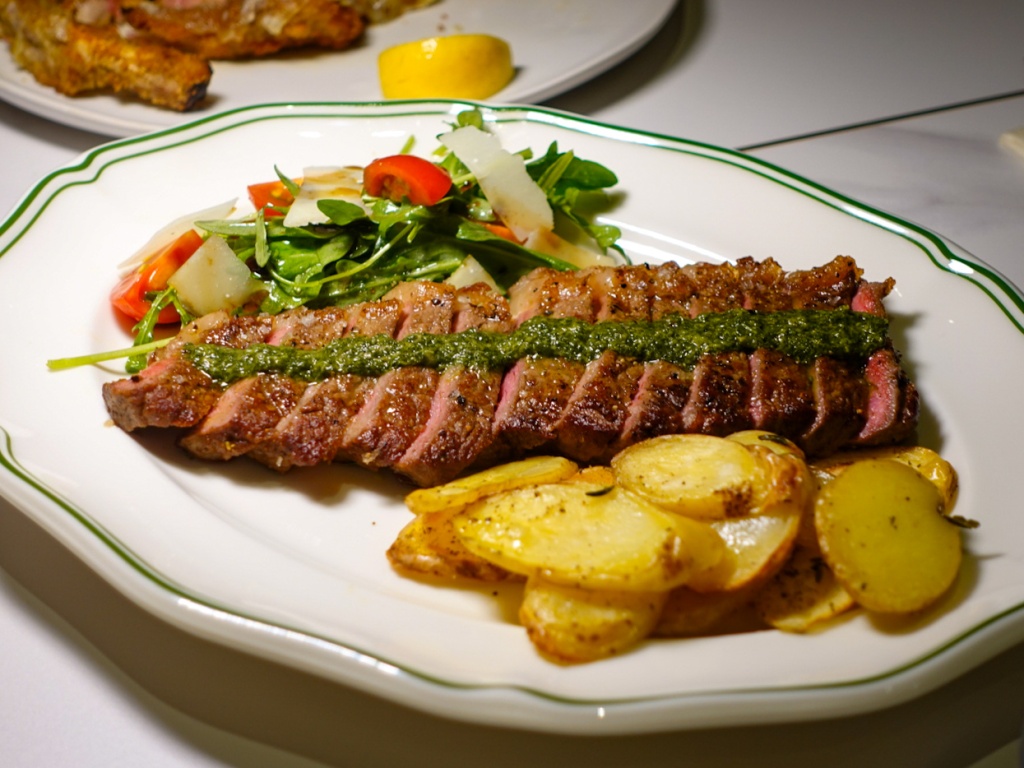
There are other secondi choices on the menu — grilled fish and assorted seafood, a black angus striploin, and a braised veal shank — but if you’re looking for something different, the iberico is undoubtedly it.
By now, I am stuffed but Suji’s dolci (dessert) selection is too enticing to pass up on.
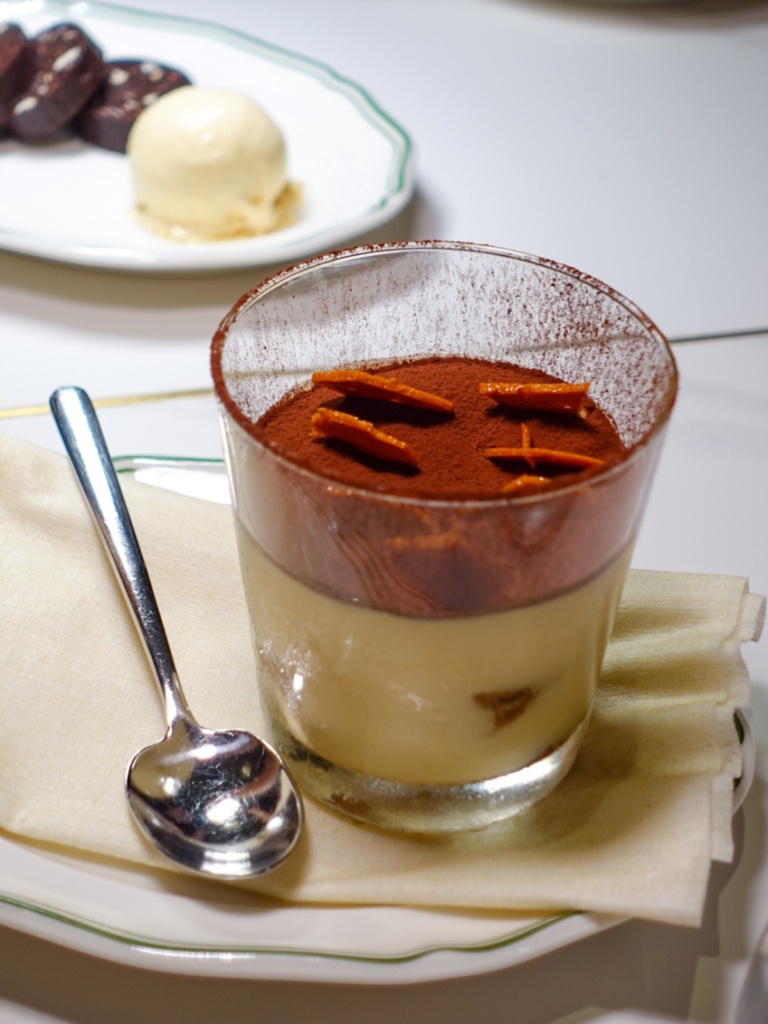
The dalgona tiramisu (S$14), which is alcohol-free, is a classic Italian dish but jazzed up with crunchy Korean honeycomb shards on top, adding texture, roasted nuttiness, and sweetness.
If you really had to just choose one, try the salame di cioccolato (S$12), a no-bake Italian dessert made with chocolate, butter, and crushed cookies.
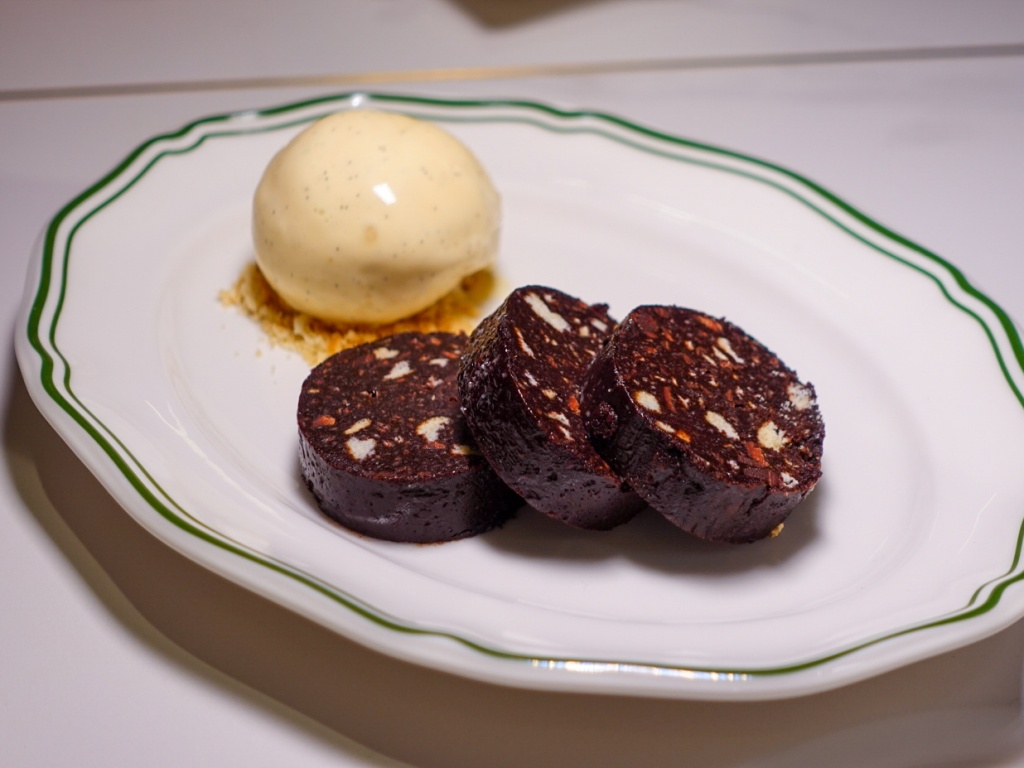
It may not feature on many dessert menus here but it’s popular enough in Italy that everyone would have a recipe of their own — Suji’s version is an adaptation of her neighbour’s recipe, which she serves topped with vanilla ice cream.
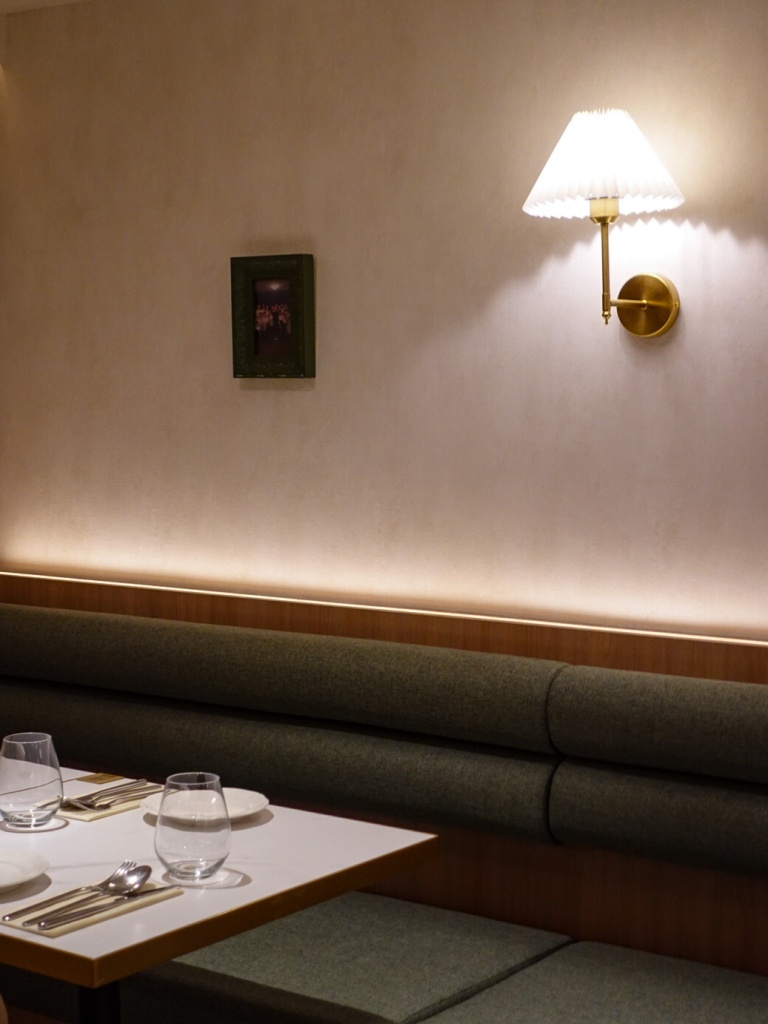
As we savoured the last of our desserts, I noticed that even though Osteria Da Su was buzzing with diners, it still felt homely and comfortable, as though we were dining in the chef’s dining room.
It might be the cosy interior, or her cooking — which is unpretentious, heartfelt, and satisfying — but it’s enough to have earned a spot in my list of go-tos the next time I’m craving a bit of Asian-inspired Italian fare.
PS: If you find yourself unable to make time for dinner, Osteria Da Su has plans to open for lunch from November, and on Mondays, too, from mid-November.
This was a hosted tasting.
For more ideas on what to eat, check out Shake Shack’s latest white truffle menu and Bar Middle, a new Japanese-style cocktail bar.
Wed 5.30pm - 10pm
Thu 5.30pm - 10pm
Fri 5.30pm - 10pm
Sat 5.30pm - 10pm
- Telok Ayer



Sarah is constantly seeking out new coffee spots and cocktail bars around the world, and should probably drink more water while at it.
Read more stories from this writer.