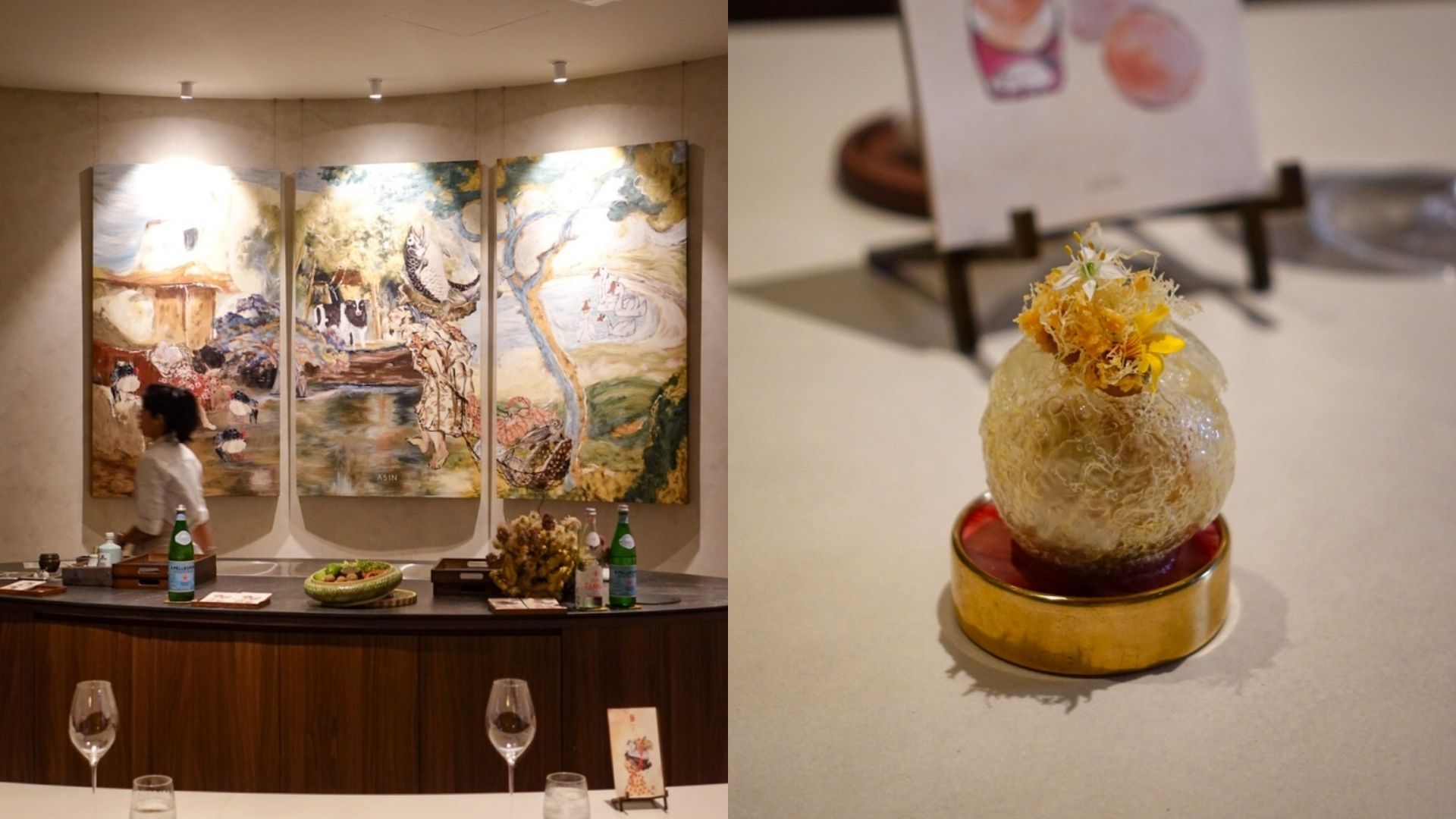
Chef Ace Tan returns with progressive-Asian concept Asin at Carpenter Street

If you were one of those who bemoaned the closure of Asian fine-dining spot Asu at Labrador Villa late last year, you’ll want to pay attention to this new opening.
Less than half a year after Asu’s closure, chef Ace Tan is back with a new restaurant — Asin at 38 Carpenter Street — that he has launched with a new business partner, Desmond Heng of Suguru, a Japanese home-dining concept.
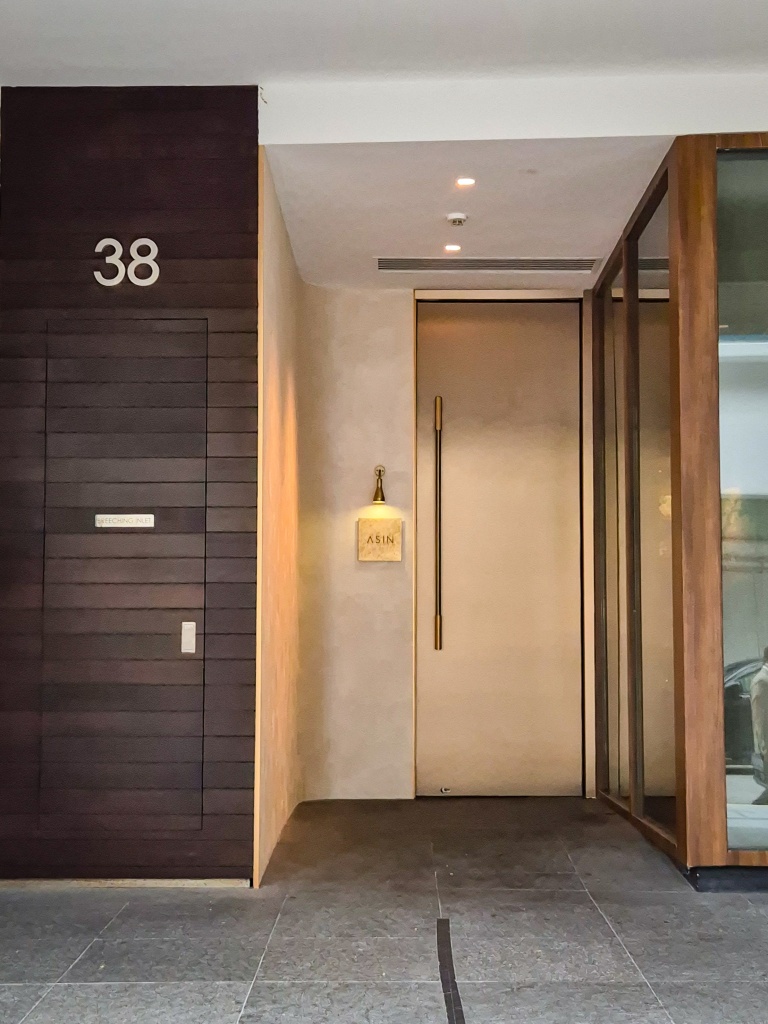
If the address rings a bell, it’s where wine bar RVLT operated from for more than a decade before it moved to Henderson Road under a new name, Revolution Wine Bistro.
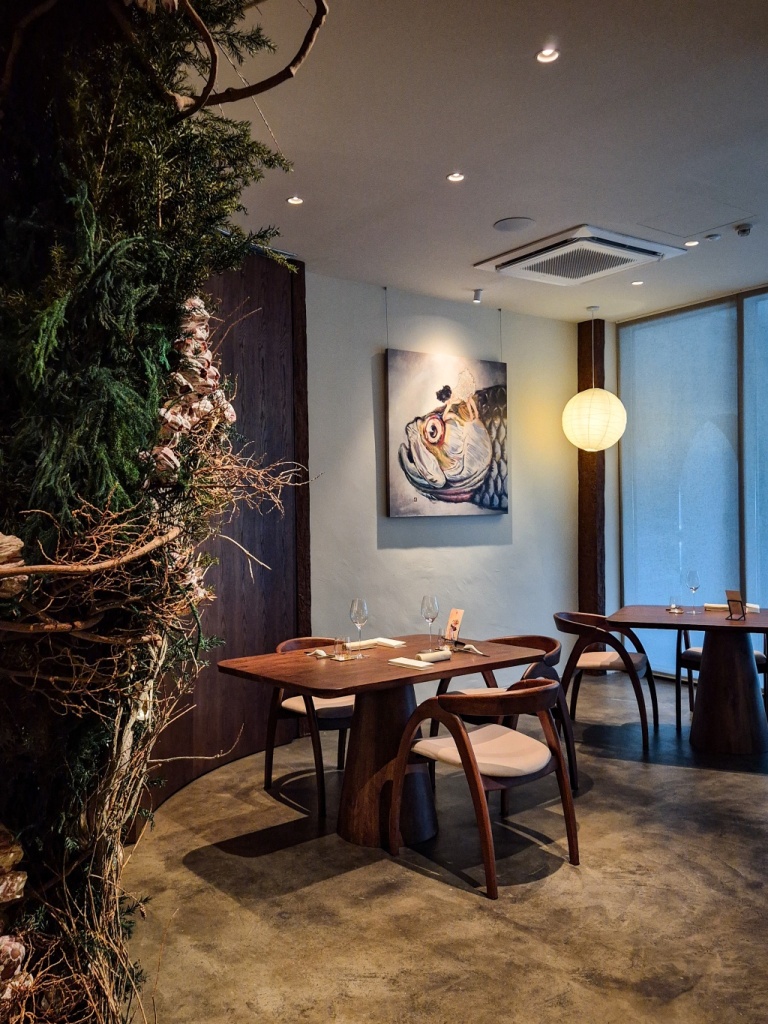
Ace has transformed the formerly dim space into a warm, cosy abode, centred around a curved 10-seater chef’s counter and an eye-catching artwork painted by his romantic partner, Chloe Woon.
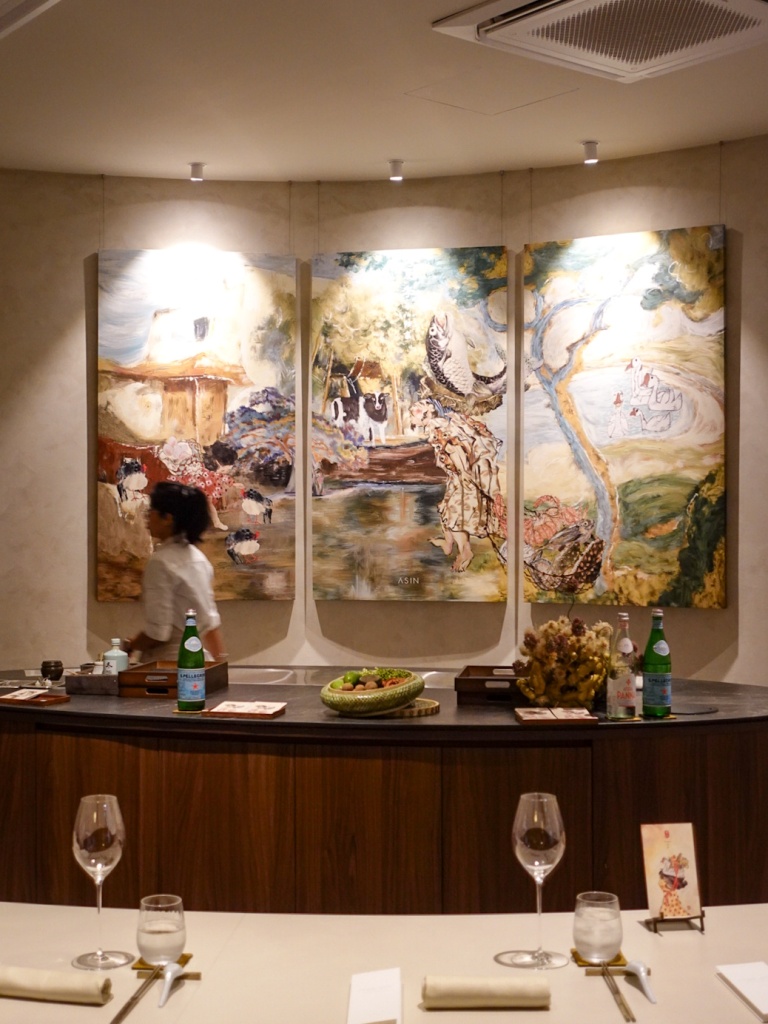
The elements in the painting may seem a bit random initially — a fish leaping through the air, a cow in the corner, and a basket filled with seafood.
But over the course of the meal, and through the dishes and accompanying postcards (also by Chloe), you’ll realise it ties the various elements of your meal together — a fun way to keep diners guessing what comes next.
Food as therapy
Asin is currently open for dinner only, and offers a S$188 eight-course set menu, with supplementary courses, ranging from bites to mains and desserts, available.
It serves up progressive Asian fare, though perhaps not in the way you might expect. While there are elaborate, modern techniques at play, Ace describes it as carrying forward the wisdom of what came before and building upon it.
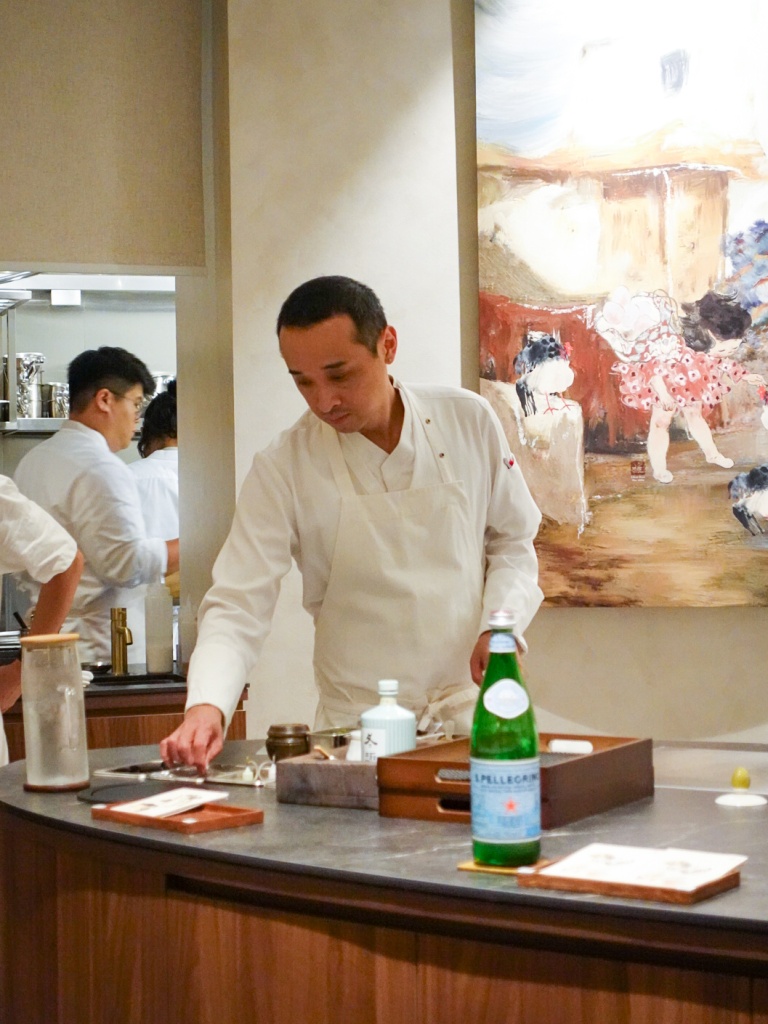
“It is also about knowing a little more than yesterday,” he tells us.
In moving from Asu to Asin, Ace has gone from executive chef to chef-owner, while shifting his focus from TCM (traditional Chinese medicine), to being guided by the four seasons and five elements, instead.
Having grown up around his relatives’ TCM shop in Tanjong Pagar, Ace’s belief in food as therapy — or shi liao — continues to shape his cooking today.
What’s on Asin’s summer menu
The meal starts off with a trio of dim sum bites: Oyster Omelette, tori luffa bao, and assam hamo.
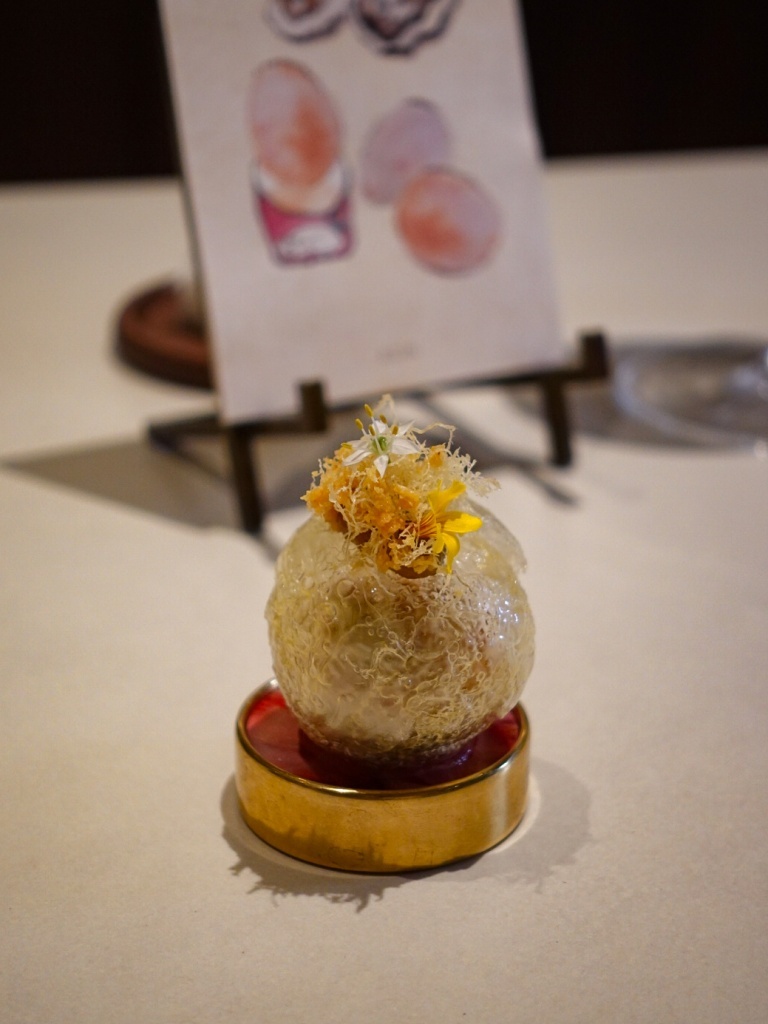
The Oyster Omelette is dazzling, featuring lightly grilled baby oysters and egg, encased in an opaque crystalline sphere. There’s a smidge of basil-chilli sauce — which I appreciate, since local versions can sometimes be overly spicy and one-note — cutting through the richness nicely.
The tori luffa bao is another work of art, with yellow-wine braised chicken, jujube, and luffa gourd served within a soft bun.
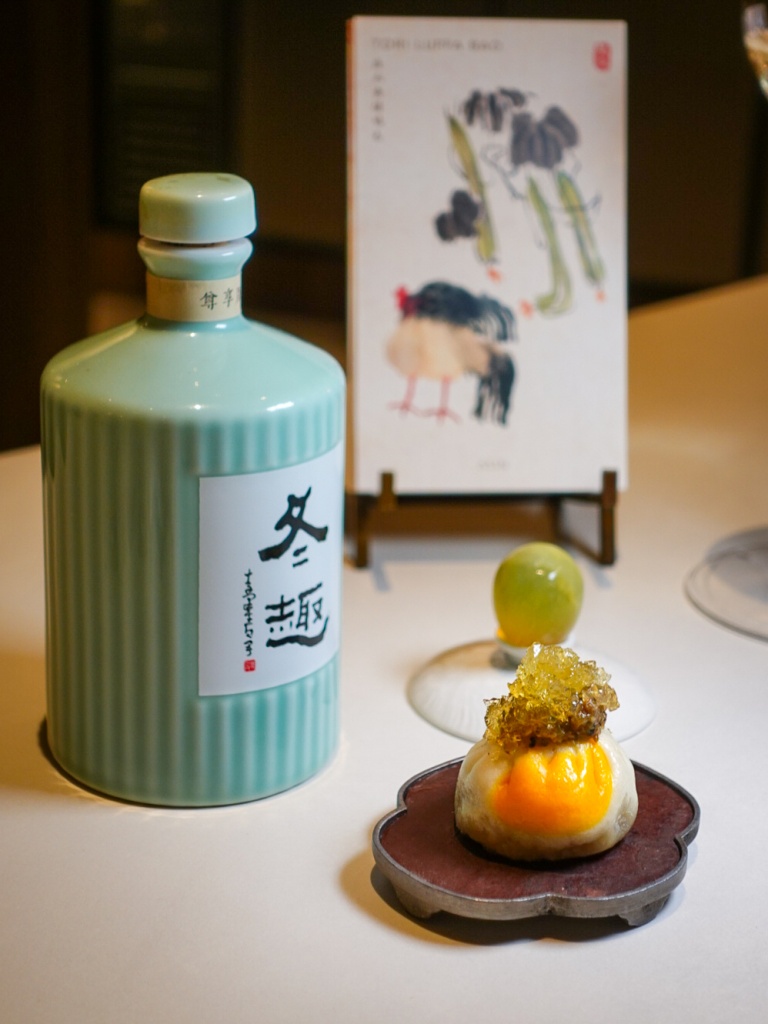
Every ingredient has its place on the plate: Luffa helps cool the body, while the wine chicken and jujube help restore it.
The next dish of assam tomato hamo is a bit more vibrant than its predecessors. Here, pike conger eel (hamo) is marinated in Chinese wine and soya sauce, lightly battered, and served with a hollowed-out Japanese amela tomato filled with kombu-tomato jelly, atop a tamarind-perilla sauce.
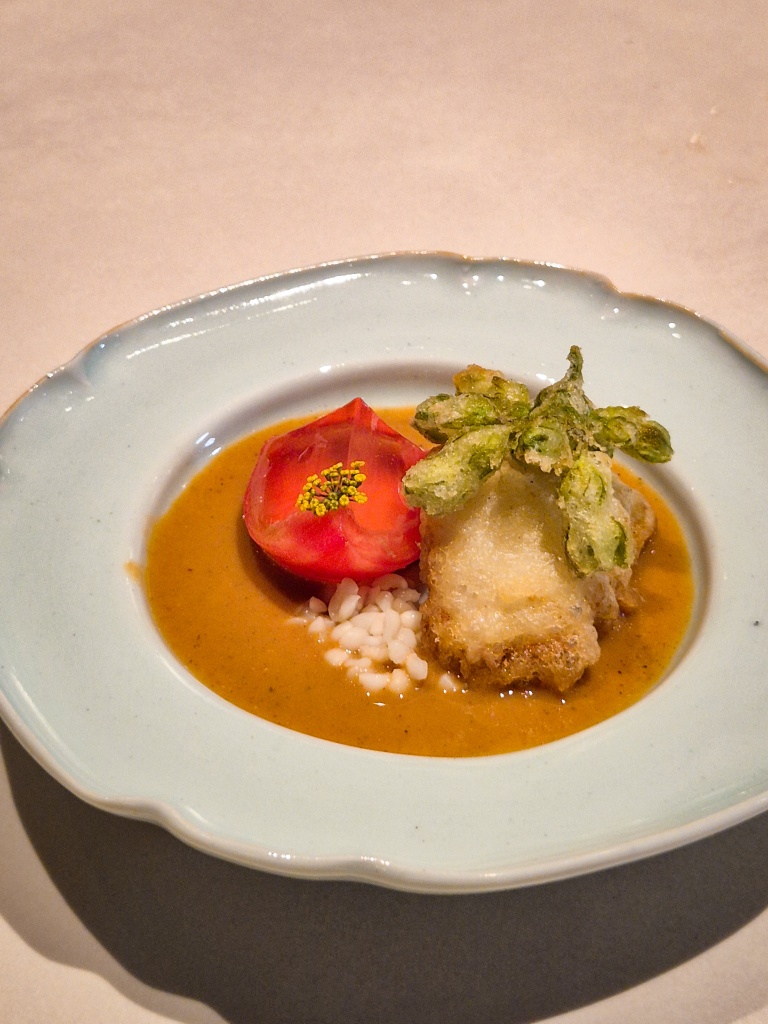
The dish is bright, punchy, and familiar, thanks to the assam, but still surprises with its tomato elements.
If the bites weren’t enough, you can add on Ace’s Ngor Hiang 6.0 (extra S$18), which comes stuffed with tiger prawn and five-spiced Jeju pork, served on a bed of tuhau-prawn sauce, with tuhau being a type of wild ginger from Sabah.
Actually, scratch that. Just get it.
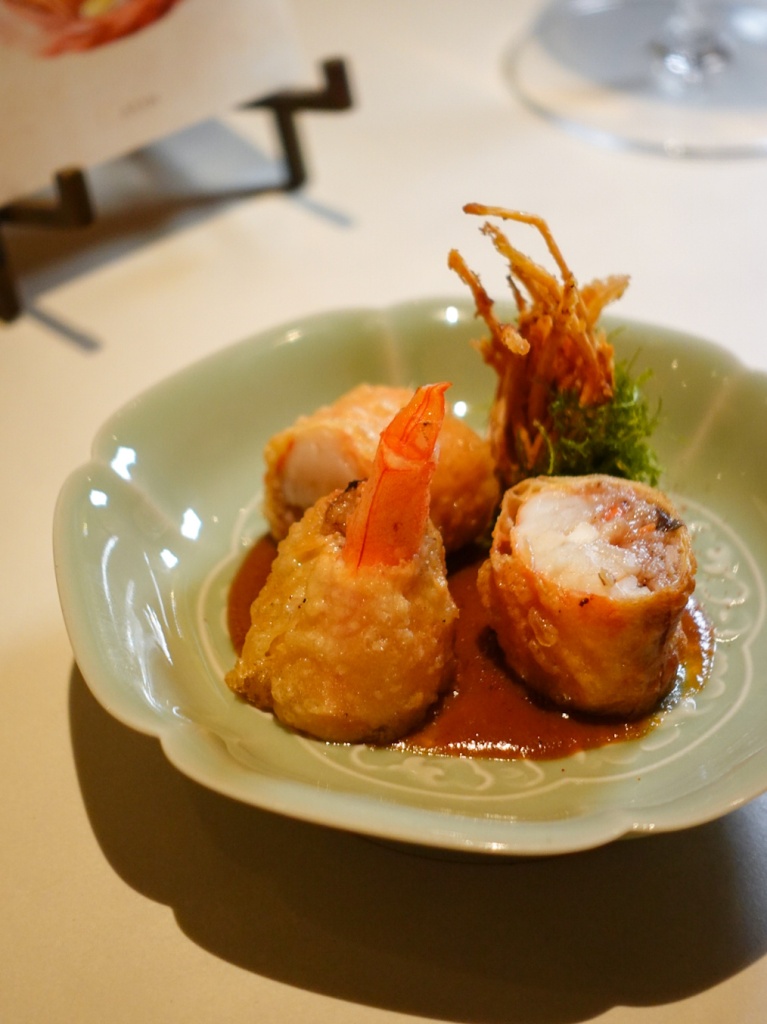
Based on his grandmother’s recipe and refined over multiple restaurant stints, version six comes deep-fried, with a crispy prawn head, to boot, and had me questioning every ngoh hiang roll I’ve had before.
After several punchy courses, Ace shifts gears with the refreshing yum pu ma noodles next — a blended take on the Thai raw marinated crab dish and the Teochew version.
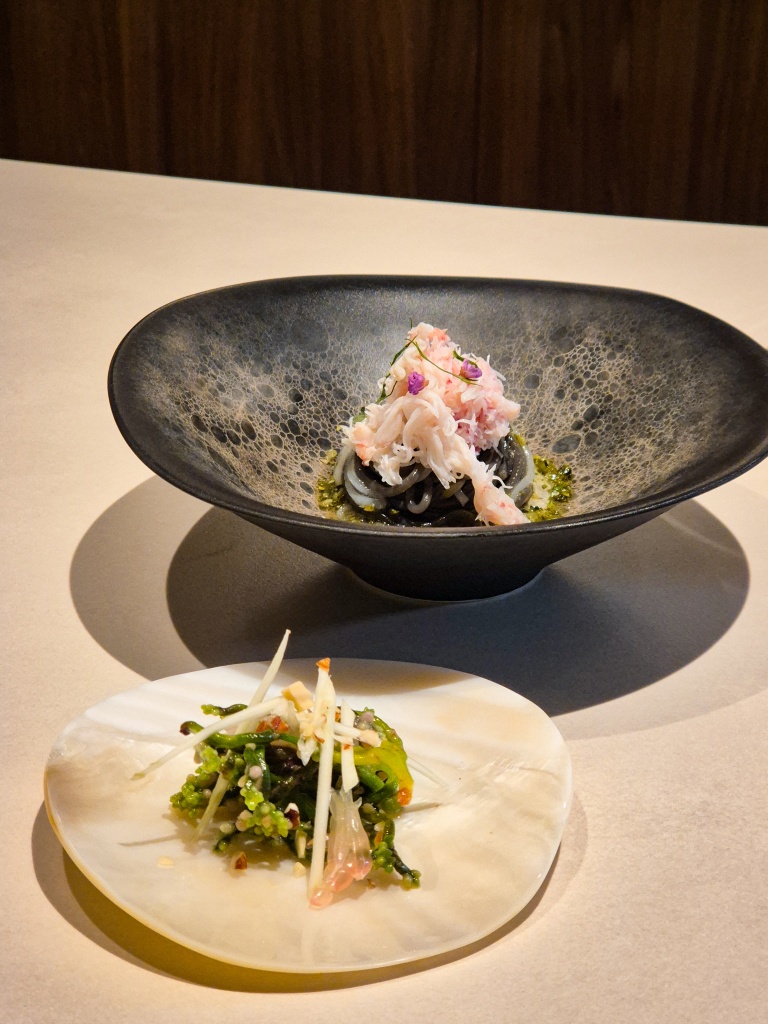
Bouncy Chinese fern and Thai rice noodles come coated with a spicy-tangy Thai fish-sauce marinade with crushed walnuts, and are sandwiched by Teochew-style raw crab at the bottom and topped with lightly steamed shredded Hanasaki crab legs.
A side salad of Ceylon spinach, hanaho (shiso) flowers, pomelo, and crushed walnuts dressed in a white beancurd sauce further brightens the course.
Next, there’s the supplemental FTQ dumpling (S$35), named after “fo tiao qiang” or Buddha Jumps Over The Wall. It is essentially a spiny sea cucumber stuffed with scallops, fish maw, and served with Korean abalone on the side — a compact version of the classic delicacy, if you will.
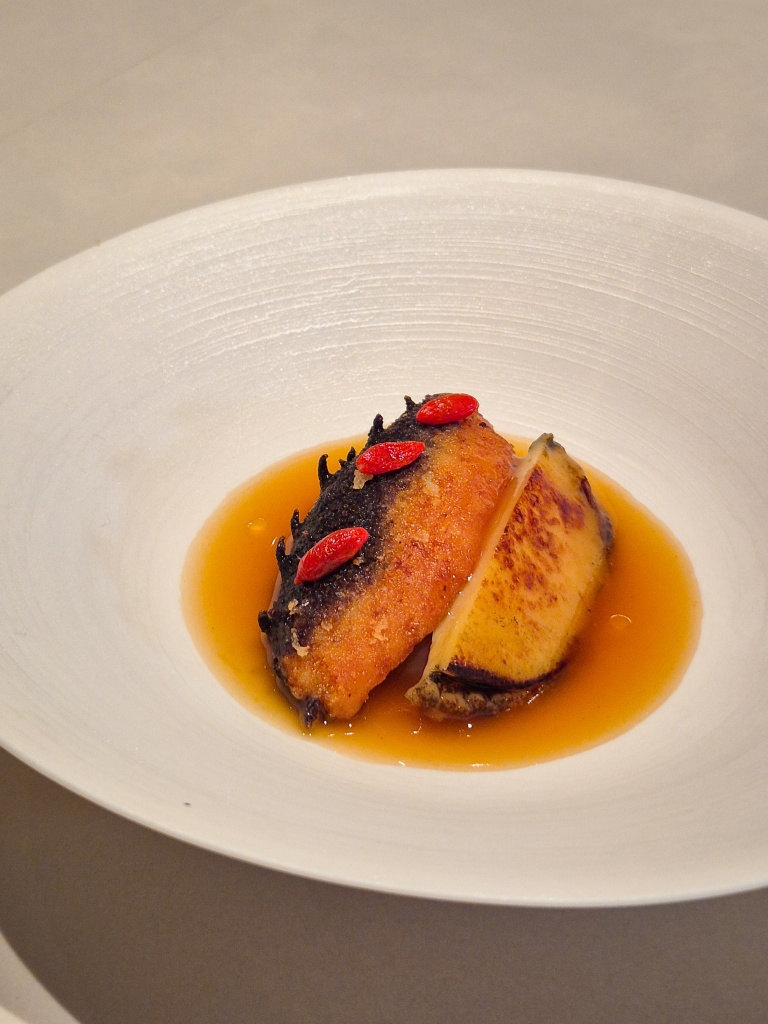
It’s rich, intensely savoury, and surprisingly elegant, with a very yummy thick sauce made with Jin Hua ham, herbs, and fresh and dried scallops.
The mains feature fish and duck as the star proteins, with the option to add Korean Hanwoo beef.
The Black Beauty seems deceptively simple at first, but it really isn’t. Here, the meat is taken out, combined with moroheiya (a leafy green) and wrapped in fish belly, with the skin placed back on top.
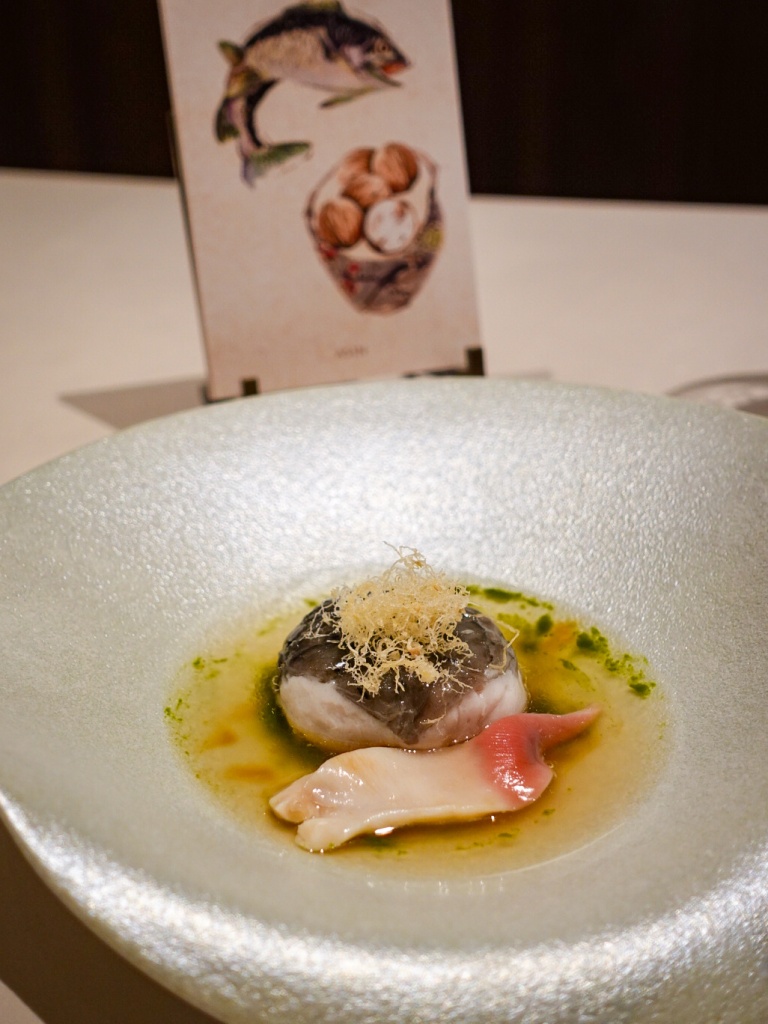
In deconstructing the fillet, Ace deftly sidesteps the issue of the freshwater fish having many small bones — a common pet peeve of mine — delivering a uniformly textured, bone-free fish with a trio of sauces.
The next course, the jiang mu ya, also features a protein I don’t usually go for — duck — but by the end of it I was left wanting more.
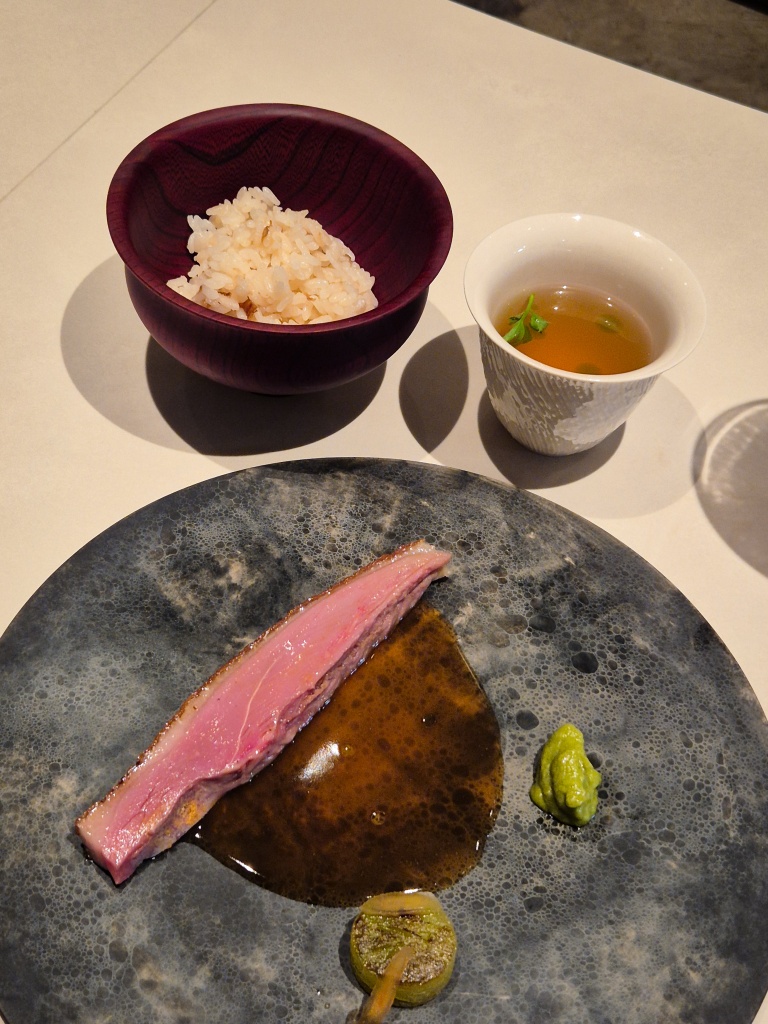
The roasted Irish duck is impeccably tender and fragrant, owing to being first steeped in a ginger brine, stuffed with a coriander-chilli farce, and then dry-aged for a week.
It comes with a watercress-duck consomme and a mountain-yam rice — refreshing elements that complement the robust, yet clean duck flavours well.
By contrast, the pepper Hanwoo (S$55) packs a serious flavour. Aged in tallow and shio koji before being coated in a crust of Sarawak white peppercorn, mushroom and white sesame, it is then seared and slow-roasted to a medium finish, and served with part of its gritty crust intact.
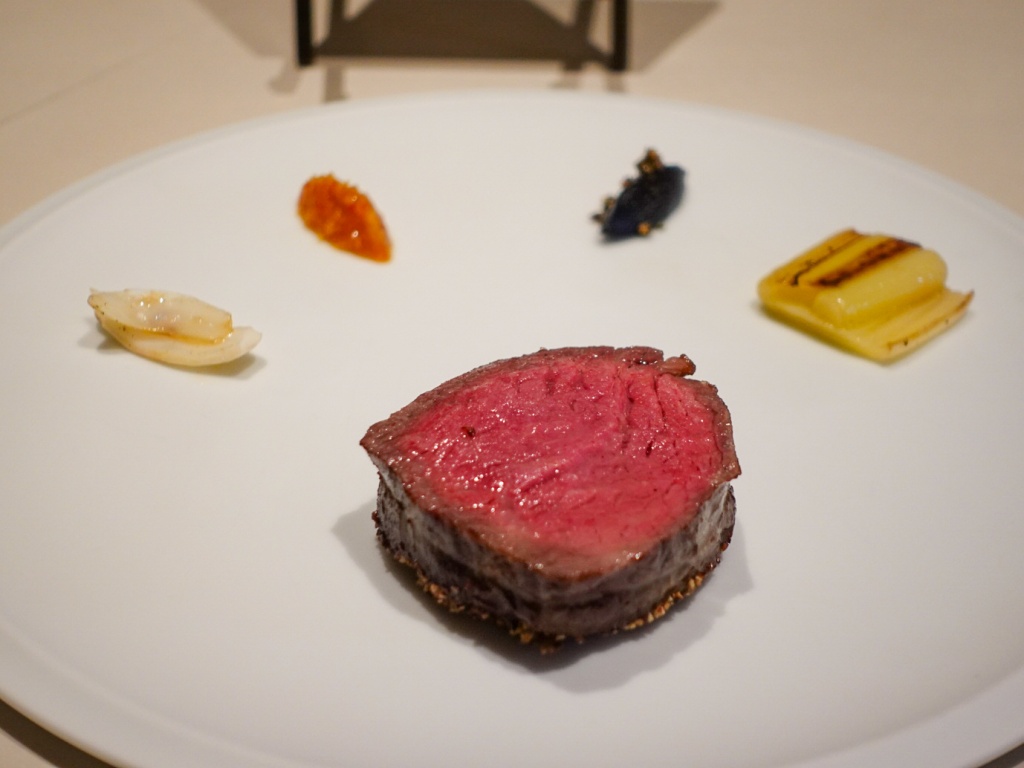
It arrives topped with a Sarawak pepper sauce and an array of condiments — black garlic paste, kumquat kosho, lily bulb and confit-grilled leek — though I personally found it fine even without.
Staying true to his shi liao philosophy, the finishers hardly feel like desserts — they’re not too sweet and feel very nourishing.
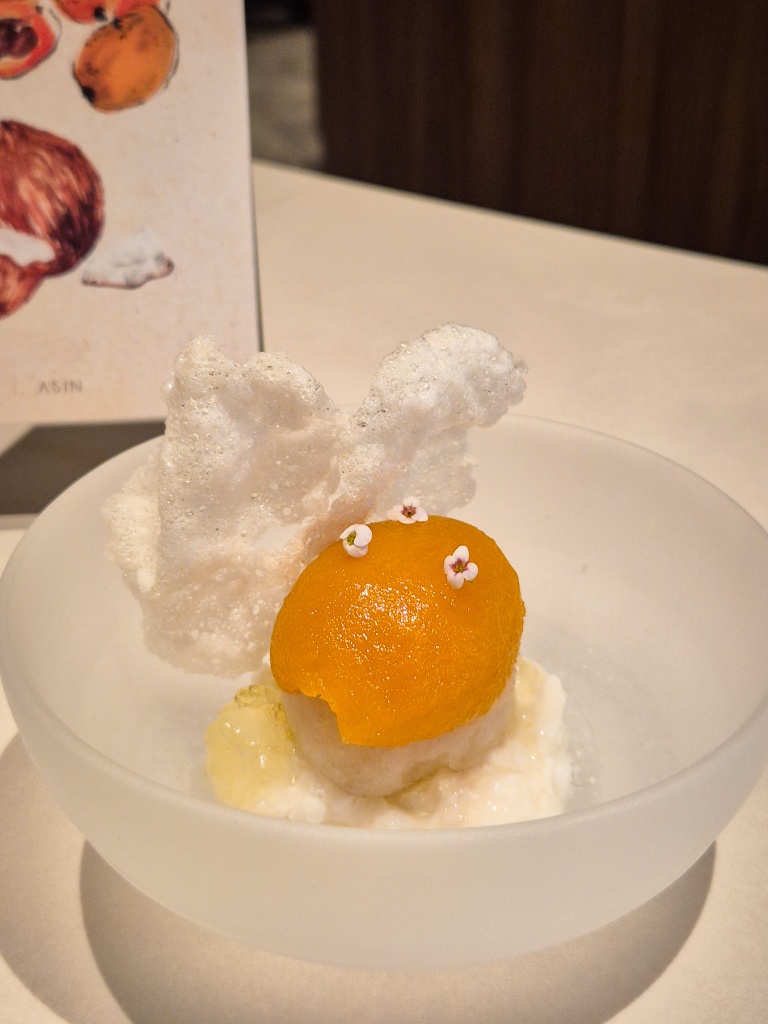
There’s the biwa honey sago with chrysanthemum-poached loquat, bird’s nest, and fermented coconut-glutinous rice, topped with stingless bee honey, which is less sweet than conventional honey and carries a pleasant tartness.
For a slightly sweeter finish, opt for the gula apong caramel (S$18) supplement, featuring gula apong sherbet with Japanese cherries, attap seed, and decaf coffee jelly — a thoughtful touch.
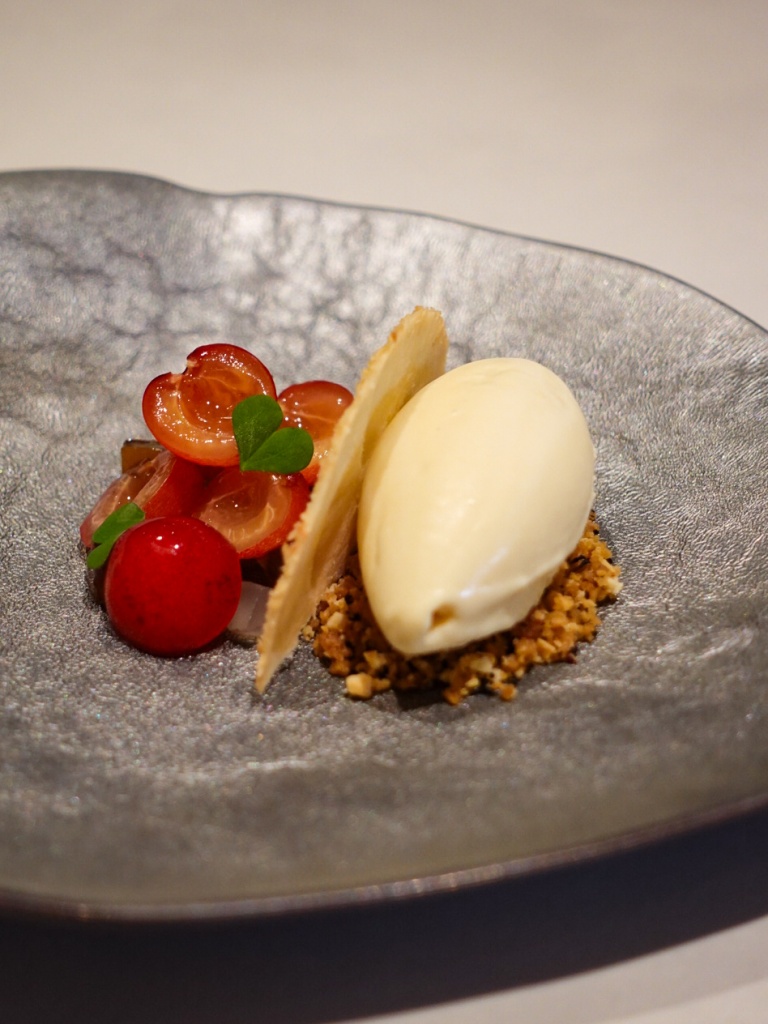
Gula apong, harvested from the nipah palm, is often said to be slightly smokier and saltier than gula Melaka, which is harvested from coconut palm. The resulting sherbet is deeply flavourful without being cloying, and rounds off the meal beautifully.
Taken together, Asin’s debut menu is quiet, comforting, and balanced — just as Ace and his team intended. You leave nourished, invigorated, and a little more aware of the benefits of everyday ingredients.
If this is what Asin is starting with, I’m curious to see what other expressions of shi liao Ace has up his sleeve when the fall menu rolls around.
This was a hosted tasting.
For more eats around Clarke Quay, check out the modern izakaya, Tomo Tokyo or Pour.traits cafe with hearty foccacia sandwiches and mocktails.
Thu 6pm - 11pm
Fri 6pm - 11pm
Sat 6pm - 11pm
Sun 6pm - 11pm
- Clarke Quay



Sarah is constantly seeking out new coffee spots and cocktail bars around the world, and should probably drink more water while at it.
Read more stories from this writer.