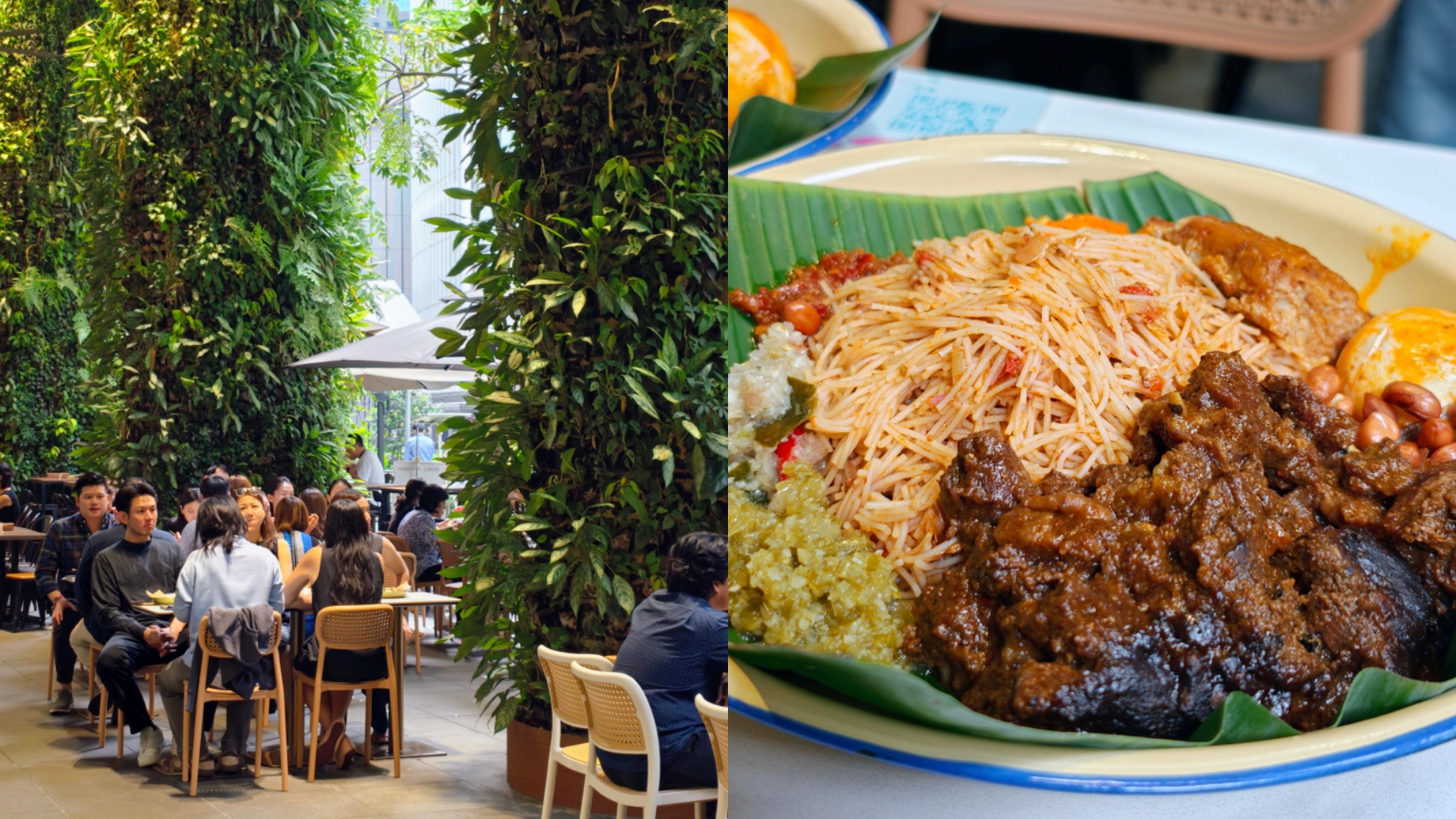
Nyonya Next Door brings fast-casual Peranakan sets from S$8.90 to the CBD

Lunch in the CBD has a way of eating into your wallet; it seems S$15 for a bowl of noodles around Shenton Way won’t even raise an eyebrow these days.
So, when we heard a new Peranakan concept was setting up shop in the area with sets starting from S$8.90, we had to see it for ourselves.
Enter Nyonya Next Door, a fast-casual spot bringing lemongrass-laced coconut rice, buah keluak curry, and all the trimmings of a proper Nyonya spread to the office crowd — minus the special-occasion price tag.
Heritage flavours for the lunch rush
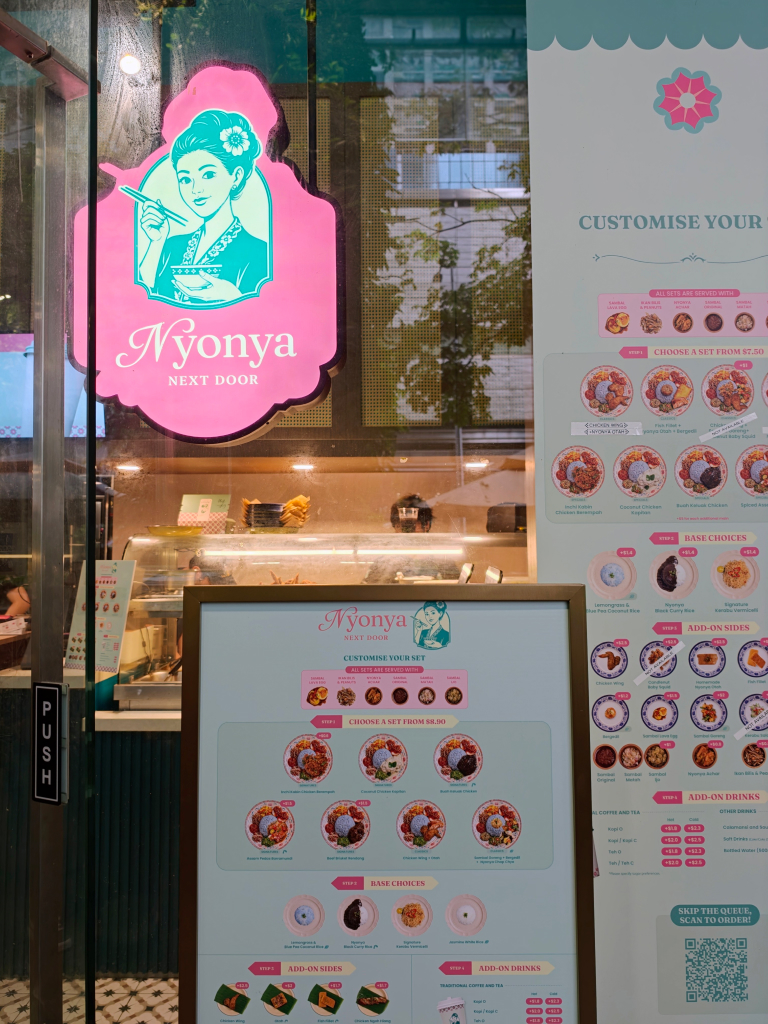
Situated in One Shenton, Nyonya Next Door is the newest venture from the team behind now-closed Cherki, the modern Peranakan restaurant known for putting a contemporary spin on heritage recipes.
Here, the same DNA shows up in a leaner, faster format, with build-your-own sets rather than a full sit-down affair, a self-service order kiosk, and a handful of tables placed right outside its doors.
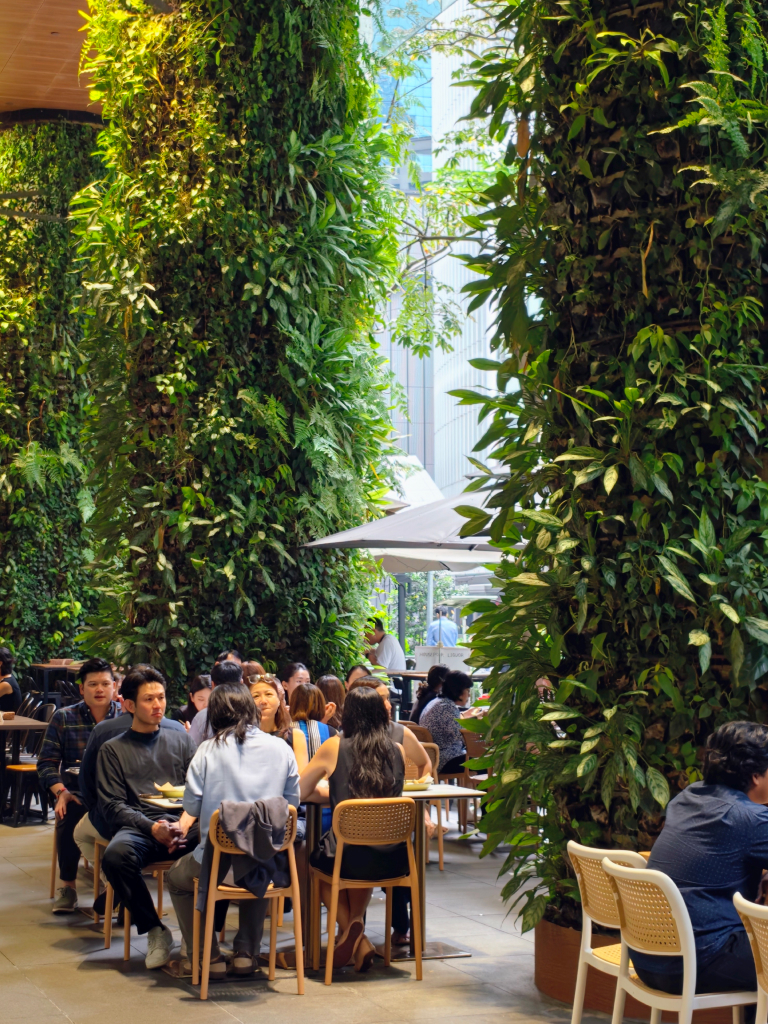
The premise is refreshingly simple: Peranakan food, the founders argue, was never meant to be reserved for celebrations. It’s home food, and Nyonya Next Door wants it back on regular rotation.
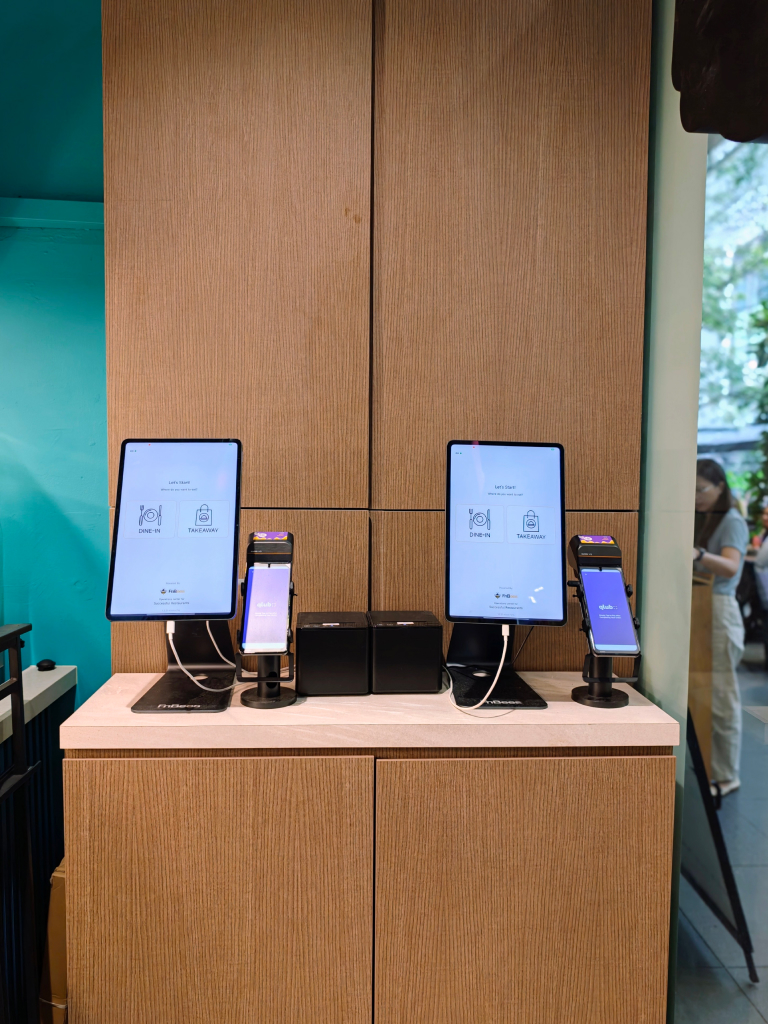
Diners pick a set, select a base carb (we’re partial to the lemongrass and blue pea coconut rice, but more on that later), and add on a side or two if you wish. It’s a format built for a rushed weekday lunch, just as much as an unhurried one.
A taste of its build-your-own menu
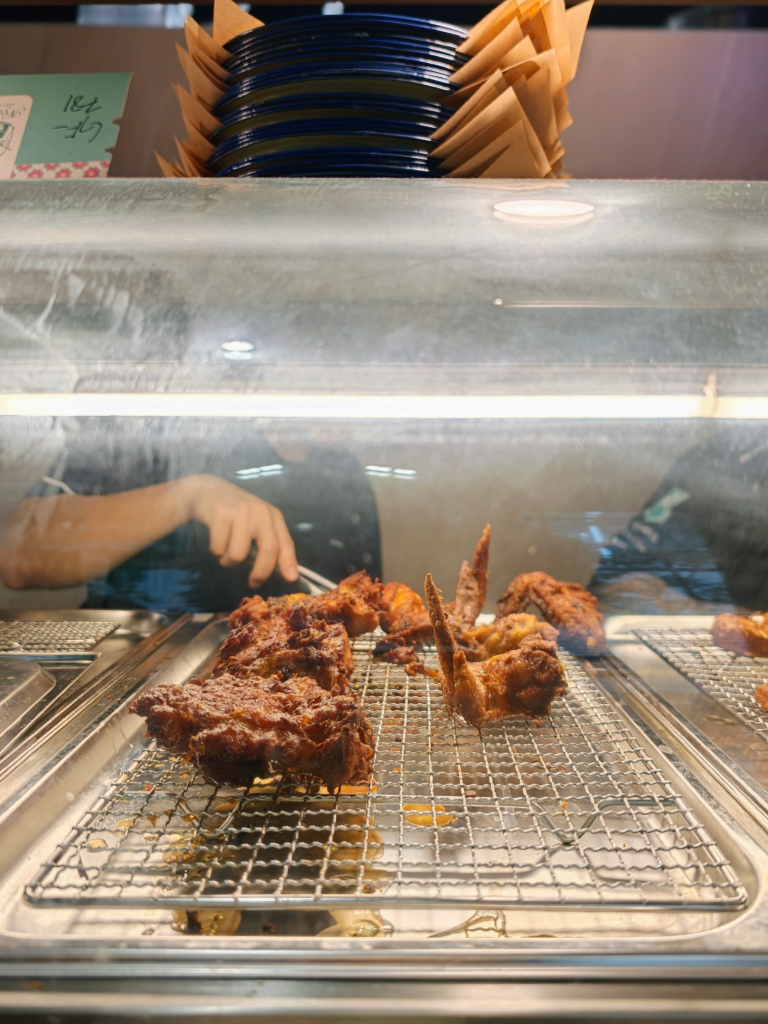
There are seven sets to choose from, all starting from S$8.90 and arriving with the same fixed lineup: sambal lava egg, ikan bilis and peanuts, Nyonya achar, and a trio of sambals — original, matah (a raw, Balinese-style chilli condiment), and ijo (a green chilli condiment from West Sumatra).
We started, fittingly, with the dish that takes the most patience to land on a plate: the buah keluak chicken set (S$8.90), paired with lemongrass & blue pea coconut rice and a S$1.20 top-up for fried bergedil.
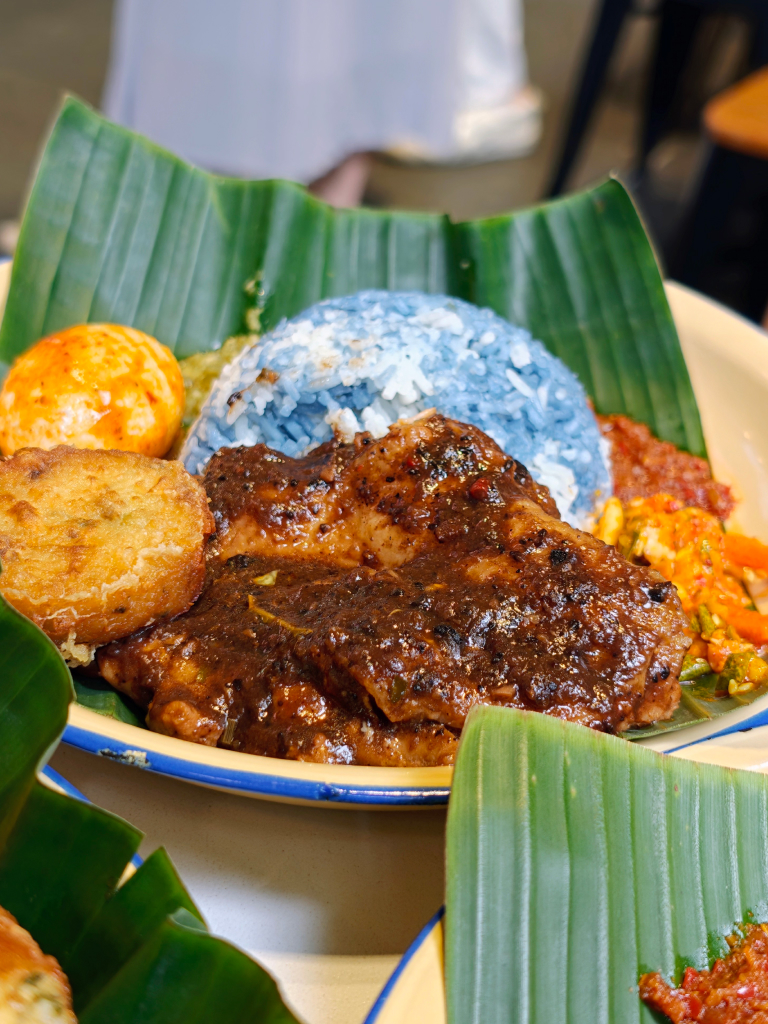
Buah keluak has always struck us as one of the more theatrical ingredients in the Peranakan pantry; the nut is toxic in its raw state, and traditionally needs three days of boiling followed by roughly 40 days of underground fermentation before it’s safe to eat.
Its flavour is often compared to dark cocoa, wine, and olives — notes that came through clearly, from the very first taste of the succulent chicken. The portion was generous too, especially for something priced under S$10.
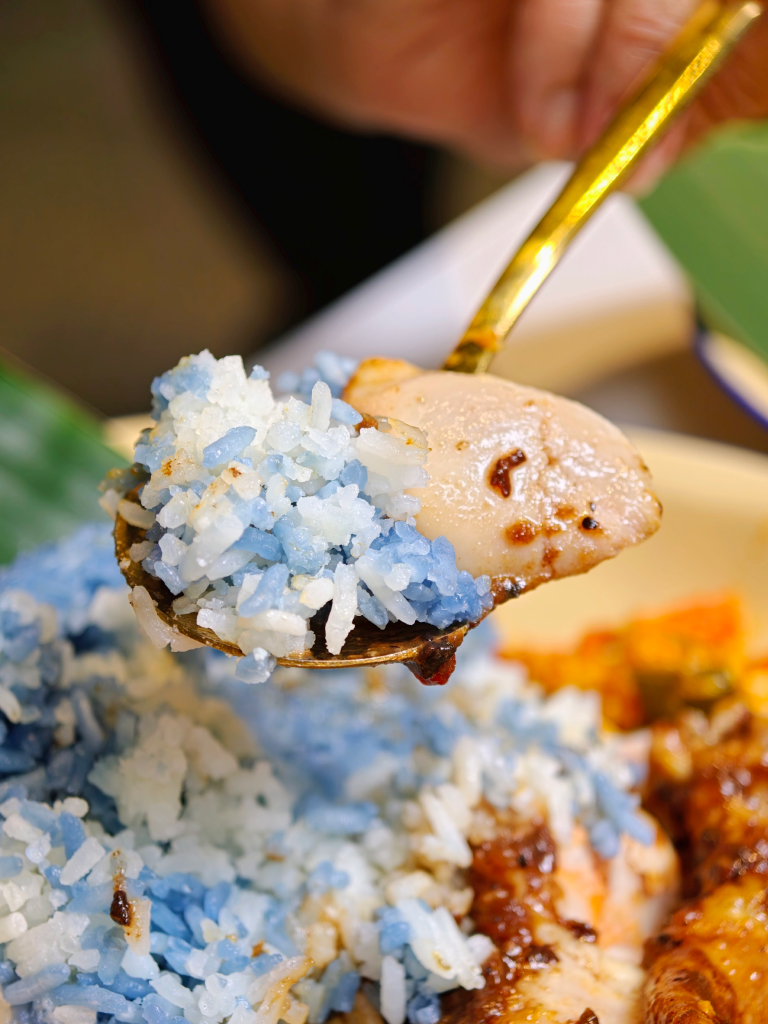
The rice beneath it, tinted a soft blue from butterfly pea flower and threaded through with lemongrass, was aromatic and rich — closer to a hearty, satisfying bowl of nasi lemak than a simple side.
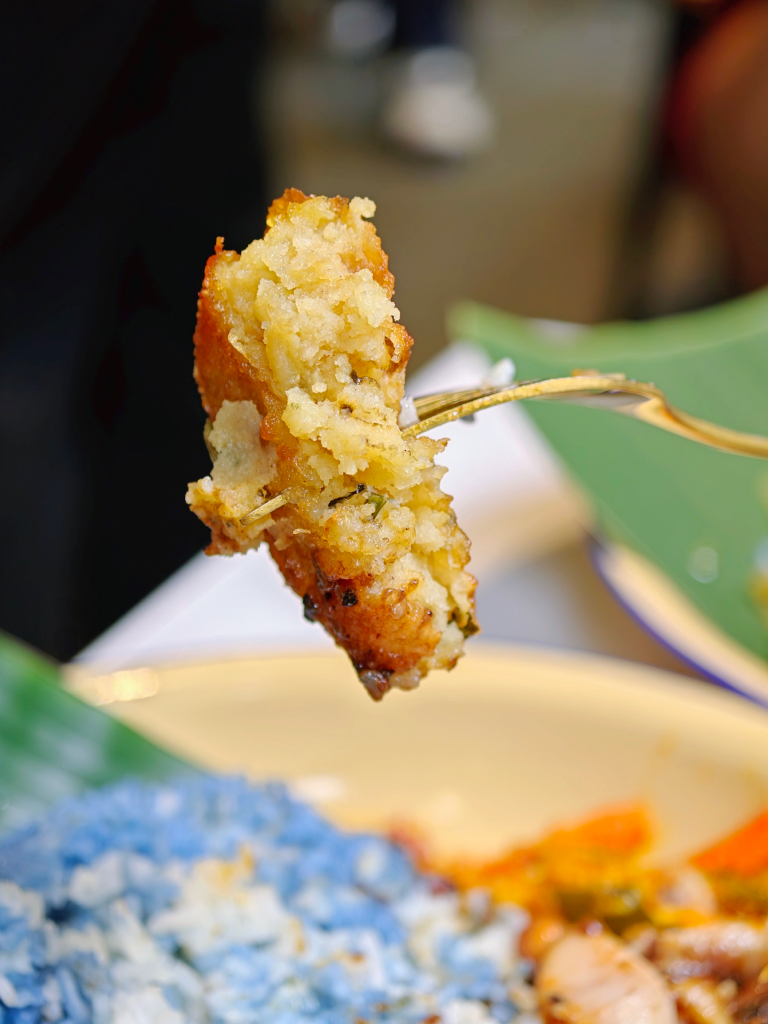
The bergedil, notably less oily than many other versions we’ve had, held its own alongside it — a worthy add-on rather than an unnecessary carb.
And then there was the sambal lava egg — the one element we didn’t expect to steal the show.
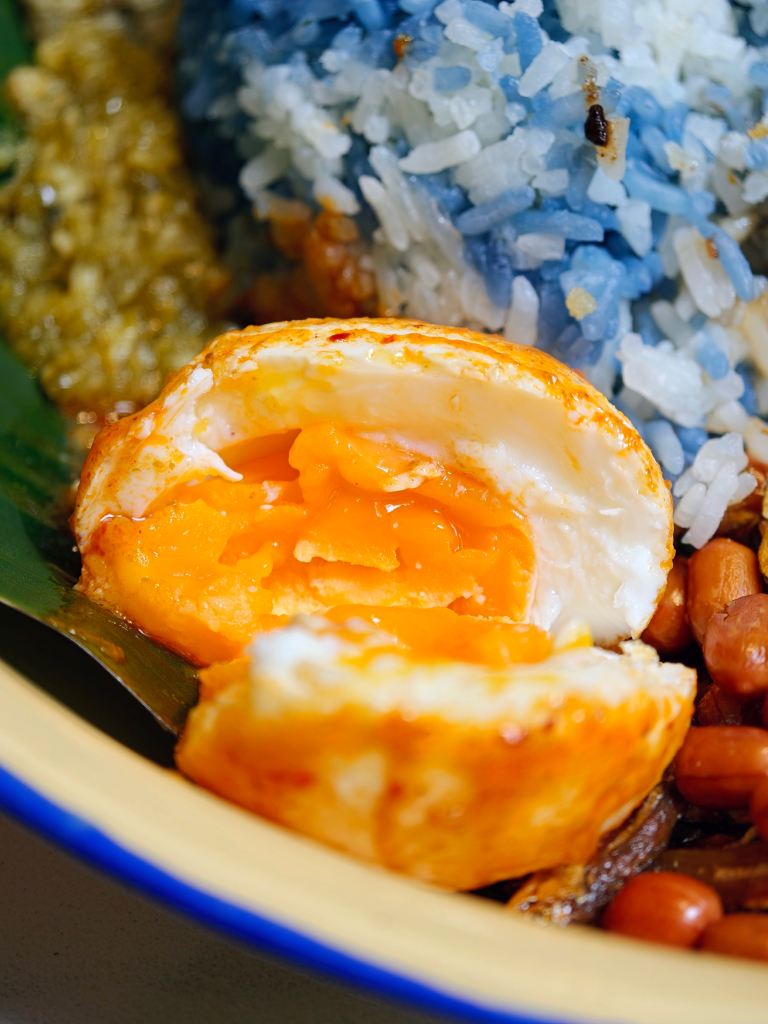
Rightfully jammy, it added a creaminess to every set that almost did away with the need for extra gravy.
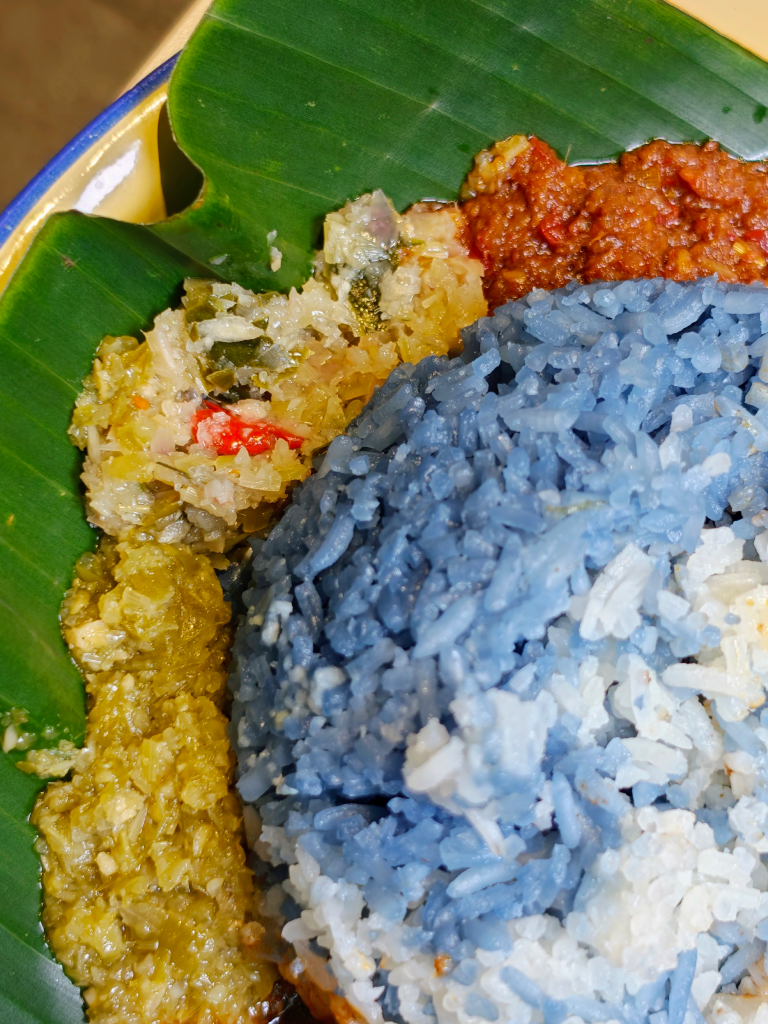
Of the three sambals, sambal ijo was our clear favourite, carrying a tanginess and brightness the other two lacked — useful, as it turned out, against the richer beef brisket rendang set (S$10.40).
We paired this one with kerabu vermicelli and added an otah top-up for S$2. Rendang is traditionally a dry, slow-cooked meat dish built on tougher cuts, simmered until the spice paste reduces right down.

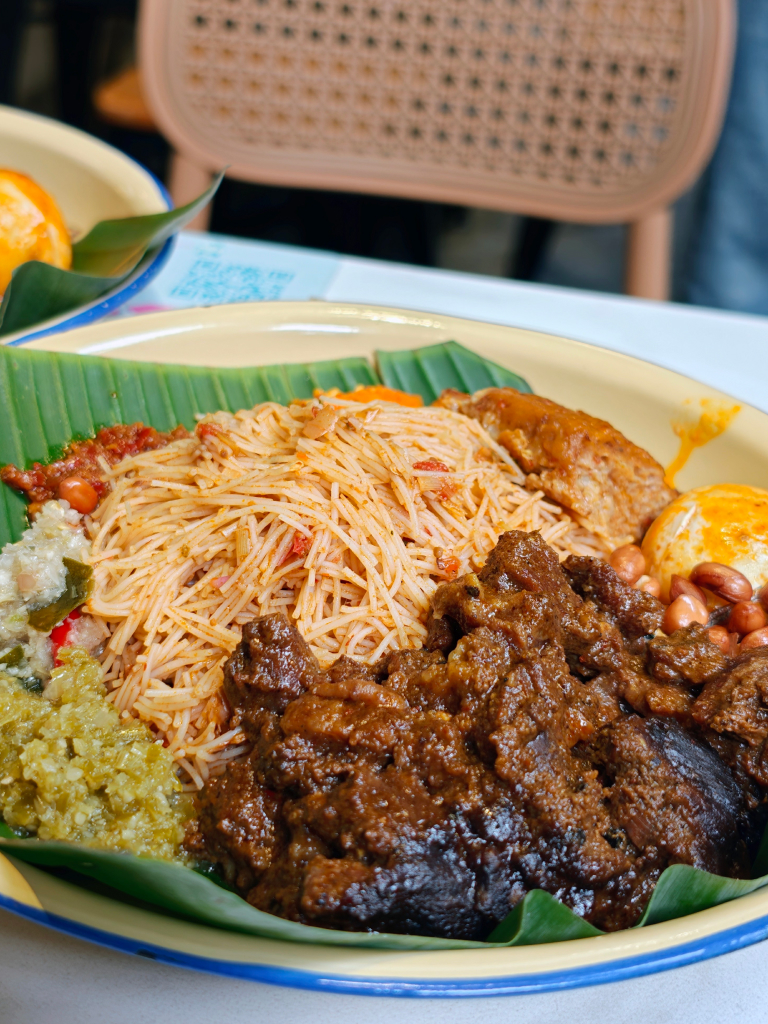
At Nyonya Next Door, the brisket — reportedly eight hours in the making — is a modern liberty on the format, though the flavours didn’t quite reach the depth we were hoping for. It was savoury enough, but we wanted more richness and a meatier presence throughout.
Kerabu, meanwhile, is technically a salad, rather than a rice or noodle base, usually built around mango or cucumber, so vermicelli felt like an unusual vehicle for it. Having never had kerabu served as a carb accompaniment before, it took us a moment to place what elements of the traditional dish were meant to come through here.
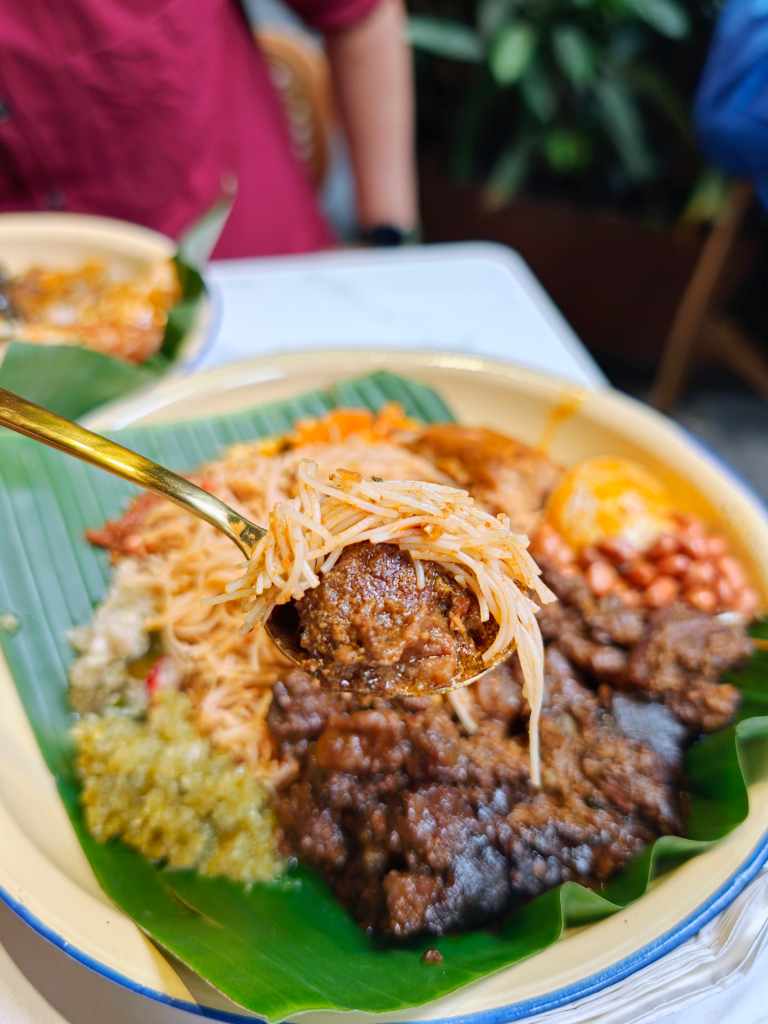
But the vermicelli carried a subtle, not-quite-spicy chilli note, and its lighter texture balanced well against the heavier rendang, more so than rice would have. If you’re after extra heat, the otah delivers: The burn hit almost instantly, followed by a distinct fishiness that’ll appeal to anyone who can’t get enough of it.
We closed with the assam pedas barramundi set (S$10.40), served over Nyonya black curry rice with a S$1.70 add-on of chicken ngoh hiang.
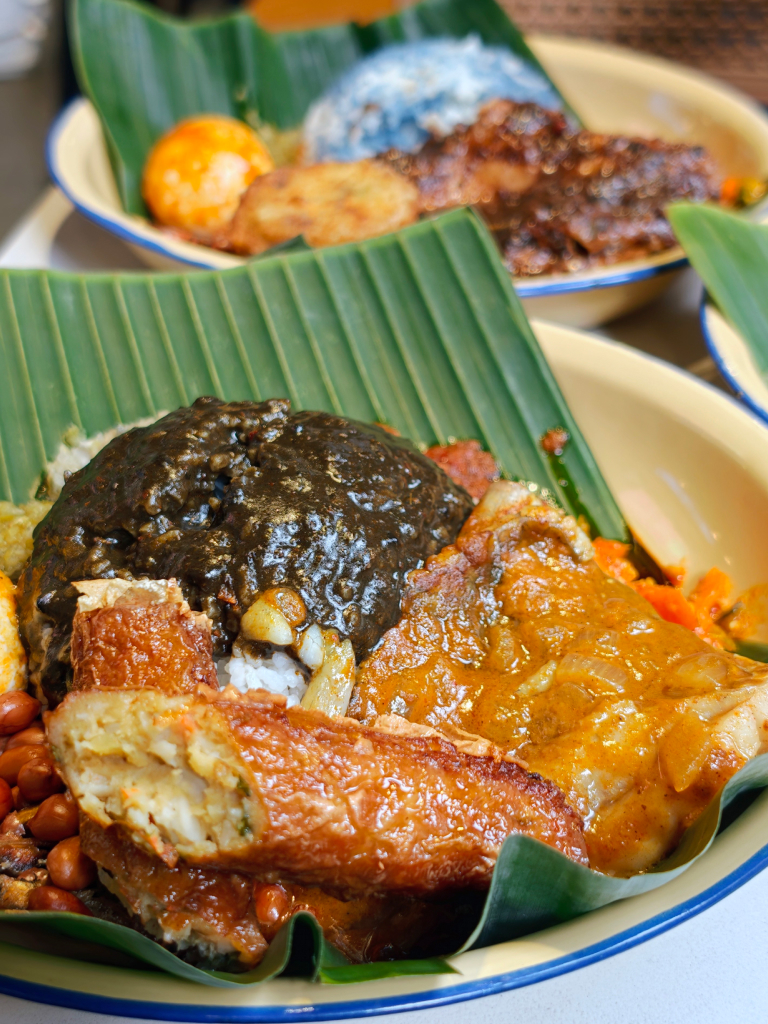
Assam pedas is a tamarind-forward, chilli-laced broth found across both Peranakan and Malay kitchens, traditionally paired with a bonier fish such as mackerel or stingray.
Barramundi here is a more contemporary choice — firmer, and easier to eat at your desk if lunch is a to-go affair.
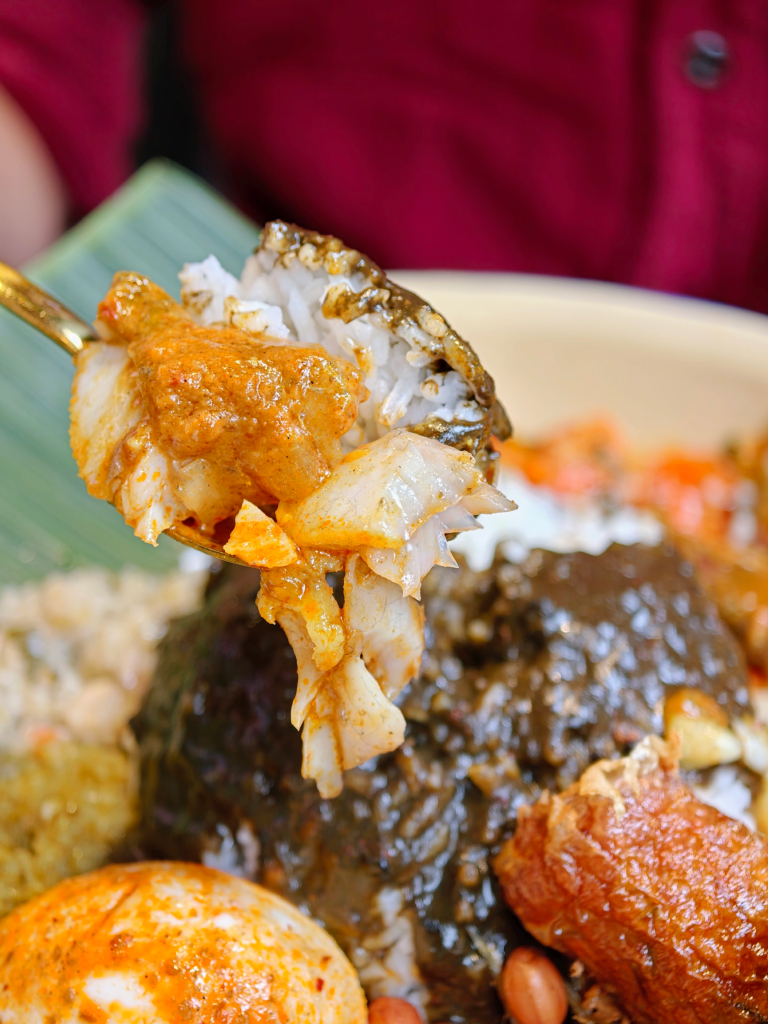
We anticipated a punchy, tangy flavour that would have us going back for seconds, but this version leaned much mellower, with barely any heat — a love-or-hate proposition, and one that didn’t end up being our top pick of the afternoon.
Credit where it’s due, though: The fish itself was fresh, flaky, and moist, with no complaints on that front. As for the black curry rice, it gets its standout glossy black appearance from a ladle of buah keluak-based sauce.
Personally, it didn’t add much nuance to the plain rice other than leaving a starchier mouthfeel; we wish the earthiness of the sauce’s spices were more prominent.
The ngoh hiang, on the other hand, more than made up for it — a Hokkien five-spice roll made here with chicken instead of the more traditional pork, generous in portion and dense enough that every bite felt properly packed and juicy.
Convenience over perfection
Would we call this the most transcendent plate of Peranakan food we’ve had in Singapore?
No — and we don’t think that’s really the point.
Nyonya Next Door doesn’t look to be chasing the kind of reverence you’d bring to a heritage restaurant with white tablecloths and a week-long waitlist; it’s chasing your Tuesday lunch break.
Judged on that basis, it does exactly what it sets out to do — feed you well, quickly, and without denting your wallet in a part of town that rarely offers any of the three.
Some dishes will land better than others (the buah keluak chicken, easily; the assam pedas, less so), but at these prices, in this location, “adequately delicious” might just be the more honest — and more useful — promise.
This was a hosted tasting.
For more ideas on what to eat, check out our review of Feugo Mesa, a new Mexican spot under an HDB at Farrer Park, and what to eat at Funan Mall.
Tue 11am - 2.30pm, 5pm - 7.30pm
Wed 11am - 2.30pm, 5pm - 7.30pm
Thu 11am - 2.30pm, 5pm - 7.30pm
Fri 11am - 2.30pm, 5pm - 7.30pm
Sat 11am - 3pm
- Shenton Way
- Downtown




Wani is a cat lady who loves a good sweat session in the gym, and is still tracking the lead to the elusive cure for wanderlust.
Read more stories from this writer.