At the new Ao restaurant, ex-Esora chef Araki Takeshi trades the kappo counter for communal dining

It feels like Singapore’s fine-dining chefs have been evolving, as we see with chef Louisa Lim’s transition from head pastry chef at Odette to her new dessert-focused venture, Loulouca, and in the opening of the more casual Assaggi by chef Denis Lucchi of the one-starred Buona Terra.
It’s not necessarily a dilution of what they previously brought to the table. Rather, these new formats reflect a changing dining environment, where meals are a touch shorter, less formal, but still enjoyable.
Ao, the newest opening from Cloud Restaurant Group, is the latest and perhaps, clearest example.
Its kitchen is led by chef Araki Takeshi, formerly of the now-shuttered modern kappo restaurant Esora, who has taken the precision and techniques he’s honed at Esora and loosened them into something else entirely for Ao’s menu.
The result? At Ao, you can expect a sharing-led, a la carte spread that moves across culinary cultures rather than just staying within the confines of Japanese cuisine.
From kappo counter to communal table
Its name is the first sign that Ao isn’t just about kappo, a style of Japanese dining where the chef cooks food right in front of the customers across an open counter, that chef Araki served up at Esora, anymore.
Pronounced “ah-oh”, the restaurant’s name, which is also the Japanese word for blue, is a nod to the sky and sea that supply much of what appears on the menu.
At Ao, chef Araki retains the ingredient-led precision of kappo cuisine, while dropping the expectation of having diners seated close enough to watch every cut, or having everything decided by the chef.
Ao offers an a la carte format that spans carpaccios and tatakis through to charcoal-grilled plates, rice, noodles, and dessert — you can have anything from a fast dinner for two to a slow, sprawling meal with a bigger party size, if you desire.
That same logic — precision kept, formality dropped — carries into how the space unfolds.
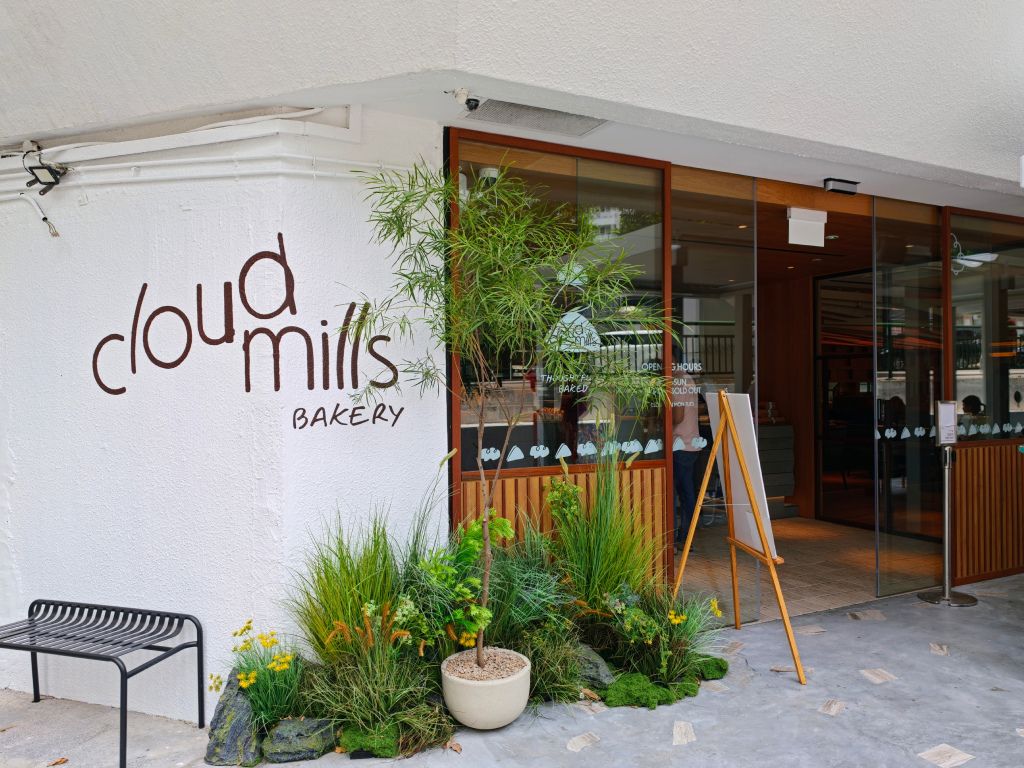
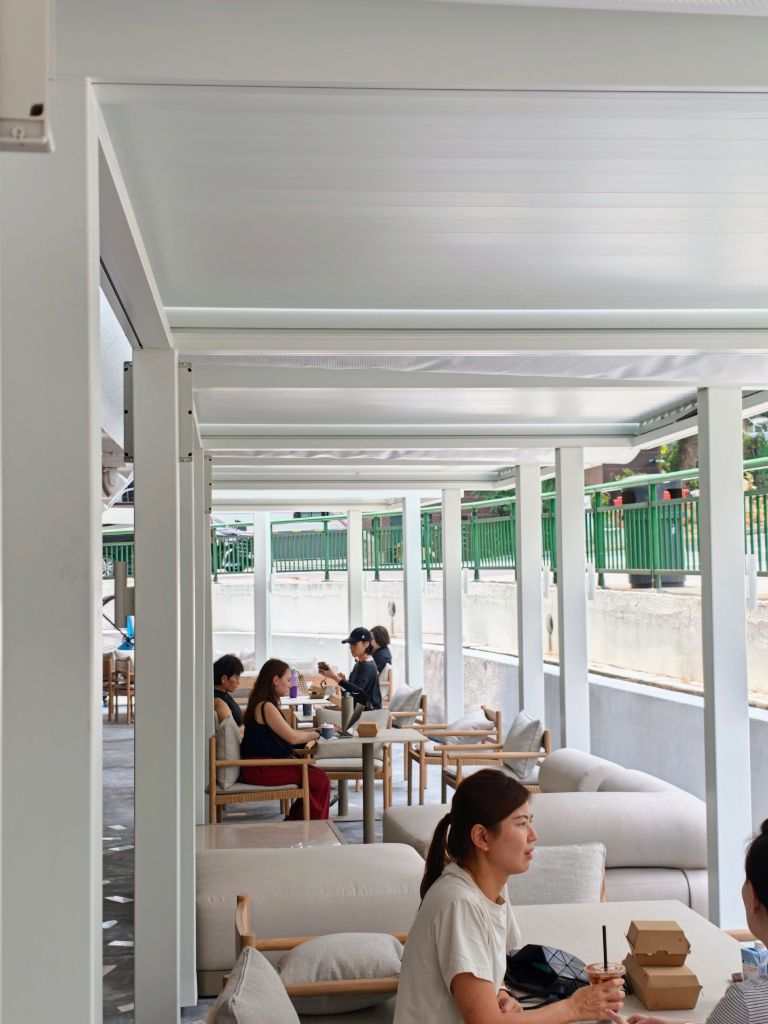
Guests reach Ao by first walking through Cloudmills, a new bakery also by the Cloud Restaurant Group, passing its bakery counter and charcoal grill before finally entering the restaurant’s dining space.
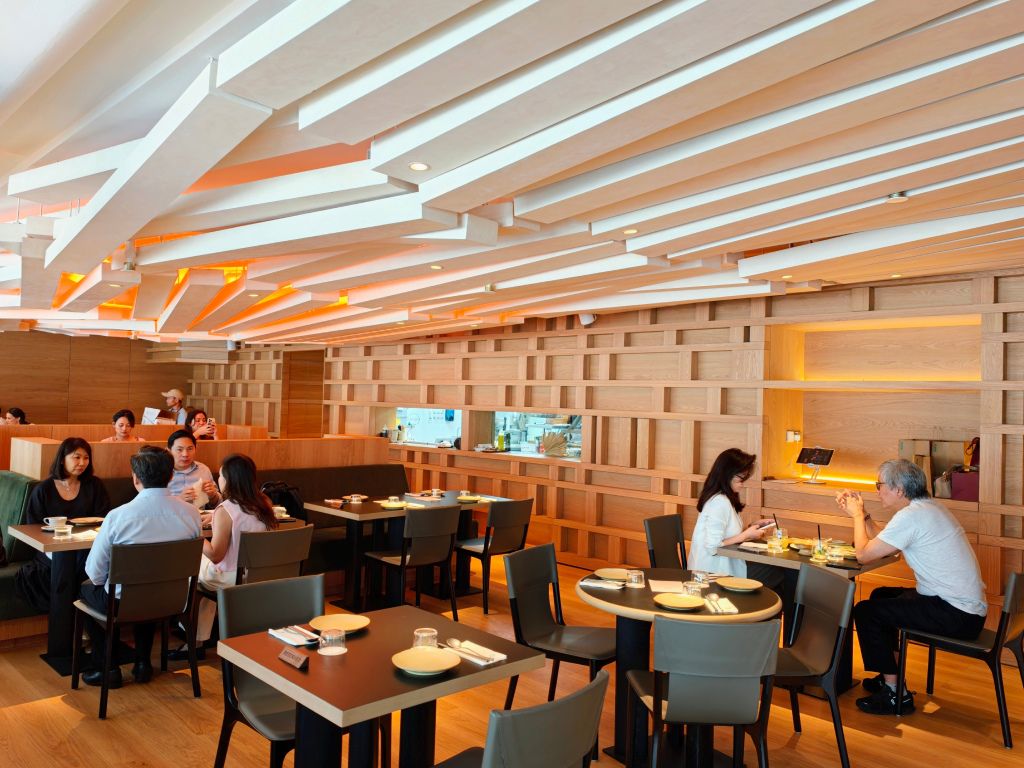
Crafted by design firm Grafted Studio, Ao’s bright space is made up of natural wood and stone, and also incorporates shifting lines within its ceiling, which makes the space seem both casual and refined at the same time.
It’s perfect for anything from buzzy communal meals to intimate and quieter meals, amid the buzz of Orchard Road.
Familiar dishes in new forms
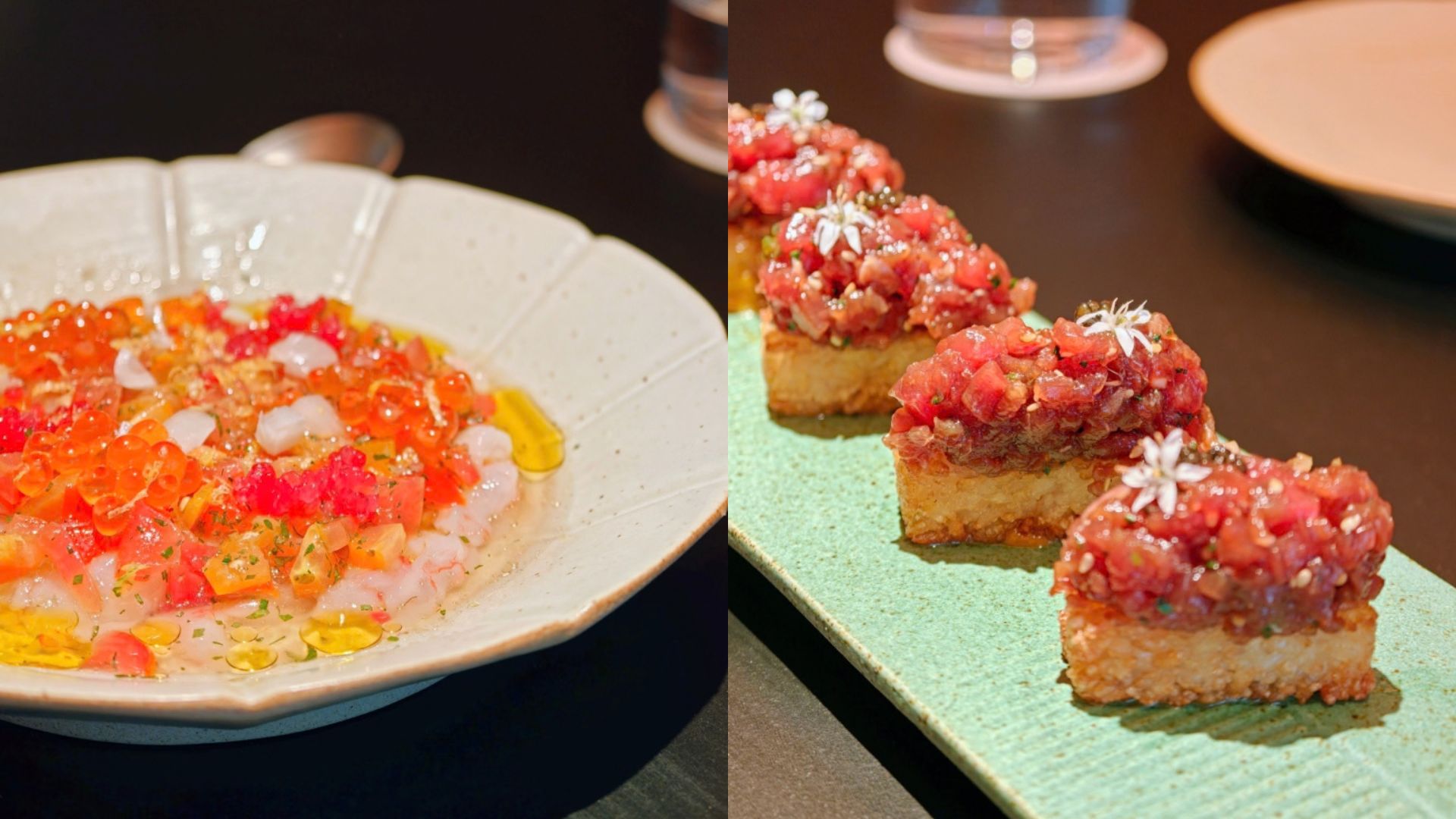
Whether you’ve had a meal by chef Araki before at Esora or not, you’d appreciate the citrusy wild northern amaebi carpaccio (S$26) starter.
It’s a bright dish, featuring amaebi (sweet shrimp) and scallop dressed in dashi, yuzu kosho (a bold, fermented Japanese seasoning paste), and olive oil. To finish, it is topped with cherry tomatoes, rakkyo zuke (a traditional Japanese sweet-and-sour pickle), shiso (perilla), ikura (salmon roe), finger lime, and lemon.
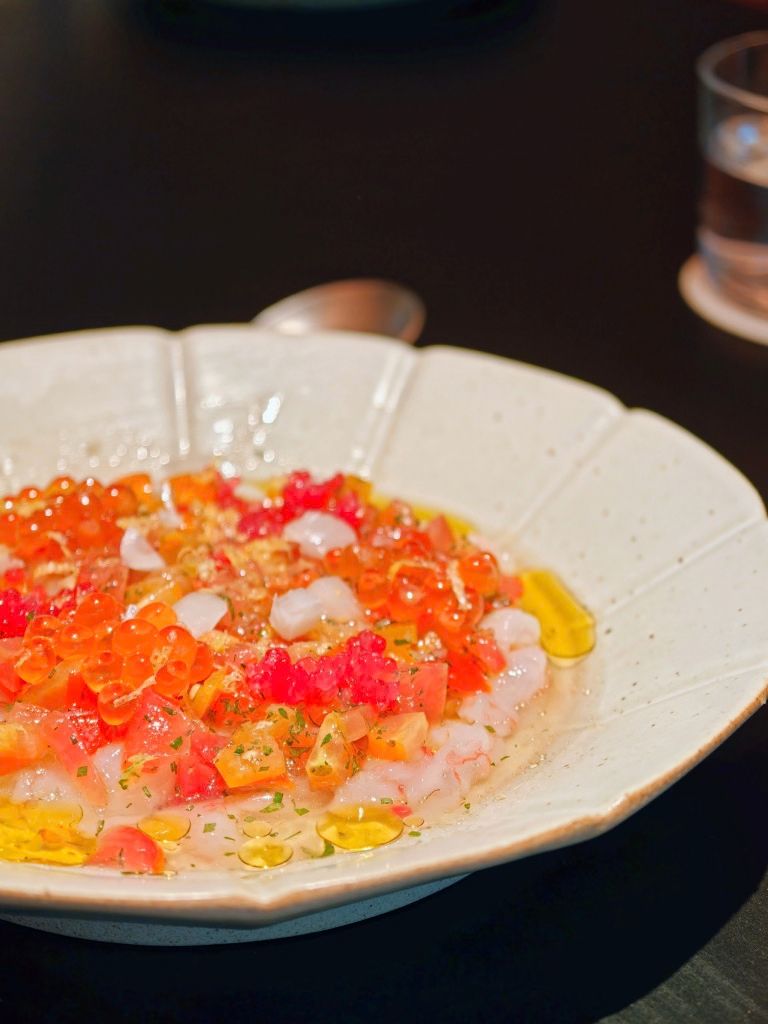
The carpaccio comes across as a more considered alternative to the usual sashimi moriawase (an assorted selection of fresh, sliced raw fish and seafood) — citrus-forward, acid-led, with the pickled rakkyo lending the dish some much-deserved balance.
You’ll want to follow that with the bluefin tuna tartare & toasted sushi rice (S$28), a one-bite delight of contrasting textures and flavours, meant to be picked up by hand and eaten directly as you would with sushi.
Here, the tartare is imbued with smokiness from housemade bincho oil, seasoned with sweet soy, olive oil, and chilli padi, garnished with chives, shallot, and sesame.
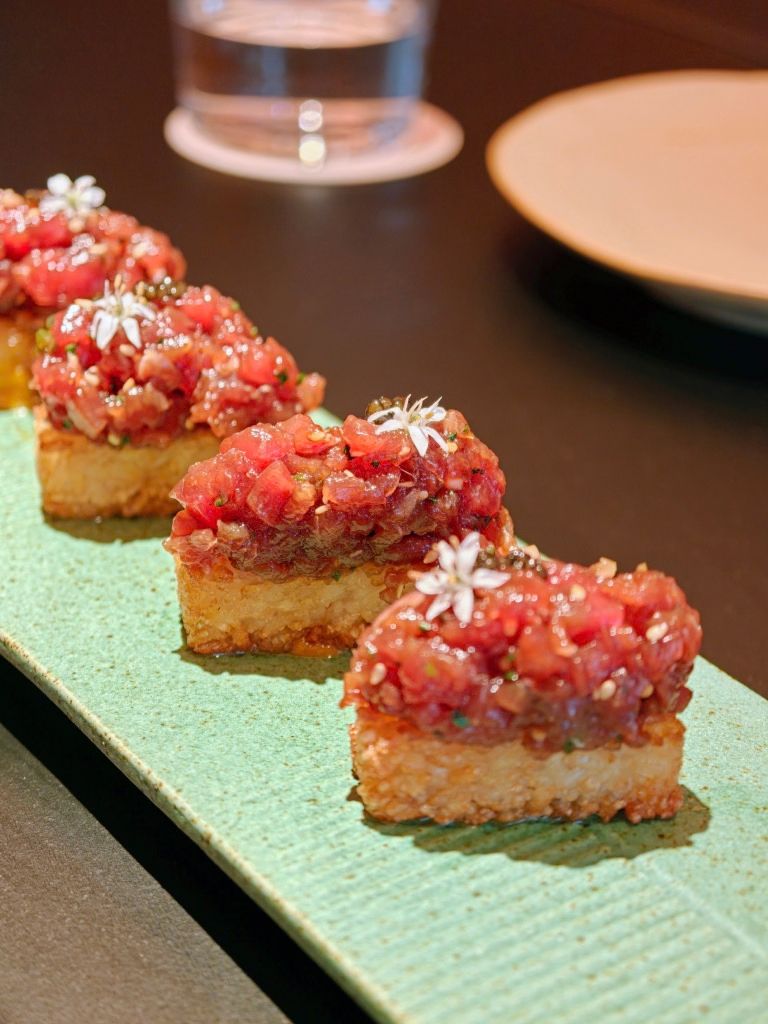
Lastly, it is luxuriously topped with Siberian sturgeon caviar and garlic chive flowers.
Biting into it, the soft, chewy rice and fatty, smoky tuna tartare come together in a mouthfeel that’s almost indescribable — indulgent, yet balanced; umami and subtly sweet. And it’s all punctuated by a mild hint of chilli at the end.
The rich Challans duck rillettes & foie gras terrine (S$20) is a great way to round off the starters. Here, you get duck rillettes with shallots and candied fig over sourdough, a sweet-sticky balsamic reduction, shaved foie gras, and orange zest.
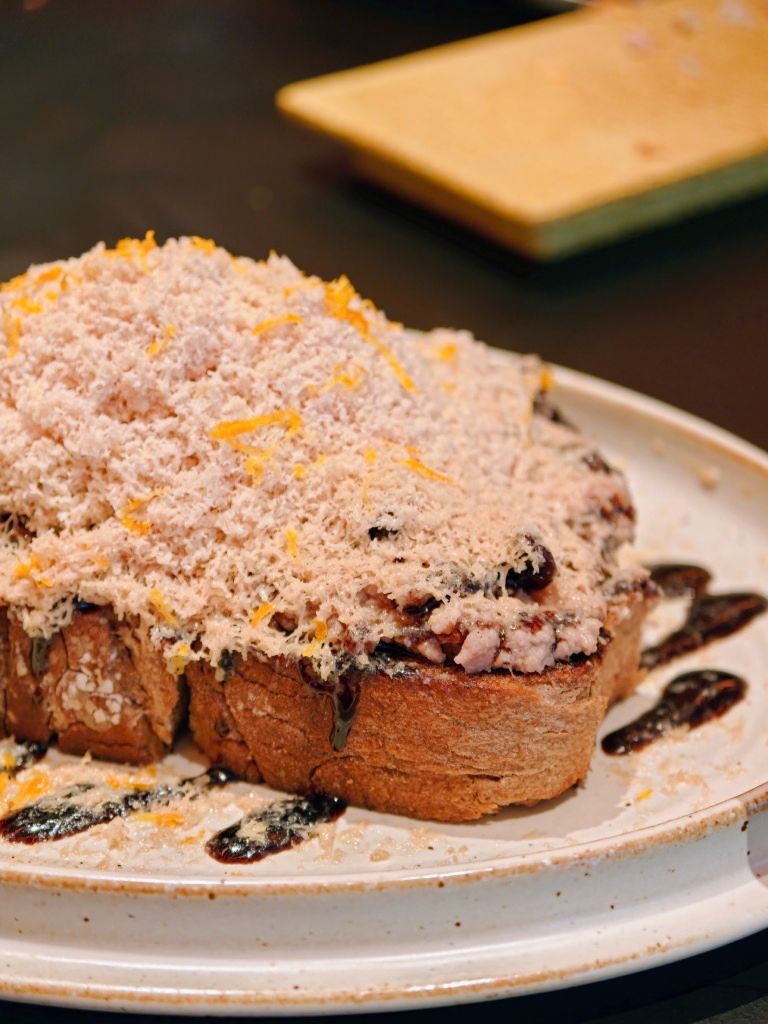
If you’re a fan of gamey dishes, this one will be right up your alley. Its relatively large portion size also means you’ll definitely want to order this for sharing, unless you love duck that much, we suppose.
The handful of raisins on top also helped provide a pop of sweetness that kept it from being too cloying. We understand that the fruit topping will change with the seasons, so that’s something to look forward to if you return.
As we move on to the sharing plates, the kitchen’s technical expertise shines brighter.
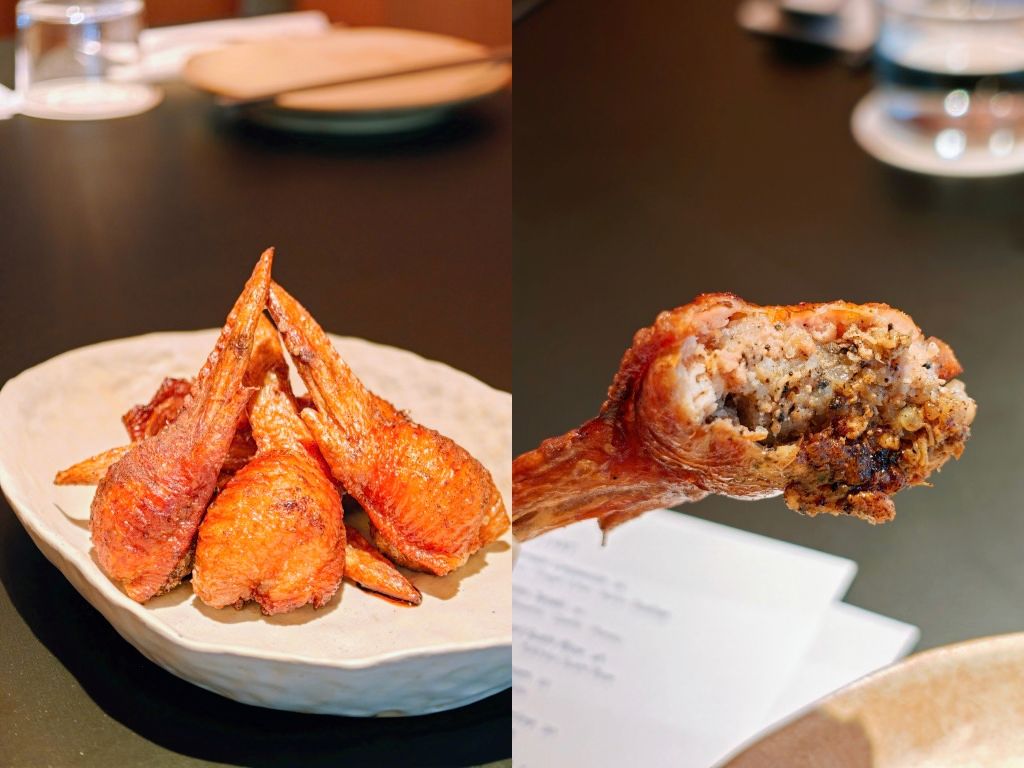
The grilled chicken wings with black truffle mochi rice (S$22) is essentially a Japanese tebasaki (a famous Japanese deep-fried chicken wing dish from Nagoya), built with a Cantonese crispy-skin technique the chef picked up in Hong Kong.
Here, the wing is scalded, glazed in a maltose-vinegar syrup, air-dried for 12 hours, then deep-fried, stuffed with okowa (a mochi and short-grain rice mix cooked in bonito stock with minced chicken, carrot, burdock, and truffle), and dusted with porcini powder, served over a red vinegar and garlic reduction.
It’s a lot of steps for a chicken wing, but the resulting flavours and textures are a testament to the hard work — the skin crackled with every bite, and the deep, intense umami flavours coated the palate beautifully.
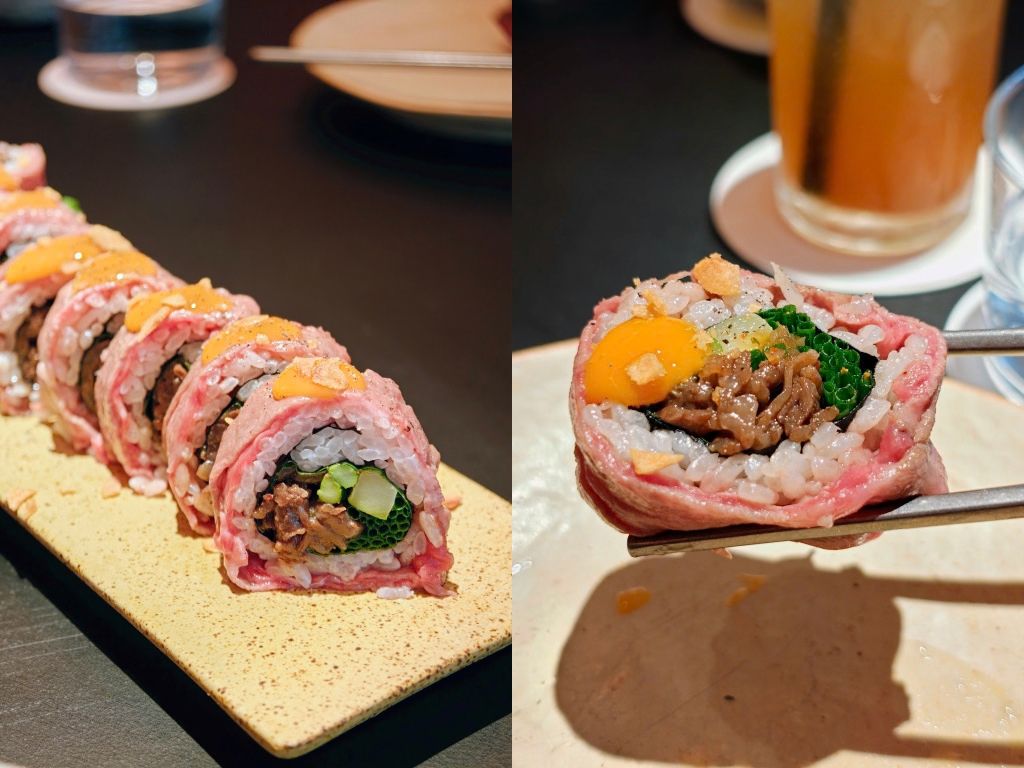
When the sukiyaki wagyu maki roll (S$28) arrived, we were floored by its generous portion. Yes, it might be a sharing plate and there’s enough to go around, but it works even better as a one-dish meal if you’re dining solo and famished.
As its name suggests, the popular hotpot dish comes reimagined as sushi. Thinly sliced wagyu chuck roll, cooked down in soy, mirin, and sugar, is wrapped around sushi rice, asparagus, zucchini, chives, and smoked iburigakko from Akita.
It is then torched and finished with raw egg yolk sauce, fried garlic chips, wasabi, and a ponzu-horseradish sauce.
The smoked daikon and wasabi cut through what could otherwise be a very rich roll, while still letting you enjoy the beef’s smokiness.
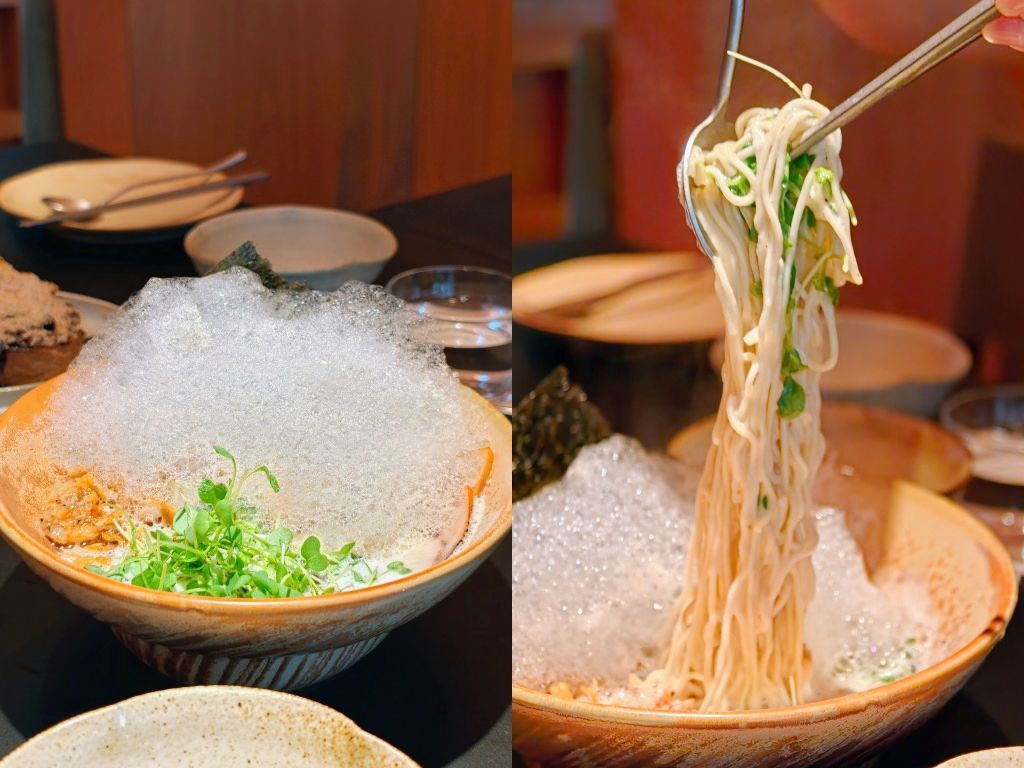
If you’re looking at adding a rice or noodle dish to the table, one dish stood out for us: The “sakura-dai” sea bream ramen (S$28), a creamy, collagen-rich sea bream broth built from roasted bones and kombu stock, dotted with black garlic oil, and topped with swordfish chashu, which was first sous vide, then grilled and sliced.
Just when you think that’s all, the bowl is topped with seaweed, yuzu bubbles, kaiware (daikon radish sprouts), and crispy sakura ebi (tiny pink shrimp).
Compared to the typical tonkotsu broth you might expect in a regular bowl, this is a lighter, more refreshing slurp that still maintains enough body and depth to keep you coming back for more.
Remember to eat this quickly before the yuzu bubbles fizzle out, though; its light taste really adds a nice zesty touch to the sweet-salty broth.
You’ll do well to end the meal with the roasted black sesame tiramisu (S$16), which keeps the structure of a classic tiramisu but swaps the espresso for roasted black sesame paste folded into the mascarpone. It is also finished with a light dusting of the same roasted black sesame, albeit in powder form.
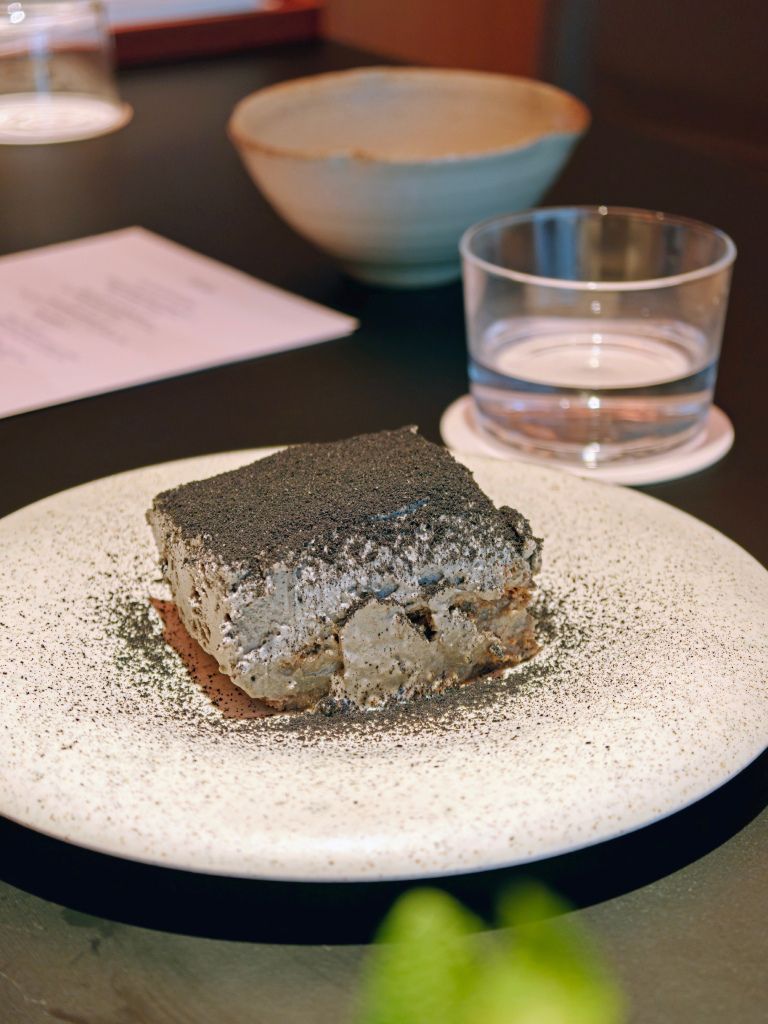
It’s also alcohol-free, making it an easy pick for the table, especially if you have varying dietary requirements.
We love a classic tiramisu, but we must admit that this rendition might have swayed our preferences quite a bit.
With its roasted notes, sweet creaminess, and light-as-air texture, Ao’s version ticks all the boxes for a new favourite.
Where the technique lands
What stays with you after a meal at Ao isn’t any single dish, but rather the care stacked into the whole experience and across all the dishes.
Whether it’s the amaebi carpaccio’s citrus restraint, the tebasaki’s twelve-hour process, or the sea bream ramen’s deliberately lighter broth — everything tasted intentional, finessed, and lovingly prepared.
If anything, the new Ao restaurant shows us that you don’t need a set sequence or a single cuisine for meal to be this considered — order a little or everything and share it across the table, and you’ll have a delicious time here either way.
Editor’s note: An earlier version of the article had erroneously stated that the tiramisu dish did not caffeine. This has been rectified. We are sorry for the error.
This was a hosted tasting.
For more ideas on what to eat, check out Kiap Kiap Chicken Club & Bar, the latest spot for fried chicken and vibes, and these unique spots for kimbap in Seoul, Korea.
Tue 11am - 10pm
Wed 11am - 10pm
Thu 11am - 10pm
Fri 11am - 10pm
Sat 11am - 10pm
Sun 11am - 10pm
- Orchard



Wani is a cat lady who loves a good sweat session in the gym, and is still tracking the lead to the elusive cure for wanderlust.
Read more stories from this writer.