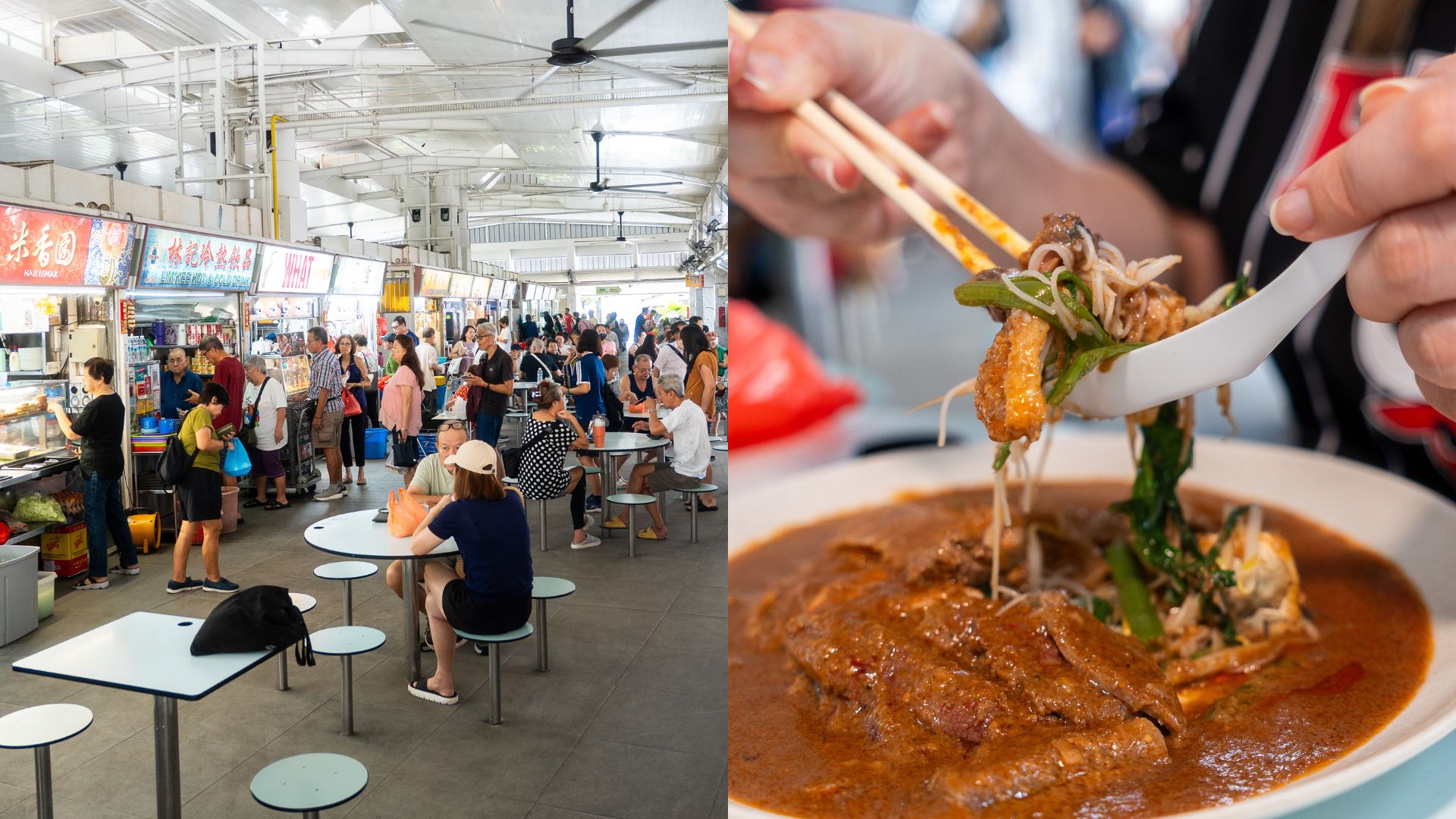
After tuberculosis fears, 216 Bedok Food Centre and Market waits for crowd to return

- Following news of a recent TB cluster linked to the Bedok area, some hawkers at 216 Bedok Food Centre and Market say business has dipped by up to 70%.
- Health authorities have since stressed that it is safe to dine at 216 Bedok Food Centre and Market, but traffic has yet to return.
- HungryGoWhere visits the stalwart hawker centre to speak with stallholders and check out some of the comforting eats still drawing regulars back.
On a rainy Saturday afternoon at 216 Bedok Food Centre and Market, the lunch crowd is thinner than usual, though not entirely absent. It has been two weeks since the news first broke of tuberculosis (TB) clusters linked to the Bedok area, sending waves of concern through the neighbourhood and sharply affecting business at the hawker centre.
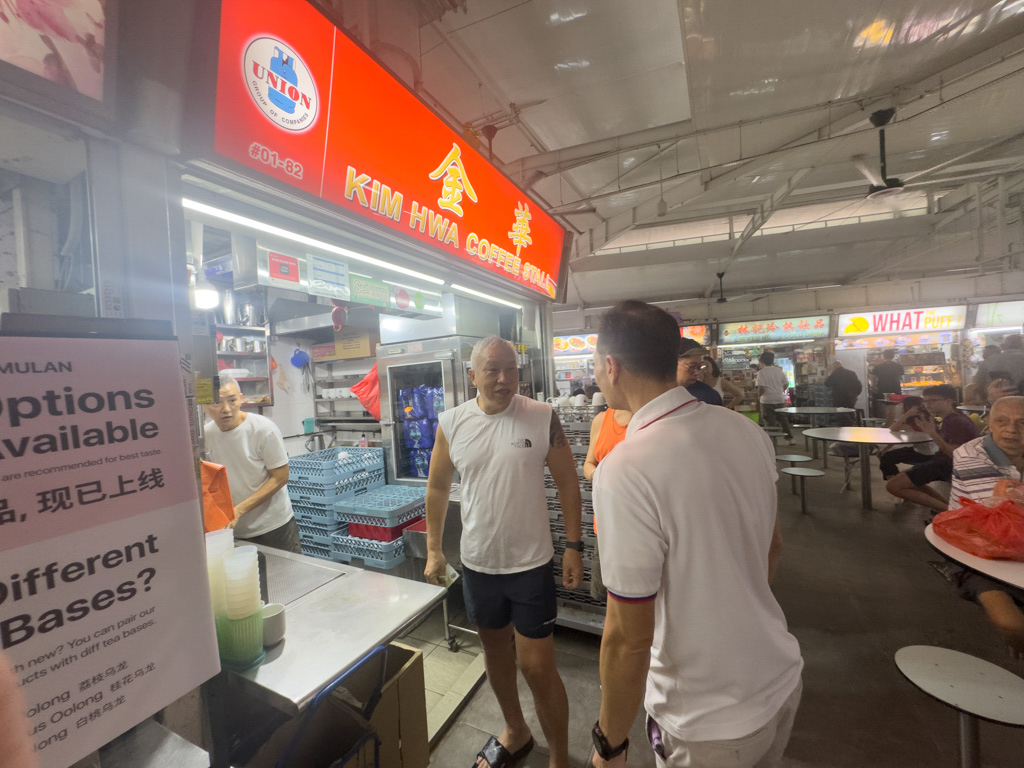
“The crowd is about 70% of what you’d see on a weekend, barring the rain,” says Tan Kiat How, Member of Parliament for Kampong Chai Chee, as he introduces me to the hawkers at the 47-year-old hawker centre.
As we weaved through the narrow aisles, it quickly became apparent that the 49-year-old politician knew the hawkers here, beyond their stall signs.
Stallholders waved him over between orders. One even paused mid-cook, wiping away the grease with a towel wrapped around his waist as he shuffled to the front of the stall to shake his hand.

The Senior Minister of State for the Ministry of Digital Development and Information & Ministry of Health has been dining at 216 Bedok Food Centre and Market, even before news of the TB clusters surfaced.
He tells HungryGoWhere that he has returned repeatedly with his team in recent weeks, dining and tapau-ing (taking away) meals at the hawker centre, to reassure residents and the public that it remains safe to visit and eat there.
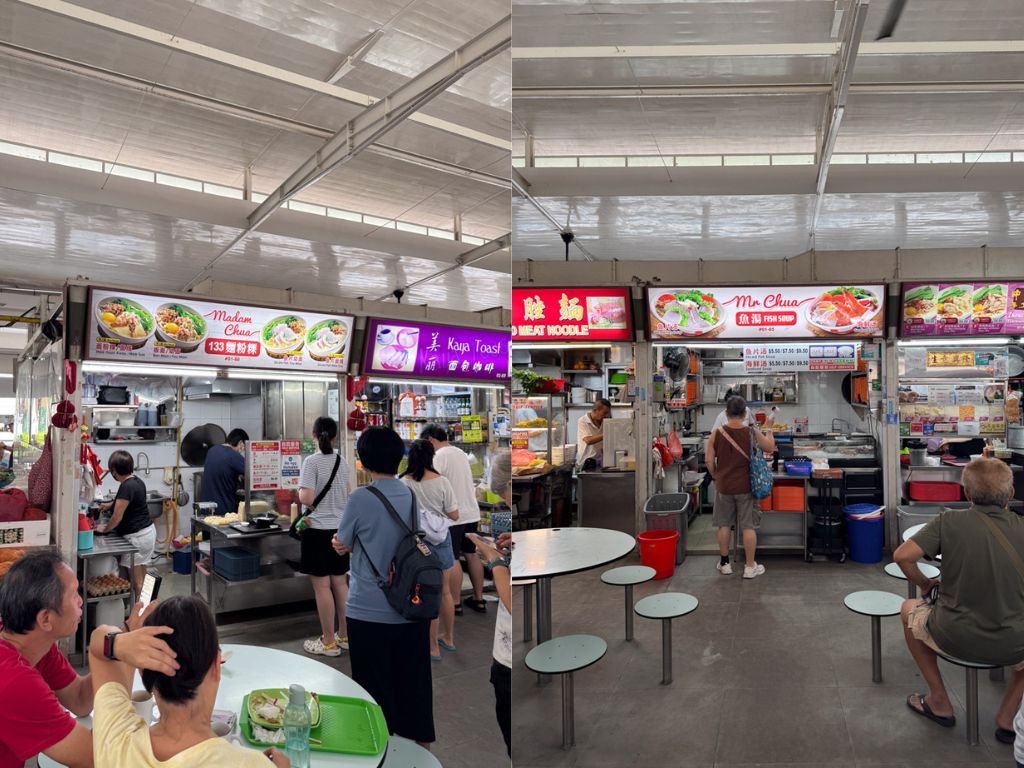
Along the way, Kiat How points out two stalls, Madam Chua Mee Hoon Kueh (01-68) and Mr Chua Fish Soup (01-65), which have similar branding and are run by the Chua family.
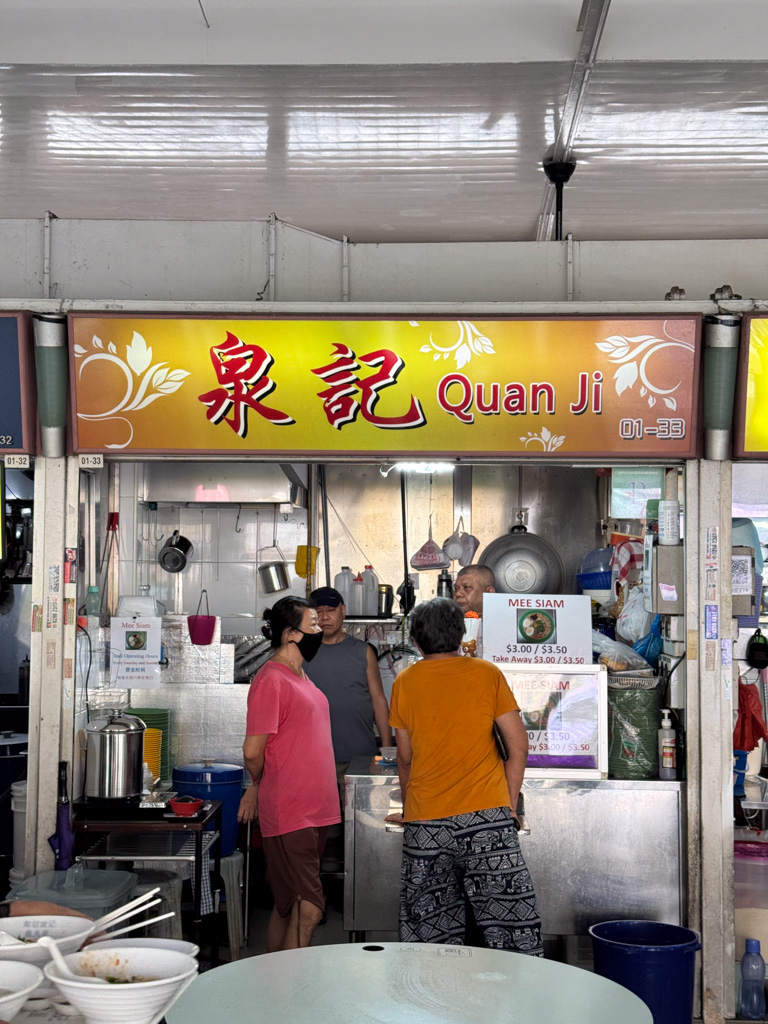
Elsewhere, he gestures towards Quan Ji (01-33), a humble mee siam stall that opens only on the weekend, where a plate still goes for $3 or $3.50.
At another corner sits Omma Chicken Soup (01-58), a Korean-inspired stall opened by Kenneth Teo, 31, the founder behind local TCM bubble tea chain Cha Mulan (01-81).
At Sempurna Jaya Muslim Food (01-47), known for its nasi padang and striking gado-gado, Kiat How jokes warmly about the stall’s dynamic quartet of helpers, made up of one uncle (nicknamed “Charlie”) and three aunties, whom he affectionately refers to as “Charlie’s Angels”.
Hawkers say business dropped sharply after TB cluster reports
The fallout from the TB cluster news was swift. Several hawkers HungryGoWhere spoke to say business dropped by 50% to 60% after reports first emerged on May 1, with several stallholders describing the following day as “the worst hit”.
Some also felt subsequent news reports triggered another dip in foot traffic.
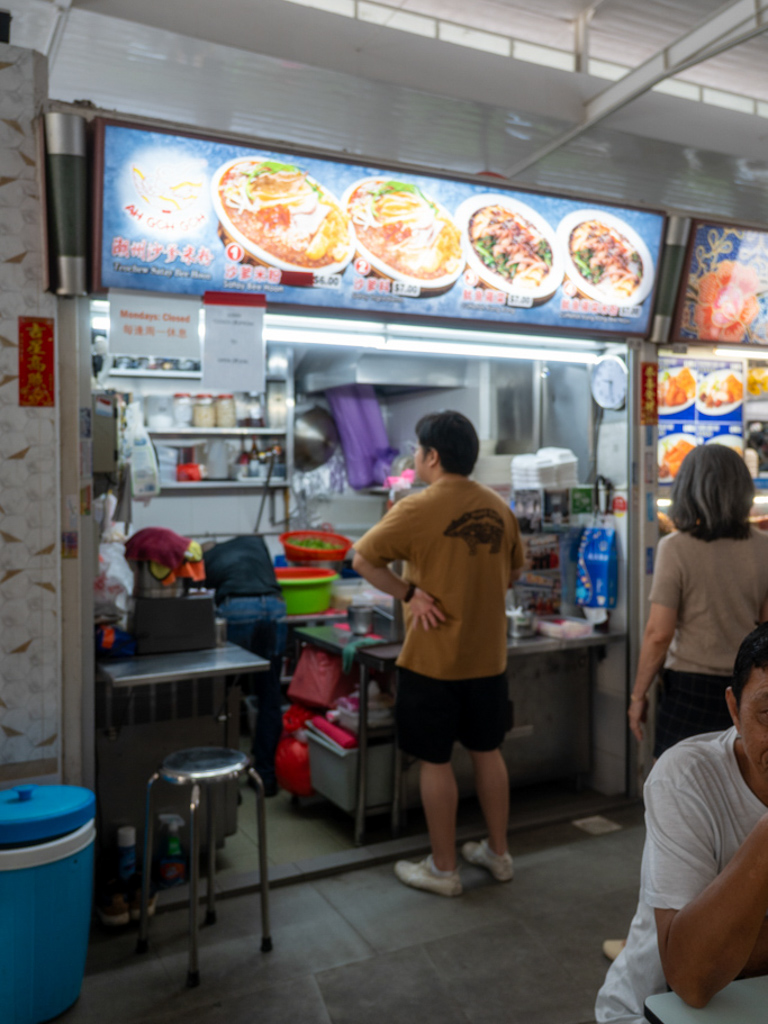
69-year-old Martin Goh, who has run Ah Goh Goh Traditional Satay Beehoon (01-30) for the last six years, says business fell by about 60%. The stall used to sell laksa, but following a hernia injury, the brusque-looking hawker switched to a simpler menu that was less physically taxing to prepare.
Down the aisle, Gen-Z hawker Lim Yuan Ming, 24, of 1.5-year-old What The Puff! (01-27) says business was less severely affected, compared to some neighbouring stalls, with sales dipping by around 10% to 20%.
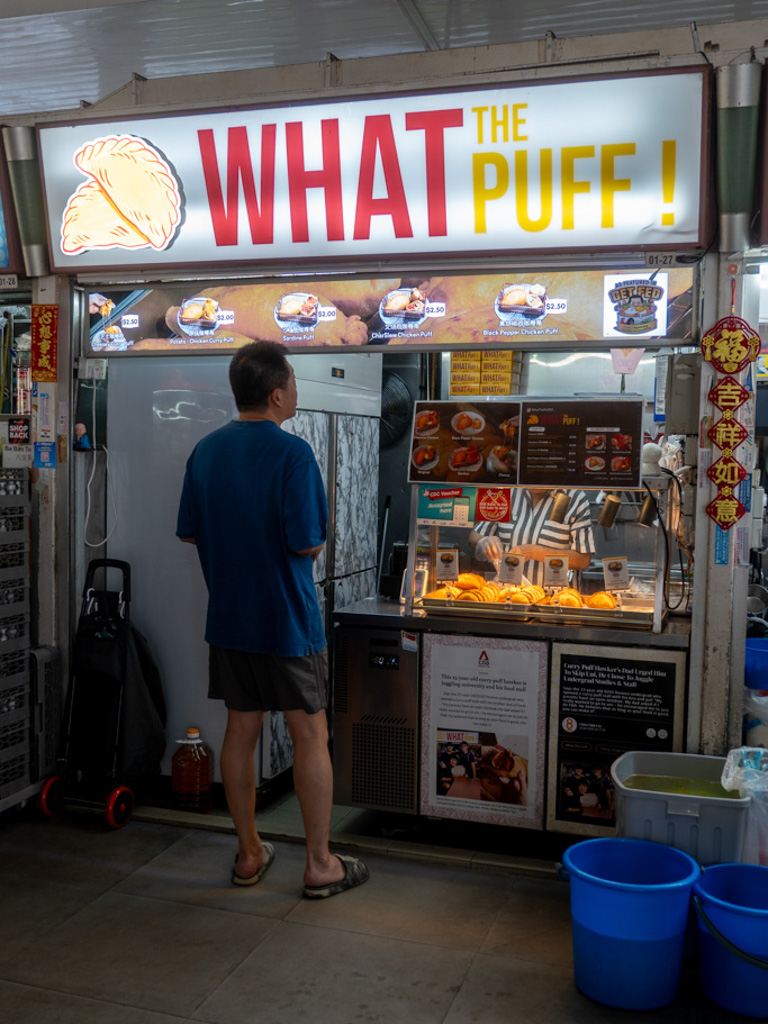
Yuan Ming, who runs the hawker business with his elder brother and a business partner, attributes this cushion, in part, to a recent media feature a week before news of the TB clusters broke.
Still, Yuan Ming recalls that foot traffic “fell quite badly” the day after the reports first surfaced. His mother, Wendy Koh, 57, who runs a separate hawker stall selling steamed dishes (01-57) at the other end of the food centre, says business has fallen by about 40%.
“In the earlier weeks, we didn’t see as many senior regulars,” she adds.
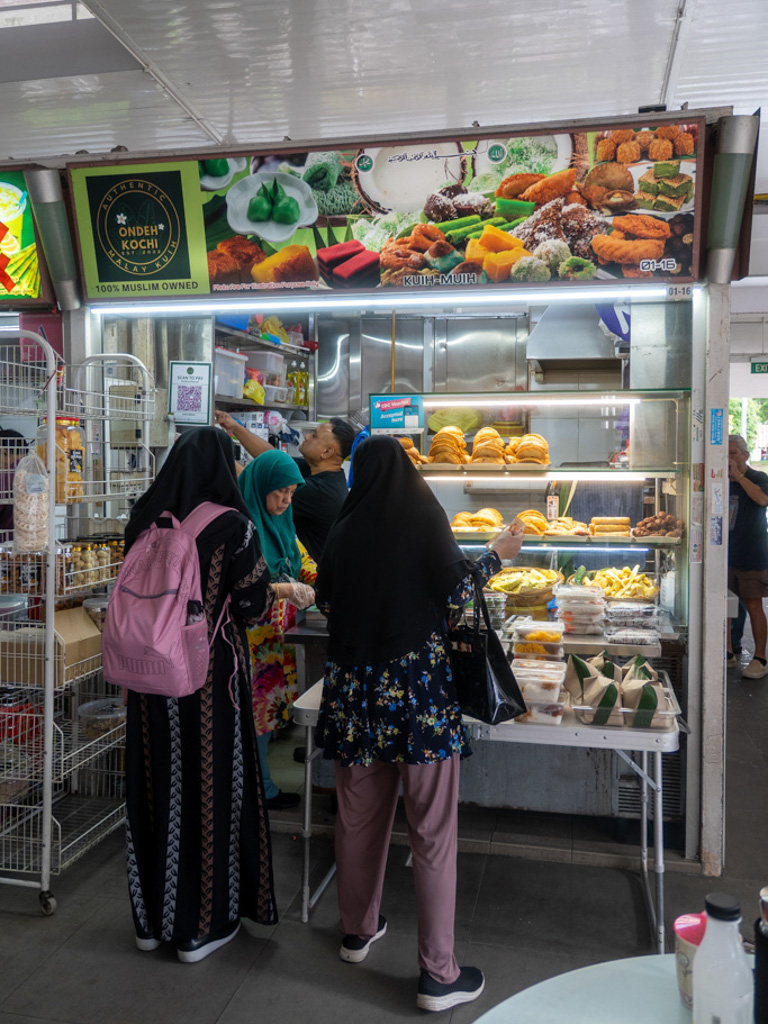
At Ondeh Kochi (01-16), 52-year-old Osman Kadir says sales across his stalls fell by between 50% and 70% after news of the TB clusters first emerged. Together with his elder sister, Osman runs the stall known for its goreng pisang and handmade kueh, while also operating a nasi padang stall nearby.
The drop in foot traffic also led to food wastage. Osman says some unsold kueh had to be donated to a nearby mosque after prayers, while other items were transferred to another stall he operates in Kaki Bukit. He also observed another dip in crowds after continued media coverage on the TB screening exercise.
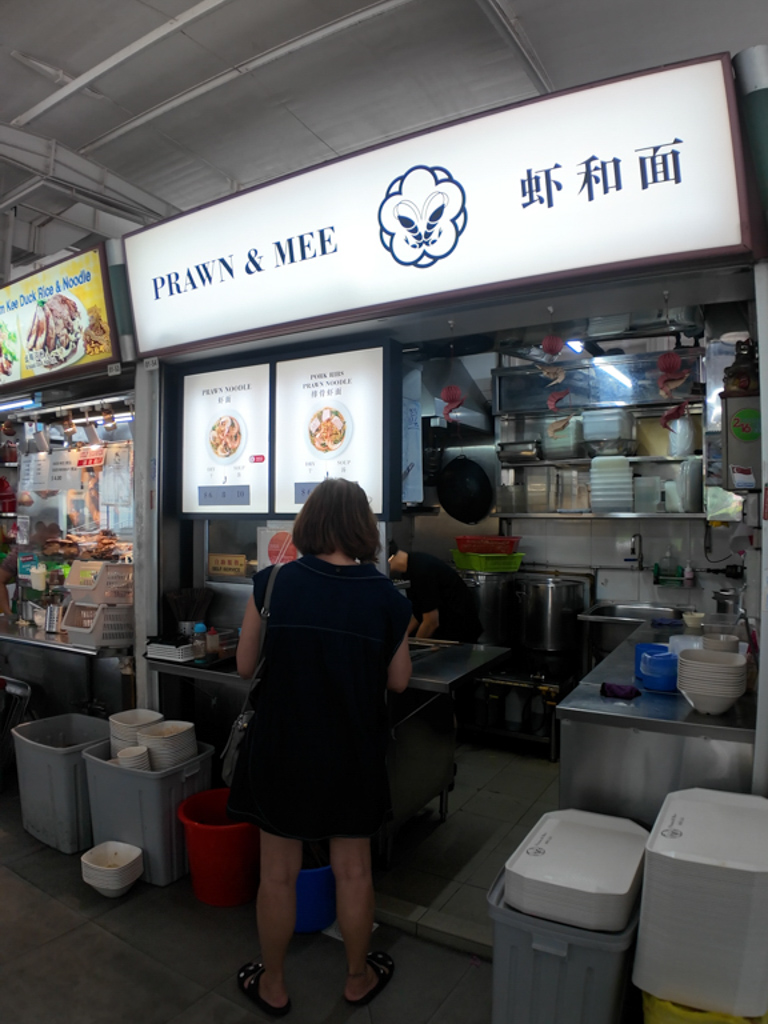
Nearby, Prawn & Mee (01-54) co-owner Raphael Sim, 36, says that the fluctuations varied day to day. “Some days are really bad, some days are okay,” he says. “It’s really unpredictable right now.”
Raphael, who pivoted from selling umeboshi donburi to prawn noodles in 2019 after graduating from the prestigious Culinary Institute of America, says the recent slowdown reminded him of the uncertainty hawkers faced during the Covid-19 pandemic.
“We still focus on consistency,” he says. “We try not to change anything out of the ordinary.”
Both hawkers say they hope customers will continue returning, stressing that authorities have repeatedly assured the public that TB is not transmitted through food or brief contact.
TB is not spread through food or brief contact
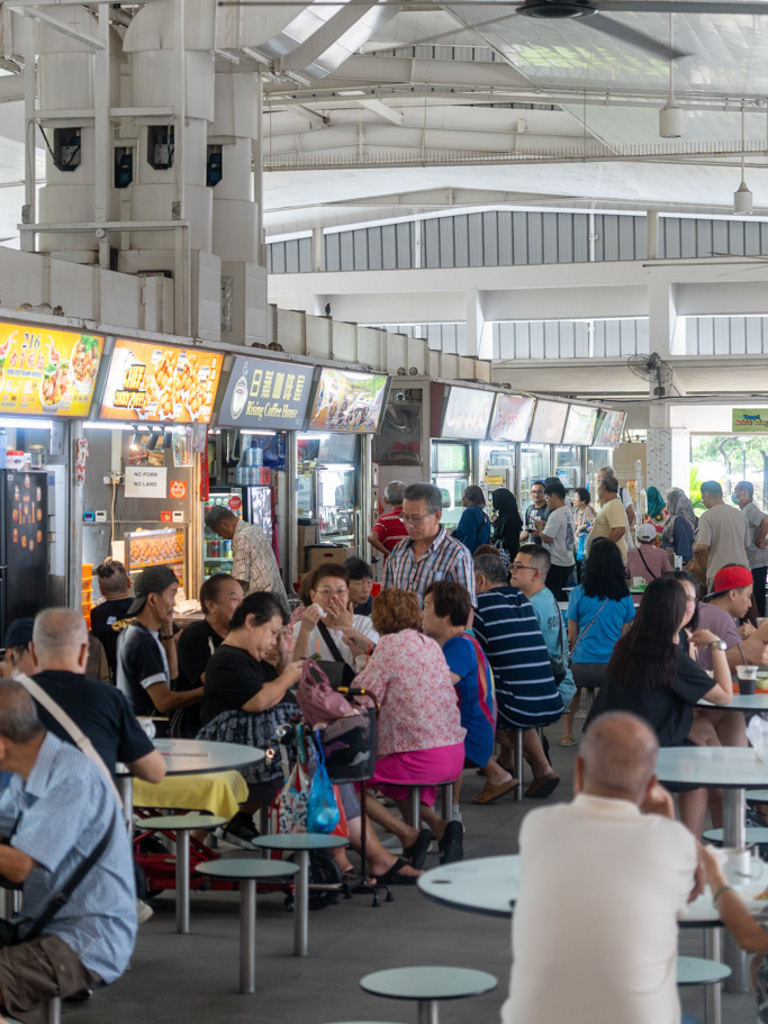
Health authorities have since stressed that TB is not transmitted through food, utensils or brief contact, and typically requires prolonged exposure over days or weeks. According to the Communicable Diseases Agency (CDA), a person also cannot get TB from sharing cups, touching surfaces or shaking hands.
In recent weeks, ministers, including Minister for Health Ong Ye Kung, have also visited 216 Bedok Food Centre and Market to dine with hawkers and reassure residents. The market and hawker centre has also undergone deep cleaning, while merchant associations organised promotional activities, including voucher campaigns and a getai performance, to help draw crowds back.
CDA also began mandatory screening exercises at Heartbeat@Bedok on May 4, after three TB clusters were detected in the area. To help affected businesses, the National Environment Agency introduced a half-month rental rebate for eligible hawkers and merchants in May, while the East Coast Town Council waived half a month of service and conservancy charges for affected tenants.
“But for hawkers, it’s not really the rental rebate,” says Kiat How. “They want people to come and eat the food.”
Check out some of these hawkers below.
Hong Heng Teochew Carrot Cake
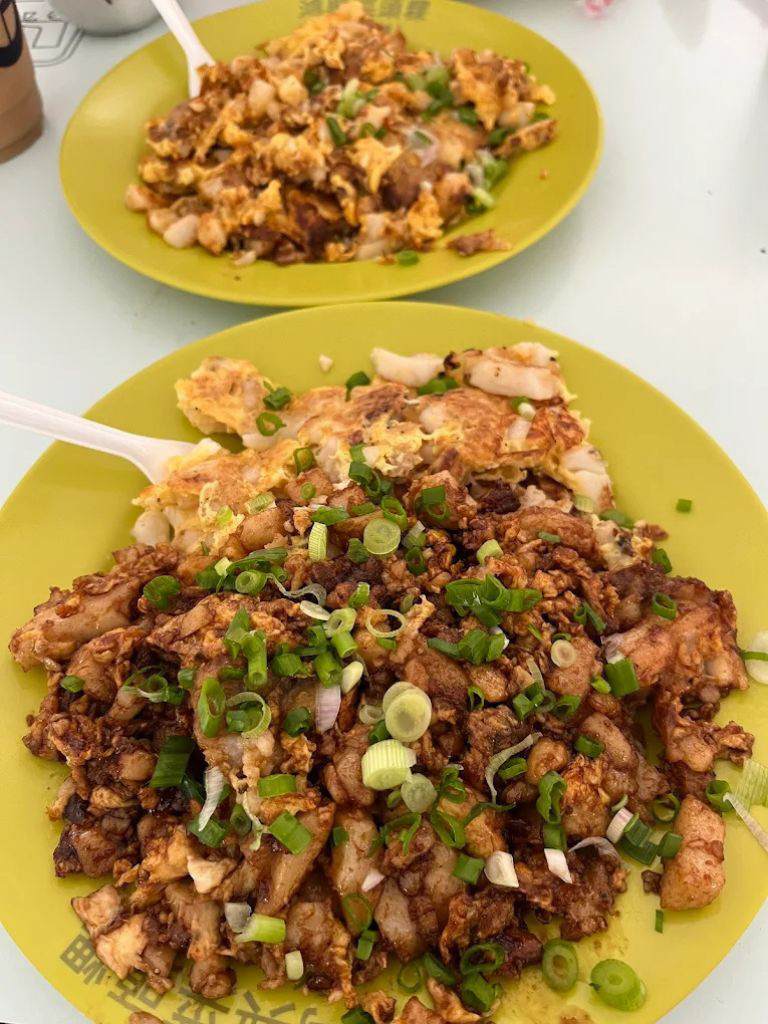
Hong Heng Teochew Carrot Cake serves up old-school carrot cake with crisp edges and soft chunks of radish cake beneath. It’s run by the hawker centre’s chairman, 62-year-old veteran hawker Koh Lim Poh — who has been frying carrot cake for 46 years and previously peddled his wares in Joo Chiat in the late 1970s. Prices start from S$3.50.
Ondeh Kochi
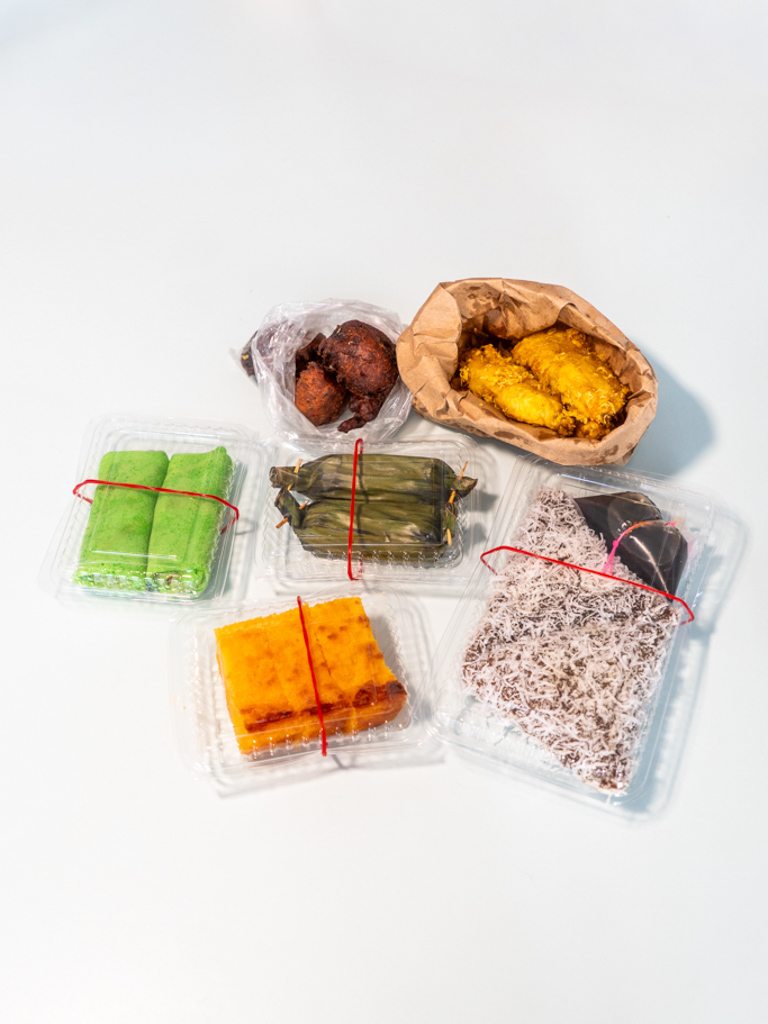
Run by Osman and his elder sister, Ondeh Kochi serves sinfully delicious goreng pisang (S$2.50 for three pieces) that boasts a light batter and a creamy, custardy interior. Also worth trying are the gooey banana balls, or cekodok pisang (S$2.50), with their dark golden exterior and soft, sweet banana-filled centre.
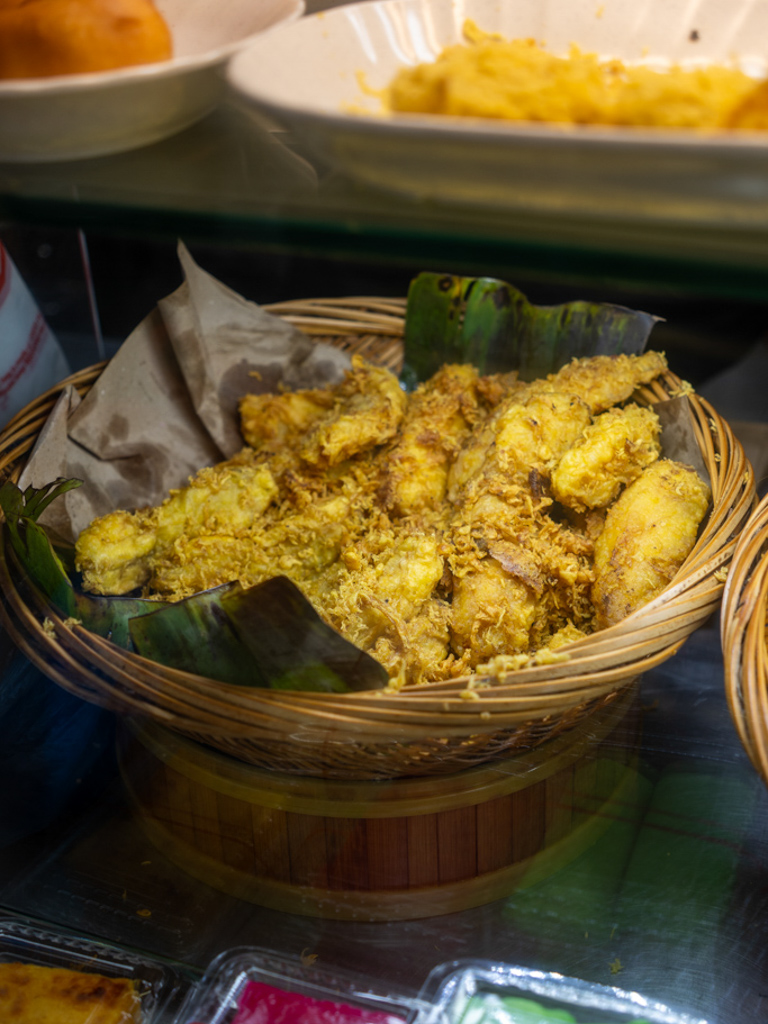
The stall also offers a colourful spread of handmade kueh, priced at three for S$5. Its kuih lopes (S$3) is especially satisfying, pairing soft glutinous rice cakes with freshly grated coconut and smoky gula melaka syrup.
Ah Goh Goh Traditional Satay Beehoon
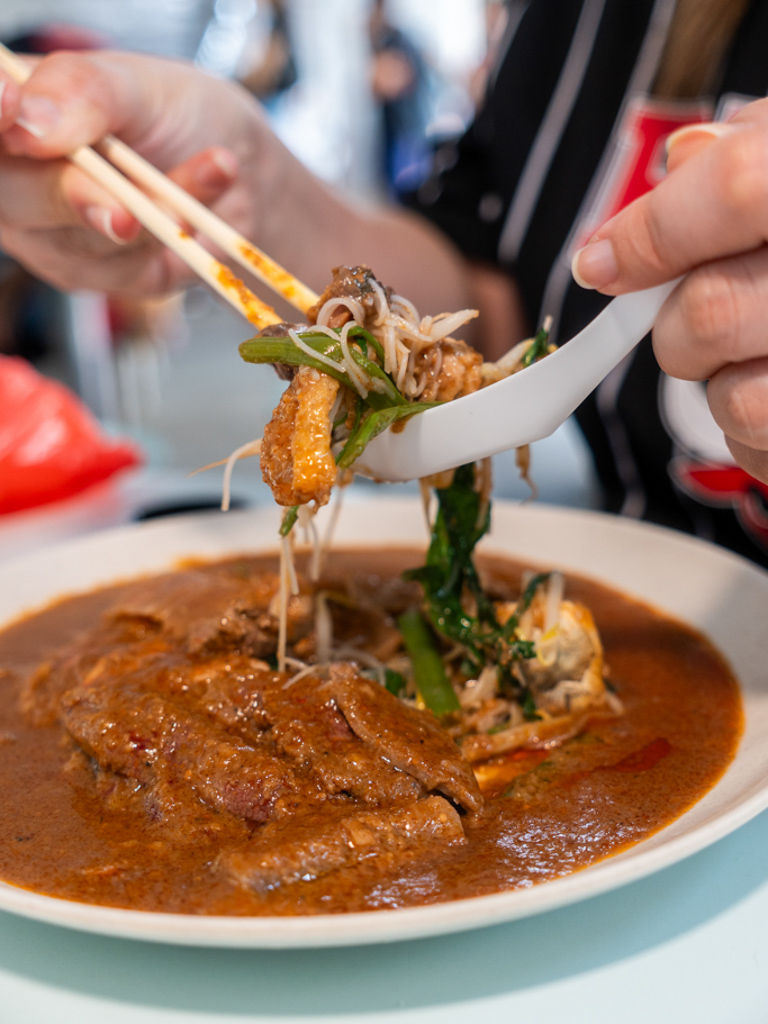
This longtime stall specialises in satay bee hoon (S$6) coated in a rich peanut gravy that is both sweet and savoury. The dish comes topped with cuttlefish, cockles and kang kong, a hearty old-school hawker meal that can be somewhat difficult to find these days, especially for breakfast. Cash only.
Prawn & Mee
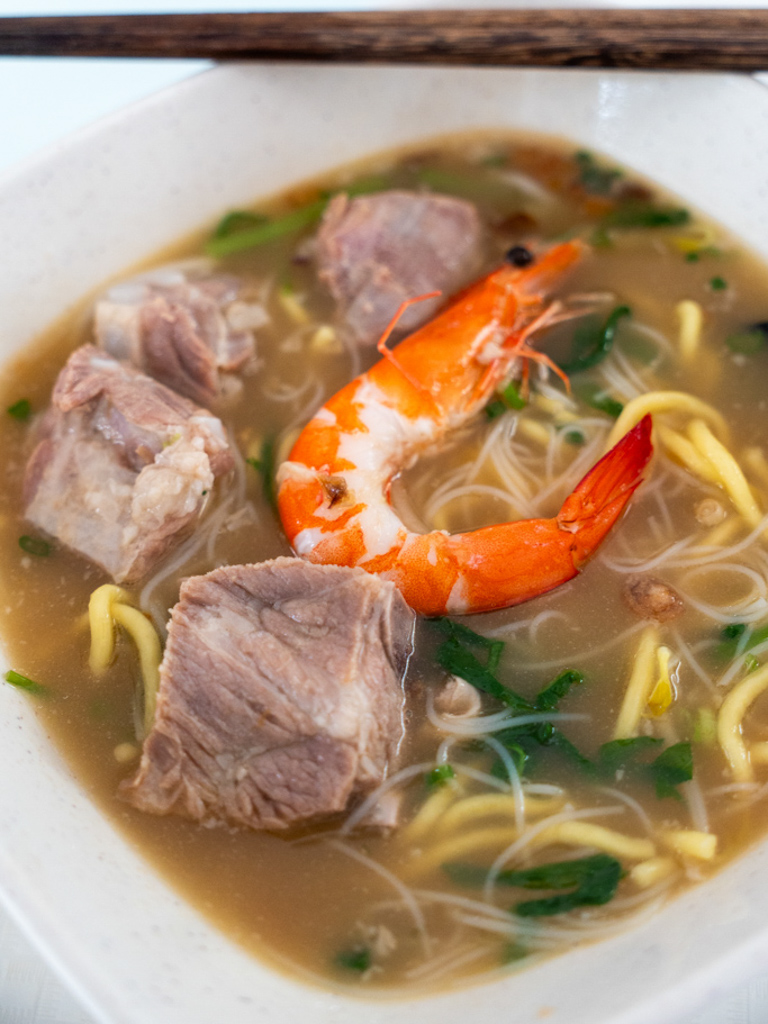
The culinary school-trained hawkers Raphael and Gladwin Yap dish up robust bowls of prawn noodles simmered from pork bones and crustaceans. Clad in coordinated all-black outfits that feel more Maison Margiela than traditional hawker whites, the younger team is no greenhorn at the hawker centre. We had the pork ribs prawn noodles (S$6), which boasted plenty of umami depth, though the broth can err slightly on the sweeter side.
What the Puff!
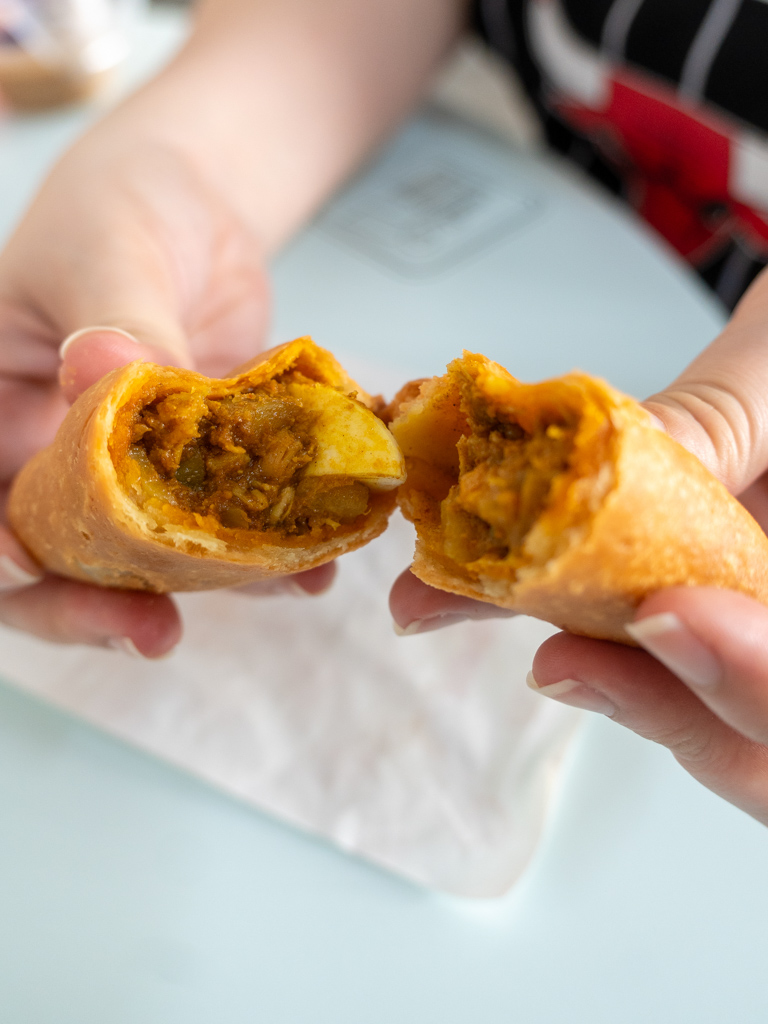
Having built a following for its flaky handmade curry puffs stuffed with curried potato and chicken, What The Puff! has since expanded rapidly beyond its original hawker beginnings, reportedly growing into a half-a-million-dollar operation within a year. Despite the buzz, the young team still prepares the pastries fresh daily at their Bedok stall, where queues continue forming for the crisp, buttery puffs. Go for the original puff (S$2) which boasts shredded chicken and fragrant curry paste and diced spuds or sardine puff (S$2) for a spicier kick.
Generation Coffee
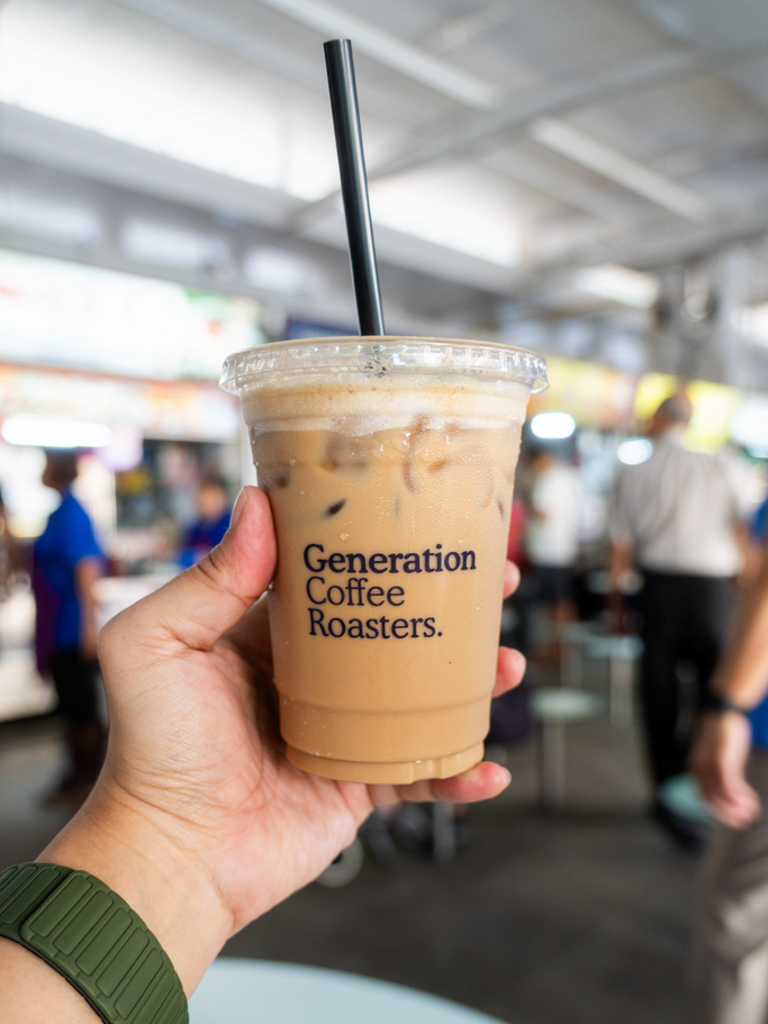
The coffee chain has an outpost in Bedok, where traditionalists can still get a warm cup of old-school kopi (from S$1.90), albeit using more premium coffee beans. Beyond the usual kopi and teh (from S$1.90), the stall also serves espresso-based bevvy (from S$2.90) and lattes (from S$3.90) for younger caffeine seekers looking for something a little more atas between hawker rounds.
For more ideas on what to eat, check out the best spots to get birthday cakes for your loved ones and the new Muslim-owned Kovan bakery with great shio pan!

Ler Jun chases "good" food the way some people chase flight deals. He writes about hawker legends, neighbourhood favourites, and the occasional fancy feast. His stomach is as curious as his pen.
Read more stories from this writer.