Review: Can’t decide between ube and matcha? Halo Ube & Matcha gives you the best of both worlds

- The team behind Hvala has just launched Halo Ube & Matcha, taking over its former Hvala Kissa unit at 100AM, just in time to ride on the rising popularity of ube-flavoured items.
- Its menu is built around real ube and matcha, with drinks starting at S$4.
- Standouts include the ube banana pudding coffee and ube liquid mochi hojicha, while we thought the ube matcha latte was just average.
There’s a particular kind of Tanjong Pagar lunch hour where everyone seems to be carrying a coffee that costs more than a regular kopi-and-toast breakfast altogether — and no one bats an eyelid.
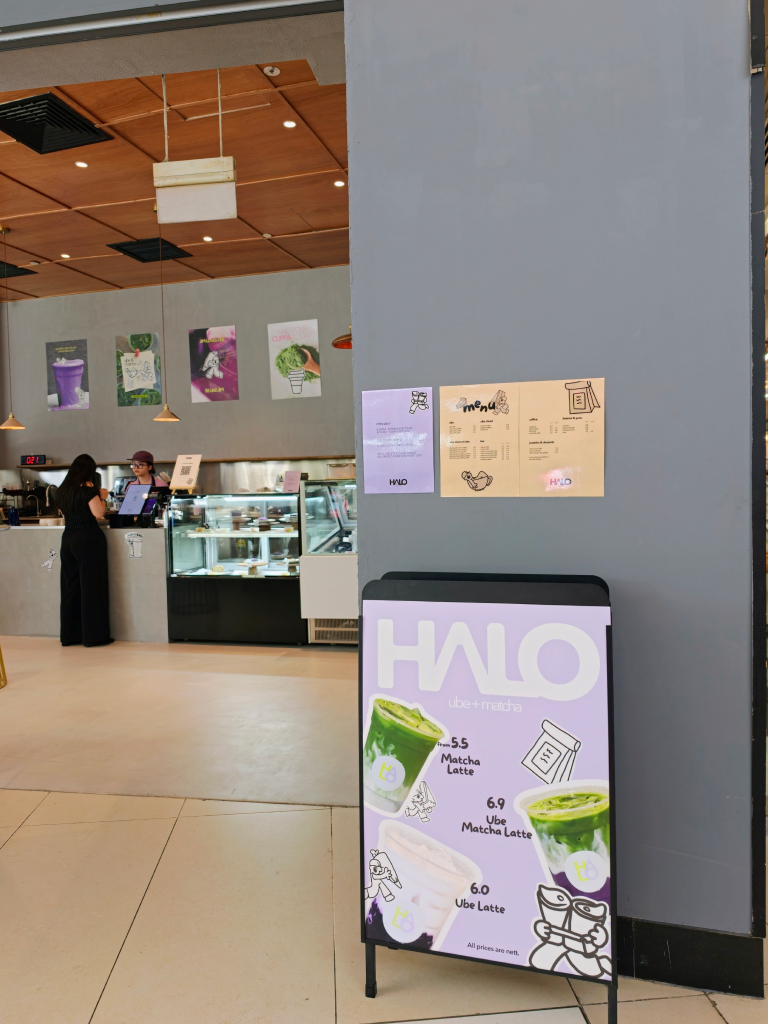
So when I came across the S$4 price tag outside the new Halo Ube & Matcha at 100AM, it stopped me mid-stride. Even if that was just its cheapest drink.
At a glance, everything about the shopfront, from the matcha-and-ube branding to its prominent spot within the high-traffic Tanjong Pagar mall, suggested a cafe that knew exactly which trends it was tapping into.
The backstory
The team behind Halo Ube & Matcha is none other than the ones who started Hvala — in fact, the new concept stands right where Hvala Kissa once was.
If you’re unfamiliar with Hvala, the homegrown brand was one of the first, if not the first, that helped bring matcha into the local mainstream consciousness long before it became a cafe menu staple.
The brand was founded by Andrea Tan, who was the first woman to take the Singapore National Brewers Cup title back in 2015.
In the decade that Hvala has been around, it has expanded into many different concepts: A teahouse chain, a three-storey Japanese-style outpost at Keong Saik, and most recently, the now-defunct Hvala Kissa, a decaf-focused coffee concept.
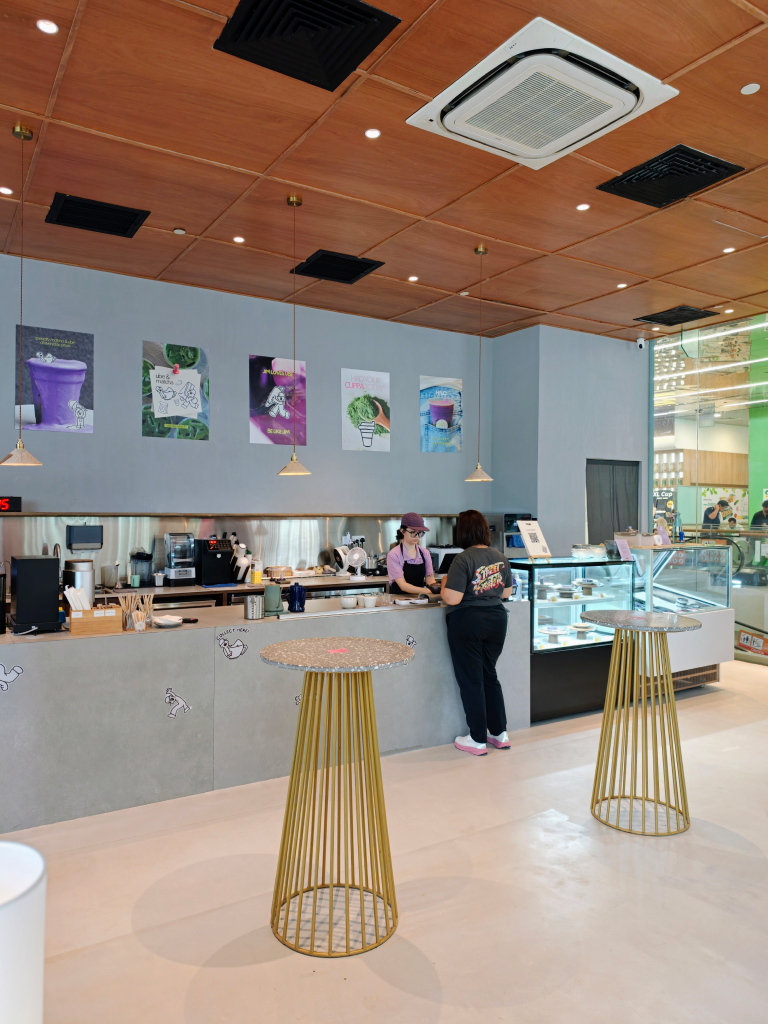
Despite undergoing a concept change from Hvala Kissa to Halo Ube & Matcha, however, its 100AM space hasn’t changed much. Most of the original fit-out, which seats about 20 comfortably, has been kept intact — with the team opting to retain the same pared-back, industrial aesthetic.
As its name suggests, the menu centres on ube (a purple yam from the Philippines), from an ube latte to ube-based matcha and even an ube banana pudding series.
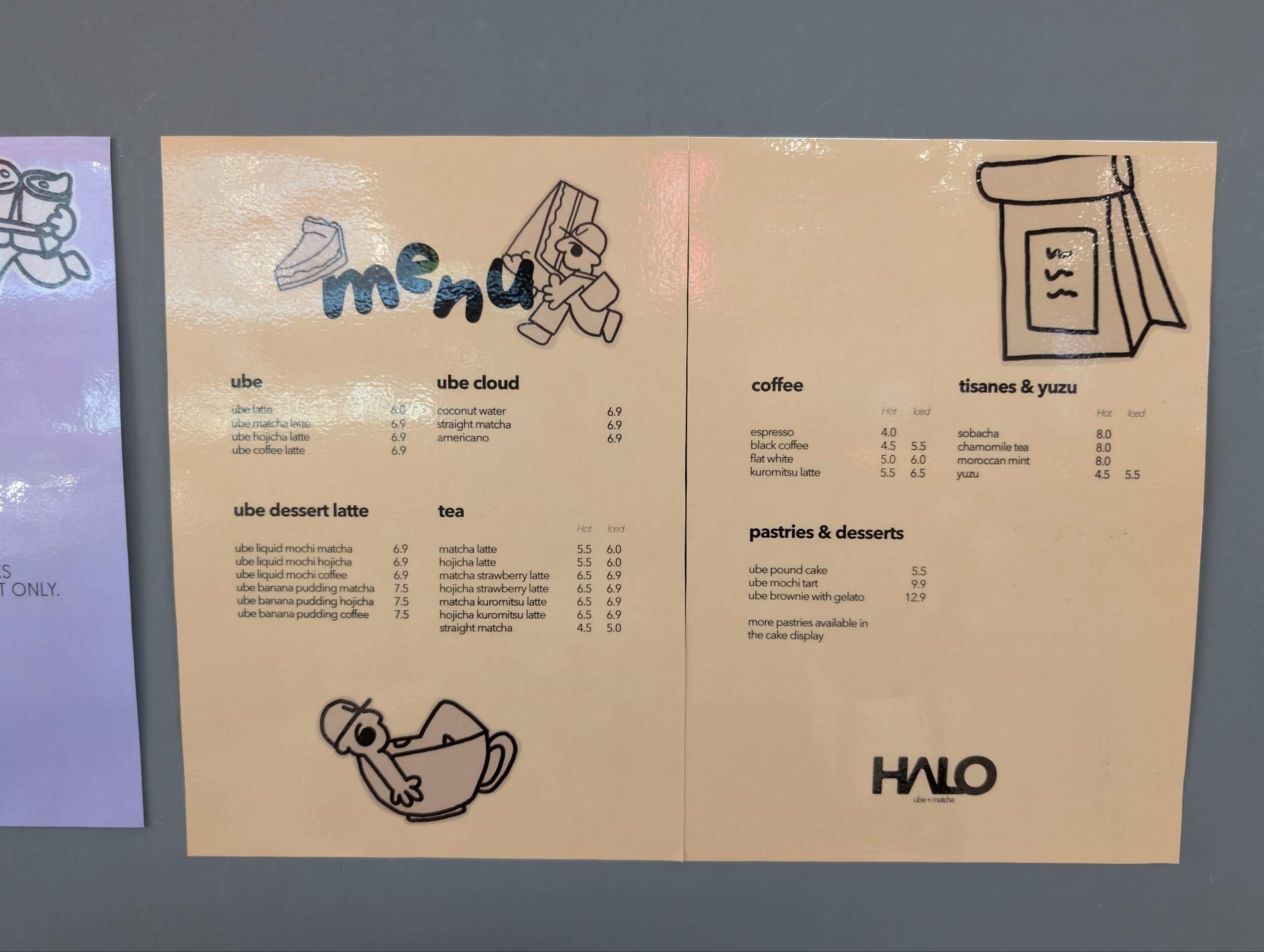
For anyone who’d rather skip the ube altogether, there’s a sizable menu of straight matcha, hojicha, and coffee drinks, plus a short list of tisanes (herbal teas) and a yuzu beverage, too.
The health conscious will be glad to know that you can tweak your desired sweetness level here, from “less sweet” to “extra sweet”, whichever you prefer.
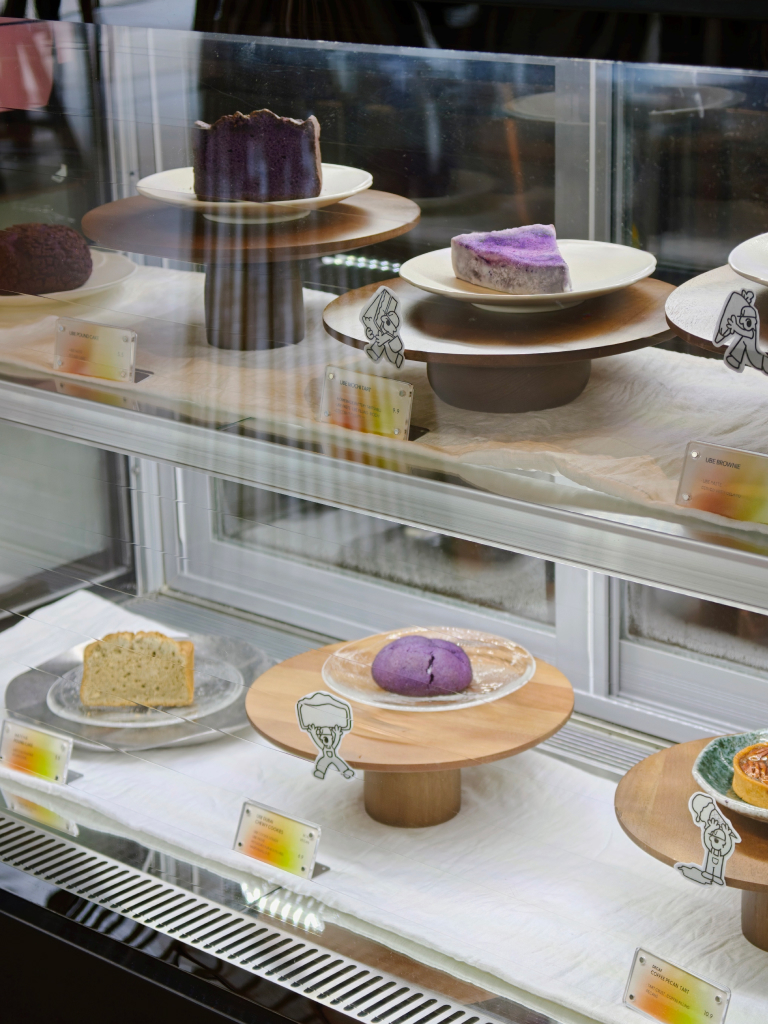
Dessert choices are more limited, with options such as an ube pound cake (S$5.50), ube mochi tart (S$9.90), ube brownie with gelato (S$12.90), and rotating assorted pastries.

Our verdict
Hvala Kissa only opened at the end of 2025, making Halo Ube & Matcha a surprisingly quick pivot.
At first glance, it could read as indecision. But after spending an afternoon here, it’s clear that Hvala is doing what it has always done well — spotting where local tastes are headed and getting there ahead of the crowd.
While Filipino dessert shops have quietly championed ube for years, 2026 feels like the year the purple yam finally enters the conversation, popping up everywhere from bubble tea menus, to supermarket shelves, and cafe menus.
Halo’s latest move leans fully into this rising momentum.
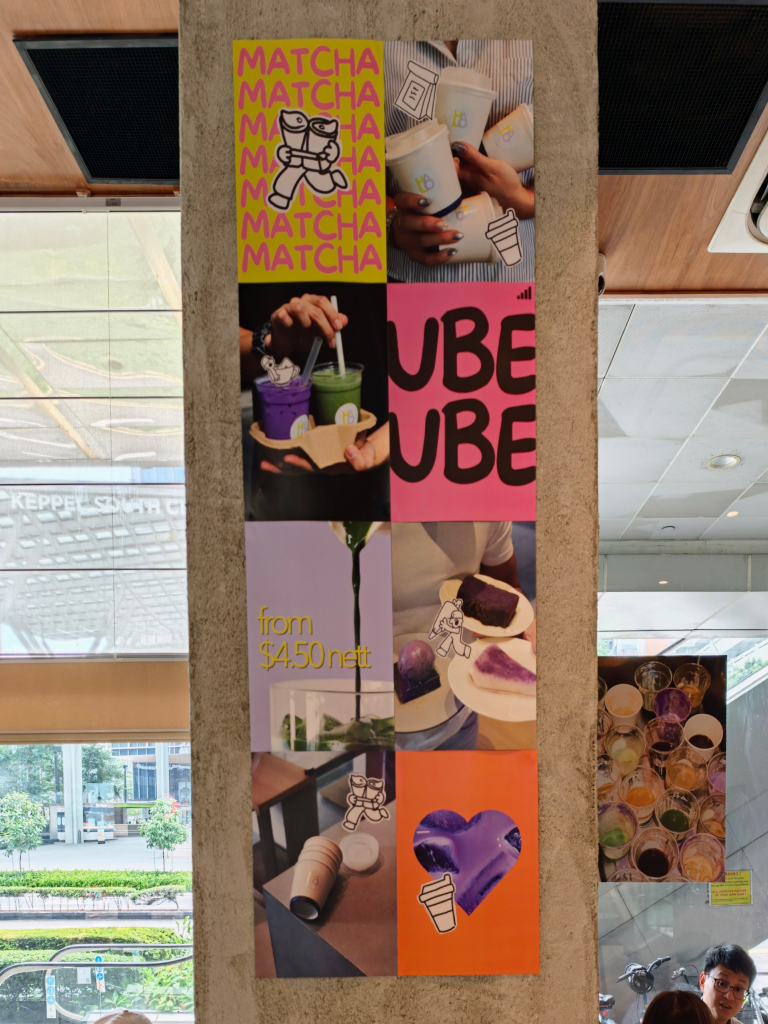
But what makes Halo stand out isn’t how it’s opted to pair the popular matcha with ube — it’s how accessible the concept is.
With drinks starting at just S$4, it’s easily one of the more affordable speciality beverage concepts in the CBD.
Additionally, rather than treating ube as a novelty, the menu explores it in all sorts of ways, from straightforward lattes to more playful creations such as its liquid mochi and banana pudding drinks.
And it’s not just a gimmick; the ube and matcha taste as they should, with no artificial flavours doing the heavy lifting, while more inventive creations blur the line between drink and dessert in a good way.
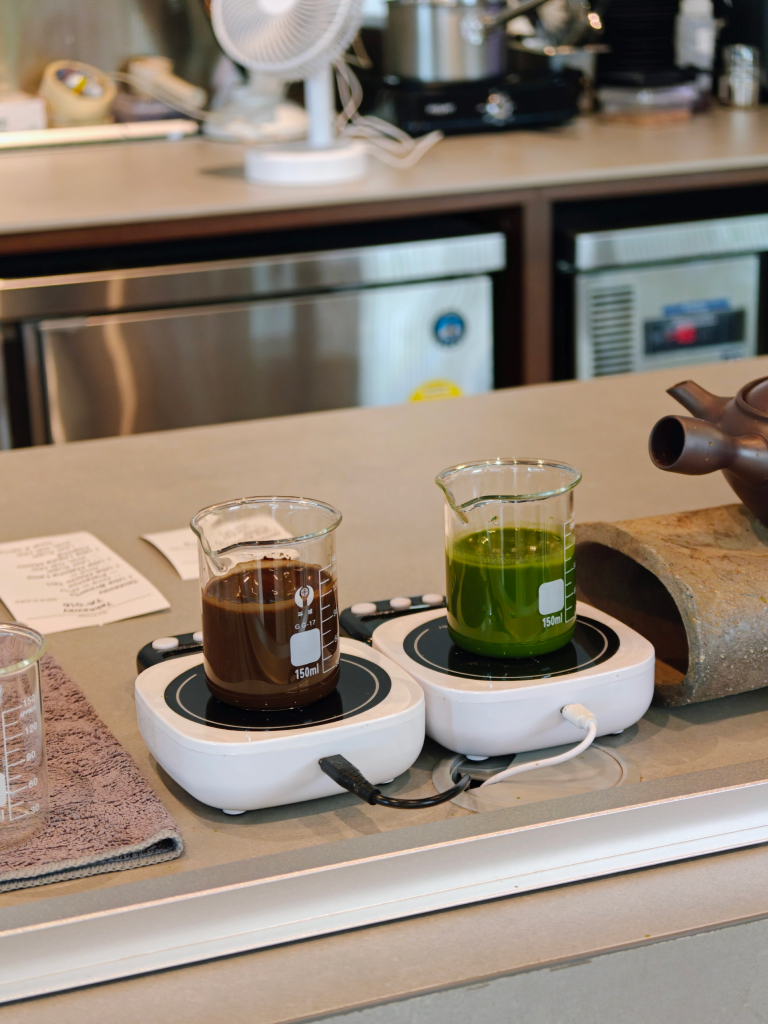
If you’re planning a visit, we’d suggest coming after the weekday lunch rush, which is when the cafe settles into a surprisingly peaceful nook.
Granted, the industrial interiors and its lack of plush seating won’t convince you to stay for hours, but if you do decide to, there are enough open tables and quietness to make it an easy place to escape from the office for a while.
What it’s good for
First-time visitors after the full Halo experience should skip any safe orders and go straight for the ube banana pudding coffee (S$7.50) — if there’s a dish built to convert someone into a regular, this would be it.
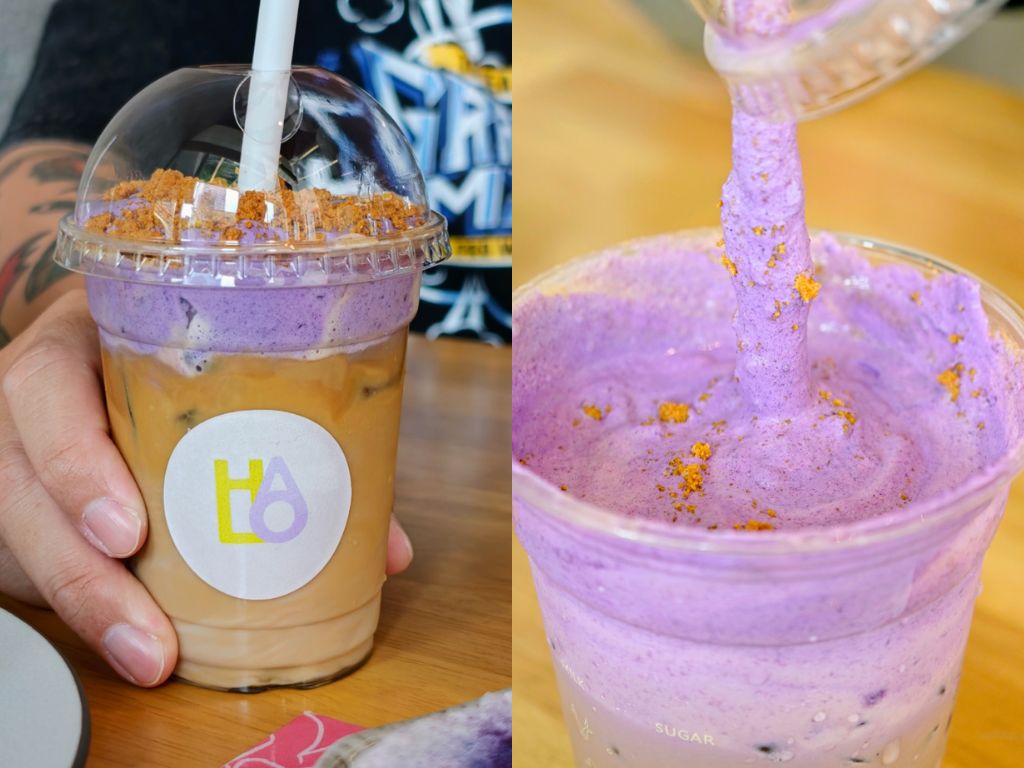
The drink features ube-flavoured banana pudding stirred through coffee and finished with a scatter of Biscoff crumbs. Once mixed, you end up with something between a pudding and a beverage — indulgent, thick, but very delicious.
The taste of banana comes through prominently, though you can still taste enough of the coffee for your needed caffeine kick.
Anyone hoping for a conventional latte with this drink might find it unconventional, but those with a sweet tooth will likely polish this indulgent smoothie off without much effort, as I did.
The ube liquid mochi hojicha (S$6.90) is another standout, especially if you’re after a more considered sip.
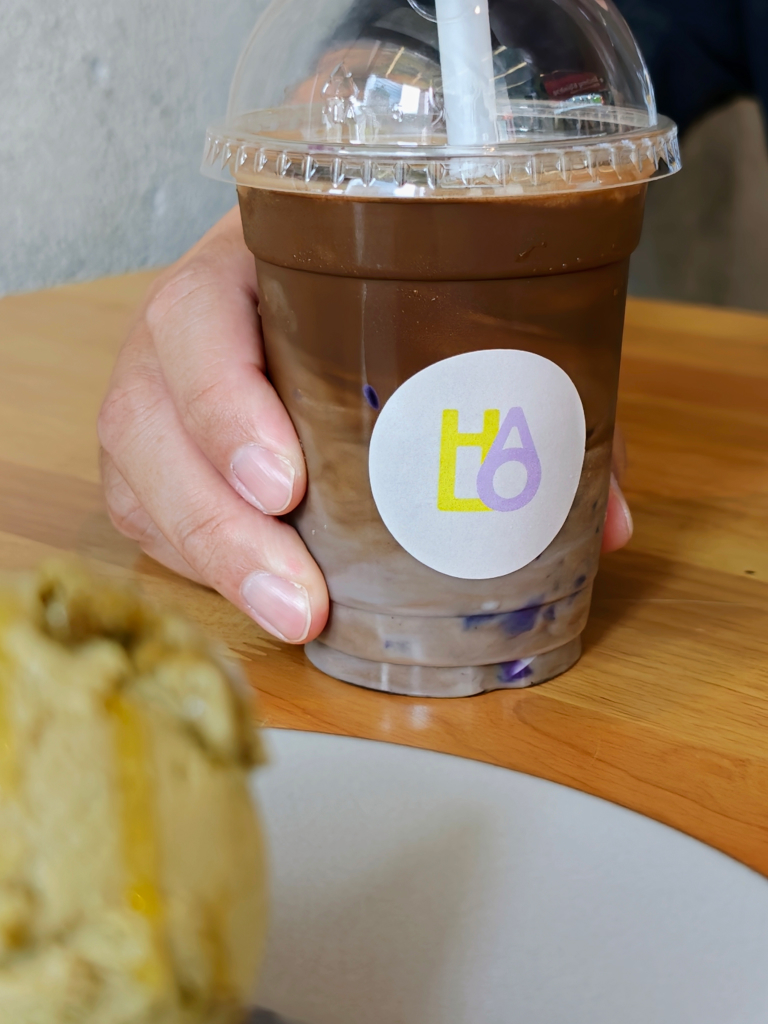
Liquid mochi — a stretchy, pourable form of mochi that is often served in bubble tea or over shaved ice — isn’t something you see often on drinks menu here, but it earns it place, giving the drink a pleasantly chewy texture in place of the usual pearls or nata de coco.
Paired with hojicha, whose roasted nuttiness plays well against ube’s earthiness, it’s one of the more balanced drinks on Halo’s menu where the textures work as well the flavours.
Desserts wise, the ube brownie with gelato (S$12.90) was a nice surprise.
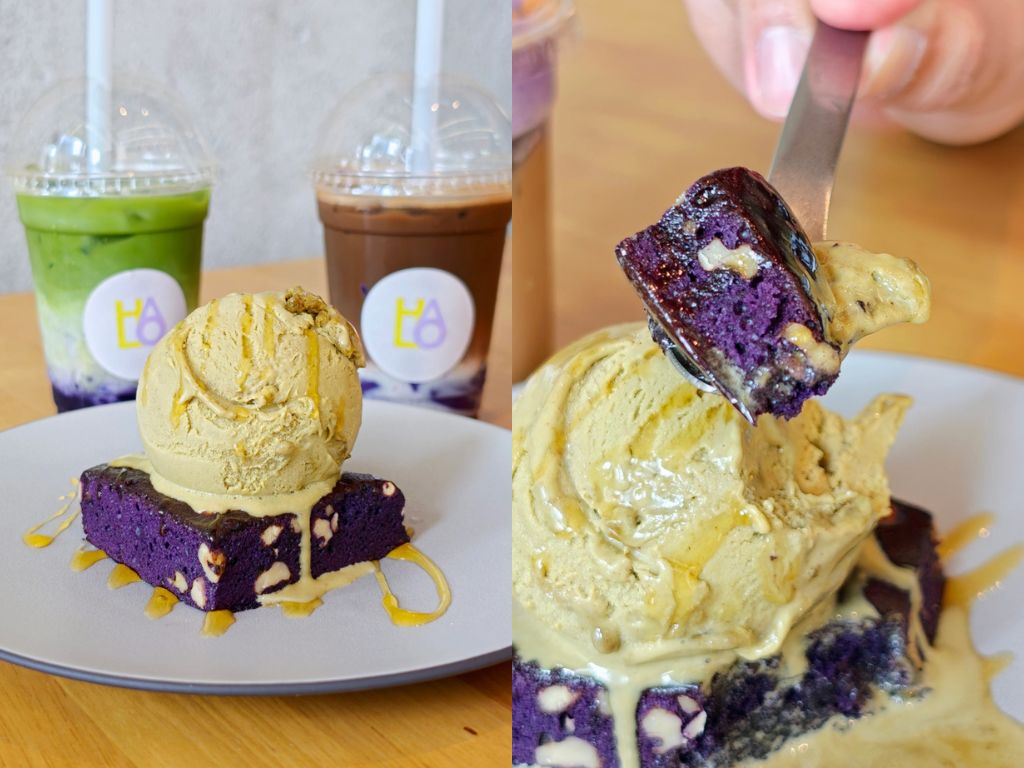
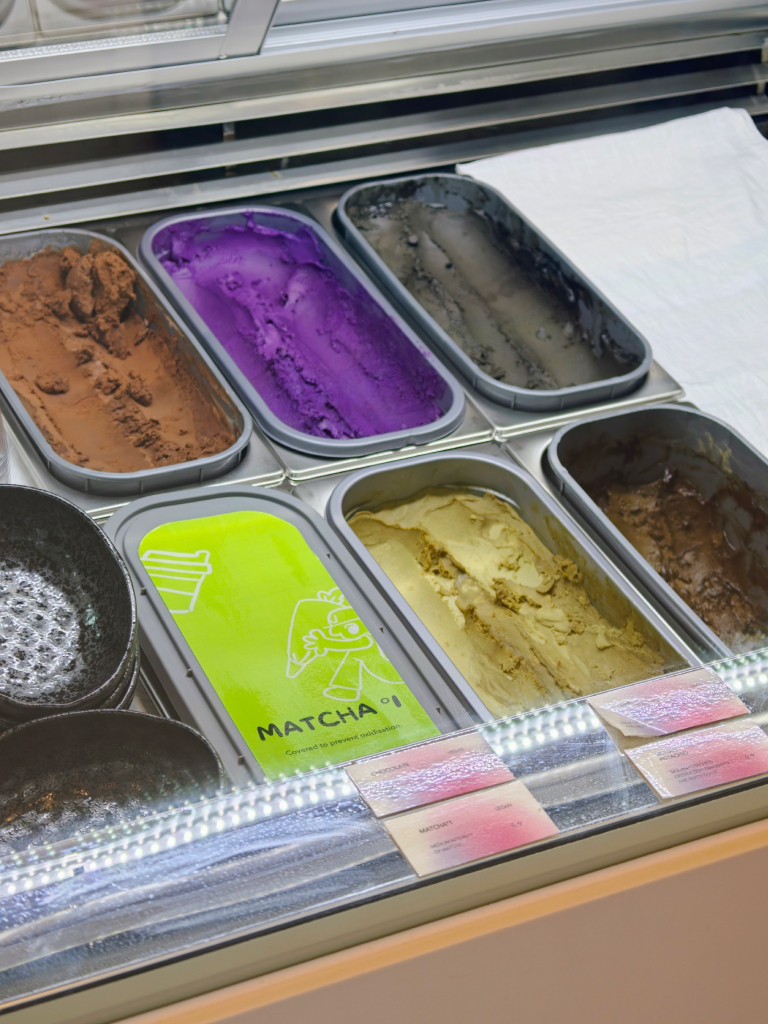
Halo’s version is denser than most classic chocolate brownies you’d find — which provides for a satisfying chew — and Halo Ube & Matcha leans into that by topping it with a generous scoop of vegan Sicilian pistachio gelato, which softens the richness nicely.
It’s worth noting that it’s a very photogenic dessert that tastes as good as it looks, so if you’re the sort that loves a good ‘grammable sweet, this is a shoo-in.
Would I come back for this and have it again all to myself? I reckon yes.
The ube mochi tart (S$9.90), on the other hand, is better shared.
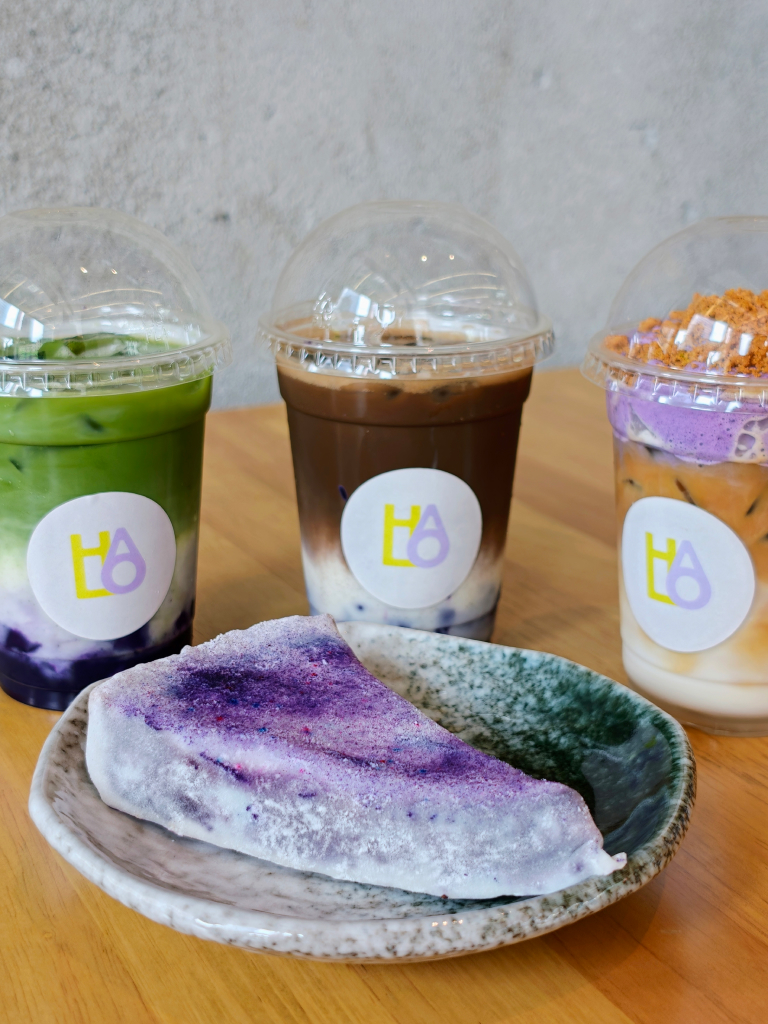
It features a cookie-like tart shell, rich ube filling, and coconut Chantilly, all wrapped within a mochi skin, making for an enjoyable mix of textures.
The sweetness builds quite quickly so it’s best enjoyed split across the table — it can become a little overwhelming if tackled alone.
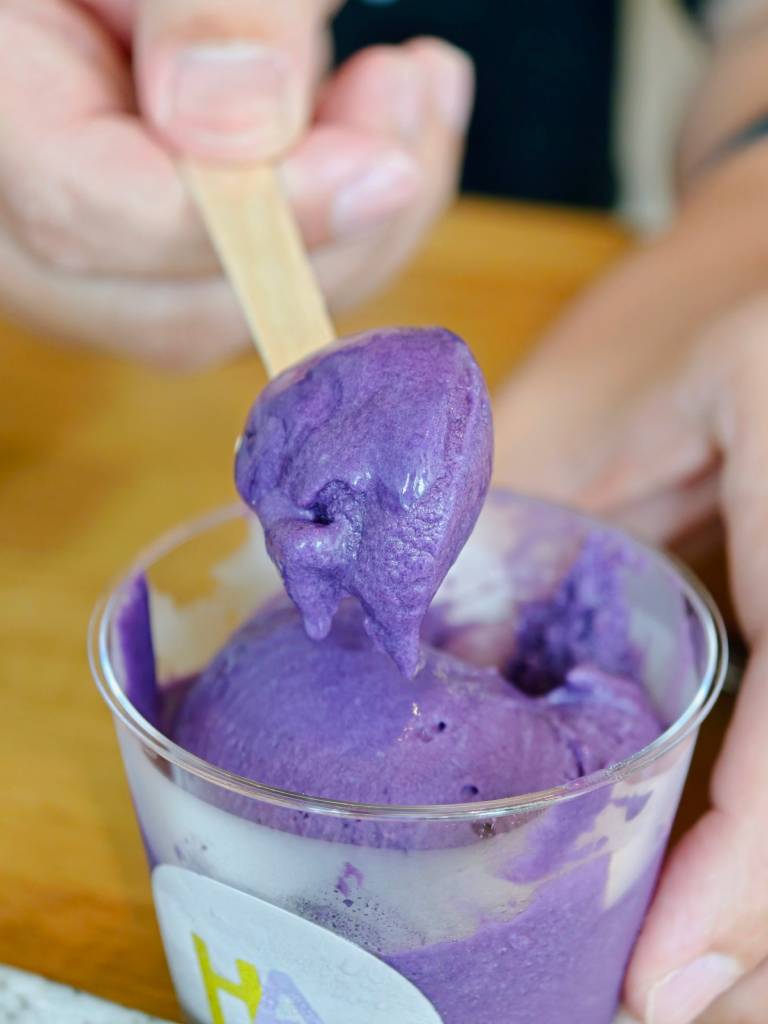
If you’re after something simpler, the ube gelato (S$5.90) offers a gentler take than its other menu counterparts. The flavour is subtler than expected — closer to vanilla than an intensely earthy ube taste — making it an ideal pairing for richer desserts elsewhere on the menu.
What it could improve on
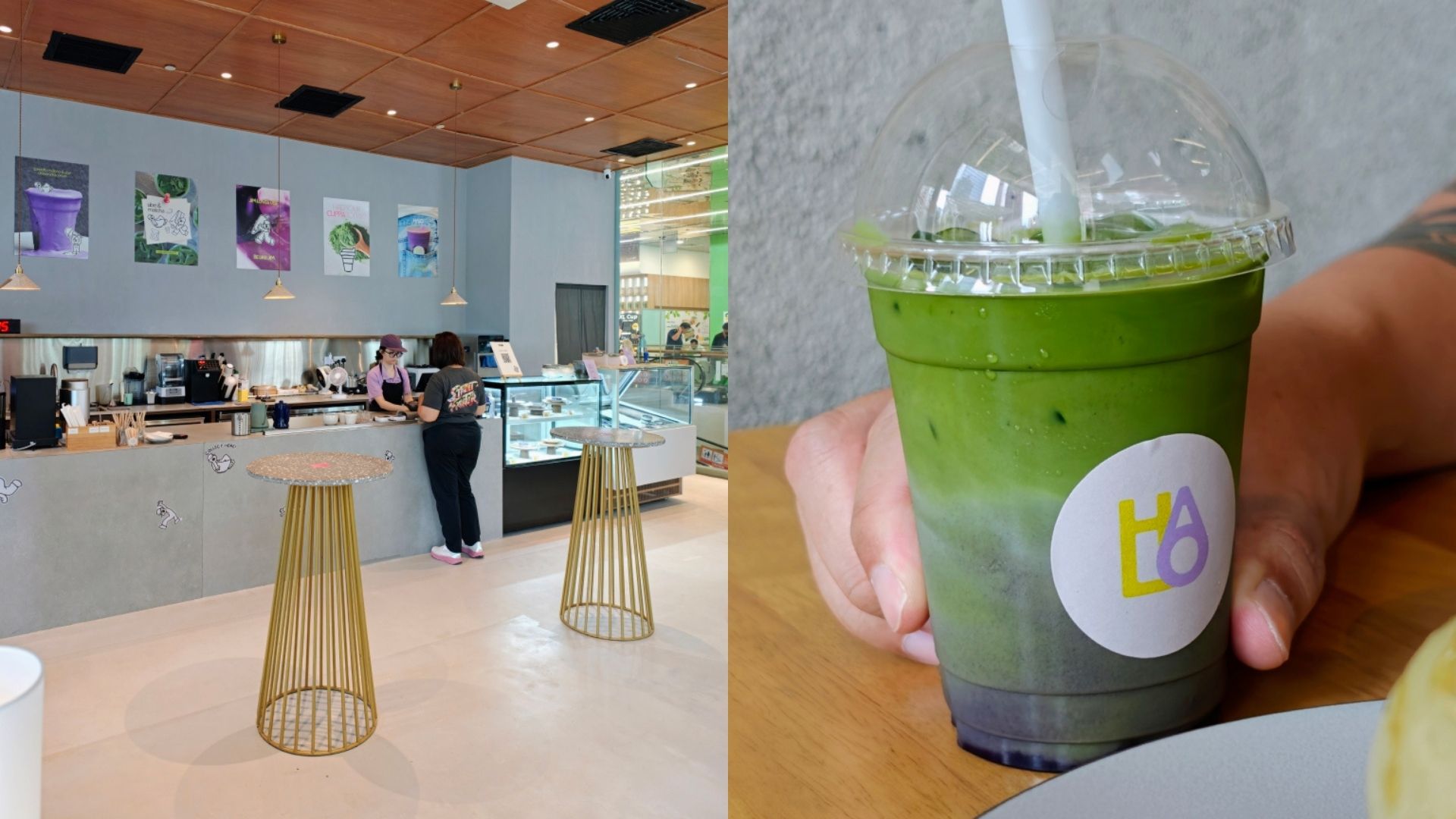
If there’s one drink that didn’t quite live up to the rest of the menu, it’s the ube matcha latte (S$6.90). Not because it is poorly made, but because it plays things a little too safe.
The matcha comes through earthy, and the ube lends just enough body without tipping into heaviness — it’s a perfectly reasonable order for anyone who wants a straightforward drink without much deliberation.
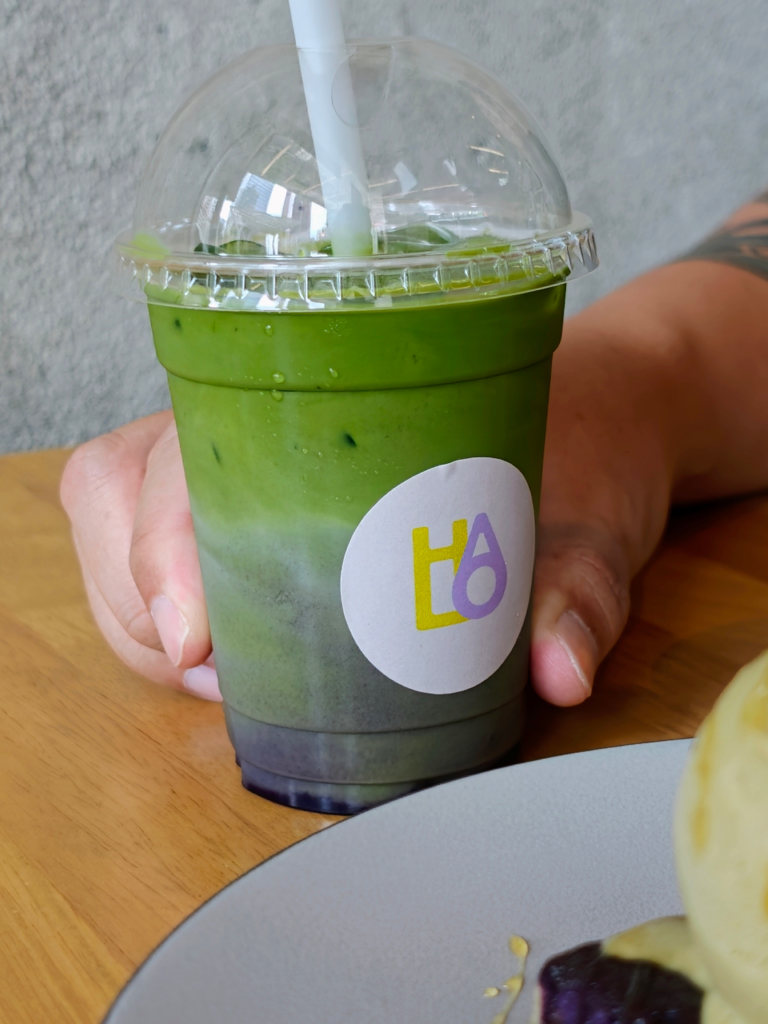
However, placed alongside the more playful liquid mochi hojicha and the banana pudding coffee, it feels less memorable.
Some of the sweeter drinks and desserts could also benefit from a little more restraint — the ube banana pudding coffee leaned sweet even when we opted for the lower end of the sweetness scale.
Perhaps using percentage-based options, similar to those offered by bubble tea chains, might offer more precision than Halo’s current “less sweet” to “extra sweet” scale.
Still, these are minor gripes, and can be easily solved by sharing a more indulgent dessert, or simply saving a cafe visit for those “treat yourself” type of days.
As expected of Hvala, Halo Ube & Matcha is a solid new concept that will probably lead the charge for more ube-themed spots in Singapore, in the months to come.
The brand could have opted to coast on the popularity and novelty of ube and matcha, instead, it’s doing the harder and more deliberate work of building a thoughtful menu that will work even after the trend has moved on, and at fair prices, too — what’s not to like?
Our quick takes
Is it conducive to conversation? Yes; when we visited on a weekday afternoon after peak hour, the cafe was quiet with no ambient music playing and only a handful of tables occupied. It made for an easy spot to catch up or even hold a casual meeting.
Is a reservation necessary? No, walk-ins only. Most customers appear to be office workers from the surrounding area grabbing takeaways, while those dining in tend to stay briefly — you shouldn’t have any trouble finding a table when there.
How to get there? Halo Ube & Matcha is a five-minute walk from Tanjong Pagar MRT Exit A.
HungryGoWhere paid for its meal at this restaurant for this review.
For the latest eats, read our story on Still Cafe, a cafe serving speciality coffee, matcha, and homemade bagels, and our list of stalls to try at 216 Bedok Food Centre and Market.
Tue 11.30am - 8.15pm
Wed 11.30am - 8.15pm
Thu 11.30am - 8.15pm
Fri 10.30am - 9.30pm
Sat 10.30am - 9.30pm
Sun 10.30am - 9.30pm
- Tanjong Pagar





Wani is a cat lady who loves a good sweat session in the gym, and is still tracking the lead to the elusive cure for wanderlust.
Read more stories from this writer.