Laifaba expands to New Bahru: Young chef-owner serves roast meats inspired by grandma’s recipes

Going into F&B — especially in a hawker setting — is far from the most popular ambition amongst Singaporeans.
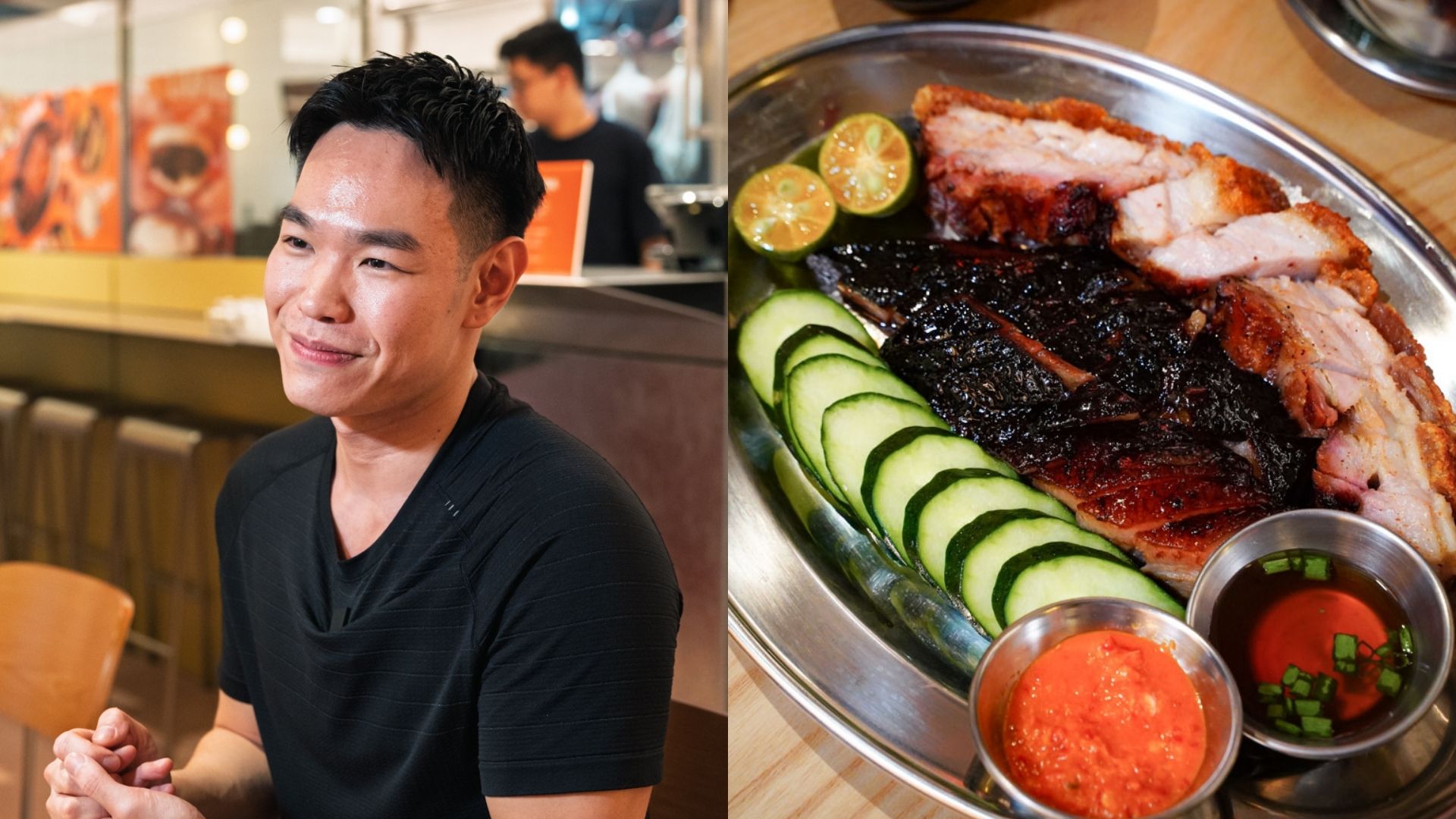
Who’d forgo a comfortable bank job to toil in the heat? That’s what 32-year-old Royce Tan, chef-owner of Laifaba, did.
With a finance background and a stint studying in Australia, few would have foreseen the ex-bank analyst embracing the labours of hawker life.
But many foodies in Singapore are thankful he chose this life. Laifaba has become touted as one of the best places to indulge in wanton mee and roast meat.
The eatery has gotten much social media attention for its oh-so-decadent offerings, especially its char siew, which uses the “bu jian tian” cut for extra fattiness.
But its Bukit Batok location meant that it was not the most accessible, which is why Royce jumped at the chance to open a second Laifaba outlet at the buzzy New Bahru!
Laifaba at New Bahru
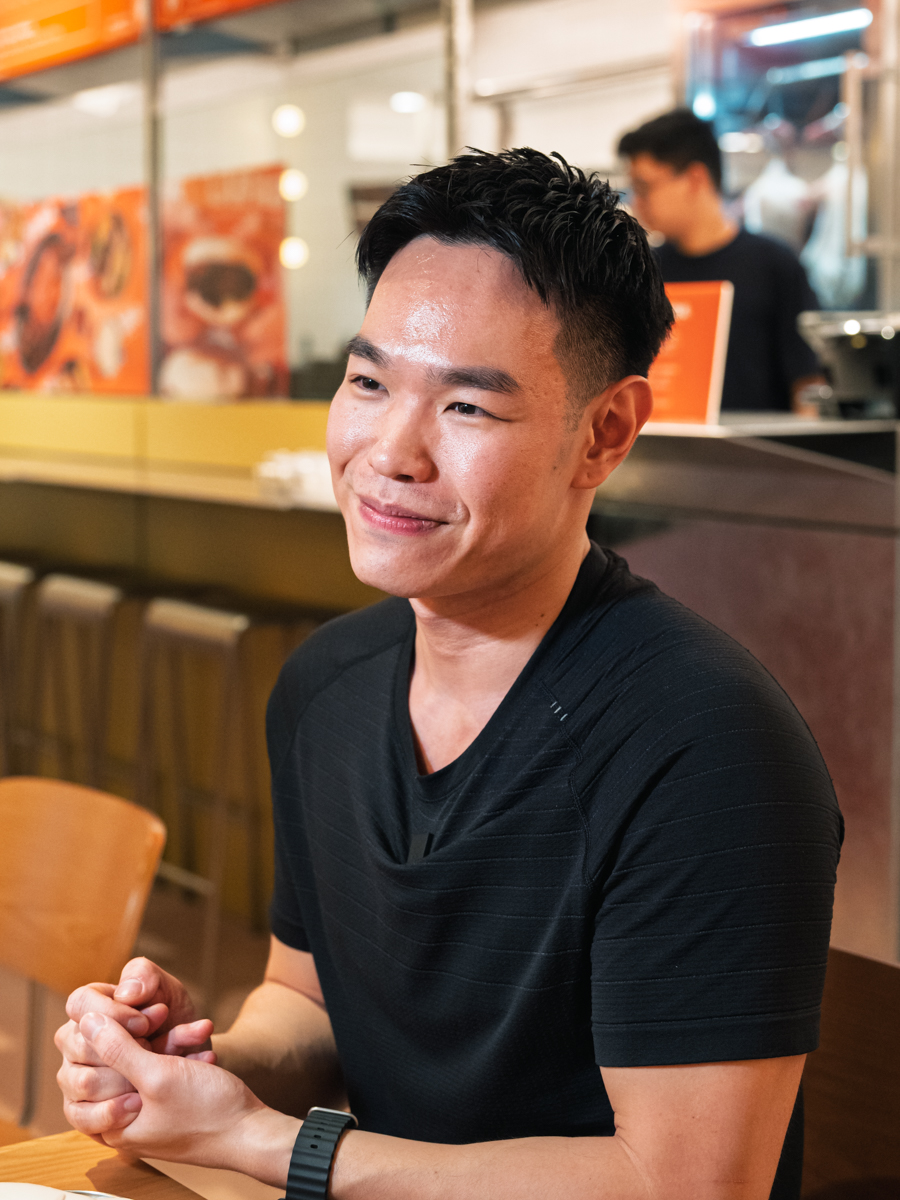
Interestingly enough, at its inception in 2020, Laifaba (which translates to “come and get rich” in Mandarin) was originally a wine bar operating out of Scarlett Hotel in Chinatown.
However, the Covid-19 pandemic Circuit Breaker measures forced a pivot away from alcohol — and Royce found that wanton mee, based on his grandma’s recipe, was the answer.
After the lease ended circa 2021, Laifaba moved out of the hotel, and had a short stint in a basement stall in Lucky Plaza.
Eventually, it found a new permanent home in a standalone restaurant space in Bukit Batok.
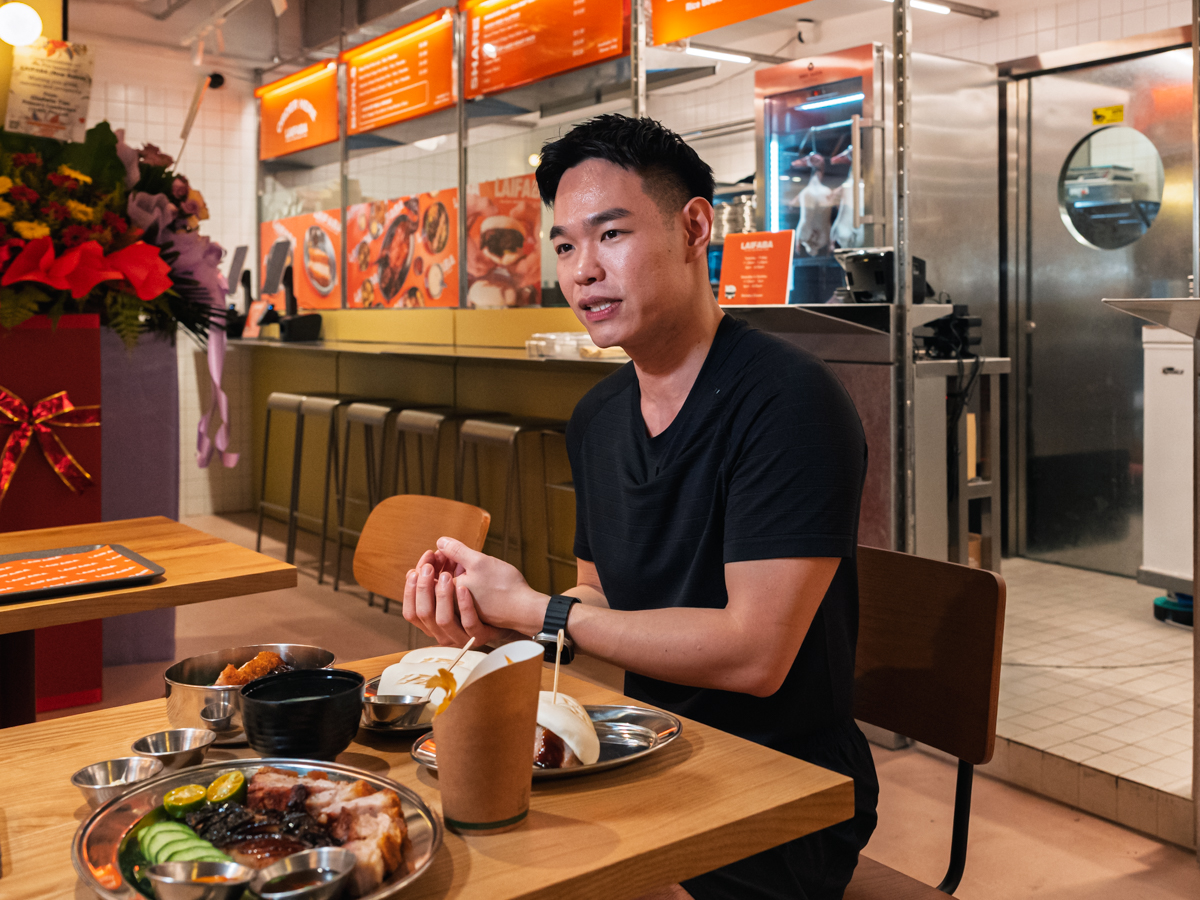
To Royce, finally stepping into an actual hawker setting needed some acclimatising: “We were at Lucky Plaza for a couple of months, and it was our first journey as hawkers.”
He developed a newfound admiration for the craft, with its long hours, tight spaces, and working conditions that weren’t the best.
“You also had to deal with service and cooking at the same time, since there is no separation between the back and front of the house,” he adds.
“On top of that, queues can be long and people can get impatient.”
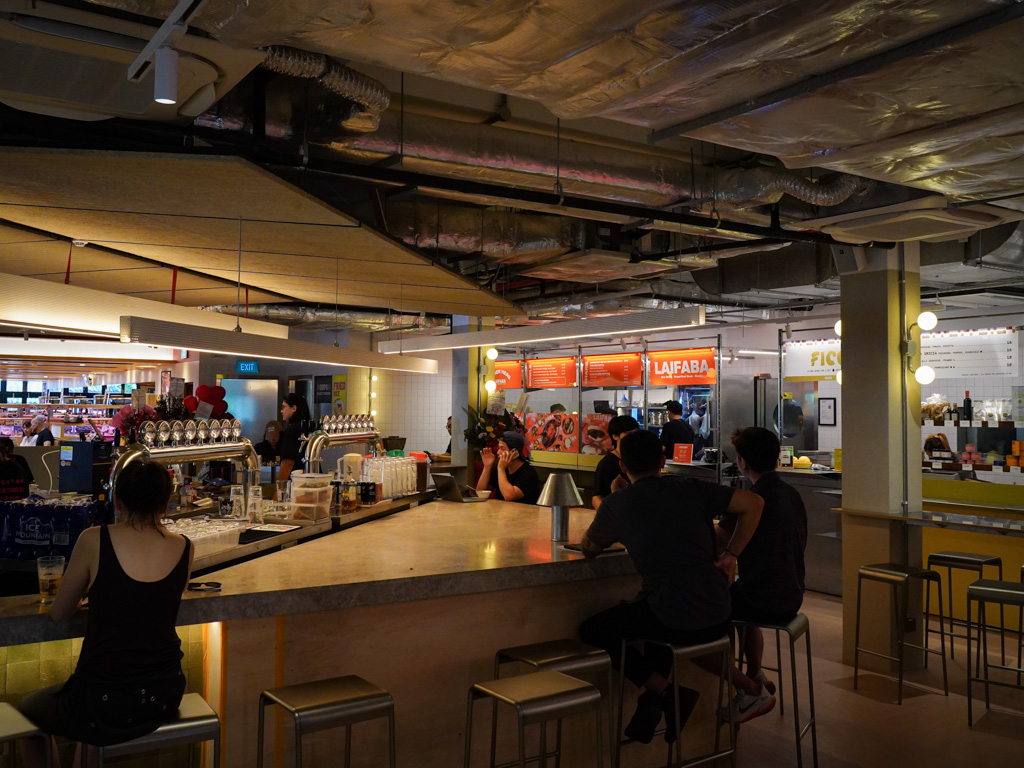
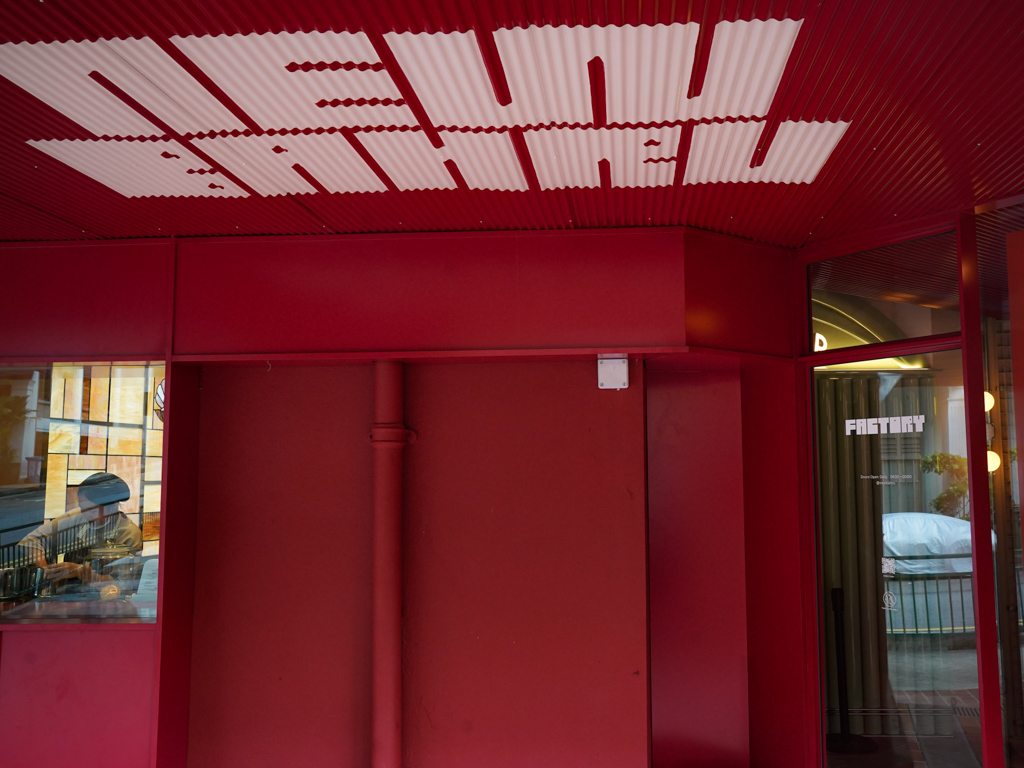
Royce’s latest move sees Laifaba moving into New Bahru as one of the tenants in the new Factory Block food court.
It isn’t your usual food court, though.
New Bahru’s newest fixture is a modern concept that brings a whole slew of renowned and cult-favourite brands together, including Sushiro, and craft beer bar Orh Gao Peh Gao.
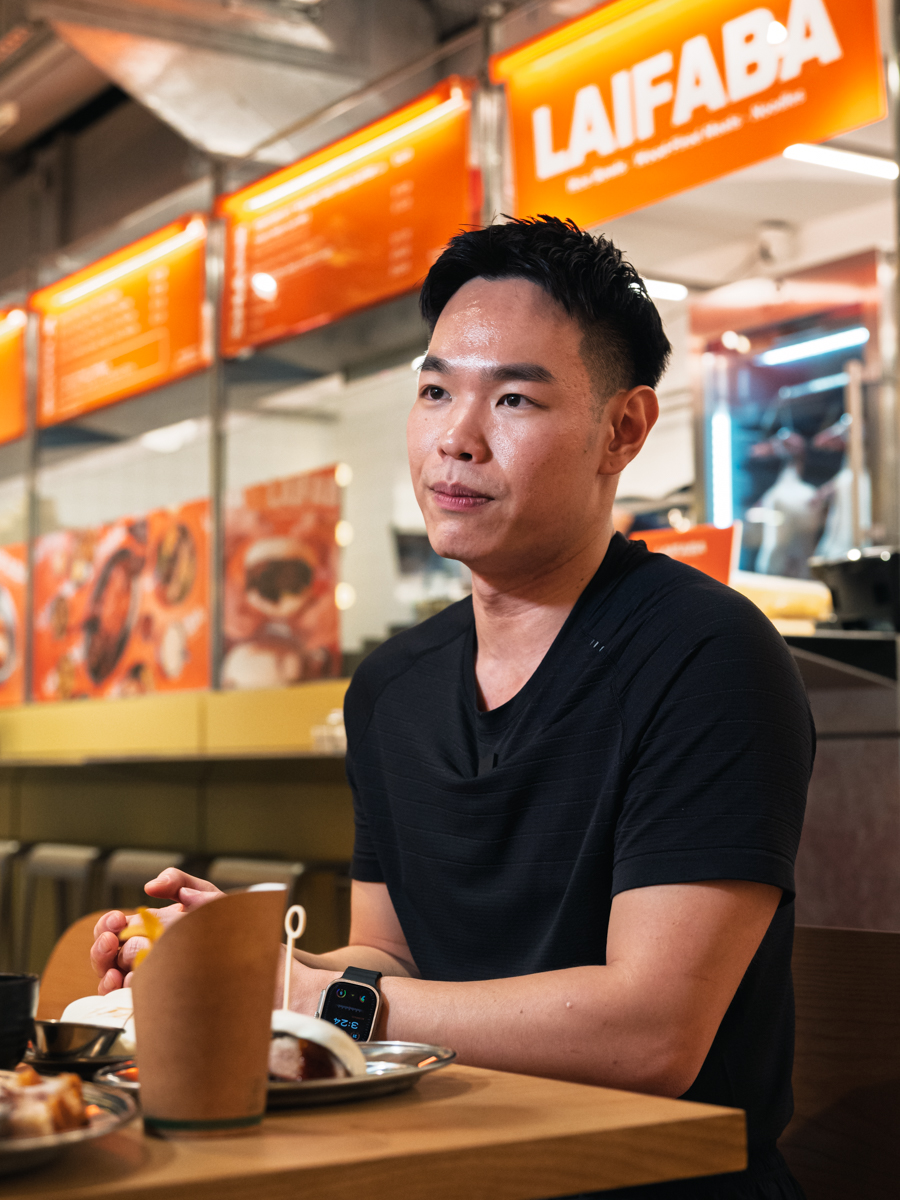
Says Royce: “The crowd here is super different. We expect more families in Bukit Batok, but there’s a younger crowd here — many who come for dates or to hang out with friends.”
Ultimately, though, the reception has been good, and he is grateful for how things have panned out so far.
The best roast meat in Singapore?
Royce might be young, but Laifaba’s wanton mee and roast meats have been touted as some of the best in Singapore.
It’s no wonder, since he learned his fundamentals and recipes from his grandma, who used to ply her trade as a street hawker in Kranji, back in the day.
One issue, though, is that by the time Royce consulted her, she had left her hawker days two to three decades in the past.
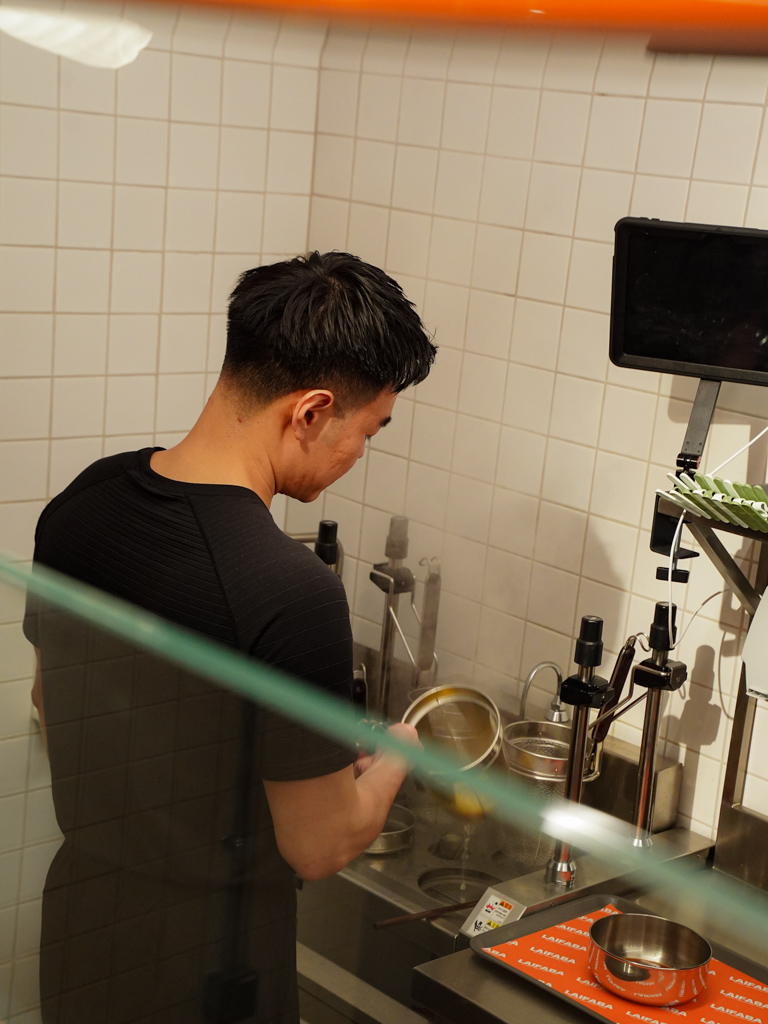
“It was tough, since she stopped hawkering for a long time, and we couldn’t procure a lot of ingredients anymore,” he laments.
Because of this, he went through a lot of trial and error, and made everything from scratch to best capture that original taste and nostalgia.
But Royce also didn’t want to stop there — he continued experimenting, striving to perfect each component of the wanton mee.
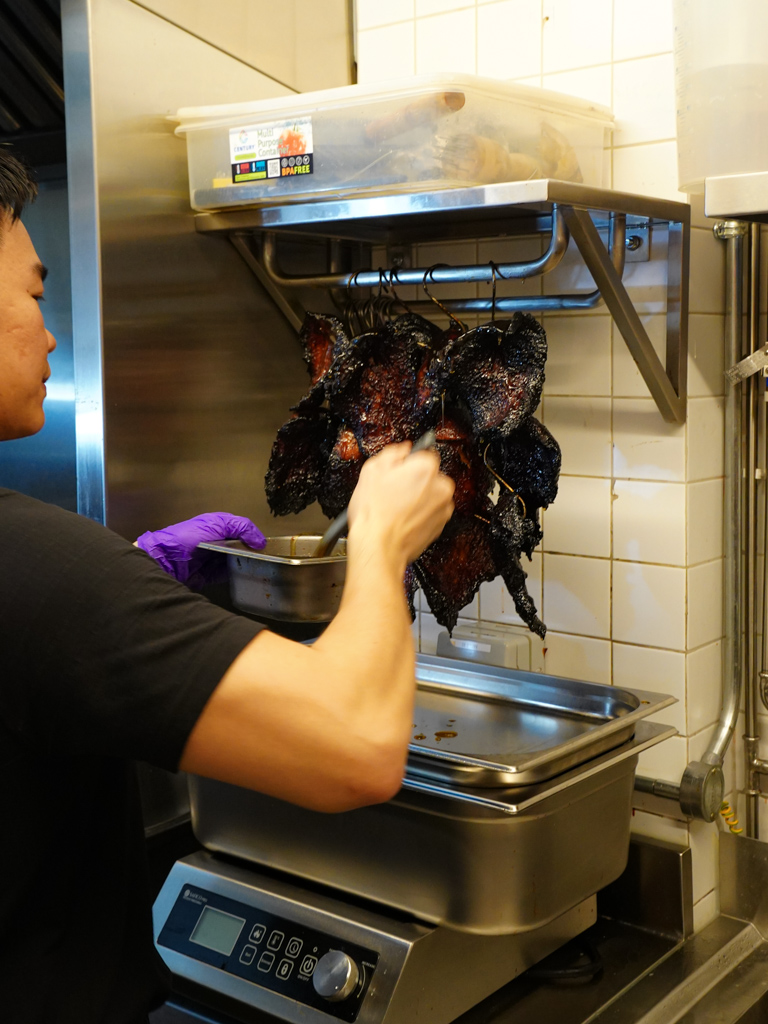
That included sinking a lot of time into the roast meats, which is perhaps what Laifaba is most known for today.
His roast-meat journey started with char siew, since it was a key ingredient in wanton mee, but it led Royce further down the rabbit hole — specifically into open-fire roasting.
For the perfectionist, that was the hardest aspect to nail: “We started with a combi-oven, then roasting with gas, and progressed into charcoal and wood. But open-fire roasting is very unforgiving.”
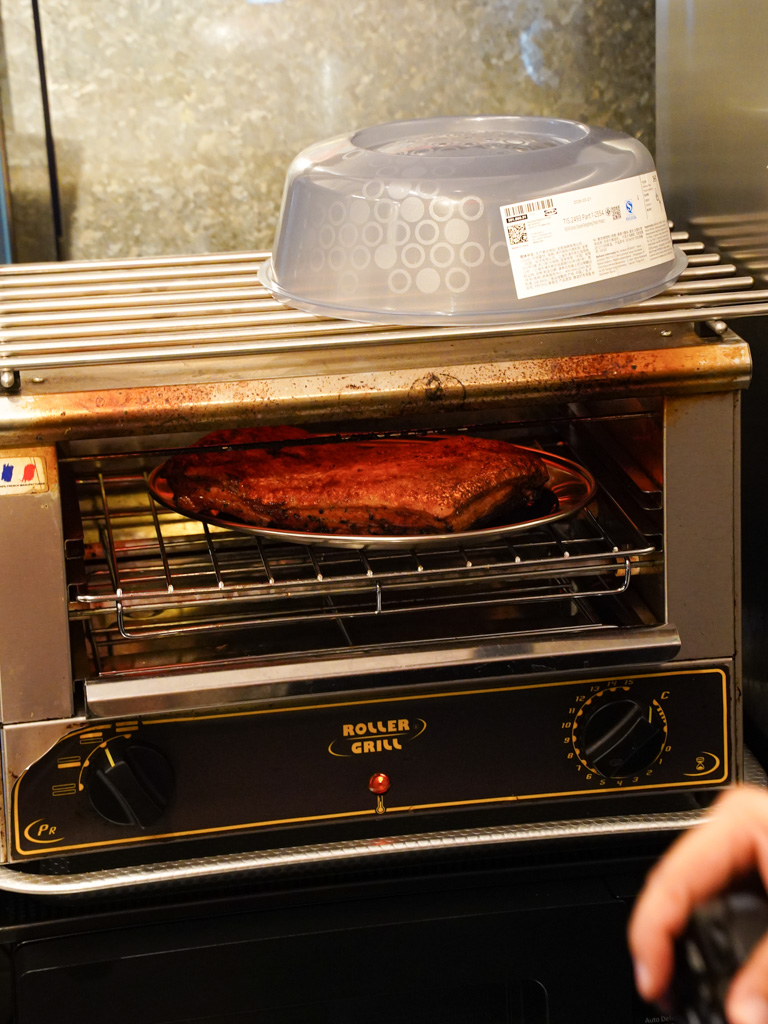
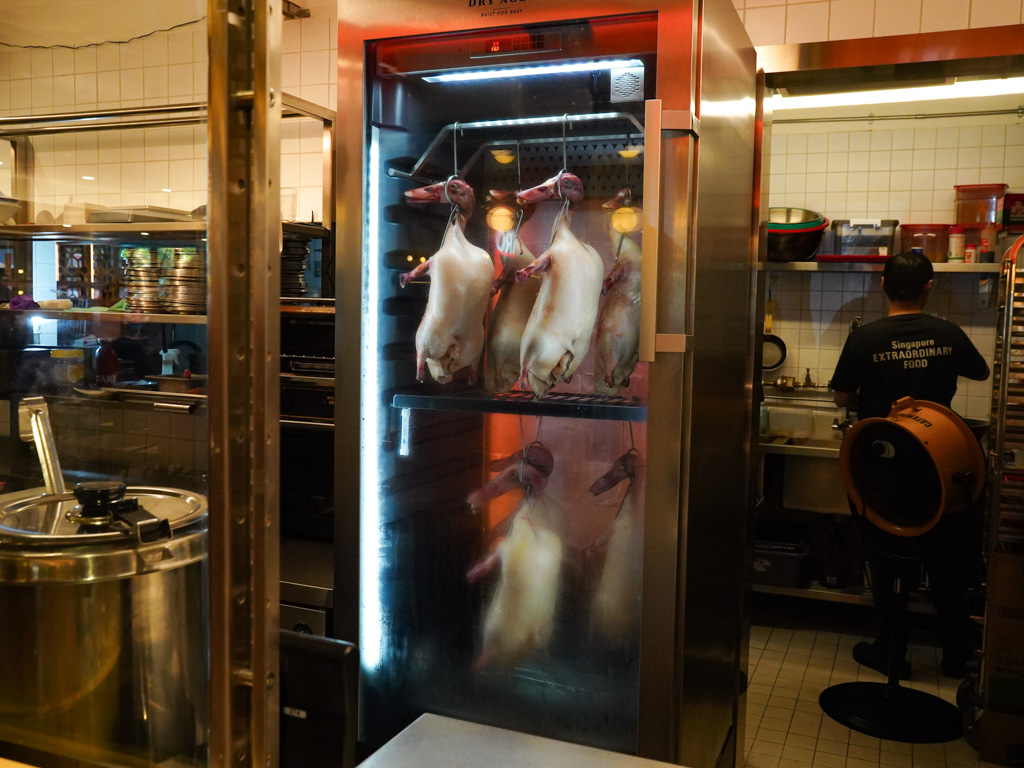
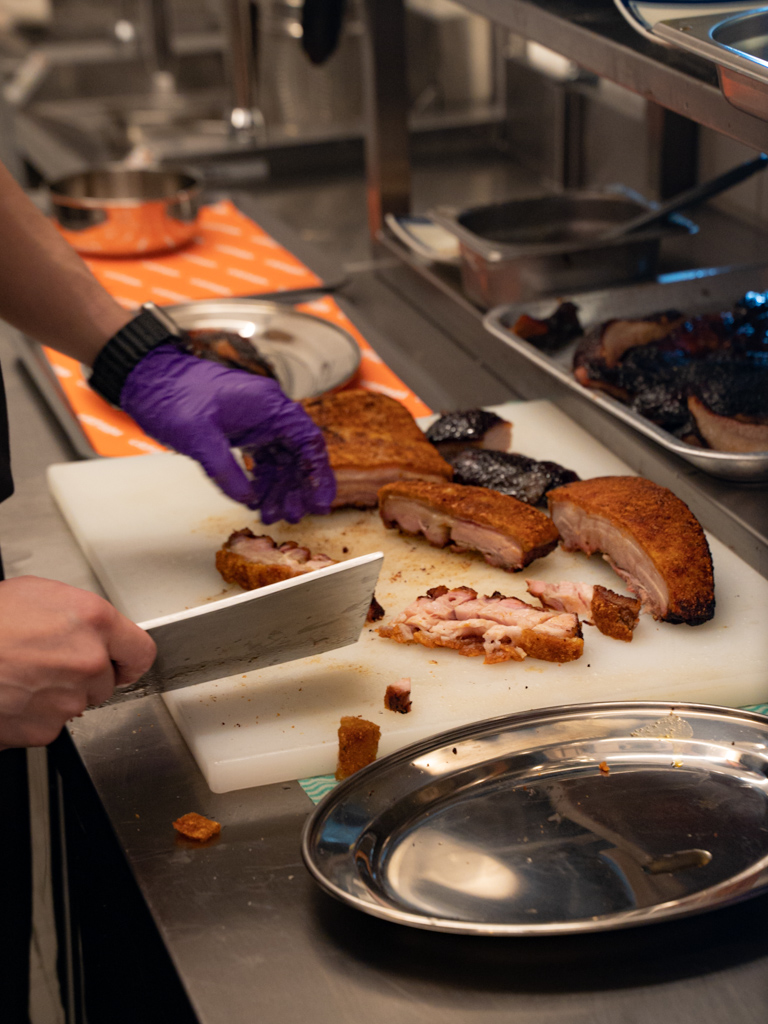
Nonetheless, he insists on serving fresh roasted meats, which means you can find the old-school heavy-duty steel drum roasters it requires, even in Laifaba’s smaller New Bahru space.
Another modification that Royce came up with was using the “bu jian tian” cut for Laifaba’s char siew.
Literally translated as “never see the sky” in Mandarin, this is a fattier cut around the pig’s armpit area, and is what the Spanish refer to as “secreto”.
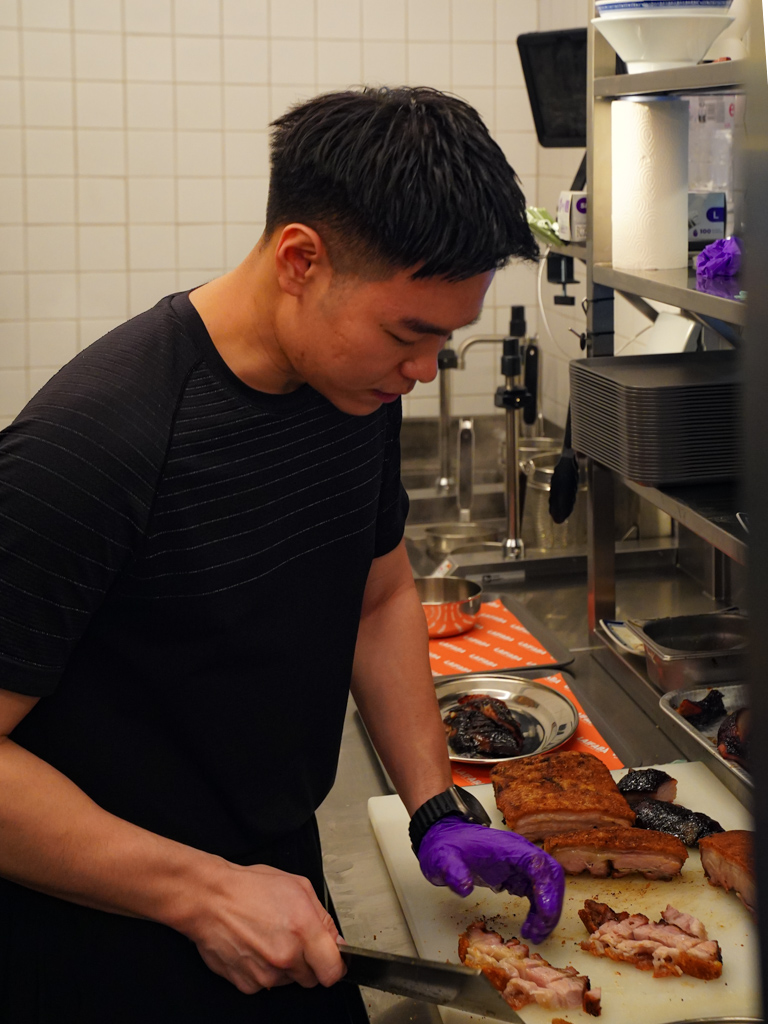
The rationale was that people associated good char siew with a caramelised exterior and melt-in-your-mouth fat, which the bu jian tian cut is perfectly suited to.
Despite widespread praise, Royce thinks he has a long way to go.
“Even today, we are still learning as we go, and I don’t think this journey will ever stop,” he adds. “It’s hard to maintain consistency, but we appreciate all the support we have received over the years.”
“We like to push things”
We all know roast meats are a category of food that is seen as more old-school, and not trendy and hip.
So why did Laifaba decide to team up with New Bahru — and how is Royce making it “cool” for a different crowd?
“After hearing New Bahru was setting up a food hall with curated local food brands, we thought it was a perfect platform for us, since we wanted to push things a little further,” he says.
“We want to show that our everyday dishes have their own place in the culinary world.”
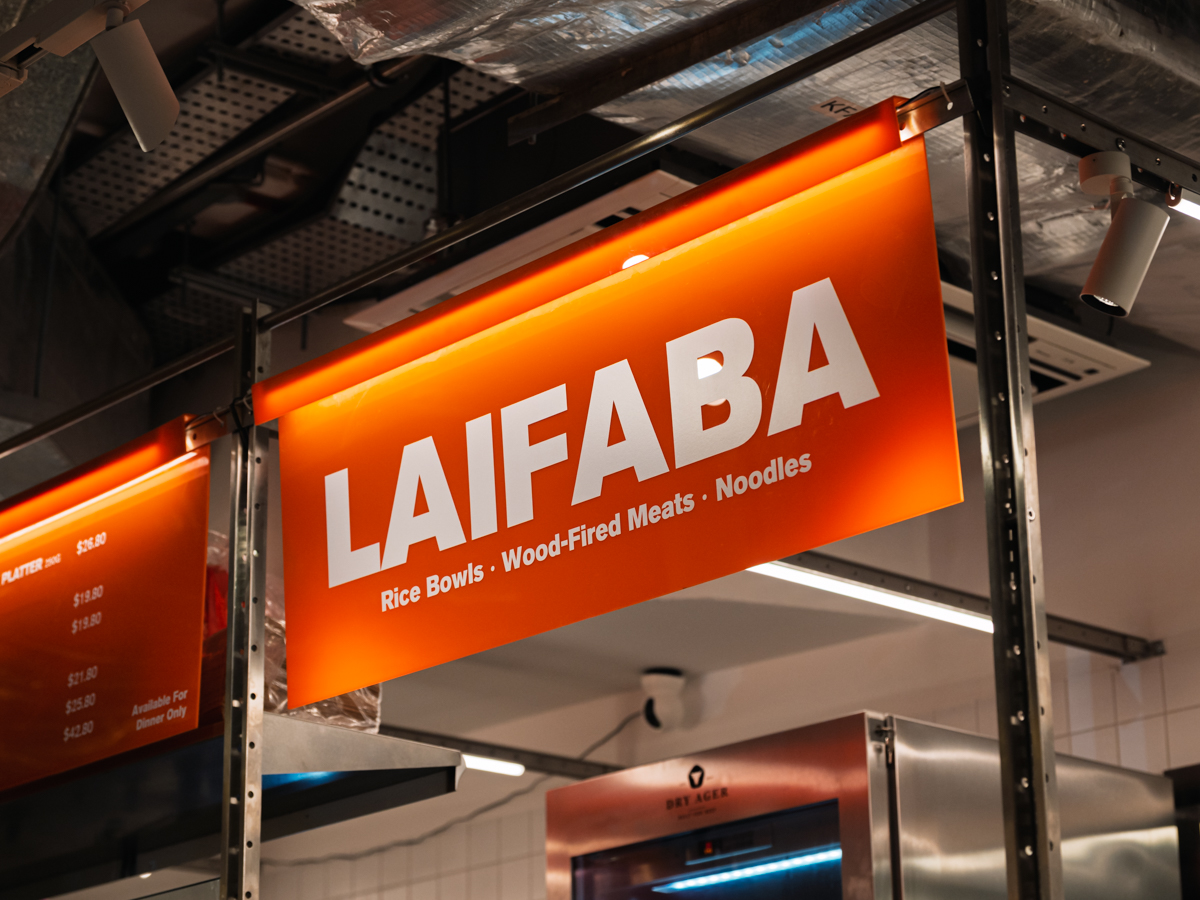
For starters, Laifaba’s branding and offerings were fine-tuned to feel trendier and more modern than the rustic fittings at Bukit Batok.
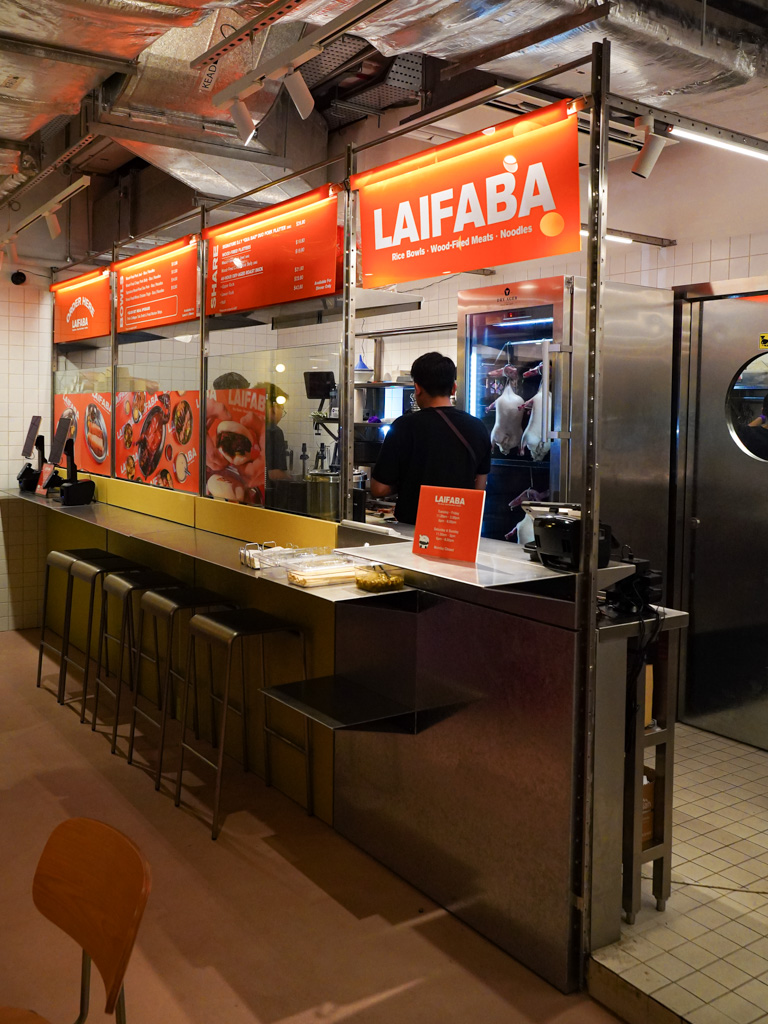
The stall front features a more industrial, angular silhouette, and is dominated by metallic elements and a bold orange palette.
Its crockery has also been transformed, where old-school bowls — usually lined with blue accents or roosters — are traded for minimalist steel plates.
There is also a self-ordering kiosk here to make things much more streamlined.
Most importantly, Royce has worked on tweaking the Laifaba New Bahru menu to spice things up a little.
This means an emphasis on the roast meats themselves, highlighting sharing platters with DIY “gua bao burgers” (a twist on traditional braised pork belly buns).
He sums up how Laifaba approaches its New Bahru crowd: “It’s more fun. More dynamic. The cuts of meat and components we use, and the presentation, are a little different.”
And that seems to have worked wonders, since the clientele has expanded beyond just Singaporeans.
Royce says that many expats and foreigners love to come back for the meat platters — especially with a pint of beer.
Laifaba’s New Bahru menu
For those who are weighing up whether to visit Laifaba’s New Bahru outpost or the Bukit Batok flagship, it depends on what you’re looking for.
The menus are very similar — including prices — but the New Bahru location focuses on the wood-fired roast meats instead.
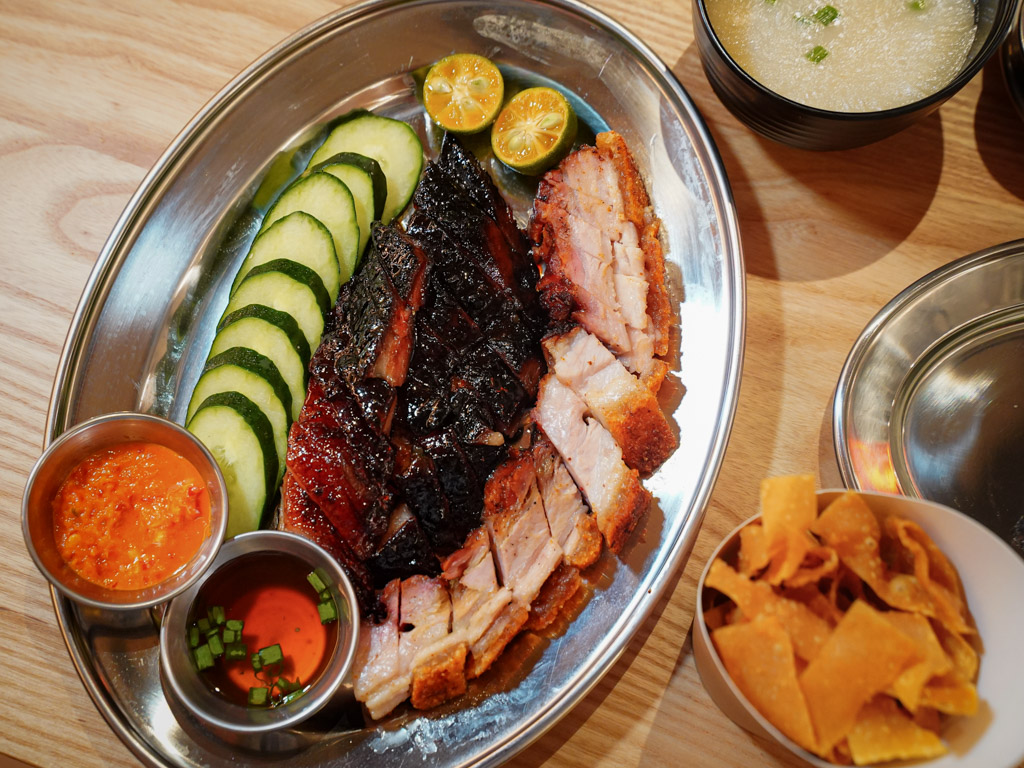
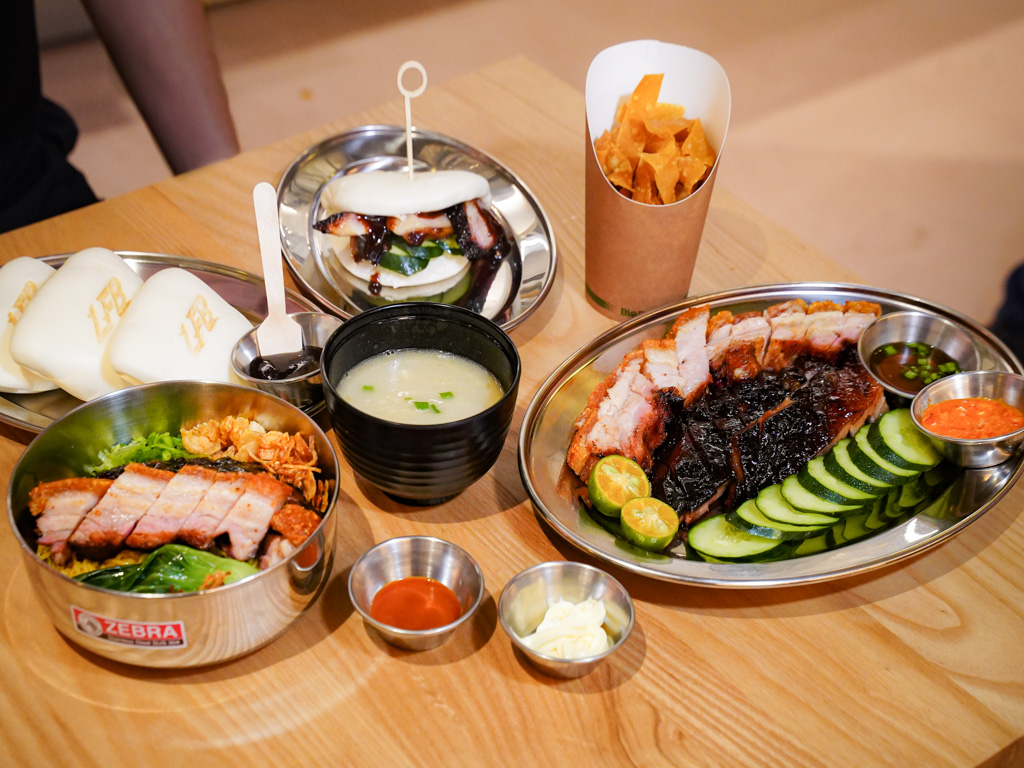
As Royce mentioned, the highlight here is the signature DIY “gua bao” pork platter (S$26.90) that’s packed with a 250g mix of wood-fired pork jowl (from S$19.80) and wood-fired crispy pork belly (from S$19.80).
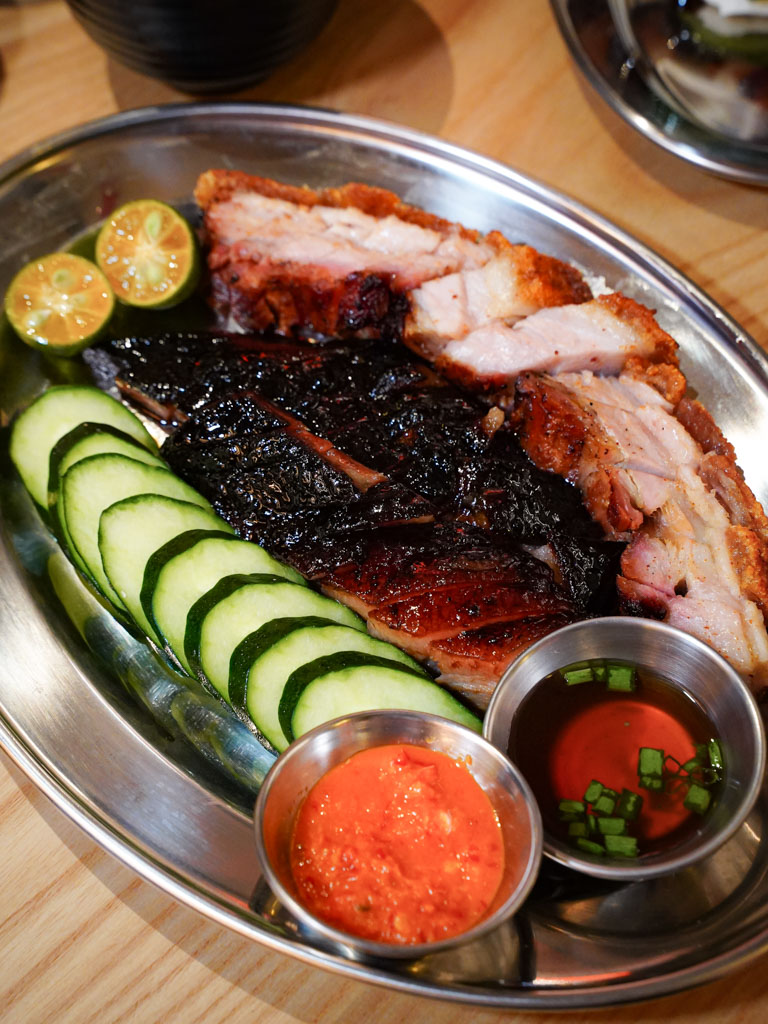
The platter also comes with sliced cucumbers, chilli, fish sauce, calamansi, and plain bao buns.
A big change here is the cut of pork used for the char siew, with the stall serving wood-fired pork jowl, instead of the signature bu jian tian.
While every foodie knows Laifaba for its bu jian tian char siew, this pork jowl hits all the markers of a good char siew: melt-in-the-mouth fattiness and a beautifully caramelised exterior.
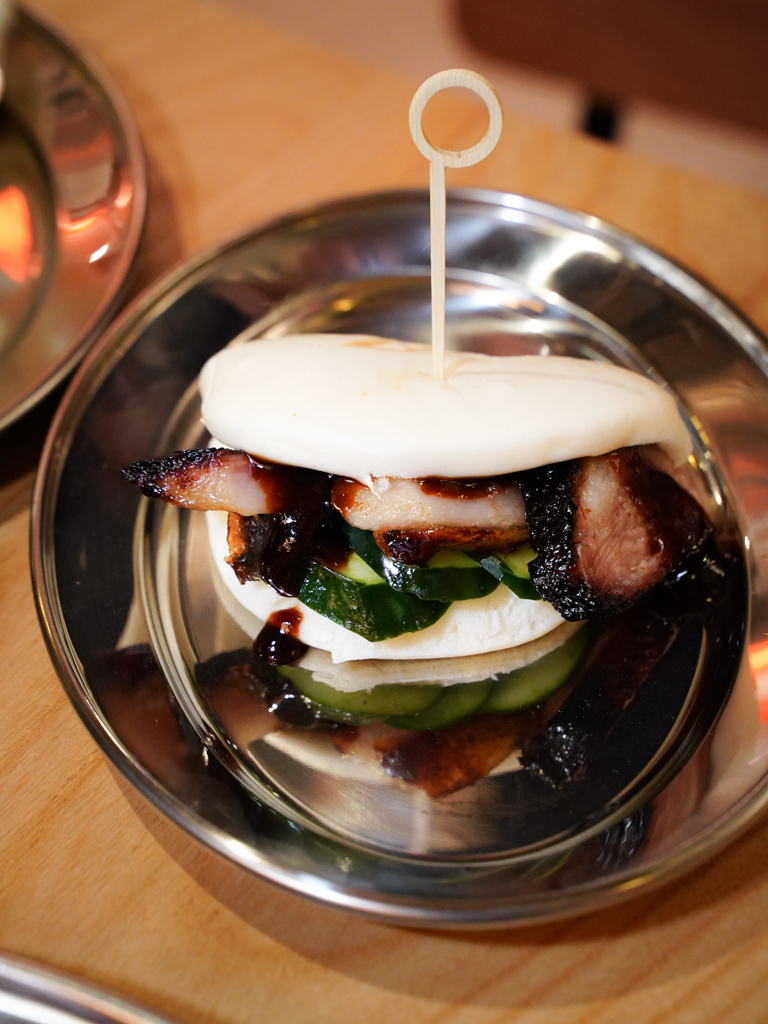
Pork jowl can be prone to being unctuous, but the texture here was succulent, tender, and delicately gelatinous, without being greasy at all.
At the same time, the rather unorthodox condiments of calamansi and fish sauce also complement the char siew surprisingly well.
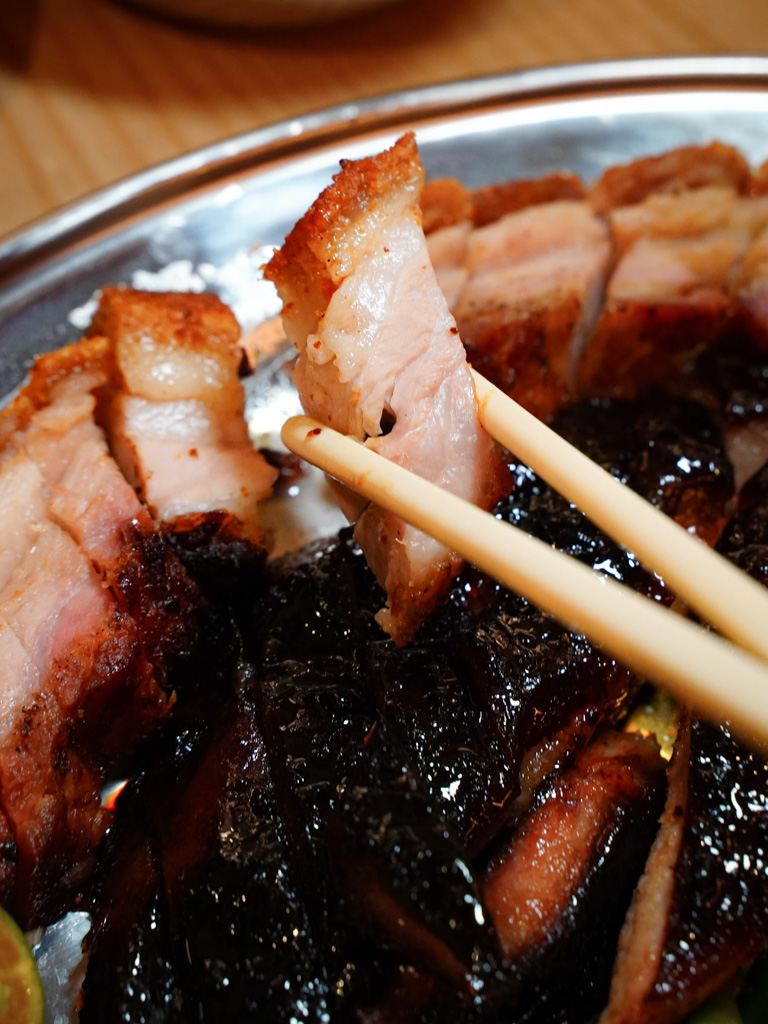
The calamansi adds an enjoyable acidity to cut through the fattiness, while the fish sauce bolsters the umami and sweetness, and adds a lot of depth.
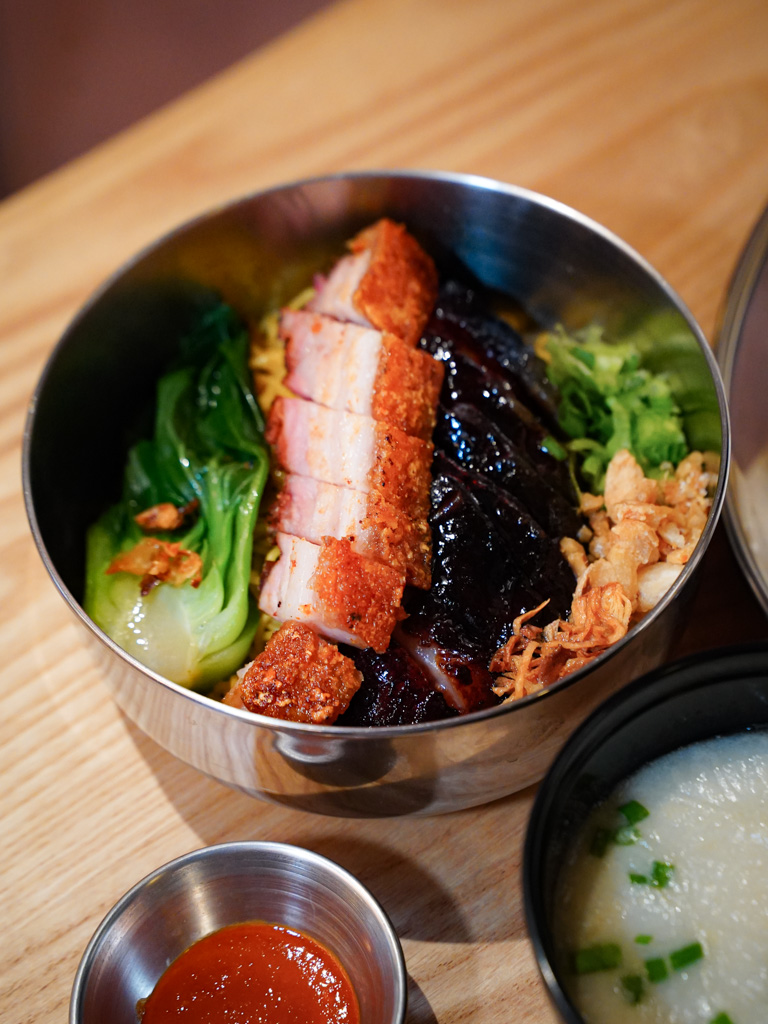
We also loved Laifaba’s crispy pork belly, which was picture-perfect: It was tender with well-proportioned streaks of fat, while the skin crackles with ferocity.
A straightforward but hard-hitting indulgence — and possibly the best siew yok (roast pork) we’ve had in a long time.
Of the two meats, though, we think the char siew pairs with the bao buns best, since the glaze and fattiness do also remind us of gua bao!
If you’re here alone, you can also opt for a smaller portion of meat, either paired with rice or Laifaba’s famous noodles at S$12.80. (The duo pork option is priced slightly higher at S$14.80.)
Sort of, anyway — the noodles at New Bahru don’t come with dumplings, unlike its Bukit Batok sibling.
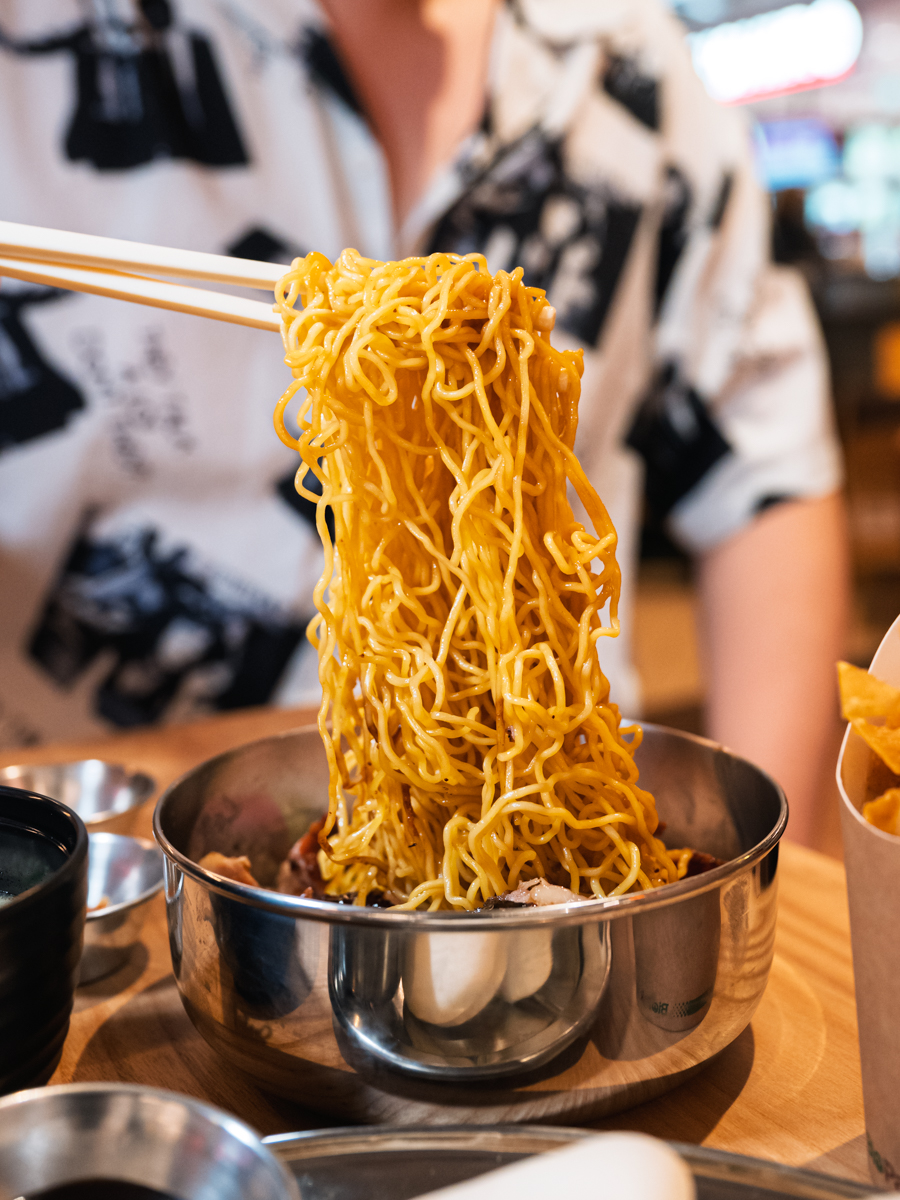
But if you’re a noodle lover, you’d still be very happy with it, as the noodles are cooked until springy, while fried shallots and a rich sauce ensure each slurp is fragrant — as solid as it gets for wanton mee. It’s super shiok and helps ease the richness of the meat!
Most folks might not think of going to New Bahru for char siew and roast pork, but you know what? We might just make it a point to travel to New Bahru more often just for Laifaba in the future!
For more ideas on what to eat, read our stories on the cosy Orchard Plaza izakaya where you can point to order and the story behind how Kitchenman Nasi Lemak got its first Michelin Bib Gourmand.
Wed 11.30am - 2.30pm, 6pm - 8.30pm
Thu 11.30am - 2.30pm, 6pm - 8.30pm
Fri 11.30am - 2.30pm, 6pm - 8.30pm
Sat 11.30am - 3pm, 6pm - 8.30pm
Sun 11.30am - 3pm, 6pm - 8.30pm
- Fort Canning





Evan started off writing about food on Instagram, before joining outlets such as Buro and Confirm Good to pursue his passion. His best work usually comes after his first whisky shot in the morning.
Read more stories from this writer.