Slow down for a sip at Koko Kawane, where a 13th-gen tea farmer’s matcha pairs with French-style pastries

Somewhere between the umpteenth matcha tiramisu and yet another tin stamped “ceremonial grade”, matcha in Singapore stopped being a tea and became a personality trait.
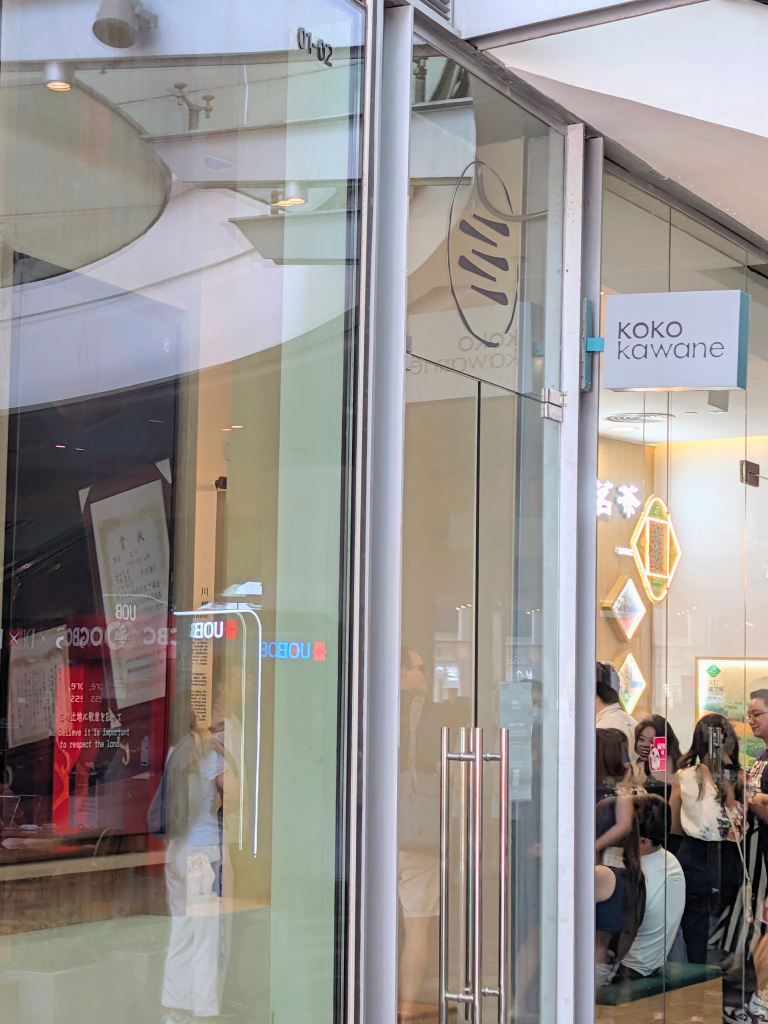
It’s been whipped into croissants, poured into highballs, and queued for in numbers usually reserved for limited-edition collectibles. So, there’s something almost disarming about Koko Kawane, a new 15-seat atelier at The Star Vista that treats the green stuff with the reverence it’s owed.
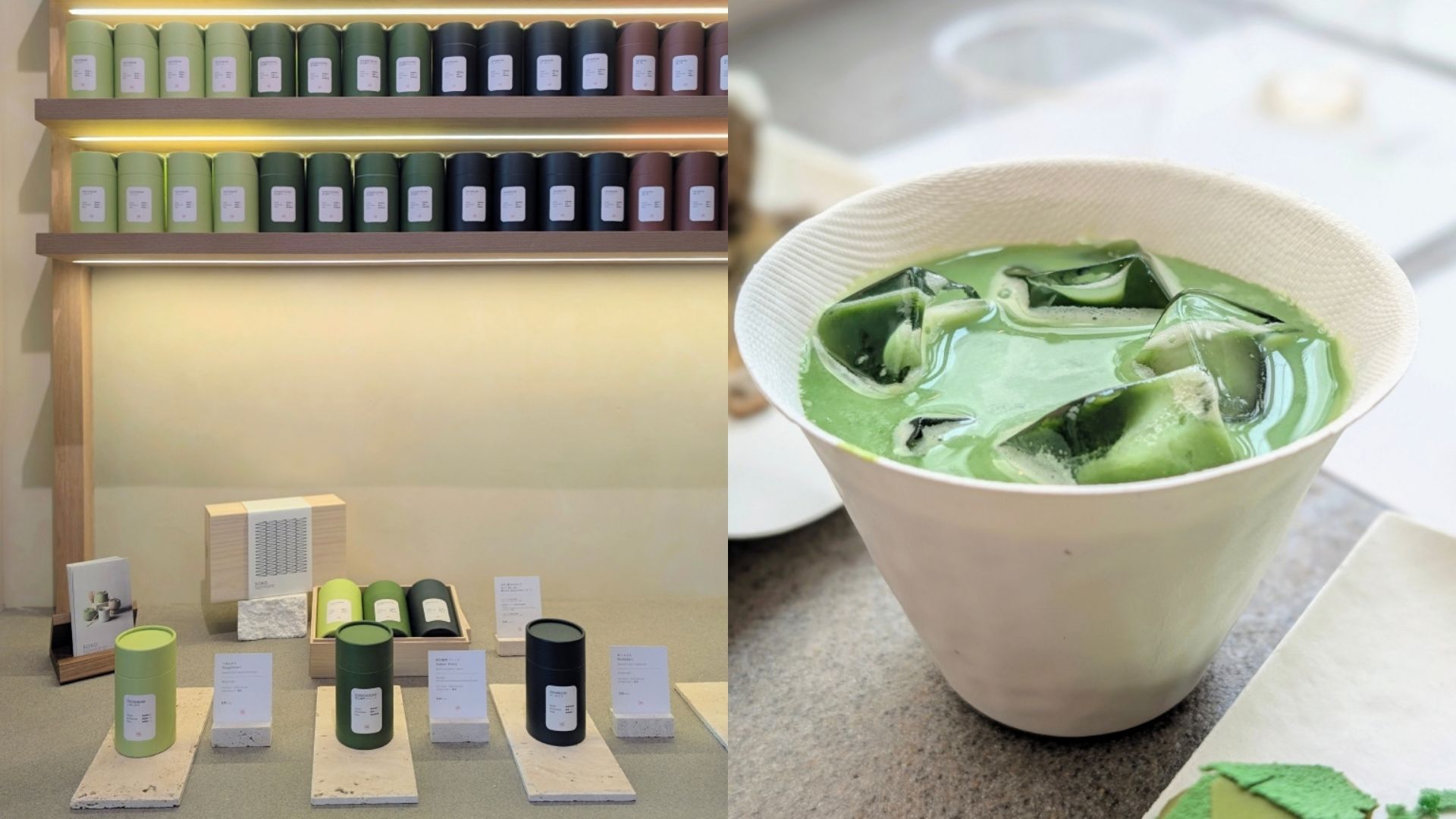
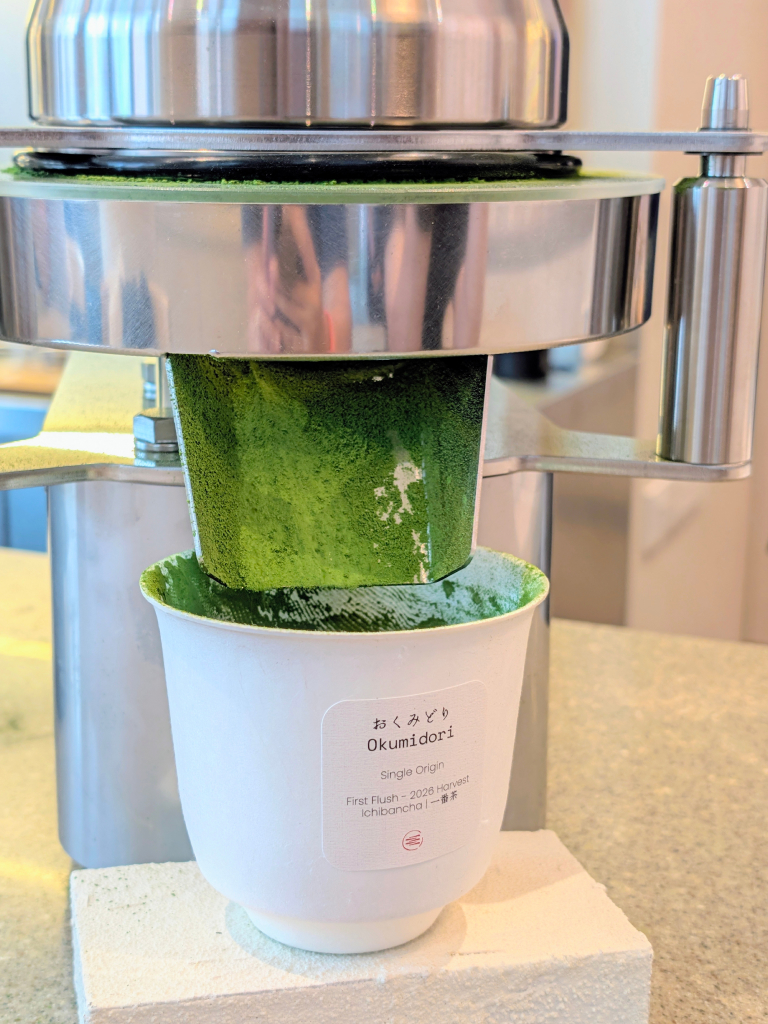
It’s backed by a Shizuoka tea farm that has been tending its fields since the 1600s. The menu reads more like a guide to cultivars than a list of flavoured lattes; tencha (unrolled, shade-grown Japanese green tea leaves) gets milled right at the counter, and the pastries are made to marry the tea rather than simply accompany it.
Matcha for purists? Perhaps.
A farm in Shizuoka, a patissiere from Kagoshima
In all seriousness, though, that could be a good thing. To understand what’s in the cup, you have to start some 5,000km away in Kawane, a mountainous pocket of Shizuoka strung along the Oi River.
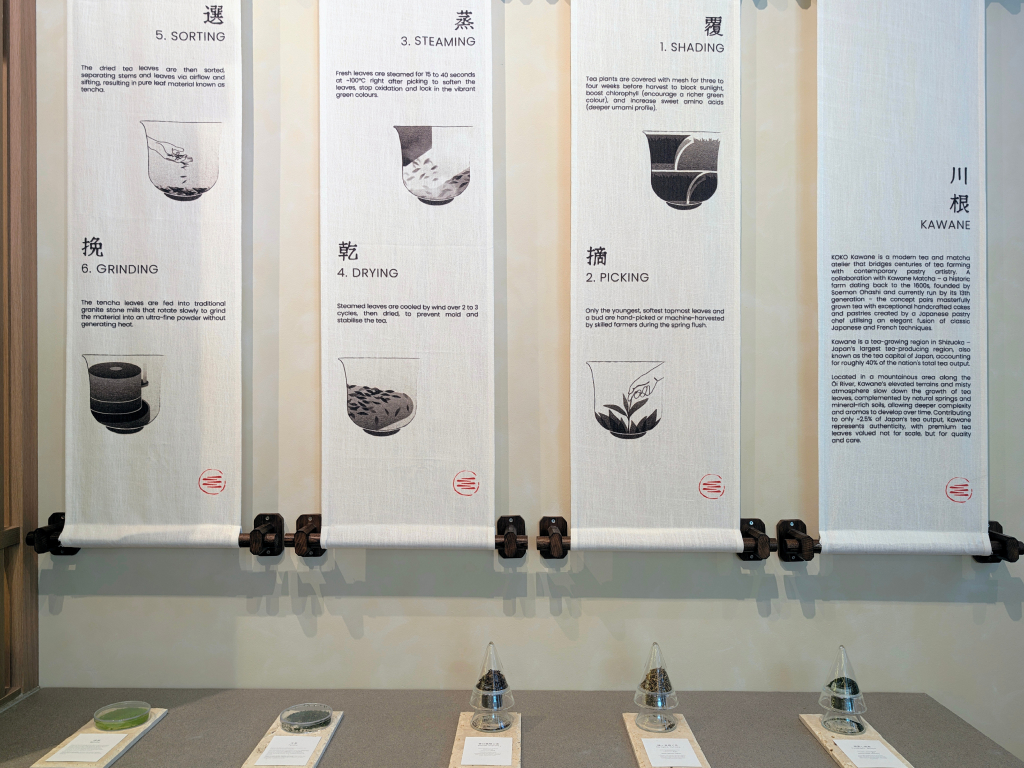
Shizuoka is Japan’s tea heartland, producing around 40% of the country’s output. Kawane is a far smaller player — and rather proud of it. Up here, altitude, drifting morning mist, natural springs, and mineral-rich soil slow leaf growth. That gives them time to build their aroma and complexity.
The Ohashi family has farmed these slopes since the 1600s, starting with founder Soemon Ohashi, whose name lives on in the atelier’s signature Soemon blend (S$13.50). Today, Kazuteru Ohashi, the 13th generation, runs the farm.
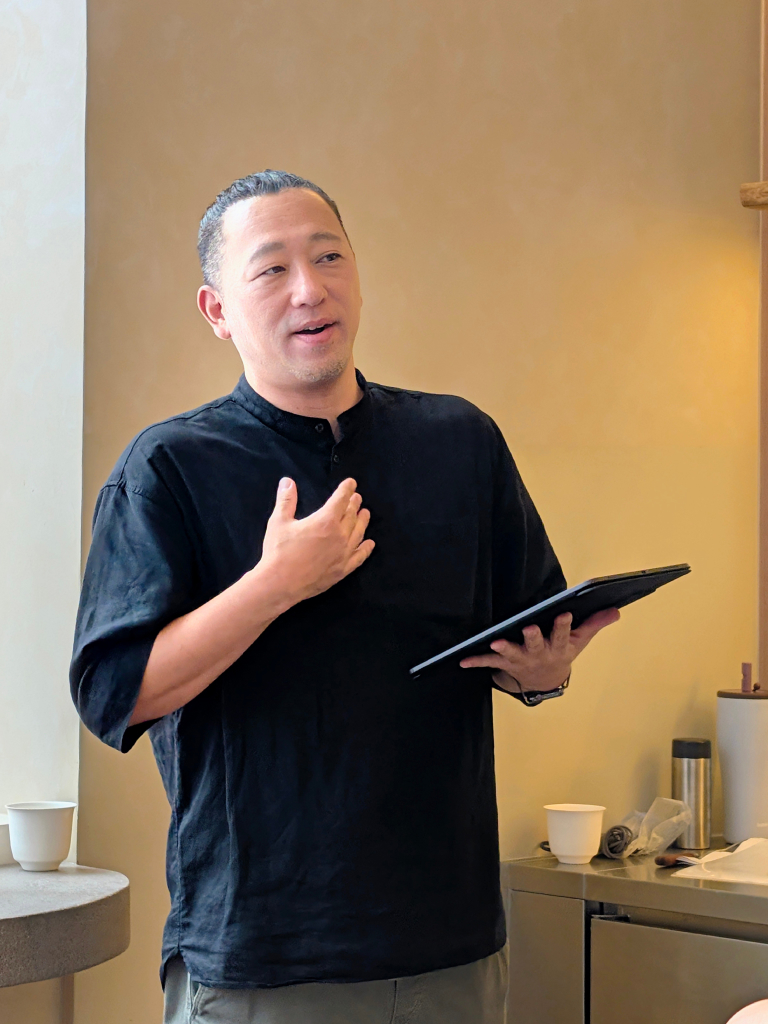
Four centuries on, the family still tends each field according to its own conditions. They work organic JAS-certified — Japanese Agricultural Standards — plots about 600m up and practise chagusaba, a traditional method in which grass cut from the surrounding hillsides is spread between the tea rows as natural mulch (a method recognised as a Globally Important Agricultural Heritage System).
The other half of Koko Kawane’s equation is head pastry chef Mei Kubota, who hails from Kagoshima. She trained at Ecole Tsuji Tokyo and its sister school, Chateau de l’Eclair. She only moved to Singapore three years ago after a stint under master chocolatier Richard Seve at his Lyon patisserie, followed by three Tokyo patisseries.
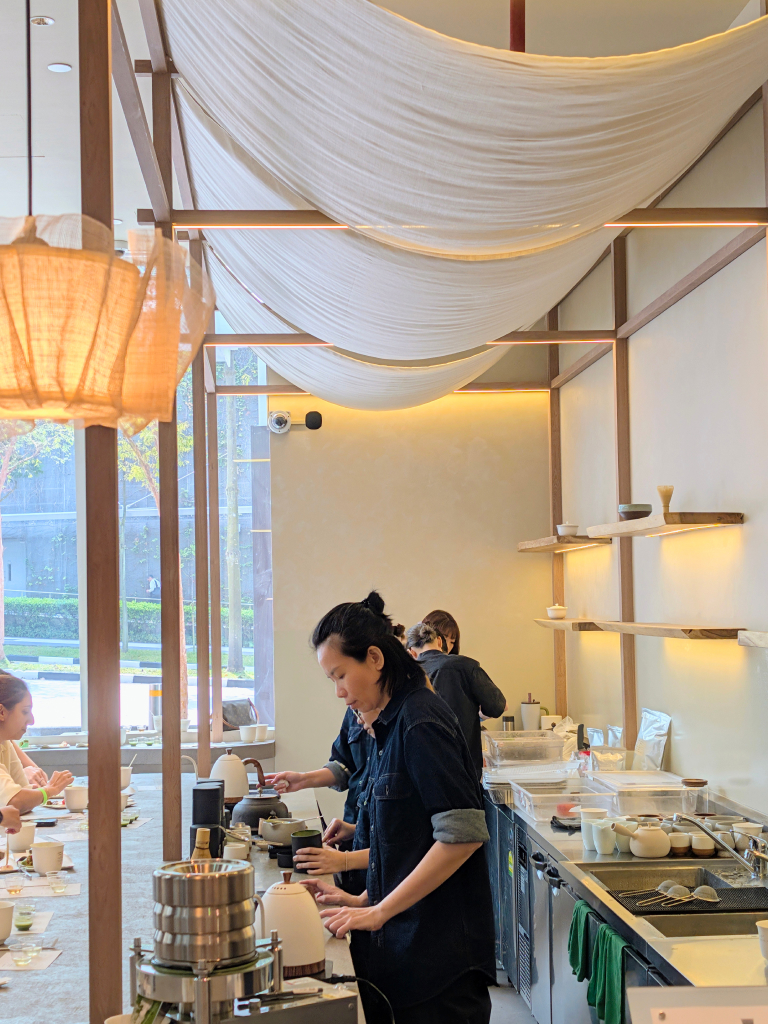
Here, she led the kitchen at Koko, a Japanese-style patisserie which started on Tras Street and has since become a fruit shortcake kiosk and central kitchen at Coliwoo Midtown. Her style pairs French technique with Japanese restraint and a firm aversion to anything cloyingly sweet.
For Ohashi, who was spurred on by Singapore’s appetite for matcha and its soft spot for Japanese craft, it’s a chance to put Kawane, and the people behind every harvest, on a wider map. Hence the name: Koko for the patisserie, Kawane for the land where the tea is harvested.
A crash course in cultivars
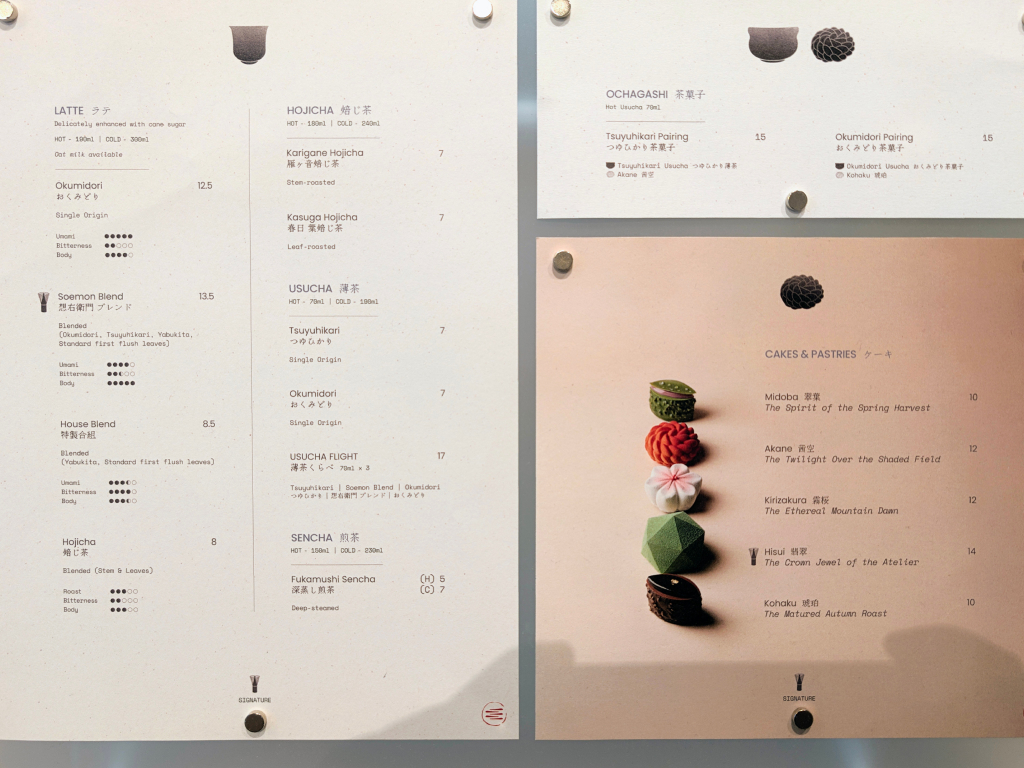
Koko Kawane’s menu is organised like a tea tasting, by preparation rather than flavour, so it pays to know how you like your matcha before you order.
If you need guidance, start with usucha, the traditional “thin tea” whisked with nothing but water. It’s the clearest window into what the farm actually grows. Single-origin Tsuyuhikari and Okumidori are available on their own (S$7 each), but first-timers are better off with the dine-in usucha flight (three 70ml cups of Tsuyuhikari, Soemon blend, and Okumidori, S$17).
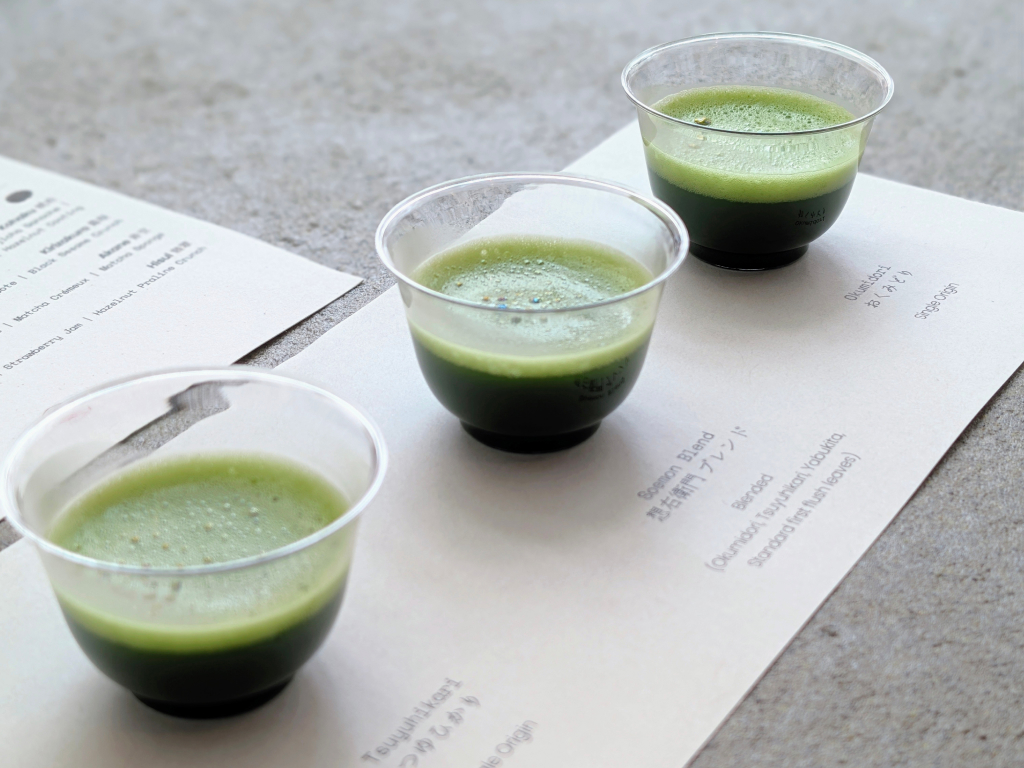
The Tsuyuhikari is crisp, with a subtle sweetness, while the Okumidori goes deeper on umami and finishes smooth. Meanwhile, the signature Soemon blend — a mix of Tsuyuhikari, Okumidori, and Yabukita — sits between them.
If you ask us, the Soemon blend tastes more mineral and “clean”, making it a good entry point for those who want to try their first matcha drink that doesn’t come as a latte.
Tasted back to back, they show just how much cultivar and blending can shift a cup of what most of us lump together as matcha.
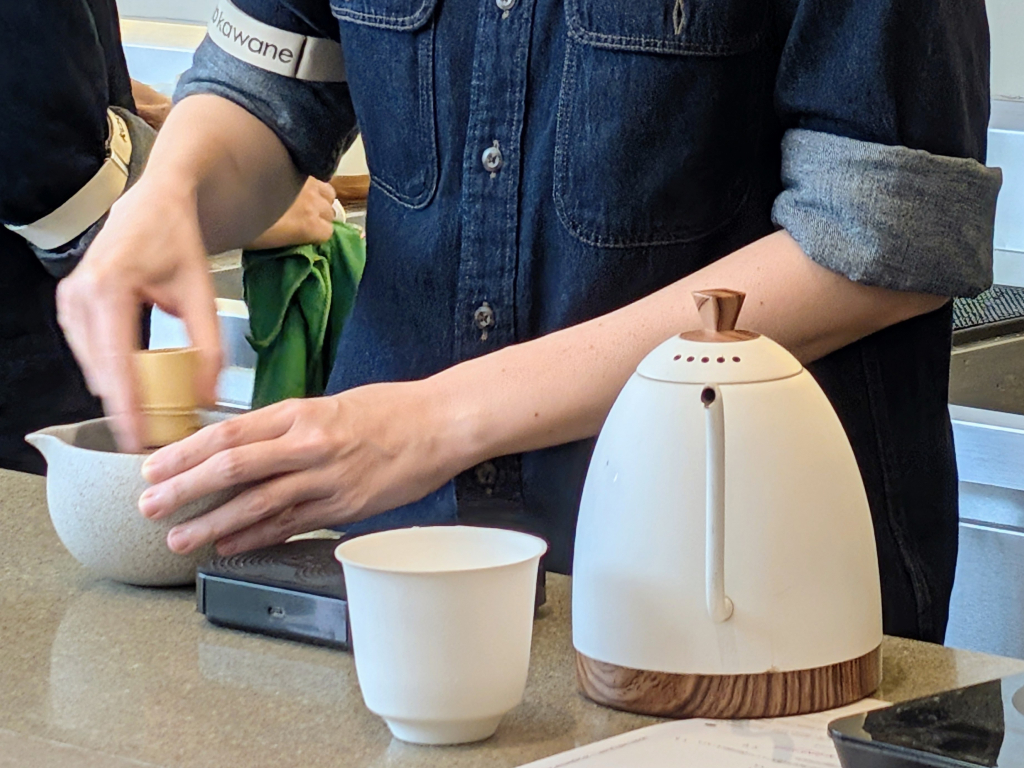
Those usucha preferences also double as a cheat sheet for the lattes. For those inclined to order from this selection, every latte comes lightly sweetened with raw cane sugar, and switching to oat milk costs no extra.
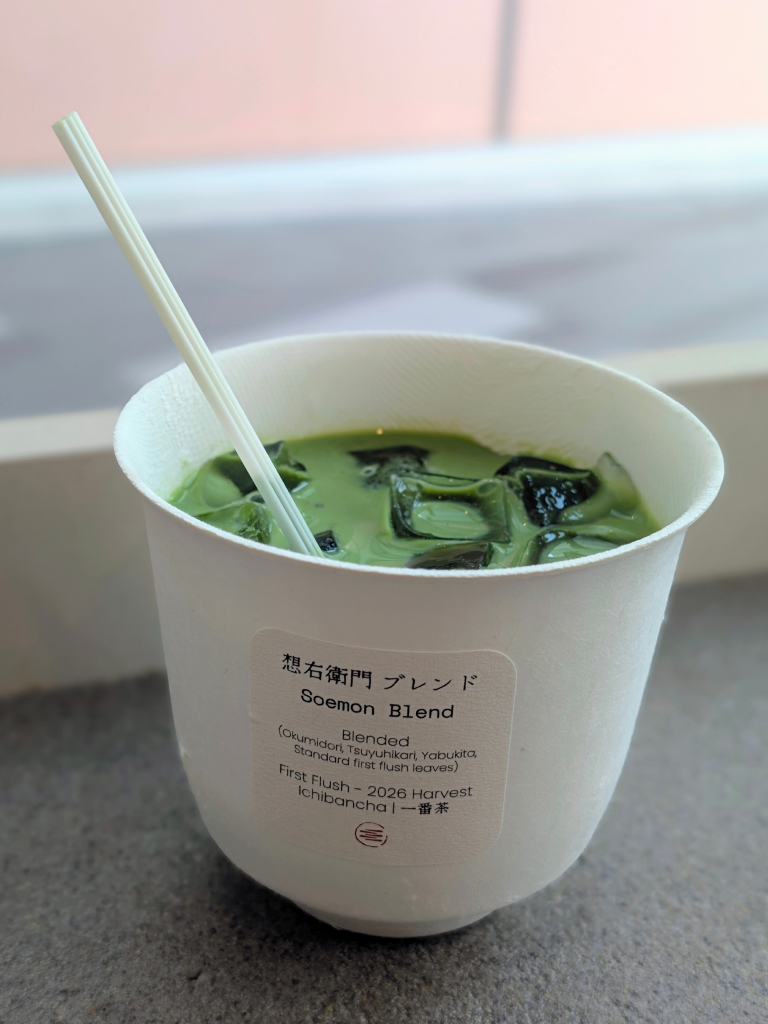
The menu’s dot charts rating umami, bitterness, and body help, too. The house signature Soemon blend (latte, S$13.50) is creamy and silky, with a distinct nuttiness and velvety smoothness.
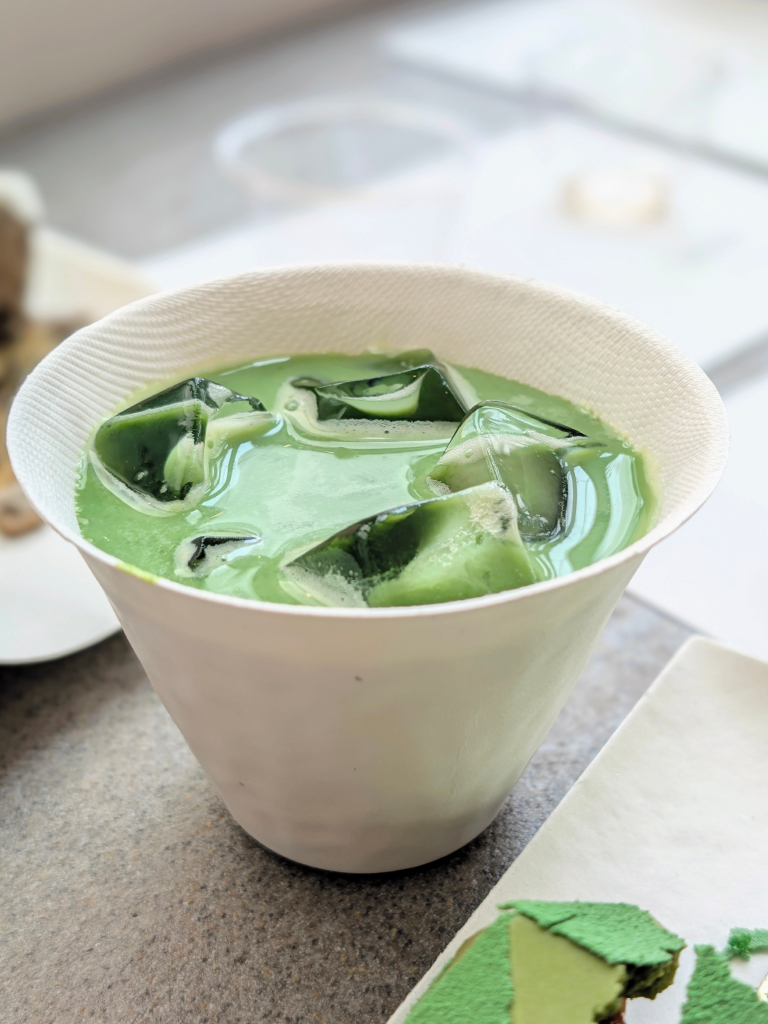
For a latte built around a single cultivar, go for the Okumidori (latte, S$12.50), which carries the full body and umami of its usucha.
Oh, and don’t forget to make room for a round of the non-matcha teas, which are easy to overlook but show off Koko Kawane’s range. The two hojicha options make a good study in contrast.
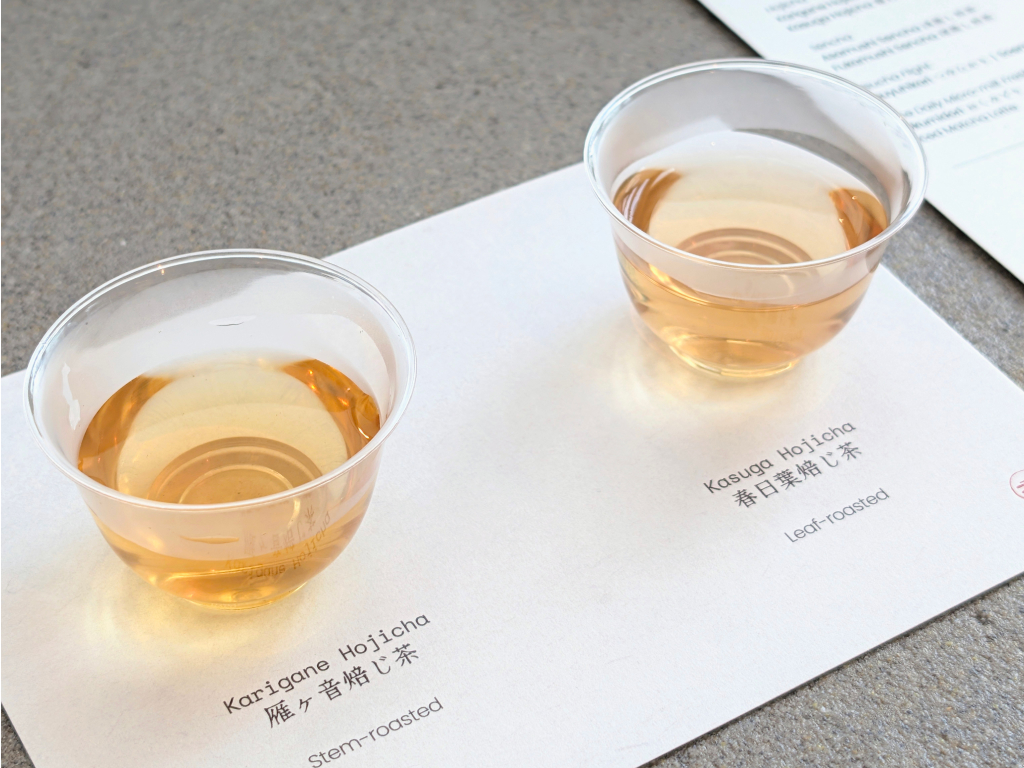
Karigane (Japanese green tea made from the stems, stalks, and veins) (S$7) is roasted for a gentle, fragrant cup, while the leaf-roasted Kasuga (S$7) goes fuller, with caramel and nutty notes.
If you’re in the mood for a bolder cup of tea and want roasted notes that linger on the palate, the hojicha options are your best pick.
The pastries, meanwhile, bring their own personality to the mix — built to accompany the tea rather than compete with it. Chef Mei keeps the sweetness in check and borrows each creation’s look and name from Kawane’s landscape.
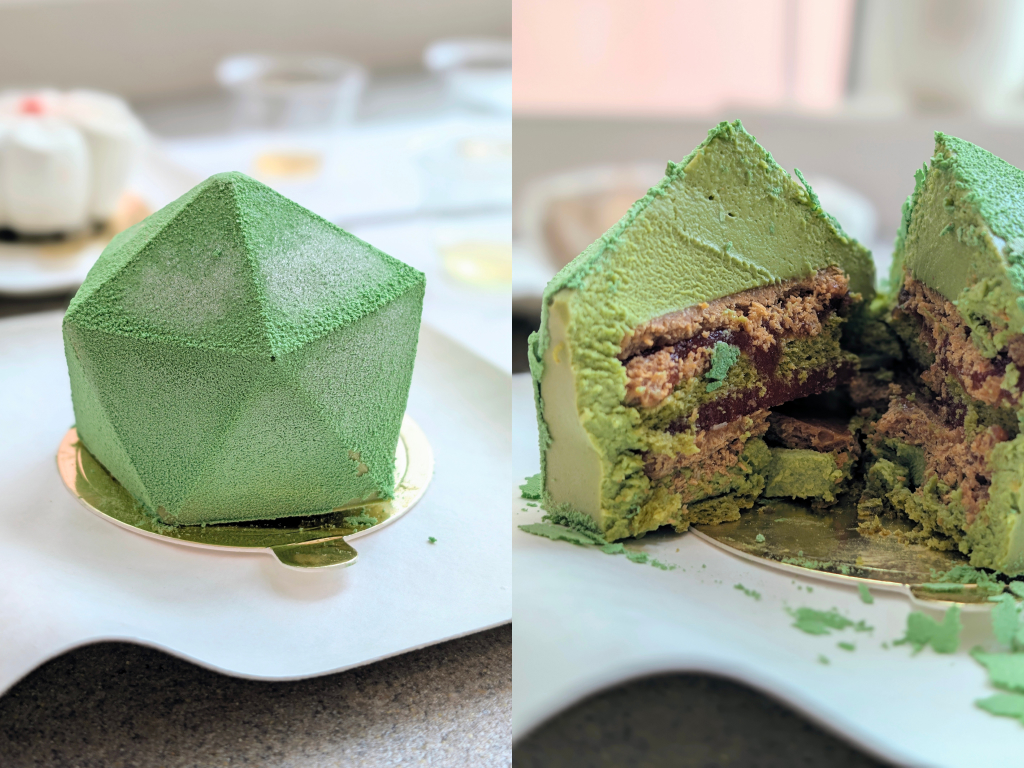
The signature Hisui (S$14) layers matcha mousse and sponge with strawberry jam and a hazelnut praline crunch. And we completely understood why this is a signature; in our opinion, it’s the most well-balanced, with strong contrasts between sweet matcha and tart strawberry jam.
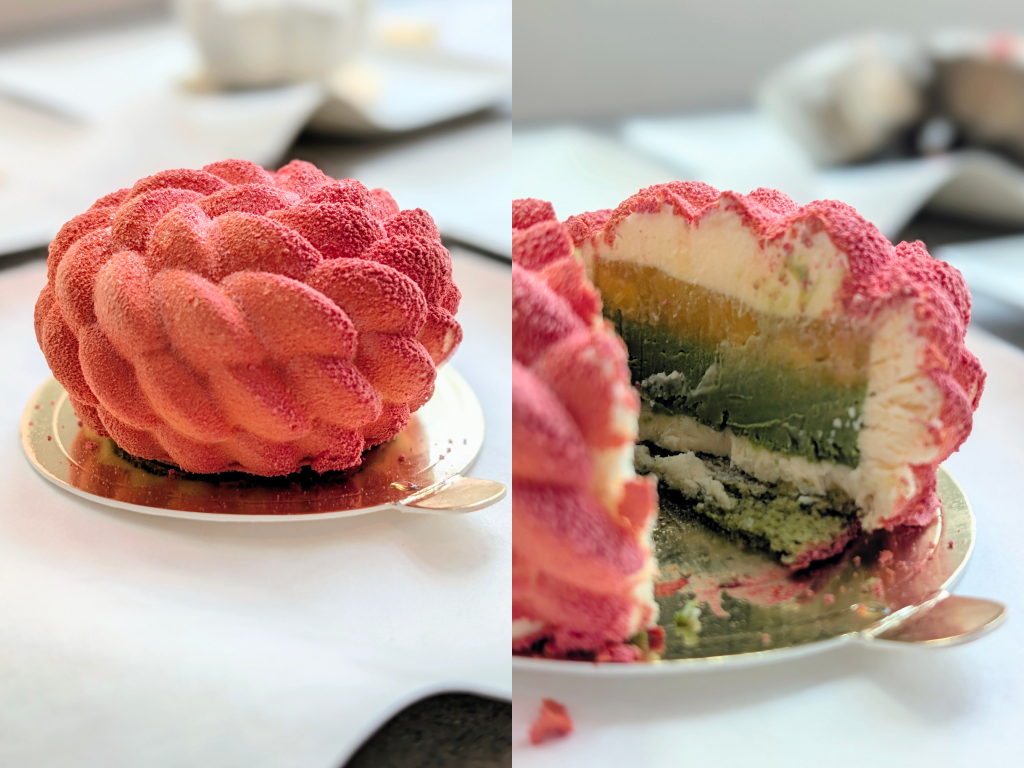
The Akane (S$12), inspired by twilight over shaded fields, pairs coconut mousse and mango compote with matcha cremeux. This one’s a close second, with the mango flavour really coming through robustly, followed by a mild coconutty finish.
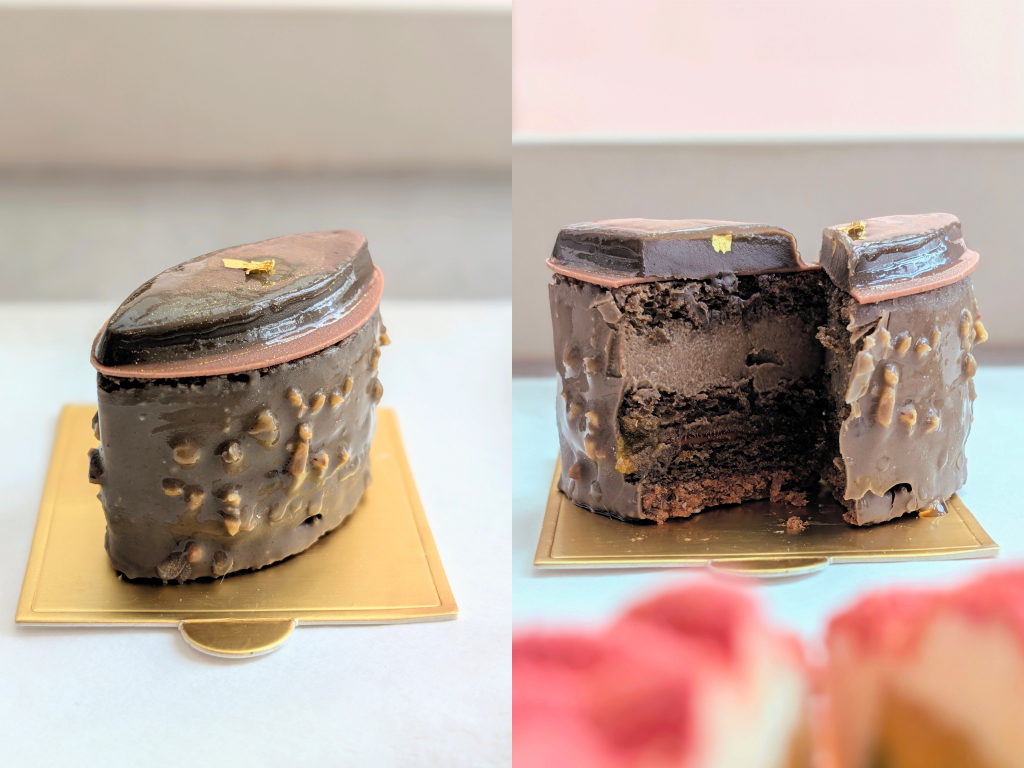
For those who gravitate towards chocolate creations, the Kohaku (S$10) nods to the autumn harvest, doubling down on hojicha across its chocolate shell, sponge, cremeux, and ganache, with passion fruit jam and hazelnut for contrast.
Want the full effect? Order one of the ochagashi pairings (S$15). This traditional format matches a small sweet to a complementary tea (not the latte variation): the Akane with Tsuyuhikari usucha, or the Kohaku with Okumidori.
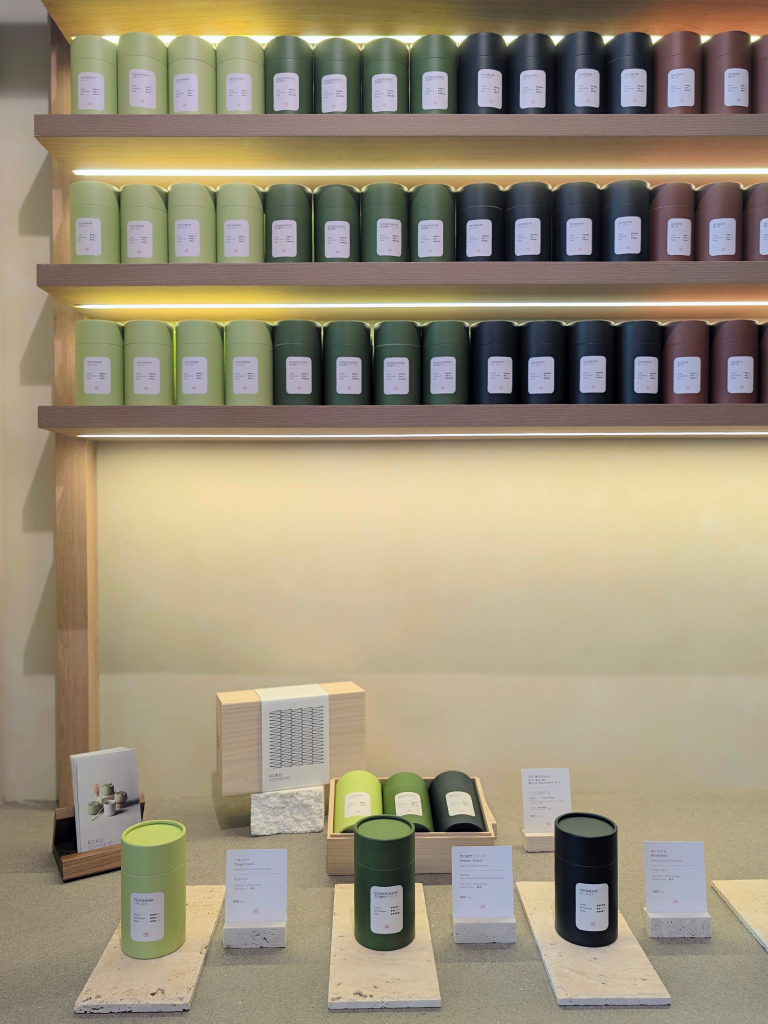
Additionally, should a visit leave you wanting more, the retail shelf stocks Koko Kawane’s teas to brew at home, with prices starting from S$20.
No whisk, no reward
Singapore has no shortage of places to get a matcha fix. Koko Kawane offers a chance to slow down and really understand it — from tasting how each cultivar shifts from cup to cup, to watching tencha turn to powder at the counter, and picking a pastry made with the tea in mind.
Behind it all is a family that has spent four centuries learning how mist, altitude, and mineral-rich soil shape a single leaf, and that attention to detail is clear as day.
So, bring a friend, order the flight, and let the afternoon stretch.
This was a hosted tasting.
For more ideas on what to eat, check out One-Ninety Bar’s new Garden Cafe menu and our recommendations for samgyetang spots in Singapore.
Tue 10am - 9pm
Wed 10am - 9pm
Thu 10am - 9pm
Fri 10am - 9pm
Sat 10am - 9pm
Sun 10am - 9pm



Wani is a cat lady who loves a good sweat session in the gym, and is still tracking the lead to the elusive cure for wanderlust.
Read more stories from this writer.