Jellyfish Sushi: The new fluid and experimental dining playground at New Bahru by Bjorn Shen

If you’ve been to New Bahru in recent months, you’ve likely come across the vibrant Artichoke Pizza Parlor on its ground-floor, or heard whispers of Small’s, the discreet seven-seater omakase counter hidden behind it, known for swapping menus every few months.
The ever-tinkering chef behind both concepts isn’t slowing down. Tucked even further back within the same premises is his newest project: Jellyfish Sushi —- a fluid, experimental sushi bar that plays loosely with convention.
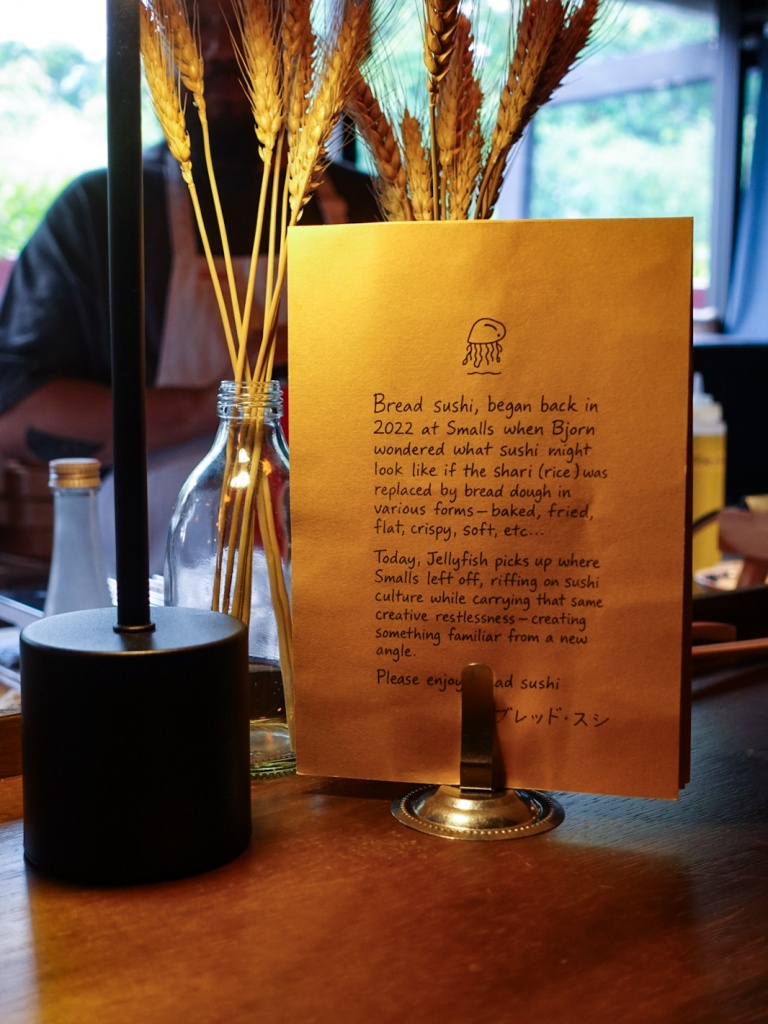
Bjorn Shen first started Small’s back in 2019 as an incubation space for ideas that “didn’t quite fit anywhere else”. It was there he toyed with concepts such as “pizza omakase”, and later “bread sushi”.
While Small’s has remained a space for Bjorn to continue to play out the whimsy, such as an all-fish Korean BBQ, we see Jellyfish as Bjorn’s way of paying homage to Small’s unfettered beginnings, while embarking on a new trajectory.
For Jellyfish’s debut menu, he revisits the well-loved “bread sushi” concept he first explored at Small’s back in 2022, but this time in a bigger (it sits up to 10), dedicated space, with a promise of even more unexpected interpretations.
At its core, Jellyfish is a sushi bar. However, while fish is the anchor, its vessels and embellishments are anything but.
Bjorn hints at risotto sushi, Vietnamese summer roll sushi, and even Peranakan and Indian-inspired variations down the line.
In his words: “Like a jellyfish with no bones, this sushi (at Jellyfish) has no boundaries. We drift wherever our weird ideas take us.”
The only form of structure is logistical: Two dinner seatings at 6pm and 8.15pm, from Tuesday to Saturday, offering up to 12 courses per person, at S$165.
Everything else is pretty much fluid like a jellyfish, guided by Bjorn and team, Mathew Woon, head chef of Artichoke, and Fernando Tendean, former head chef of now-defunct Baba G’s Pizza Place in Bali.
Navigating Jellyfish Sushi’s menu
If you’re familiar with Artichoke or Small’s, locating Jellyfish Sushi is straightforward.
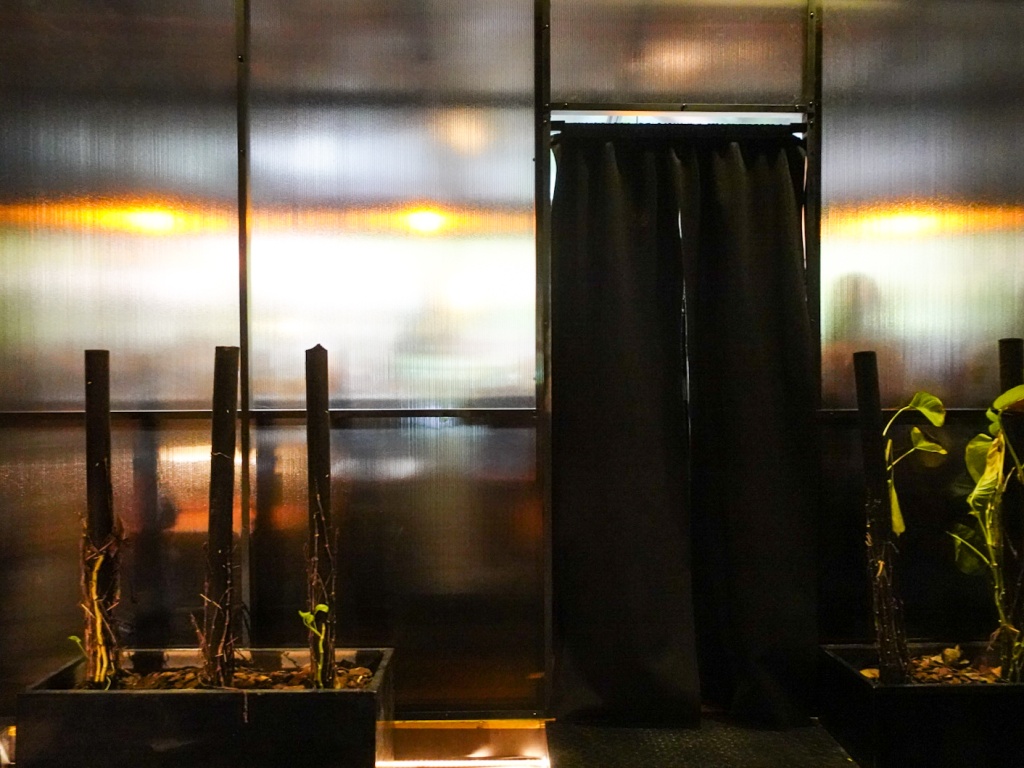
The new concept sits behind both, housed in a standalone, thoughtfully furnished space which feels removed from the other two concepts.
Jellyfish is calm, airy, and pretty much self-contained. By contrast, Artichoke’s energy spills over into Small’s, owing to the use of curtains to separate the two spaces.
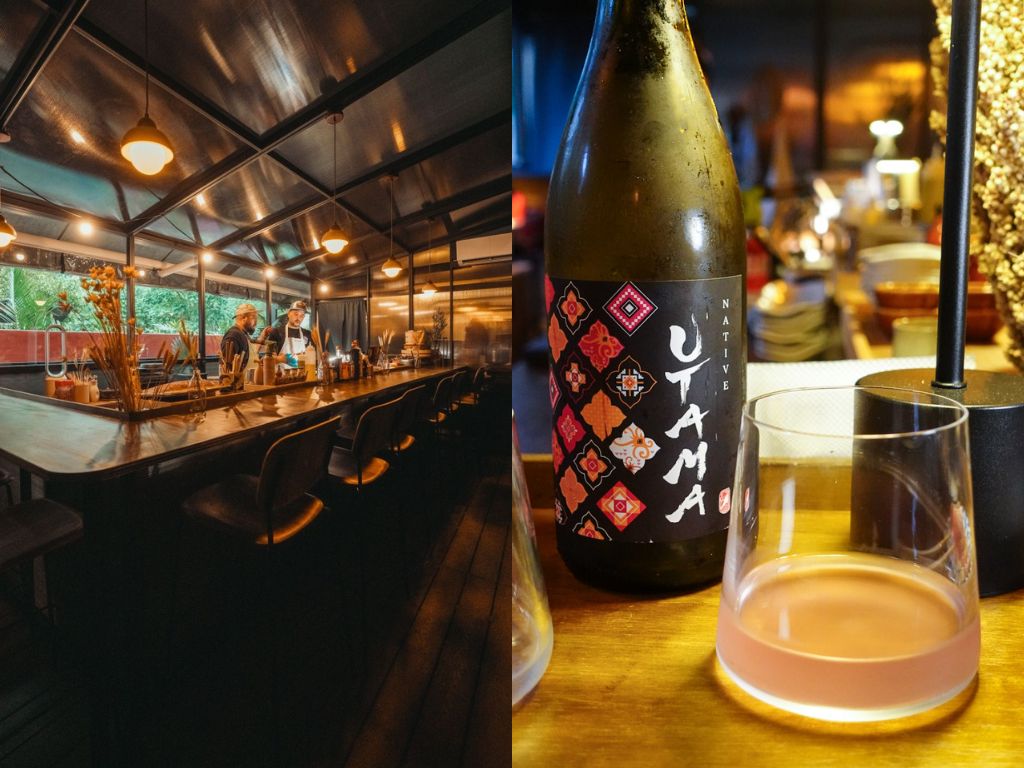
Opt for the earlier seating if you can: It allows time for you to settle in with a glass of sake — Bjorn stocks a wide variety including locally sourced ones from Singapore’s first sake brewery, Orchid Craftworks) — and enjoy the last of daylight filtering through the counter space.
The “dough-makase” opens with an appetiser trio of familiar offerings: Hiroshima oysters, salmon Maki-no-rice, and grilled anago.
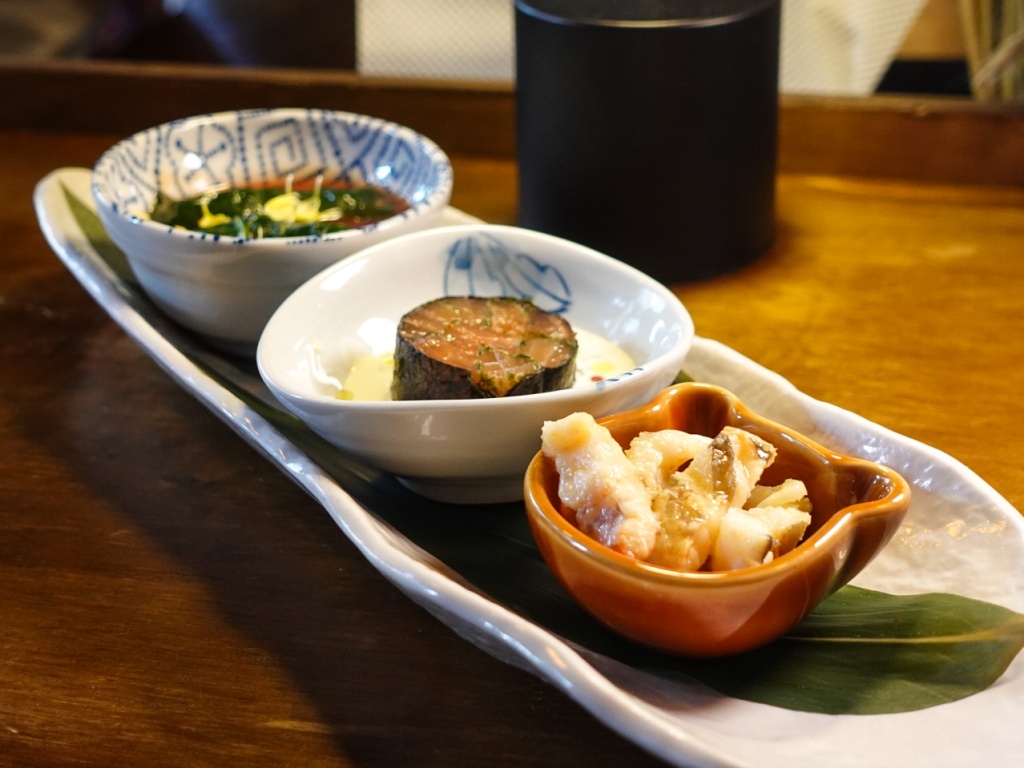
There’s no bread here, yet, and no prescribed order of eating either. Consider this a gentle warm-up and easing in, before the more unconventional courses arrive.
The oysters, served in a chilled minestrone dashi, were a personal highlight — light, gently tangy, and appetite-whetting, much like the miso soup that often opens a Japanese meal.
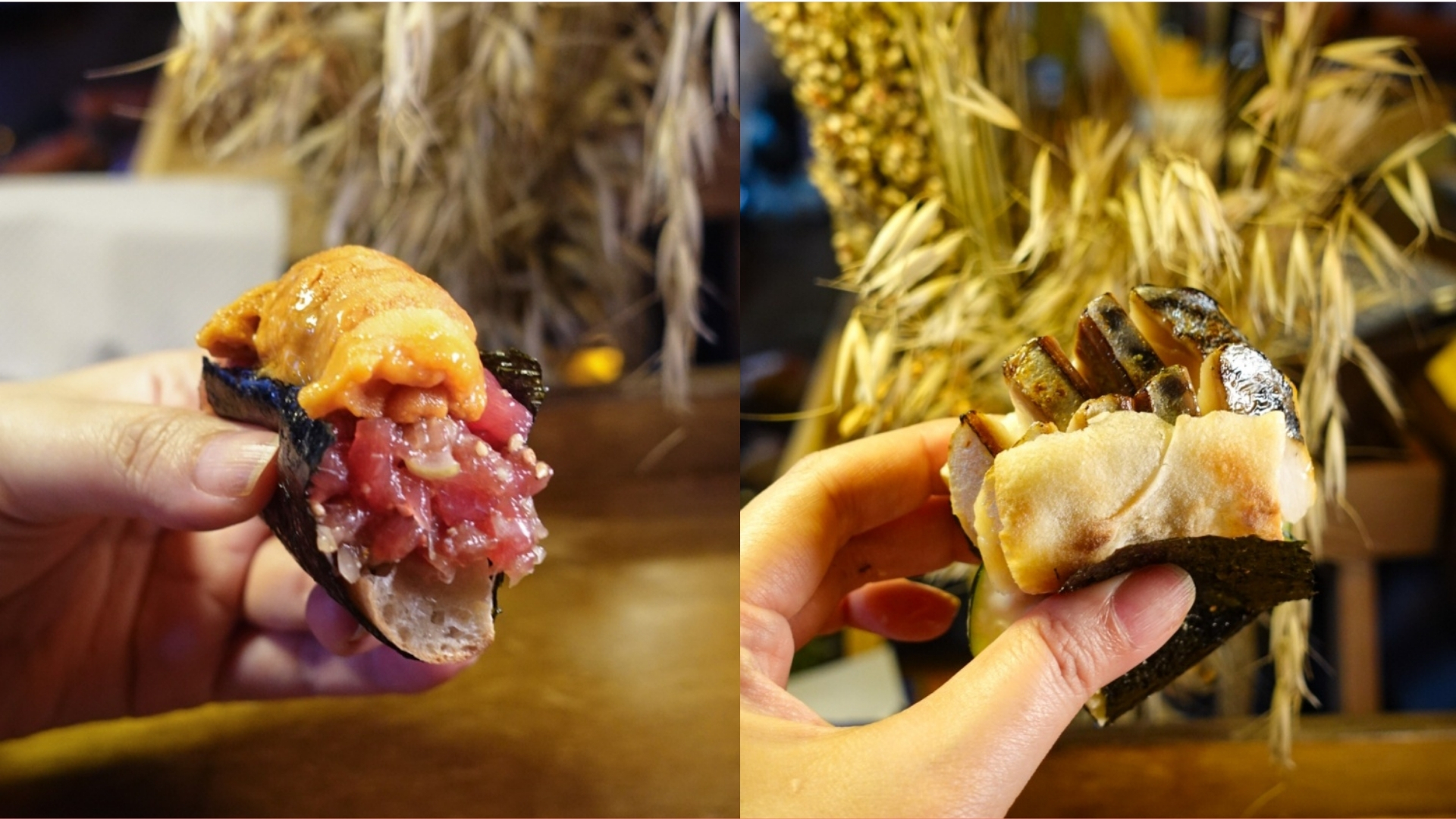
The much-anticipated bread sushi courses start with the shime saba & stracciatella.
Saba (mackerel) is salt-cured, then pickled in plum vinegar before being placed into bread with salted zucchini, stracciatella cheese, and wasabi mayo, with a nori wrap on the outside. The bread itself is lightly brushed with a vinegar blend to echo sushi rice.
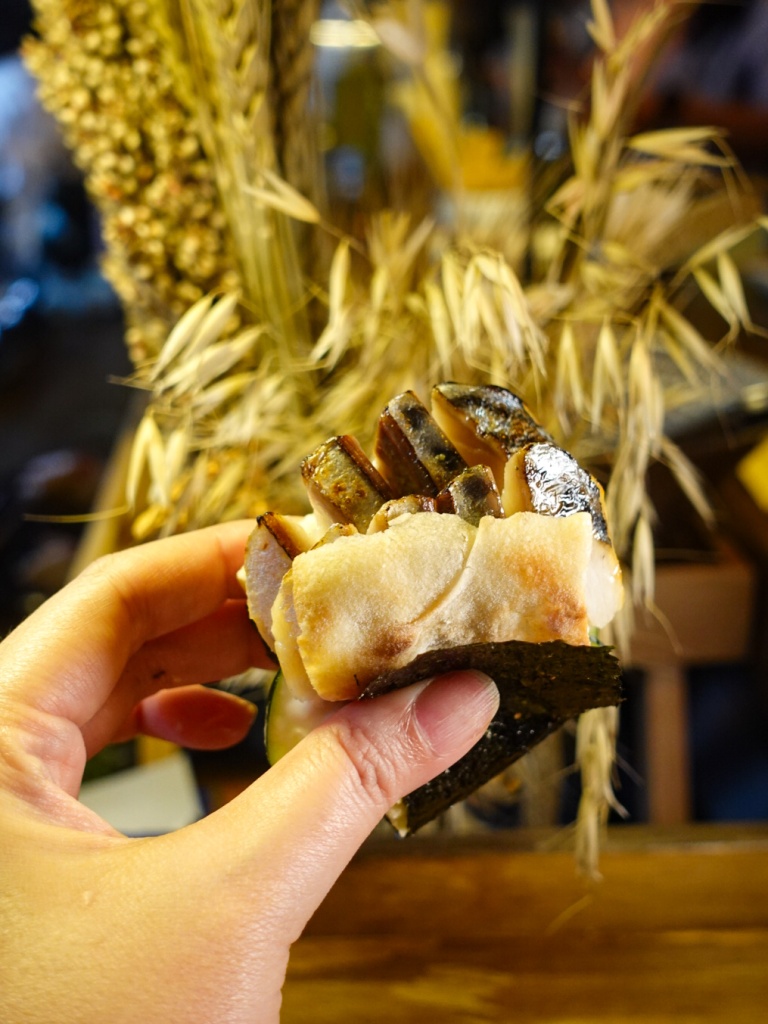
As we eat, Bjorn points out that the concept of bread and fish isn’t as foreign a pairing as it might sound.
The Spanish enjoy marinated anchovies with tomato on bread, while the Scandinavians often pile pickled herring on open-faced rye sandwiches (known as a “smorredbrod”). Those in Northern Germany have a similar variation known as the fischbrotchen, stuffed with herring or mackerel and creamy remoulade.
I’m not naturally inclined towards either fish or bread, but Bjorn’s measured approach to the protein, bread, and its accompaniments makes this first item an easy introduction — balanced, familiar enough to be comforting, and not too overwhelming.
The kanpachi & salted lettuce course is where things start to get interesting.
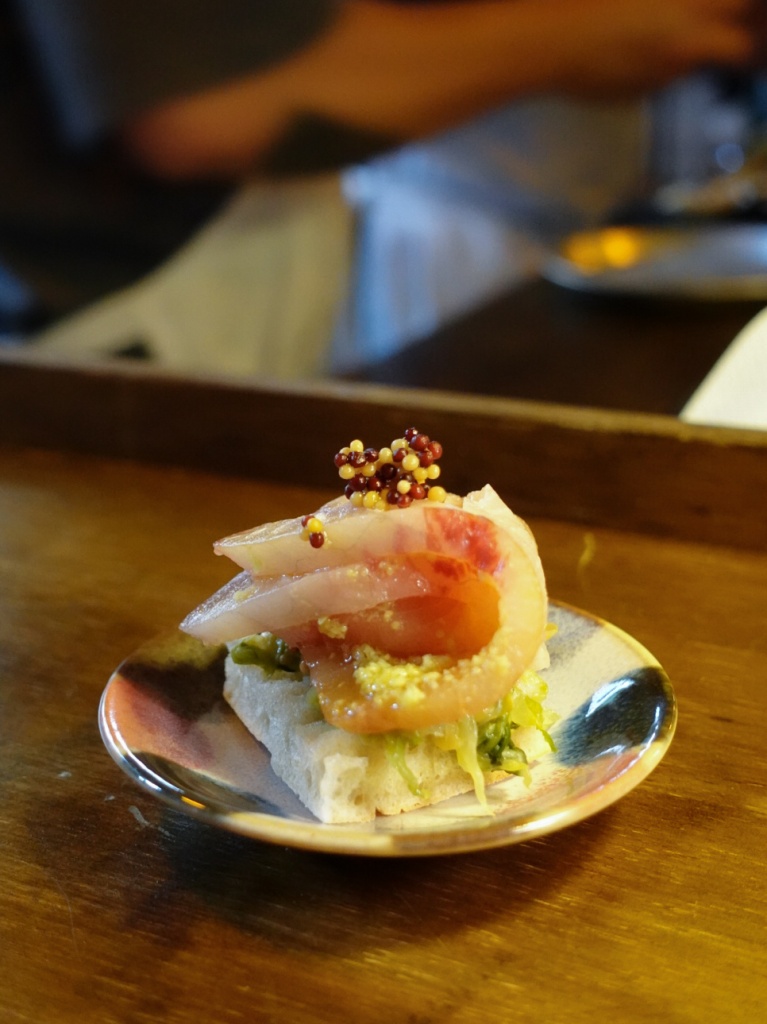
Bjorn explains that he uses three different parts of a loaf, across the various sushi pieces, to complement each fish. Here, the lower-half of the bread — spongier with a firmer crunch — cushions the rich amberjack, while salted lettuce dressed in smoked vinegar cuts through the fat.
It’s served open-faced, though I found myself wishing it were enclosed — with more bread to balance out the generous portion of fish —- simply because the textures worked so well together.
He follows this with a madai carpaccio & pistachio, served on the fluffier top crust, a nice contrast to the springy red sea bream.
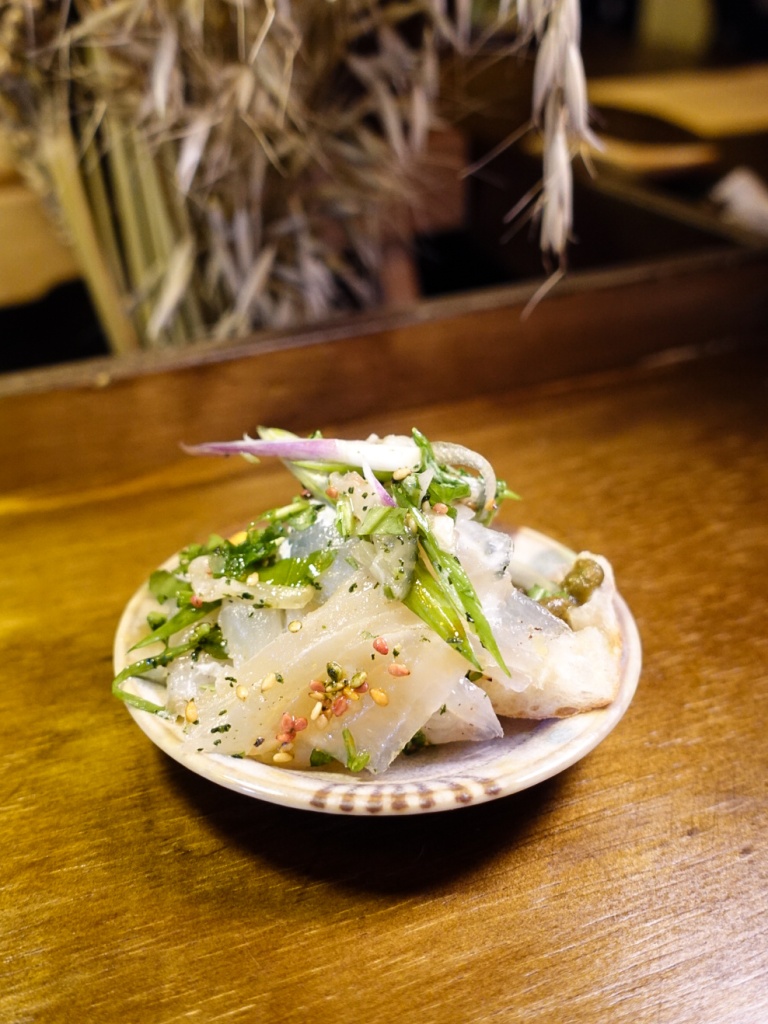
Lightly dressed with garlic oil, lemon zest, and pistachio paste, and finished with rocket leaves, it’s a refreshing pause before the heavier dishes to come.
A palate cleanser of heirloom tomato — pickled in Japanese vinegar with umeboshi and sugar — also bridges the transition nicely with its brightness.
Next, Bjorn and his team serve up different parts of a Nagasaki bluefin tuna — starting first with finely chopped akami (main red meat of the tuna) and leek, negitoro-style, served on the side crust of a bread for more bite, and wrapped with nori, just like a handroll.
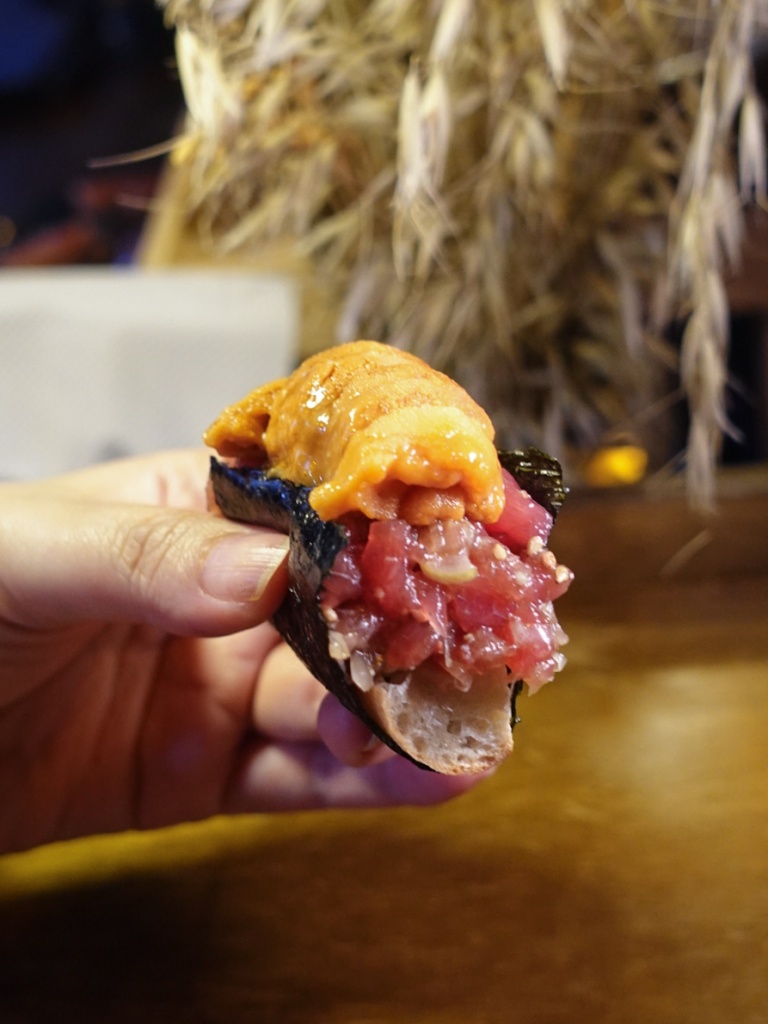
There’s a surprise element — the addition of uni (sea urchin) — on top of this already decadent handroll. It’s a welcome move, of course, and one that elevates all elements of the dish, and goes well with the wonderful crunch from the bread at the end.
Bjorn lets on that every seating comes with its own surprises, so repeat visits are unlikely to feel identical, even if the core menu concept is unchanged.
The chutoro (medium-fatty tuna) comes next, cubed and paired with avocado and tomato, served on a monaka wafer, with the fish resembling a bara-chirashi (diced raw fish) and the monaka as a bowl of sorts. It’s a colourful creation that comes together looking like a prettily plated fruit tart.
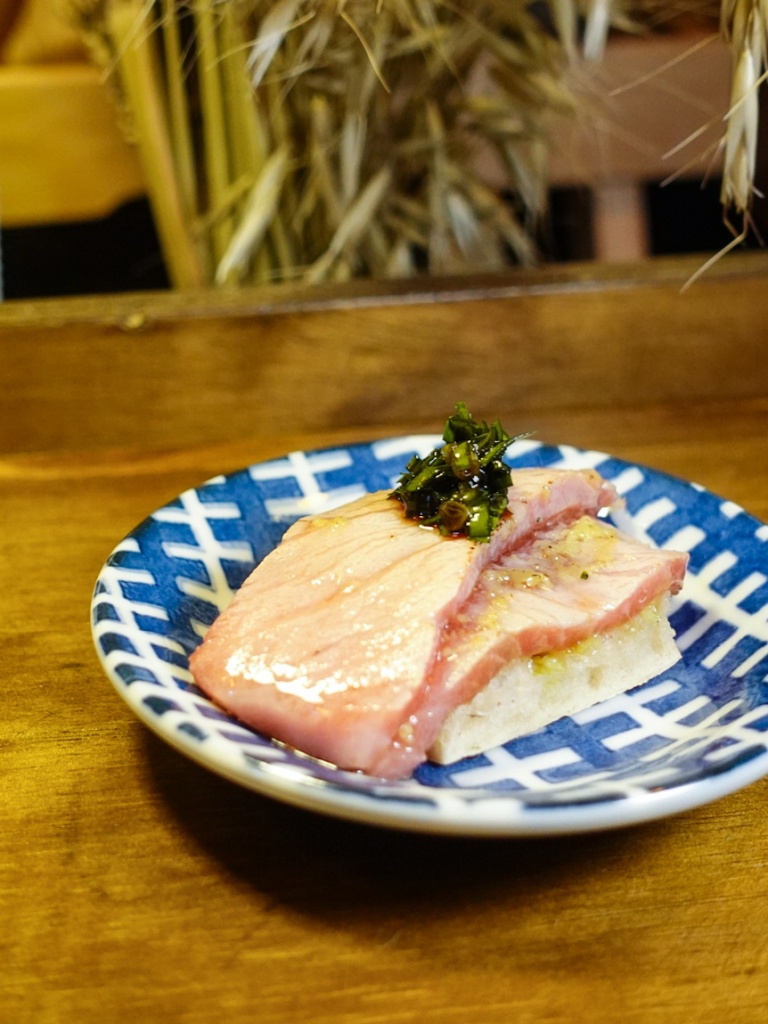
The final tuna course, the otoro, or tuna belly, has the least embellishments of all (not that it needs anything more) — a light sear, topped with soy-sauce-marinated garlic chives, served on the bottom crust of the bread.
It’s rich, confident, and a fitting close to the bread-sushi sequence before one of the most surprising components of the meal, the wakame ramen from Awaji island.
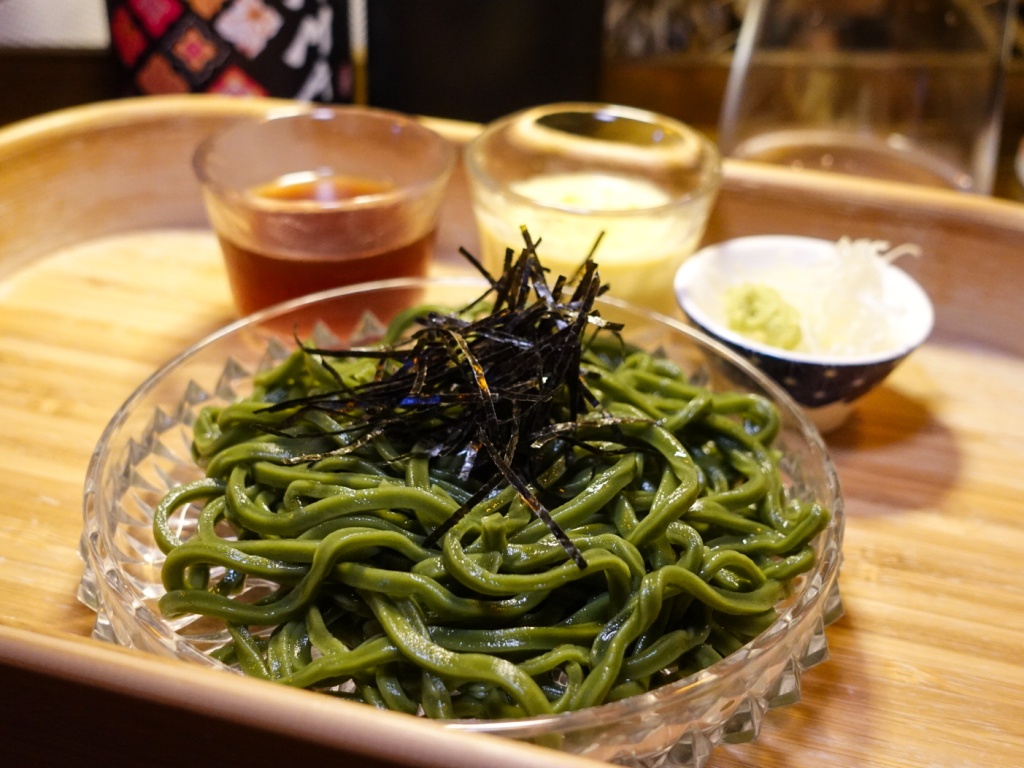
A special dish unique to Awaji island in Japan’s Hyogo prefecture, the deep-green wakame (seaweed) noodles are made from locally harvested seaweed, known for its fleshy texture and fragrance.
Served alongside a roasted saba tsuyu made from mackerel bones, imbued with charred bread for depth, and a cold asari clam potage, the dish is quietly stunning.
The clam potage, in particular, is mildly briny and deeply satisfying, coating the firm wakame noodles perfectly — I would have happily gone for seconds, if that was an option.
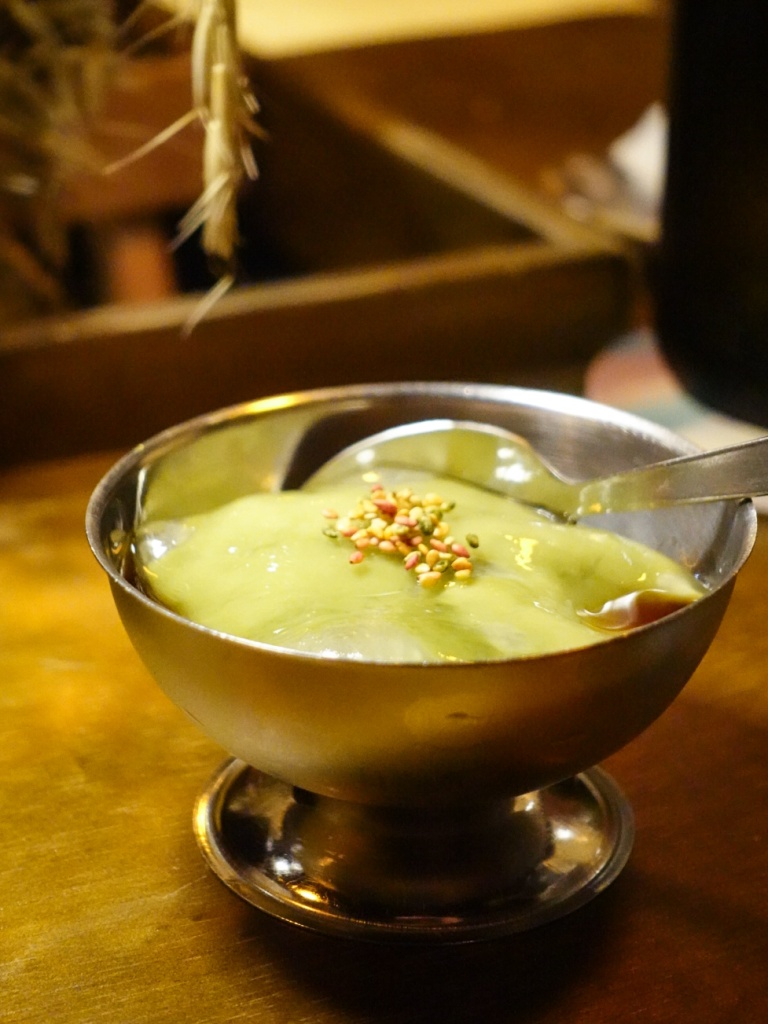
Dessert comes in two parts: A mini sweet potato sandwich with fig butter and hazelnut spread, and a matcha pudding with warabi jelly and Okinawa black sugar.
The matcha pudding, with a wobbly, translucent sheet of warabi jelly, is perhaps the closest visual nod to a jellyfish all evening. The use of matcha here is light-handed and closes the meal cleanly, with no flavour overstaying its welcome.
As we dig into the last bites, Bjorn asks each diner for their favourite dishes. Much as I wanted to name a bread sushi, it’s the tomatoes and potage that linger mostly clearly, and it’s a response that Bjorn takes in his stride, with a chuckle.
While the experience at Jellyfish had yet to convert me into a full-fledged fish-and-bread lover, it definitely left me open to seeing a lot more possibilities with fish than I’d expected.
And if Bjorn’s aim is to push the boundaries of what sushi can be with Jellyfish Sushi, I’d say he’s succeeded — even with this stubborn diner.
Jellyfish Sushi, or even “bread sushi” may sound like quite the gimmick at first, but it’s really a literal food for thought you leave with long after the meal ends: If sushi can be had with bread, what other combinations are we limiting ourselves from exploring?
In a dining landscape that often plays its safe to pander to the masses, Jellyfish Sushi’s quiet fluidity — thoughtful, measured, yet unafraid to drift — might just be its greatest strength, and what we need.
This was a hosted tasting.
For more places to explore around New Bahru, Bjorn’s pizza concept Artichoke Pizza Parlor, or Odem, a Korean restaurant helmed by a young female chef.
Tue 6pm, 8.15pm
Wed 6pm, 8.15pm
Thu 6pm, 8.15pm
Fri 6pm, 8.15pm
Sat 6pm, 8.15pm
- Fort Canning



Sarah is constantly seeking out new coffee spots and cocktail bars around the world, and should probably drink more water while at it.
Read more stories from this writer.New Openings New Bahru Central Fort Canning Asian Japanese Sushi Sashimi Restaurants Fusion