Gyusei Gyukatsu Wagyu-Steakhouse introduces Singapore’s first halal A5 wagyu katsu

Gyukatsu (beef cutlet in Japanese) has always been a Japan trip flex — crisp panko, rosy beef, and that little tabletop grill moment where everyone suddenly becomes a chef.
Gyusei Gyukatsu Wagyu-Steakhouse brings that same DIY sizzle to Bugis, but with a twist: It’s halal-certified, and the team bills it as the first halal gyukatsu concept outside Japan — one of the very few globally to centre the experience around premium wagyu cuts.
The idea behind the katsu
Located along North Bridge Road, Gyusei Gyukatsu Wagyu-Steakhouse specialises in gyukatsu, breaded beef cutlets served rare and finished on a tabletop grill, and opened in September 2025.
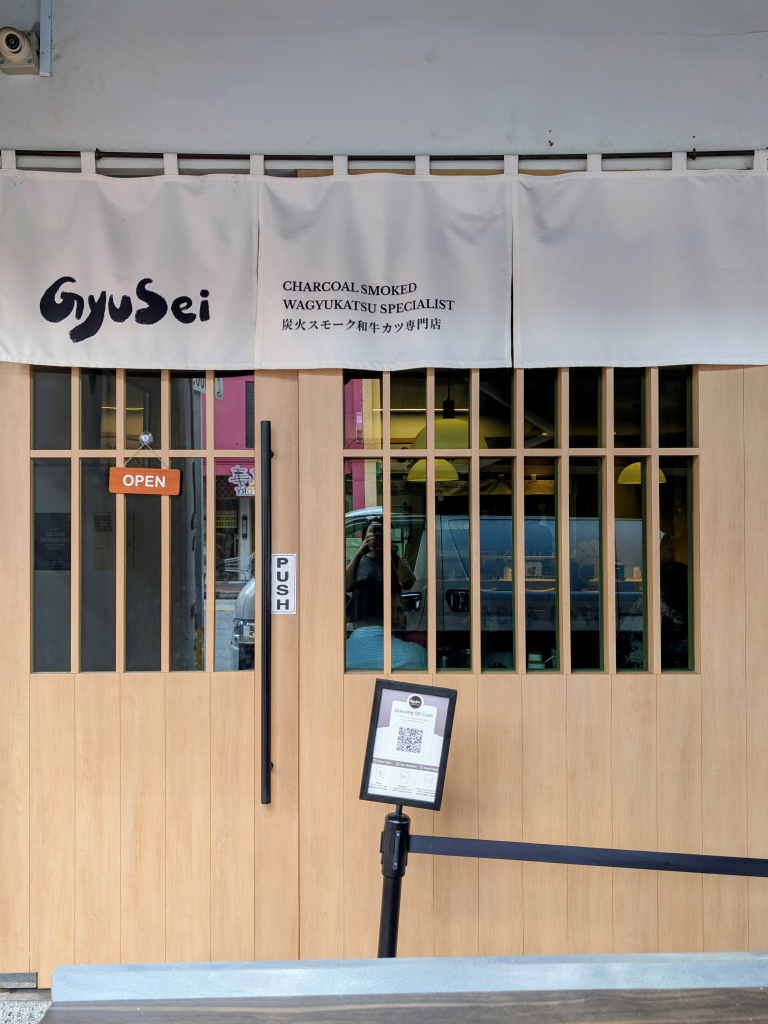
Gyusei does not seem to be a mass-market Japanese chain, but a concept developed with direct Japanese involvement, in partnership with TK Group. The F&B group is also responsible for other halal steak spots such as Tomahawk King: Steakhouse & Grill and Charr’d.
Rather than pivoting to secondary cuts or non-wagyu alternatives, the team leaned into sourcing halal-certified Japanese beef, by working with suppliers in Japan that operate halal-compliant facilities.
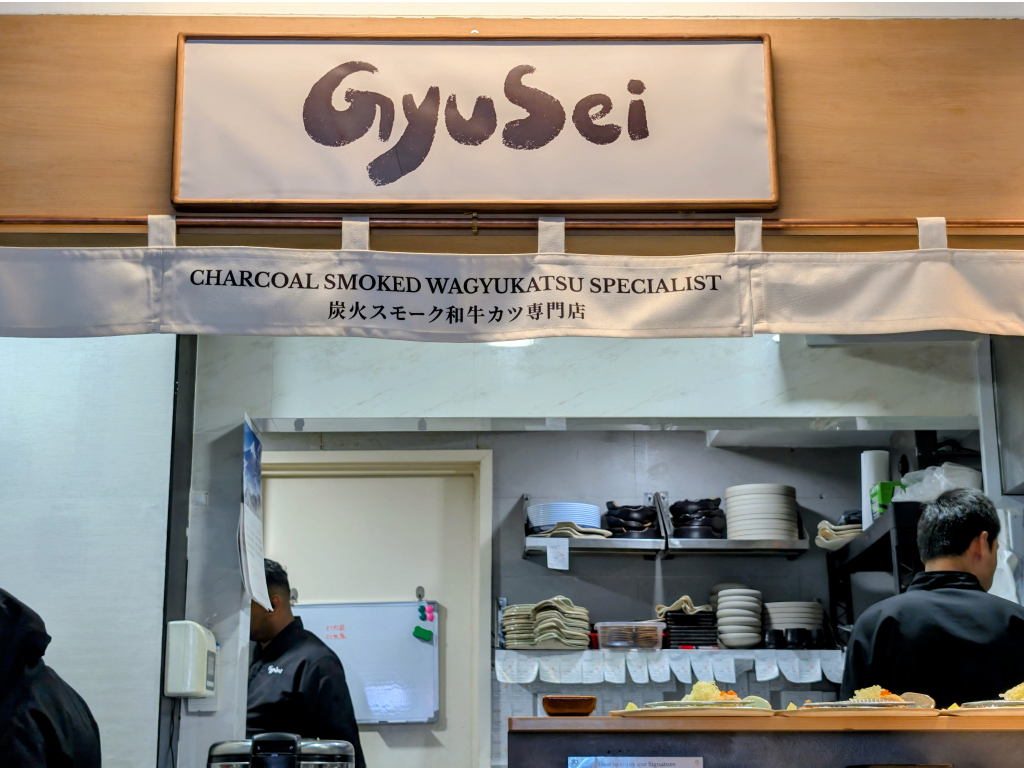
What Gyusei Gyukatsu Wagyu-Steakhouse wants to be known for is its focus on high-grade charcoal-smoked wagyu gyukatsu, including A5 Japanese wagyu — uncommon in halal Japanese dining.
The menu highlights prized cuts such as ribeye, striploin, and tenderloin, served in set formats that allow diners to grill each slice to their preferred doneness. The emphasis is very much on texture and fat quality — a crisp breaded crust giving way to richly marbled beef, finished simply with condiments rather than heavy sauces.
The gyukatsu experience
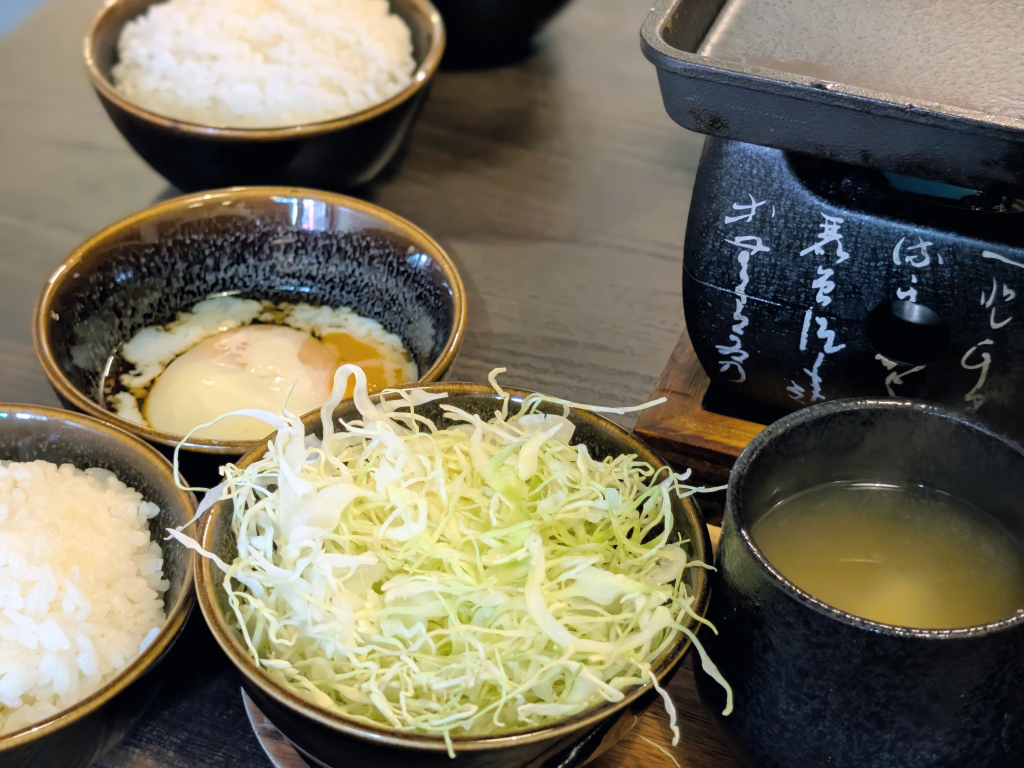
All of Gyusei Gyukatsu Wagyu-Steakhouse’s mains are served as set meals, each anchored by free-flow Japanese rice, ice-cold cabbage salad, and a light miso soup. While the restaurant is best known for its wagyu gyukatsu, the menu is broader than it first appears.
Alongside its beef offerings, it also serves a premium seafood set (S$39) featuring salmon, unagi (freshwater eel), ebi (shrimp), and soft-shell crab, as well as two vegetarian sets for diners who prefer to skip meat altogether.
Unlike the beef sets, the seafood option does not come with an onsen egg for dipping, placing the focus squarely on the seafood itself.
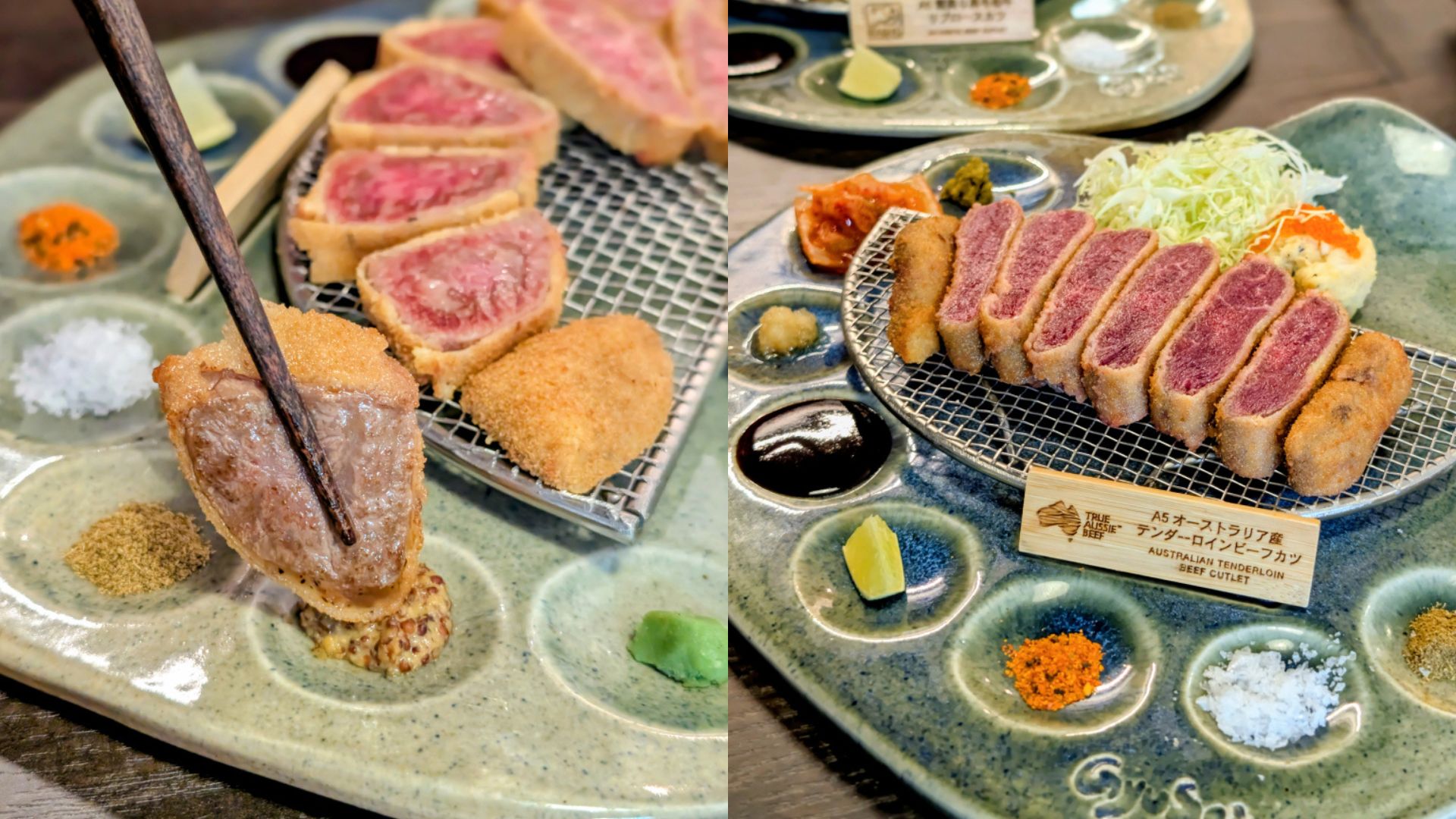
Each tray arrives with a tidy line-up of condiments — from flaky salt and shichimi togarashi (Japanese chilli pepper), to horseradish and kimchi — encouraging diners to adjust flavours as they go.
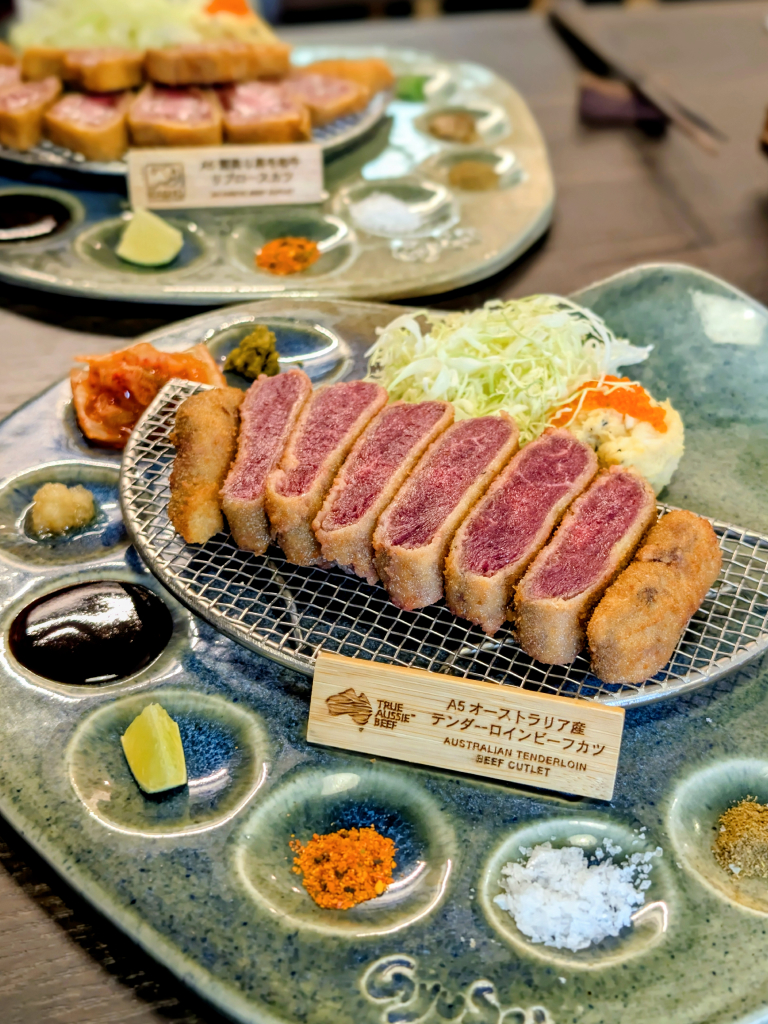
The restaurant runs a weekday lunch Australian tenderloin set (120g, S$33), available from opening until 4pm. It comes with the same free-flow sides, plus a softly set onsen egg for dipping — a detail that immediately makes it feel like a complete, considered meal rather than a pared-back option.
To stack things up against one of Gyusei Gyukatsu Wagyu-Steakhouse’s headline offerings, we also ordered the A5 ribeye set (120g, S$69), which arrives with similar accompaniments and its own bowl of runny onsen egg.
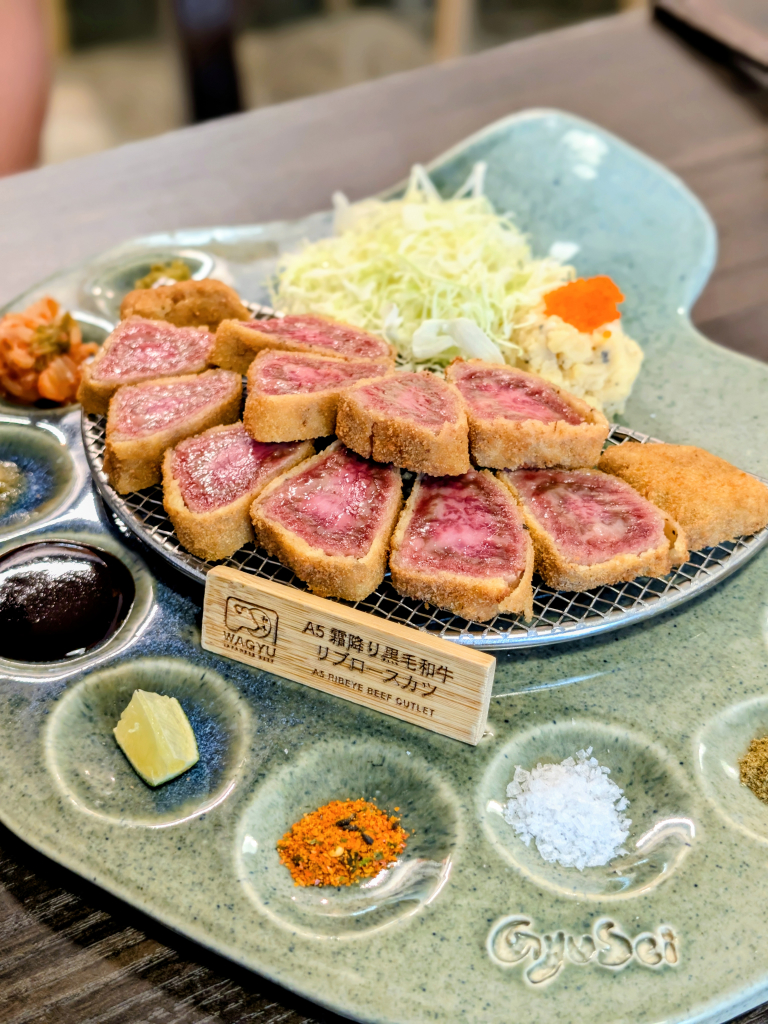
Placed side by side, the difference between the two cuts is immediately apparent. The A5 ribeye, with its dense marbling, looks almost lacquered, while the Australian tenderloin is noticeably leaner and more restrained in appearance.
Cooking the gyukatsu is refreshingly low-stakes. Staff recommend about five seconds per side on the tabletop grill — just enough to warm the centre and render the fat — though diners who prefer a firmer bite can leave it on longer without judgment.
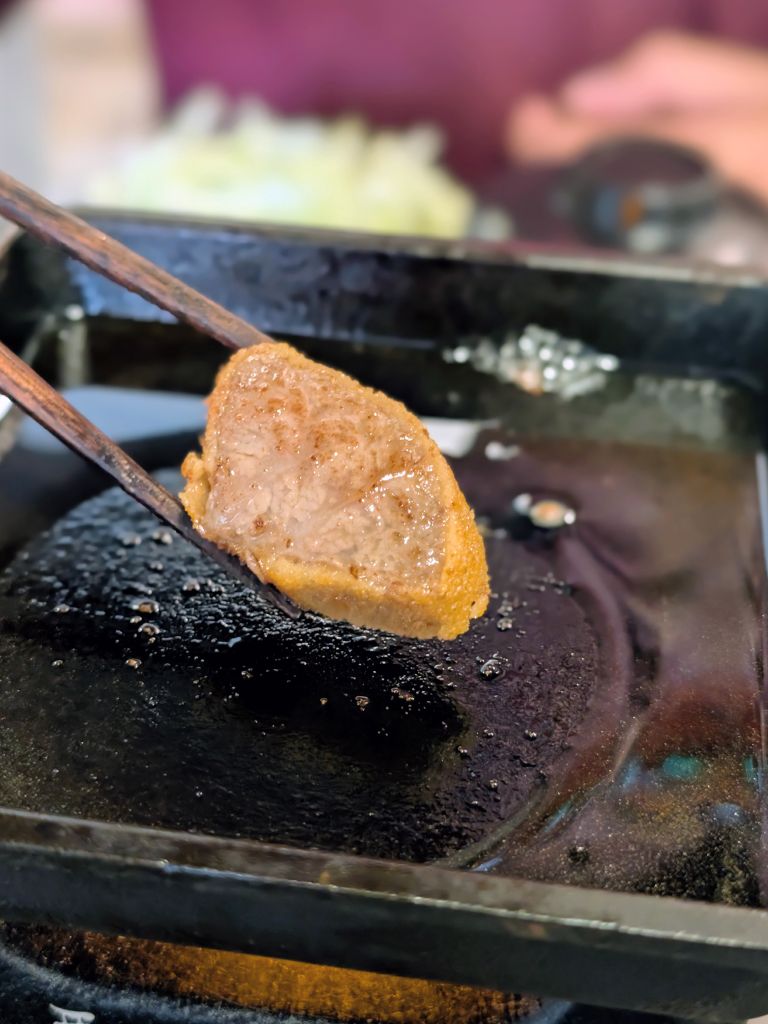
The ritual is quick, intuitive, and oddly satisfying, turning each slice into a choose-your-own adventure.
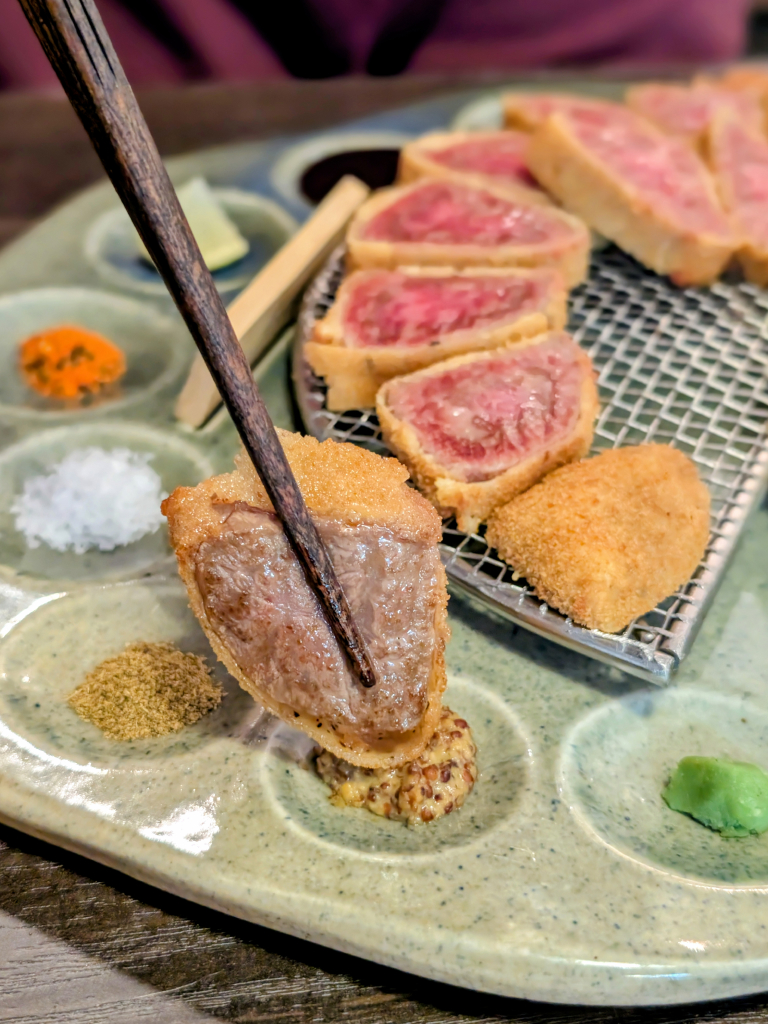
The Australian tenderloin proved to be a quiet overachiever. It was tender, clean-tasting, and remarkably satisfying for the price, especially when paired with a pinch of salt or a dab of horseradish.
It’s the kind of cut you could return to regularly, without feeling weighed down.
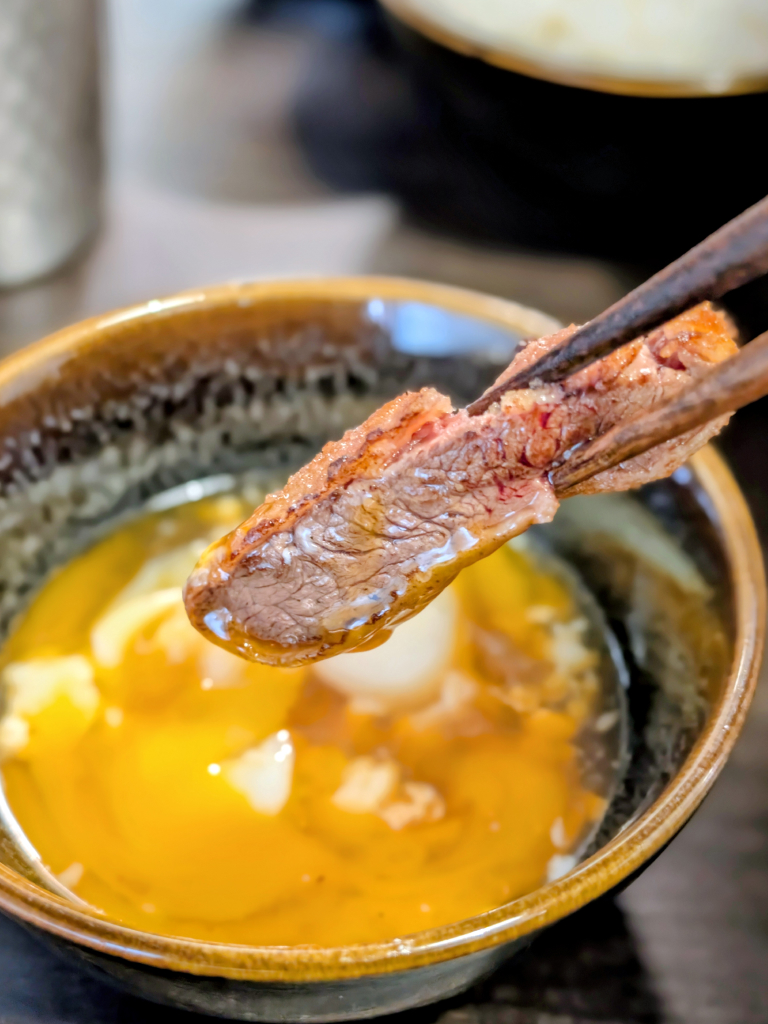
The A5 ribeye, by contrast, leans unapologetically indulgent. Rich, buttery, and almost melting at the edges once grilled, it’s best enjoyed with restraint. Dipping it lightly into the onsen egg added silkiness and depth, though overdoing it tipped the experience into cloying territory.
Our favourite pairing, unexpectedly, was the kimchi. Its acidity and crunch offered much-needed relief from the wagyu’s intensity.
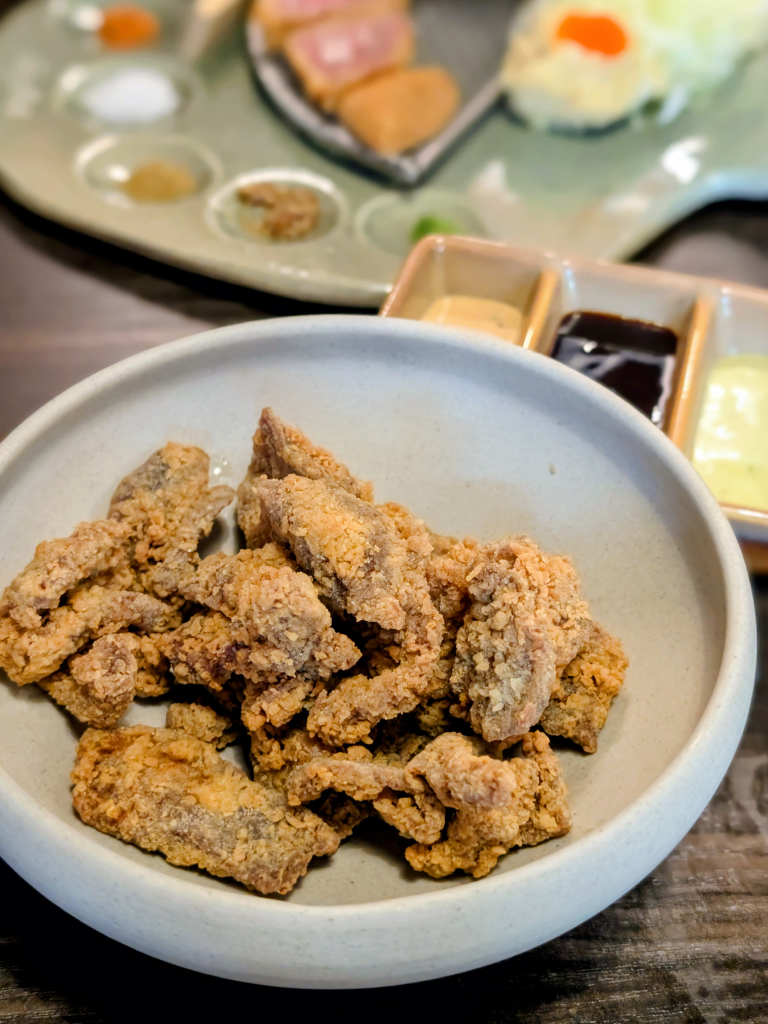
What we didn’t anticipate was the A5 wagyu tenders (S$28) stealing the spotlight. Available in limited quantities daily, this deep-fried side dish is made from A5 strips trimmed from the preparation of the restaurant’s main wagyu cuts — a smart, low-waste move that also happens to be delicious.
Crisp on the outside and indulgently rich within, the tenders are served with three sauces: Ranch, mint mayonnaise, and house katsu sauce.
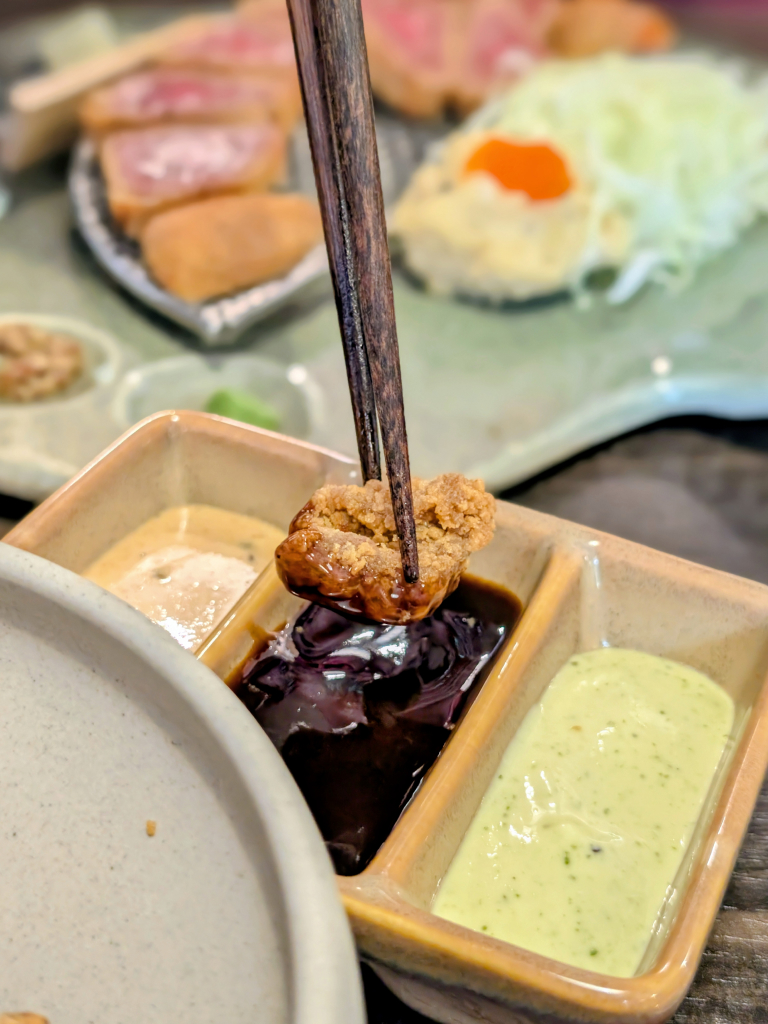
Of the trio, the mint mayo stood out most — gently herbaceous rather than aggressively minty, and surprisingly effective at cutting through the fat. If these are available during your visit, ordering them is non-negotiable.
Beyond beef, Gyusei Gyukatsu Wagyu-Steakhouse also offers a range of non-beef sides, including Grandma’s nanban chicken (S$18), truffle bonito fries (S$16), and agedashi tofu (S$12, tofu cubes coated in potato starch and deep-fried).
As the nanban chicken was unavailable during our visit, we opted for the XL Hyogo oysters (S$29 for three). Each oyster is topped with caviar and accompanied simply by a lemon wedge and a bottle of Tabasco sauce.
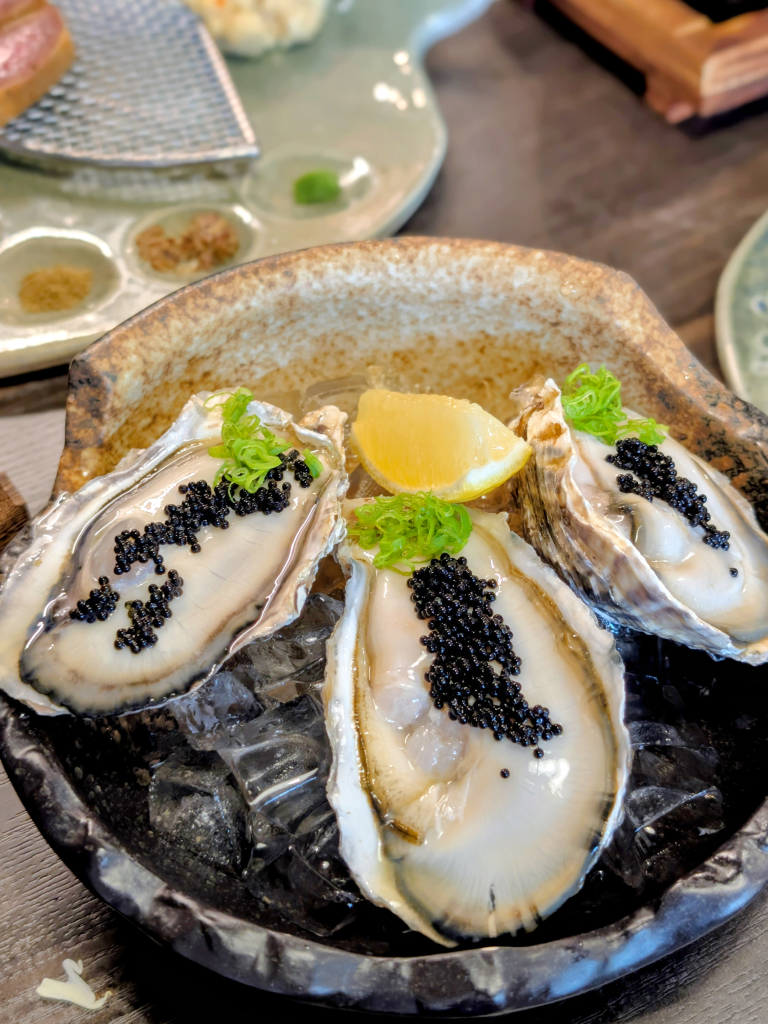
Plump and generously sized, the oysters delivered on their reputation, with a creamy texture and a balanced sweet-briny flavour. The finish leaned clean and oceanic rather than metallic, making condiments largely unnecessary — though a dash of Tabasco wouldn’t be out of place, if you’re craving extra zip.
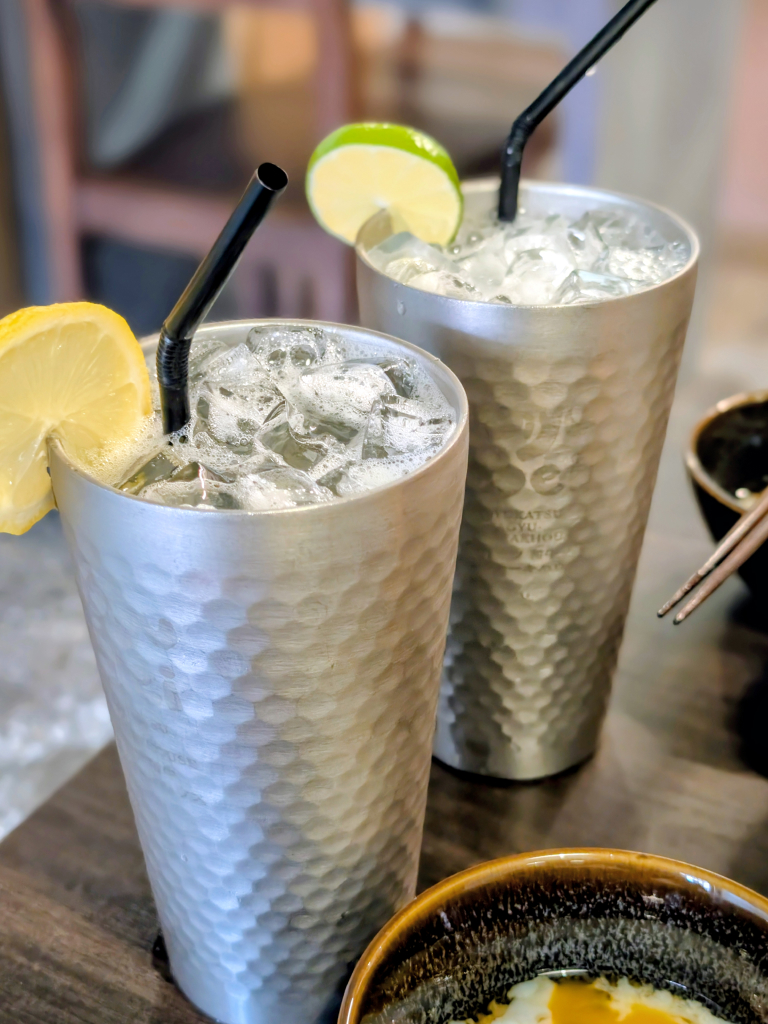
To wash it all down, we went with the lemon sour and Calpis sour (S$12 each). Both were generously poured, but the lemon sour edged ahead, its sweet-sour tang doing a better job of cutting through the meal’s cumulative richness.
It’s the safer, more refreshing choice if wagyu is the main event.
A solid addition to the scene
By the end of the meal, it’s quite apparent that Gyusei Gyukatsu Wagyu-Steakhouse leaves a clear impression: This is straightforward, high-quality food executed with confidence.
Yes, it was a pricier lunch, especially if you’re leaning into the A5 cuts. However, the value lies in the ingredients, the careful sourcing, and the freedom to enjoy each slice exactly the way you want it.
There’s no over-seasoning or unnecessary theatrics here; just well-chosen beef, crisp katsu, and a format that lets the ingredients speak for themselves.
For diners who’ve long watched the gyukatsu trend from afar, Gyusei Gyukatsu Wagyu-Steakhouse delivers a satisfying, accessible entry point — one that feels considered, indulgent, and ultimately worth the spend.
For more ideas on what to eat, check out The Fresh Pasta, a hawker stall selling fresh, handmade pasta, and these must-visit speciality coffee shops in Tokyo.
Wed 12pm - 10pm
Thu 12pm - 10pm
Fri 12pm - 10.30pm
Sat 12pm - 10.30pm
Sun 12pm - 10pm
- Bugis
- Lavender



Wani is a cat lady who loves a good sweat session in the gym, and is still tracking the lead to the elusive cure for wanderlust.
Read more stories from this writer.