Review: New Taishu Yakiniku Horumon Mokurin is pricey but smoking good

- Taishu Yakiniku Horumon Mokurin is a hot new yakiniku spot on East Coast Road with solo-friendly counter seating and individual grills.
- Over 30 quality meat cuts, including offal options such as intestines, liver and stomach.
- Dishes to try include the beef dashimaki tamago, 4-kind horumon platter, and Arabica coffee jelly.
I’ve always loved the way the Japanese approach solo dining. In every city in Japan, you’d see locals perfectly content dining alone in sushi restaurants, ramen joints, and the hundreds of quick-service restaurants around, slurping away without a hint of self-consciousness.
In fact, there are places such as Ichiran that have even built an empire out of the idea that you shouldn’t have to make eye contact with anyone while eating — and it sells.
Singapore, though? We’re admittedly still kind of awkward about it, which is exactly why the newly-opened along East Coast Road, Taishu Yakiniku Horumon Mokurin, feels like a little breakthrough.
At this new yakiniku concept, you’re absolutely welcome to be here alone and dig into premium Japanese BBQ like a king.
The backstory
Taishu Yakiniku Horumon Mokurin, or simply Mokurin, had its grand opening in December.
Since then, it’s been steadily generating a healthy buzz on socials, and — as I saw from my visit last week — garnering a strong following of Japanese expats, too.
I think we can all agree that’s usually the best sign for any Japanese restaurant in Singapore.
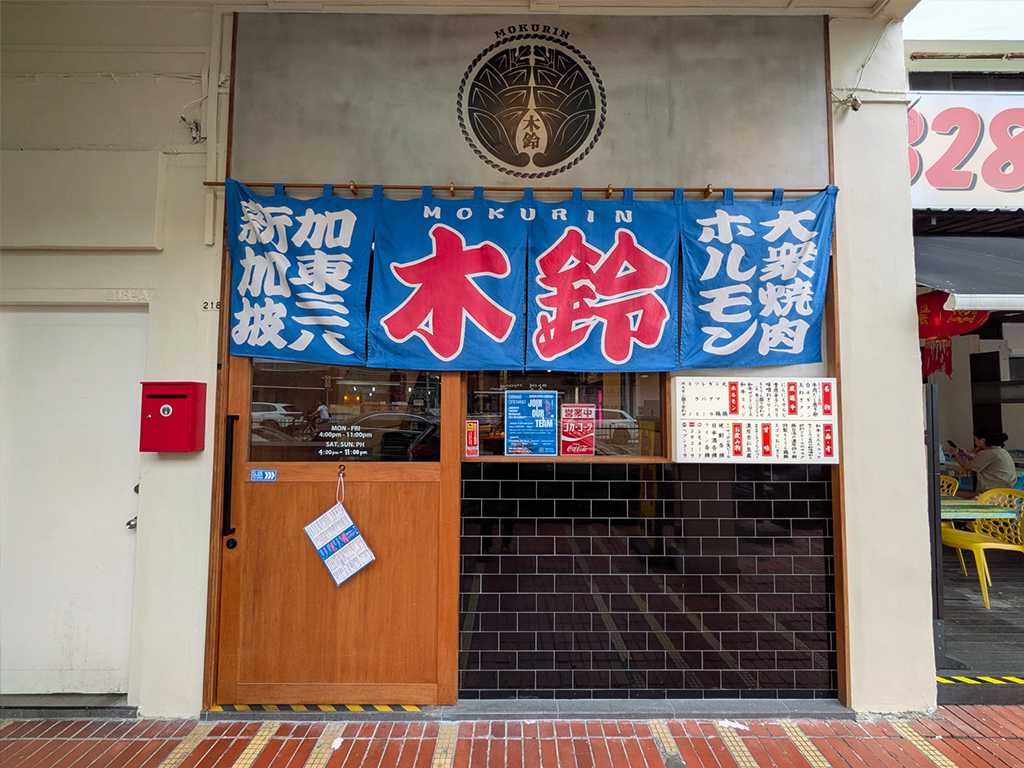
Taking up a somewhat spacious unit along East Coast Road, Mokurin’s space is warm and spacious, and kind of feels like a random yakiniku spot you’d stumble into in Osaka, Japan while wandering around.
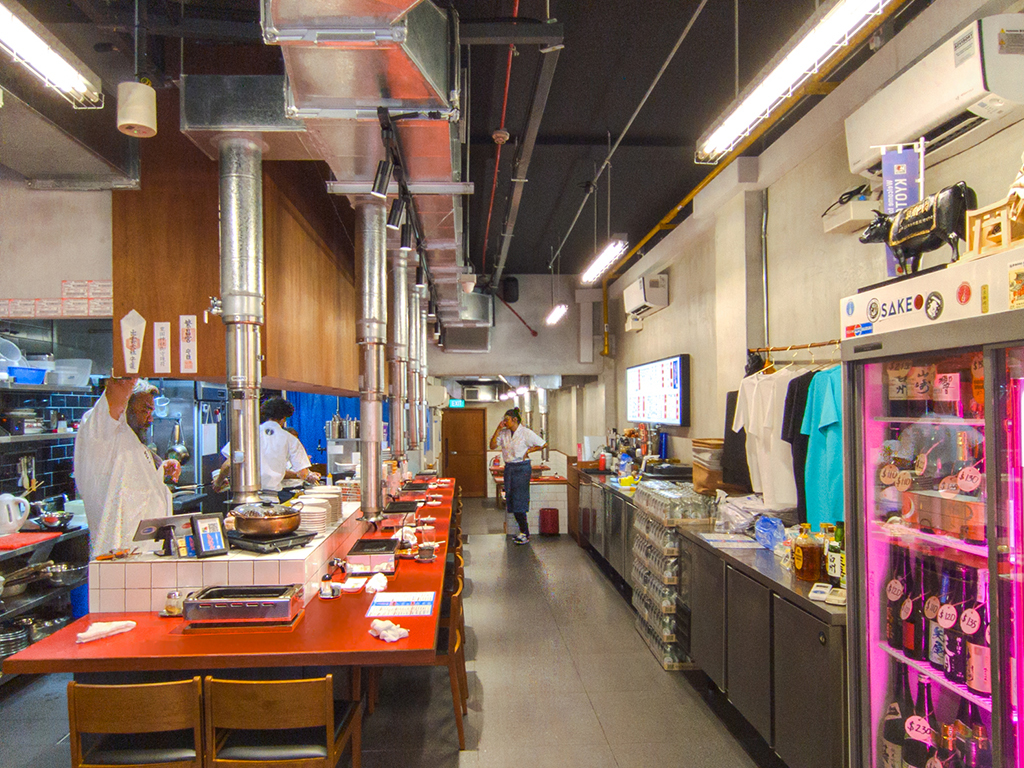
While there are some retro vibes from the Japanese-style menu, bright red counter, and overall casual layout, it feels more thoughtfully done than gimmicky.
There are rows of tables for small groups (two, maybe three), but grab a seat at the counter if you can, where you can watch the chefs prep and plate the meats.
Each seat has its own retractable exhaust hood, too, which is a nice and thoughtful gesture, and something not a lot of yakiniku or barbecue spots consider.
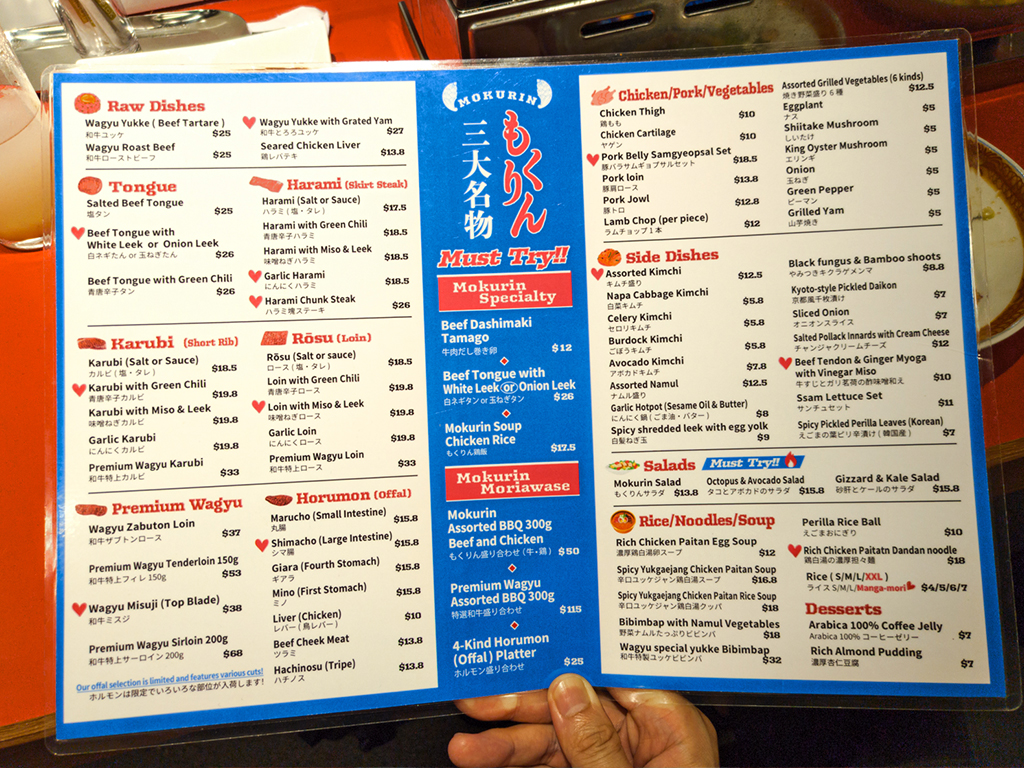
Decor and meticulousness aside, what really sets Mokurin apart is its focus on horumon (offal), which is actually a huge part of yakiniku culture in Japan, but something that you’d hard-pressed to find at the more mass-market yakiniku joints here.
Mokurin’s menu boasts a staggering 30 different beef and chicken options, including an entire horumon section, to choose from. There are the likes of tongue, cartilage, and various innards, too — you know, the fun stuff.
Lost? The moriawase (or “mixed plate” in Japanese) section might help — offering curated protein platters that you can choose from.
Our verdict
It’s clear that Mokurin isn’t trying to be fancy — it’s just good meat, cold drinks, and the simple pleasure of grilling your own food exactly how you like it in a space that’s lively, smoky, and full of personality.
I arrived right when it opened at 4pm, when the restaurant was quiet, but it quickly filled up with the sound of meat sizzling and people talking over each other.
Admittedly Mokurin isn’t cheap, and you will spend money here, especially if you get excited and start ordering too many cuts (which you will), but the value is there.
The meat quality and taste here is fantastic — especially the beef intestines, which happens to be a cut that I tried for the first time in an izakaya in Tokyo last year and absolutely loved.
The staff can come off as terse and reserved (likely due to the language barrier) but were professional and respectful, communicating between themselves in hushed tones in a way that doesn’t draw attention to themselves.
What it’s good for
If you’re overwhelmed by the text-heavy menu like I was, the Mokurin assorted BBQ (S$50 for 300g of beef and chicken) is a good bet.
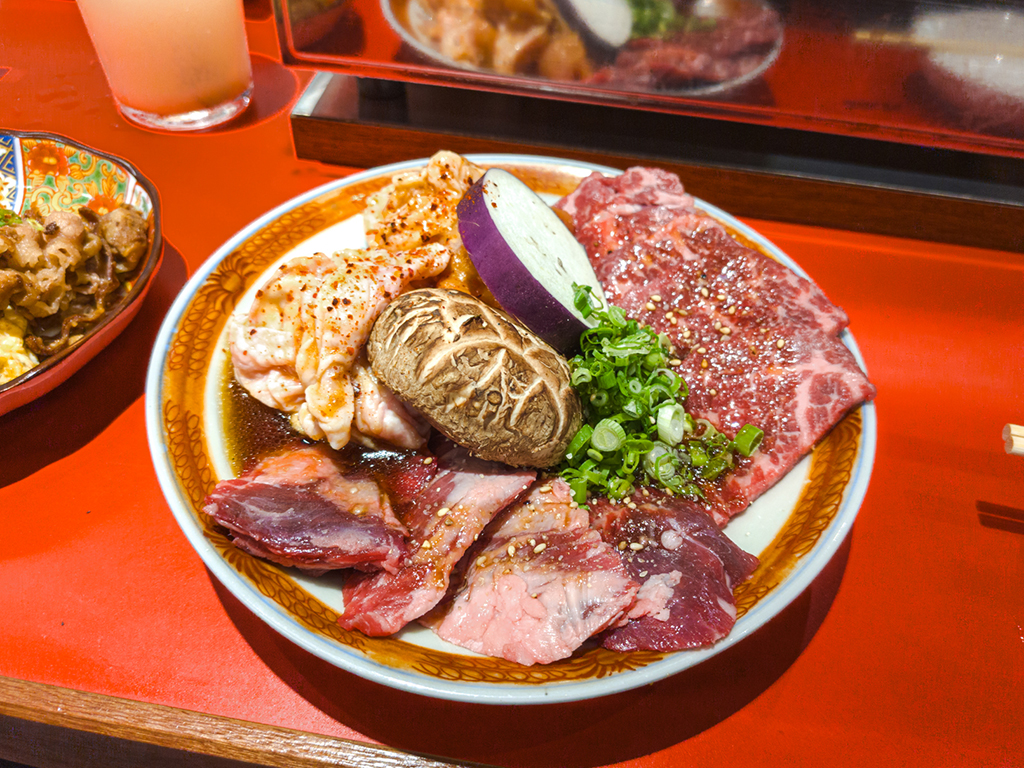
The variety for the assorted platter is generous enough — the plate comes with beef short rib, beef skirt steak, chicken thigh, chicken skin, a piece of shiitake mushroom, and sliced eggplant.
Each part grills differently, each one has its own texture, and it’s a fun mix.
What impressed me off-the-bat, is that almost every plate of meat is seasoned to order (which I could easily witness from my counter seat) so nothing sits around pre-salted and drying out.
Both the short rib and skirt steak comes simply seasoned with salt and some sesame seeds.
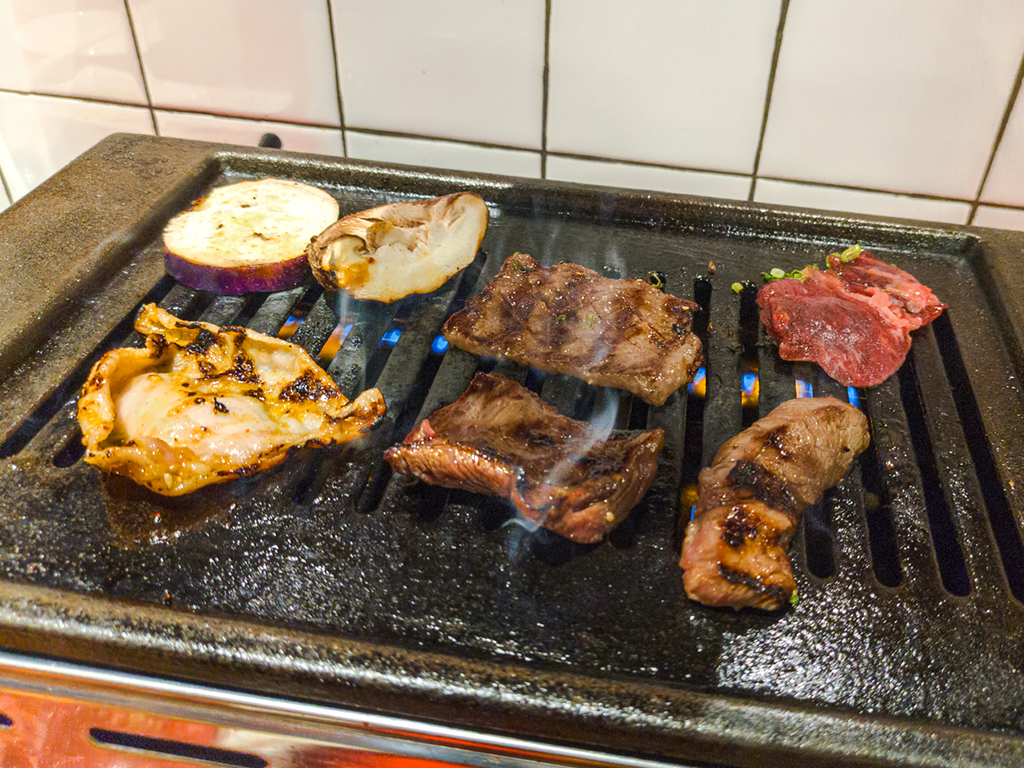
The skirt steak, or “harami” in Japanese, is normally a lean and tough cut so it’s sliced thinly, and the result is tender and beefy, yet has a slight, enjoyable chew.
The karubi, which translates to “short rib”, is a lot more marbled, and caramelises nicely on the grill — I enjoyed this with some light soy-based yakiniku sauce on the side.
The chicken thigh comes pre-marinated for maximum flavour, and grills up juicy and tender, slightly sweet with light soy and garlic notes. It’s an easy and accessible cut for those who don’t like too much beef.
Lastly, the chicken skin that Mokurin uses doesn’t feel overly oily and fatty, and crisps up beautifully on the grill. It’s an item not formally on the menu, so you might need to specially request this from the staff if you want to try this in your platter.
Now you must be wondering, what about the offals that Morukin supposedly specialises in?
Granted, offals aren’t new to the local Singaporean crowd — the Chinese do eat a lot of pork innards here in Singapore. But beef? That’s a bit rarer.
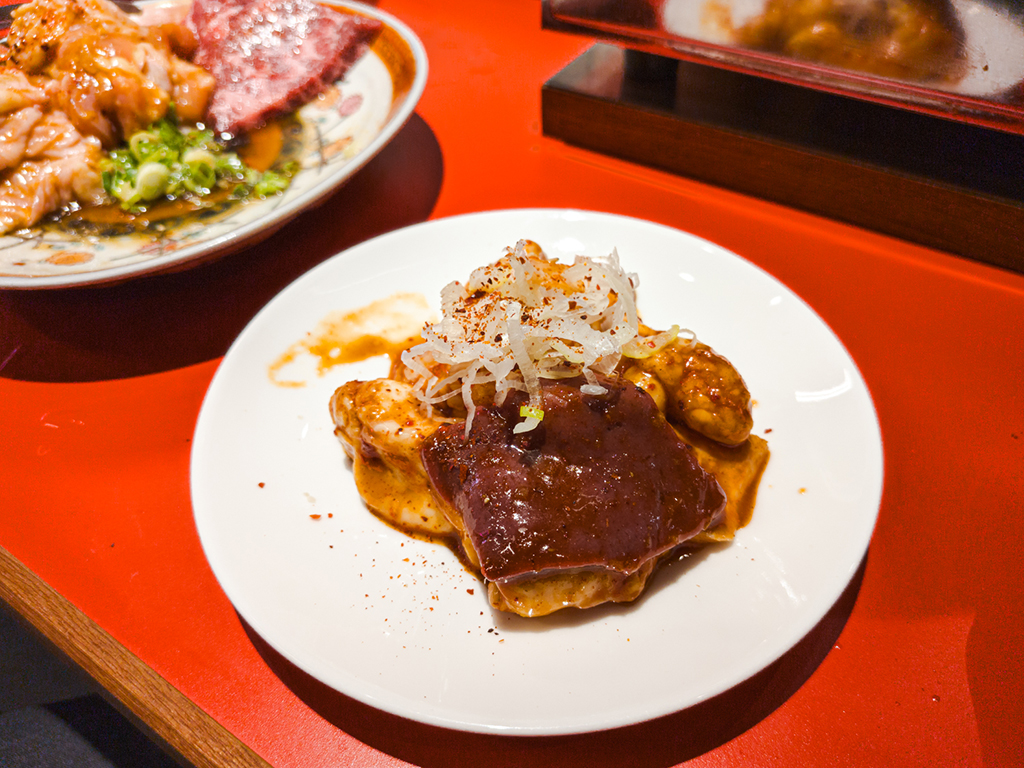
If you’re even remotely curious about beef offal (and you should be) but don’t know which to choose, get the 4-kind horumon (offal) platter for S$25.
The selection of offal is up to the chef, but you’ll likely get some combination of the following: Small beef intestine, large beef intestine, chicken liver, and either tripe or stomach (in my case, I got mino, which is the cow’s first stomach).
These cuts were properly clean and pristine, without any sign of funky smell you sometimes get from innards.
The large beef intestine, or “shimacho” in Japanese, is just sublime — it develops just enough char on the edges to be lightly crisp while staying creamy inside, while the small intestine (marucho) is quite a bit fattier. In fact it might cause a small flare up on the grill thanks to the high fat content, if not watched properly, but it melts into a rich, slightly sweet, almost buttery chew.
Then there’s the first stomach (mino), one of my favourites of the meal, which has a light and chewy texture — a bit like tripe but less spongey.
Finally, the last on the platter — chicken liver — which is not inherently a new thing in Singapore, but it’s a quality piece, lightly seasoned with salt and pepper, that grills up soft and tender.
It’s worth noting that there’s a hefty side menu at Mokurin including (interestingly) a few types of kimchi — there’s something called avocado kimchi, along with vegetables such as black fungus, bamboo shoots, and pickled daikon.
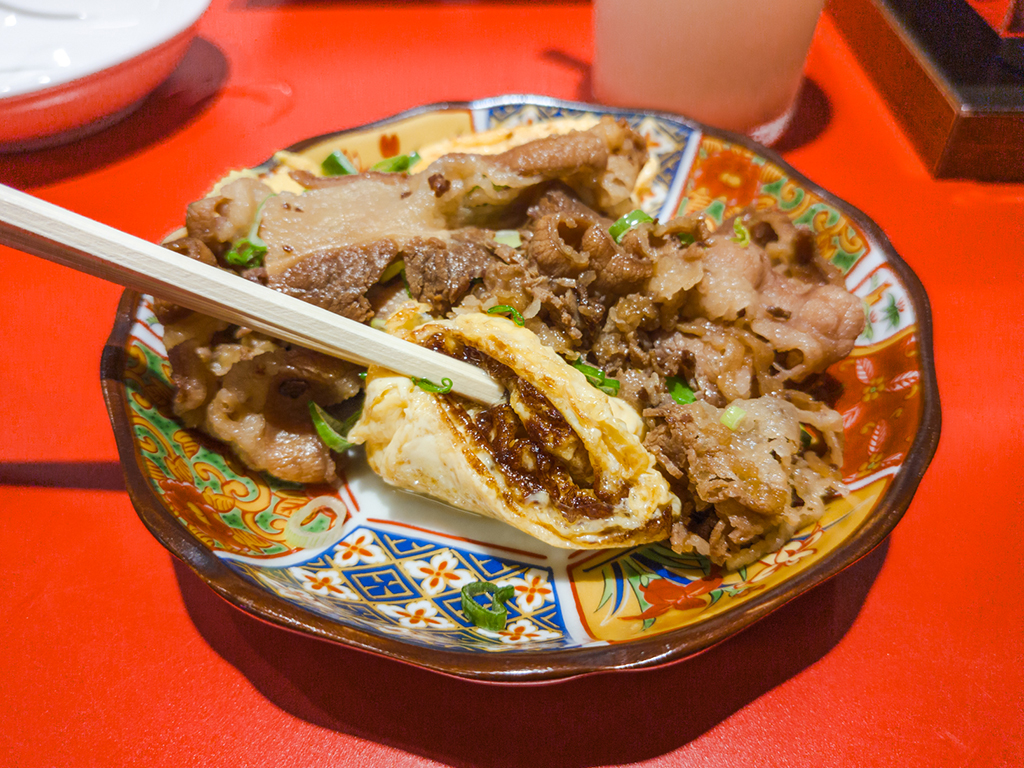
I opt for one of Mokurin’s self-proclaimed specialities, the beef dashimaki tamago (S$12). This isn’t your usual egg omelette — instead of just serving it dry on a plate, Mokurin layers it below a pile of thinly-sliced braised beef belly that tastes deeply savoury.
The layers of rolled egg themselves are also slathered with rich beef sauce that make this so comforting and satisfying to eat. Not only is this dish a good break from the constant grilling, it’s also perfectly executed.
After all that meat, there will come a time in your meal when you’ll need something to balance all that richness — that’s where the hearty Mokurin soup chicken rice (S$17.50) comes in.
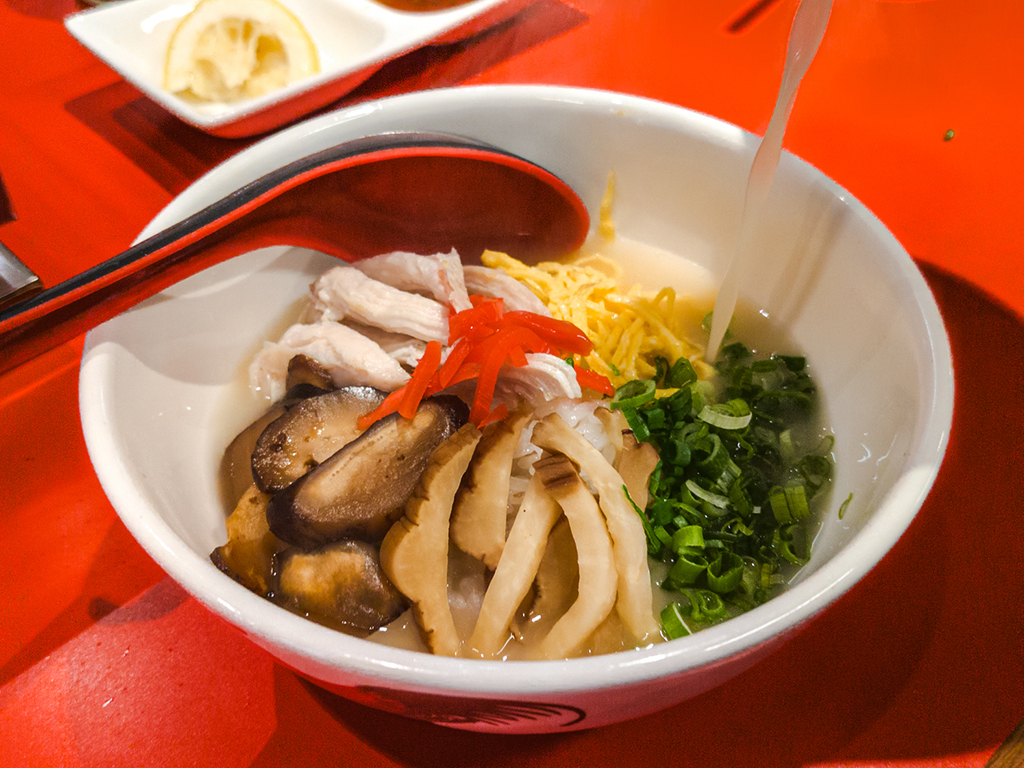
This ochazuke-style dish arrives hot, featuring rice, tender chicken breast, shredded egg, mushrooms, and pickled vegetables all waiting to be doused in a hot chicken broth.
The broth is light yet flavourful enough (the umami-rich shiitake and crunchy vegetables are delicious) to reset your palate and warm you up.
As a final dish, I opt for the more robust of the only two desserts (an almond pudding or a coffee jelly) on the menu.
I don’t think I’ve ever had coffee jelly, but I’m now a convert thanks to Mokurin’s Arabica 100% coffee jelly (S$7).
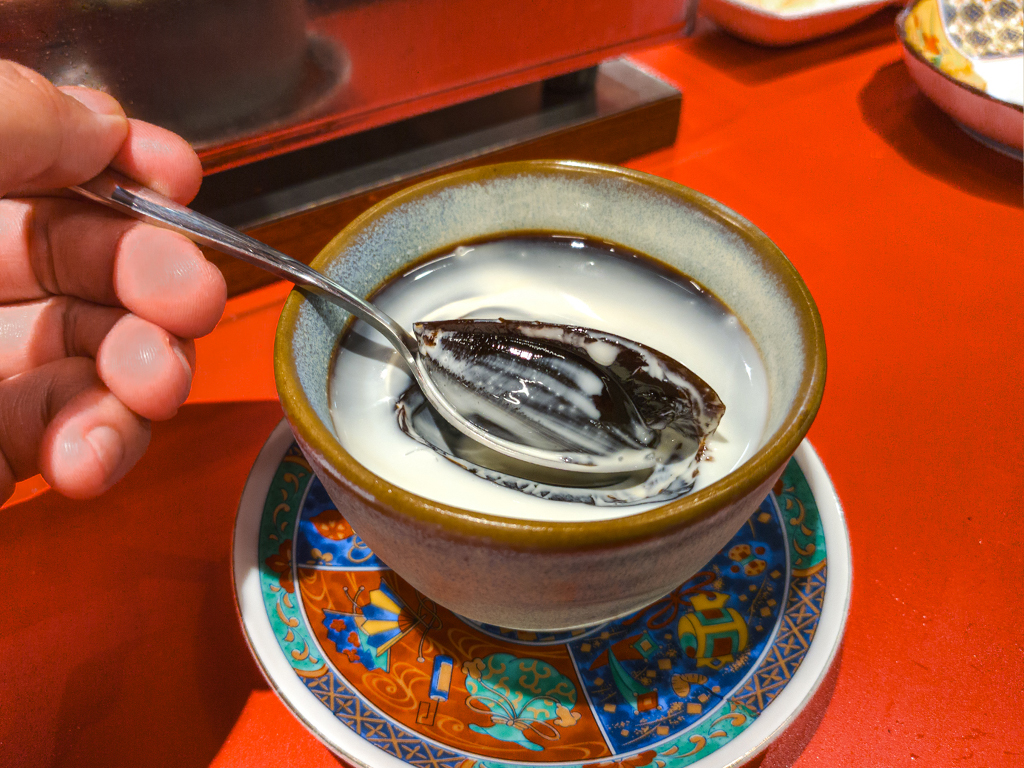
The thing that strikes you first is the texture, firm and chewy, with a bit of resistance against your spoon. It’s also bitter in a good way — clean and refreshing with the slightest bit of sweetness from a layer of cream on top.
After a heavy meal, something simple like this is exactly what you want.
If you want to add drinks (which you should), Mokurin has a pretty extensive selection of non-alcoholic options such as soft drinks and teas from Taiwan and Japan, as of course, alcoholic drinks (from S$9.50) such as beers, sours, highballs, shochu, sake — you can choose from the selection in the fridge up in front.
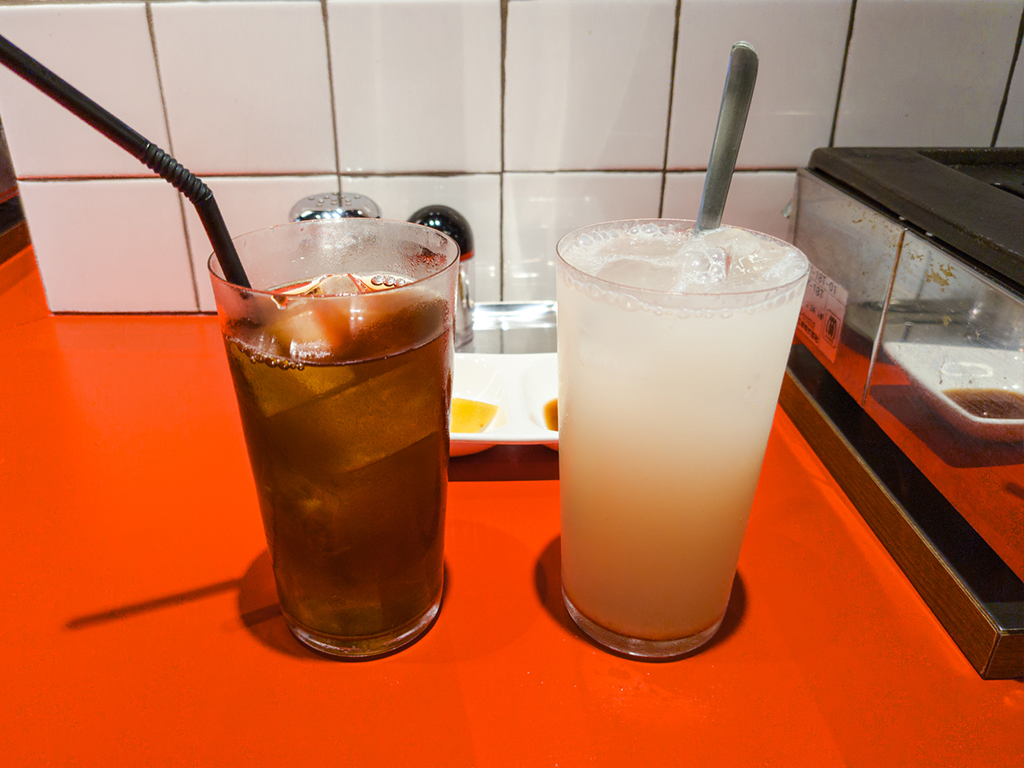
The iced hojicha (S$5) is a safe choice: Simple, nutty, and smoky without any overwhelming astringency.
If you’re in the mood for something with a bit of kick, try the Secret lemonade sour (S$9.80). I have no idea why it bears a “secret” label, but I can say it’s deliciously tangy, crisp, and ever so slightly sweet with just a hint of shochu. All of this cuts through the richness of the grilled meats nicely.
What it could improve on
It’s a small gripe for a place where the food is this good, but as I had highlighted earlier, service at Mokurin can feel a bit terse, even verging on being slightly unfriendly, if you don’t speak Japanese.
When I asked an English-speaking staff member what cuts were in the offal platter that had just been served, they simply said, “it’s the chef’s choice”, without offering to check with the kitchen.
I asked the Japanese chef directly, but he struggled to explain as well, which might make it challenging for first-timers who might already be unfamiliar with offal, and could make them feel even more lost.
Our quick takes
Is it conducive to conversation? Yes, although chances are you’ll be overheard by the people next to you.
Is a reservation necessary? Recommended, especially during weekends or for any time after 5pm.
How to get there? The restaurant is a seven-minute walk away from Marine Parade Station Exit 4, beside the iconic 328 Laksa’s second branch, opposite Esso petrol station.
HungryGoWhere paid for its meal at this restaurant for this review.
For more places to dine around East Coast, check out our Joo Chiat cafe guide, and this new concept which combines a flower bar and matcha!
Tue 4pm - 11pm
Wed 4pm - 11pm
Thu 4pm - 11pm
Fri 4pm - 11pm
Sat 4pm - 11pm
Sun 4pm - 11pm
- Marine Parade



Gary eats and knows things, which he attributes to over 30 years of eating and drinking — surely that must count for something, he surmises. He was previously the deputy editor at City Nomads and content lead at Burpple.
Read more stories from this writer.