“It’s a pity no one wants to continue this craft”: Second-gen owners of Tanjong Rhu Pau on the dying art of handmade baos

There’s a Chinese idiom:“乘风破浪” (cheng feng po lang), which captures the spirit of pressing forward with courage, in the face of challenges.
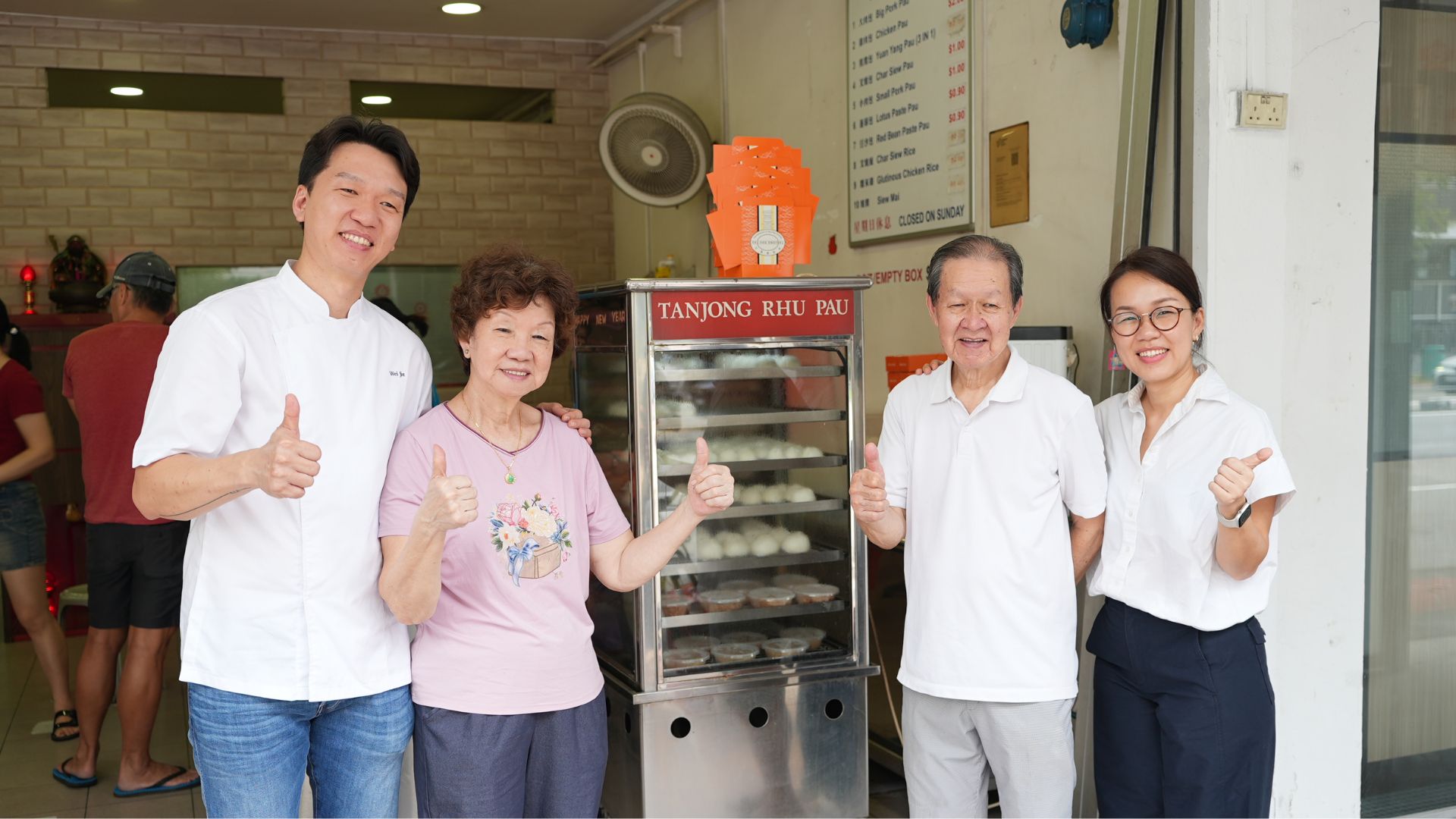
It brings to mind the second-generation custodians of homegrown heritage brand Tanjong Rhu Pau, siblings Yap Wei Jie, 43, and Chloe Yap, 48.
In 2015, the duo stepped into more active leadership at the family-run business, with Wei Jie primarily in the kitchen, while Chloe took the helm of administrative matters.
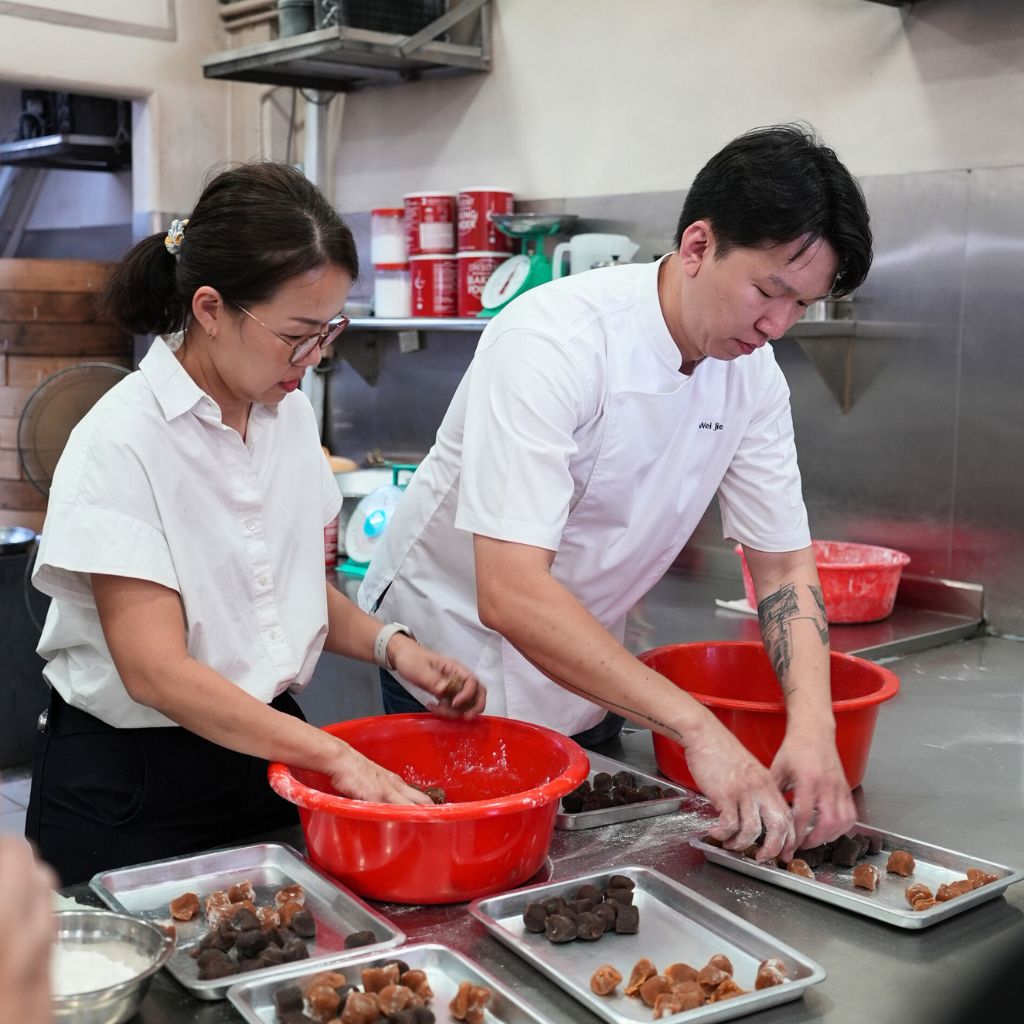
For them, stepping into the family business was only natural. Making baos (steamed buns) by hand has always been a big part of their childhood, and it’s instilled in them a deeply rooted passion of keeping the time-honoured craft alive.
That sense of responsibility, as well as techniques handed down from their father, founder Yap Peng Wah, 78, guides the siblings’ as they painstakingly wrap the brand’s signature mini char siew baos today.
“Some people might call us stubborn,” Wei Jie quips.
“But it’s simply the way we believe things should be done, since we grew up with the business and saw firsthand the hard work that goes into upholding these high standards,” he adds.
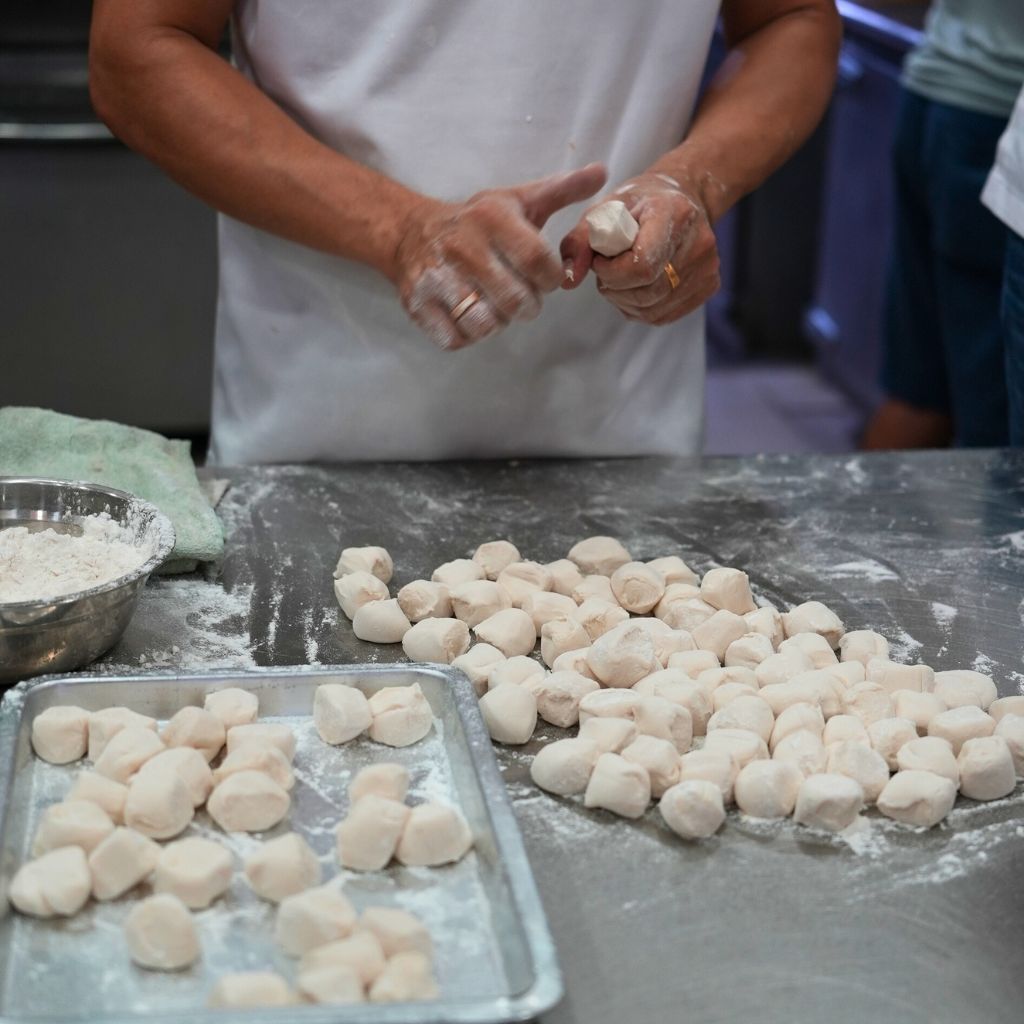
We had a chance to try our hand at it ourselves, and put ourselves to Tanjong Rhu Pau’s lotus paste and red bean paste baos — supposedly the “easier” ones to learn.
But honestly, the struggle was real — we’d thought we could nail it on the spot, but were quickly disapproved of this notion.
Even with multiple demonstrations and guidance from the shop’s veteran bao masters, ours still emerged out of shape, and sported a thick, uneven bottom.
Coaxing the dough into that signature pleated form is hard enough, but the skill also requires consistent practice that can take years to master
The work also calls for stamina — to spend long stretches on one’s feet shaping each bao by hand — and a willingness to work hard, especially since its core ingredients, chiefly its dough and char siew fillings, are made from scratch in-house.
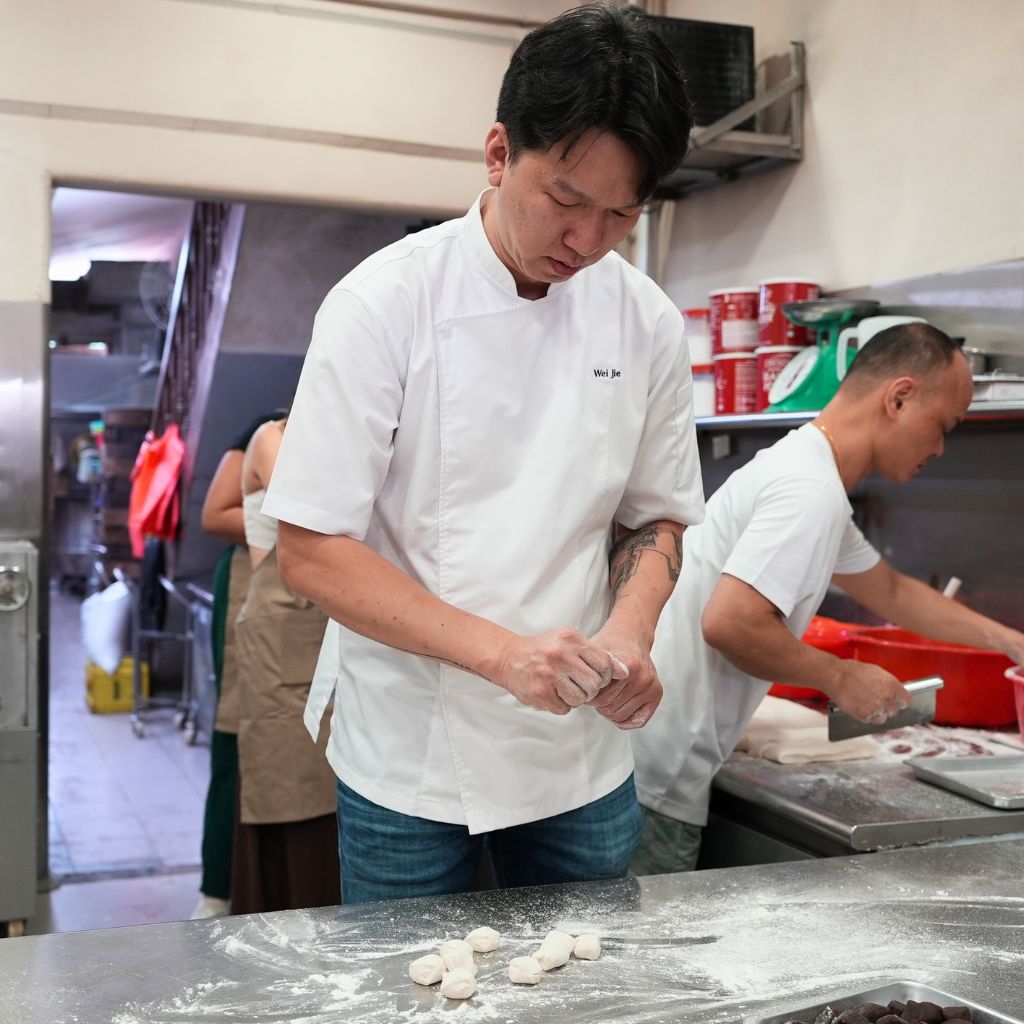
The work certainly takes a toll, especially on Wei Jie, who has had to undergo physiotherapy for repeated strain on his lower back — at over 1.8m tall, he’s much taller than the average Singaporean, which forces him to hunch in an awkward position to operate the dough machine, and over his workstation, too.
Thankfully, physiotherapy has since helped him better engage his muscles, allowing him to keep pace with the trade’s demanding physical rhythm.

A household name since the 1990s
For many of us, Tanjong Rhu Pau is a name we’d first heard from our parents or the older generation — a testament to the brand’s loyal following over the years, especially for its classic char siew baos.
It had humble beginnings in 1988, when the business set up its very first outlet at 7 Jalan Batu, within Chin Shin Huan Eating House. (Nearly four decades on, the OG spot is still in operation!)
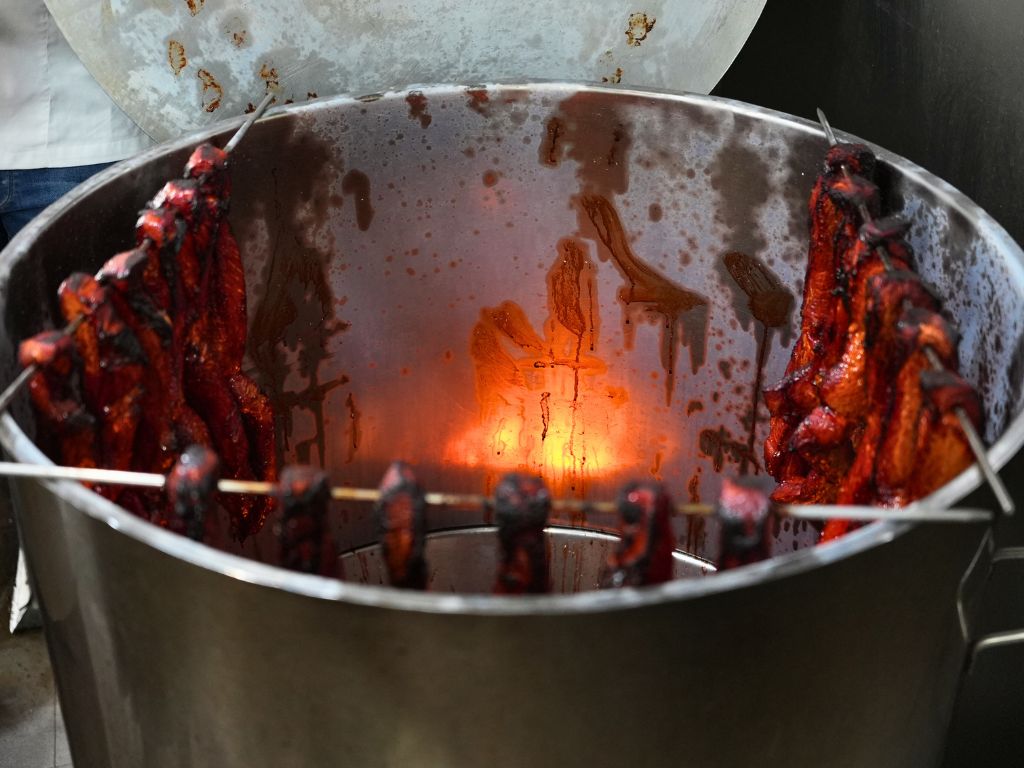
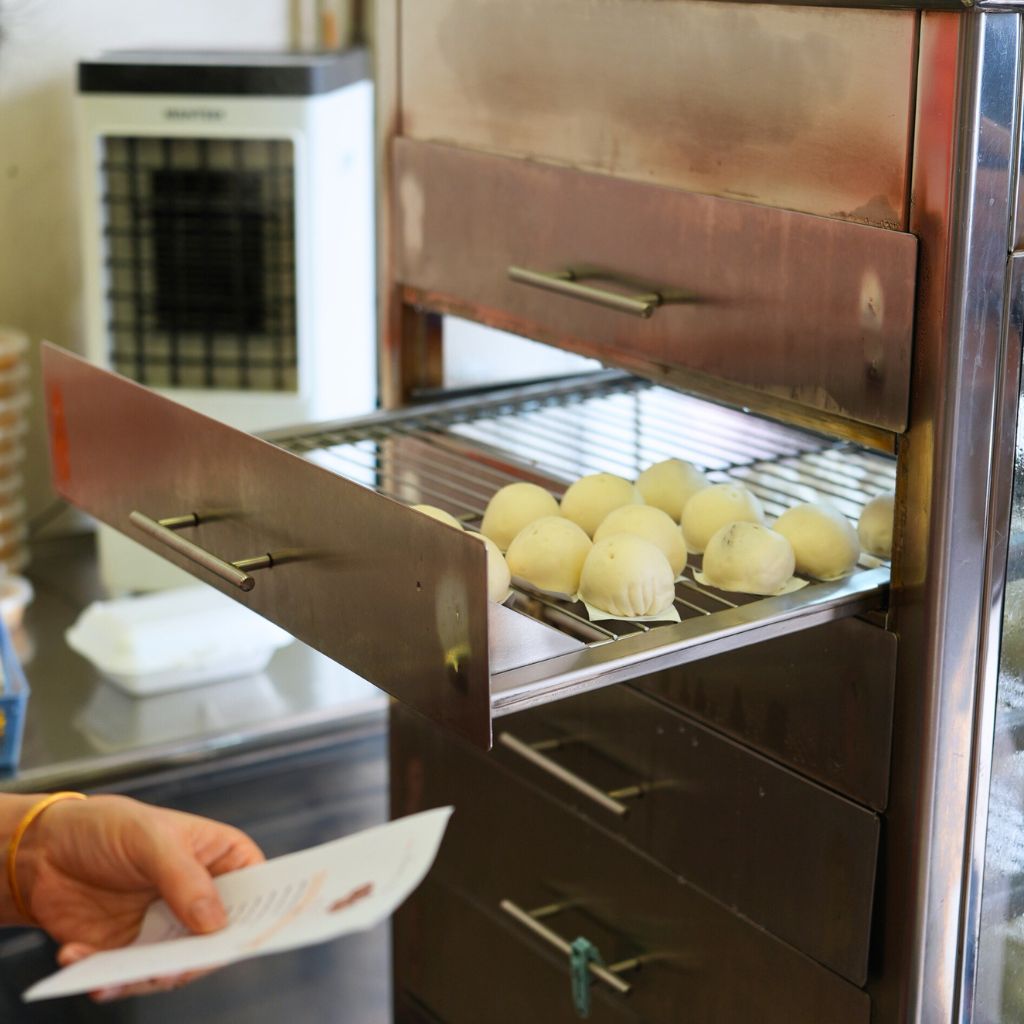
A key part of Tanjong Rhu Pau’s “secret recipe” is its 30-year-old fermented mother dough, which gives the baos a lighter and more fluffy texture, compared to those made with commercial yeast.
This is paired with charcoal-roasted char siew — made using fresh pork hind leg — and coated in a proprietary housemade sauce.
Along with meticulous craftsmanship, as all the best ones are, the result is a formula that has stood the test of time.
It’s no wonder dad Peng Wah was unwaveringly strict about the quality of each bao — a discipline Wei Jie and Chloe are committed to carrying forward.
“You need to have a good core product to have a longstanding business — that’s what we learnt from our father,” the siblings say, in unison.
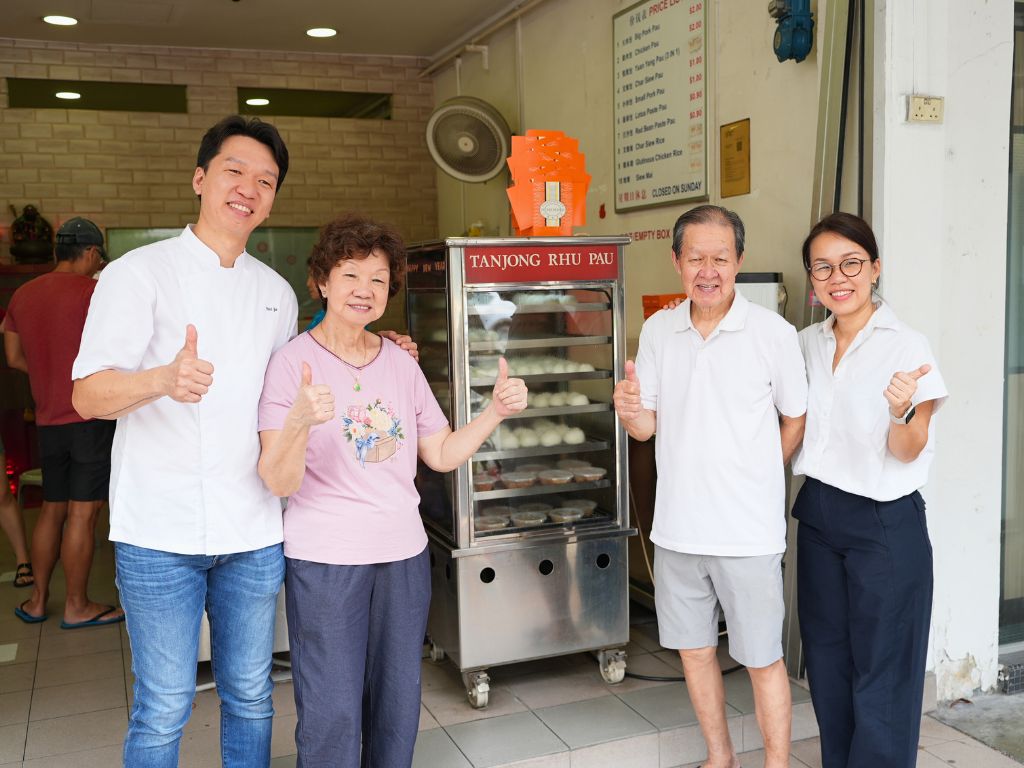
Today, Peng Wah and his wife are still involved in the business, mainly taking part in the daily ritual of turning out baos and behind the scenes.
Ironically, one of the siblings’ main motivations for coming on board was to encourage their ageing parents to slow down.
Regardless, their parents continue to show up every day, mindful of the manpower crunch the business faces and a desire to ease their children’s workload.
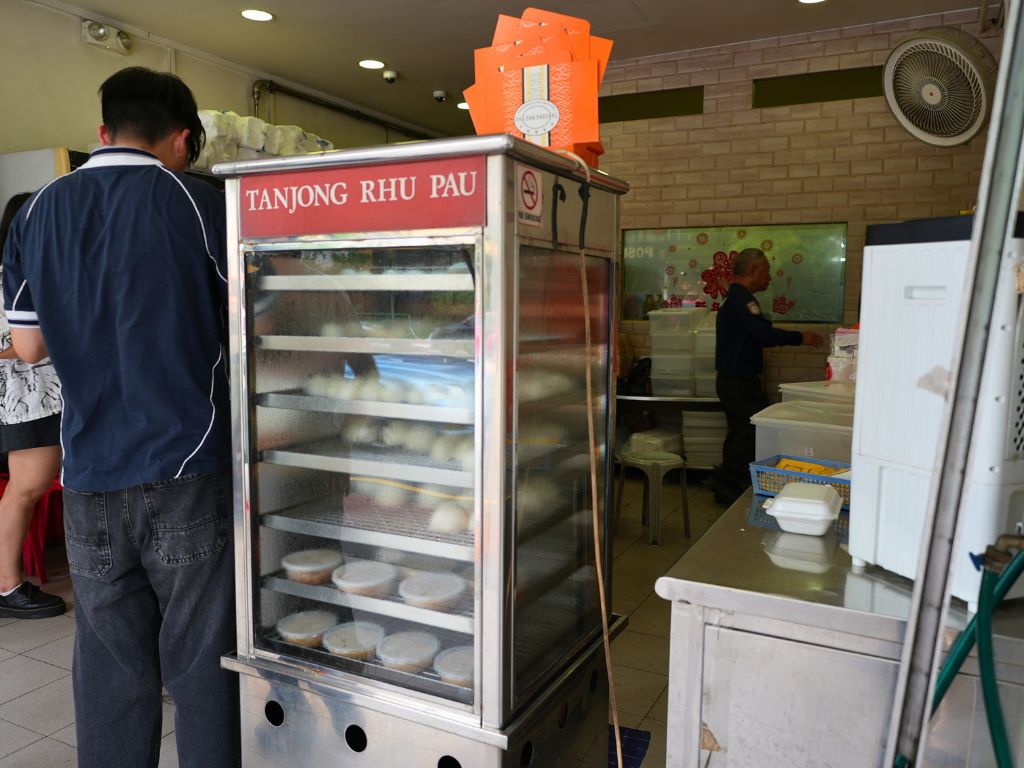
Now, the brand has four outlets across our sunny island, including two flagship stores — one each on Balestier Road and Guillemard Road.
New kiosks in Mandai and Bishan’s Junction 8 are in the pipeline as well, with their openings slated for this month.
All of its branches offer both piping-hot and chilled baos, giving customers the option to either enjoy these fresh goods on the go or reheat them at home.
Looking ahead, the second-generation owners hope to introduce Tanjong Rhu Pau to a younger audience, while still cherishing the loyal aunties and uncles who have supported the brand for years.
Trying the baos at Tanjong Rhu Pau
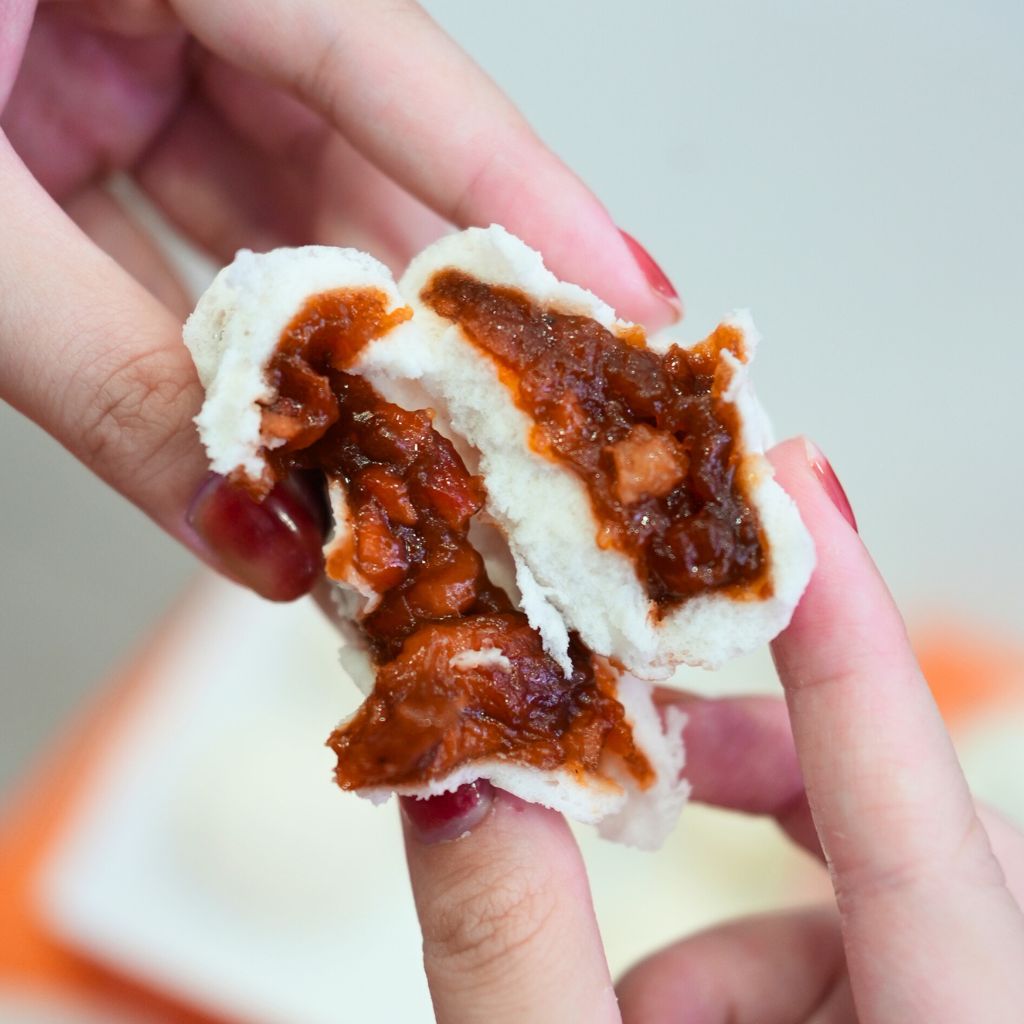
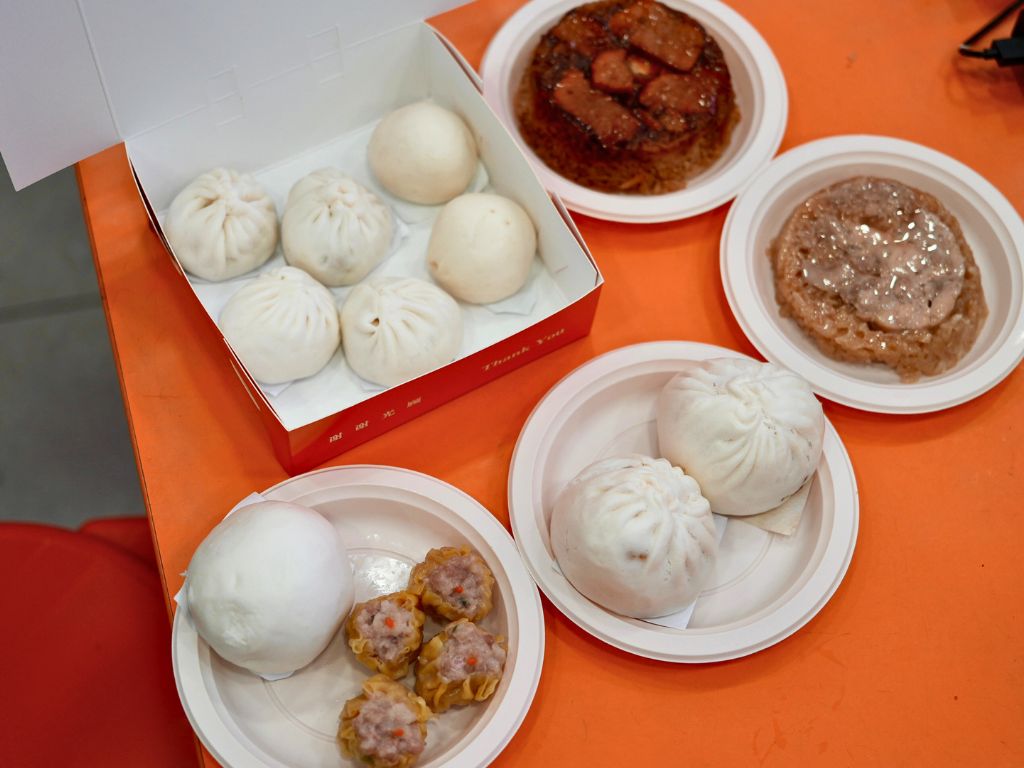
Obviously, the petite char siew pau (S$1) is a must-try — a fan-favourite since its debut, earning shout-outs from Shin Min Daily and The Sunday Times in the 1990s.
I mean, how can you resist this bao that packs all the sweet, smoky goodness in one morsel?
Tanjong Rhu Pau’s char siew filling carries a gentle peppery kick, which sharpens the aroma and keeps the sweet char siew sauce from feeling too cloying.
Meanwhile, the dough hugs the filling just right, delivering a nicely balanced skin-to-meat ratio you can easily demolish in two bites.
Priced at S$1, this bite-sized bao is the ultimate grab-and-go breakfast — light enough not to weigh you down, yet so deeply satisfying that stopping at just one feels impossible.
If you’re heading down for your fix, be sure to take advantage of its ongoing char siew pau promo, which entitles you to two free pieces when you purchase eight. This is available at all of its outlets, except Mandai and runs till March 31 only.
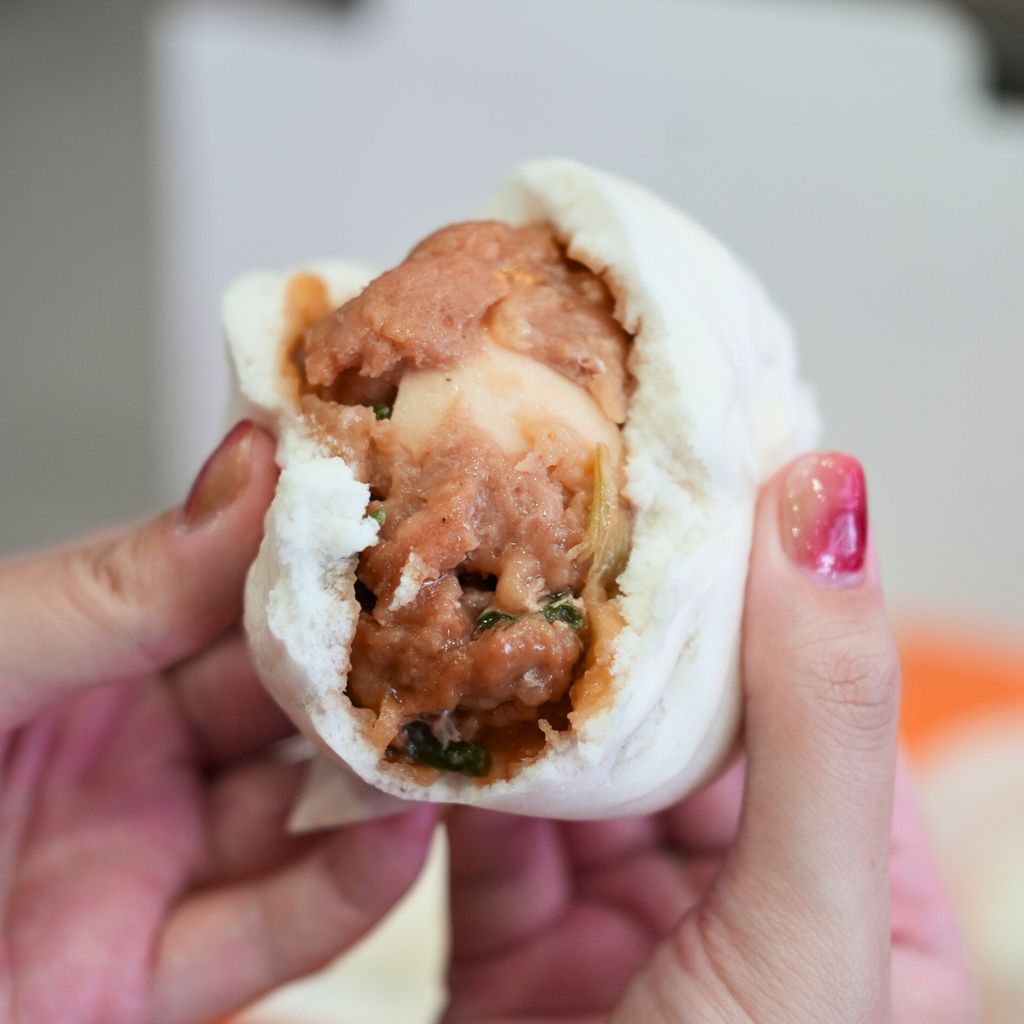
The big pork pau (S$2) is another crowd-pleaser, featuring a juicy pork filling and a wedge of egg tucked inside.
This one hits all the right notes — I especially like that the inner layer of dough isn’t soggy, even with all that succulent stuffing.
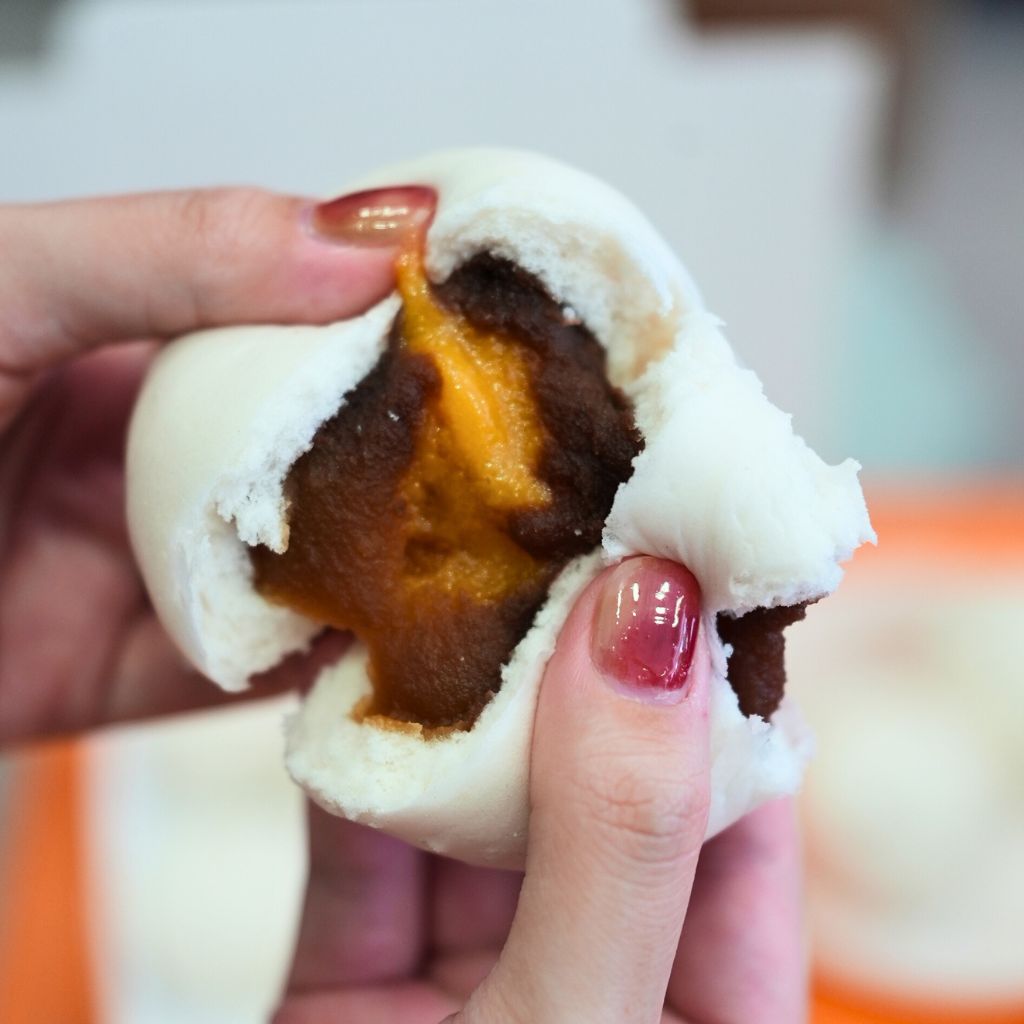
Then there’s the unique Yuan Yang pau (S$2), which marries lotus paste, red bean paste, and salted egg yolk custard within.
Older fans might remember the original version, where the custard was replaced with a whole salted egg yolk. Wei Jie and Chloe have since jazzed it up with a more molten consistency that gives today’s version its charm.
I half-expected it to be cloyingly sweet, but it wasn’t at all: The lotus and egg yolk custard meld beautifully, while the red bean paste gives a subtle earthy and nutty finish.
This might just have converted me from the traditional lotus paste pau (S$0.90) — because why settle for less when you can have it all?
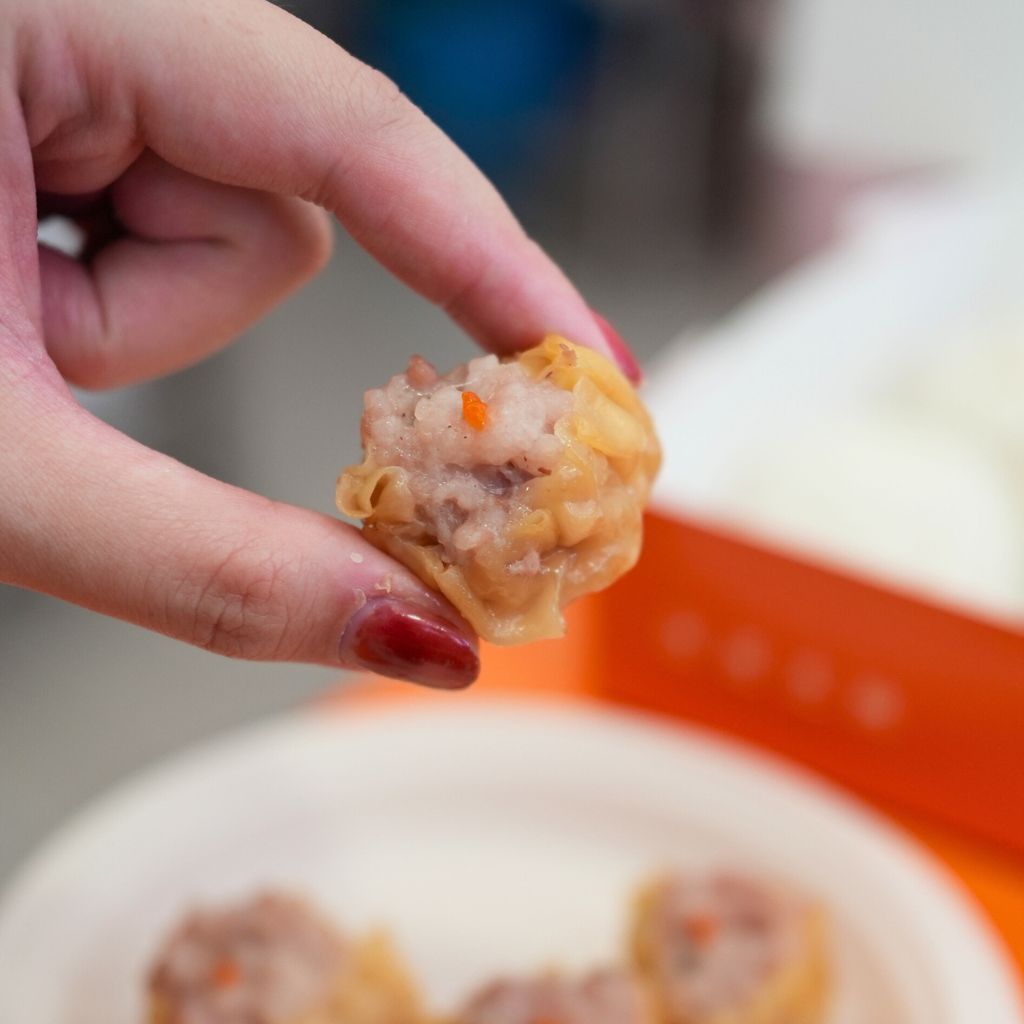
For non-bao bites, the siew mai (S$0.60) is a sure-hit. Its miniature, adorable size had us squealing — in a positive way.
Juicy and addictive, it ticks all the boxes of a full-sized siew mai.
Sure, it could be bigger, but there’s also a special kind of satisfaction in popping a handful in one go — and I’m totally down for that.
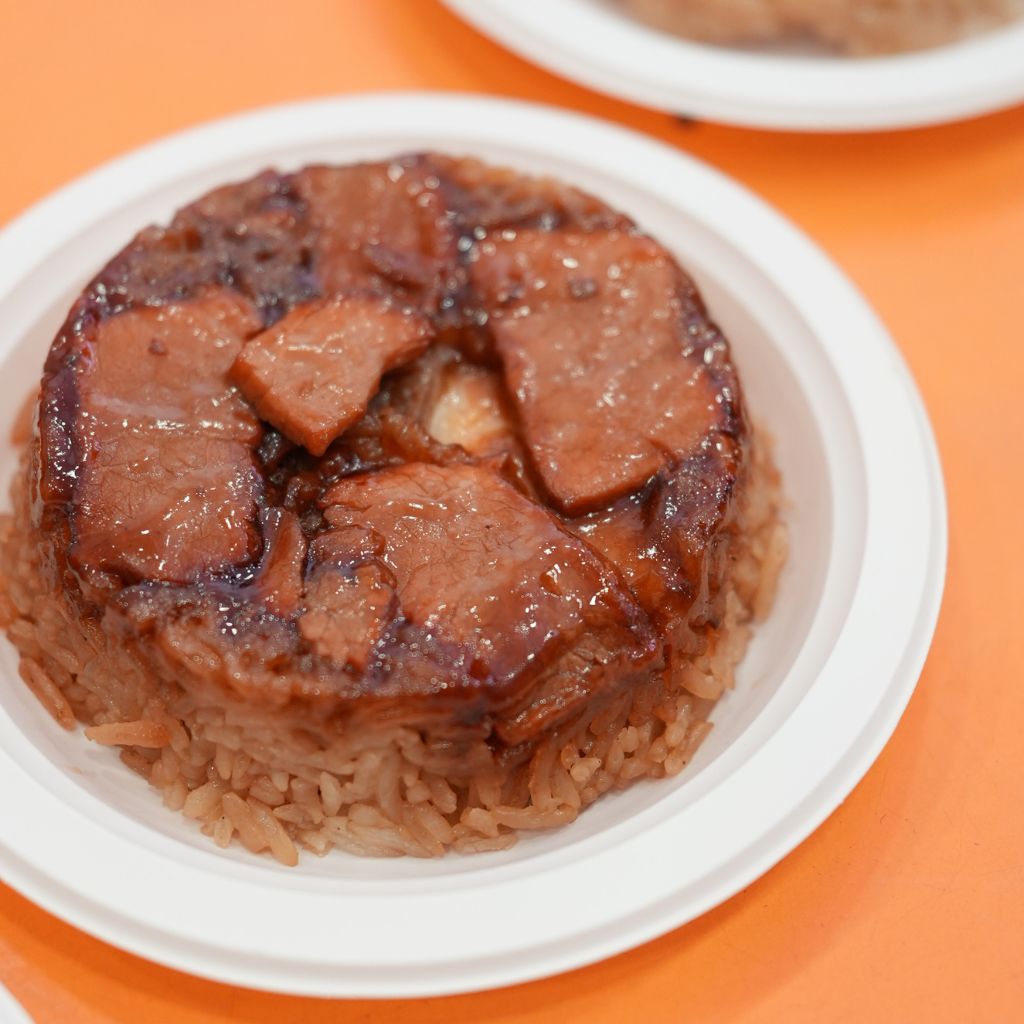
Don’t skip the char siew rice (S$2.50) — or as it’s better known as, fan choy — it’s made with the same housemade char siew that stars in its signature bao, plus a wedge of hard-boiled egg.
It’s a classic tea-time or breakfast pick that doesn’t disappoint — the rice is soft and moist, infused with the sweet-savoury punch of the char siew zhup (sauce).
Heartwarming moments that made them go “uwu”
Like many in the F&B trade, Tanjong Rhu Pau has weathered its share of challenges. Even so, Wei Jie and Chloe continue to press on with an unstoppable drive.
They are candid enough to admit that burnout and fatigue have surfaced at times, while shouldering their father’s legacy and the demands of sustaining a traditional craft.
However, there have been uplifting moments that pulled them through these tougher stretches — a reminder of why their mission is so meaningful to them.
Chloe recalls a customer packing Tanjong Rhu Pau’s baos to bring out of Singapore, so her son studying in the UK could enjoy a taste of home — to this day, the memory of that interaction still warms her heart.
Moments such as these, she reflects, affirm just how special the brand has become.
“We’re also really happy when customers tell us Tanjong Rhu Pau is now closer and more convenient for them, without having to travel all the way to Balestier Road,” Chloe says.
She adds: “It’s also about observing customers’ preferences and purchasing patterns — we’re not in a rush to expand, or doing it just for the sake of it.”
Both Chloe and Wei Jie revealed that they’re continually brainstorming new, modern flavours — though the “right timing” has yet to come.
Still, it’s something longtime Tanjong Rhu Pau fans can surely look forward to!
At a time when many traditional crafts in Singapore are disappearing, Tanjong Rhu Pau reflects a sobering reality: Decades of success, or even survival, do not necessarily guarantee longevity.
Its successors Wei Jie and Chloe show that true endurance stems from a wholehearted commitment to the craft, while honouring the vision the brand was built on.
It’s a path that demands grit and conviction, and it’s precisely this steadfast dedication that makes the siblings’ journey all the more admirable.
This was a hosted tasting.
For more ideas on what to read, check out the opening of the viral Chinese tea brand Molly Tea at Orchard Central and Fish Tale with customisable fish soup bowls.



Shannon has the taste buds of a grandmother and perpetually struggles with a food coma.
Read more stories from this writer.