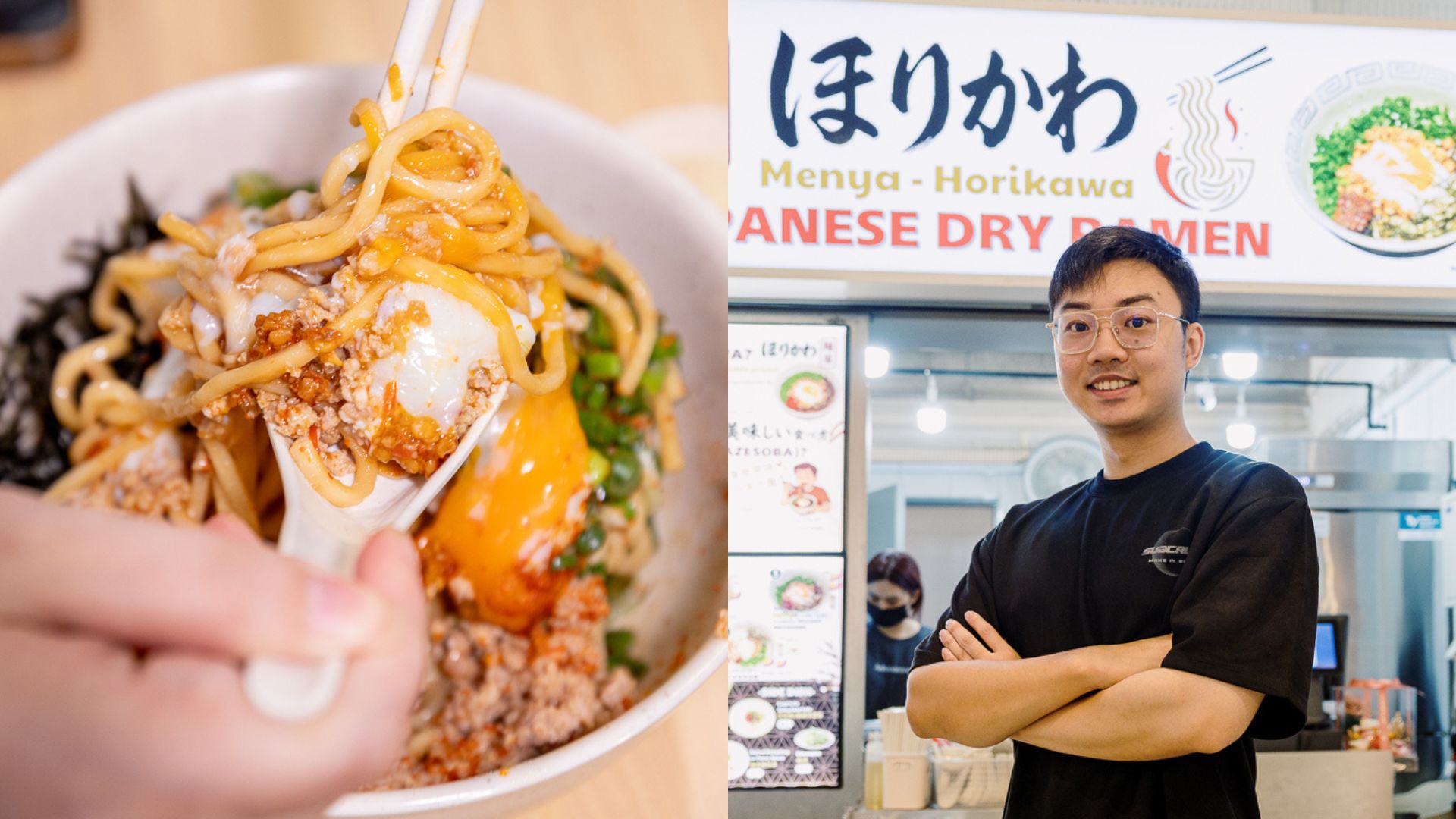
Menya Horikawa: Young hawker Rick Tan brings mazesoba to the heartlands

- After running an egglet stall that didn’t take off, 29-year-old hawker Rick Tan is now the owner of Menya Horikawa, a mazesoba-focused stall at the Buangkok and Woodleigh Hawker Centres.
- Rick learnt the dish from a Japanese chef and refined it through rounds of feedback to suit the tastes of his hawker crowd.
- His stall serves hearty bowls of original, spicy, curry and seafood mazesoba.
Mazesoba, the Japanese dry ramen dish known for its springy texture, rich sauce and assembled toppings, is typically something you’d expect at a Japanese restaurant. It’s less common to find it in hawker centres, let alone from a stall that focuses almost exclusively on the dish.
But at Menya Horikawa, 29-year-old owner Rick Tan is doing exactly that.
Drawing from his love of dry noodles, such as bak chor mee and chilli ban mee, and inspired by an “aha” moment in a Japanese restaurant, Rick is adapting mazesoba for everyday diners. And he’s doing so in a way that keeps the dish approachable and affordable.
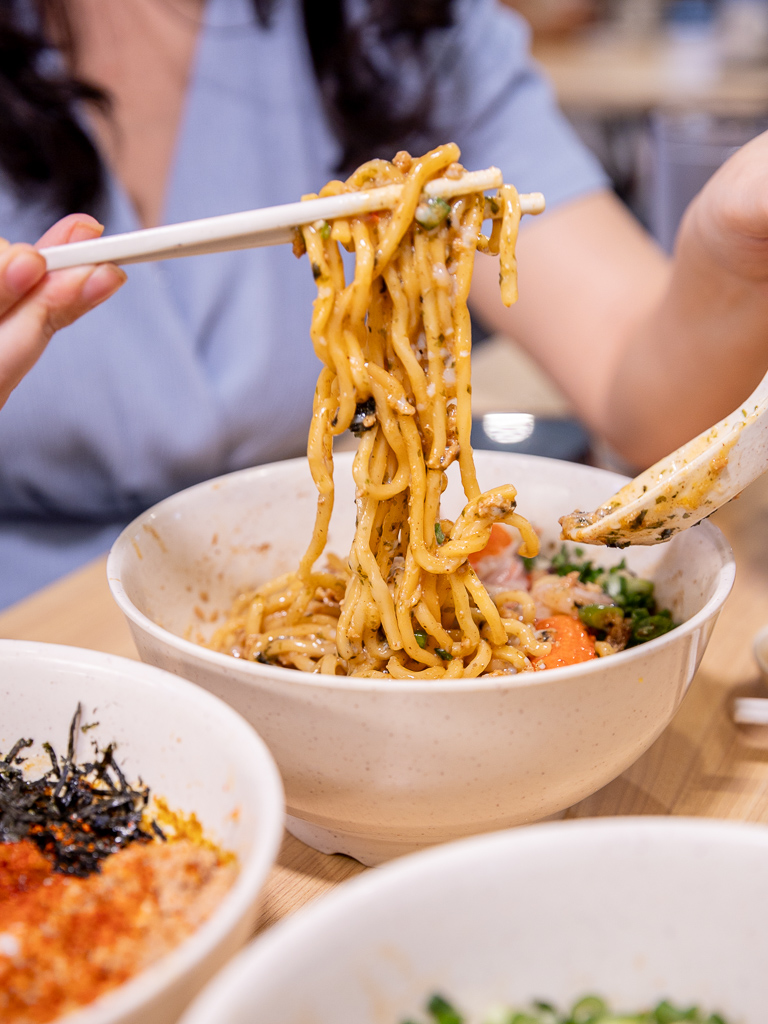
The result: Bowls of noodles with distinctive bite, robust Japanese flavours and a loyal, fast-growing crowd across two outlets at Buangkok Hawker Centre and Woodleigh Hawker Centre.
It’s a journey that began not with culinary school, but with a tech diploma, a failed waffle business, and a determination to try again.
Rick’s hawker journey
Before turning to F&B, Rick studied business information technology at Singapore Polytechnic. But like others who discover their passions lie elsewhere, his expertise in this field didn’t quite come into play after graduation.
After trying out web design, trading, and other ventures, he eventually found himself drawn into the F&B world through the most unexpected route — non-fungible tokens (NFTs).
While dabbling in NFTs, he got to know several friends in the F&B scene, which opened his eyes to the industry and the possibilities within it.
Still, he had no prior cooking or kitchen experience, as he plainly admits. Rick’s first attempt at F&B came in the form of a Hong Kong egglet stall at Buangkok Hawker Centre, at the same unit that Menya Horikawa now occupies.
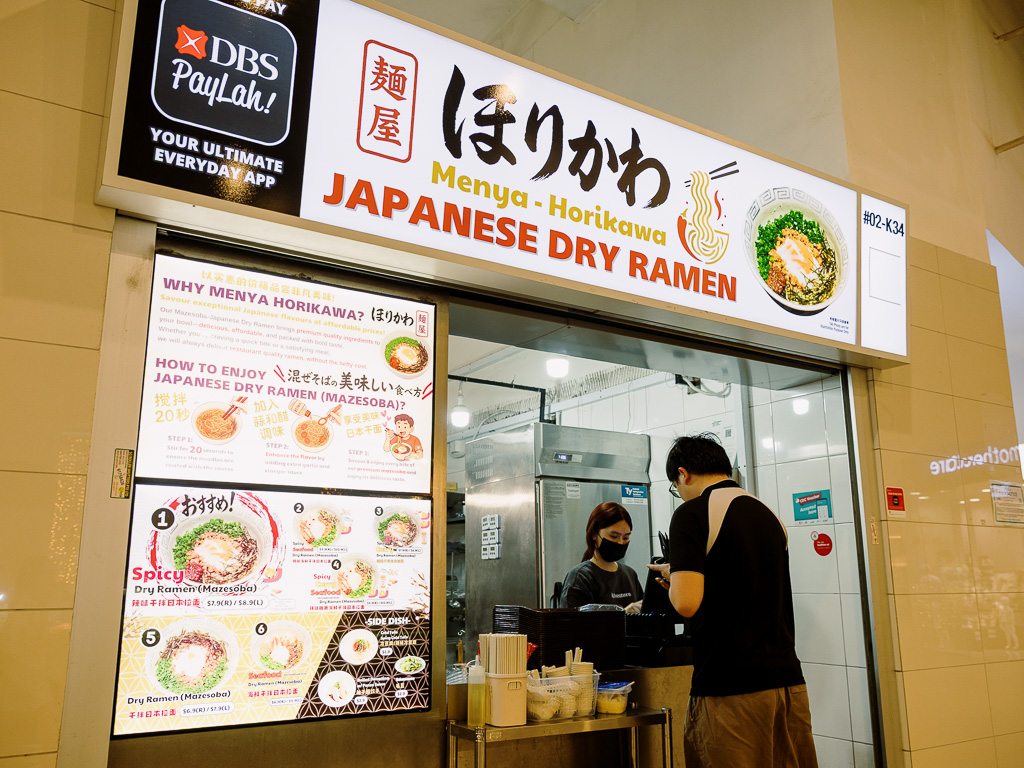
While business was steady when the stall first opened in 2023, profits started to dwindle after a year. “Egglets are not as popular with a hawker crowd, with it being a snack rather than a full meal,” Rick says.
What made the business untenable wasn’t just the lower footfall — it was the imbalance between the hours he poured in and what he earned. “The time and effort taken to make the food wasn’t equivalent to the money I made,” he admits.
Still, Rick found it a pity to surrender the stall space he had secured. Instead, he pivoted and went out searching for another cuisine that could work.
Discovering mazesoba
Rick’s turning point came through his girlfriend, who works in accounting and has connections to Japanese restaurant clients. One day, she introduced him to Tokyo-trained chef Koichi Horikawa, who is currently based in Singapore.
The chef prepared several dishes for Rick to try, but it was the spicy mazesoba that stopped him in his tracks.“When I first tried it, I knew it was the dish that I had to share with everyone,” he says .
Rick loves spicy food, and the balance of noodles, seasoning, meat, and heat immediately clicked. “I realised that I could eat and cook this dish every day,” he says.
That was the start of Menya Horikawa. And chef Koichi didn’t just inspire Rick — he generously taught him the recipe and cooking technique himself.
From February to April 2025, Rick became chef Kochi’s protege, training for two hours daily at his restaurant. In tribute, Rick named the stall after him when it opened at Buangkok Hawker Centre in September last year.
At first, Rick followed chef Koichi’s recipe to the tee. But once he started selling the dish at his hawker stall, he had to tweak the recipe. Singaporean diners found the Japanese spice levels overwhelmingly intense.
“They mentioned that it was way too salty and spicy,” he says. “We had to tone down the spice levels of both the meat and sauce — these were adjusted repeatedly based on customer responses.”
Though the toppings look simple — minced pork, seaweed, spring onions, and onsen egg — Rick believes two components define his mazesoba.
Firstly, the noodles: Rick uses tsukemen noodles that are sourced from a Japanese supplier in Singapore — the same supplier used by many ramen shops.
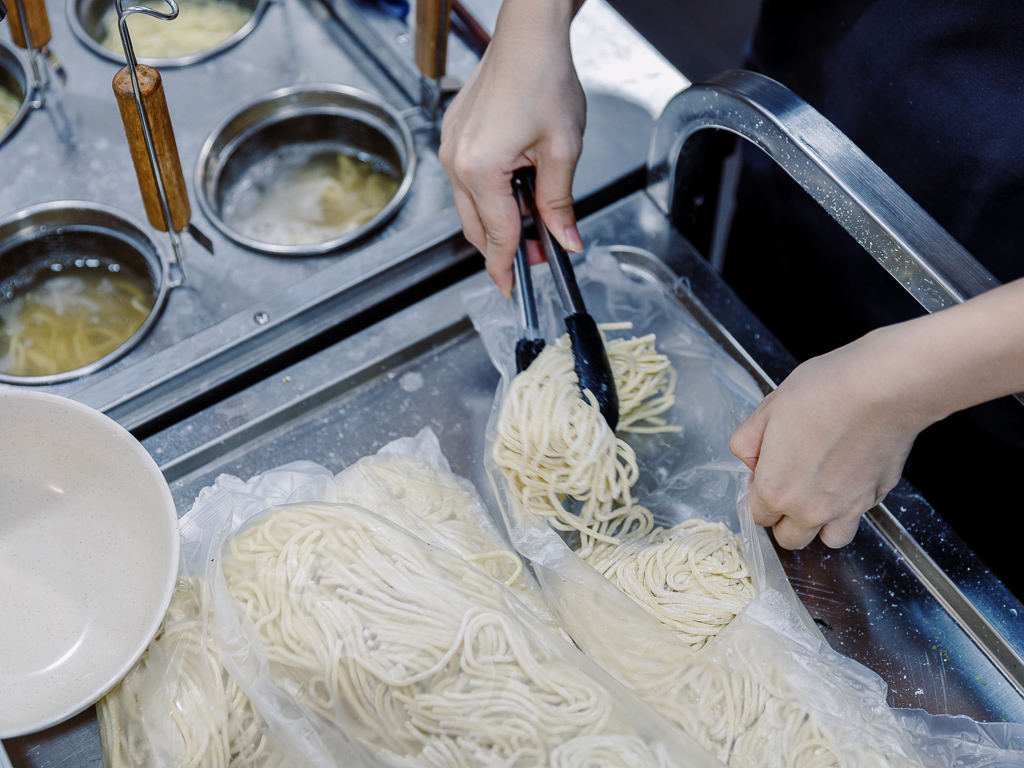
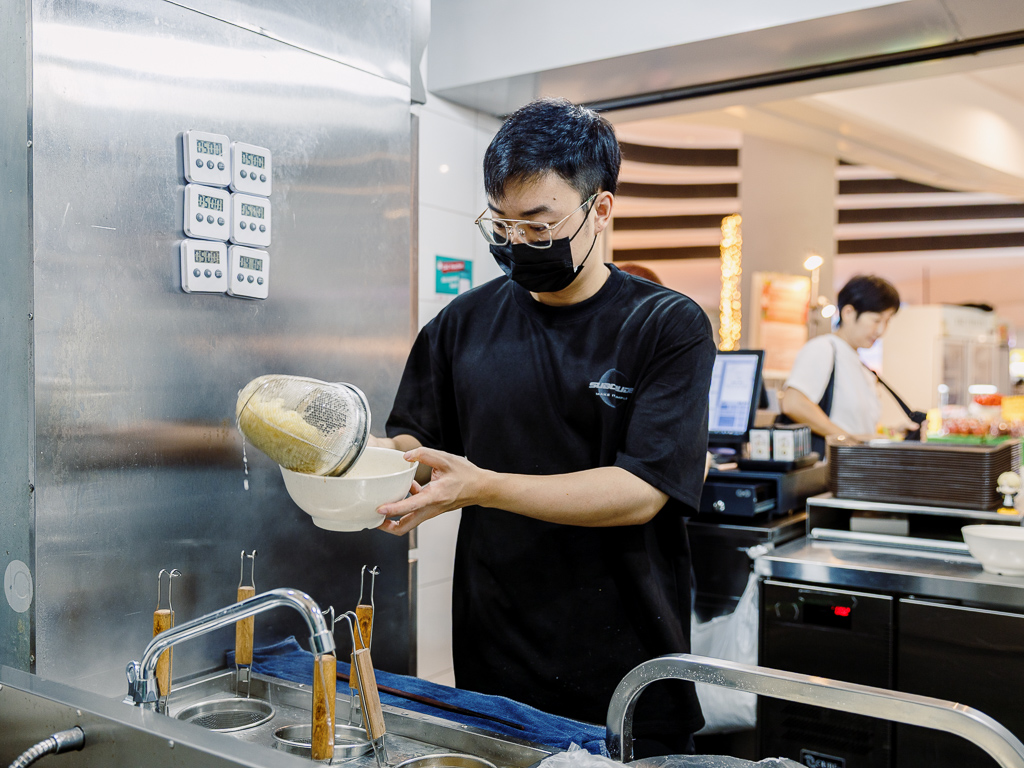
The distinct chewiness is something Rick believes sets the noodles apart. “Some restaurants only blanch the noodles for 30 seconds,” he observes. “We boil it for five minutes so the texture comes out very nicely. It’s chewy, with a bit of bite, but not overly hard.”
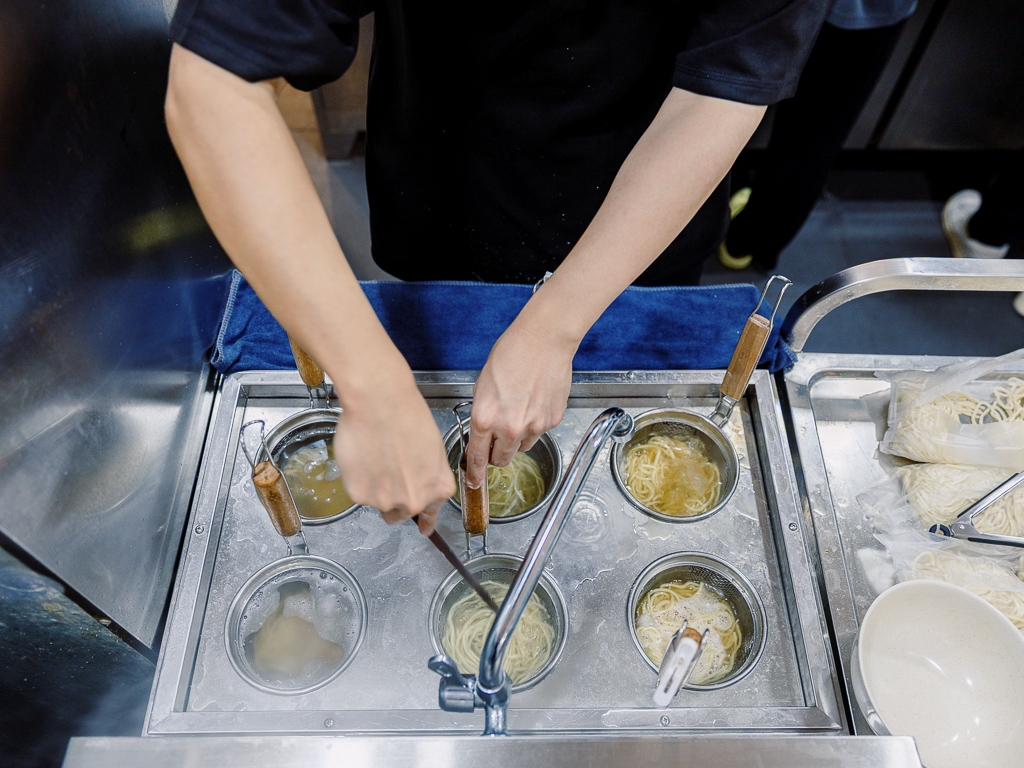
The second defining component is the base sauce, made from garlic and miso. The sauce is finished with Japanese sesame oil, and blended together with the other ingredients for depth and aroma.
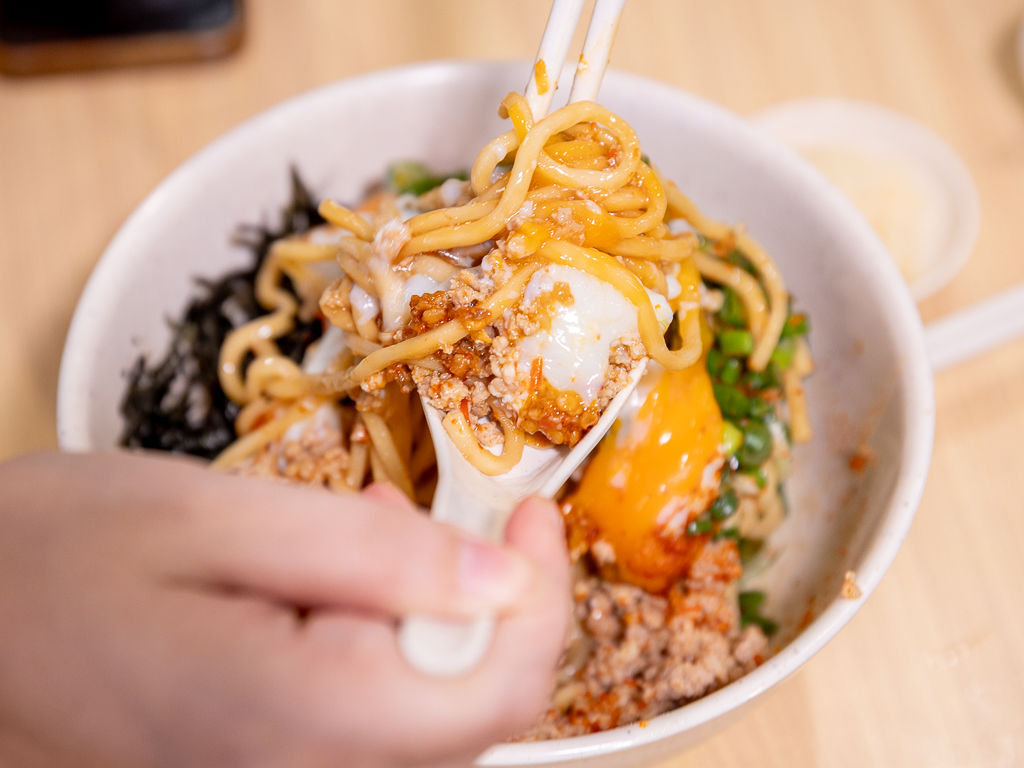
His spicy sauce is made entirely in-house, pan-fried then thinned with sesame oil so customers can stir it smoothly into the noodles.
His staff like it so much that some eat just the noodles and sauce for lunch, without any toppings. “Even without other ingredients, this is a complete meal for them,” says Rick.
Related Articles:
The menu
Rick deliberately keeps the menu tight. Beyond the signature mazesoba (from S$6.90), he has introduced several variations.These include the spicy (from S$7.90), seafood (from S$9.90) and curry (from S$7.90) versions.
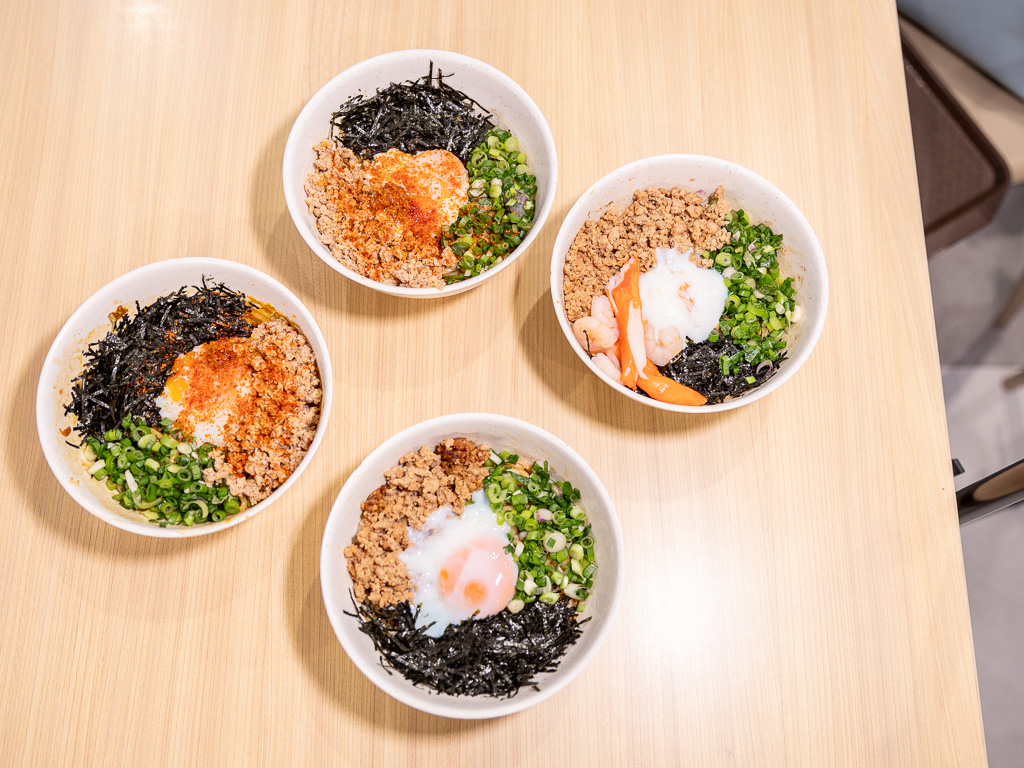
Each comes with its own unique flavour tweaks. The seafood version, for instance, has shrimp, crab sticks and special powders (which Rick keeps a secret) that transform the entire bowl into a savoury umami punch.
The menu also stands out for serving only mazesoba, whereas other Japanese stalls have many other items on their menus. But Rick avoids expanding into other Japanese fare.
“With too many items, you need more equipment, preparation, and manpower,” he explains. “In a hawker centre, manpower is one of the biggest challenges. I wanted to streamline the food preparation process.”
This simplification allows anyone, even new staff, to assemble a bowl on their first day. Behind the scenes, prep is efficient, with attention to detail. The pork is cooked in 10kg batches every two days to ensure freshness, and eggs are prepared using a sous vide machine. Spring onions are chopped using a machine too.
Consistency is a big part of why Menya Horikawa’s bowls taste the way they do. The noodles, sauce, meat and toppings must come together in a precise ratio, and even small variations can throw off the balance.
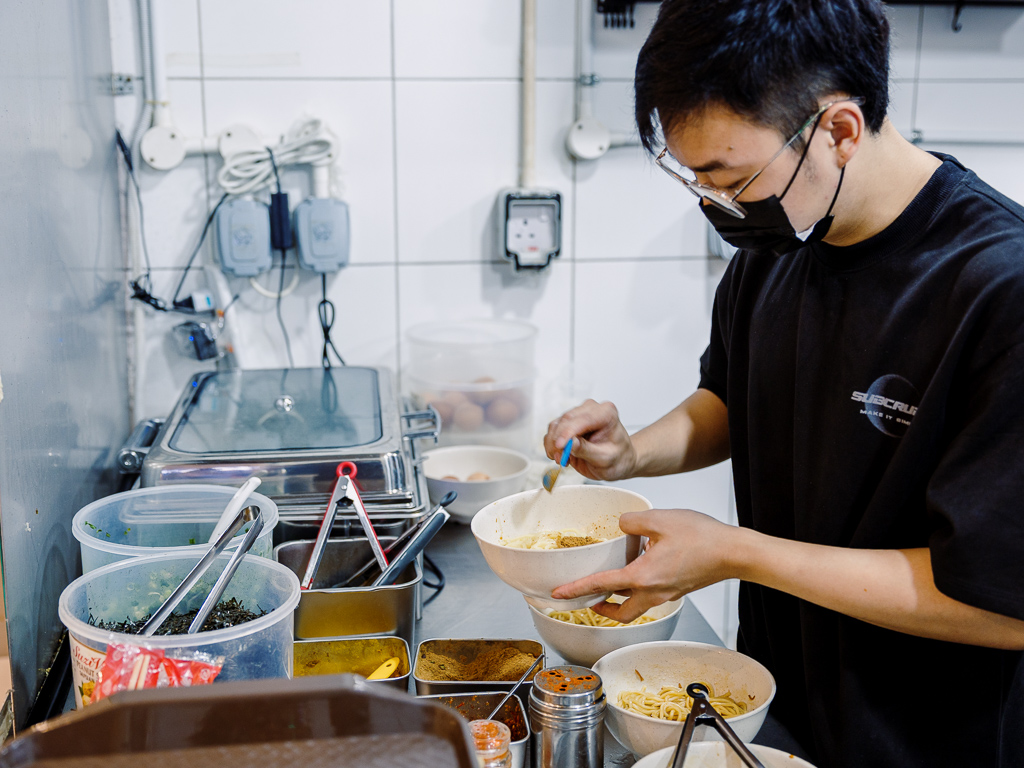
That’s why careful measuring and portioning of ingredients are essential behind the scenes, Rick shares. Ensuring that every serving has the right noodles-to-sauce ratio is what keeps the flavours consistent across both outlets.
“We prepare the meat and sauces at the Buangkok outlet and then send it over to Woodleigh, to ensure consistency,” adds Rick.
Our thoughts
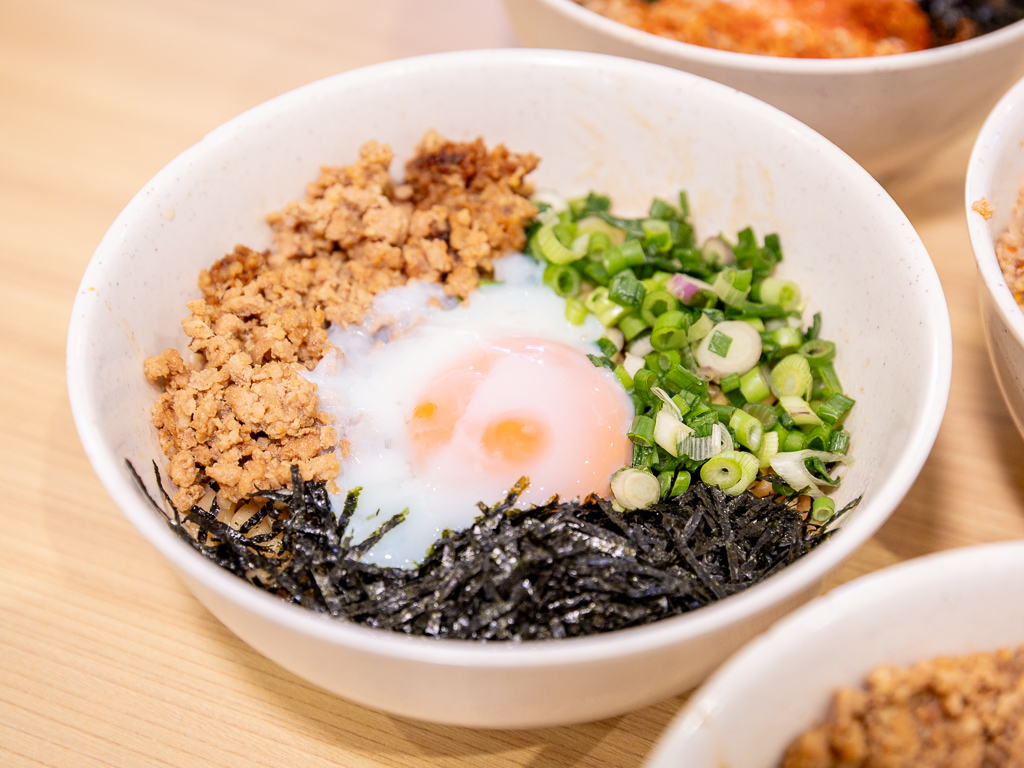
We first tried the signature mazesoba, arguably the best option if you have a low spice tolerance. We found the dish to be tasty, well-balanced, and easy to appreciate. The noodles had a satisfying, chewy bite, and the flavour profile of the sauce was rich without being overwhelming. The minced pork added savoury depth as well.
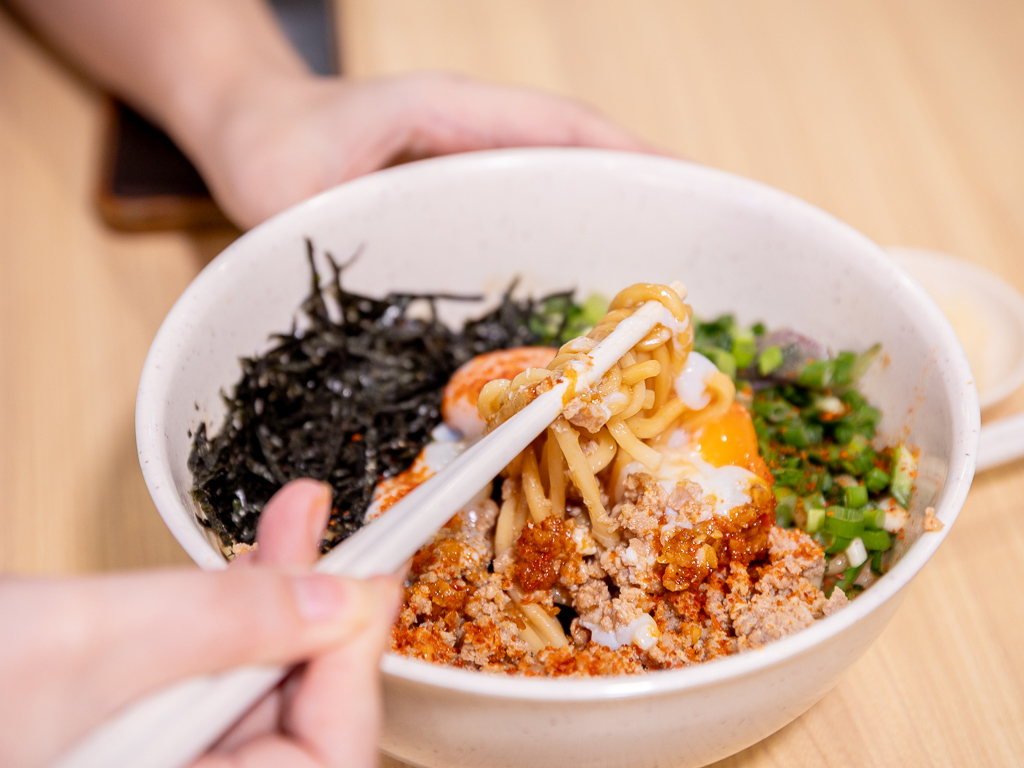
For those who want a little heat, the spicy mazesoba adds a pleasant kick that builds gradually. The spicy sauce does not overwhelm the dish too. Instead, it adds dimension and a more robust flavour, as compared to its non-spicy counterpart, making each mouthful more addictive. Fans of chilli pan mee will find this instantly appealing.
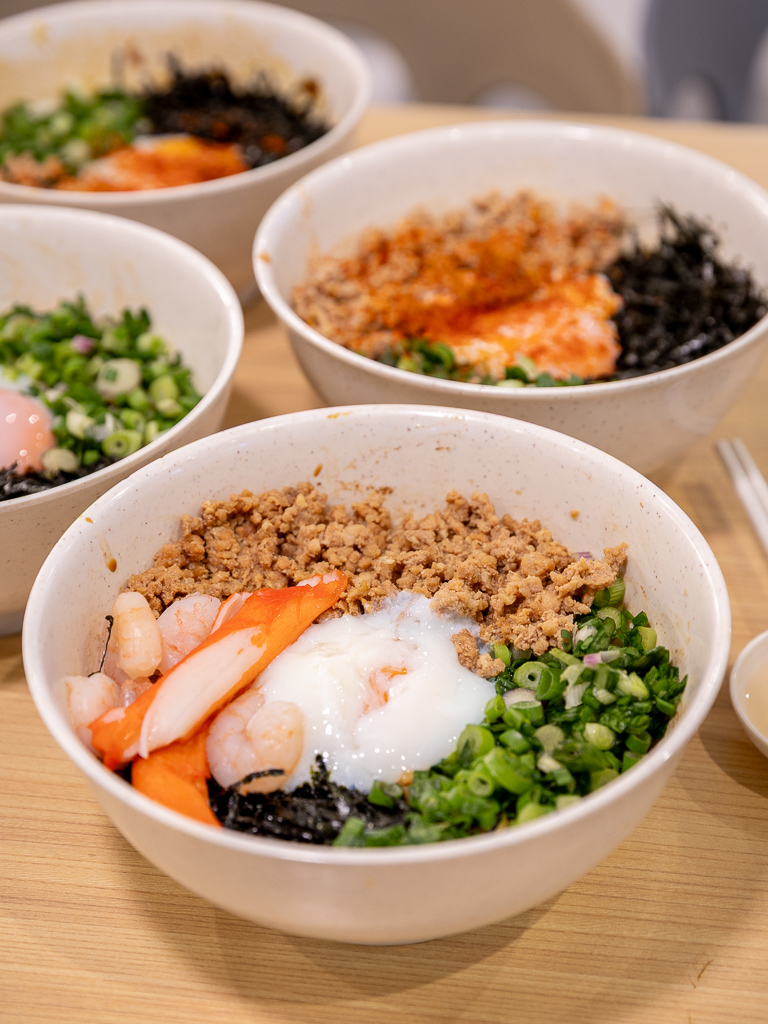
The seafood mazesoba is noticeably different — not just in ingredients, but in flavour identity. Shrimp, crab stick, and a house blend of powders give the noodles a pronounced umami punch. It’s still recognisably mazesoba, but the seafood flavour comes through clearly when everything is tossed together.
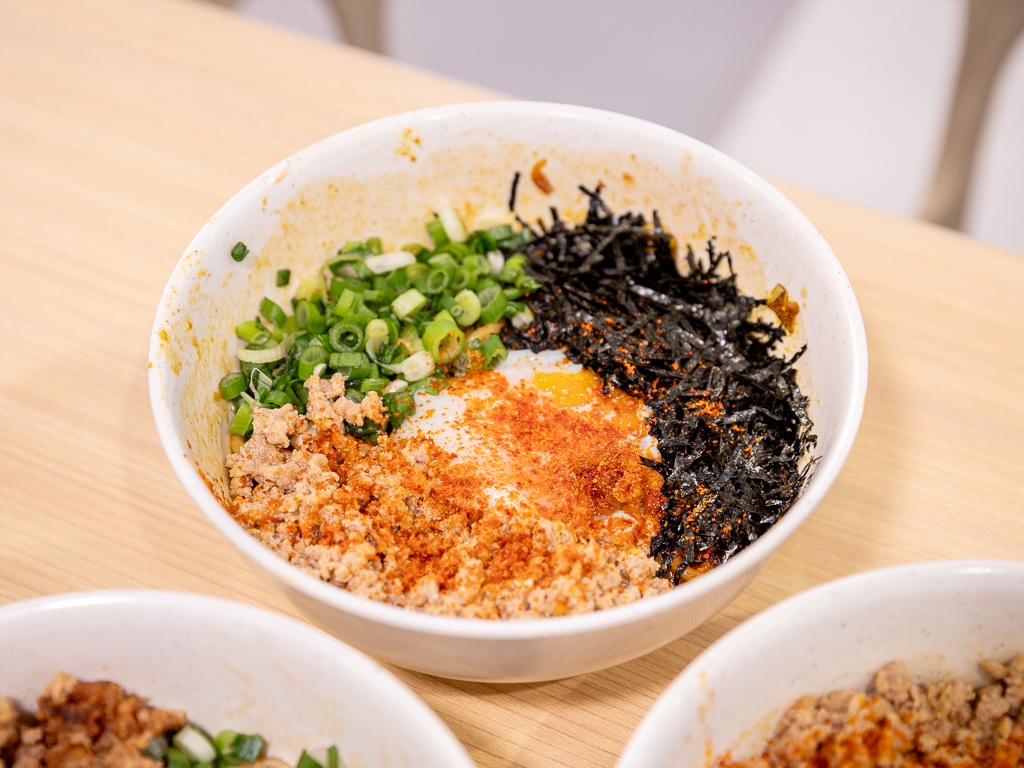
The spicy curry mazesoba leans on S&B curry powder and added spices, infusing the sauce with the familiar warmth of Japanese curry. This bowl is aromatic and comforting, though it’s also the most intense in terms of flavour. With curry, savoury sauce and spice, there’s a lot happening at once — making it best suited for diners who enjoy strong, layered flavours.
What’s next
Rick is also R&D-ing new items. He sees a demand for more options without pork, as some customers prefer alternatives such as chicken or beef. “We have plans for both chashu and beef mazesoba,” he shares.
Expansion is on the horizon, but carefully paced. “We will focus on the current outlets first, but we definitely have plans to expand,” Rick says.
Ultimately, he hopes diners leave feeling that they’re getting restaurant-quality noodles at everyday prices. Customers have even praised his mazesoba as being better than ones they’ve had at restaurants.
“I just want customers to enjoy a very good bowl of mazesoba at an affordable price,” he says.
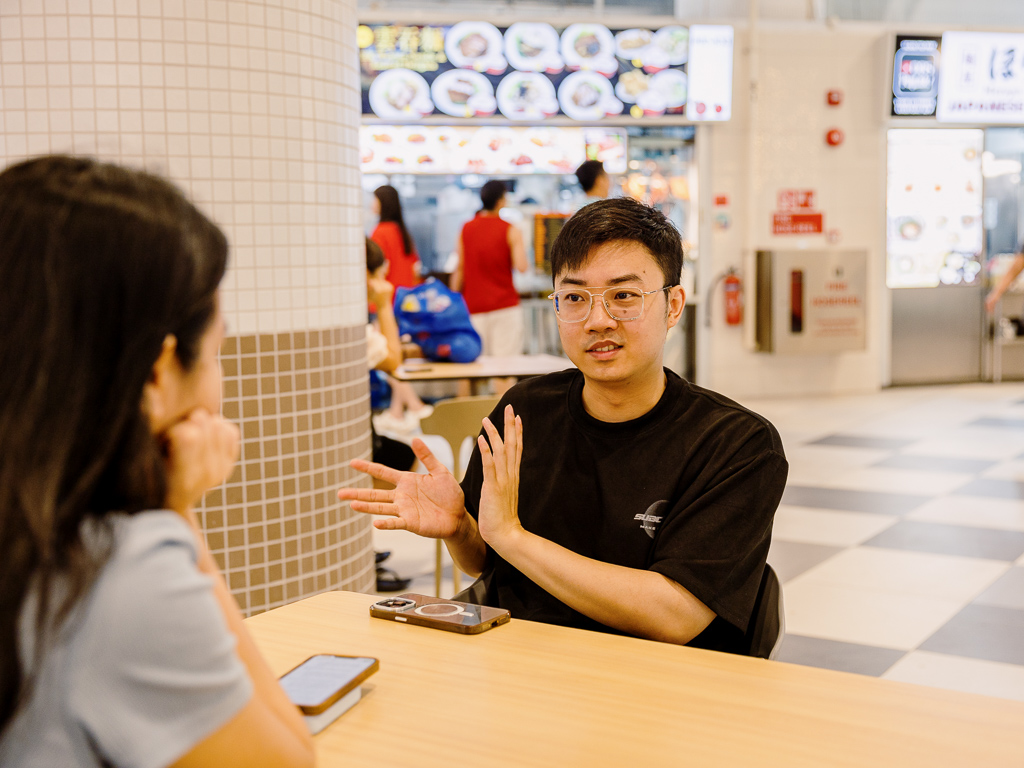
For aspiring young hawkers who have faced setbacks, Rick’s advice is grounded, honest, and encouraging.
“All industries have their own challenges and nothing comes easy,” reflects Rick. “Enjoy the process if you really want to try something new. While risks may be high, the journey is worth it.”
For more ideas on what to eat, read more about China’s viral crab pot brand’s first-ever outlet in Singapore and Bjorn Shen’s all-new Jellyfish Sushi.
- Buangkok Hawker Centre, 02-K34, 70 Compassvale Bow
- Woodleigh Village Hawker Centre, 01-40, 202C Woodleigh Link
Tue 11.30am - 8.30pm
Wed 11.30am - 8.30pm
Thu 11.30am - 8.30pm
Fri 11.30am - 8.30pm
Sat 11.30am - 8.30pm
Sun 11.30am - 8.30pm
- Buangkok
- Woodleigh





Rebecca Wong is a experienced freelance writer whose work has been featured in The Straits Times and Channel NewsAsia, to name a few. She gravitates towards topics like food, travel and human interest stories, and cannot resist a hearty plate of chicken rice or freshly kneaded pizza.
Read more stories from this writer.