En Group launches Okinawan street food concept Karii at Suntec City

Singapore has no shortage of Japanese food options, but Okinawan food? That’s a little rarer.
Off the top of my head, I could probably name two: ShinnSato Okinawa Cuisine at the little Japan town that is Orchard Plaza, and Okinawan Diner Nirai-Kanai at Great World City.
In line with the popular saying that “good things come in threes”, the latest Okinawan concept by the En Group is the newest to the party, though its offerings are a touch different from the former two.
Located at Suntec City’s basement floor, around the vibrant Fountain of Wealth, Karii is an Okinawan street food concept that’s bright, fuss-free, and geared towards the usually bustling crowd in the area.
It’s also said to be Singapore’s first such concept — the other Okinawan spots we know of seem to serve more full-fledged meals, fitting of a sit-down dinner with drinks.
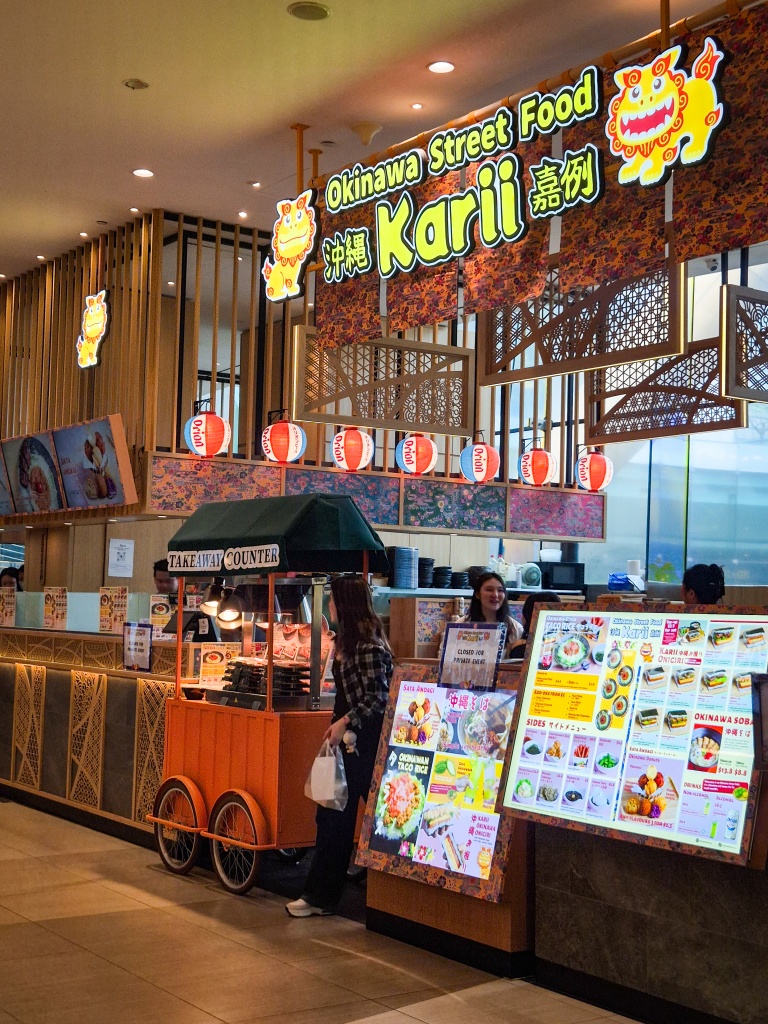
Karii, which means “happiness” in Okinawan dialect, is also a phrase that’s often used when Okinawans clink their drinking glasses.
In the same vein, the casual-themed Karii at Suntec City wants people to grab and enjoy some nosh, and toast to happiness. (Yes, there are alcoholic options, such as a shikuwasa sour, starting from just S$8.)
The concept occupies a small space next to En Group’s other concept Tonkatsu Enbiton, and shares its kitchen.
While there are some dine-in booths and seats, its cute takeaway cart in front of the restaurant that points to its focus on grab-and-go meals.
Diving into Karii Suntec City’s menu
Now, what does Okinawan street food entail?
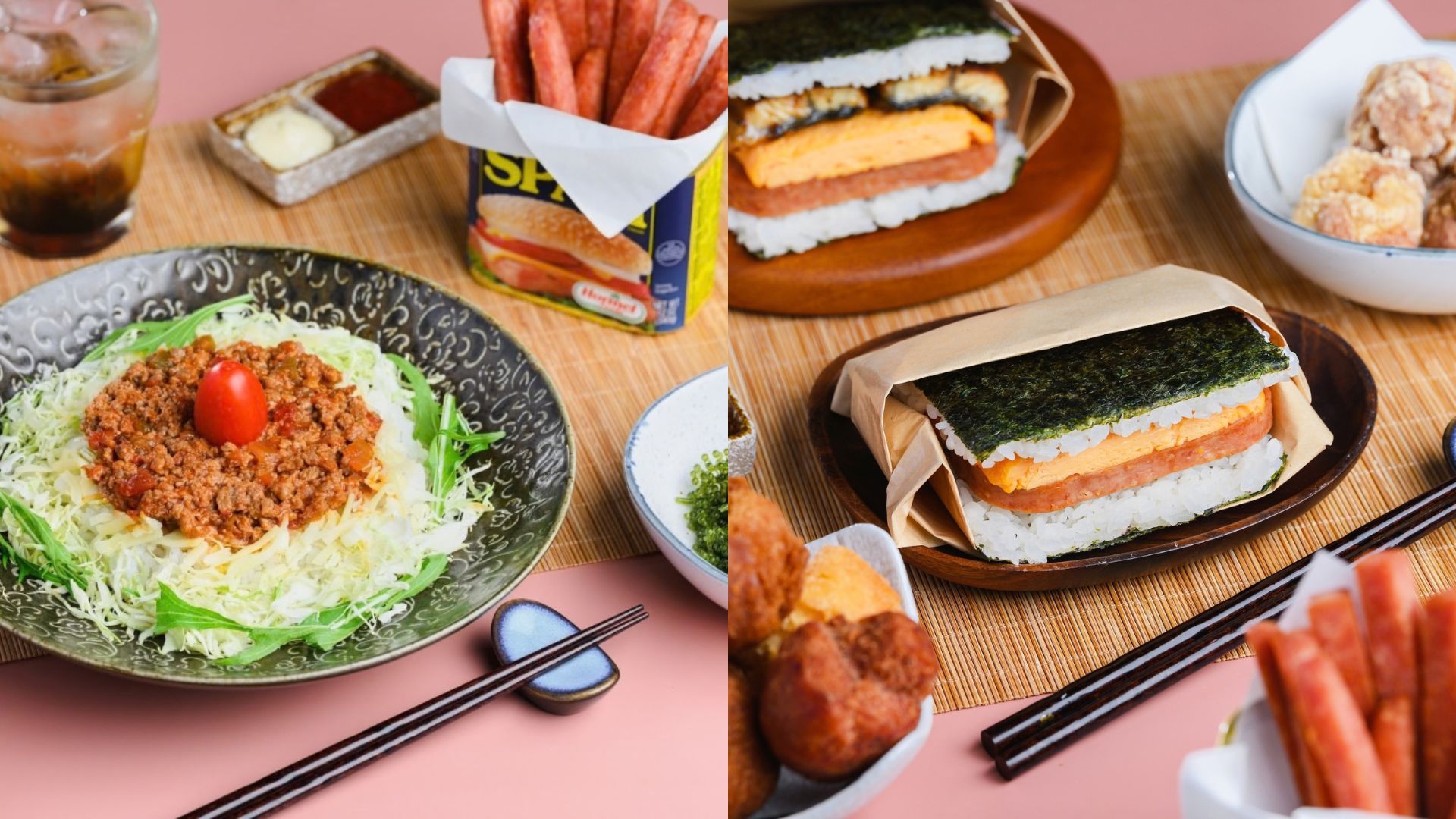
Think spam onigiris you can have on-the-go, taco rice bowls that can be scarfed down easily, and small sides such as spam fries (S$6.80), mozoku tempura (fried Okinawan seaweed, S$2.80) and Okinawa doughnuts, known as sata andagi (S$2.50 for three pieces).
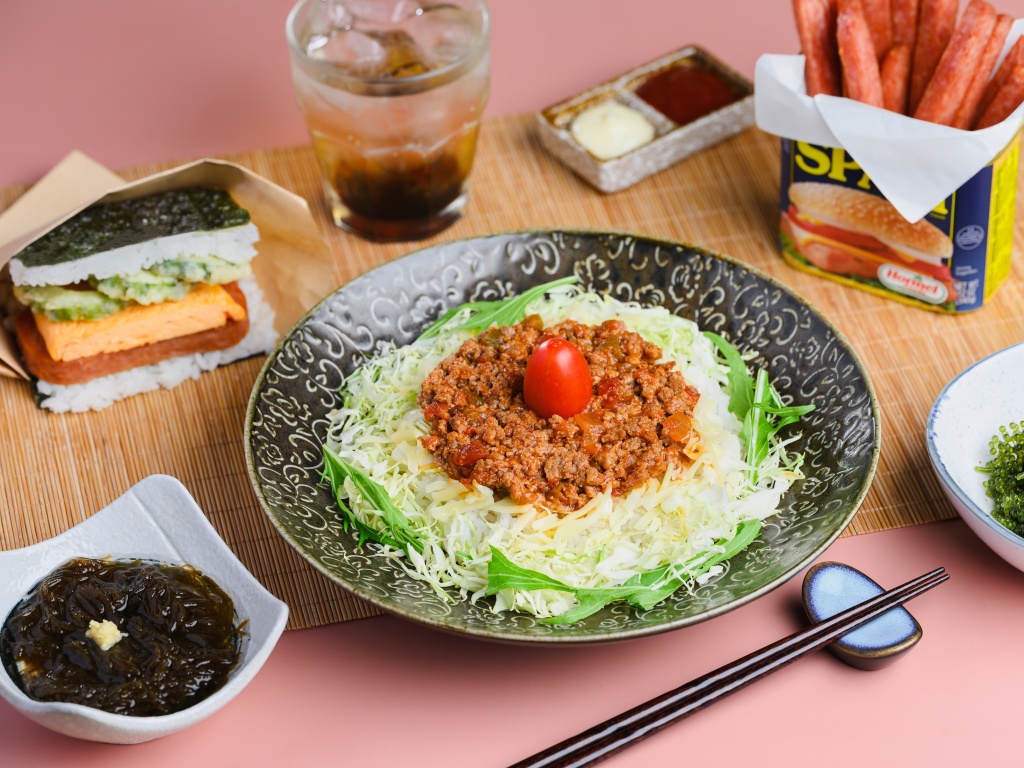
Every Karii onigiri comes with the basic ingredients of spam, dashimaki tamago (Japanese omelette), and mayonnaise sandwiched between Japanese rice and seaweed.
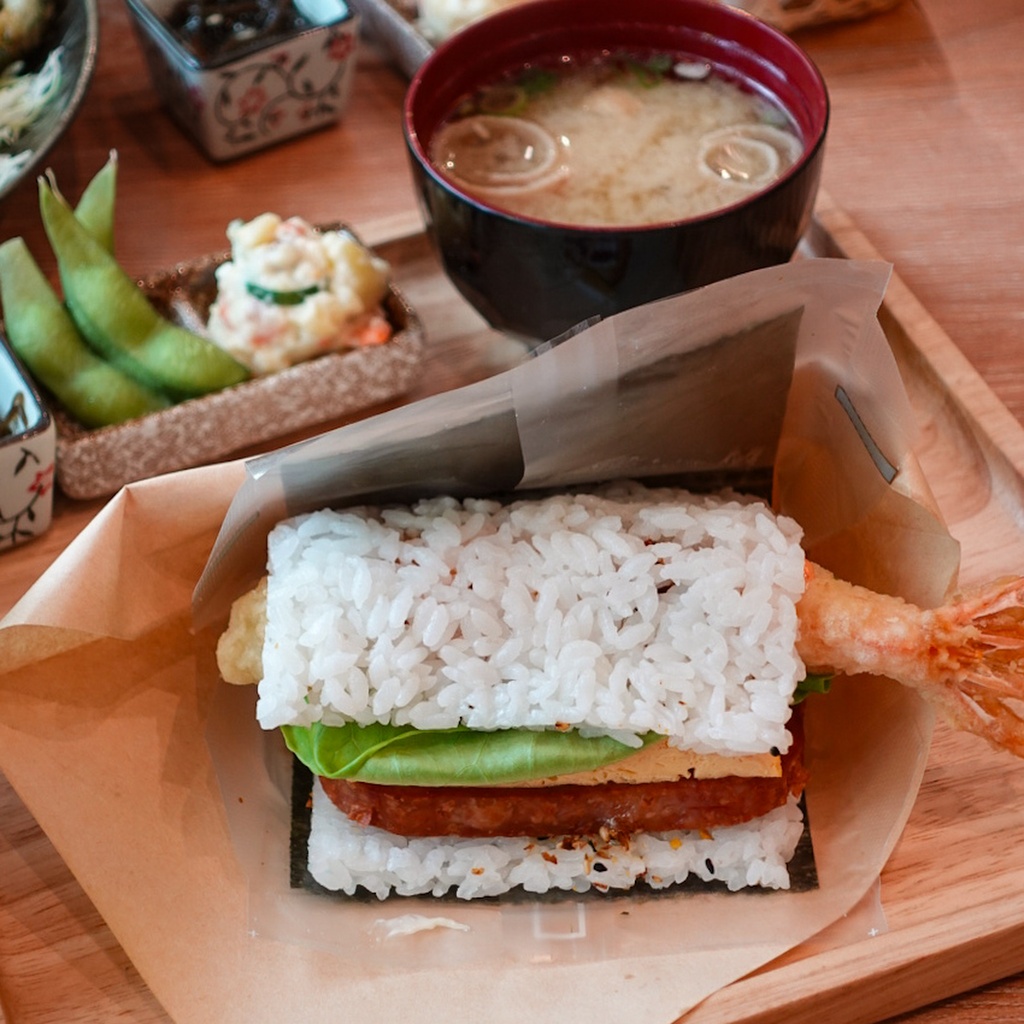
Options run the gamut from a classic Okinawa onigiri (from S$5.50), to heartier ones such as a mentai ebi onigiri (from S$9.50, with fried tiger prawn and mentaiko mayo), and even more obscure ones such as goya tempura onigiri (from S$7.50).
Goya is more commonly known as bitter gourd, and is a staple Okinawan green.
While I’m not a fan of this nutrient-dense vegetable, it’s clear that Okinawans know best — the region is one of only five in the world that’s been named a “Blue Zone”, which is awarded to places with some of the longest life expectancies in the world.
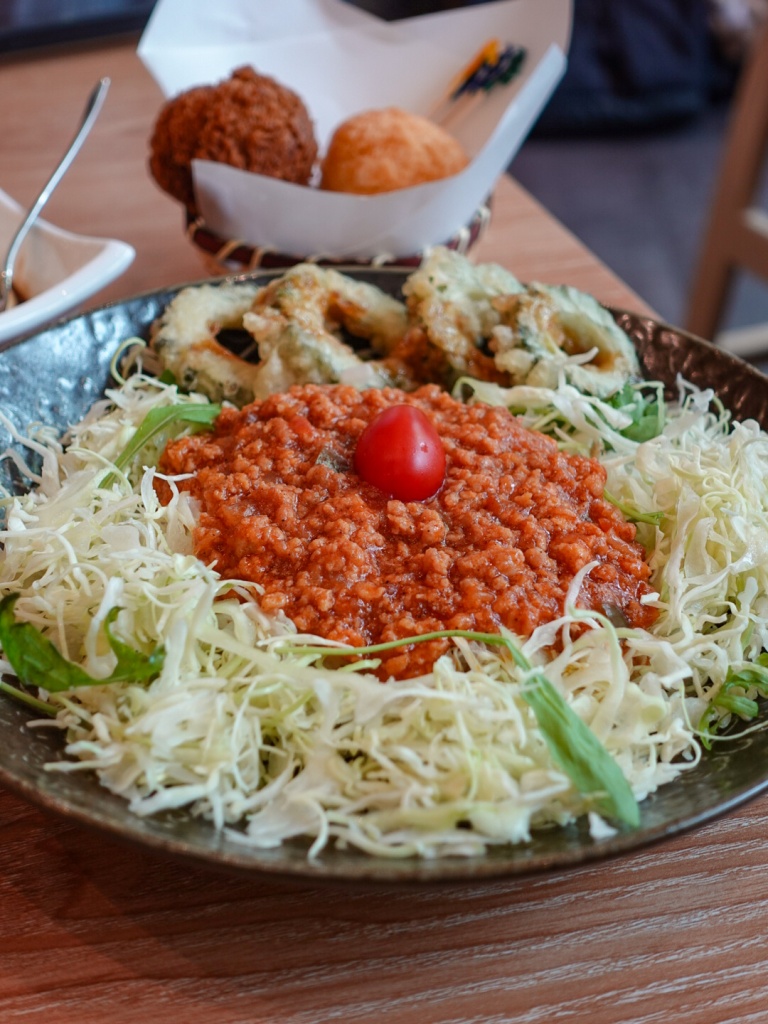
Besides having it in an onigiri, you can have it with Karii’s other menu highlight — the Okinawa-style taco rice bowl. As its name suggests, this is a rice bowl topped with classic taco ingredients.
A bowl comes with seasoned minced meat, cheese, arugula, cabbage, cherry tomato, and rice, and you have the option of Hokkaido pork (S$6.80) or beef (S$7.80) for your mince.
Add-ons range from goya tempura (S$2), to more conventional proteins such as teriyaki chicken (S$3.50), and even unagi kabayaki (S$5.50).
A dark horse for us was the Okinawa soba, which comes in two sizes: Small (S$8.80) and regular (S$13.80). It comes topped with ranfute (braised pork belly), which is savoury-sweet, tender, and goes so well with the paitan tonjiru broth (white pork soup).
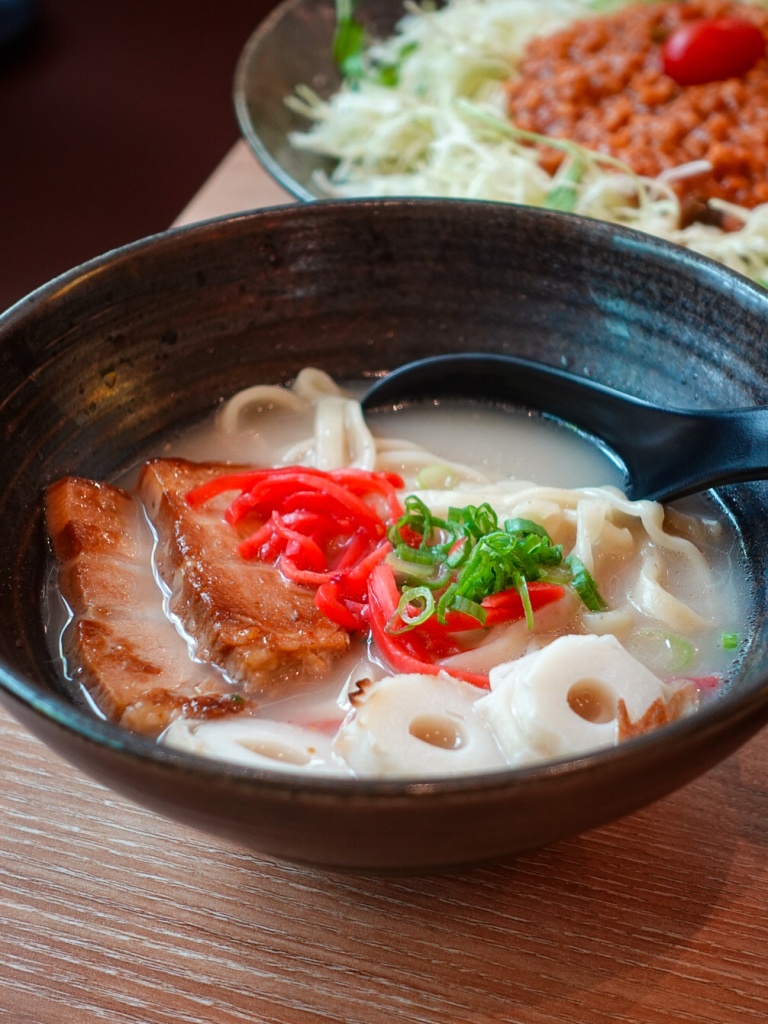
Unlike most soba dishes you might be used to, Okinawa soba is made of wheat flour instead of buckwheat, and is thick, with a good chew. Some might find it similar to our local ban mian, though the former has more bite.
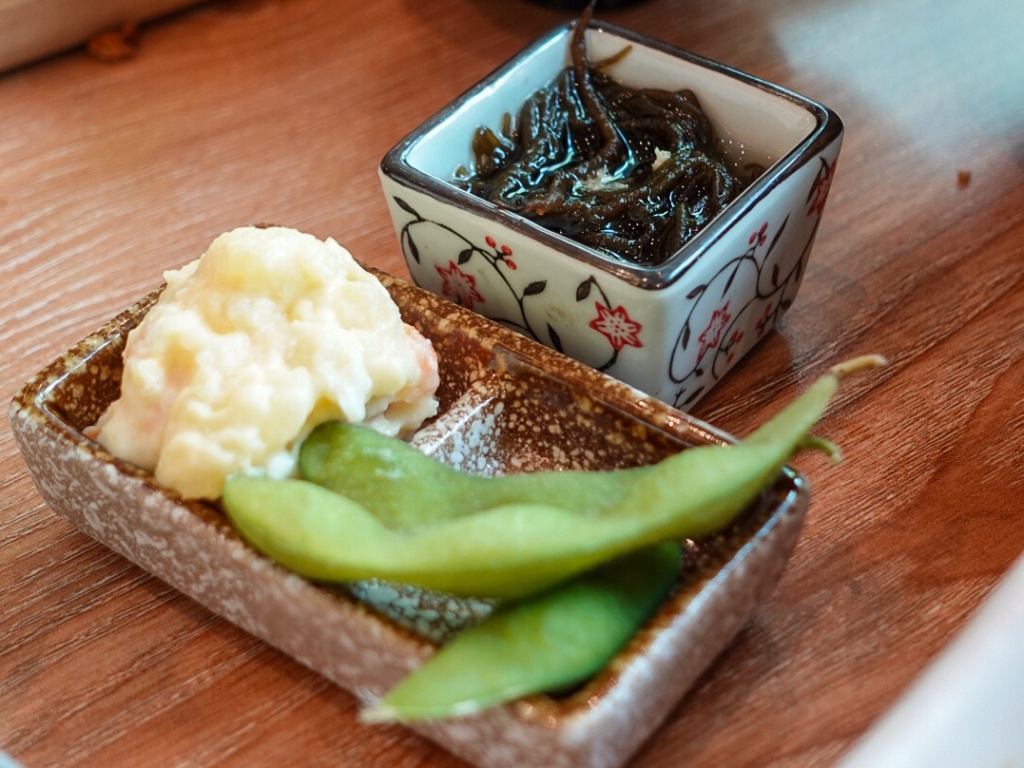
All mains can be ordered a la carte or had as a set (extra S$3.50), which gives you two appetisers of the day, mozuku su (Okinawan seaweed marinated in vinegar) and Okinawan white miso soup.
Just when you think food is all you’ll find the bitter goya in, Karii also has it in its drinks, too — the goya shikuwasa honey (S$6.80) features bitter gourd, shikuwasa (an Okinawan citrus fruit), honey, and soda.
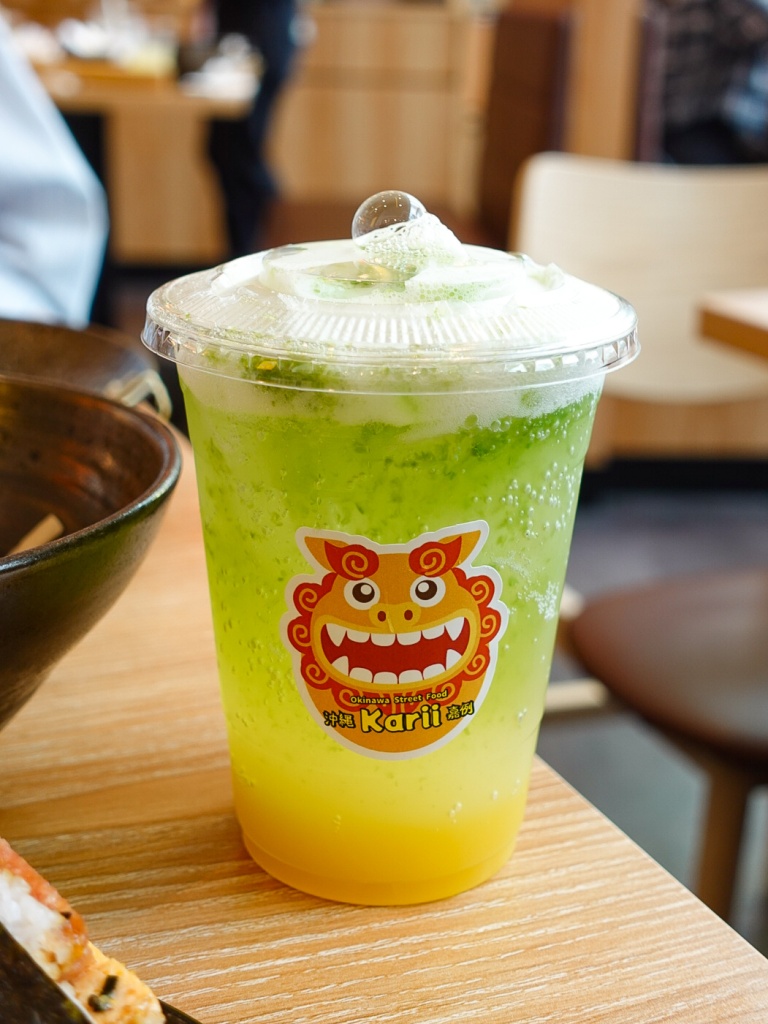
Of course, there are more typical options, mostly with shikuwasa — which reminds us strongly of yuzu — as well as alcoholic ones, such as a shikuwasa sour (S$8.50) and even a Okinawan kokuto hai (S$9), with Okinawan brown sugar and awamori rice liquor).
Need a lil’ more to round the meal off? There’s also Okinawa doughnuts sata andagi (S$2.50 for three) — little floury balls in flavours such as brown sugar, sweet potato, or just as-is. They remind me of the local kueh bahulu, albeit crispier on the outside and denser.
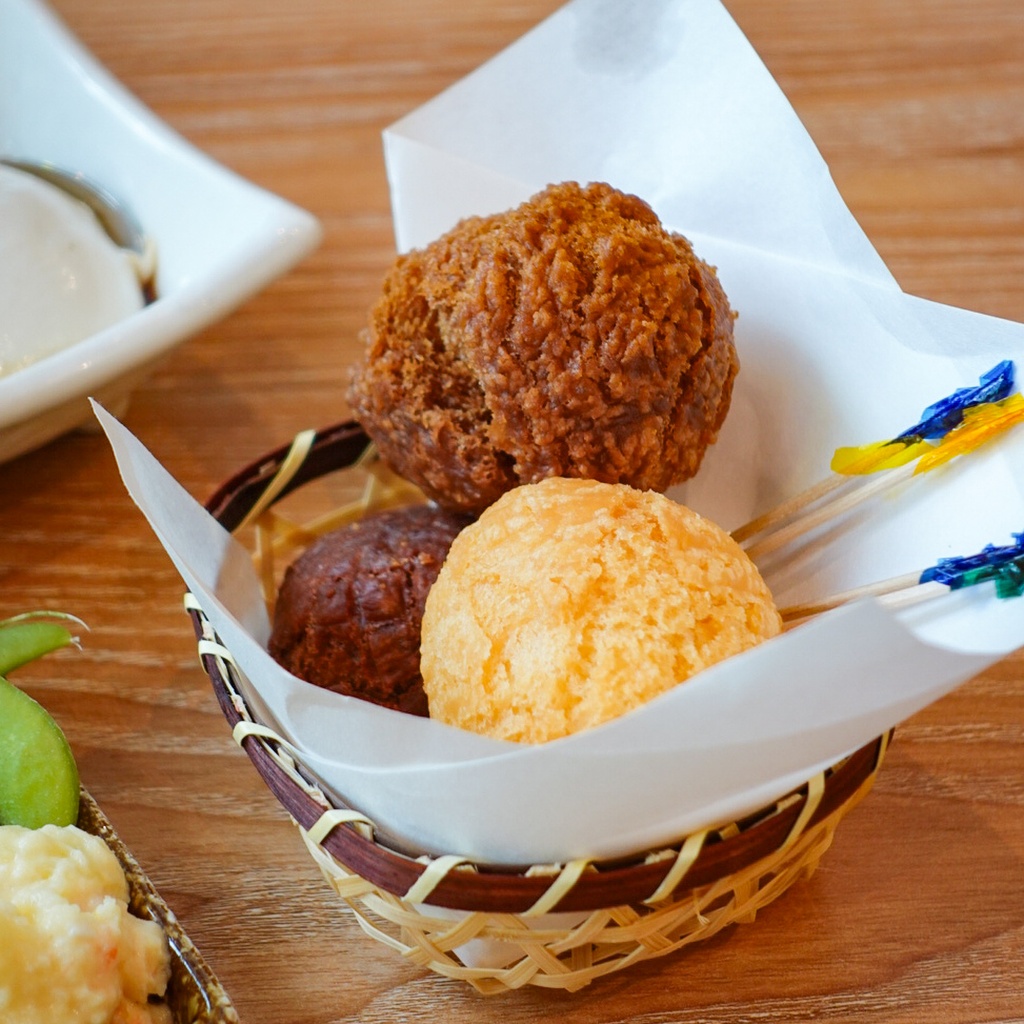
It’s not quite my kind of dessert, but I can see it being a quick fix for those with a sweet-tooth or those who definitely need a dessert after their meals. Or perhaps, its Okinawa shikuwasa honey sorbet (S$3)?
Whatever your choice, we’re sure a quick meal at this new concept’s sure to add a lil’ brightness and sparkle to your day.
This was a hosted tasting.
For more new places, check out Jumboree, a new food hall by Jumbo Group, and Molly Tea’s first outlet in Singapore!
Tue 11am - 10pm
Wed 11am - 10pm
Thu 11am - 10pm
Fri 11am - 10pm
Sat 11am - 10pm
Sun 11am - 10pm
- Esplanade
- Promenade
- City Hall



Sarah is constantly seeking out new coffee spots and cocktail bars around the world, and should probably drink more water while at it.
Read more stories from this writer.