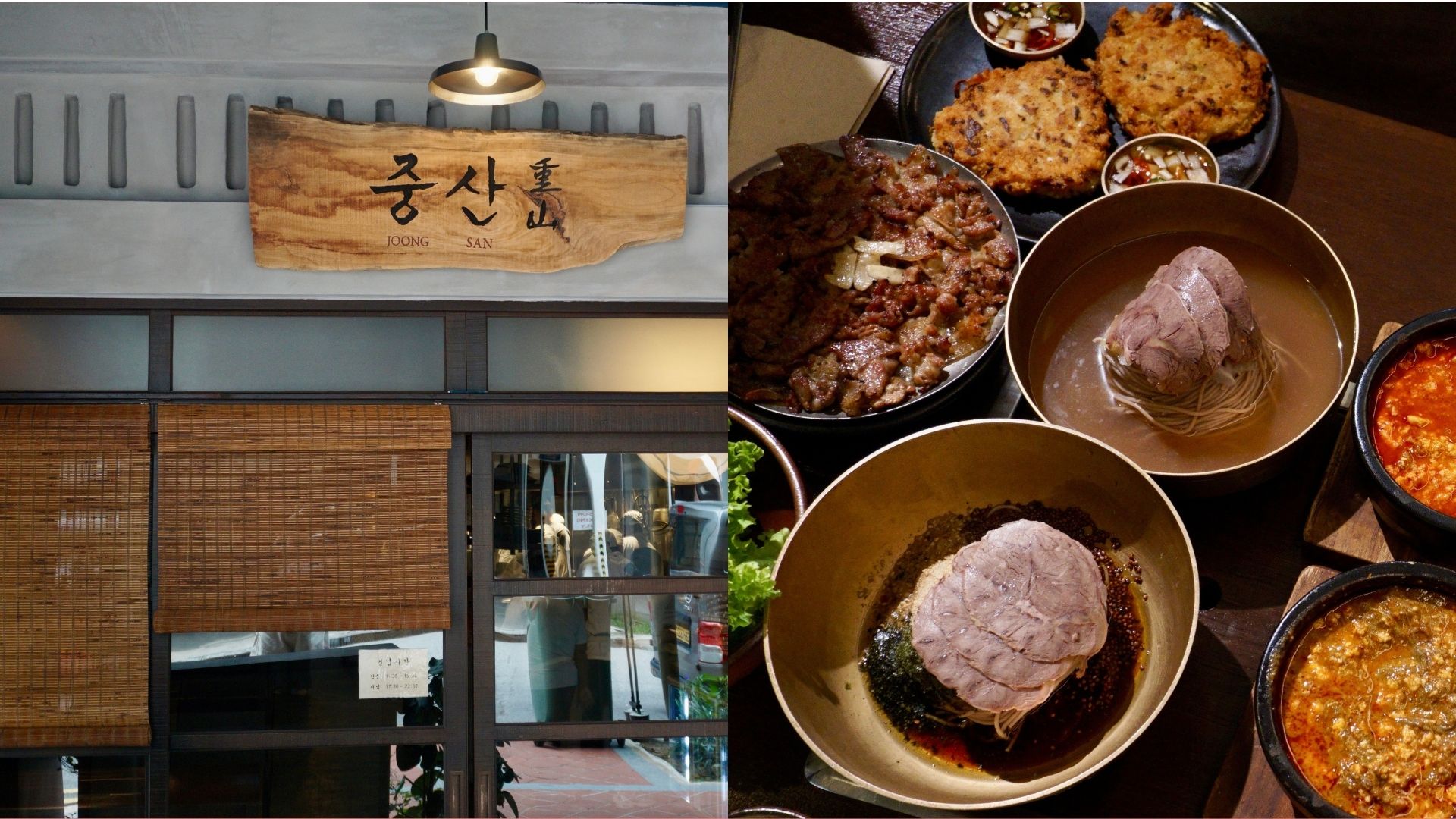
Joong San at Telok Ayer brings you an authentic taste of Korean fare

The Korean food scene in Singapore developed quite a bit in recent years, with well-established Korean restaurants bringing their concepts directly to Singapore.
Um Yong Baek is one such success story, bringing Singaporeans an authentic taste of Busan pork gukbap (soup rice), while also becoming a hot favourite at Telok Ayer.
After years of continued success in Singapore, the team behind Um Yong Baek has launched Joong San. Opened in August last year, Joong San is located a stone’s throw away from Um Yong Baek’s first branch at Boon Tat Street.
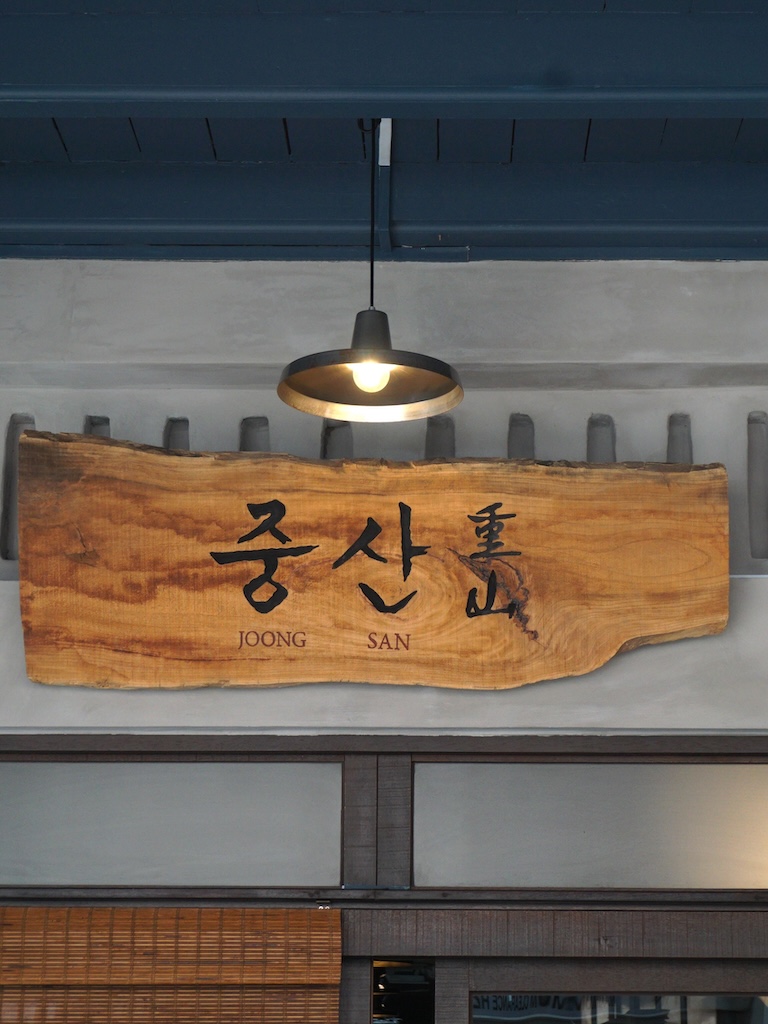
Though it’s been half a year since its launch, the restaurant still sees a steady line of customers waiting during lunchtime. The restaurant is also popular with the Korean community here in Singapore.
While Um Yong Baek highlights pork as the star of its dishes, Joong San’s menu is more diverse, and centres around authentic, good Korean cuisine. You can also try a more beef-centric barbecue at dinner.
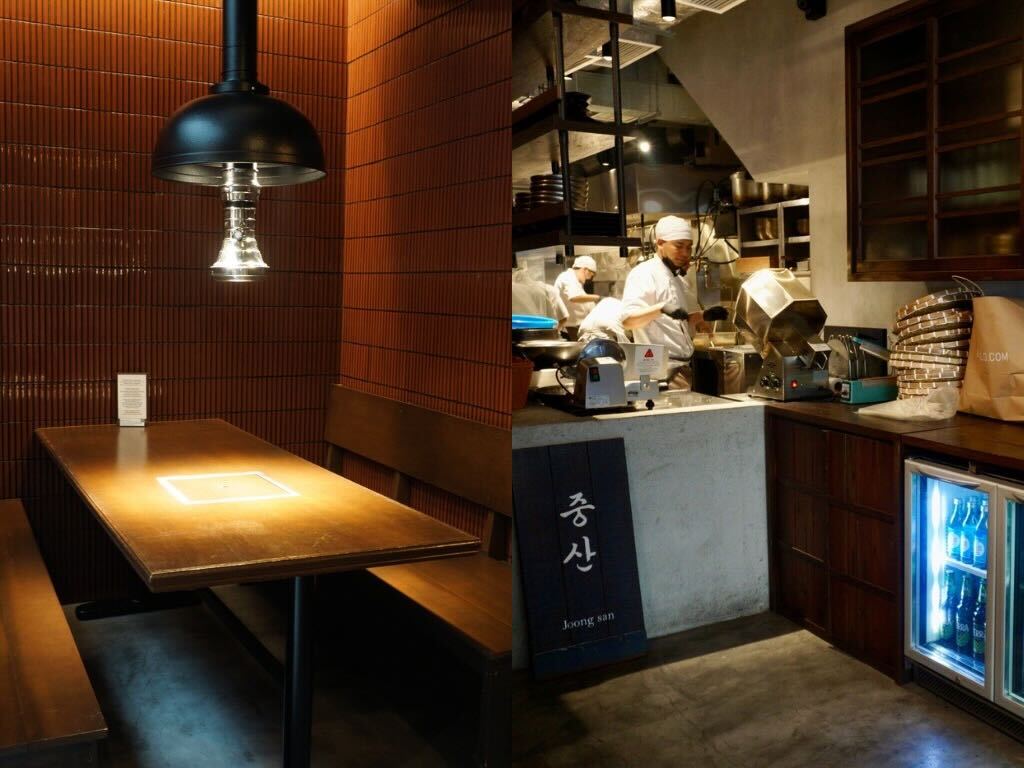
Joong San also emphasises a communal dining culture, which is why you’ll see that most dishes are catered towards sharing amongst diners.
“You could think of Joong San and Um Yong Baek as two completely different concepts!” quips Michael Lee, Joong San’s general manager.
Lunch at Joong San
Perhaps the only similarity between the two restaurants is that they focus on barbecue at dinner, whereas the lunch menus focus mainly on stews and noodles.
At Joong San, diners are required to order one main dish per person. In return, diners can eat their fill of banchan (side dishes) and barley rice.
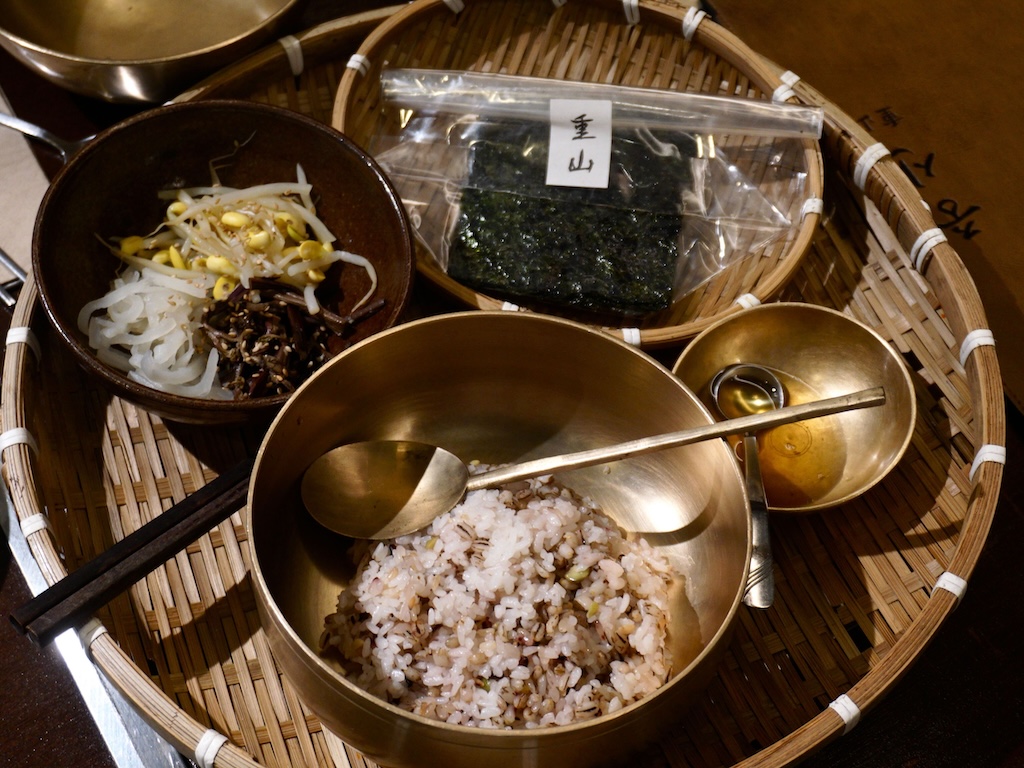
Barley rice, or boribap in Korean, is a traditional dish that features barley mixed with rice and a variety of seasonal vegetables that’s seasoned with sesame oil to taste.
I was pleasantly surprised to see it offered at Joong San, and as a complimentary side dish too, since boribap is a Korean dish that’s less well known locally.
Something worth noting is that Joong San makes its sesame oil fresh in-house, making its sesame oil notably more savoury and nutty, than the usual bottles you get off the shelf.
The barley rice also comes served with Joong San’s gopchang-gim (charcoal-roasted thick seaweed), which you can purchase in packs at S$2, if you’d like to bring some home.
Authentic flavours with ingredients made from scratch
Joong San strives to provide a culinary experience to diners that’s identical to what you’d get in Korea, which is why it takes pride in making the main stars of its lunch menu — buckwheat noodles and tofu — from scratch.
For the noodle dishes, we tried the Pyongyang naengmyeon (S$25) and deul-gireum mak-guksu (S$25), both of which feature Joong San’s buckwheat noodles, made in-house.
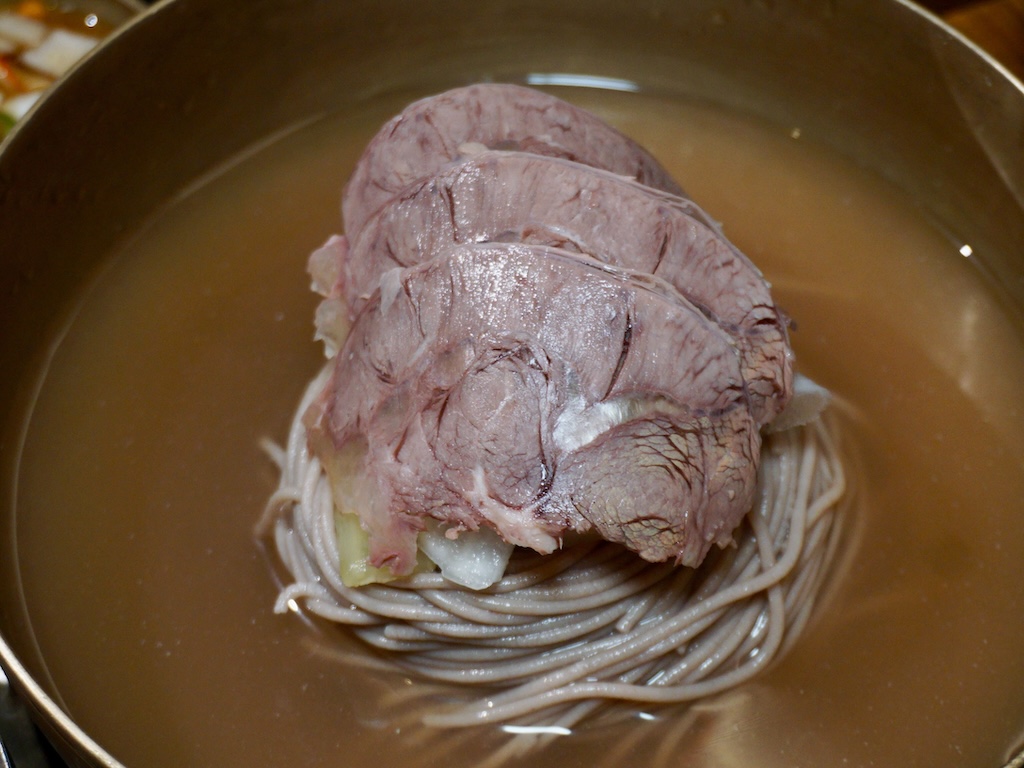
Pyongyang naengmyeon is a variation of the mul-naengmyeon (cold noodle soup) Singaporeans are more accustomed to, if at all. Pyongyang naengmyeon uses a milder beef broth than the stronger-tasting mul-naengmyeon, which some might find to be on the blander side.
As Joong San’s noodles are made with 100% gluten-free buckwheat, its noodles are noticeably firmer and less chewy as compared to other buckwheat noodles I’ve tried.
If you find the naengmyeon a little plain for your liking, I’d recommend asking the staff for some vinegar and mustard to add a little twang to your noodles. A small bit of both does wonders in elevating its flavour profile.
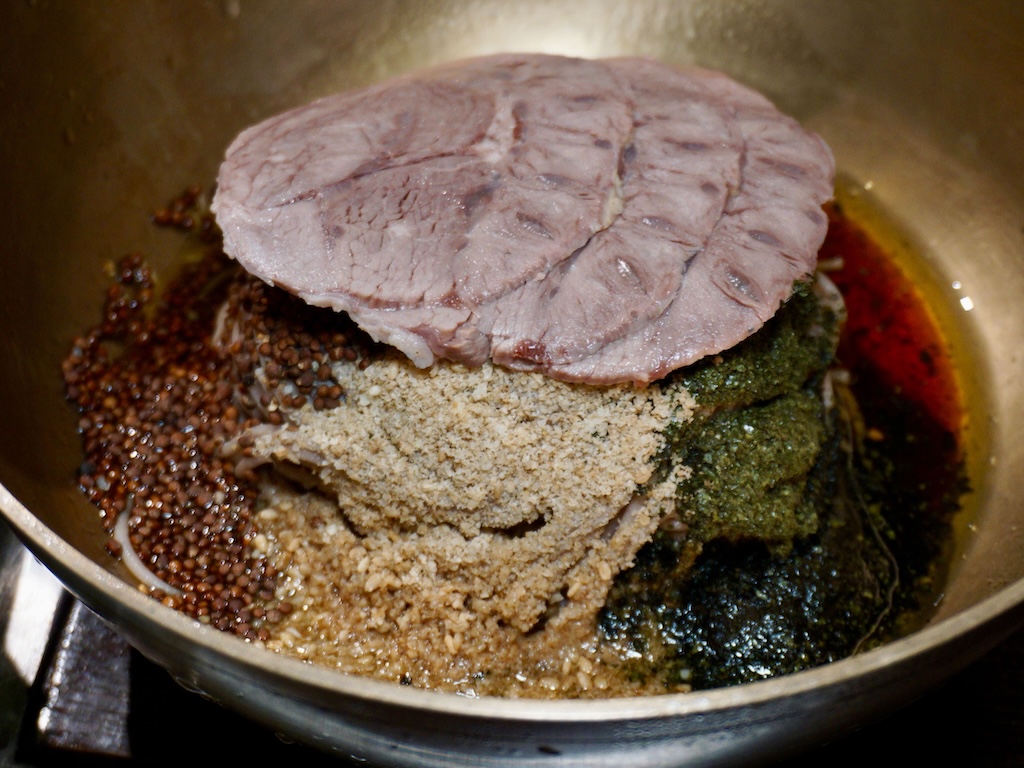
The deul-gireum mak-guksu on the other hand was more flavourful in comparison. Deul-gireum, which is perilla oil in Korean, features prominently in this dry noodle dish along with a generous garnish of perilla seeds, making the mak-guksu nutty and savoury.
If you’re craving for something piping hot and comforting, Joong San also serves soft tofu stew.
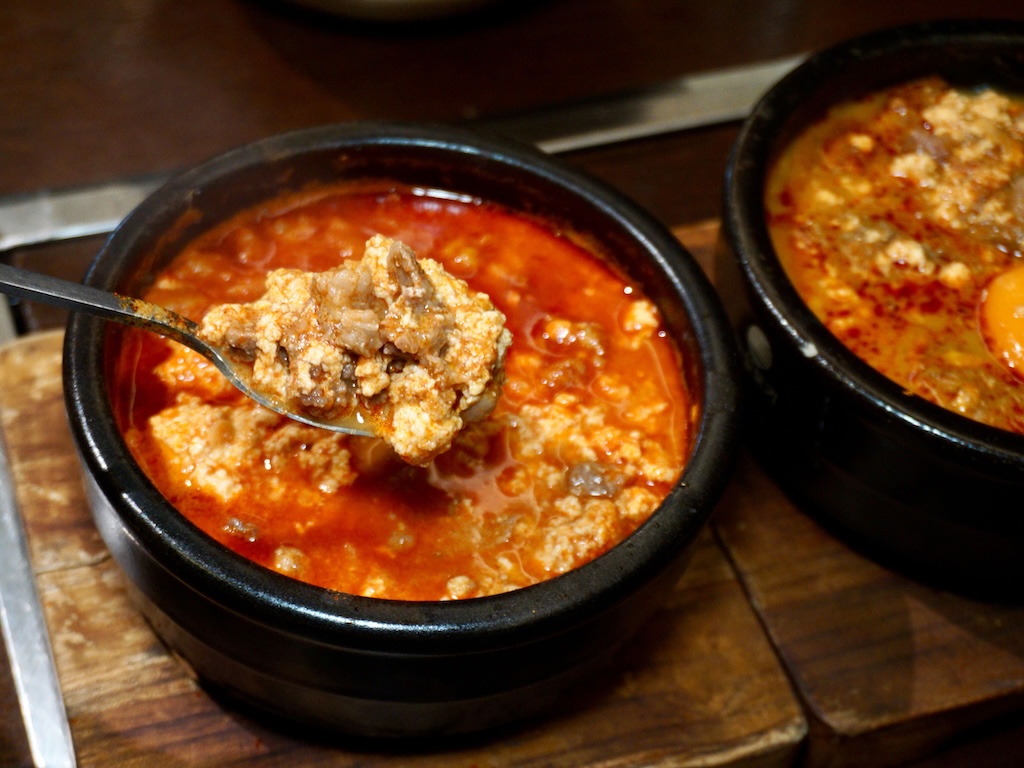
The original sundubu jjigae (S$24) features housemade soft tofu with beef chunks in a slightly spicy, thick broth served in a ttukbaegi (earthenware bowl).
While I usually crave (and finish) a bowl of rice with my stew, I was impressed by how sufficiently flavourful Joong San’s sundubu jjigae was on its own, so much so that it didn’t even need my usual carby accompaniment.
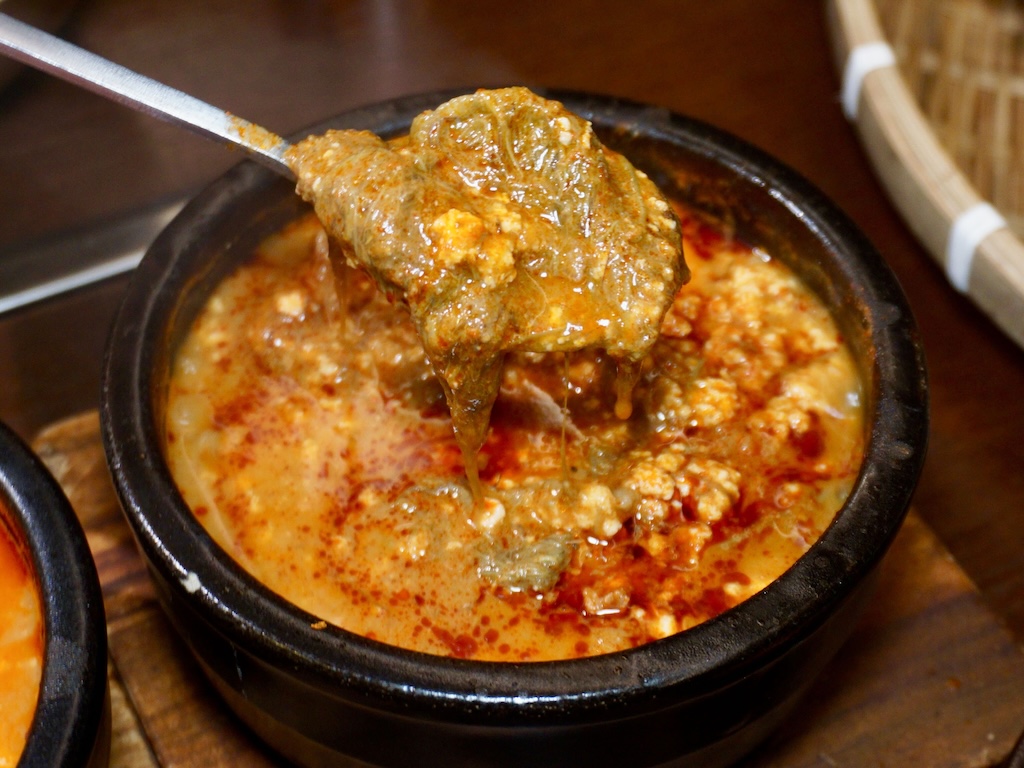
I personally preferred the gosari sundubu jjigae (S$24), which features gosari (bracken) in the soft tofu stew. It added a slightly earthy taste to the stew, while the innate chewy and slightly slimy texture of the gosari gave the stew a bit of bite and viscosity.
The staff told us that while Singaporean diners gravitate towards the original sundubu jjigae, the gosari variant is more popular with Korean customers.
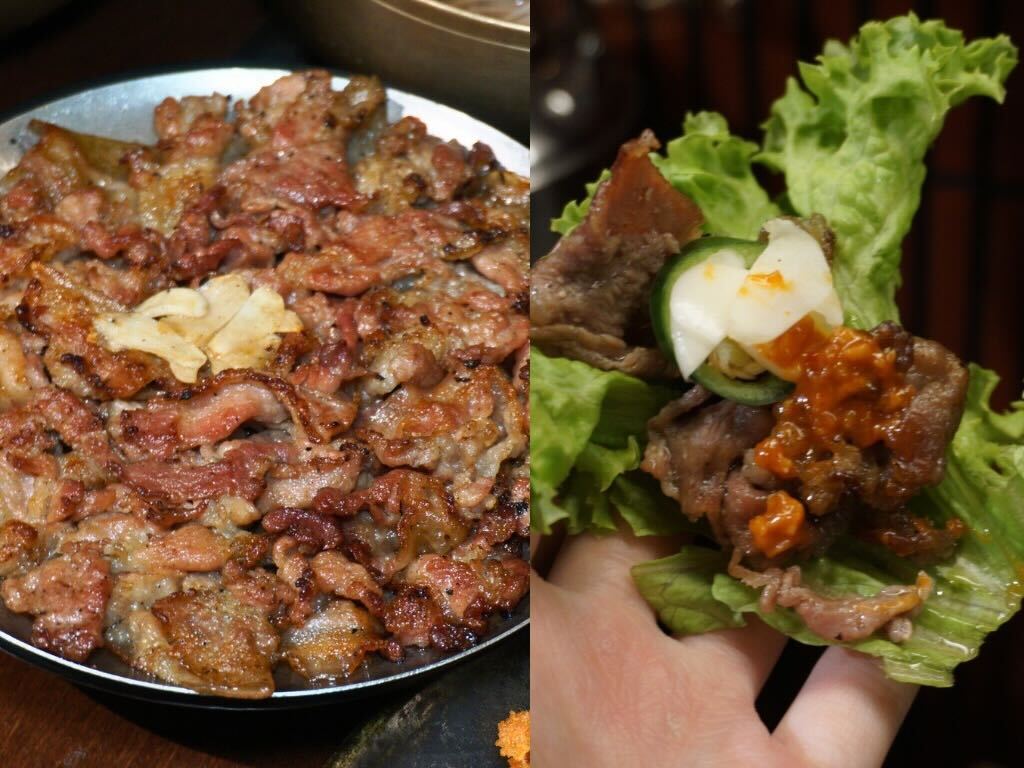
Besides the mains, Joong San’s side dishes are worth a try too. We enjoyed the yeontan bulgogi (S$17) — charcoal-grilled pork bulgogi that’s juicy and smoky.
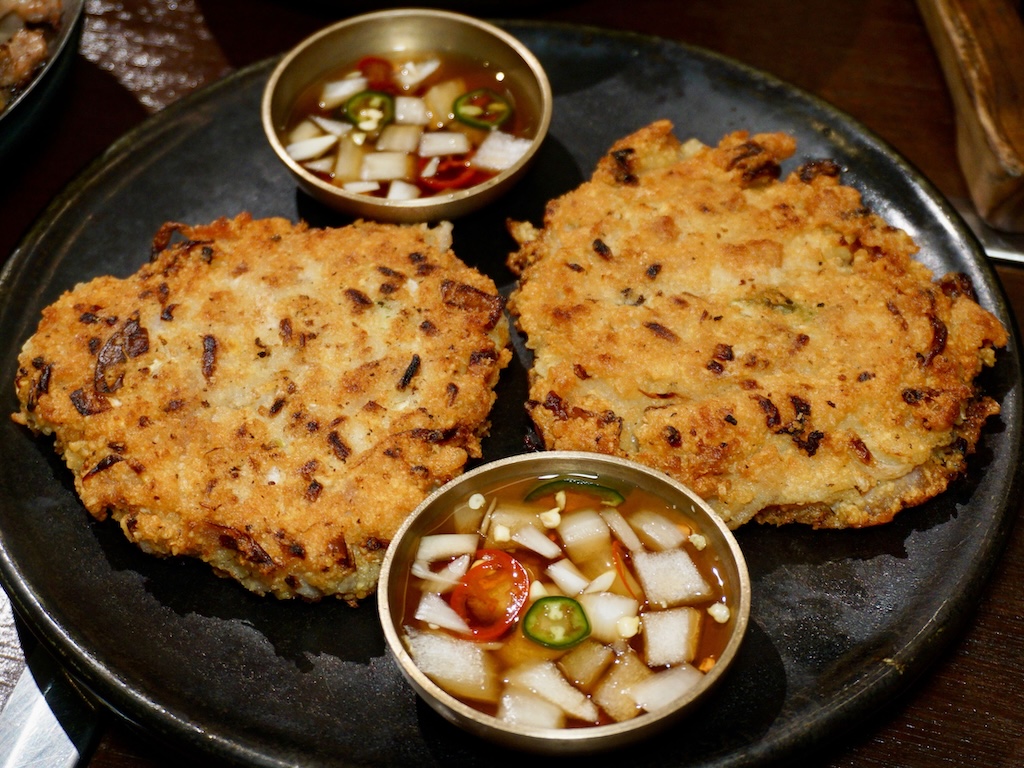
If you’re craving Korean street food, the nokdu bindae-tteok (S$13) is one item you wouldn’t want to pass on. Bindae-tteok is a savoury mung bean pancake commonly sold by street vendors and I reckon Joong San is one of, if not the, first Korean eatery here to offer bindae-tteok on its menu.
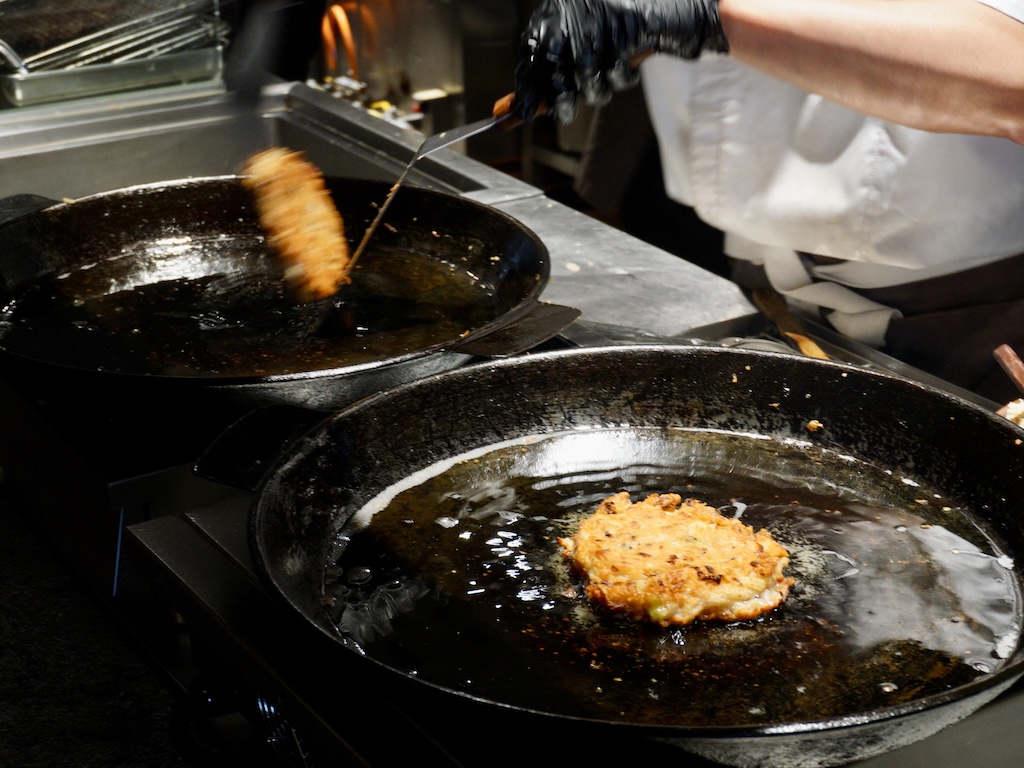
The bindae-tteok was satisfyingly crispy without being overly oily, a feat that sometimes even market stalls in Korea struggle with.
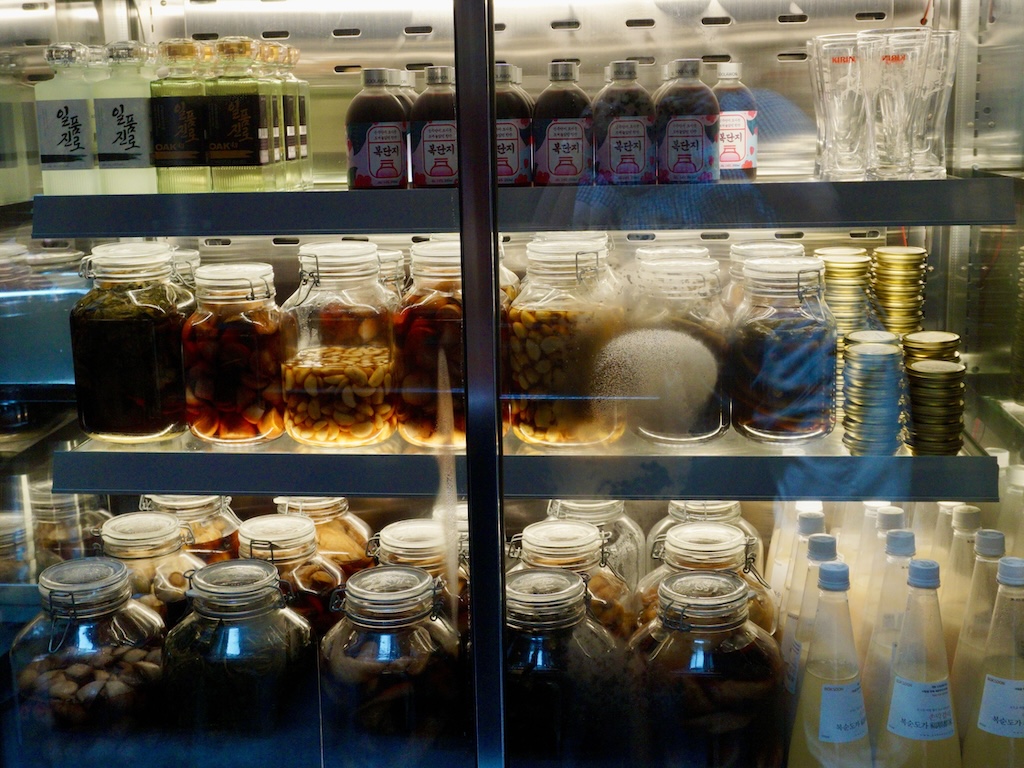
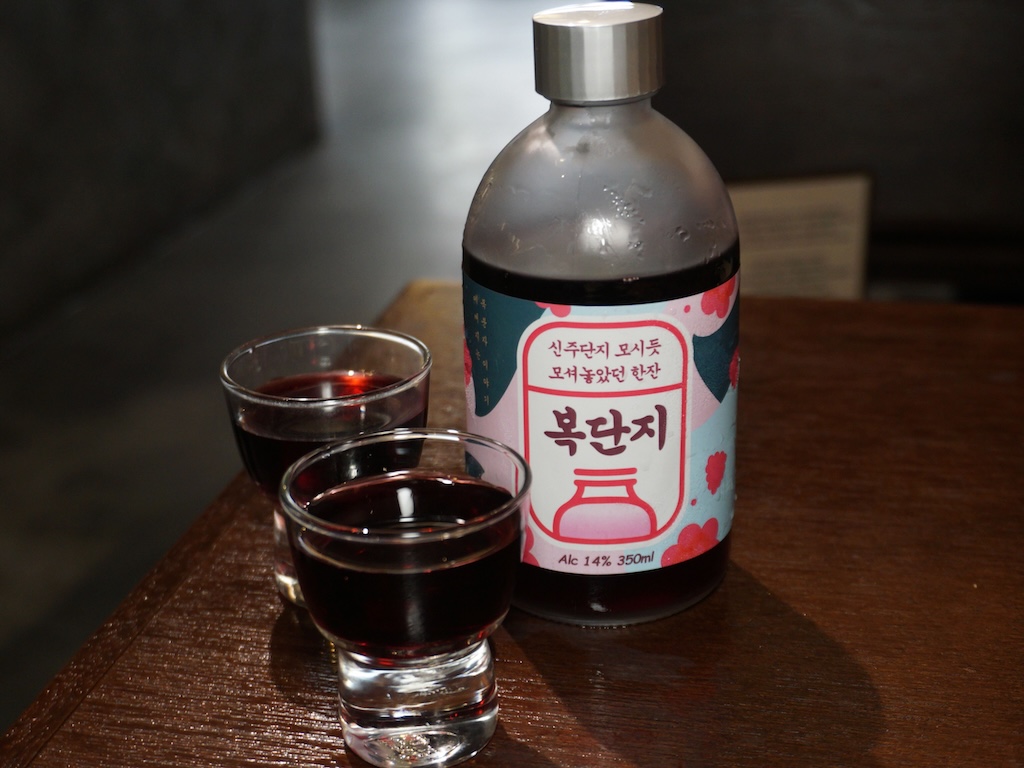
For those that prefer a little booze to pair with their meal, we’d recommend trying the bokdanji (S$45), a rice wine infused with Korean wild raspberries, which I’d found to be a more premium version of bottled bokbunja (black raspberry wine) that you might find in supermarkets.
At dinner, Joong San offers a different menu centered around beef barbecue. Main dishes such as sundubu jjigae and Pyongyang naengmyeon will still be available, albeit as side dishes.
Having eaten at Joong San, I understand why it still draws queues nearly half a year after its opening. If a flight to Korea feels too far away, Joong San might just be able to give you the next best option — an authentic, hearty Korean dining experience.
This was a hosted tasting.
Looking for new spots to explore? Hong Lim Complex’s viral matcha store has moved to Guoco Tower, and there’s a hidden specialty coffee spot at Lavender’s CT Hub!
Tue 11.30am - 3.30pm, 5.30pm - 10.30 pm
Wed 11.30am - 3.30pm, 5.30pm - 10.30 pm
Thu 11.30am - 3.30pm, 5.30pm - 10.30 pm
Fri 11.30am - 3.30pm, 5.30pm - 10.30 pm
Sat 11.30am - 3.30pm, 5.30pm - 10.30 pm
- Telok Ayer



Hannah is constantly on a hunt for good food and vibey cafes, with the occasional mild lactose intolerance being the only thing that interrupts her endeavours.
Read more stories from this writer.