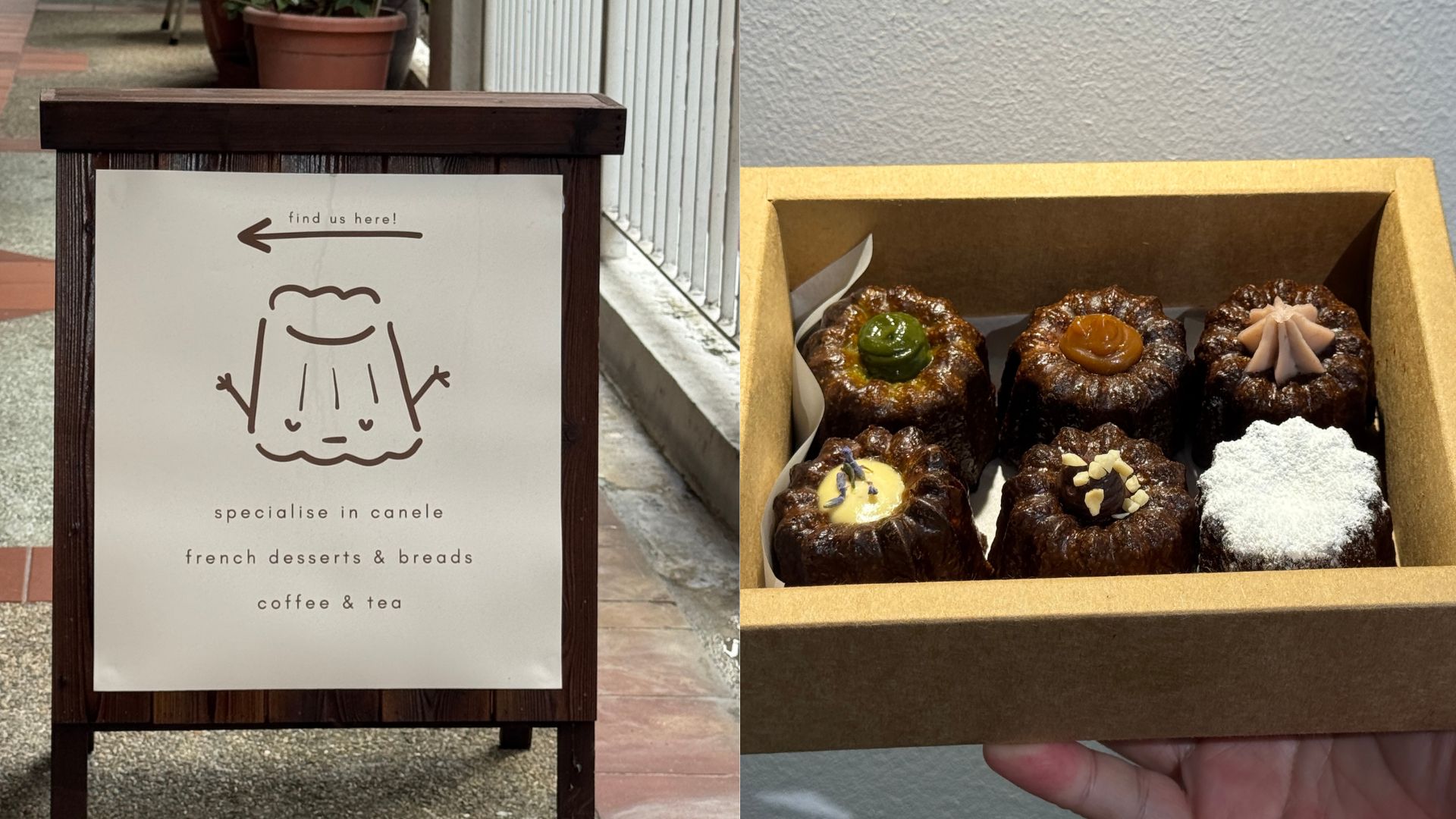
Hues Canele: Bakery at Chinatown HDB block with locally inspired caneles

Caneles aren’t uncommon in Singapore, but quality ones can be pretty difficult to find, given how labour-intensive it is to bake from scratch.
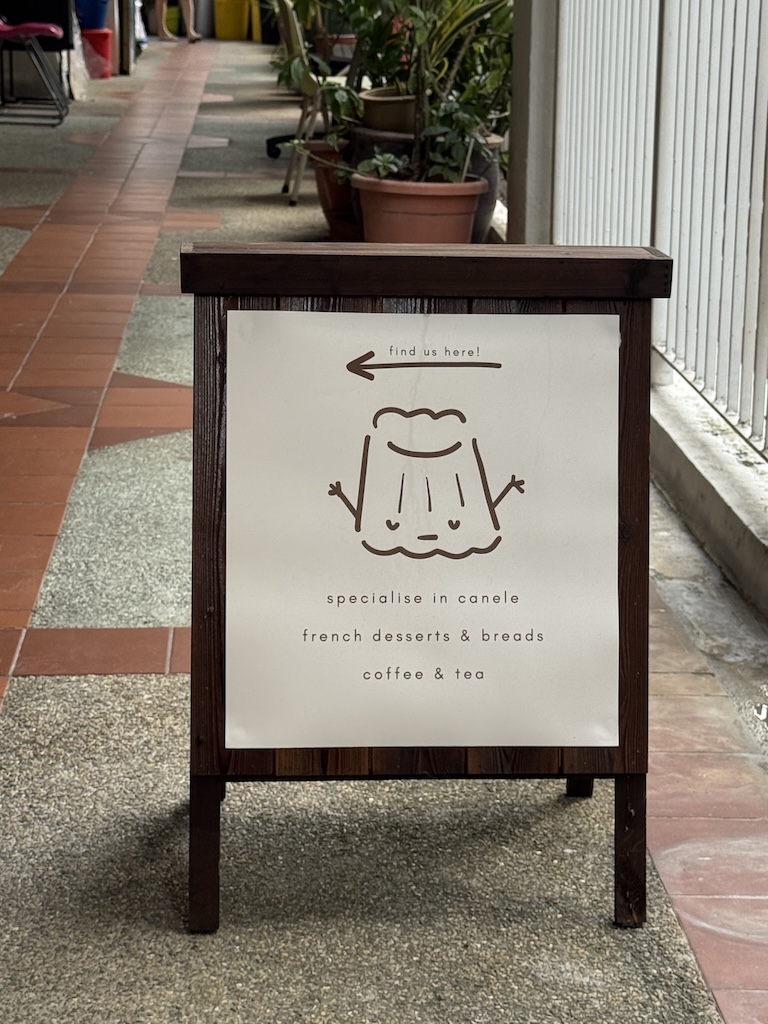
So when I heard there’s a new bakery at Chinatown specialising in caneles, I knew I had to make the trip down to try it myself.
Home-based business origins
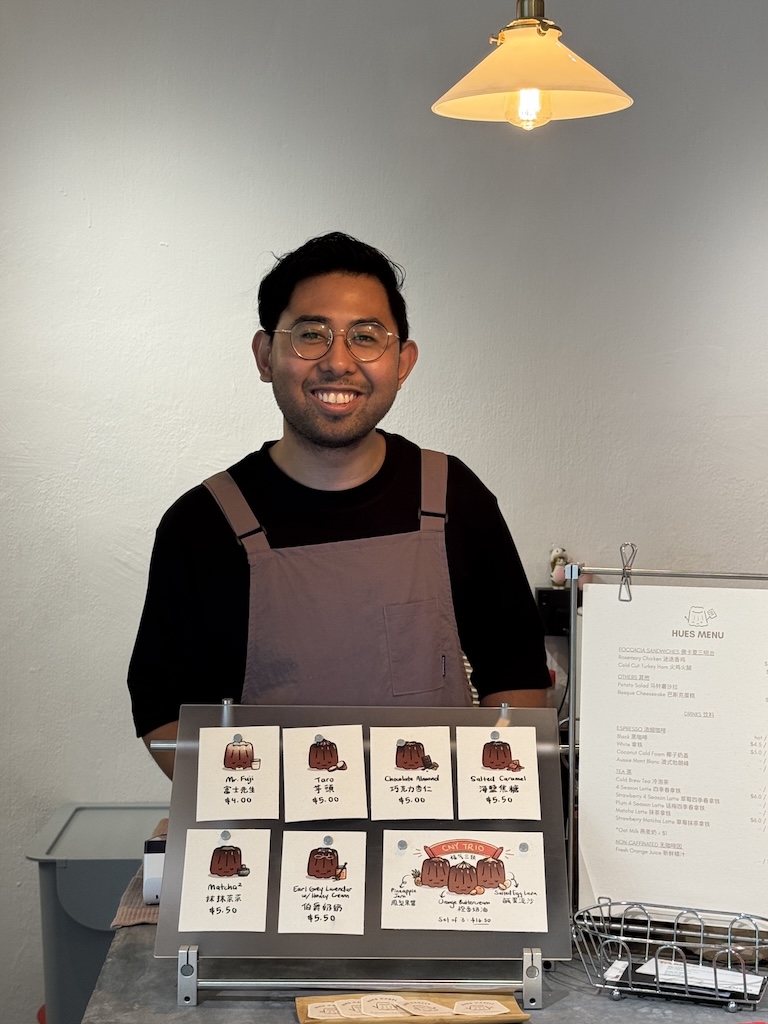
Hues Canele started off as a home-based business in 2024. Its owner, who prefers to go by Ku, 34, decided to take the leap of faith to open a brick-and-mortar store, after a year and a half.
Much like his bakes, which are redolent with local flavours, Hues is nestled within the HDB blocks of Chinatown, just upstairs from a neighbourhood fish soup and old-school mama shop. Being able to enjoy artfully crafted French pastries such as these, a mere stone’s throw from where you can get your daily claypot rice, chee cheong fun, and yong tau foo, is a pleasant surprise.
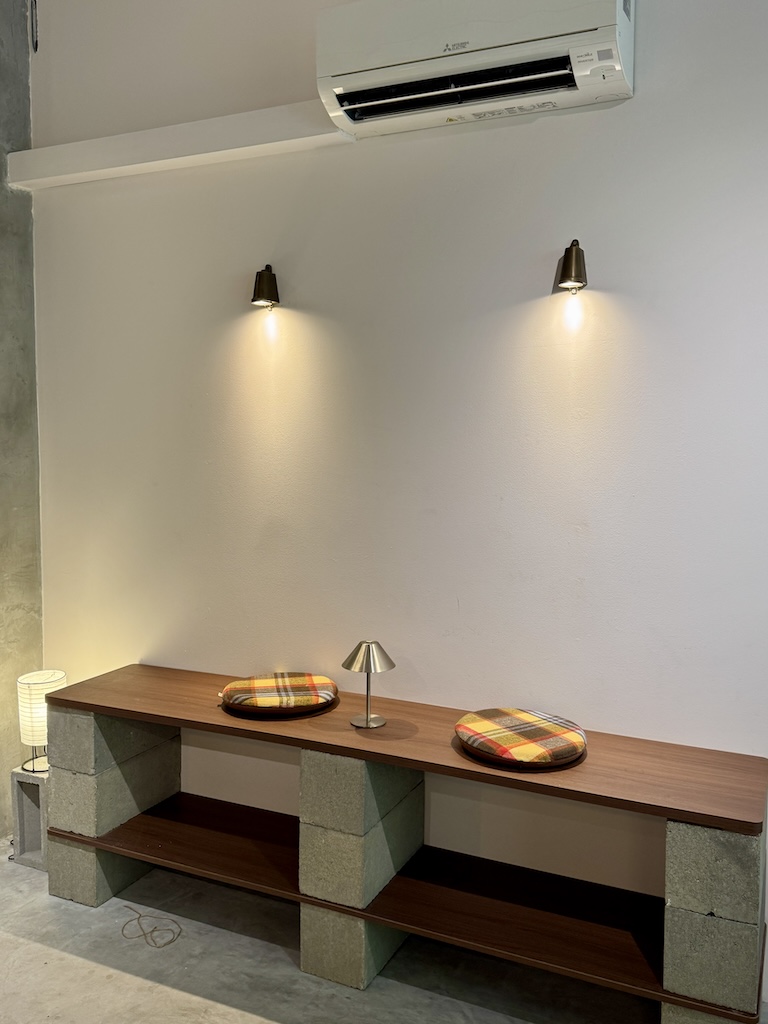
The small bakery at Sago Lane is mainly a takeaway-only establishment, with a few bench seats, if you’d like to have your bakes immediately.
While we were there, there was a constant stream of office workers coming in to get pastries to-go.
No plain caneles here
You won’t find your typical caneles at Hues’.
For one, traditional French canele recipes contain rum, so alcohol-free caneles are pretty rare.
And while pastry purists might look askance, Ku wanted to bring something fresh to the table, in the form of locally-inspired, flavoured caneles.
Hues’ caneles are also billed as being Muslim-friendly.
Ku tells us he tries to switch up seasonal flavours monthly, so there’s always something new to look forward to.
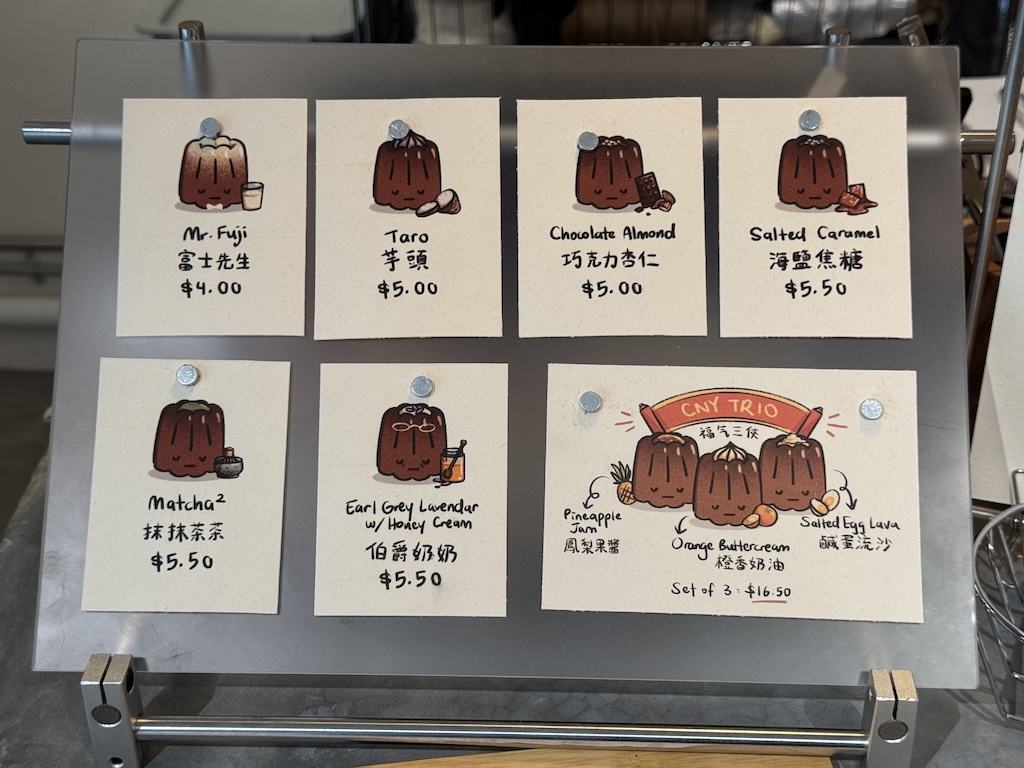
Hues’ caneles on a whole are perfectly crisp and caramelised on the exterior, while soft and custardy within. The filling is a bit eggier than most caneles I’ve tasted, but that’s not a bad thing. In fact, it reminded me of Cantonese milk egg custard, but in pastry form.
If you still long for caneles in its unadulterated format, the closest one on offer is the Mt. Fuji canele (S$4), a plain canele dusted with icing sugar. The icing sugar set atop the brown pastry resembles the snow-capped Mount Fuji, hence its adorable name.
Being more used to traditionally plain caneles, I found this spin to be a delightful twist on the classic bake, with the sugar adding a slight sweetness.
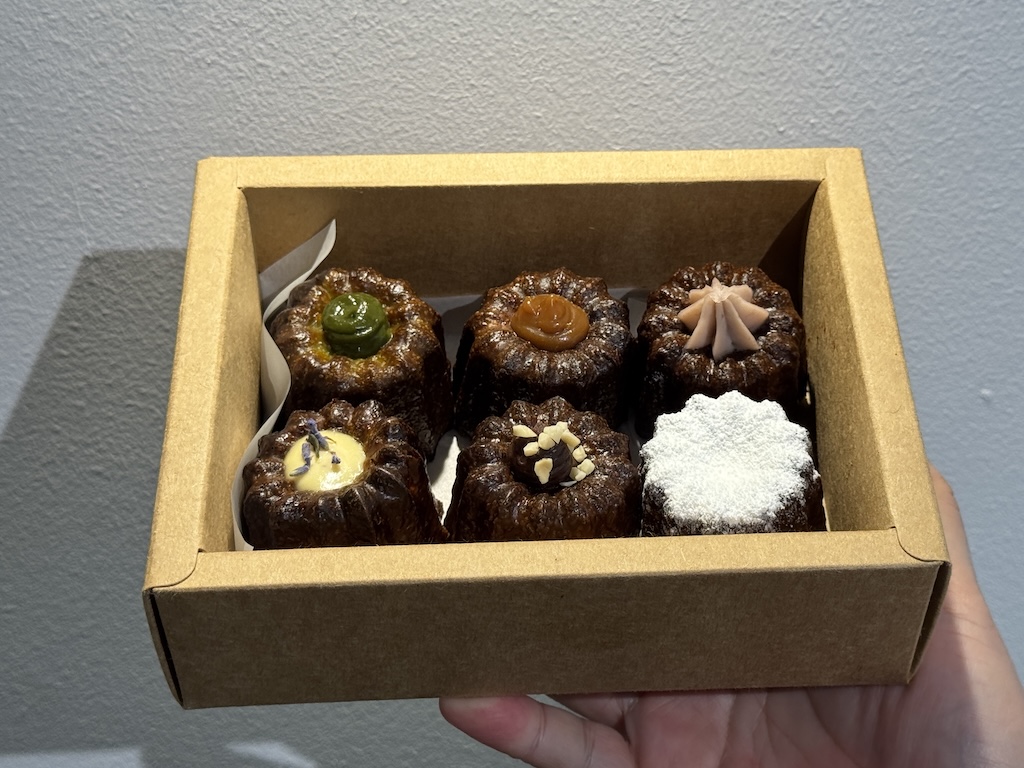
Of the canele flavours I tried, I enjoyed the taro (S$5) and the chocolate almond (S$5) best.
I’m not a fan of taro, but Hues’ rendition stole my heart with how creamy and mildly sweet it was, ever so slightly enhancing the base pastry. Meanwhile, the chocolate filling in the latter was thick and rich.
All in all, I admired how Hues managed to add on fresh flavours to the quintessential canele, without compromising the essence of it.
If you’re hoping to grab some caneles fresh out of the oven, Hues releases them in batches at 11.30am and 2.30pm, so time your visits accordingly.
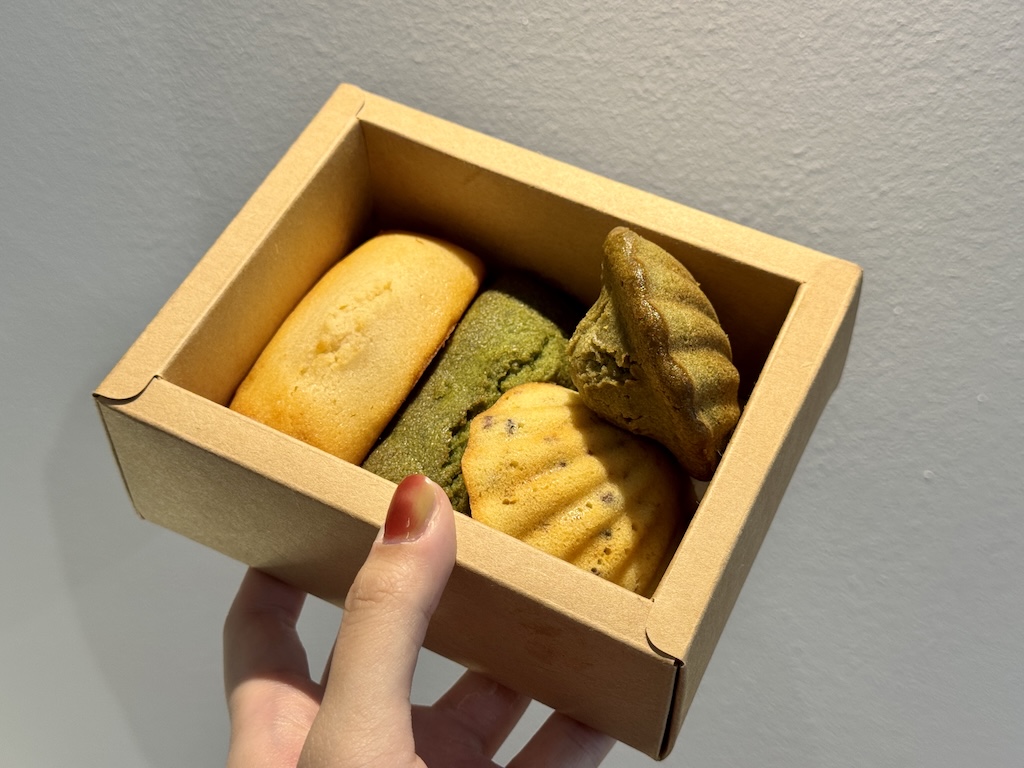
Financiers are also available at Hues, and I managed to try the original (S$3) and the matcha (S$4) versions. I found them on the drier side, though, so while the flavours came through nicely, the financiers paled in comparison to the Hues’ namesake caneles.
I also snagged the osmanthus cacao nib madeleine (S$4) and the brown sugar coconut madeleine (S$4) when they were still on rotation. While these were kept soft, they also leaned drier and more dense than your usual madeleines — texture-wise, it was more similar to a pound cake.
Ku switches up the madeleine flavours regularly, so you might see a different slate on offer, if you’re dropping by!
Other bakes
Ku has also introduced baked goods, which weren’t on rotation when Hues was still a home-based business.
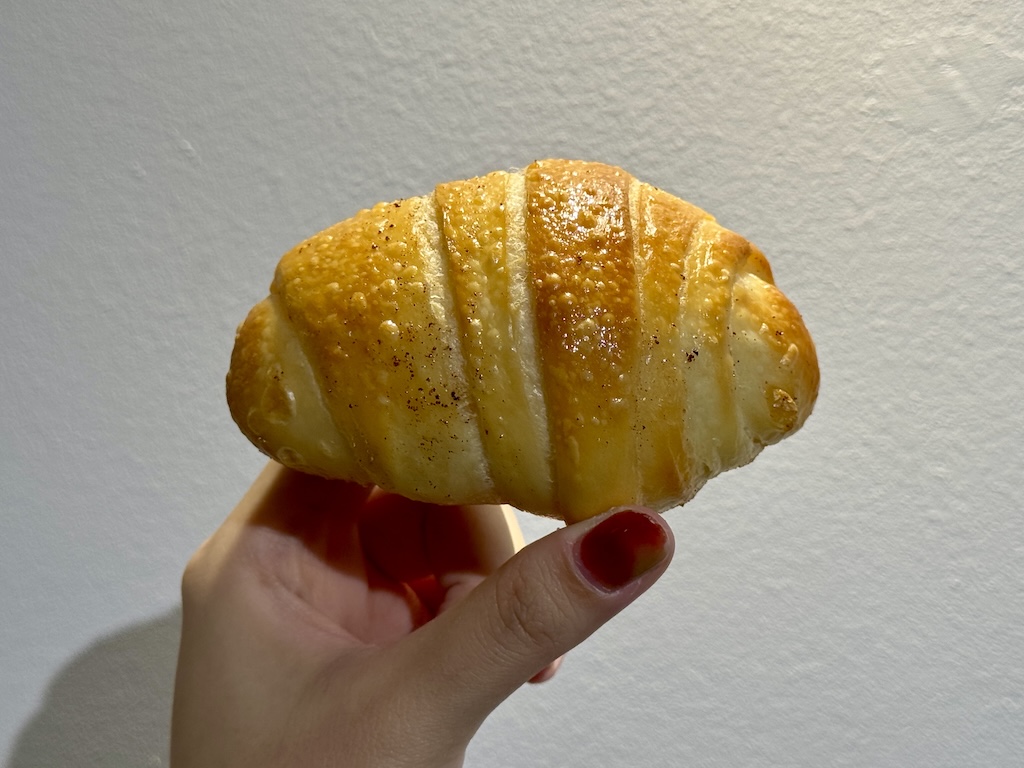
A standout was its plain shio pan (S$3.80), a Japanese salt bread that’s been all the craze recently. For many of us, the hallmark of a good shio pan is how buttery it is. Hues forces us to rethink that notion with its rendition.
Ku’s version lacks the noticeable greasiness that popular shio pans have. Even without the overload of butter, the exterior is crispy, while the inside is soft, pillowy, and not hollow.
I quickly regretted not snatching up the remaining shio pans for myself, as Hues’ shio pan stock was wiped clean by a customer that came in not long after I did.
Ku also tells us that he’d been experimenting with focaccia flavours, and I managed to try the caramelised onion and enoki focaccia (S$5.80).
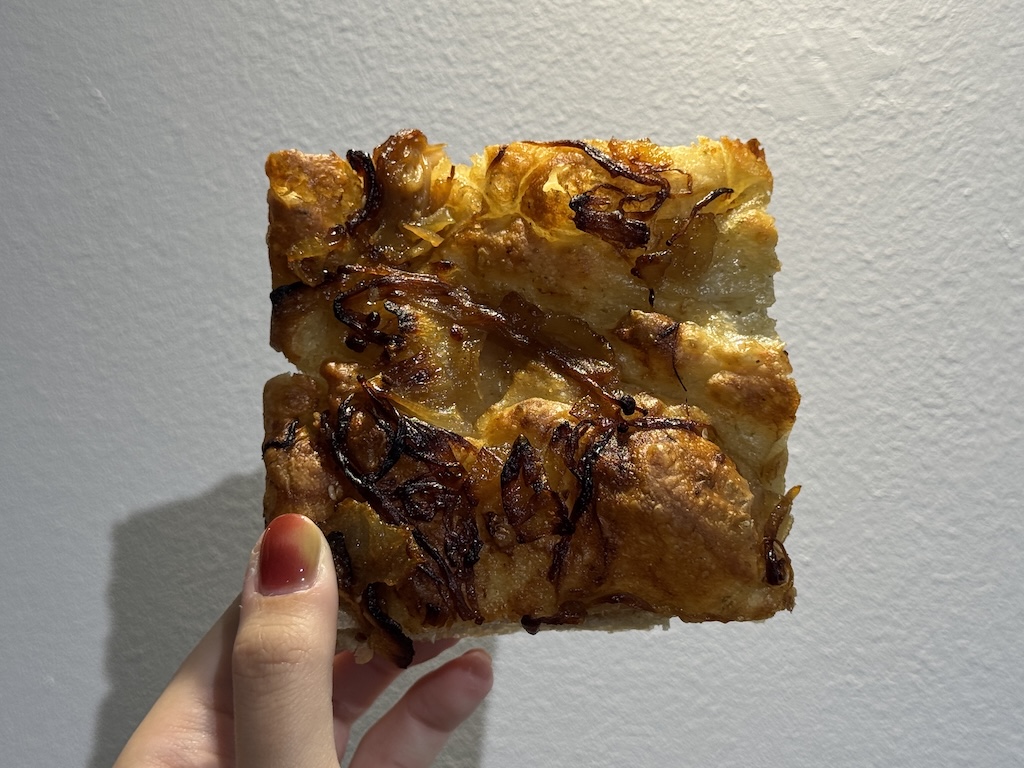
The focaccia took me by surprise with how good it was — the caramelised onion stood out with its savoury notes, making it an addictive loaf I just couldn’t get enough of. Otherwise, it scored full marks in the texture department with a perfectly crispy crust and chewy, but airy interior.
While I came to Hues in search of caneles, I left it more impressed with its breads than with its signatures. But that’s not to say Hue’s caneles are lacklustre — it’s rather a testament to how excellent the breads were.
Drinks
If you’re looking for some drinks to go along with your pastries, Hues has a few coffee and tea-based drinks available.
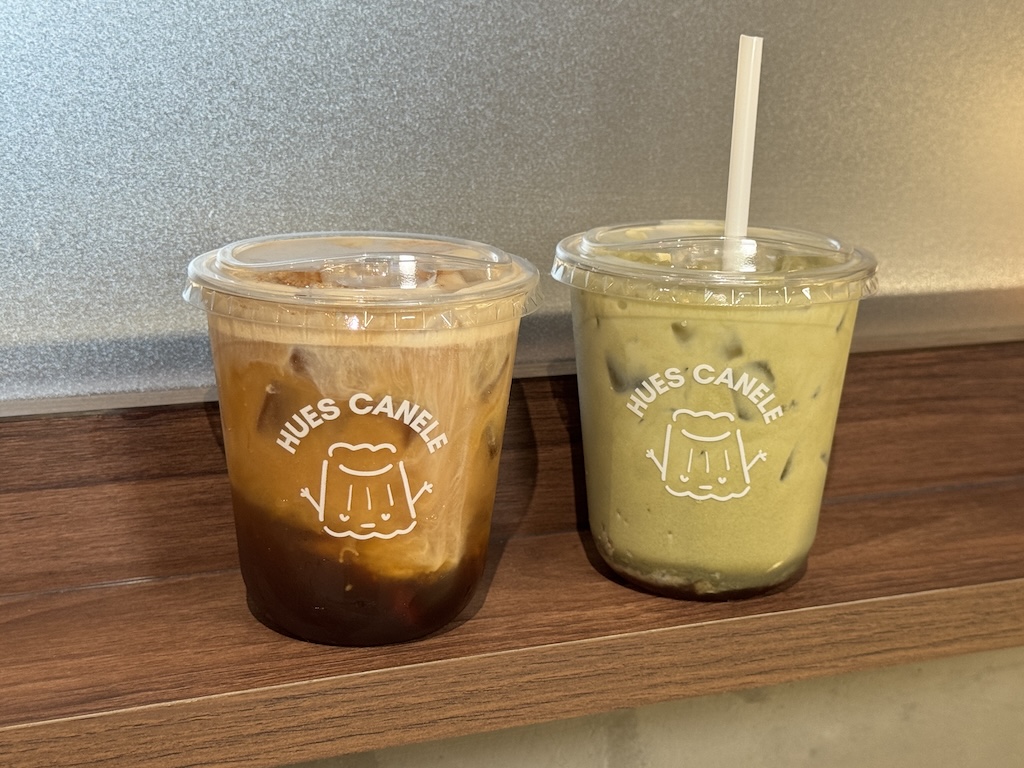
We tried the Plum 4 Season latte (S$8), an oolong milk tea with plum that turned out to be quite an intriguing drink. The tart, plum notes worked surprisingly well against the creamy milkiness of the tea, and wasn’t quite like any other milk tea or bubble tea I’d tasted before.
The Aussie Mont Blanc (S$8.50) was an espresso with orange juice, topped off with a signature Mont Blanc foam cap — a riff off a popular Melbourne trend that sees drinks topped with a cream top and some orange zest.
If you’d like a non-dairy option for your drinks, oat milk is available at an extra S$1.
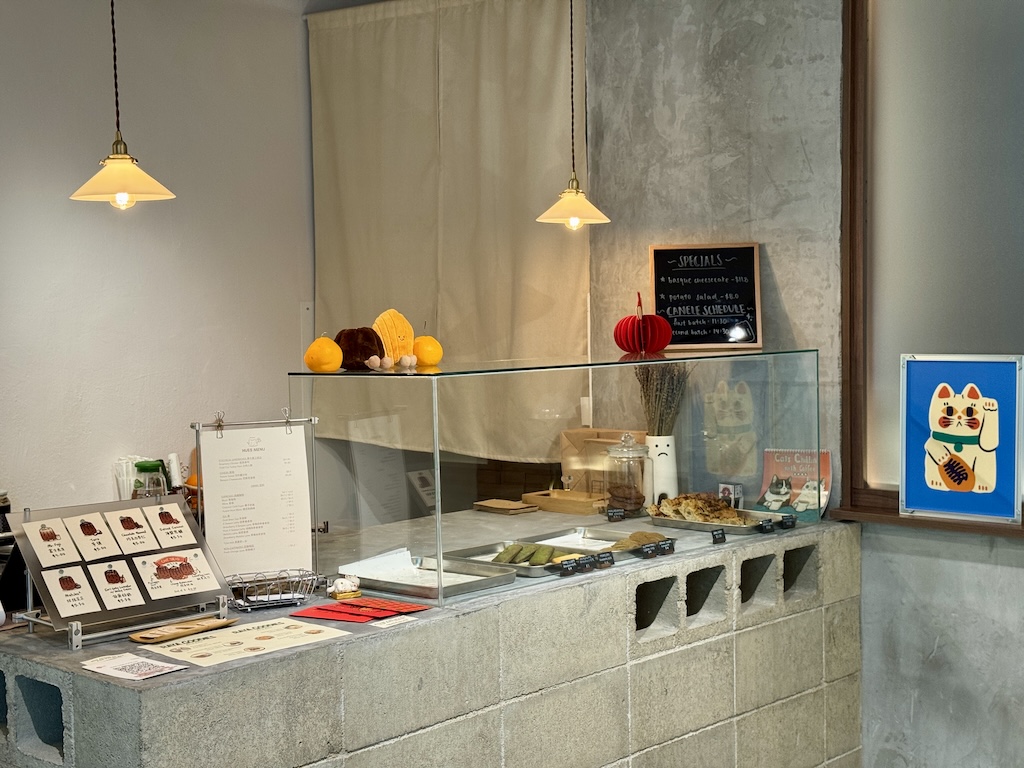
Whether you’re a canele lover like me, or just happen to be around the Chinatown area, Hues is definitely worth checking out for its unique canele flavours and breads!
Looking for new spots around Chinatown? Check out this cafe hidden in a tableware store, or this aesthetic cafe with roti john French toast.
Wed 8.30am - 5pm
Thu 8.30am - 5pm
Fri 8.30am - 5pm
Sat 8.30am - 5pm
Sun 8.30am - 5pm
- Chinatown
- Maxwell



Hannah is constantly on a hunt for good food and vibey cafes, with the occasional mild lactose intolerance being the only thing that interrupts her endeavours.
Read more stories from this writer.