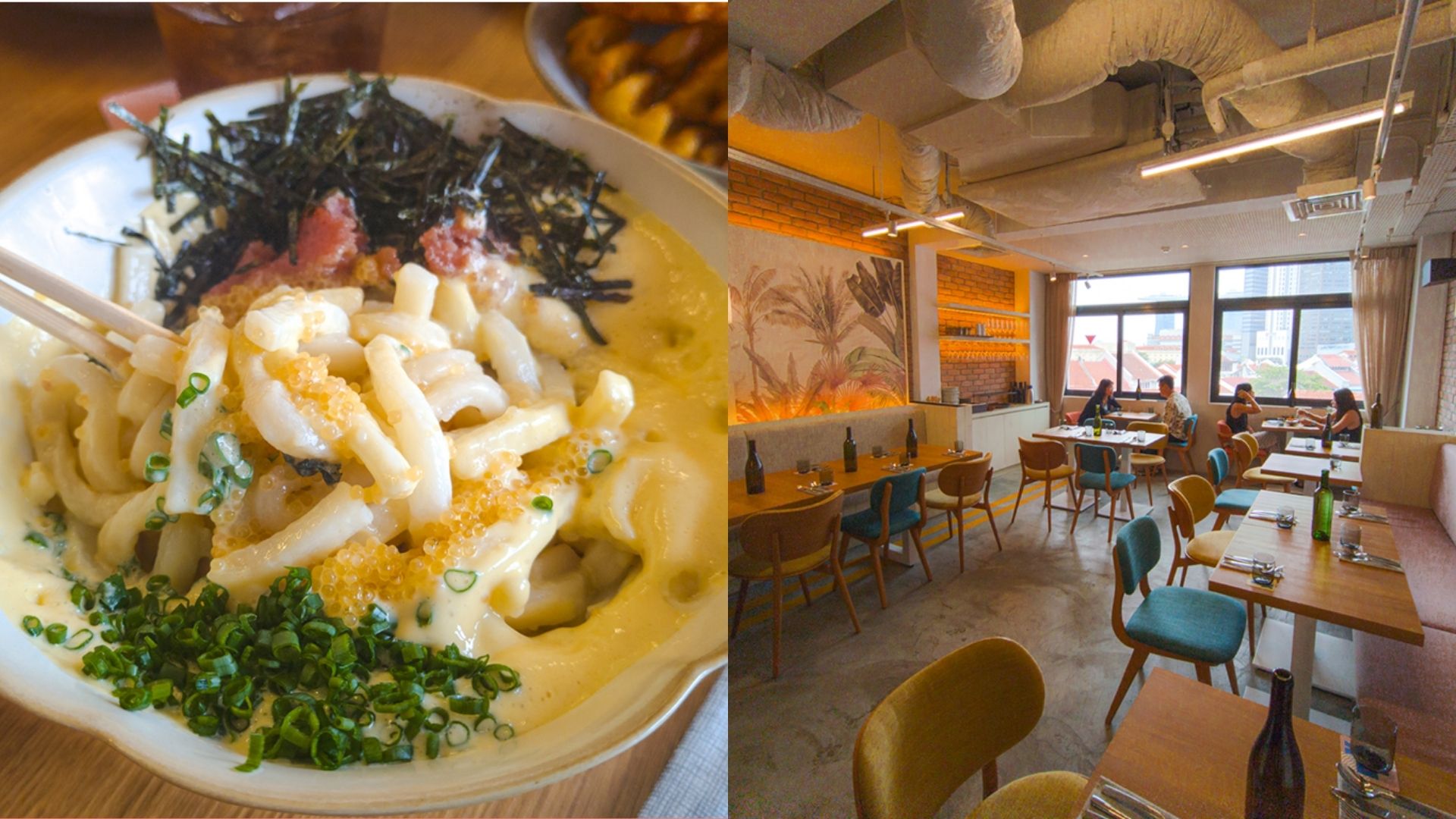
Review: Patchwork Kitchen is a hidden fifth-floor bistro in Boat Quay worth seeking out

- Patchwork Kitchen is a contemporary bistro within a South Bridge Road shophouse with a view that overlooks Marina Bay.
- Behind the concept is an LA-born, second-generation Korean whose menu blends East-Asian flavours with casual bistro sensibilities.
- Dishes we recommend include the mentaiko udon, prawn ceviche, and PWK waffles fries.
Sometime in the beginning of last year, I remember hearing about South Bridge Reserve, an invite-only members’ club for Burgundy lovers tucked inside a Chinatown shophouse, and didn’t pay much attention.
I mean, I know a tiny bit about wine, but an exclusive and intimate wine club limited to 250 passionate wine enthusiasts? That’s not quite my kind of thing.
Then I heard that the same team had opened a bistro, Patchwork Kitchen, on the fifth floor of the same building just last December — now that got my attention, so I finally made plans to head down this month, and I’m glad I did.
The backstory
Finding Patchwork Kitchen takes a tiny bit of effort — you’ll have to walk around the back of the building along South Bridge Road to get to the lift.
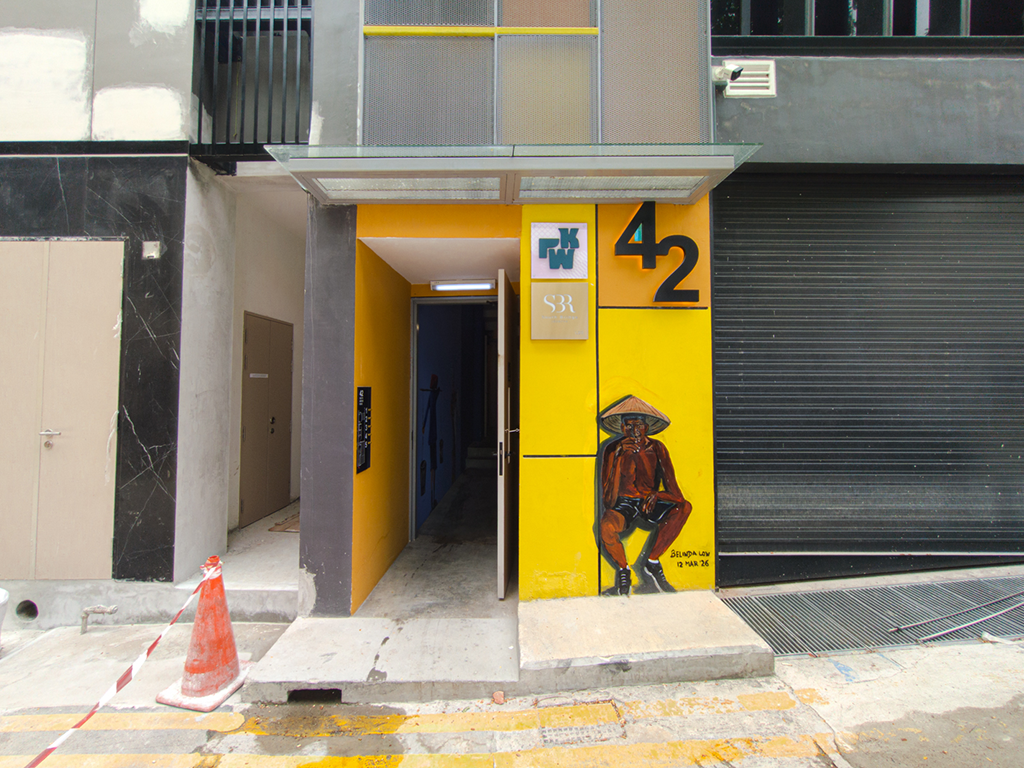
Once you head up, though, you realise that it’s well worth the effort because of how beautiful the place is.
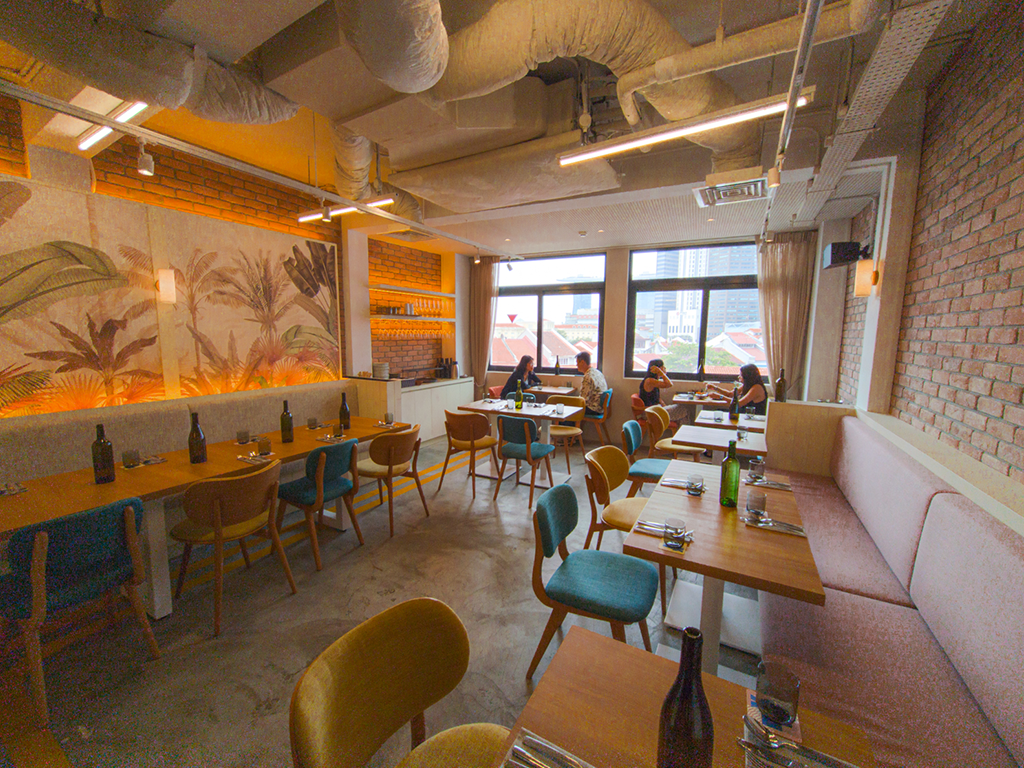
Patchwork’s good-looking dining room — while small with 26 seats — feels calm, and somewhat removed from the CBD buzz five floors down. It’s got warm wood furniture, pastel seating, and botanical wall art which gives it a slightly tropical feel, and it’s all really nice.
Behind the restaurant is James Moon, a Los Angeles-born, second-gen Korean F&B professional whose work has taken him across kitchens in New York, Bahrain, and Dubai, before he found himself in Singapore.
It’s worth noting that he’s also the managing director of South Bridge Reserve, two floors down.
Patchwork Kitchen brands itself as a casual East-Asian bistro with comforting fusion dishes, and the menu offerings represent just that. There is a selection of 10 small plates (from S$7) and seven large plates (from S$18) available for dinner, and a slightly smaller variety available for its S$24 lunch set.
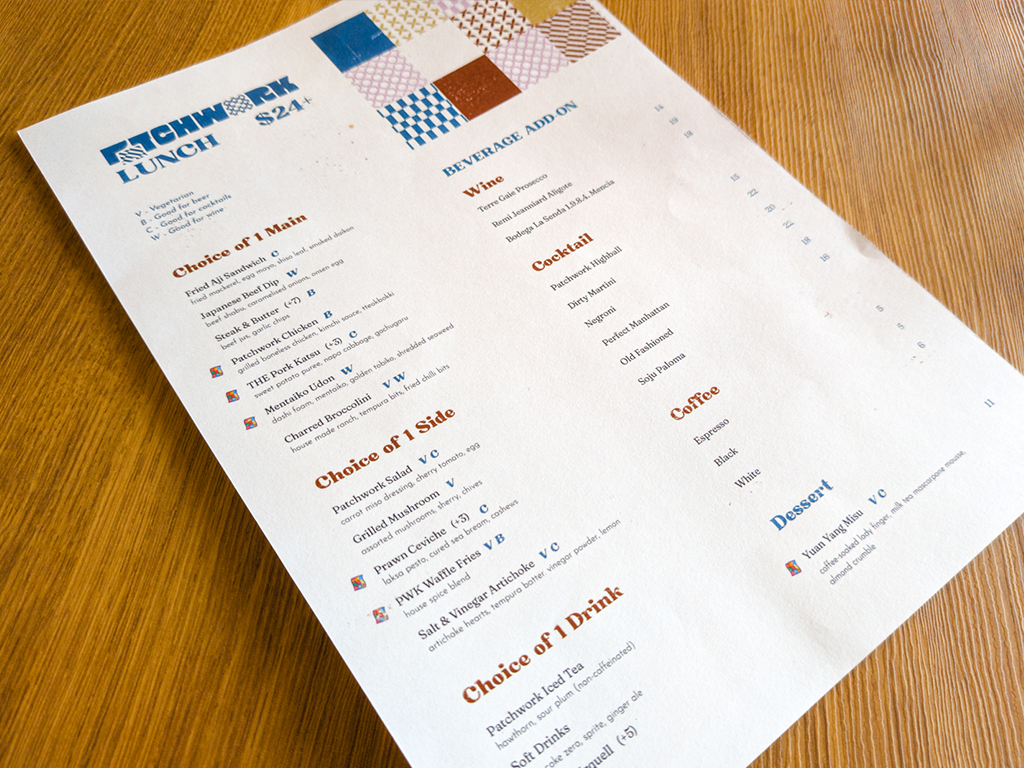
The lunch set, which is what I tried, offers a choice of one main, one side, and a drink.
While the lunch selection is smaller, it might interest some that there are two items — a fried mackerel sandwich and Japanese beef dip (beef shabu in a baguette, served with an onsen egg) — that’s only available at that hour.
It should come as no surprise that there’s a decent wine list here at Patchwork Kitchen, with several options you can get by the glass. You can also get canned cocktails (such as a soju paloma and Patchwork highball), beer, house sake, soft drinks, and coffee and tea.

Our verdict
Having dined at the space, I get the sense that if Patchwork Kitchen wasn’t as “hidden” as it is, I’m sure it’d be a lot more popular than it already is.
The setting is attractive, the service is fantastic, and the whole experience has a relaxed confidence with well-executed food (the East-Asian references in its fare feel intentional and thoughtful, rather than trend-driven) to back it up.
What I appreciate most is how much value you get with each dish at Patchwork Kitchen — especially with its lunch set, which offers most of the dishes from the dinner menu, albeit with some top ups. From what I’ve tried at lunch, it’s safe to say the dinner menu is worth its full price.
That said, I hear it gets really packed in the evenings, so book ahead if you’re intending to come in the evening. Prior planning also makes sense, seeing as there’s just 26 seats here.
What it’s good for
A good ceviche, for me, lies in the “tiger’s milk” — the vibrant, citrus-based marinade that brightens up the seafood, and with Patchwork’s prawn ceviche (S$15 a la carte, S$3 top-up with the lunch set), the laksa pesto marinade is the star.
It’s mildly citrusy and balanced with a nice herbaceousness that brings together mint, laksa leaves, crushed peanuts, and chilli flakes.
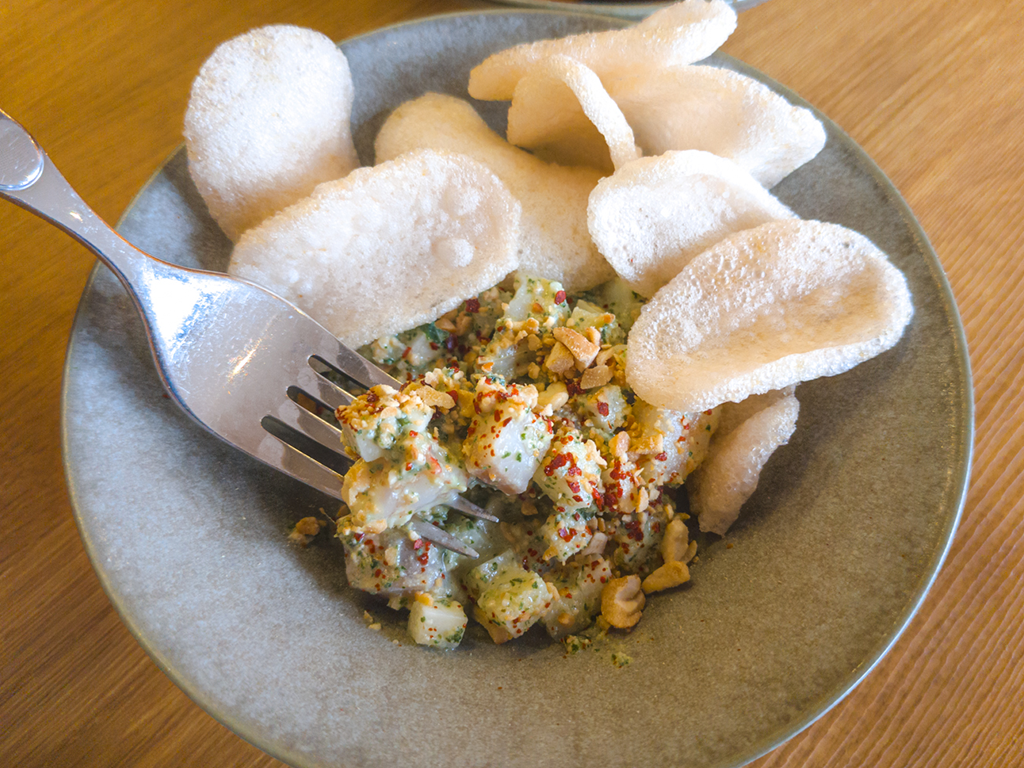
The prawns are fresh and bouncy, and lightly cured sea bream sits alongside them, adding a more tender texture to the bowl without tasting fishy at all.
Even the small pieces of prawn keropok on top turned out to be excellent (rather than just a gimmick): Full of prawn flavour and well-fried.
I don’t know exactly what’s in the spice blend for the PWK waffle fries — which I select as a side for my lunch set, or is available S$7 a la carte) — because the menu isn’t giving anything away, but whatever it is, it’s addictive.
I taste paprika in there, onion powder, salt, and a complex peppery quality that’s earthy and slightly fruity.
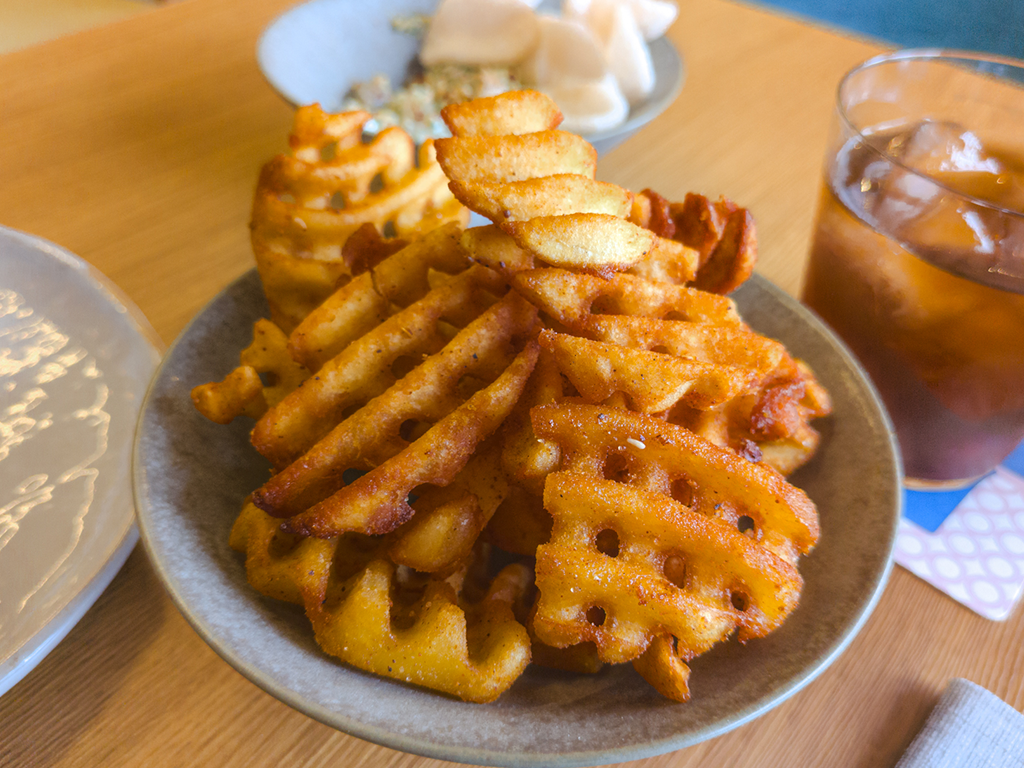
The fries themselves are properly fried, too: Fluffy and almost meaty inside with full potato flavour, no oily aftertaste, and the waffle cut maximising crunch and crispiness.
Don’t just take my word for it, though, try this for yourself when you’re there.
For the main option for my lunch set, I go for the mentaiko udon (S$19 a la carte), which seems to have quite a number of ingredients, but every single one just adds to this umami-bomb of a dish.
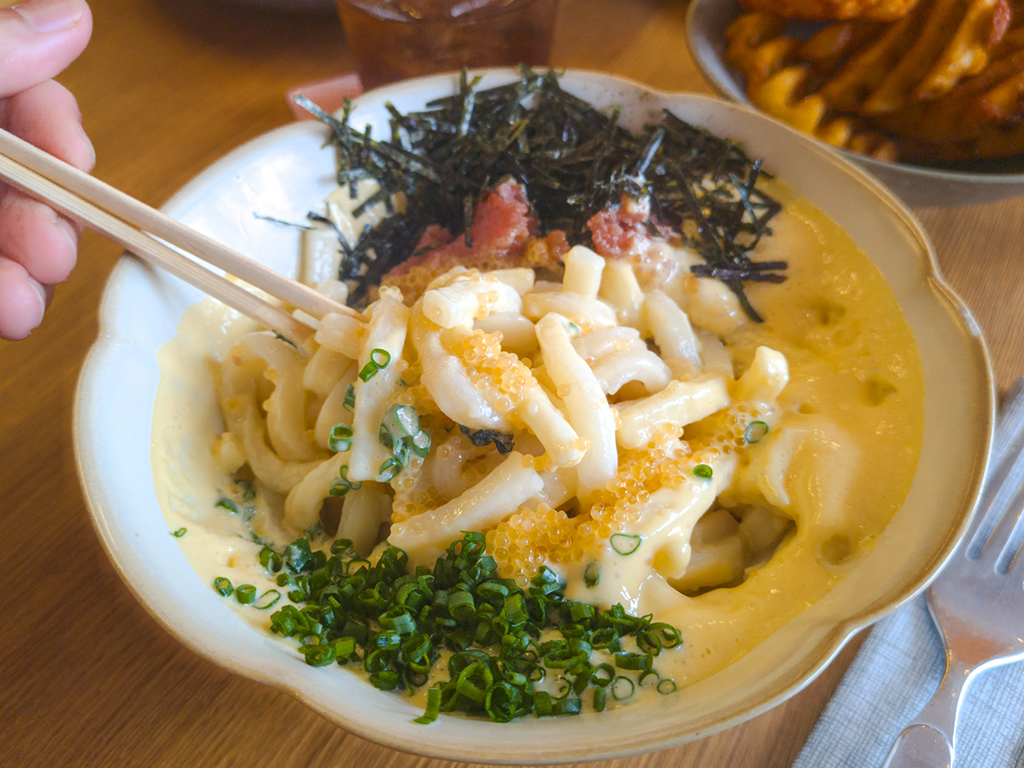
On top of the chewy-firm udon noodles, there’s a generous lump of salty, briny mentaiko (salted pollock roe), while the golden tobiko (flying fish roe) provides little pops of texture and salinity in every mouthful.
Then there’s the generous ladling of dashi foam and shredded seaweed that helps everything slide together effortlessly — mix it all together and you get a bite that tastes like the sea in the best possible way.
To wash everything down, I opt for the Patchwork iced tea (S$5 a la carte), one of the more enticing options of the ones offered with the set.
Now, iced teas in a lot of places are just… iced black tea with a slice of lemon, but not here. Patchwork’s version comes non-caffeinated and is made with hawthorn and sour plum — clearly there’s some local influence coming through here.
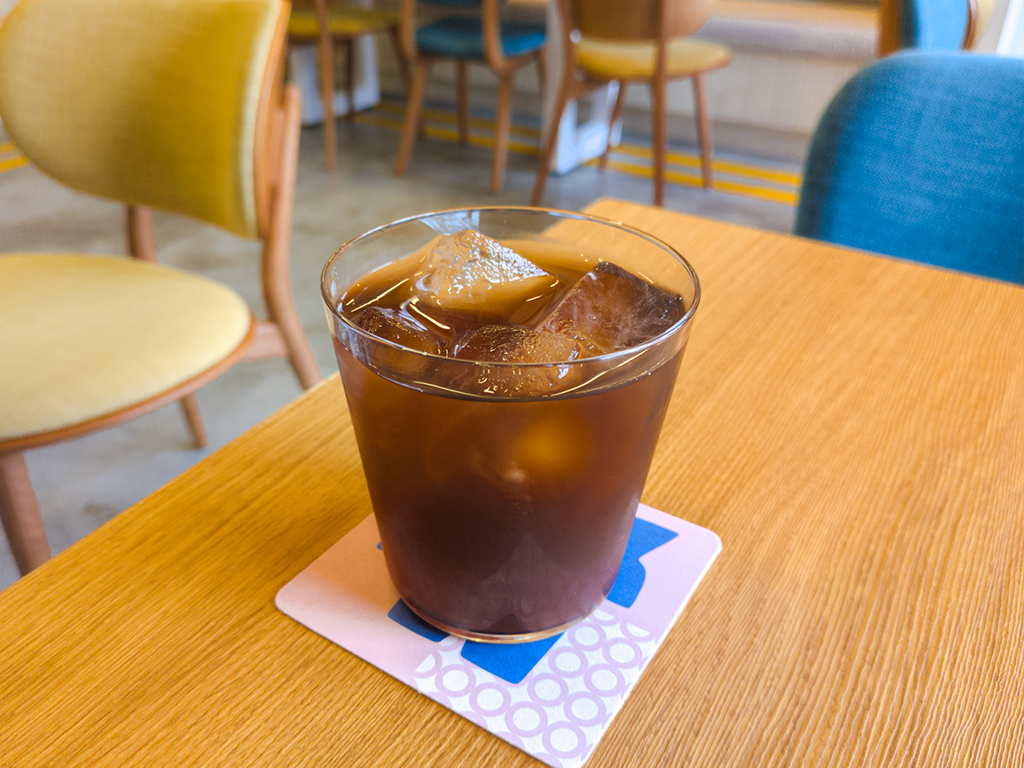
It’s a refreshing and balanced drink with barely any added sugar, and there’s also a light herbaceous quality that really whets my appetite. A good call whether you’re ordering it as part of the lunch set or a la carte.
If you come during dinner, there is a miso caramel tart (S$9) with gelato and a mango pomelo panna cotta (S$9) with coconut shaved ice in the desserts section which seem promising.
However, the only dessert available during lunch is the yuan yang misu (S$11), available a la carte only, which just means i’ll have to come back another time for those missed sweets.
The tiramisu arrives in a sealed can that you pop open like a soft drink and dig into with a spoon.
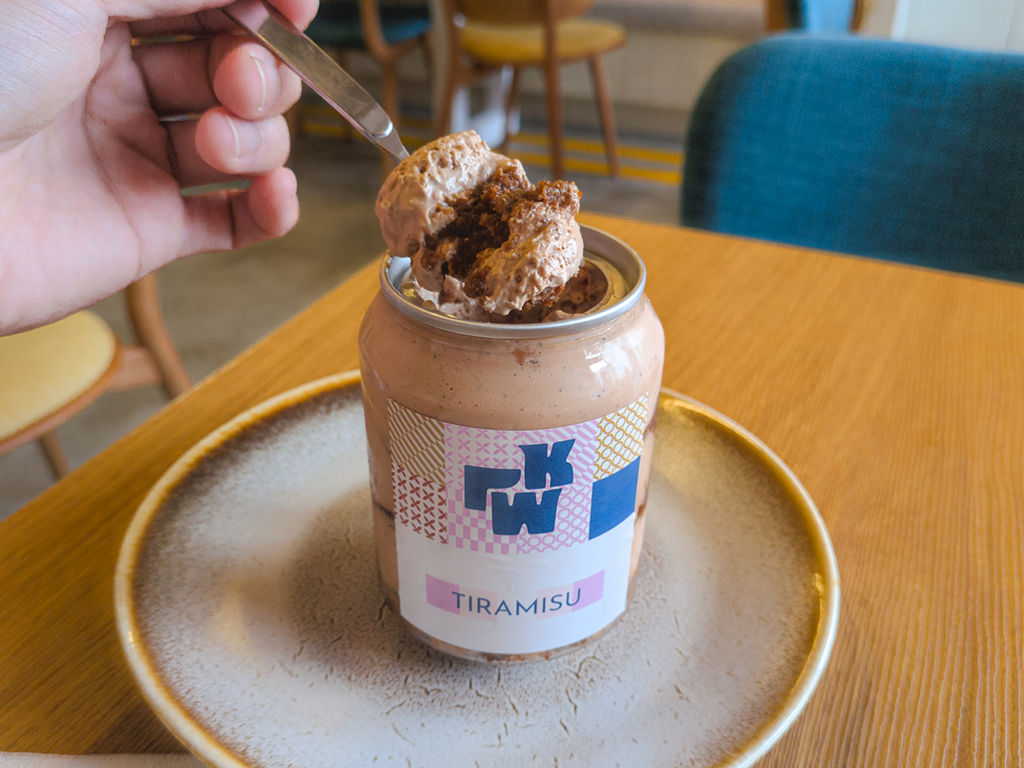
It’s a riff on tiramisu with the same coffee-soaked ladyfingers but rather than alcohol, the mascarpone is replaced with milk tea with a milky fragrance and tea aroma.
The result is denser and more homogeneous — almost cake-like — than a classic layered tiramisu, but genuinely delicious. I was already stuffed by this point, but still managed to wolf the whole thing down.
What it could improve on
To its credit, the pork katsu (S$25) is one of the more interesting and ambitious dishes on the menu, but there’s a lot going on in this dish which seems to work against it.
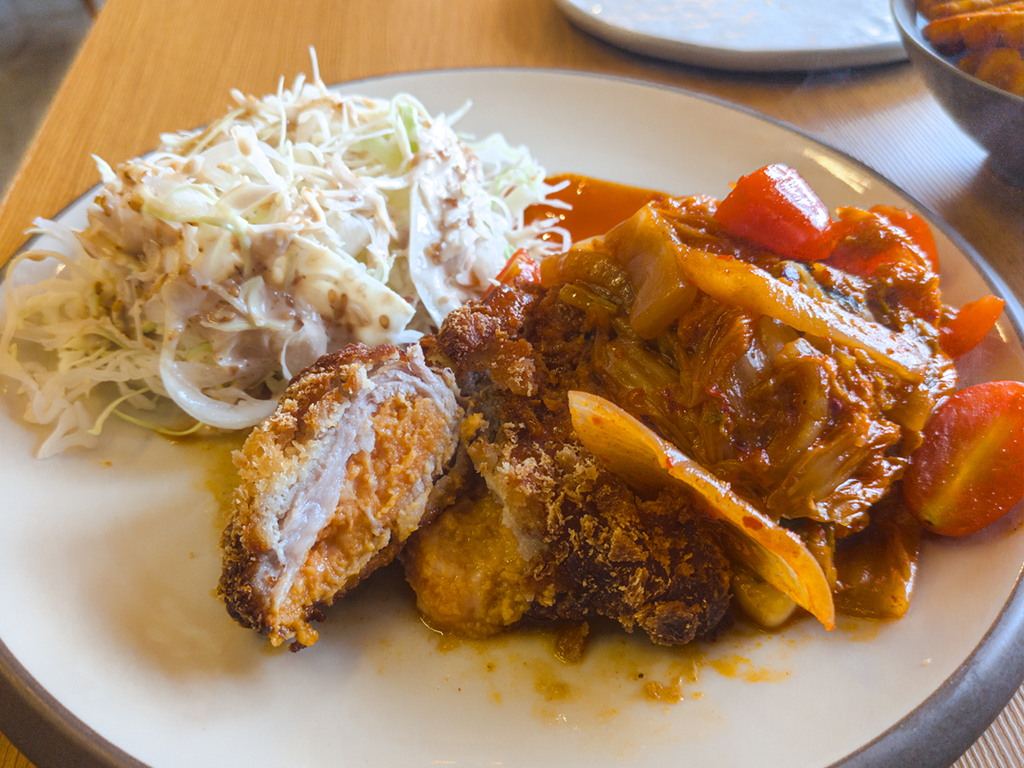
There’s julienned cabbage with sesame dressing on the side that you always get with Japanese tonkatsu, but the rest of the dish seems to draw more from Korean version of tonkatsu (usually a thinner, hammered out pork, with sauce directly on top) and Hainanese pork chop (thicker, crispier breading, and served with vegetables and other toppings).
Plus, there’s also an orange sweet potato puree tucked together inside with the cutlet — almost like chicken cordon bleu but with sweet potato instead of cheese — with the nutty and earthy puree oozing out when you slice through. So yes, tonkatsu, but not exactly.
I like the cutlet enough on its own, but I’m not convinced by the almost-kimchi-lookalike topping on top. The pile of napa cabbage (lightly spiced with Korean chilli flakes) arrives light and mild, tasting more like stewed vegetables rather than a crunchy tangy kimchi, that might have worked better.
The cherry tomatoes on the side don’t particularly deliver on sweetness or acidity either.
Lastly, from a practical standpoint, ladling the vegetables directly over the pork also meant that a good half of the nicely-fried batter turned soggy even before I finished the plate.
It’s not a bad dish per se, just one that tries to give a little too much of everything. The classic adage of “less is more” could do well for this dish, which already has a good katsu (cultlet) base going for them.
Our quick takes
Is it conducive to conversation? Yes, during lunch service when it’s less crowded, but I imagine it’ll be a lot louder during dinnertime.
Is a reservation necessary? Recommended, especially for dinner.
How to get there? Enter Carpenter Street via South Bridge Road and look for the sign on the right that points to Patchwork Kitchen. Take the lift up to the fifth floor.
HungryGoWhere paid for its meal at this restaurant for this review.
For more places nearby to explore, check out Pout Cafe, a cosy rooftop haunt, or Jeju Haenyeo, which sits right opposite at The Arts House Annex Building.
Wed 12pm - 3pm, 6pm - 11pm
Thu 12pm - 3pm, 6pm - 11pm
Fri 12pm - 3pm, 6pm - 11pm
Sat 12pm - 3pm, 6pm - 11pm
- Clarke Quay
- Raffles Place



Gary eats and knows things, which he attributes to over 30 years of eating and drinking — surely that must count for something, he surmises. He was previously the deputy editor at City Nomads and content lead at Burpple.
Read more stories from this writer.