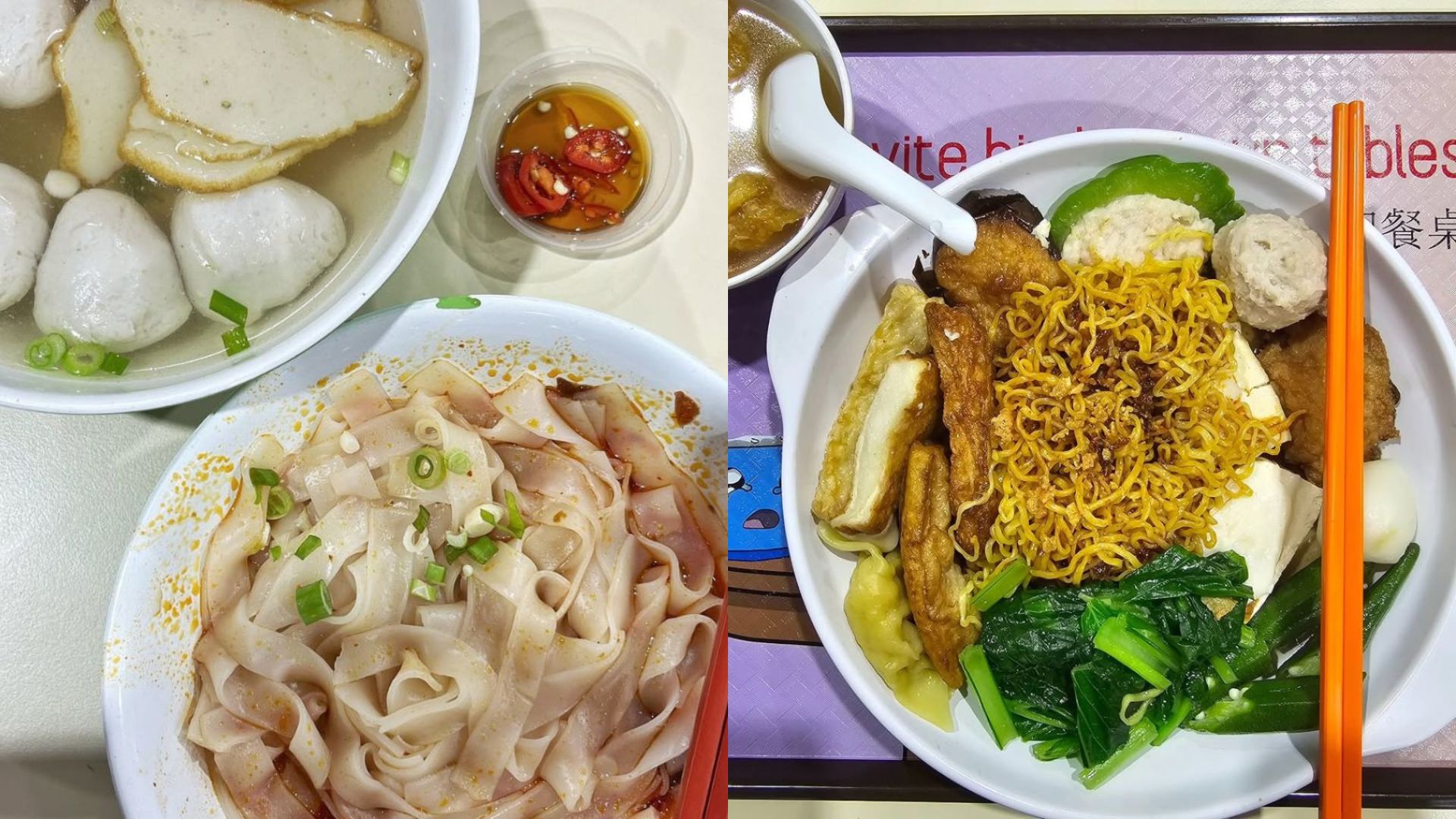
Holland Drive Food Centre: 12 stalls that keep regulars coming back

- 1. Ru Ji Kitchen
- 2. New Lucky Claypot Rice
- 3. Coffee Break — Holland Drive
- 4. Gaziantep Delights
- 5. Lao Chen Ji
- 6. Shima’s Kitchen
- 7. Zhen Ji Vegetarian
- 8. Fifty Year Yong Tau Foo
- 9. Cheng Heng Kway Chap and Braised Duck Rice
- 10. Blanco Court Kueh Chap
- 11. Yap Kee Wanton Egg Noodles
- 12. Hakka Noodle
Just a short walk from Buona Vista MRT, the two-storey Holland Drive Market & Food Centre houses a wet market on the lower level and a hawker centre above, serving the west side since the 1990s.
This isn’t just another neighbourhood hawker centre — a few stalls at Holland Drive Food Centre are listed in the 2025 Michelin Guide, while others have built loyal followings, with queues forming even before opening hours.
Here, you’ll find decades-old family recipes, a rare charcoal-fired claypot rice operation, and even authentic Turkish food from a stall equipped with a S$16,000 kebab machine. Save this Holland Drive Food Centre food guide for your next trip to the west!
1. Ru Ji Kitchen
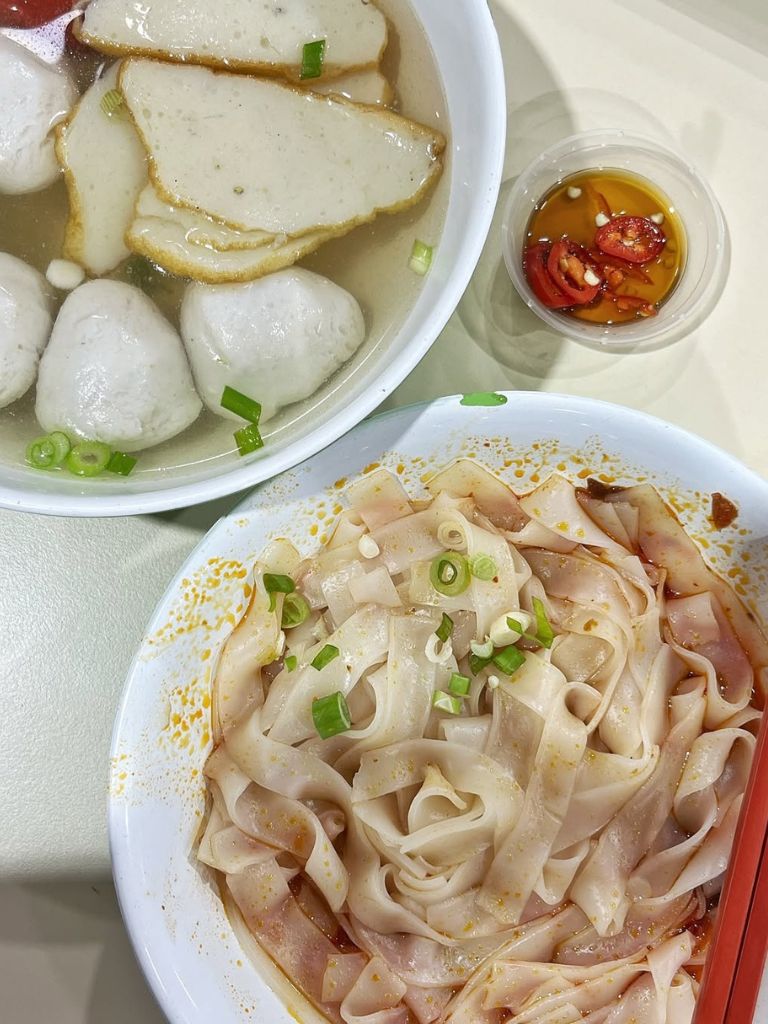
Why visit? Arguably one of the most famous stalls at Holland Drive Food Centre, Ru Ji Kitchen was awarded the Michelin Bib Gourmand in 2025, a recognition it has earned through decades of serving fresh fishballs and fishcakes, handmade with care. Its odd-shaped fishballs, made from 100% yellowtail with no preservatives, are springy in texture and deliver a clean, full-bodied flavour with no floury aftertaste.
This branch, helmed by Uncle David Ng, operates out of two adjacent units — one for fishball noodles, and the other for bak chor mee. Go early to avoid the queue!
Crowd favourites: The dry version of the fishball noodles (from S$4) is the most-ordered dish, and comes with fishballs, fishcake, and your noodle of choice. Noodles come sufficiently coated with a fragrant blend of lard oil, crispy shallots, and a well-balanced chilli-vinegar sauce, with nothing overpowering the palate.
The all-in combo (from S$5) combines fishball noodles with bak chor mee ingredients, such as meatballs, for the best of both worlds.
2. New Lucky Claypot Rice
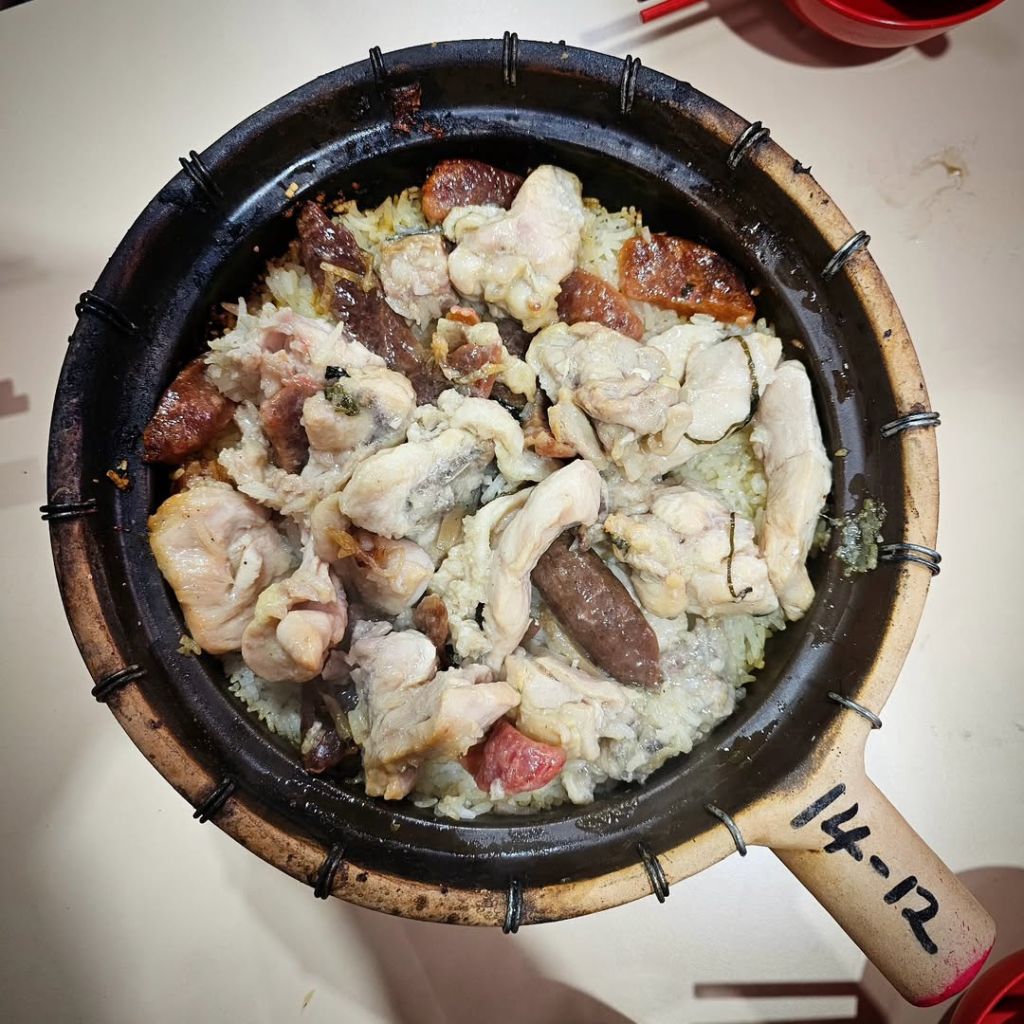
Why visit? A Michelin Bib Gourmand stall — yes, another one in the same hawker centre — from 2017 till today, New Lucky Claypot Rice is helmed by owner Choong Yee Hong, who has been perfecting his traditional claypot rice recipe since 1971 before he set up his own stall in 1979.
The cooking method has remained unchanged over the decades: Every pot is placed over charcoal, creating a deeper, smokier flavour and a crisp rice crust that gas cooking simply cannot replicate. The signature smokiness that comes from careful heat control is an art in itself; even the type of charcoal used shapes the final taste and Yee Hong does this perfectly.
New Lucky Claypot Rice uses a blend of old and new grains for its base — the old rice resists the burn and the new rice forms the prized caramelised base at the bottom of the pot.
Crowd favourites: Portions are well-sized for sharing. The smallest portion here is for two diners (S$15), and can scale up to four (S$30). The claypot wu wei rice is the signature dish, featuring a satisfying combination of tender chicken, fragrant Chinese sausages, and the indispensable salted fish that lends the dish its distinctive flavour.
Those looking for a pork-free alternative can opt for the claypot chicken rice.
Regulars often round out their claypot rice feast with a bowl of soup. The watercress pork ribs soup (S$6) is a popular pick, as it’s light and just the thing to balance the meat-laden rice. It also helps diners sneak in a serving of greens while they’re at it.
3. Coffee Break — Holland Drive
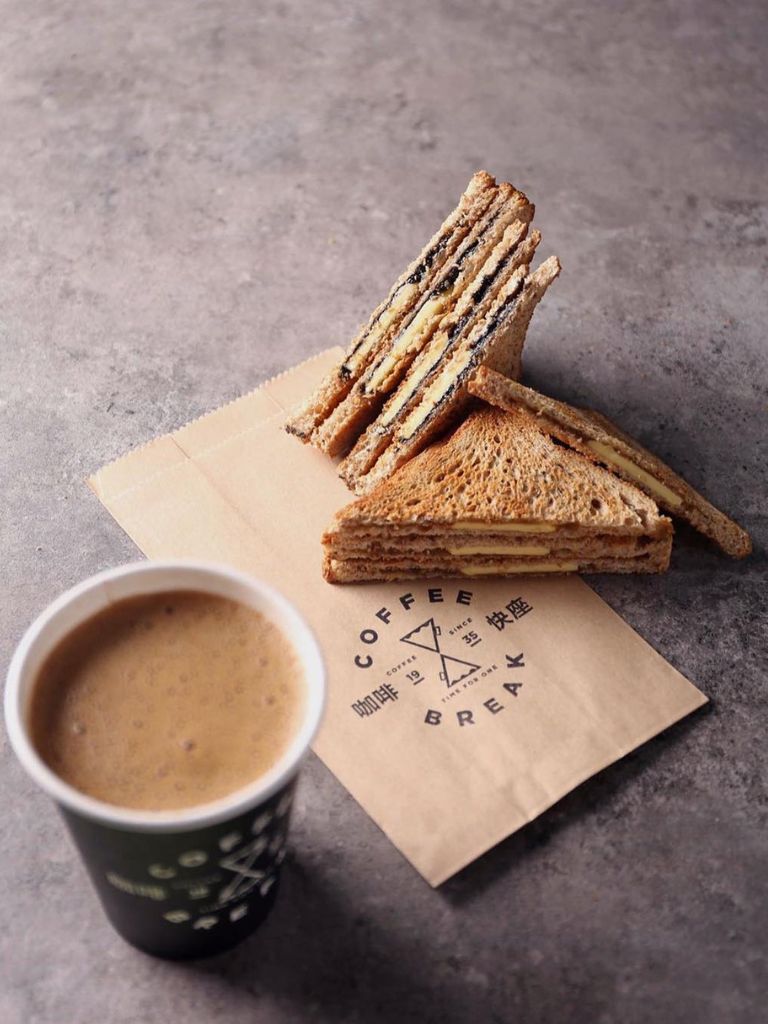
Why visit? Coffee Break is more than just a kopi institution — it’s a family story. A kopi stall founded in 1935, is now helmed by the third generation, with each of the three siblings running their own Coffee Break outlet around Singapore. The Holland Drive Food Centre branch is the newest, opened in early 2025.
Each branch carries the same philosophy that made the original Amoy Street stall a cult favourite — solid, traditional Nanyang kopi brewed through a cloth filter, paired with a menu of inventive toasts and lattes that feels grounded rather than gimmicky.
There is a good balance between old and new flavours and items here, with prices firmly in hawker-centre territory.
Crowd favourites: The black sesame toast (S$3.50) has its own devoted following. This is thin-cut bread layered with a thick, nutty spread and cold salted butter, best enjoyed while still warm. The matcha coconut toast (S$3.50) is another standout, unexpectedly addictive as earthy matcha meets creamy butter, with coconut’s mellow sweetness rounding it out for a satisfying bite.
On the drinks front, the range of flavours is impressive. The flavoured kopi selection includes unique blends such as taro, ginger, and black sesame (from S$3 each). The latte menu has pistachio, pumpkin spice, hazelnut, and more (from S$4 each). Drinks are available hot or iced.
Here’s all we ate at Coffee Break at Holland Drive Food Centre!
4. Gaziantep Delights
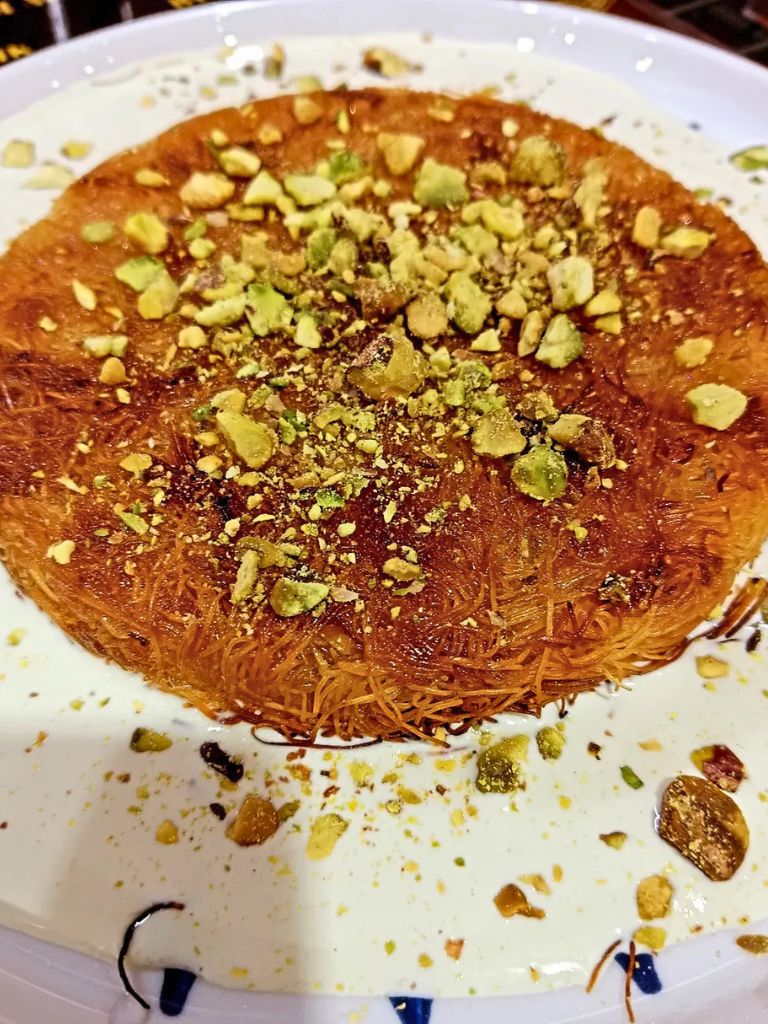
Why visit? Turkish food at a hawker centre is already a conversation starter in itself, but Gaziantep Delights, Muslim-owned and halal, goes a step further. It features a S$16,000 kebab robot imported from Turkey — it is essentially a rotating spit that, at the press of a button, shaves meat into evenly sliced portions at an ideal thickness.
The stall is named after a city in southern Turkey long regarded as one of the country’s great food cities, and the owner, Fatih Karakas, takes the namesake — which is also his hometown — seriously. The menu is broad, the ingredients are fresh, and the desserts are as good as anything you’d find at a proper Turkish restaurant in town.
Crowd favourites: The mixed doner (S$9) is a healthy kebab wrap of chicken and lamb, paired with crisp vegetables and a yoghurt-garlic sauce, all tucked into toasted flatbread. The babaganoush (S$7.50), a roasted eggplant dip served with fresh homemade pita, has steadily gained attention for its rich, smoky flavour, and while an appetiser, it also works as a light meal on its own.
For desserts, everything is handmade by the owner himself — from baklava (S$3 for one piece, S$5 for two pieces), a flaky filo pastry, to the sutlac (S$6.50), a Turkish rice pudding. The kunefe (S$12), which is shredded pastry baked golden with a molten cream centre, is an indulgent finale that rarely disappoints.
5. Lao Chen Ji
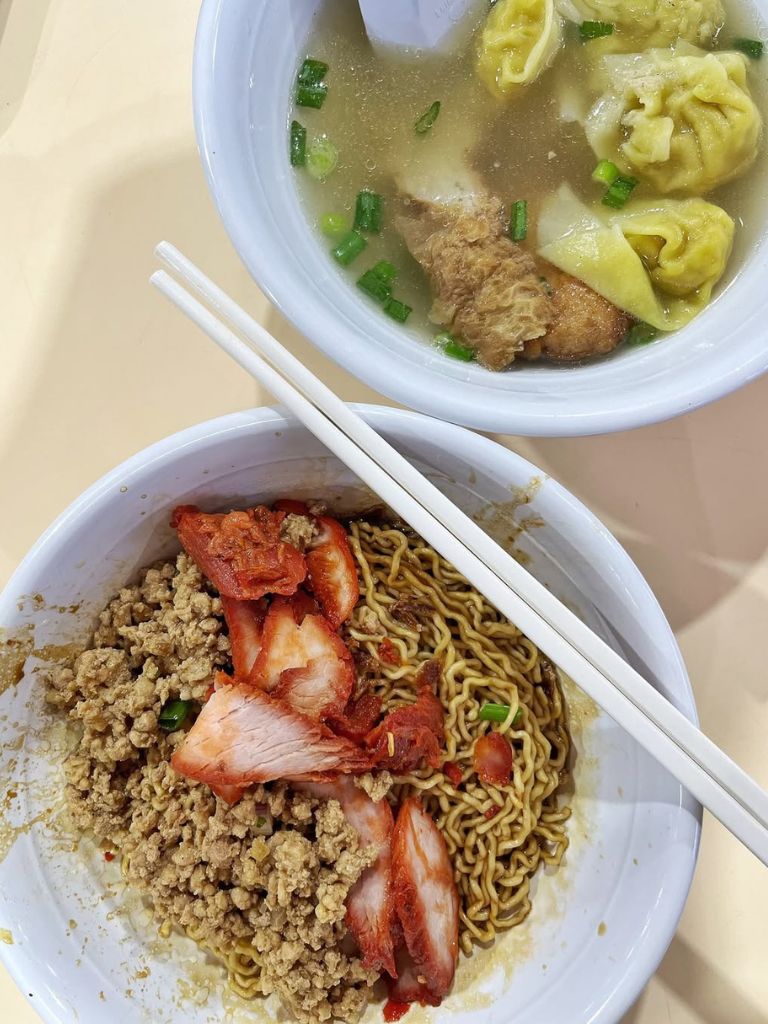
Why visit? Lao Chen Ji draws long lunchtime queues, and the wait is well worth it. The stall stands out due to its Sarawak kolo mee and yong tau foo combination — two dishes that are familiar favourites on their own, but make for the ultimate comfort meal for Singaporeans when paired.
The noodles here are cooked firm and al dente, and come coated in a savoury mix of braised meat, fried shallots, spring onions, and an optional housemade chilli sauce that deserves its own spotlight. The chilli brings real heat and fragrance, while the handmade yong tau foo is consistently fresh and flavourful.
Crowd favourites: Noodle lovers can go for Sarawak kolo mee (from S$4.50 for a small bowl), served with minced meat and char siew. You can take your pick for the yong tau foo (from S$0.70 a piece, minimum order of S$3.50), from stuffed bittergourd and tau kwa to eggplant and wanton.
For a lighter meal, pair the yong tau foo with plain kolo mee (from S$1.20 for a small bowl), which comes without minced meat or char siew but still delivers plenty of flavour.
6. Shima’s Kitchen
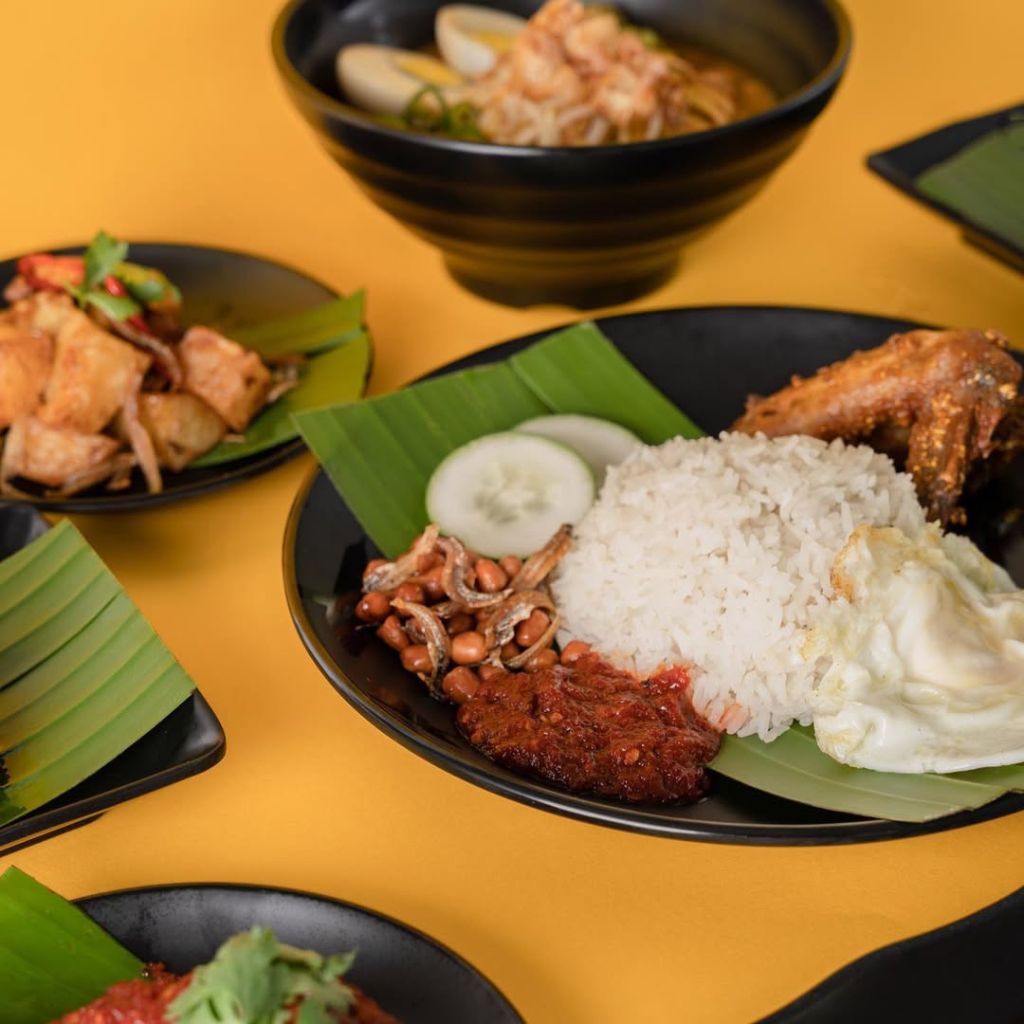
Why visit? Ask any regular at Holland Drive Food Centre where to go for Malay food, and you’ll probably get the unanimous response of “Shima’s Kitchen”. Here, food tastes just like someone’s mum made it, and that is exactly the appeal.
Shima’s Kitchen operates on a dual rhythm. Mornings are for breakfast classics such as nasi lemak, lontong, mee rebus, and mee soto (S$3.50 each). By early afternoon, the stall transforms into a nasi padang spread with a changing lineup of dishes that varies daily. The most popular items often disappear quickly, especially on weekdays.
Crowd favourites: At lunch, build your plate of nasi padang around the beef rendang (S$3.50) — slow-cooked, deeply spiced, and tender — along with popular picks such as the pineapple achar (S$1) and bergedil (S$1).
The asam pedas (S$3.50) is also highly raved about, with a rich, tangy, and fiery gravy that clings to every bite of the ikan pari, delivering layers of bold, mouthwatering flavour.
7. Zhen Ji Vegetarian
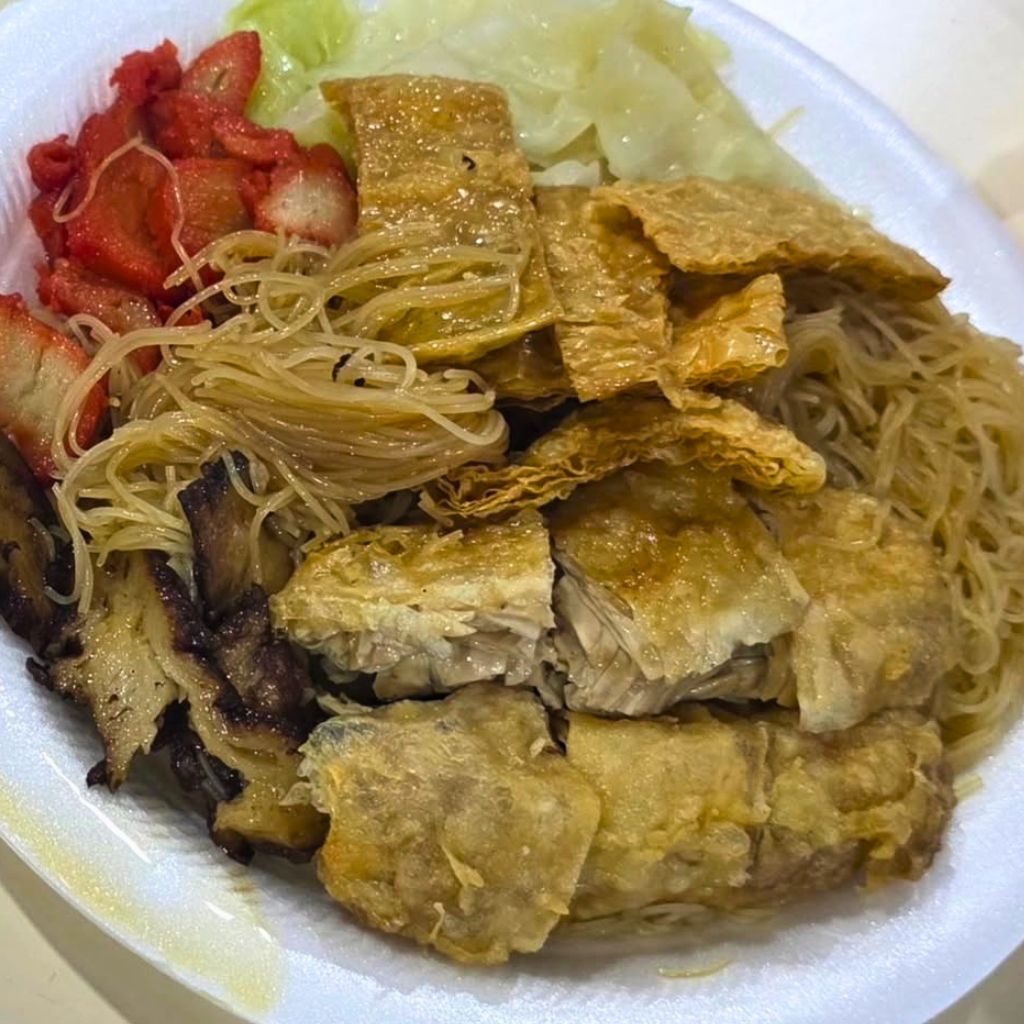
Why visit? Zhen Ji Vegetarian has been a long-standing fixture at Holland Drive Food Centre, run by a couple whose prices have barely shifted in over a decade. Everything here is egg-free and allium-free, and the portions are famously generous, often leaving diners surprised at how much food is served for the price.
The stall draws a brisk morning crowd, with queues forming early for breakfast. After around 10am, things ease up noticeably, making it a better time to visit if you prefer a quieter, more unhurried meal.
Crowd favourites: Everything here looks deceptively simple, but the prices and flavours punch well above their weight. The vegetarian bee hoon (S$2.50) comes topped with braised cabbage, assorted mock meat, crispy zai er (beancurd skin mock goose), and a chilli that carries depth and bite. The same mix is also available with kway teow if that’s what you prefer.
Another bestseller, the aromatic vegetarian chicken rice (S$3) sells out quickly, so arriving early is key if you want this. It is especially loved for its fragrant rice and satisfying mock chicken.
8. Fifty Year Yong Tau Foo
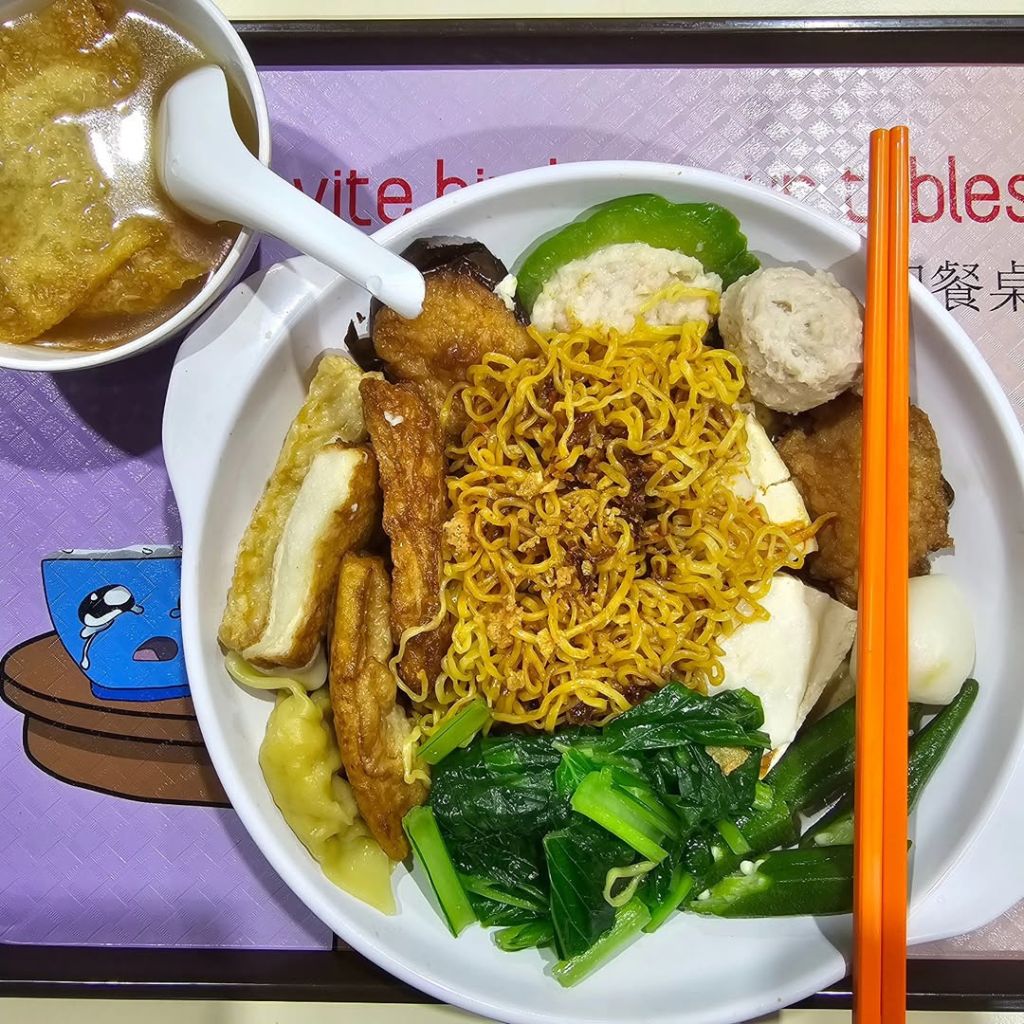
Why visit? Before you question why we’ve featured yet another yong tau foo stall, it must be said that besides being popular with the crowd at Holland Drive Food Centre each featured spot also offers a slightly different take on the classic dish.
At Fifty Year Yong Tau Foo, the draw lies in its wide variety of pieces, available in both steamed and fried versions, and filled with either fish paste or Hakka-style meat paste. Everything is made fresh daily, and has a homely, old-school feel to its stall and spread.
This is a simple style of yong tau foo, where flavours are intentionally light, so the ingredients speak for themselves — perfect for those who prefer a more traditional, uncomplicated taste profile.
Crowd favourites: The noodles with yong tau foo (from S$4 for five pieces) are available in either soup or dry style. The soup is mildly sweet, good enough to finish to the last drop, while the dry version coats the noodles in a savoury sauce with a moreish shallot-forward aroma. The chef is known for being particular about the springiness of the noodles, giving his careful attention when cooking them.
The handmade meatball is the most popular yong tau foo ingredient pick, as it is soft, well-seasoned, and substantial. The stuffed eggplant and tau pok are also reliable favourites.
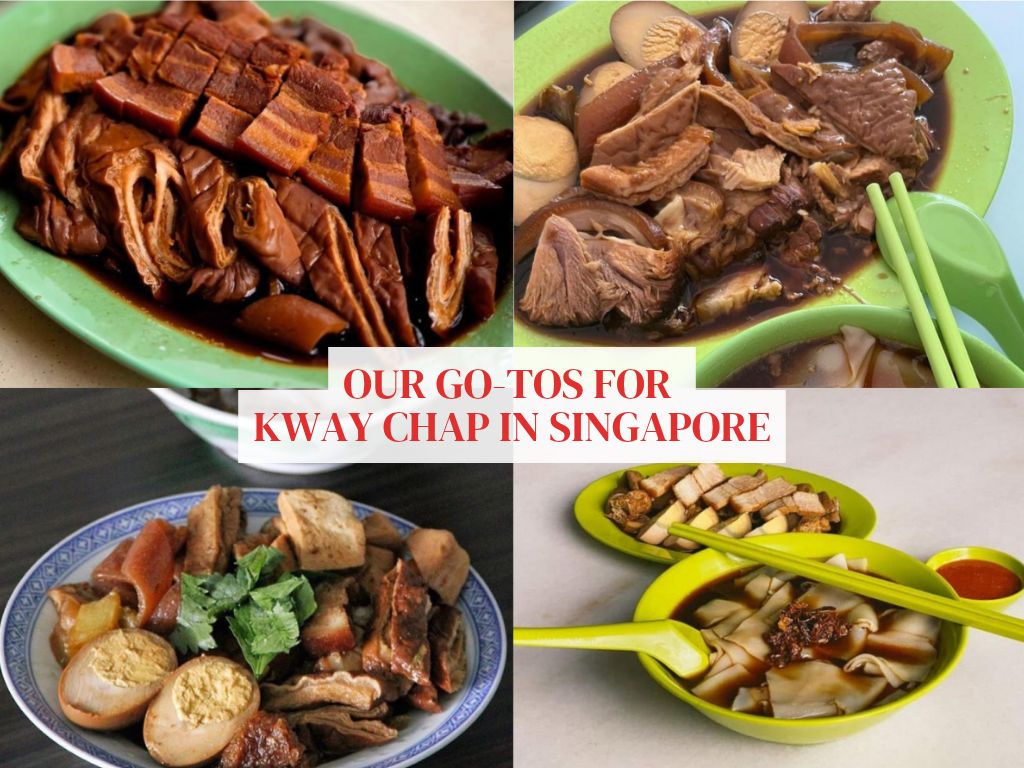
9. Cheng Heng Kway Chap and Braised Duck Rice
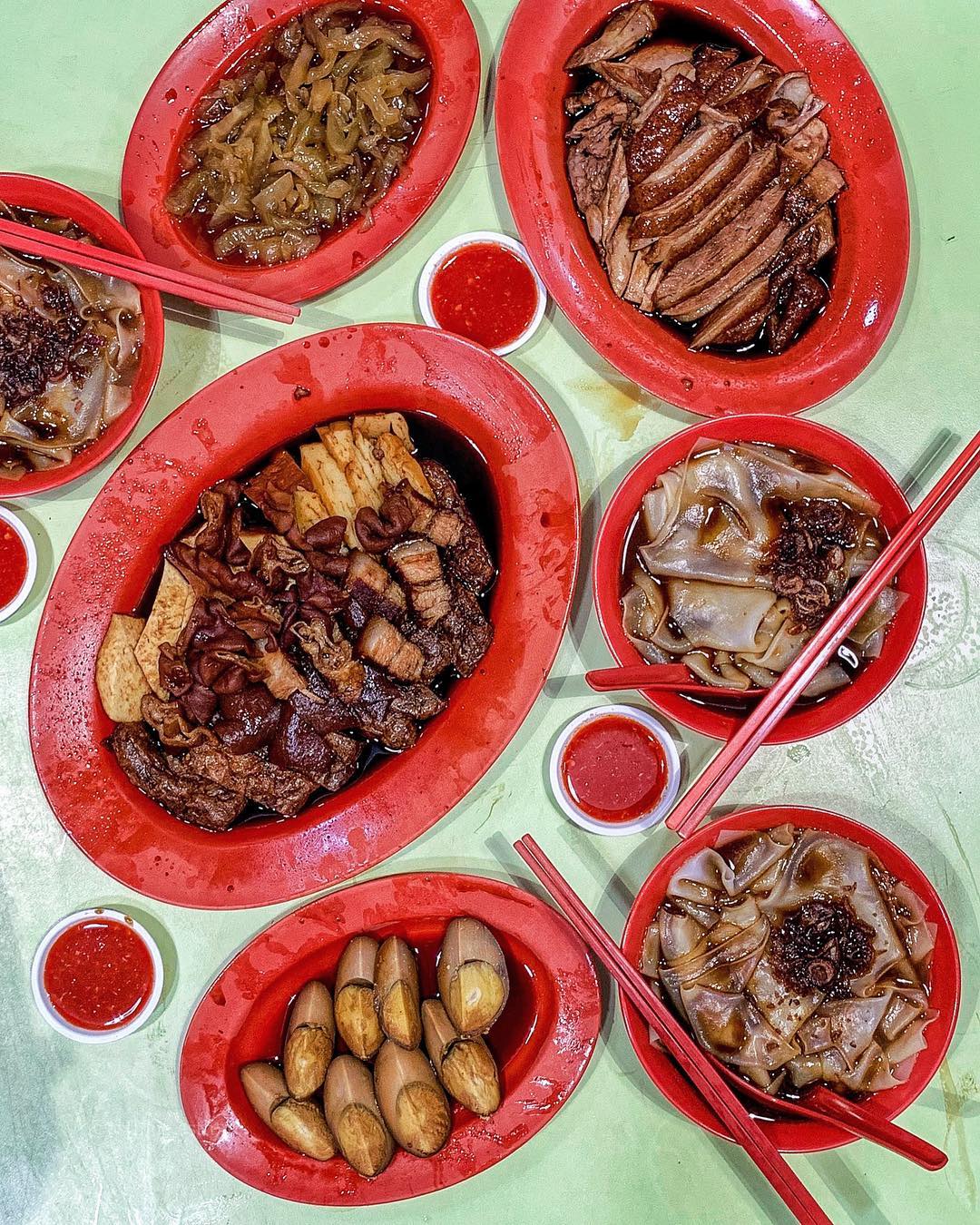
Why visit? The two famous kway chap stalls at Holland Drive Food Centre are Cheng Heng Kway Chap and Braised Duck Rice and Blanco Court Kueh Chap (which we’ll go into later). Of the two, the flavours at Cheng Heng are most robust, with a darker braising gravy that tastes more intensely seasoned. The pork cuts, offal, and duck are deeply infused with soy and herbal notes.
And yes, Cheng Heng is also listed in the 2025 Michelin Guide as a Michelin-selected Restaurant, which indicates food that is noteworthy, without carrying a formal accolade such as the Bib Gourmand, but still worth a visit.
Crowd favourites: The Teochew-style kway chap (from S$4.50) here features silky, broad rice sheets that are incredibly smooth, soaking up the herbal, full-bodied broth that has a hint of sweetness. Accompanying this is a platter comprising pork belly with a good fat-to-lean balance, well-prepared innards, a braised egg, and tau pok.
You can also opt for the braised duck kway chap (S$6.50), which is just as popular. The duck is tender, having been slowly braised in a spiced soy marinade. Be sure to ask for the house chilli on the side. Its sharp heat cuts through the richness beautifully.
10. Blanco Court Kueh Chap
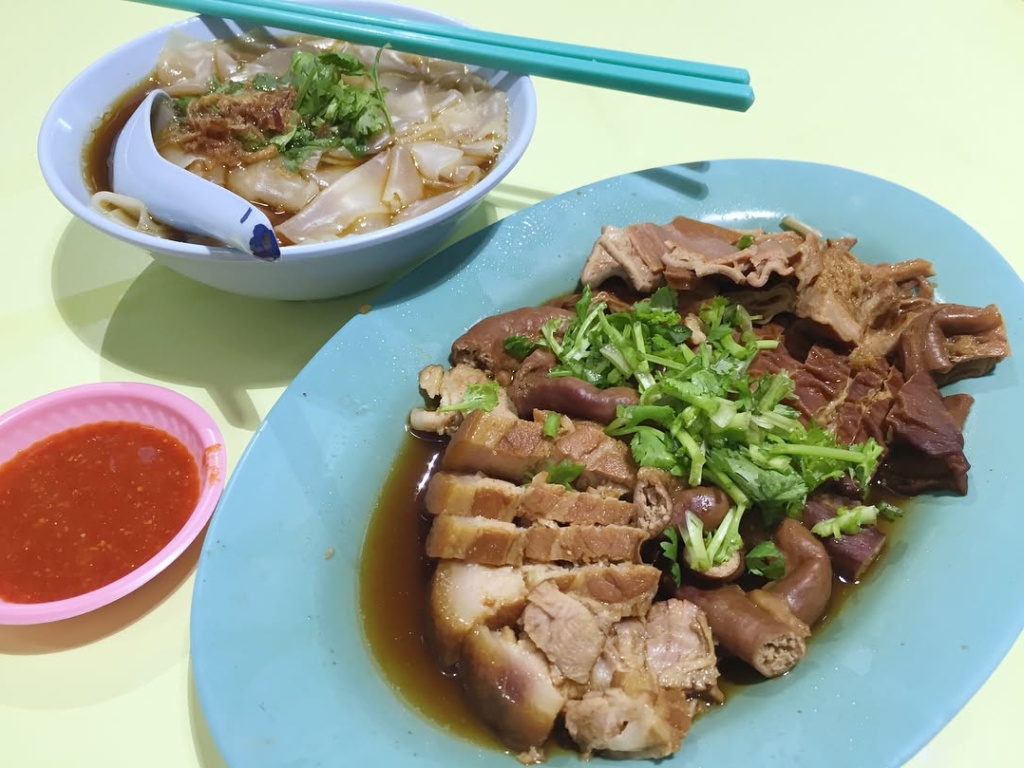
Why visit? Before Blanco Court Food Centre at Bugis made way for Raffles Hospital, Uncle Tan’s family was already serving kway chap there, with a history that stretches back to the 1950s. The family continues this legacy today at Holland Drive Food Centre, just a few stalls down from its more famous neighbour, Cheng Heng.
The style here is on the lighter end, with the braising stock being mild and gently herbal. The broth is clean on the palate, and the intestines prepared with enough care that there is no trace of unpleasant odour — some might prefer a more robust option, but we think a lighter, cleaner rendition is the way to go for most days, especially if you’re hosting tourist friends.
Crowd favourites: A single-person set of kway chap (S$5.50) comprises a bowl of smooth noodles and a plate of selected braised sides.
The tender pork belly earns consistent praise, the skin and meat give way without resistance, and the portion is typically generous. The pig skin is another steady favourite, absorbing the braising sauce without becoming waterlogged.
11. Yap Kee Wanton Egg Noodles
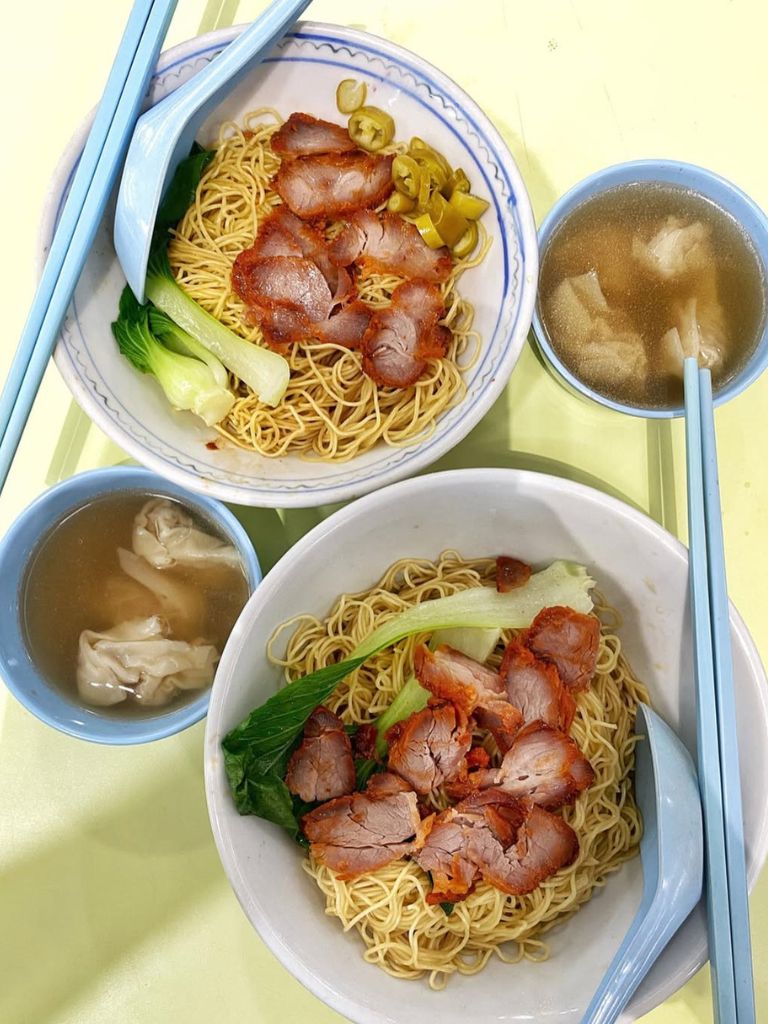
Why visit? Yap Kee Wanton Egg Noodles’ cheerful owner Richard and his wife have been making the dish in Singapore since 2003, since moving over from Johor, Malaysia. The stall dishes up a light-style wanton mee, without a dark sauce, that sits easily on both the palate and the stomach.
The noodles themselves are the highlight here. Made from wheat flour and egg with no water or alkaline agents, they have a springy, eggy character quite unlike the standard yellow mee kia found elsewhere — you’ll find it hard to stop slurping them up!
Crowd favourites: Order the wanton egg noodles (from S$5) in the original style, the stall’s recommended choice. The noodles are delicious on their own, so all that is needed here is a quick toss in a simple dressing of light soy sauce and lard oil. The char siew is roasted in-house using fresh pork, giving it a leaner, more homely character.
You can add dumplings as a topping or go straight for the dumpling noodles (S$6) if there’s space. These dumplings are plump and well-seasoned, with a satisfying crunch from water chestnuts in the filling. Many regulars also buy the frozen version to enjoy at home.
12. Hakka Noodle
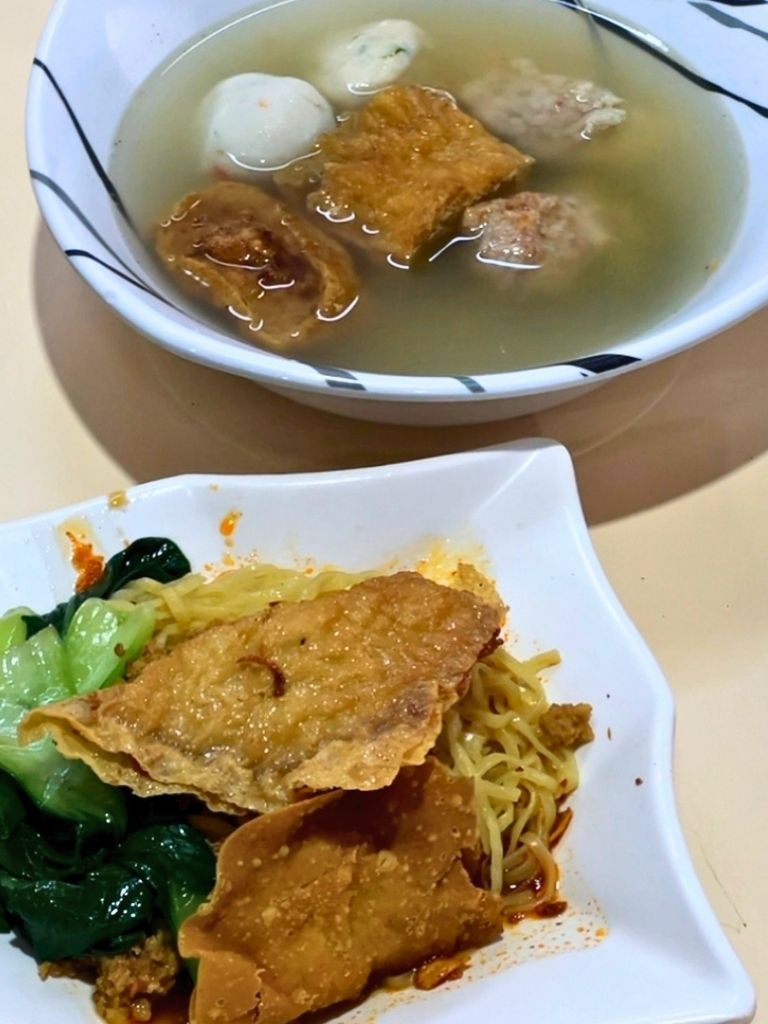
Why visit? The two sisters running Hakka Noodle are here from 3am, which says everything about how seriously they take their craft. The yong tau foo here follows an authentic Hakka style, using minced pork stuffing instead of fish paste, resulting in a richer, more savoury bite.
The chilli dip served alongside has a pleasing sourness to it, Teochew in character, that works well against the richness of the pork stuffing. The stall often sells out before the lunch crowd fully arrives, so an early visit is the safest bet.
Crowd favourites: The Hakka noodle (from S$4.50) comes as a fixed set, with a soup of yong tau foo pieces alongside a bowl of noodles dressed in a savoury house sauce and topped with minced meat. You can’t choose the yong tau foo pieces, but they are consistently tasty and keep customers coming back. Depending on what is available that day, you may get a mix of stuffed bittergourd, eggplant, tau kwa, tau pok, tau kee roll, fishball, or wanton.
Those who prefer something more robust can opt for alternatives such as the Sichuan noodle (from S$4.50) or ikan bilis noodle (from S$4.50), both served with the same yong tau foo soup and ingredients. Laksa (from S$4.50) is also available, a popular choice after the Hakka noodle.
For more places to eat around the area, check out Chip Bee Bistro at Chip Bee Gardens or Myx, a cosy Holland Village bar.