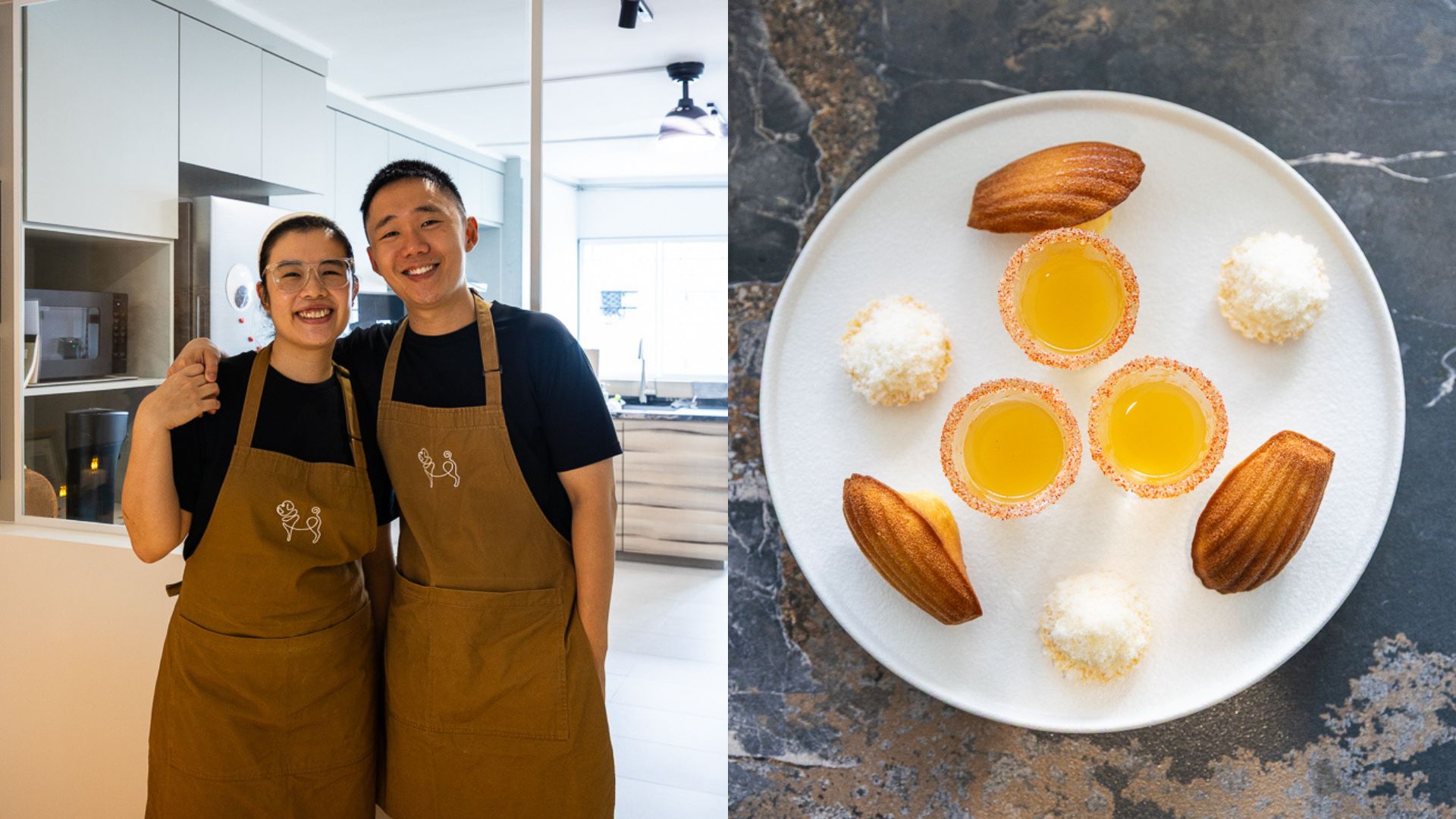
Trading Michelin kitchens for a living room: How Pugners Dining makes fine dining accessible

- After spending over a decade in Singapore’s top kitchens, Jon Marcus Tay, 31, started a home-based fine dining business with his wife, Krystle Tan, 38.
- The couple transformed their living space into an eight-seater dining room to pursue an intimate tasting menu experience with Pugners Dining.
- They tell us about trading Michelin restaurants for a home kitchen, Pugners’ minimal waste philosophy and the challenges of running a home-based business.
Jon Marcus Tay, 31, has spent over a decade in the kitchens of Singapore’s most prestigious kitchens, part of the teams at Rhubarb and Buona Terra when it earned its Michelin stars. Now, he cooks from a kitchen where the fridge is so small, he and his wife, Krystle Tan, 38, are arguing over space for a carton of milk.
And when the dinner service ends — sometimes past midnight — the couple still has hours of dishes ahead of them.
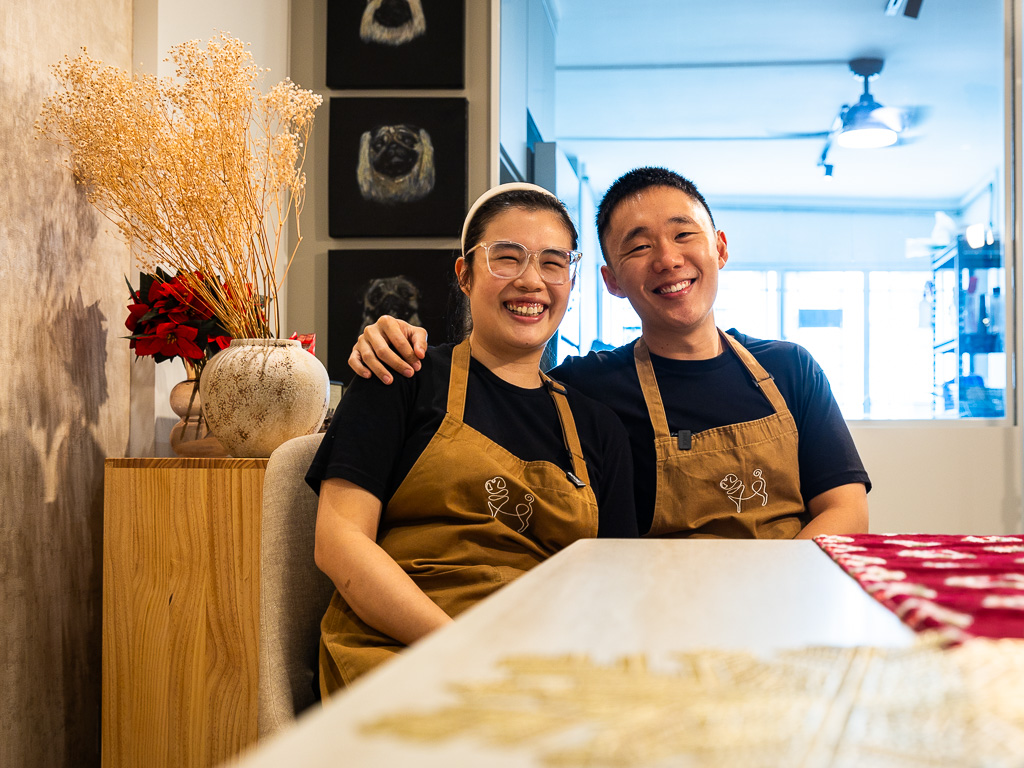
It’s a sharp departure from the world he knew, but Jon doesn’t see it as a sacrifice, because he has something simple and more essential — ownership.
Jon first started working in professional F&B at the age of 17, spending almost half his life in the kitchen. Aside from Michelin-starred restaurants, he also held positions in renowned restaurants such as Gunther’s and Garibaldi.
Yet, when customers complimented the food he cooked, Jon felt something was amiss.
“I didn’t feel that sense of pride. I didn’t feel like this was my food,” he says.
Birth of Pugners Dining
The name came first, long before the couple anticipated they’d be embarking on this venture, almost as a joke.
Years ago, Krystle was making a card for Jon and was thinking of a pun to incorporate their shared love for pugs. Combining the word pugs with partners, she landed on the word “pugners”, which was later adopted by the pair — they slapped it on selfies with the hashtag #PugnersInCrime.
When it came time to name their venture, nothing else felt right.
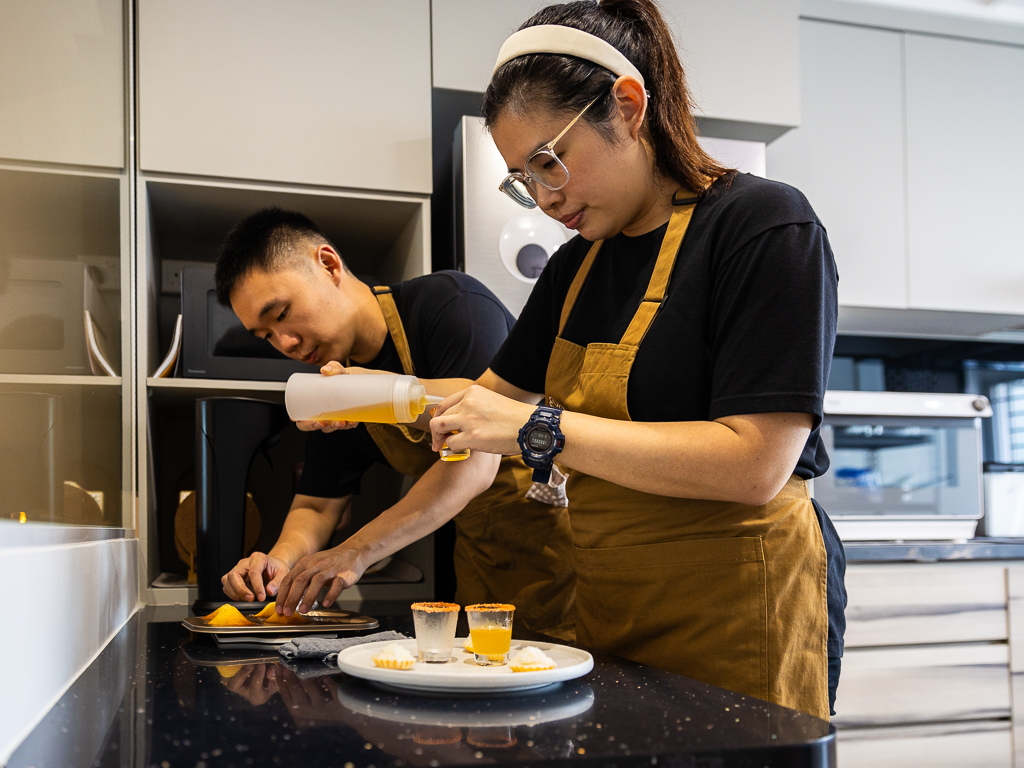
But the partnership behind Pugners Dining runs deeper than a clever pun. While Jon handles the food, Krystle draws on years of working in HR in the hospitality and entertainment industries to run everything else, from setup to packaging, to the endless ad-hoc errands that come with a home-based restaurant.
She also brings a front-of-house sensibility, an instinct for reading guests and creating intimate experiences that complement Jon’s kitchen-focused expertise.
Cooking and experimenting with flavours was something Jon had always felt passionately about, but his work in commercial kitchens never allowed him to fully flex that muscle.
“I wanted to push myself creatively, and push myself with the style of my cuisine,”
Most chefs reach a point in their career, a crossroads of sorts: Do they continue down the path they’re on, or set out to try something of their own? That’s where Jon found himself.
The answer felt clear to him, and so the couple took a sizable chunk of their savings to renovate their home, purchase proper equipment and procure their first batch of ingredients.



“Maximum taste, minimum waste”
Growing up in a frugal household, Jon was mystified by his mother’s ability to stretch the dollar when it came to meals. Leftover tomato pasta dishes would be transformed into her version of shepherd’s pie, rather than reheated or thrown away.
While these meals might’ve been considered “scraps”, Jon remembers them as delicious dishes he looked forward to.
It was a gentle introduction to a philosophy that would be tested much more harshly in his first professional kitchen. Fresh out of secondary school and on his third day on the job, Jon was given a bag full of live fish and told to kill them for dinner service.
As expected, the then 17-year-old was mortified and extremely reluctant. It was his first time even handling live fish, and to have to take their lives felt even more daunting.
“But the head chef pulled me aside and said, ‘Whether you kill the fish or not, these fish are going to die. So the best thing you can do, the best way you can respect the death of the fish, is to cook it into something delicious and not let any part go to waste,'” Jon says.
He laughs a little, acknowledging it sounds like a cliche. “But it really stuck with me.”
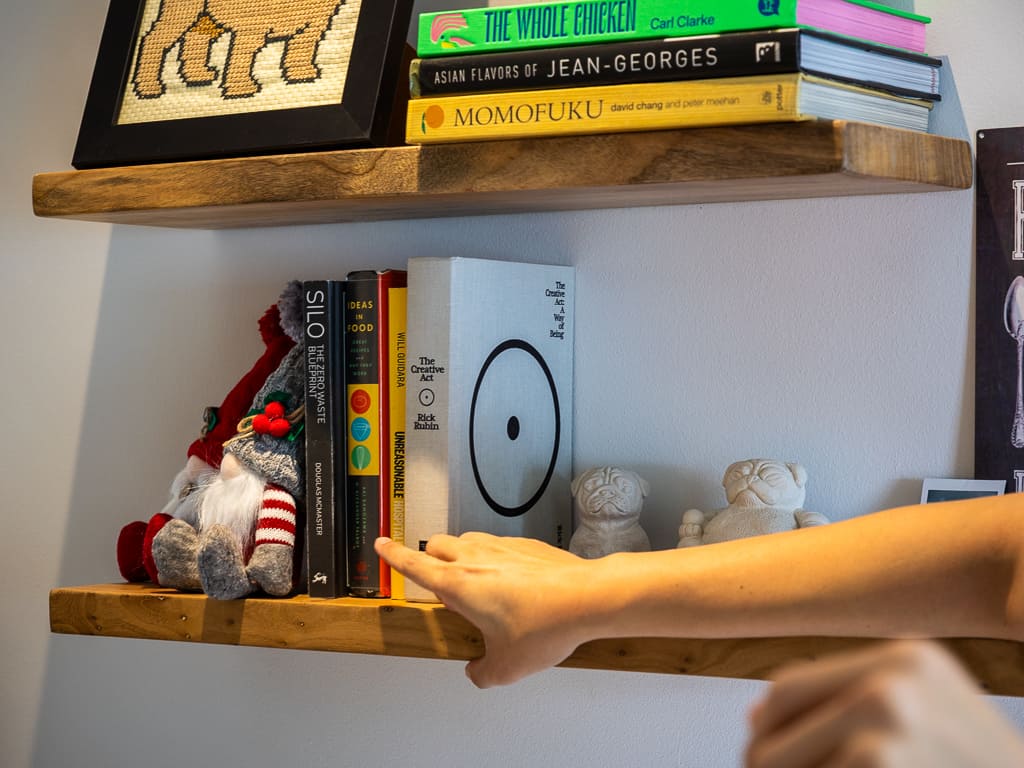
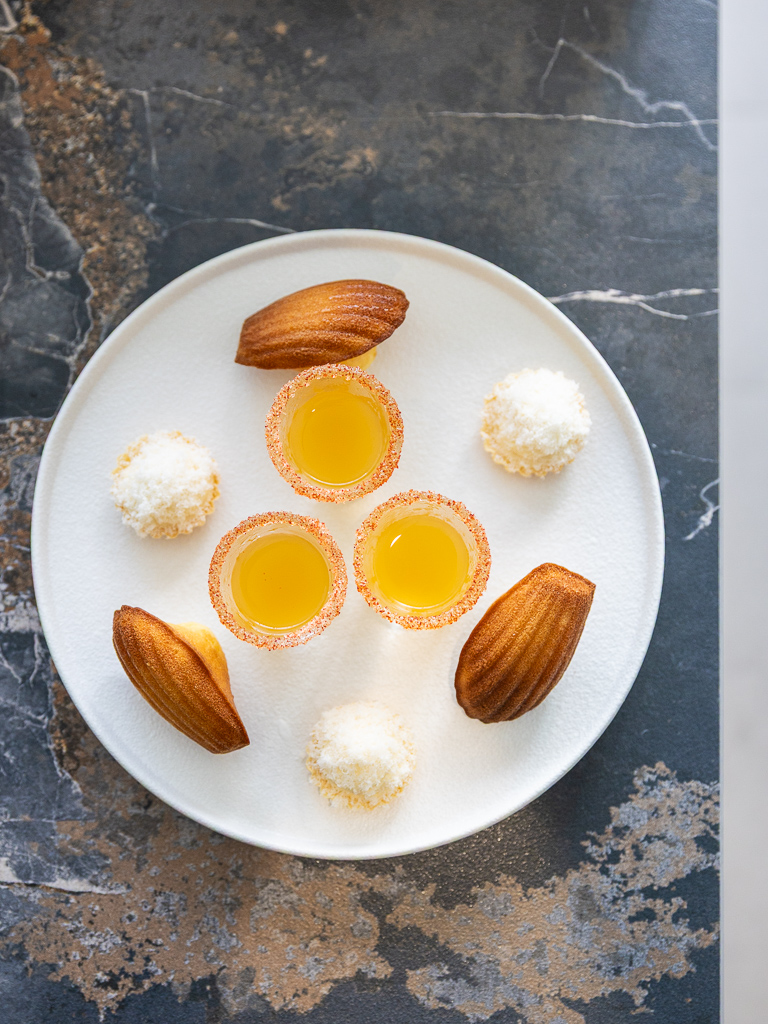
In practice, this belief shapes the dishes on Pugners’ tasting menu. Jon studied restaurants such as Silo, known for its sustainable, zero-waste approach, for inspiration.
While he can’t replicate these systems on a home-kitchen scale, the principle remains: Use everything to bring out the ingredient’s full potential.
Perhaps that is how he keeps costs relatively low at $150 per diner. (By contrast, tasting menus at established fine-dining spots can easily cost upward of S$250.)
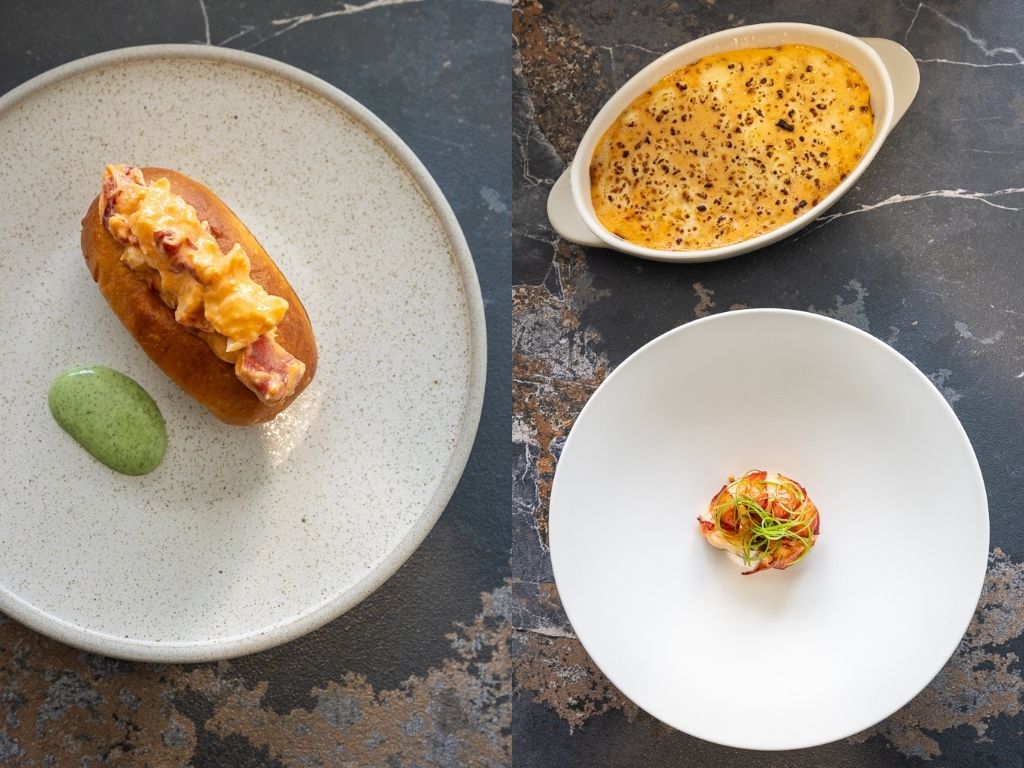
Take the lobster, which appears in three different forms across this season’s menu — The Claw-some roll, the lobster dish, and its accompanying cheese-baked rice.
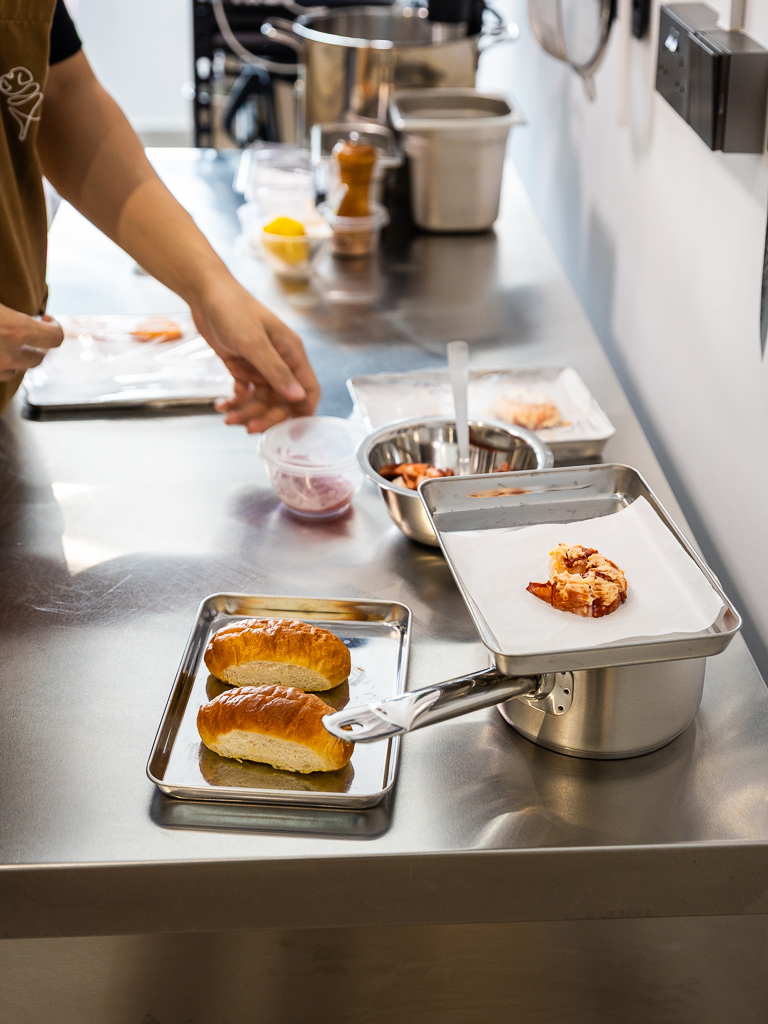
In most contemporary dining restaurants, only a small section of the tail makes it to the plate.
The claws, less photogenic and harder to work with, often serve as an afterthought: Pureed into sauces or hidden in the main dish.
By contrast, Pugner’s Dining uses every part diligently. Here, it is mixed with a filling made from lobster brain fat — Jon’s twist on lemak merah (or ayam masak merah), which traditionally uses coconut milk for its rich, fatty content. The result is a lobster roll with aggressive crustacean flavours that coat your mouth.
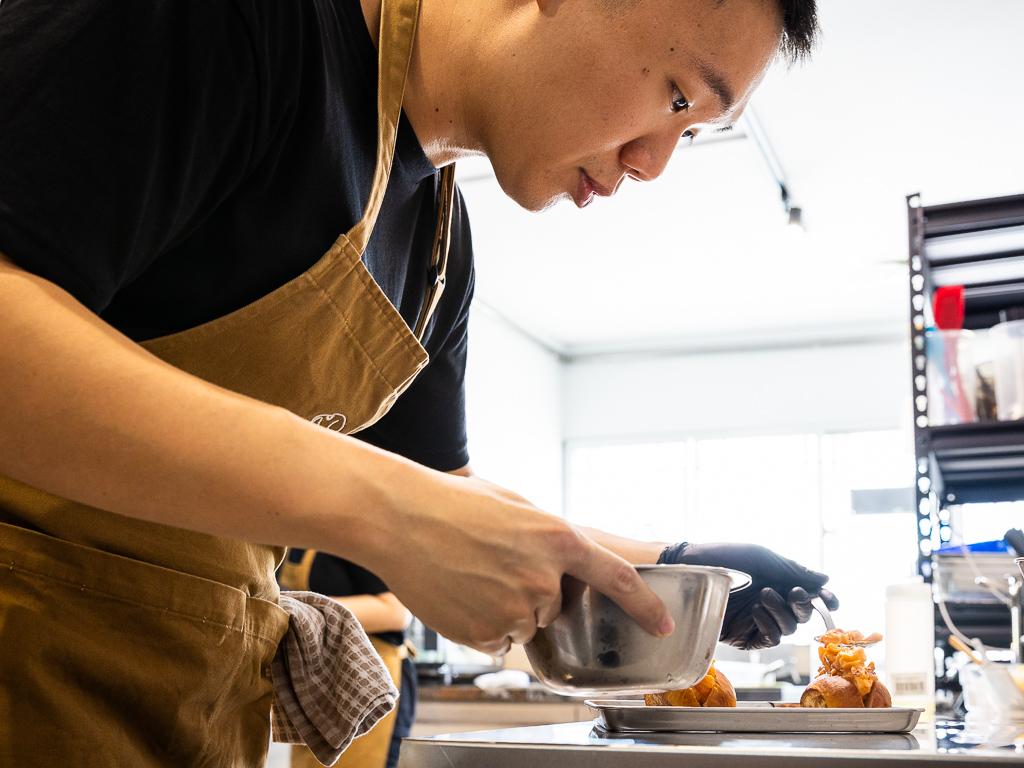
The shells, rather than going into the trash or being used as display pieces, are made into a bisque to flavour the cheese-baked rice. Jon hints that there’s a secret ingredient in the bechamel that amplifies the flavours even further — something he reveals only to his guests.
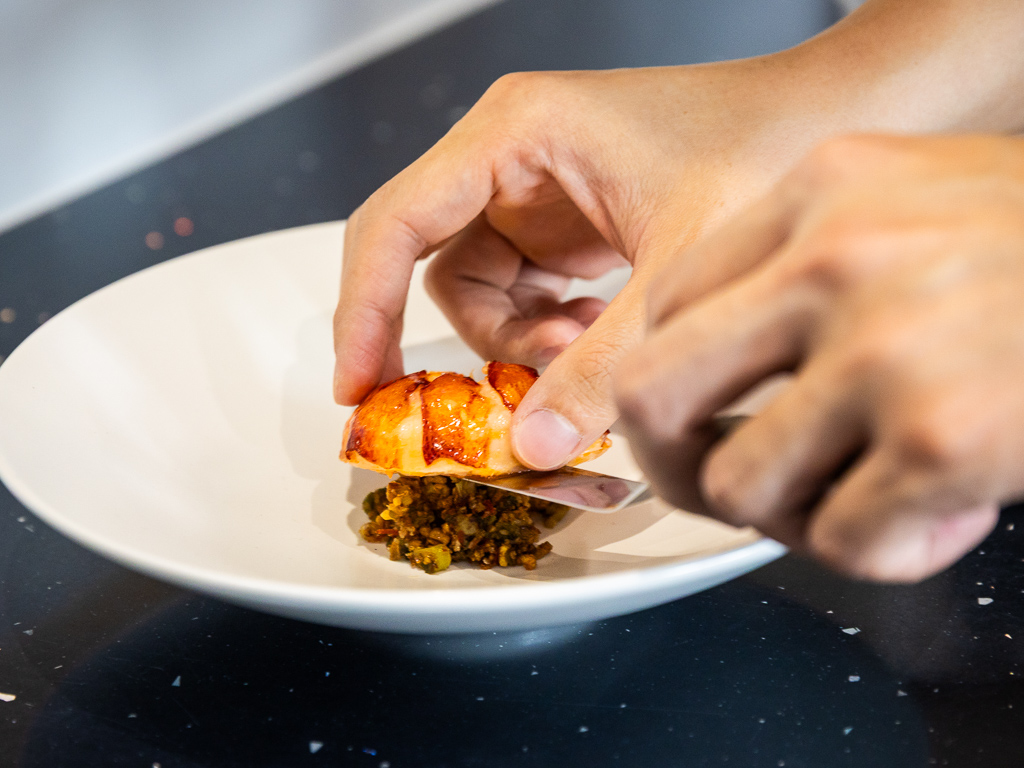
Meanwhile, the poached tail is paired with a Typhoon Shelter-style (a popular Hong Kong dish that features large amounts of fried garlic, fermented black beans, chilli, and other seasonings) preparation, giving it a completely different expression of the same ingredient.
The trade-offs of a small kitchen
But translating Michelin-kitchen standards to a home setup has required countless compromises the couple never anticipated.
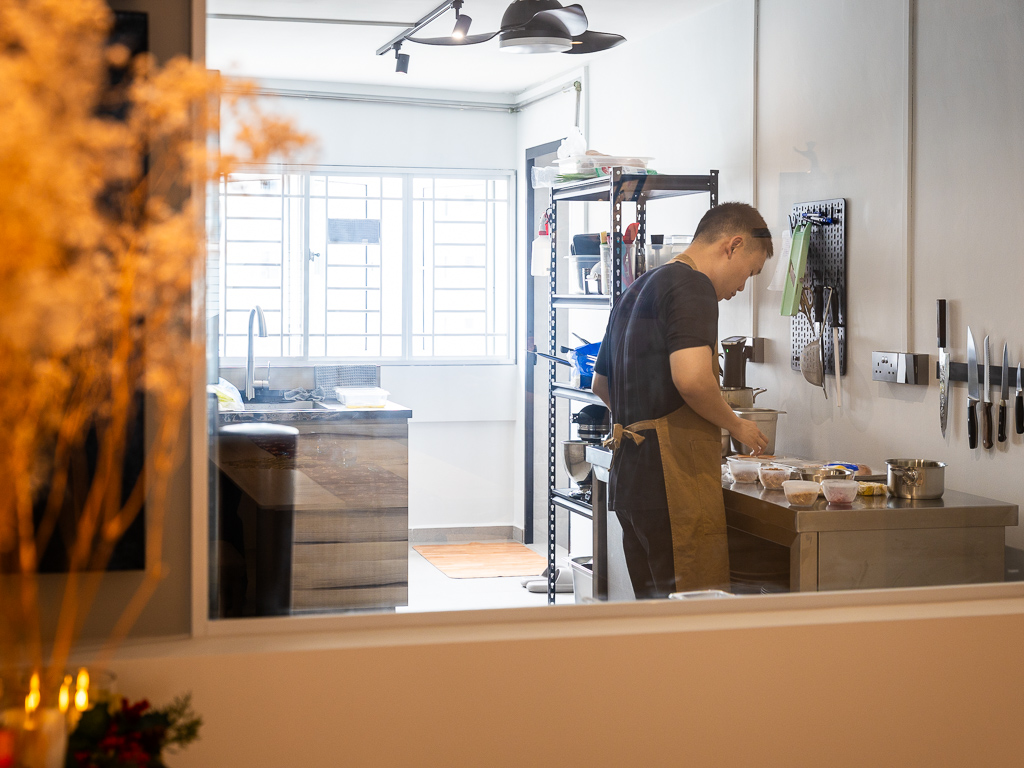
The space constraints hit first. Jon toyed with the idea of grilling proteins over charcoal to achieve a proper char, but there’s no ventilation for it. He uses a blowtorch instead.
An ice cream machine for one dessert component didn’t make financial sense, so he pivoted to a parfait. The solutions work, but Jon’s got to get creative.
Then came the logistics. In a commercial kitchen, running low on an ingredient means adding it to tomorrow’s order. At Pugner’s Dining, with limited seating and no predictable volume, ordering becomes a puzzle.
Chives, in particular, have been the bane of Jon and Krystle’s existence over the past few months. While some ingredients, such as tubers and garlic, can sit at room temperature for weeks. Others, like chives, need to be bought fresh every week.
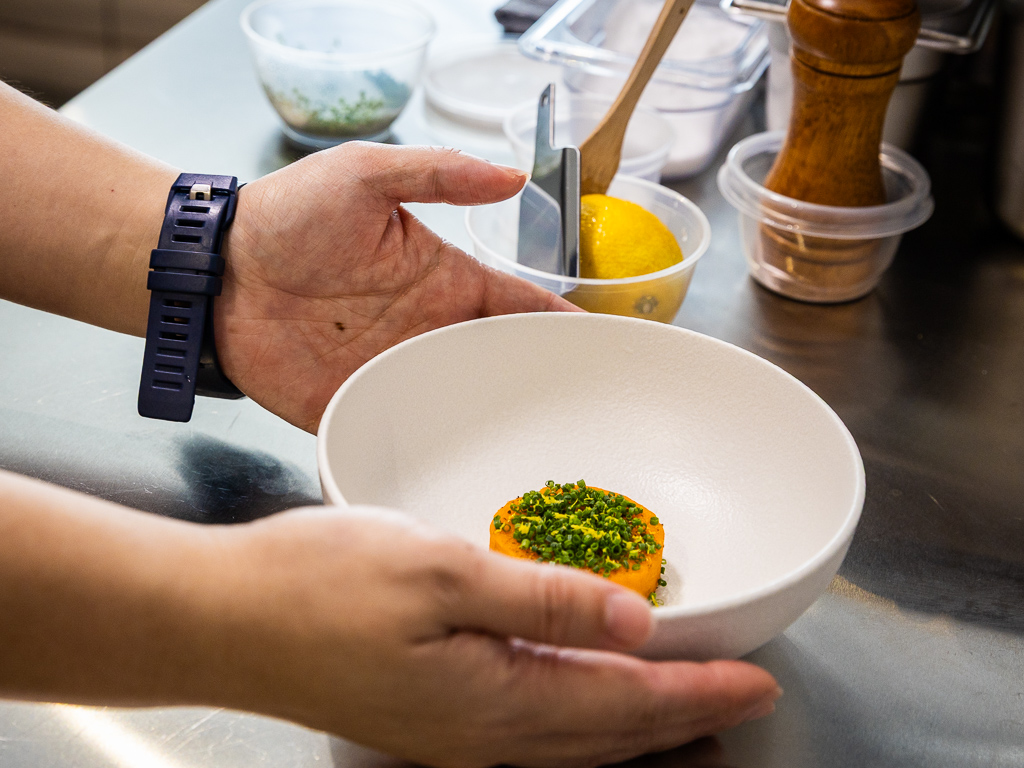
“If you don’t use fresh chives, it looks horrible, it tastes horrible,” Jon says. However, it’s not readily available at supermarkets and tends to be more expensive.
Lobster presents the same issue. “If we only have one table, which is two people, there’s no way we can get fresh lobster delivered,” Krystle explains. “We have to go pick it up from the supplier ourselves.”
The personal sacrifices are harder to quantify, but impossible to ignore. When we arrived at their home, we were greeted by a large dining table with a semi-unblocked view into their kitchen. No living room and no laundry area either, which means frequent laundromat trips for their personal laundry.
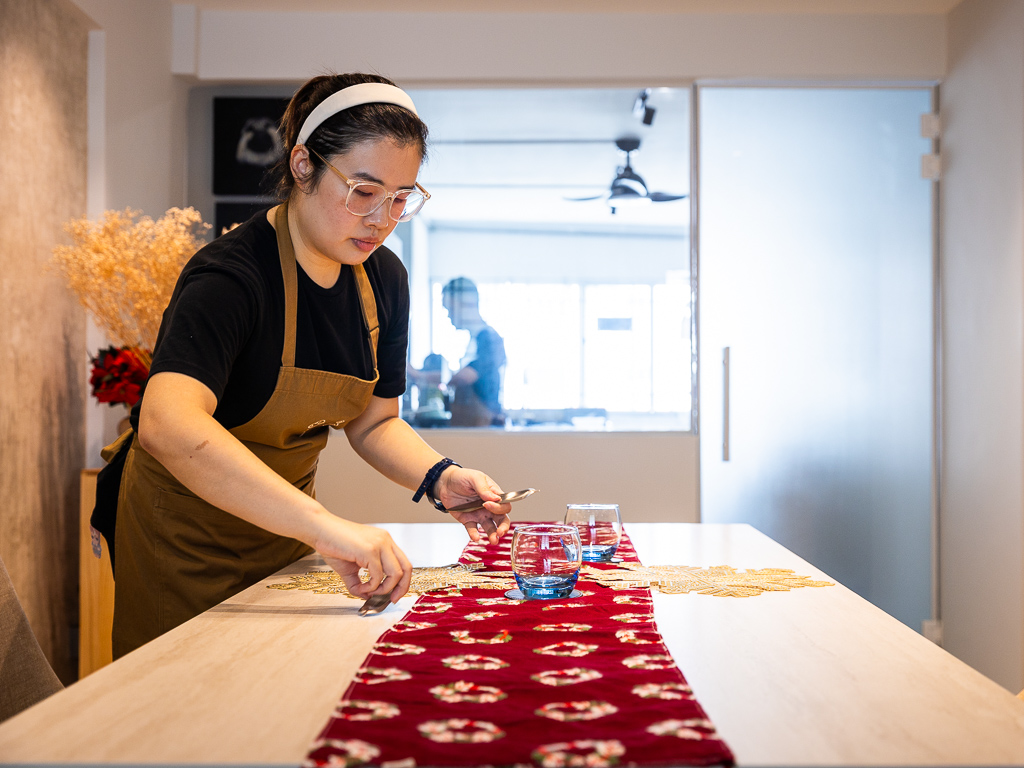
“Not having a proper living room is sometimes a bit of a bummer,” Jon admits. But the couple’s most frequent battle is over refrigerator space. With one chest freezer and one fridge for both the business and their personal needs, every inch is contested territory.
“One thing that really gets sacrificed is the limited place to store what we actually want to eat,” Krystle says. The couple exchanged a knowing glance and laughed.
Krystle explains that sometimes, she would put a carton of milk in the fridge, or a cup of coffee, and Jon would insist he needed the space for prep.
“I’m like, ‘One item. Just one,’” Krystle says, holding up a finger.

The challenges extend beyond the physical. As a home-based business, there’s no foot traffic, no accidental discovery.
Reaching beyond their immediate network requires intentional marketing, but that raises another question: Can they handle the volume?
“We ask ourselves: If we do a huge PR campaign and get huge volume, can we cope?” Krystle says. “When you cannot cope, your quality goes down. Then negative reviews start coming in, and that’s going to be a killer to the business.”
For now, they handle everything themselves, end to end.
Jon does prep work at the start of each week, then moves into dinner service. Krystle works her freelance job during the day, then shifts to the non-kitchen tasks. After service ends, sometimes past midnight, there are still hours of dishes ahead.
The first week nearly broke them. They worked from 9am to 4am every day.
“I was questioning my life choices,” Jon says. “It hits you like a tidal wave. Ingredients aren’t coming on time, your workstation is delayed…everything is messed up.”
Due to the extensive amount of ingredient preparation done by Jon alone, Pugners Dining operates only on Thursday and Friday nights, and on Saturday and alternate Sunday noons.
The compliment that landed
But for all the sacrifices, some moments made everything worth it.
For Jon, this moment came from his first customer, who engaged Jon to provide catering for his son’s birthday. After the meal, the customer went up to Jon and simply said, “The food is shiok (enjoyable).”
For the first time in his career, Jon felt like the compliment was for his food.
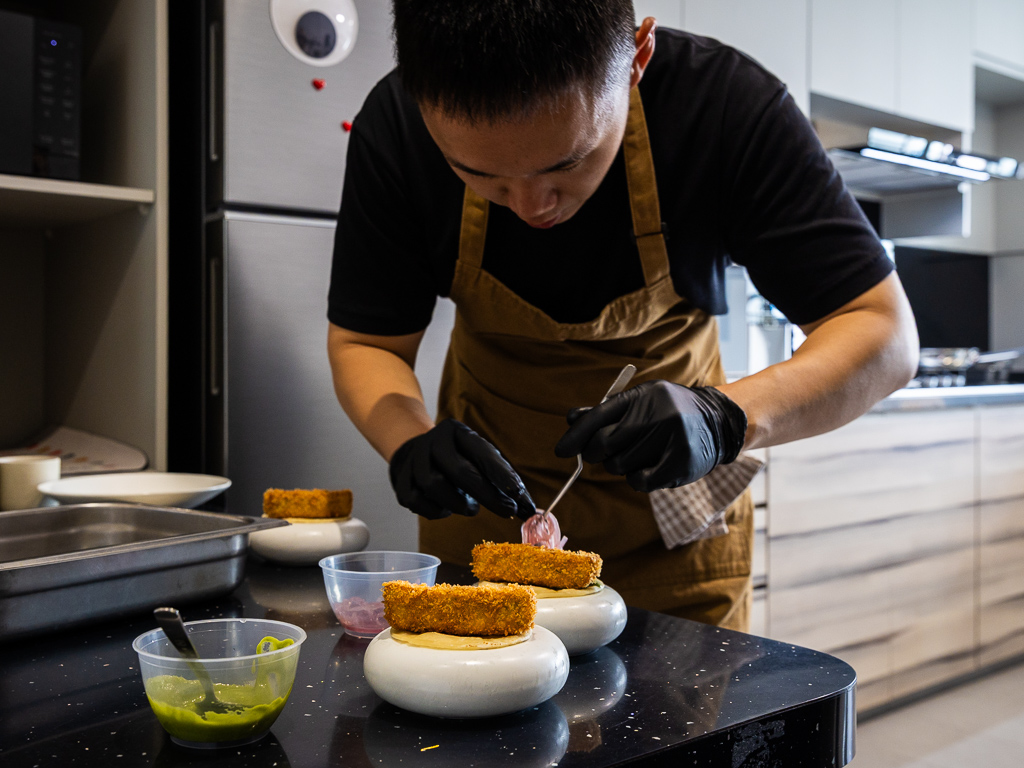
“It hit differently. Before this, I was always cooking someone else’s food. So even when customers complimented the food… It felt like a compliment to the chef, the boss or the place. But this was the first time that the compliment came out, it felt like: This is mine. 100% mine, not anybody else,” Jon recalls.
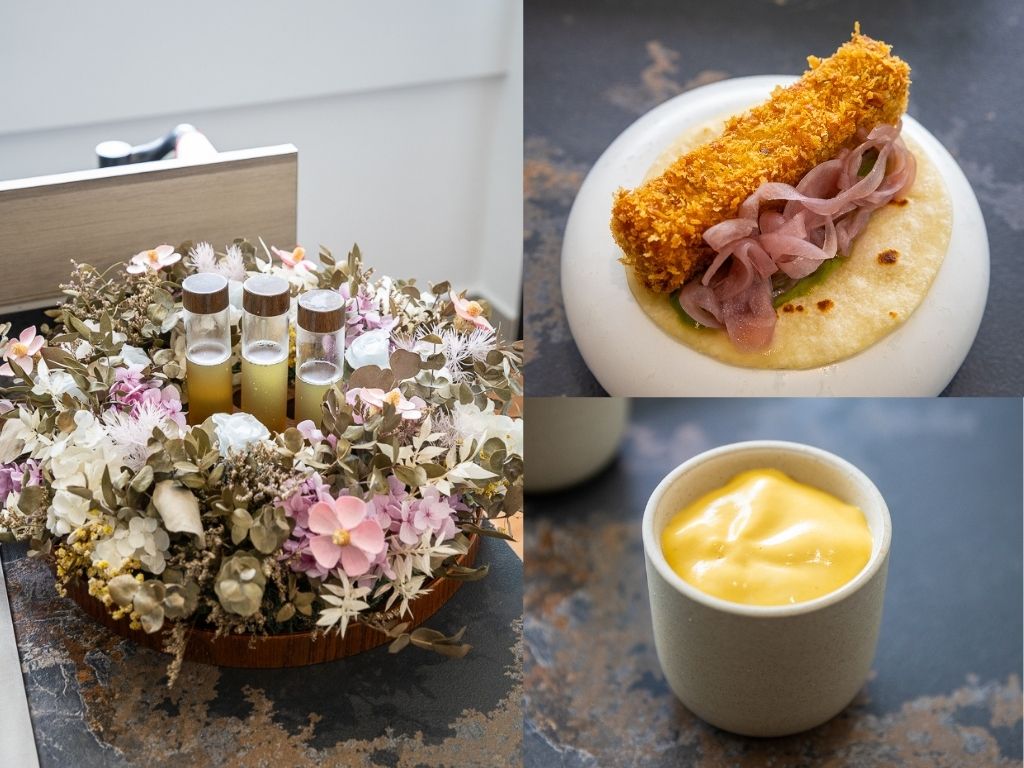
That moment — a simple compliment, sincerely given — captured everything Jon had been seeking when he left commercial kitchens. Not fame, not accolades. Just the direct connection between his cooking and someone genuinely enjoying it.
“I love cooking food, and I love to cook for people that love to eat,” he says. It’s that simple.
The long game
The couple has recently started offering seasonal takeaway bakes. Currently, it’s a bread pudding for Christmas, made with Pandoro bread (a sweet Italian bread), vanilla, pear and dark chocolate.
At Krystle’s persistent nudging, brownies will join the line-up soon. It’s one of her favourites, though he’s never put it on a menu before.
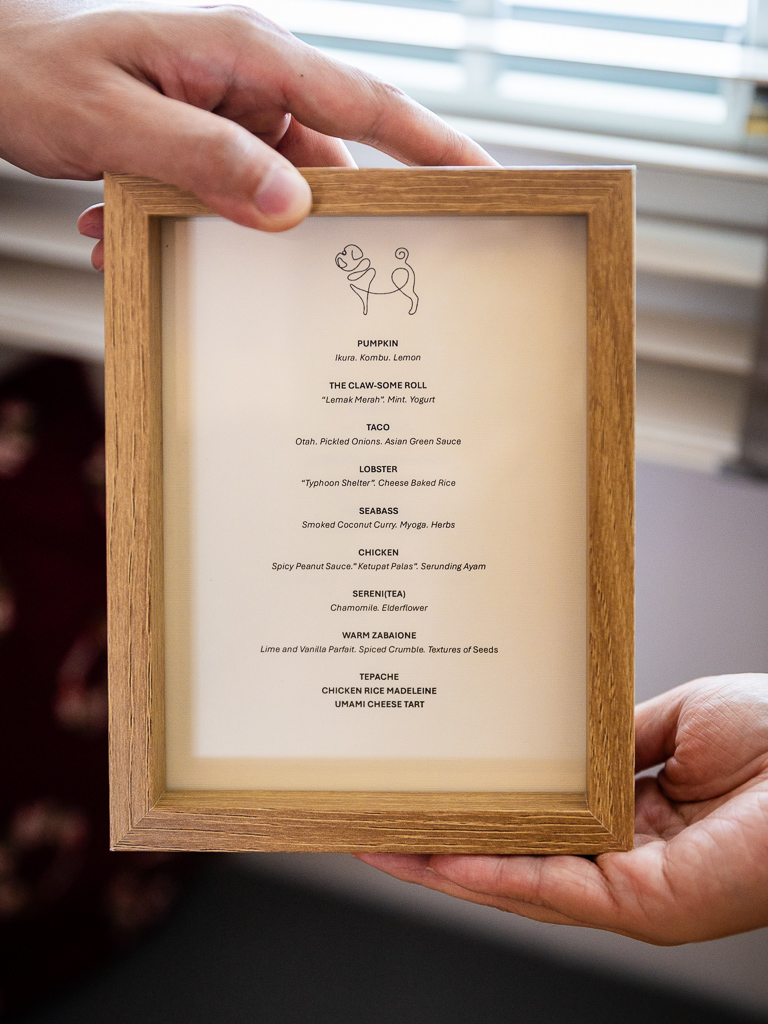
But the dining experience remains their focus. The goal, however, is straightforward: Be fully booked for dining service. (At the moment, business is erratic and can dip to as low as two to four guests per session.)
When probed about bigger plans, such as a brick-and-mortar restaurant, Jon shrugs.
“Deep down, I still have that lingering thought about opening my own place … but I’m going to take one day at a time, and if the opportunity presents itself, then we’ll take it,” Jon says. For now, his priority is pushing himself creatively, refining his style and seeing where the cuisine takes him.
Krystle is more focused on the present. Being able to give the business a strong foundation is what’s most important right now.
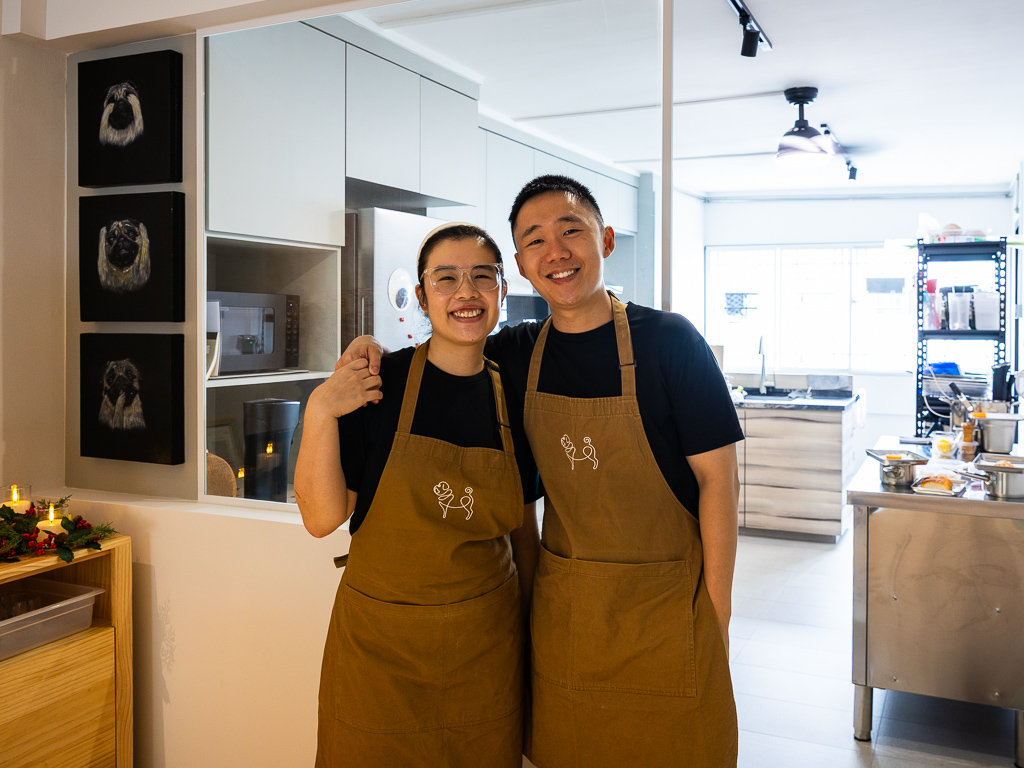
“At the end of the day, it’s small-scale, it’s home-based, but it’s still our business. It’s something we are very proud of, and we want to really run it well,” she says. “Maybe in a few years, when we feel stagnant, we’ll want more.”
For now, though, thrice a week feels like exactly the right ambition.
For more ideas on what to explore, check out our stories on the viral Dragon Curry at Golden Mile Food Centre and French-Japanese fine-dining restaurant Loca Niru at the historied House of Tan Yeok Nee.
- Hougang



Gael comes from a family of picky eaters and she also likes to talk a lot. So, writing about food seems like a reasonable pastime for her.
Read more stories from this writer.