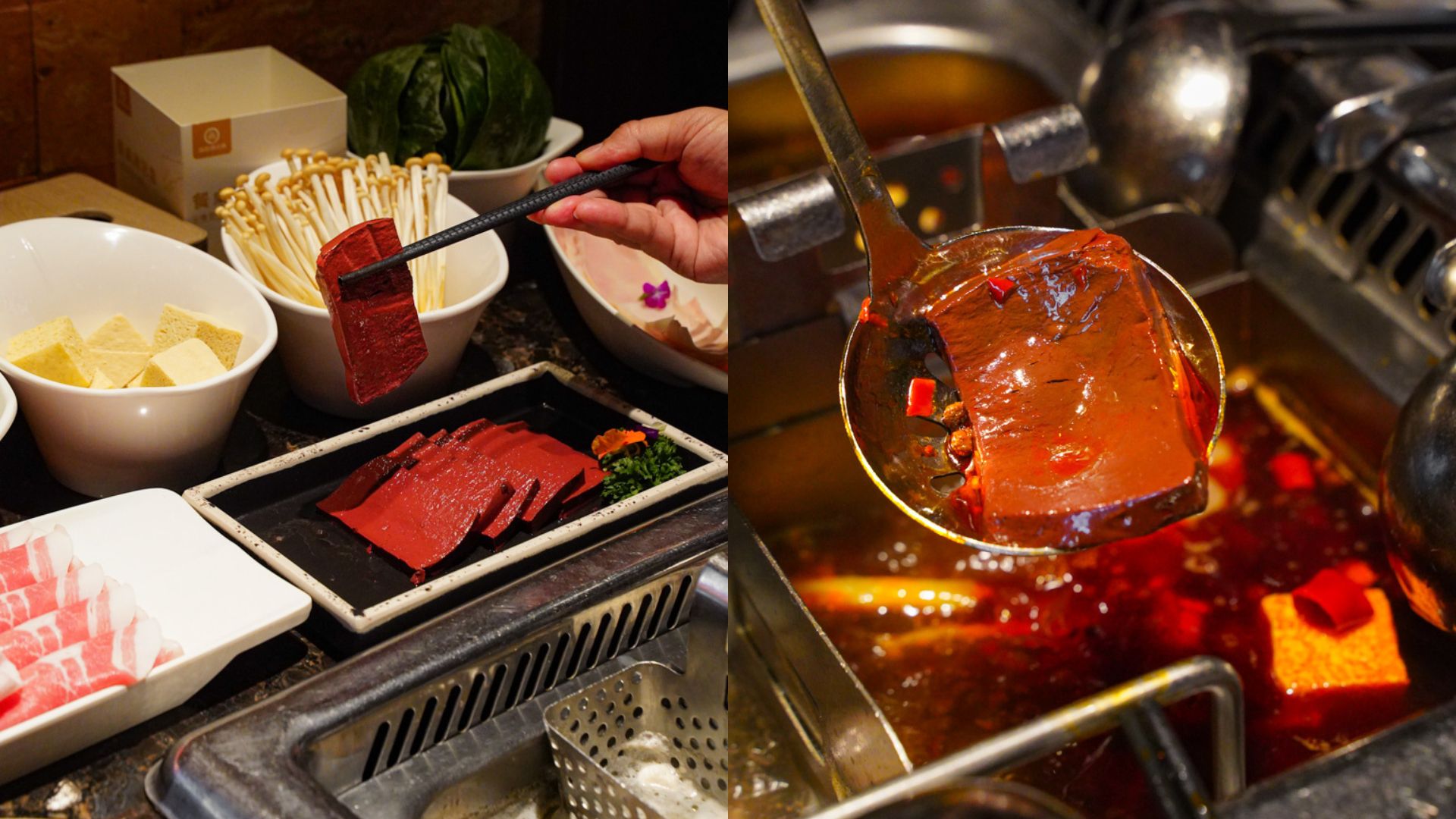
Pig’s blood is back in SG after nearly 30 years. Here’s our take

Pig’s blood is finally back in Singapore, baby!
Well, not yet, but very, very soon.
Those keeping their eyes on news headlines might remember a surprising announcement from Singapore Food Agency (SFA) back in April.
Importing pig’s blood into Singapore, which has been banned for 27 years, is finally allowed once more.
If the ban was a person, it would have gone through NS, graduated university, and started paying income tax by now.
While we have to wait a little longer, Singaporeans will be able to indulge in the uncommon ingredient from June.
CP Foods, the frozen-foods giant you may know for dumplings and chicken drumlets, will be the first to bring pig’s blood back to Singapore!
Pig’s blood as a delicacy
Given the extended ban on it, pig’s blood will be foreign to a good chunk of us in Singapore.
Those who are more adventurous in their foreign escapades, though, would recognise it as a niche ingredient widely accepted in many cultures’ kitchens.
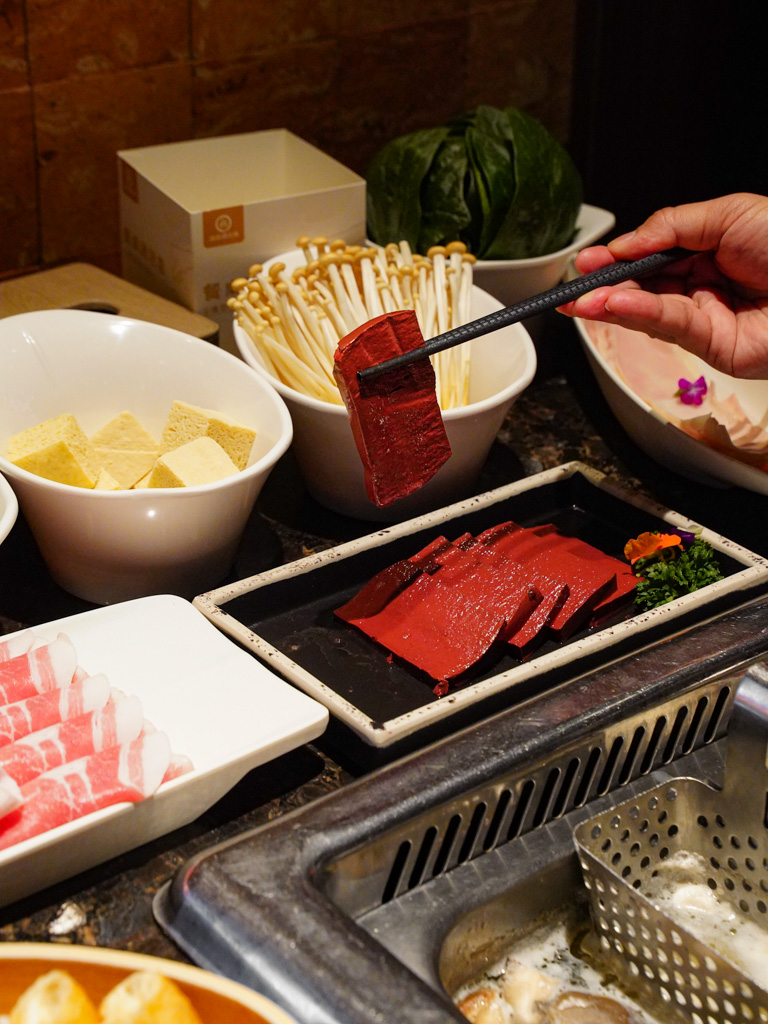
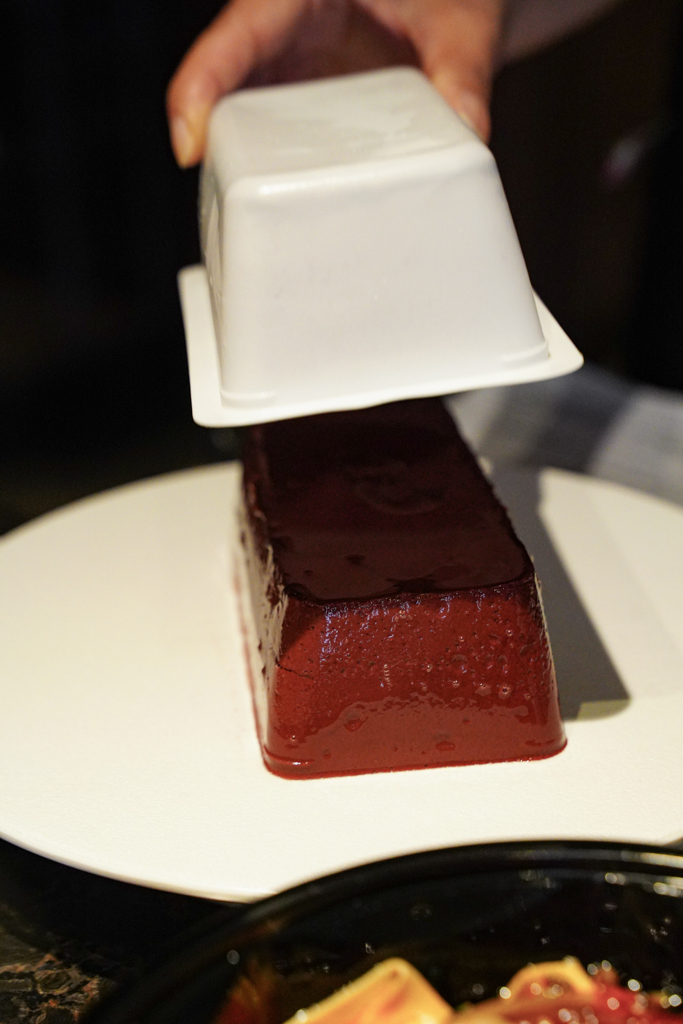
What we call “pig’s blood” is actually a curd made from pig’s blood, which is coagulated with hot and salted water.
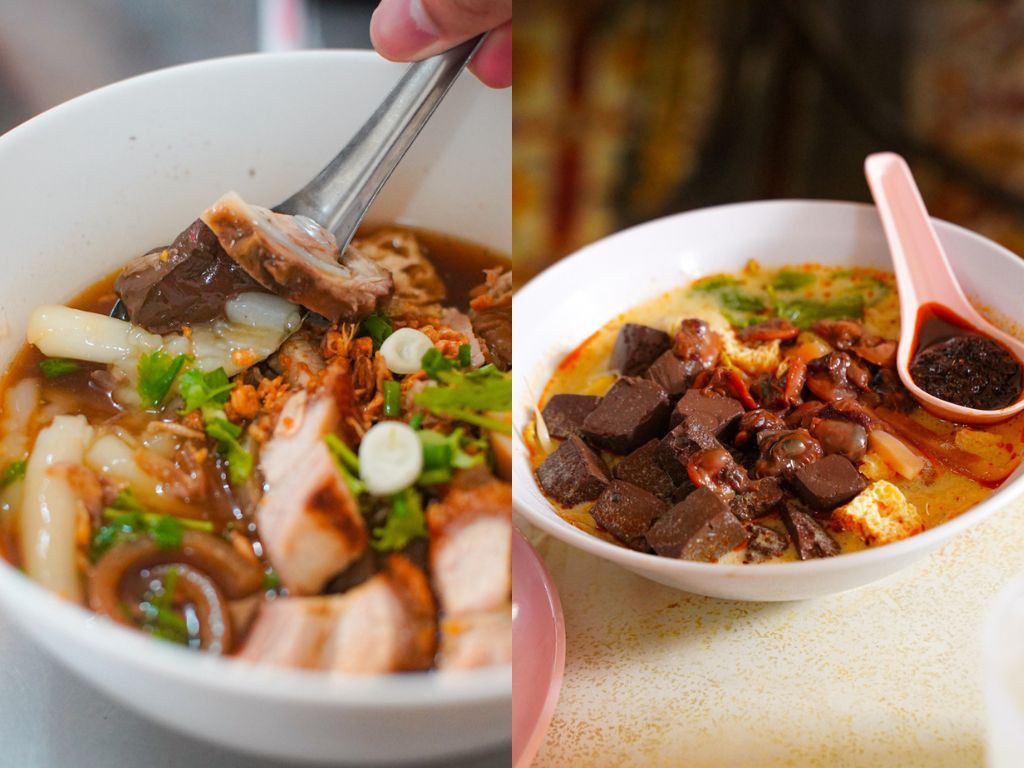
For starters, it can be spotted regularly on the menus of street-food stalls, not too far from us, in Thailand and Malaysia — pig’s blood is not an uncommon find in Bangkok or Penang.
Many locales in China also have dishes featuring it, along with a myriad of offal, and also in Taiwan, along with duck blood.
While Asian cultures, including Singapore, predominantly consume pig’s blood in its congealed form, many cultures around the world incorporate it into the food directly.
For example, blood sausages are found in western and Latin American cuisine, among others. The UK is also known for it, with traditional dishes such as black pudding using pig’s blood.


CP Foods brings pig’s blood to Singapore
Why was pig’s blood first banned in Singapore anyways?
It’s widely recognised that the Singapore government can be quite stern on some of its guidelines, particularly regulations regarding the safety of food products.
Back in 1999, a Nipah virus outbreak meant that SFA’s predecessor, the Agri-Food and Veterinary Authority of Singapore (AVA), saw fit to ban pig’s blood.
In Malaysia, the Nipah virus was spreading wildly through pig farms, and it eventually resulted in 11 cases and one death in Singapore, where workers at the local abattoir handled pigs from Malaysia.
Even after the outbreak blew over, AVA upheld the ban of collection and import of pig’s blood in Singapore, citing it as a potential source of harmful pathogens.
CP Foods, as a stalwart in the food industry, understood the importance of assuring food safety.
According to a spokesperson from CP Foods Singapore, the company is the one that got the ball rolling — it had already been producing and selling packaged pig’s blood curd in Thailand since 2020, and submitted the application to bring its established pig’s blood product to Singapore.
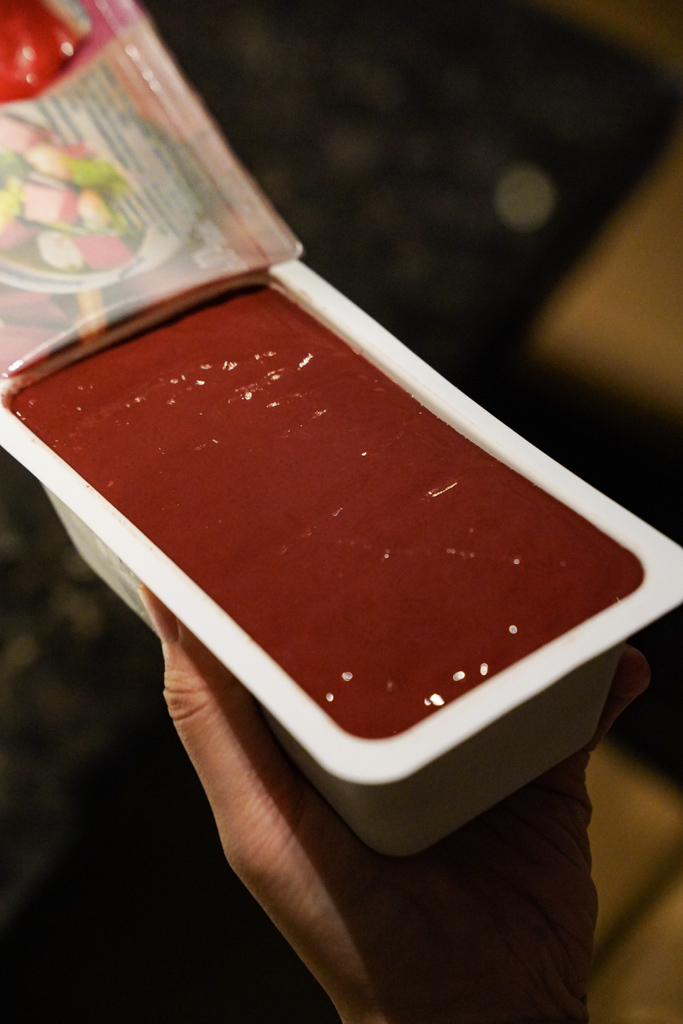
What CP Foods does differently from the past is in its processes from start to end.
First, the blood is collected through sanitised vacuum tanks, then filtered. The blood is then pasteurised and cooked at high temperatures to be turned into curd.
The finished product is also subject to rigorous microbiological testing to ensure safety before export, and subsequently handled in appropriate refrigerated conditions.
CP Foods’ pig’s blood will be rolled out into selected retailers such as FairPrice and Sheng Siong from June onwards, and will be available at S$6.95 for a 400g tray!
How will Singapore eat pig’s blood?
Full disclosure: We’d previously tried pig’s blood outside of Singapore on multiple occasions.
But we were interested to see how CP Foods’ version of the product fared, so we popped by the media preview at Haidilao to see for ourselves.
Yes, Haidilao Singapore will be serving pig’s blood.
For the reintroduction of pig’s blood into Singapore, Haidilao and Yew Kee Specialities will be two of the first local F&B establishments to adopt it.
Over the past weekend, Putien has also announced it will be treating customers in Singapore to a complimentary pig’s blood dish in late May!
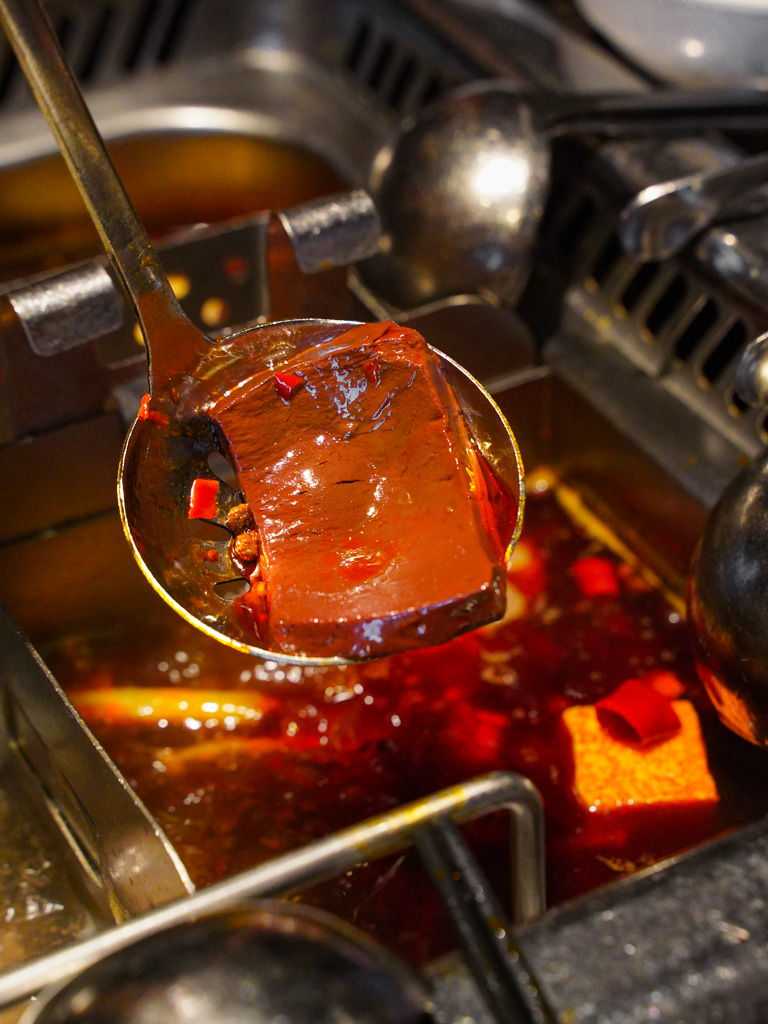
Firstly, how do you cook it?
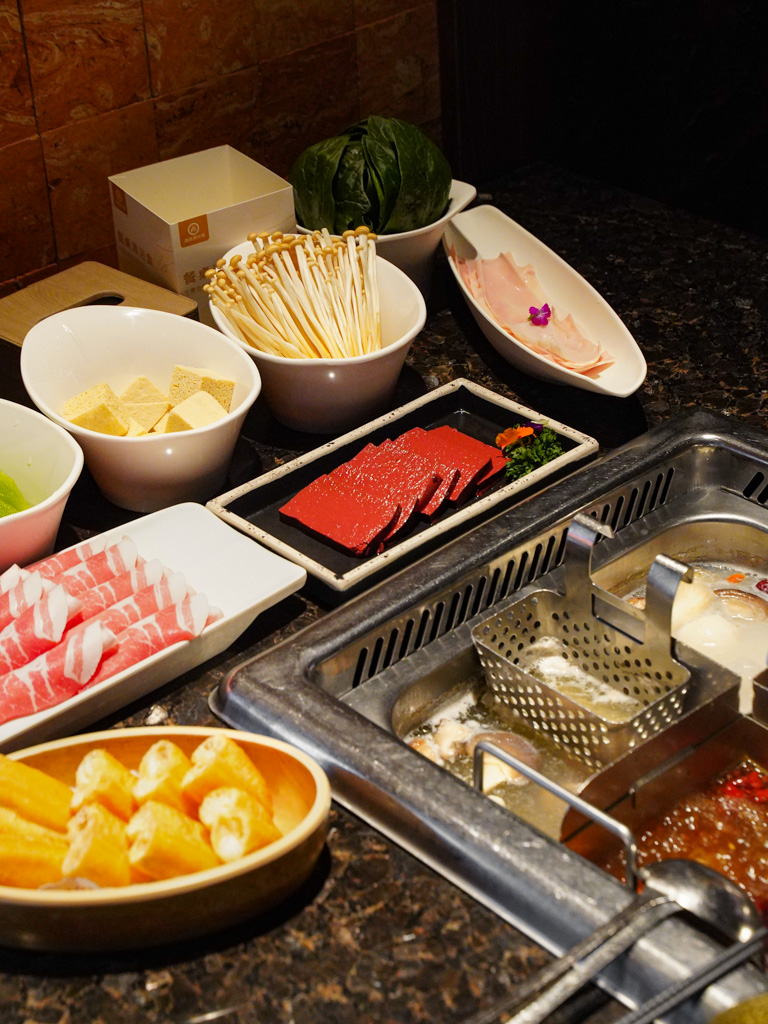
Haidilao recommends cooking the pig’s blood curd in the broth for three to five minutes. For this purpose, we were given both a mala broth and a pig-stomach and chicken broth to experiment with.
The first thing you’ll notice, when you bite down, is the flavour — rather, that there is no real flavour to pig’s blood, on its own.
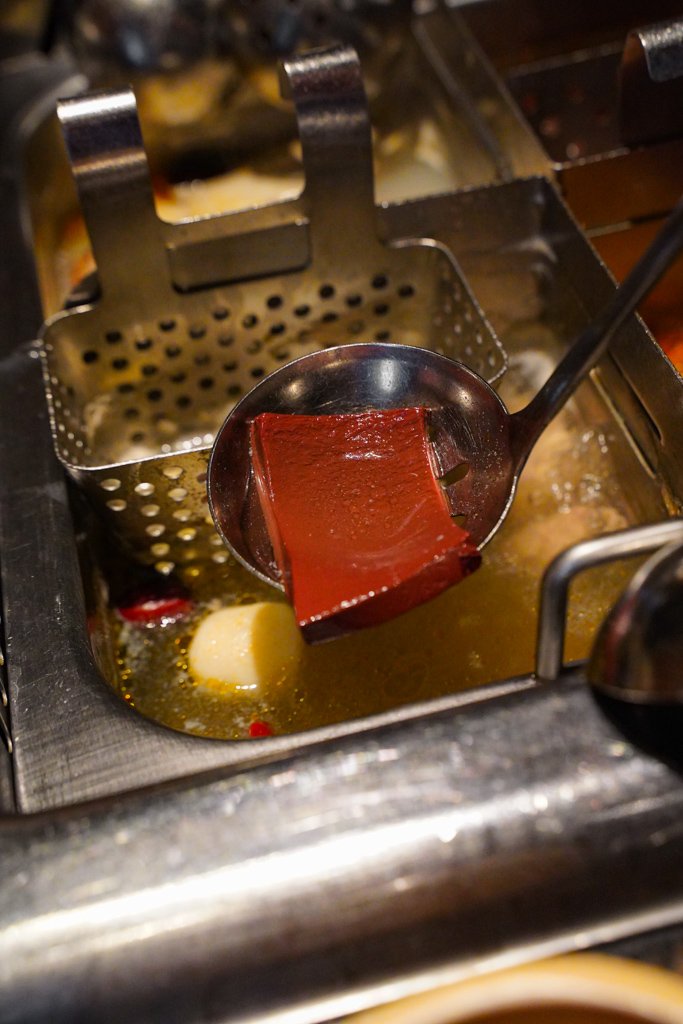
Many in Singapore who have never encountered pig’s blood have voiced apprehension of its gamey funk or iron-filled odour, but in reality, there is essentially none.
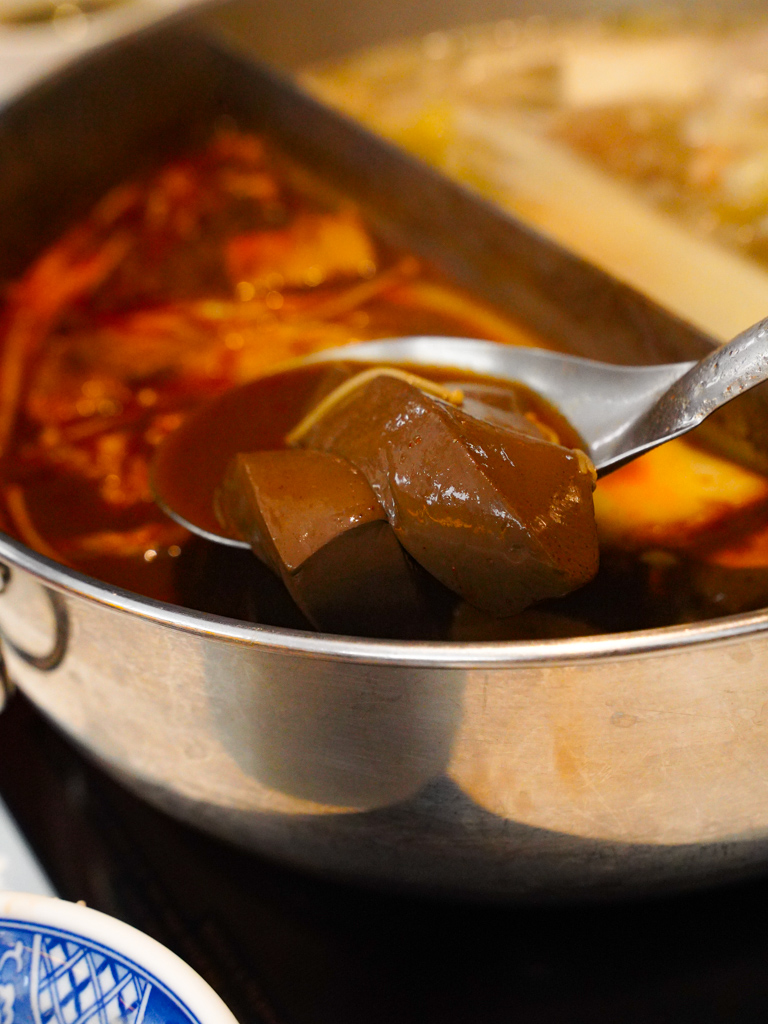
In fact, it takes on the profile of the broth it’s cooked in, but still ends up tasting extremely clean.
For example, the chicken broth version tastes light, with a bit of that comforting chicken sweetness, while the mala one just brims with numbing spice.
The crux of pig’s blood as an ingredient isn’t in its flavour, but rather the texture — it is actually supremely velvety, like tofu, but even smoother and more pliable.
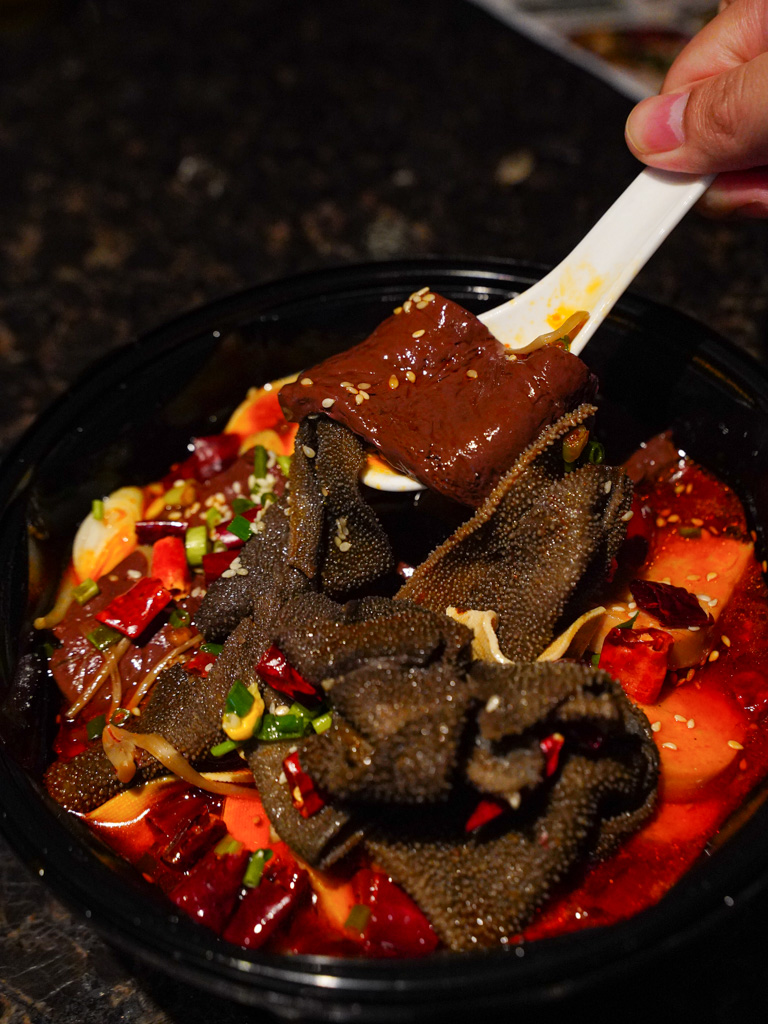
In fact, the pig’s blood curd has a high tolerance for overcooking, as it came out still wonderfully silky, after we had left one in the hotpot for 15 minutes.
Haidilao also threw it into a spicy hotpot dish with beef tripe, ham, and other ingredients, and the result is a firmer, bouncier texture that is even more akin to tofu.
Ultimately, pig’s blood is not a showstealer, but rather a chameleon-like ingredient that goes well with almost anything, elevating dishes with its velvety texture and ability to sponge up flavours.
We are very curious to see how pig’s blood is used in Singapore, considering the eclectic mix of restaurants that can be found here.
The CP Foods spokesperson noted that the company is also keen to work with western restaurants to see what unique ways its product can be utilised — we can only look forward to that!
This was a hosted tasting.
For more ideas on what to eat, read our stories on the new Korean restaurant in UE Square serving ssambap, and the free-flow Italian weekend feast at popular casual restaurant Lino!

Evan started off writing about food on Instagram, before joining outlets such as Buro and Confirm Good to pursue his passion. His best work usually comes after his first whisky shot in the morning.
Read more stories from this writer.