DIY bibimbap concept Bibim Deli by Culinary Class Wars chef Min Yohan opens at Suntec City

You might not be the most familiar with chef Min Yohan himself, but if you’ve spent some time living in Seoul, you definitely would’ve heard of his premium banchan (side dish) brand, Dosigotgan (도시곳간).
Otherwise, you might know him from his short appearance during the first season of Netflix’s Culinary Class Wars, where Min appeared briefly as a black spoon chef under the name “Side Dish Magnate”. The moniker is a nod to his banchan empire, which has over 53 locations across Korea.
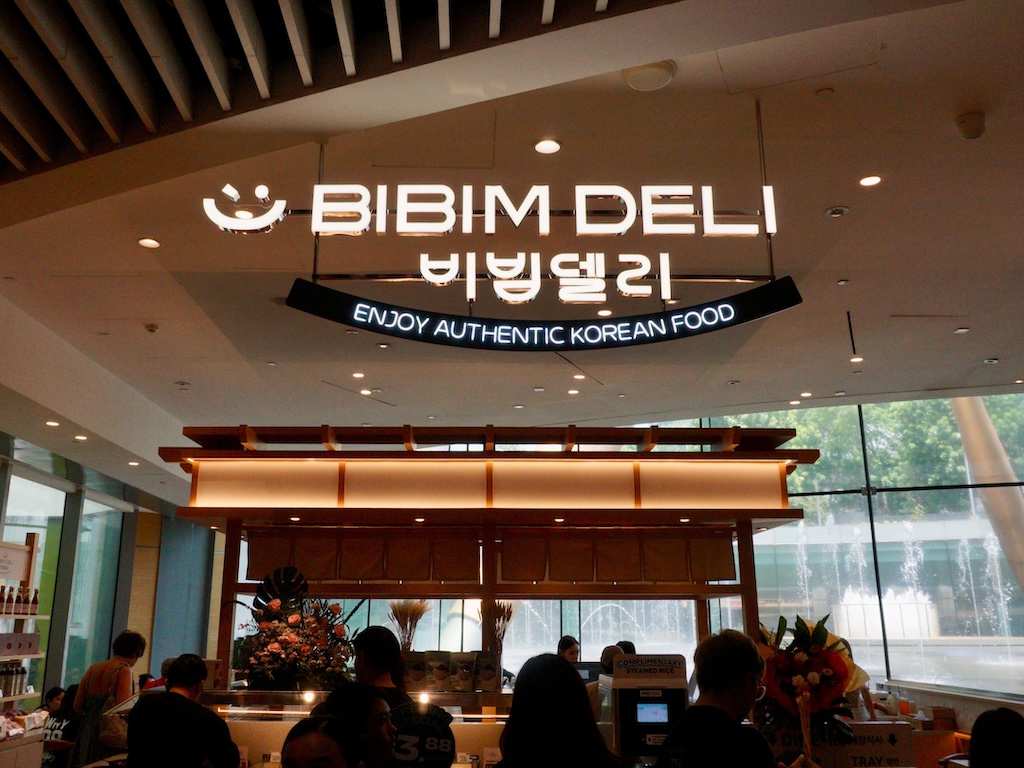
Despite his wealth of experience in food, the newly launched Bibim Deli — an all-new DIY bibimbap concept that’s just opened in Singapore — marks Min’s first F&B foray overseas.
At Bibim Deli, you get to customise your bibimbap bowl from over 20 dishes and sauces that rotate daily. The selection draws on chef Min’s repertoire of over 1,000 recipes.
You can think of it as cai fan (economic rice) with Korean dishes, but charged by weight — mala xiangguo-style.
The entrepreneurial chef
As the CEO of a multi-million dollar company at the young age of 28, managing Dosigotgan was not the end goal Min Yohan initially had in mind.
From young, Min had taken a keen interest in culinary arts. By the time he was 14, he had already attained seven F&B-related certifications in a range of cuisines, including Korean, Chinese, Japanese, and baking and pastry arts — just to name a few.
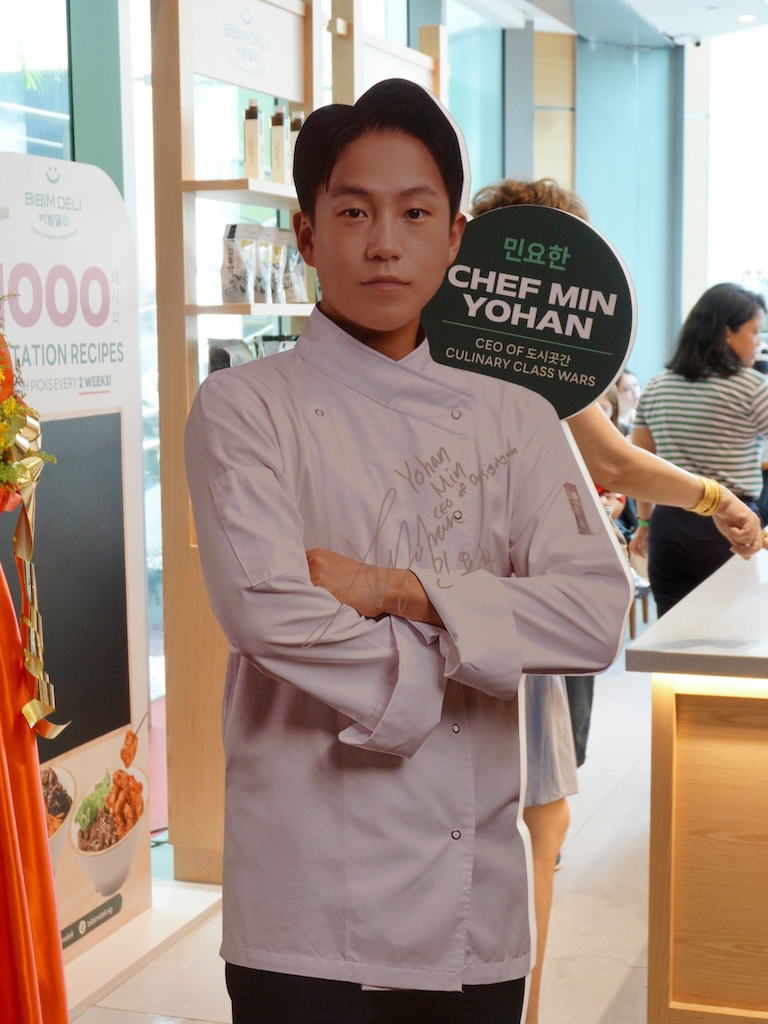
When it was time to apply for college, Min thought he wouldn’t be able to learn much from a Korean university, since he’d already attained most of the relevant certifications. In search of something more challenging, Min resolved to attend the famed Culinary Institute of America (CIA) in New York, but there was just one problem — his family couldn’t afford the fees.

Min’s parents were running a humble banchan stall in a traditional market, and Min knew he couldn’t put the financial burden of culinary school on his ageing parents.
As a result, Min started Dosigotgan by combining his parents’ expertise with a gap in the market he’d spotted — young farmers struggling to find longevity in selling their agricultural produce. Dosigotgan became an “edit shop” of sorts, featuring a constant rotation of his parents’ banchans alongside a selection of seasonal agricultural products.
While this was meant to be a temporary stint — just enough for Min to earn his school fees — Dosigotgan took off with various communities across Seoul, leaving Min the unintentional owner of a multi-million dollar business.
Since then, Min has been on a roll with his F&B ventures, with his latest one being Bibim Deli, which also marks Min’s first overseas F&B venture.
DIY bibimbap
Korean restaurants in Singapore are a dime a dozen, but a DIY bibimbap concept is definitely a first here.
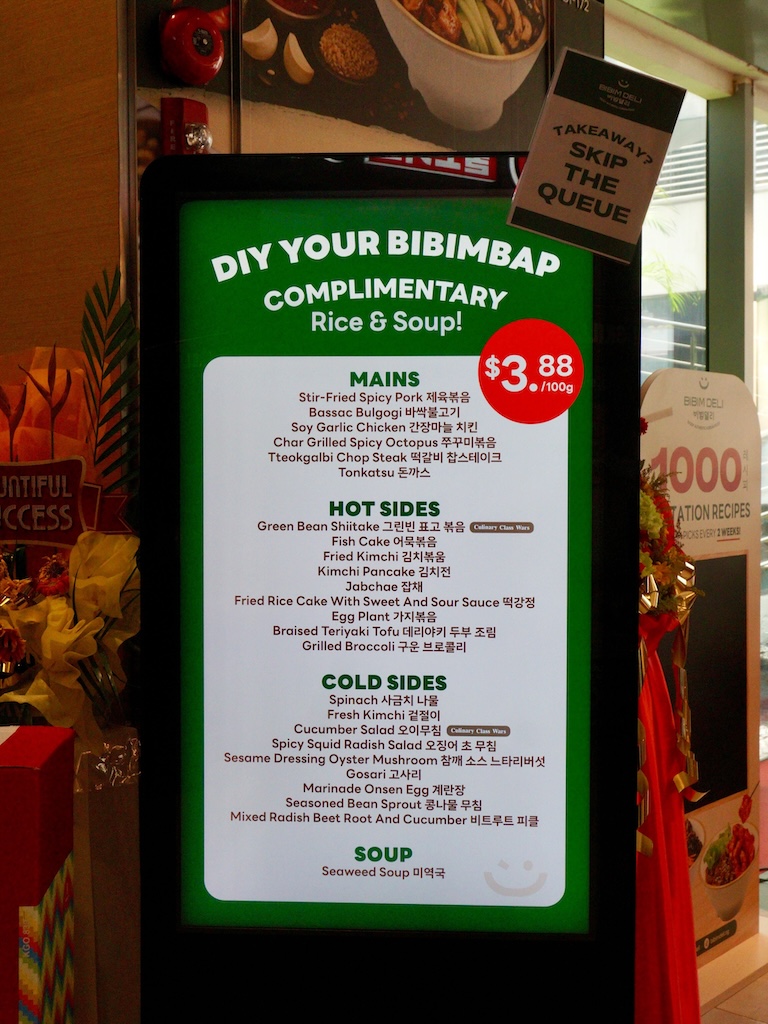
Boasting over 1,000 recipes from chef Min himself, Bibim Deli has around 20 different dishes on rotation every day, making sure you’ll never bore yourself with the same selection each time.
Here, your bibimbap bowl is charged by weight, going at S$3.88 per 100g (minimum order of 200g).
The space at Bibim Deli
Bibim Deli sits at the basement of Suntec City, closer to the inner circle surrounding the Fountain of Wealth.
At noon, the place was packed to the brim with office workers chomping down a hearty bowl of bibimbap, while the snaking queue outside didn’t seem to die down at all throughout lunch hour.
A pro-tip: If you’re looking to skip the queues, opt for takeaway instead of dine-in.
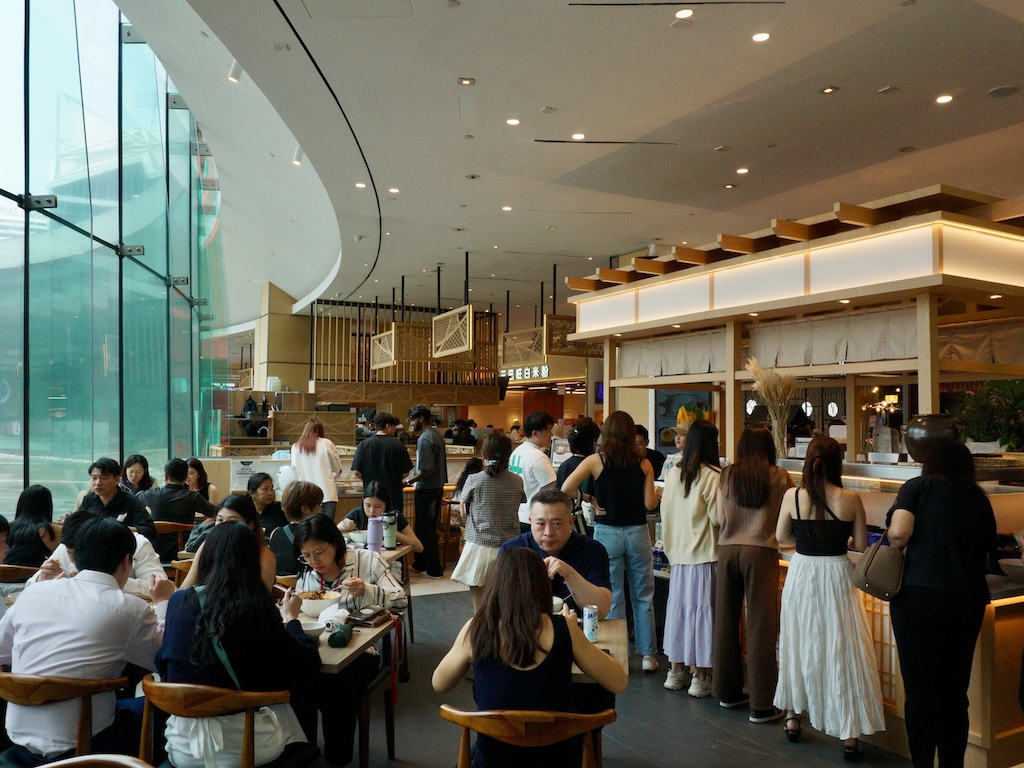
Since Bibim Deli’s seats are located in the atrium, rather than within a unit, it can get pretty noisy at lunchtime. Still, the floor-to-ceiling windows allow you to get a nice view of the Fountain of Wealth, while munching on your bibimbap.
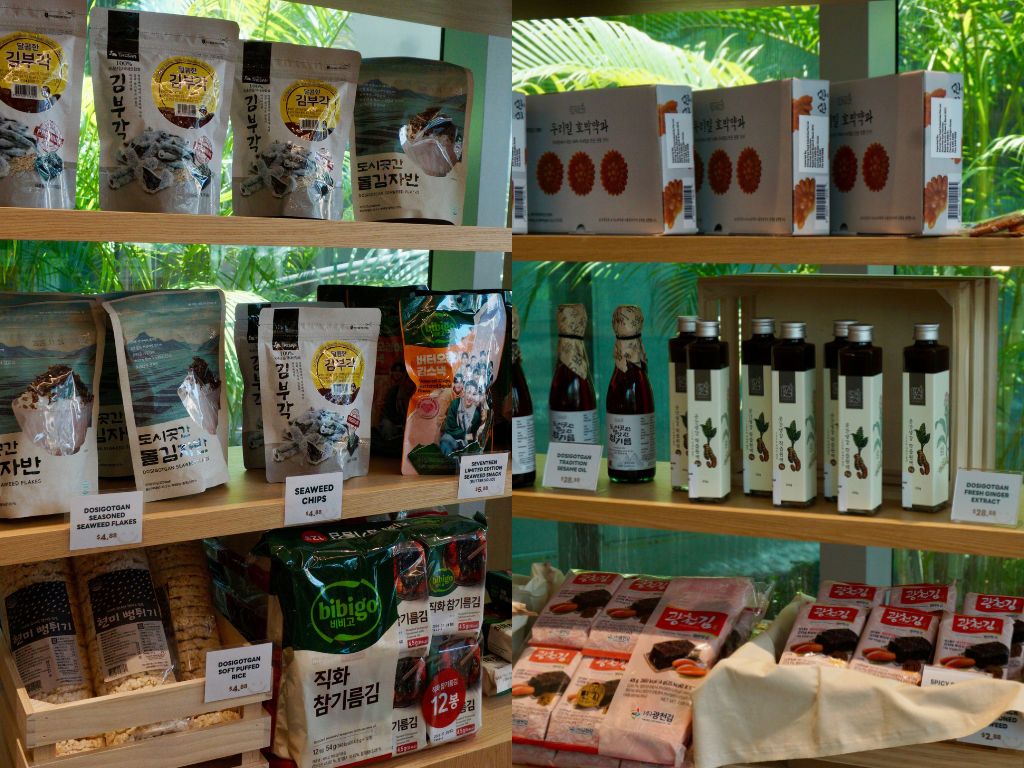
There’s also a corner stocked with snacks and condiments from Min’s Dosigotgan brand for customers to purchase for their own pantries!
Making your own bibimbap
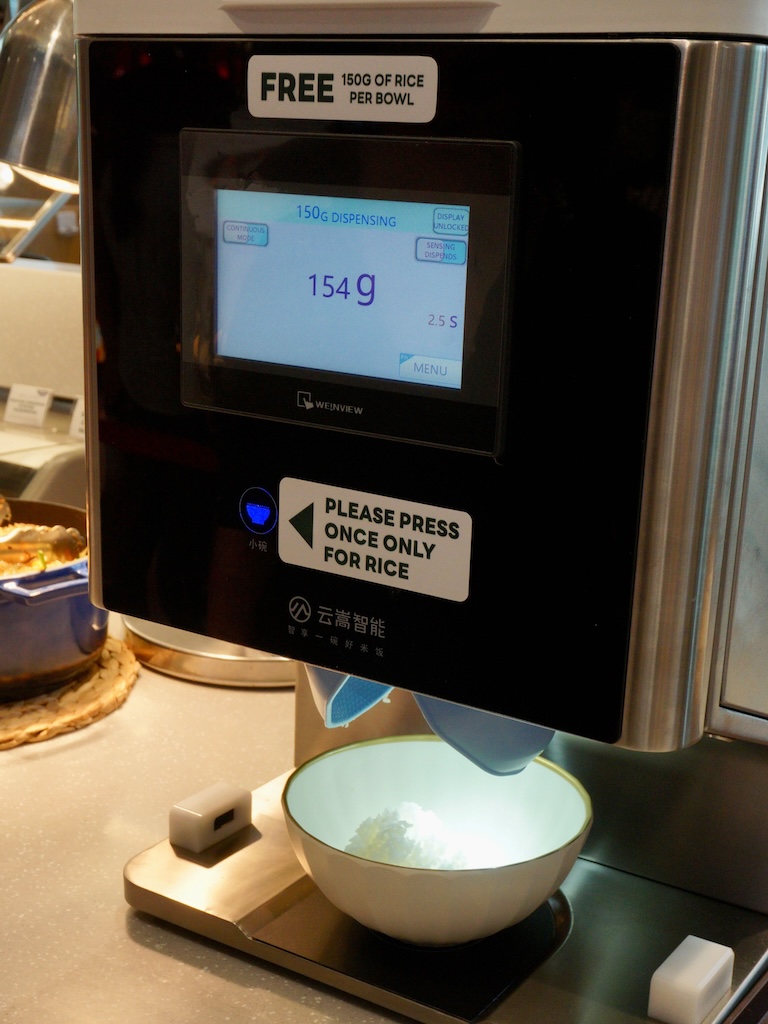
Creating your own bibimbap bowl at Bibim Deli is pretty straightforward. You start off by dispensing a 100g portion of white rice into your bowl.
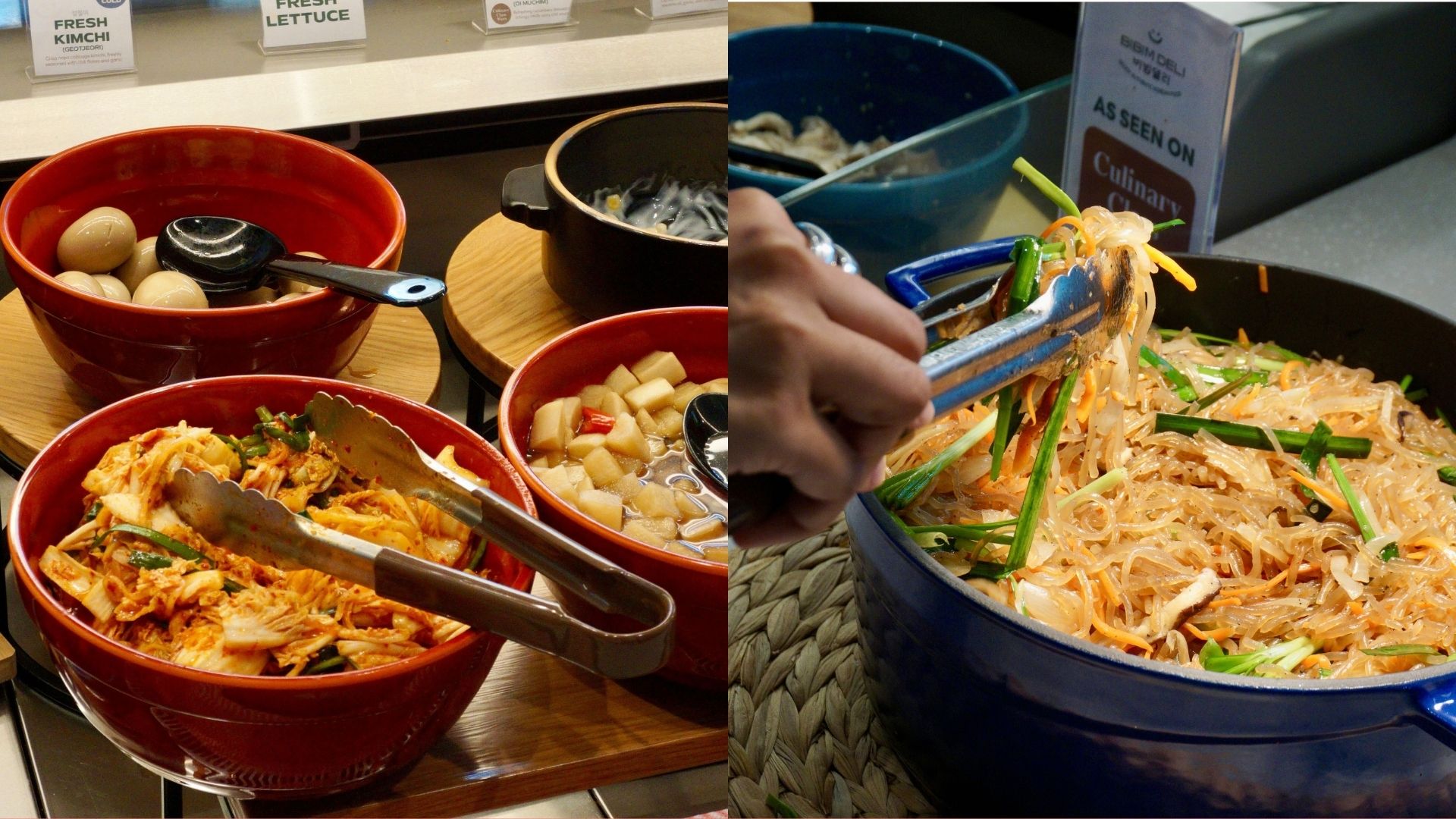
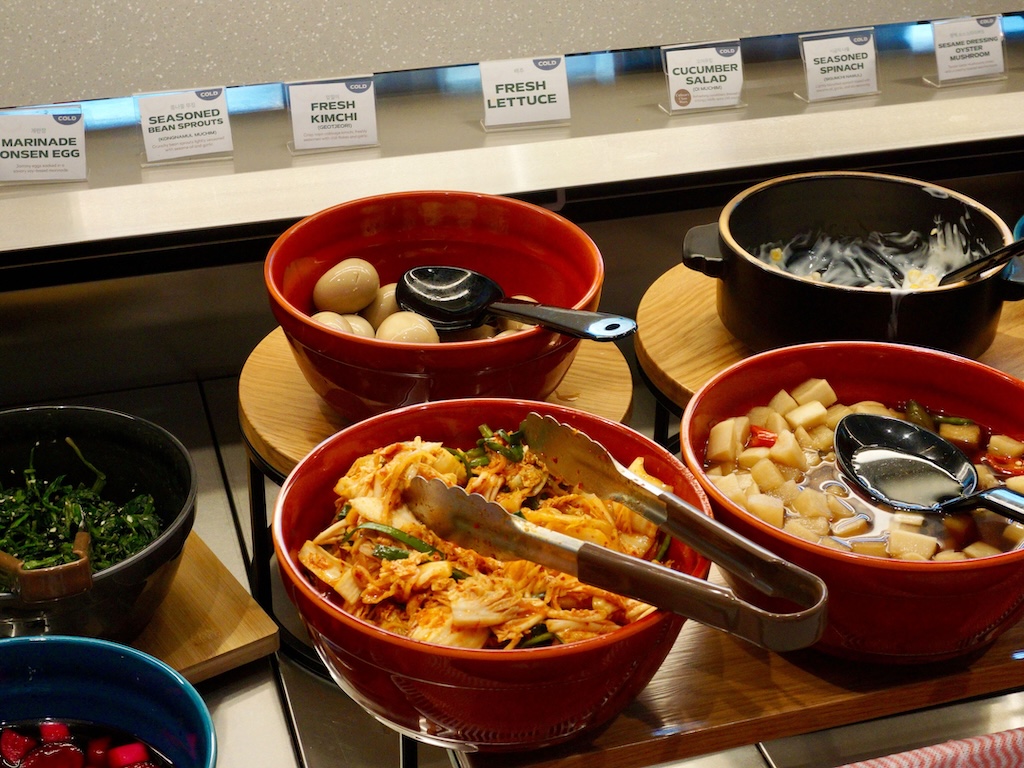
You then get to pick your cold sides. Traditional bibimbap sides such as spinach, cucumber salad, and seasoned bean sprout were displayed alongside less conventional ones, such as sesame dressing oyster mushroom and sweet corn mayo.
After which, you’ll be greeted with a selection of hot sides, featuring bibimbap staples such as fish cake, fried kimchi, and the essential fried egg.
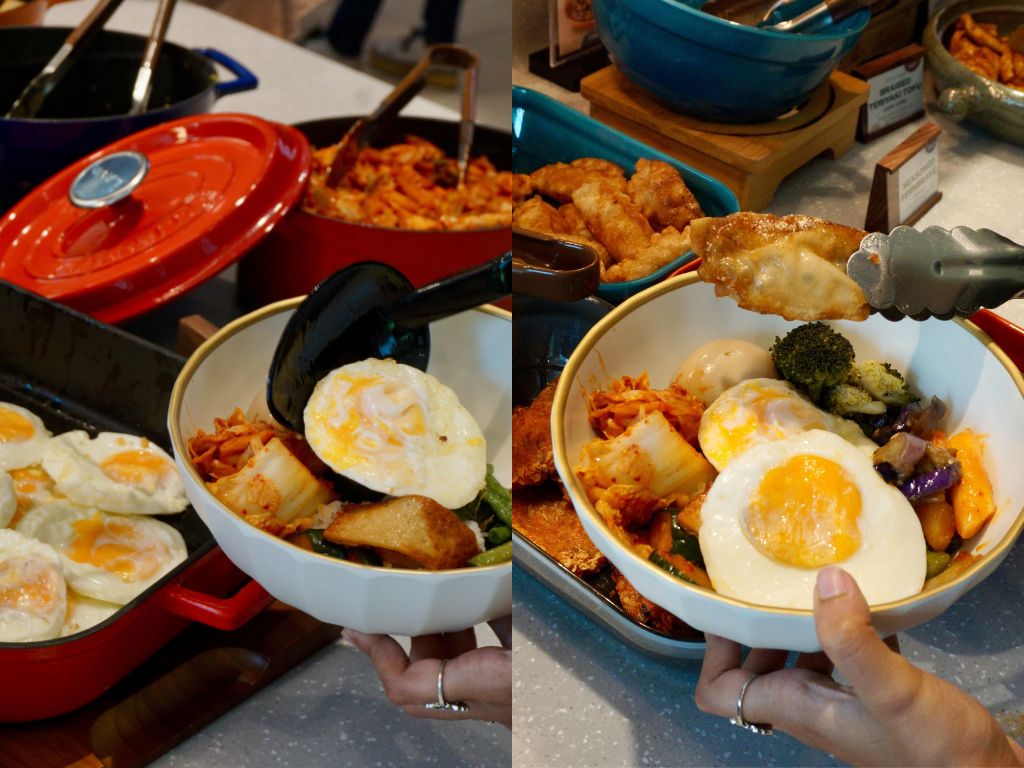
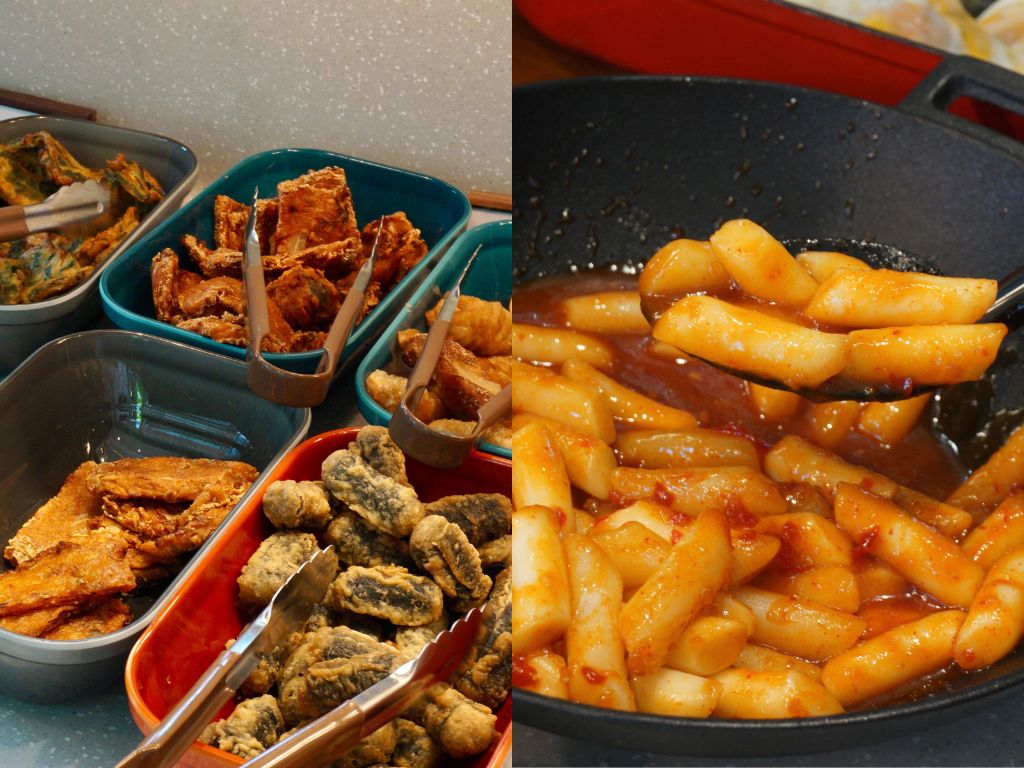
Interestingly, the hot sides at Bibim Deli include a rather wide spread of bunsik (snack) food, from fried rice cakes with sweet & sour sauce (tteok gangjeong), to tonkatsu and seafood pancake.
Definitely not your traditional picks for bibimbap, but a great addition for those who’d like their bibimbap bowls a little less healthy.
At the next corner comes the mains, where you can take your pick of protein. As per the previous sections, there’s a good mix of traditional mains such as stir-fried spicy pork and Bassac bulgogi, as well as more unconventional ones such as soy garlic chicken and tonkatsu.
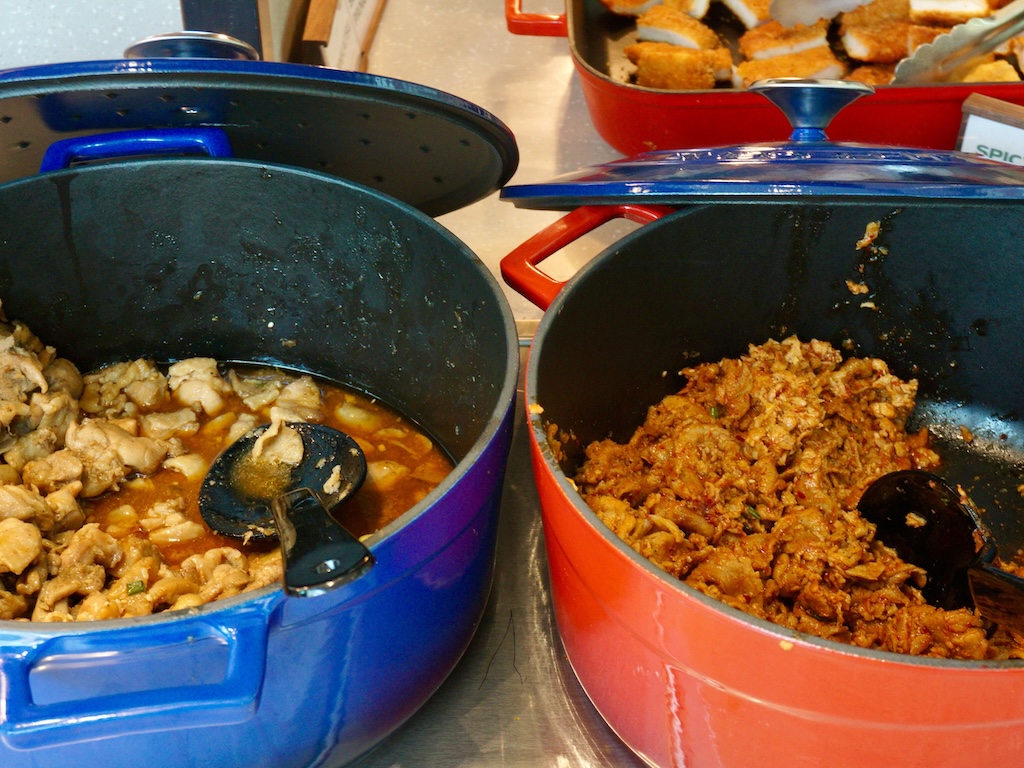
At Bibim Deli, you’ll notice the dishes aren’t displayed in big buffet trays, but rather in smaller display plates. That’s because dishes are brought out frequently in small quantities to ensure the ingredients stay fresh.
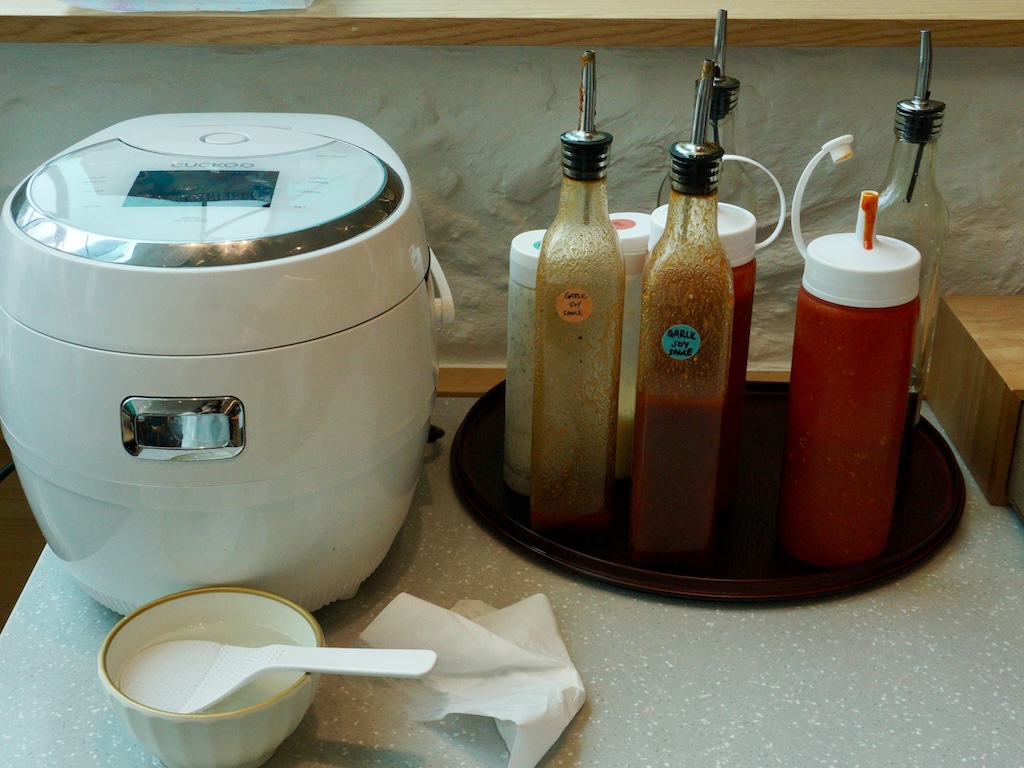
Finally, you can add the finishing touches to your bibimbap at the condiment bar, where there’s bibimbap staples such as gochujang (red chilli paste) and sesame oil, and also more unconventional sauces — garlic soy sauce, aioli, and ranch — that pair well with the fried foods.
If the initial 100g portion of rice is too little for you, you can help yourself to free-flow rice at the self-help bar.
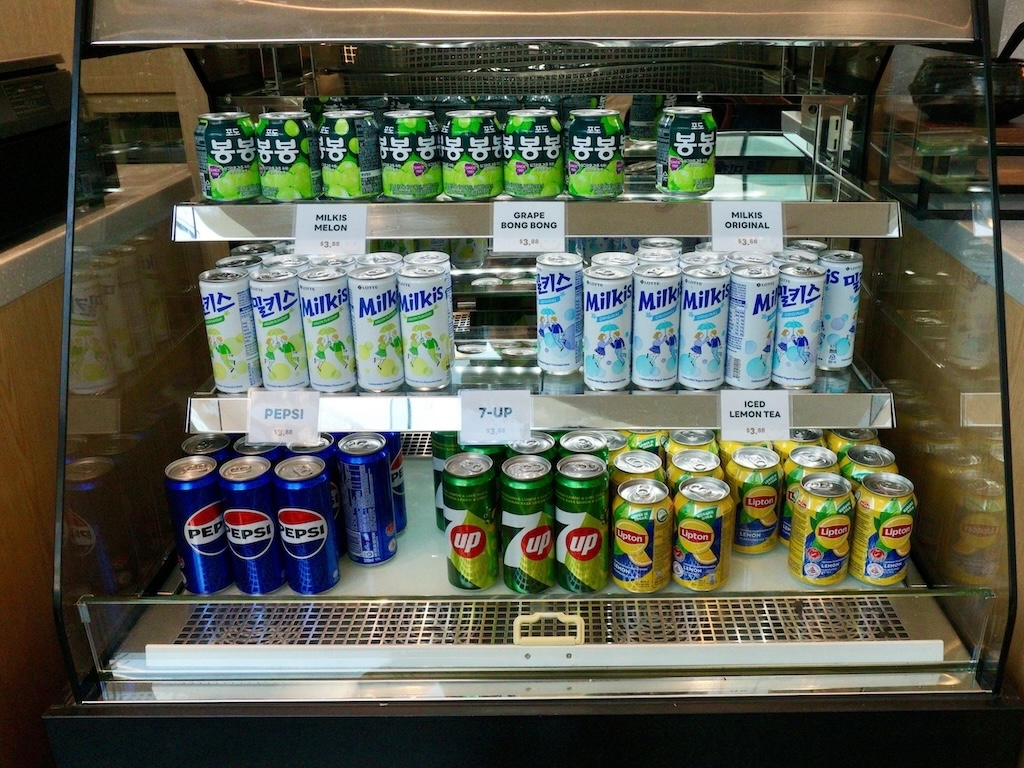
You’ll get a complimentary, non-refillable bowl of seaweed soup with your order, and if you’d like a drink to go with your meal, there’s the drink of the day available at S$2.88 a cup.
We got plum tea when we visited, but there’s also sikhye (Korean sweet rice punch) on rotation.
Free bibimbap
As part of its opening promotion, your bibimbap bowl at Bibim Deli is free as long as you accurately guess the weight of your bowl (+/- 5g).
We had two chances, but we fell short of the accurate weight by 10g, both times.
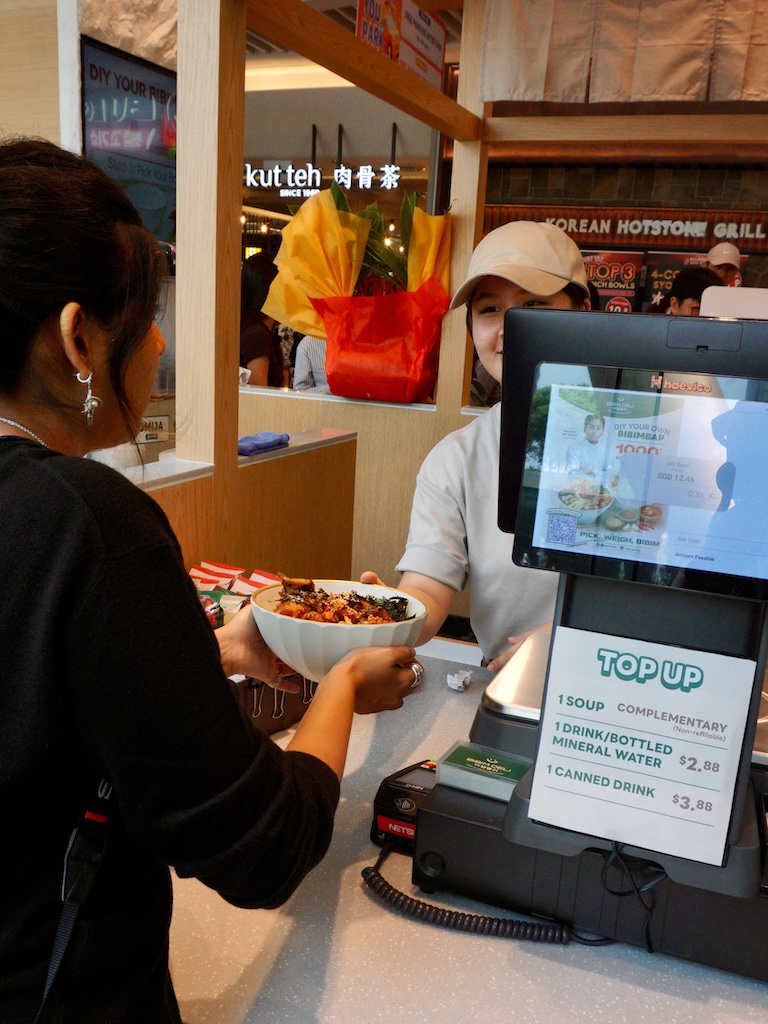
It’s not an impossible task, though. The staff would ring a bell whenever somebody made a successful guess, and while we were there, the bell went off every 10 minutes or so.
This opening event is ongoing from now till June 28, so you’ll have quite some time to practise your guesses, if you plan to make full use of this promotion.
Taste test
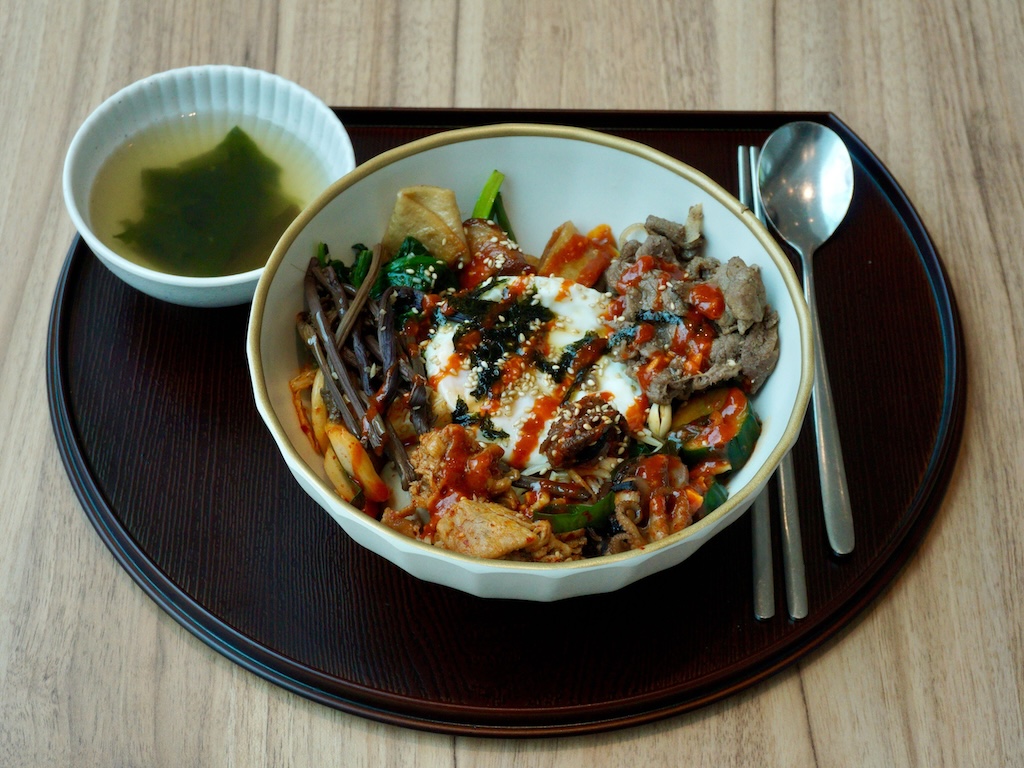
I opted for more traditional sides in my bibimbap bowl, such as gosari (bracken), spinach, seasoned bean sprout, and Bassac bulgogi. By contrast, my dining companion went ham with her selections, resulting in a mish-mash bowl of traditional and more modern sides.
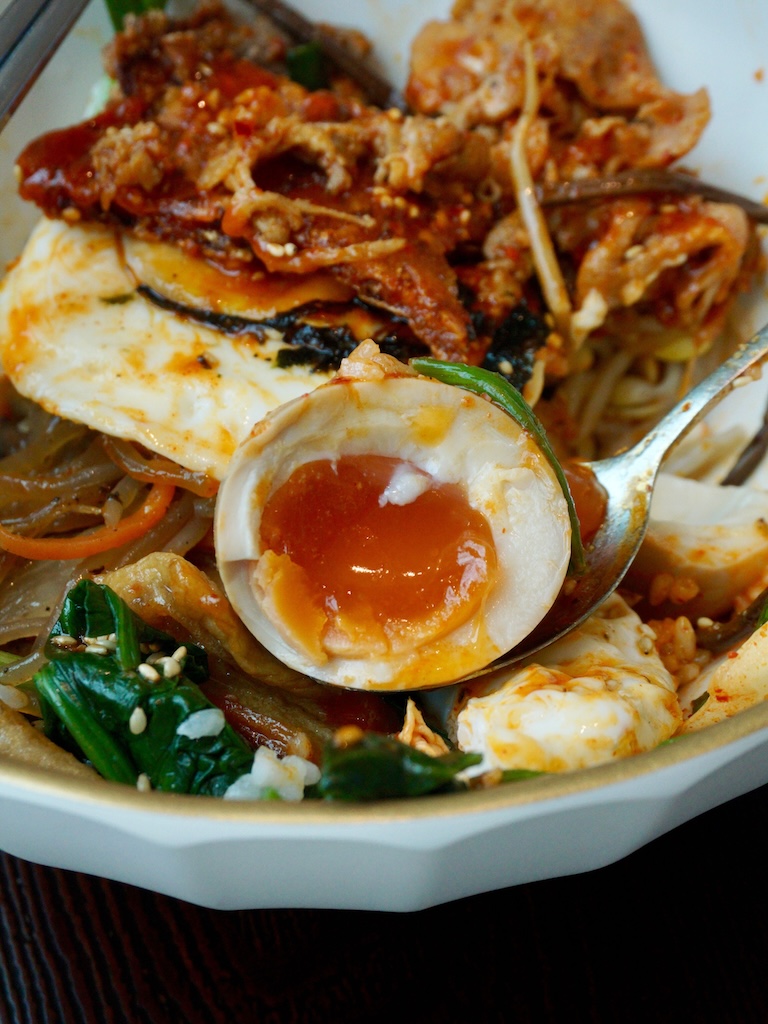
Of all the sides, I was most impressed with the marinade onsen egg. I’m well aware of how difficult it is to get that perfectly textured onsen egg — egg whites that are fully cooked, with an egg yolk that’s jammy.
Bibim Deli’s marinade onsen egg gets that desired texture right down to a T.
While the bunsik and fried foods were novel additions in our bibimbap bowls, we’ve had better renditions elsewhere — the kimchi pancake was too doughy and needed more kimchi oomph, while the fried rice cake with sweet and sour sauce was a tad too tough.
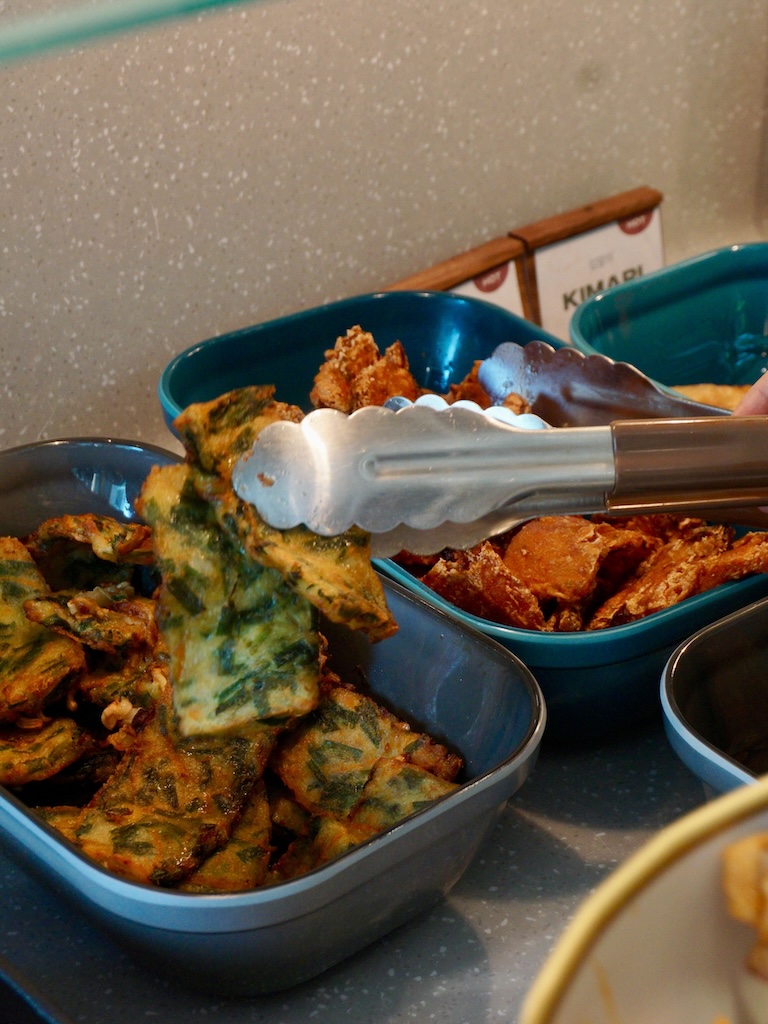
One bunsik side that stood out, though, was the kimari, seasoned glass noodles wrapped in seaweed and deep fried in batter. Usually served alongside tteokbokki (spicy rice cakes), kimari is not a side you’d expect to have with bibimbap. The kimari was perfectly crispy on the outside and you can distinctly taste the seasoned glass noodles within.
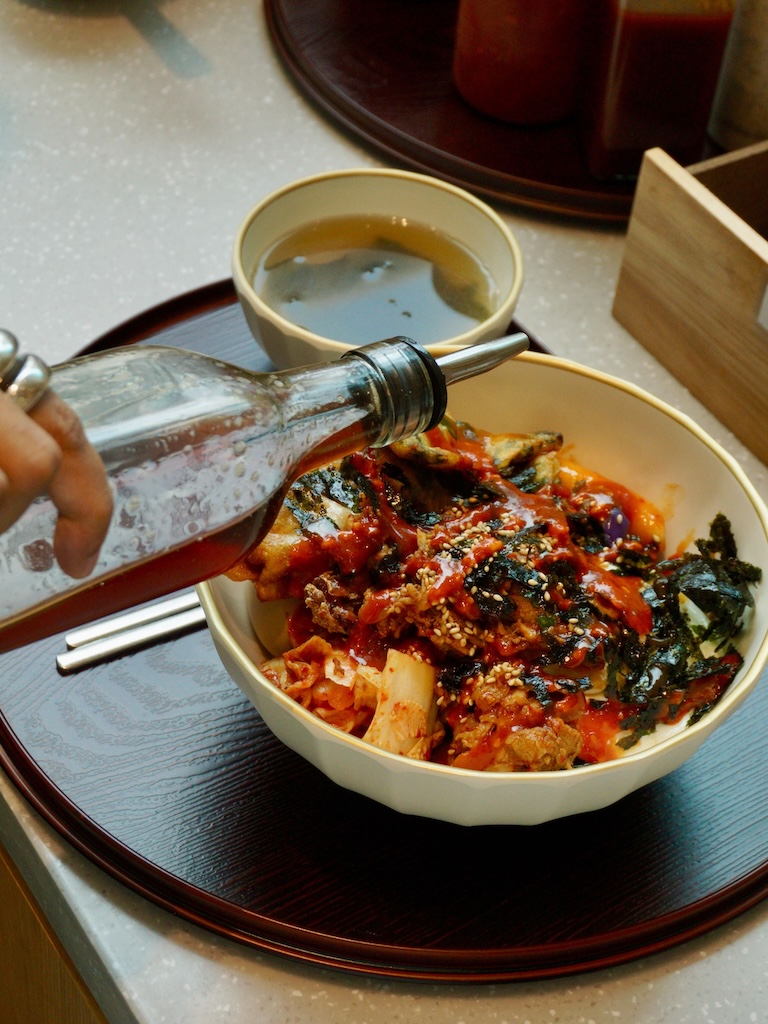
Of the mains, the char-grilled spicy octopus was a nice switch up from the good old bulgogi you’d usually get in with bibimbap. The octopus had a nice bite to it, and the dish was well-seasoned.
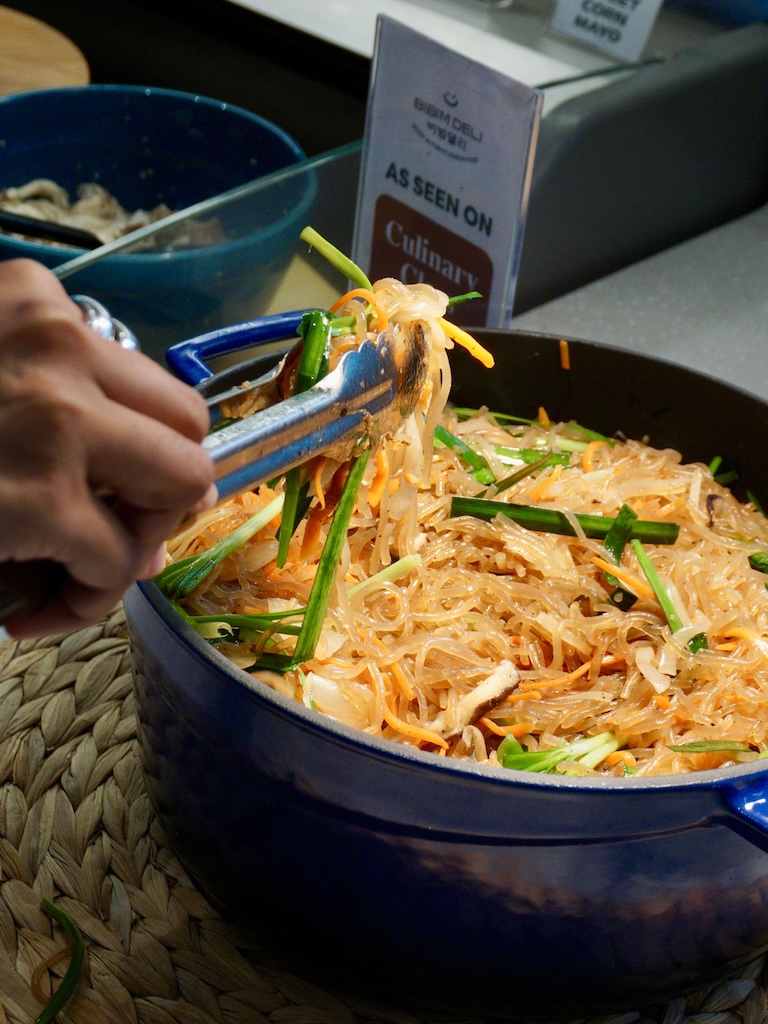
I usually have japchae as a side dish and not in my bibimbap, but the japchae here was a pretty decent side — it’s seasoned on the more peppery side, which balances out when you mix it in with rice.
With the wide variety of sides that changes up frequently, I can see why Bibim Deli is so popular with the working lunch crowd. I do foresee myself coming back here to have a hearty bowl of bibimbap, should I crave it every now and then.
Then again, you do have to be conscientious about how much you’re stacking in your bowl, or you might be surprised at the till!
This was a hosted tasting.
Looking for more eats around Suntec City? Check out this new Korean bakery-cafe with the trendiest bakes, or this new Okinawan street food concept.
Tue 11.30am - 3pm, 5pm - 10pm
Wed 11.30am - 3pm, 5pm - 10pm
Thu 11.30am - 3pm, 5pm - 10pm
Fri 11.30am - 3pm, 5pm - 10pm
Sat 11.30am - 3pm, 5pm - 10pm
Sun 11.30am - 3pm, 5pm - 10pm
- Esplanade
- Promenade



Hannah is constantly on a hunt for good food and vibey cafes, with the occasional mild lactose intolerance being the only thing that interrupts her endeavours.
Read more stories from this writer.