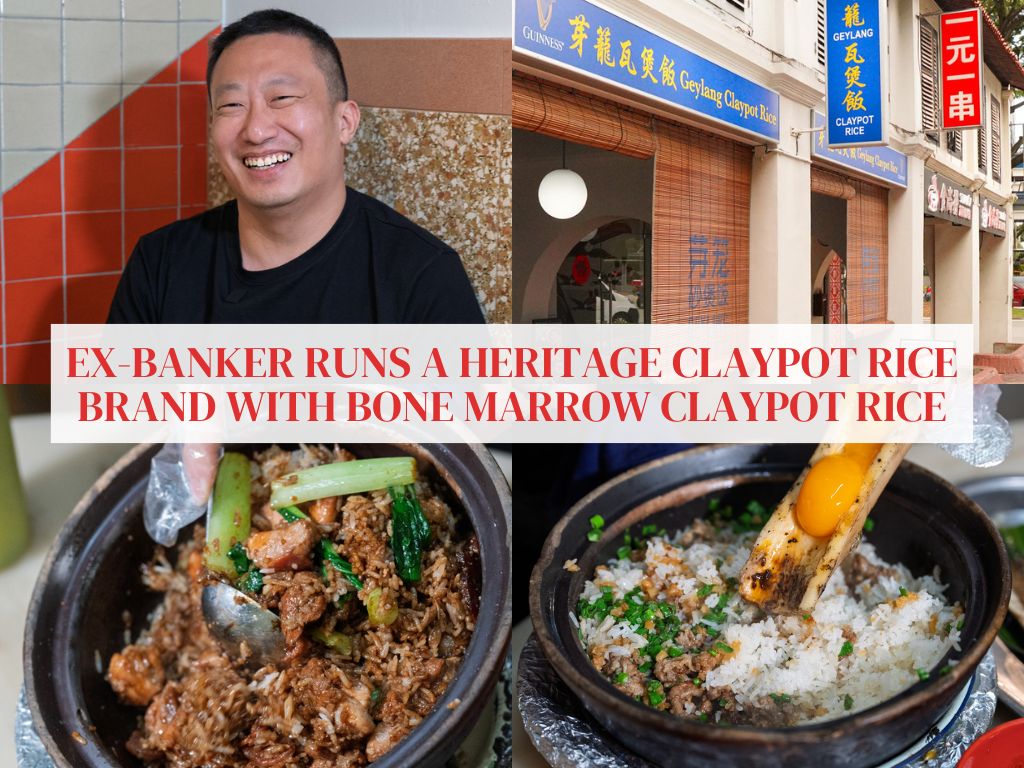
Geylang Claypot Rice: How an ex-banker keeps this 44-year-old heritage brand thriving

As a nation of foodies, Singaporeans can definitely be very combative about what dishes or restaurants they think are good, bad, or overrated.
But when it comes to underrated hawker dishes, we find that very few dishes in Singapore are as underloved as claypot rice.
Claypot rice is undoubtedly one of the most indulgent amongst Singapore’s arsenal of hawker dishes, but it is a dish that’s been slowly fading away with time, owing to the demands of labour and charcoal cooking.
And, honestly, it’s just not a creature comfort that is regularly sought after on a daily basis.
However, if you ever find yourself yearning for that smoky intensity, we recommend a visit to heritage brand Geylang Claypot Rice.
The Geylang Claypot Rice legacy
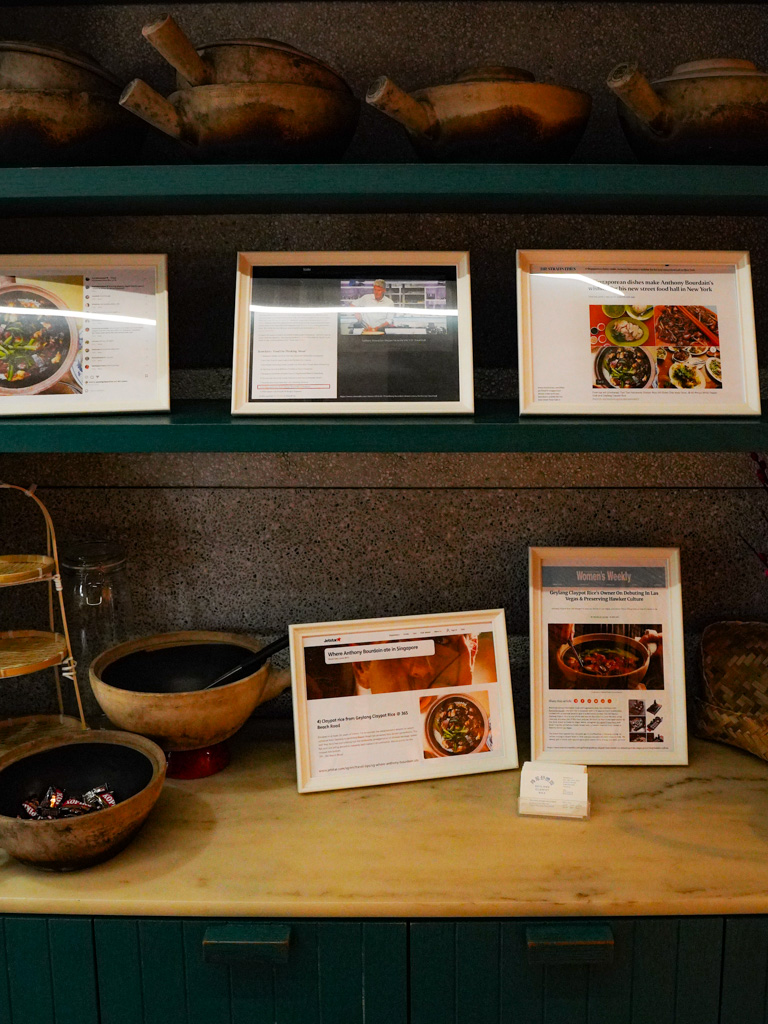
Geylang Claypot Rice is as storied of a brand as one can be.
The brand has been around for a whopping 44 years and, besides its almost-half-century history, has also been spotlighted by American culinary icon Anthony Bourdain.
Anyone who knows food recognises the weight carried by Bourdain’s praise.
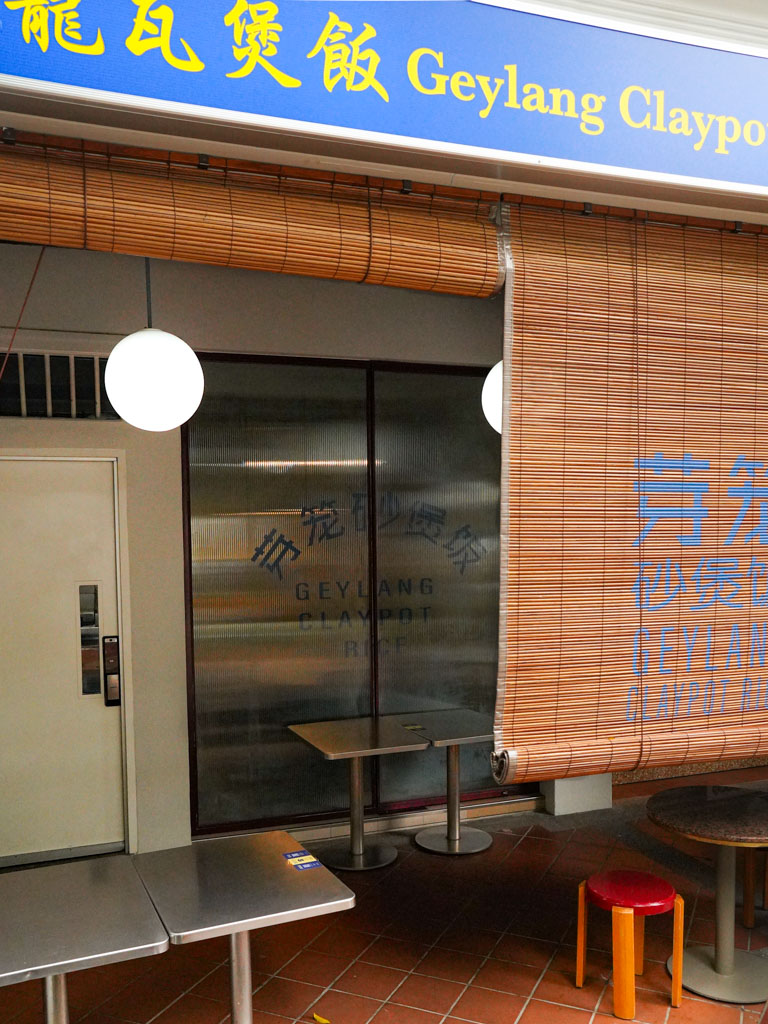
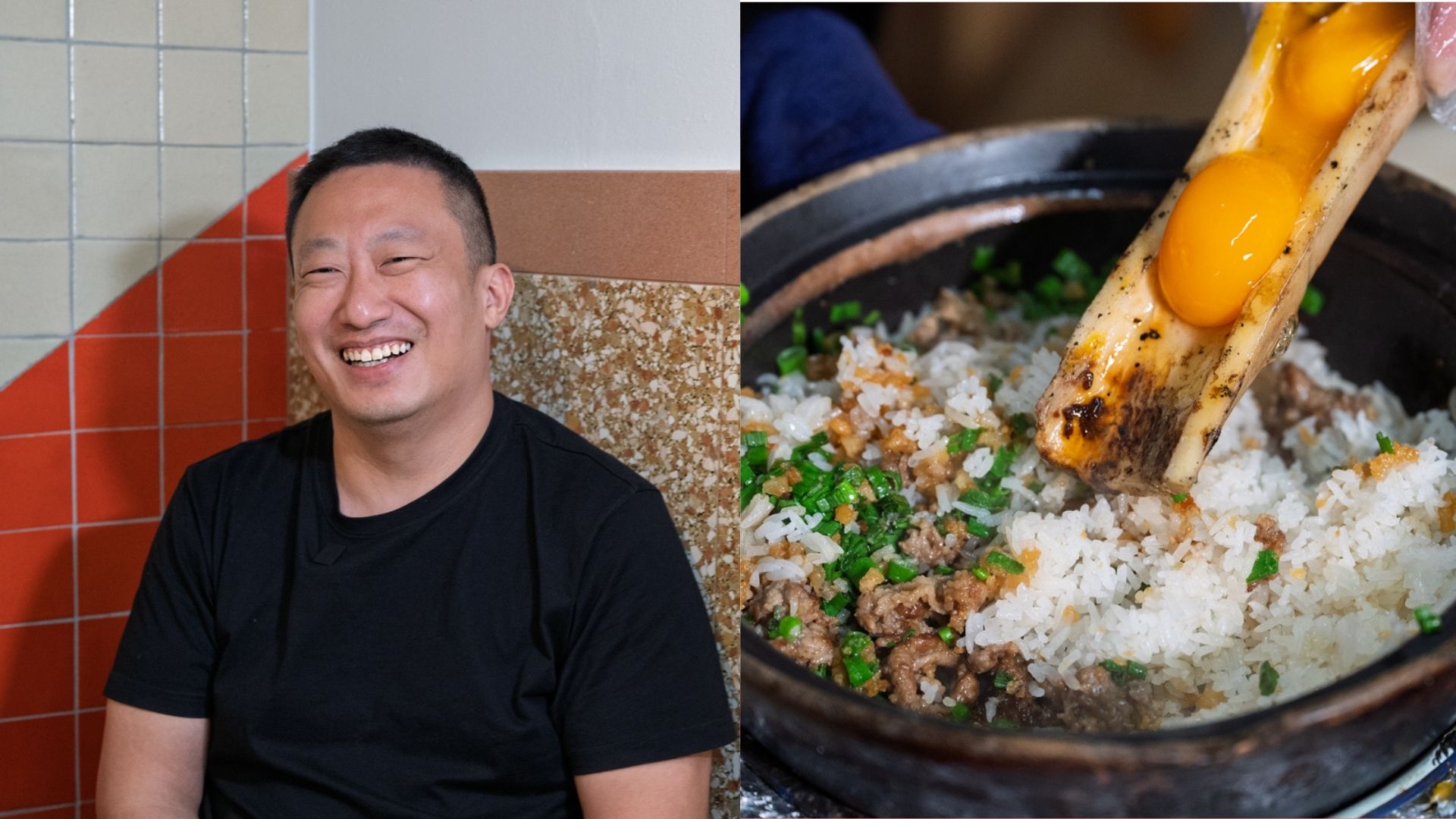
In 2012, Geylang Claypot Rice’s owner passed on — and that’s when Chris Chang, 43, decided to enter the business as the director.
Chris was a family friend and was looking for a change of pace after he had left his previous job, where he worked as a banker at Credit Suisse.
He saw it as a shame for the seminal brand to just disappear and decided to take over the reins.
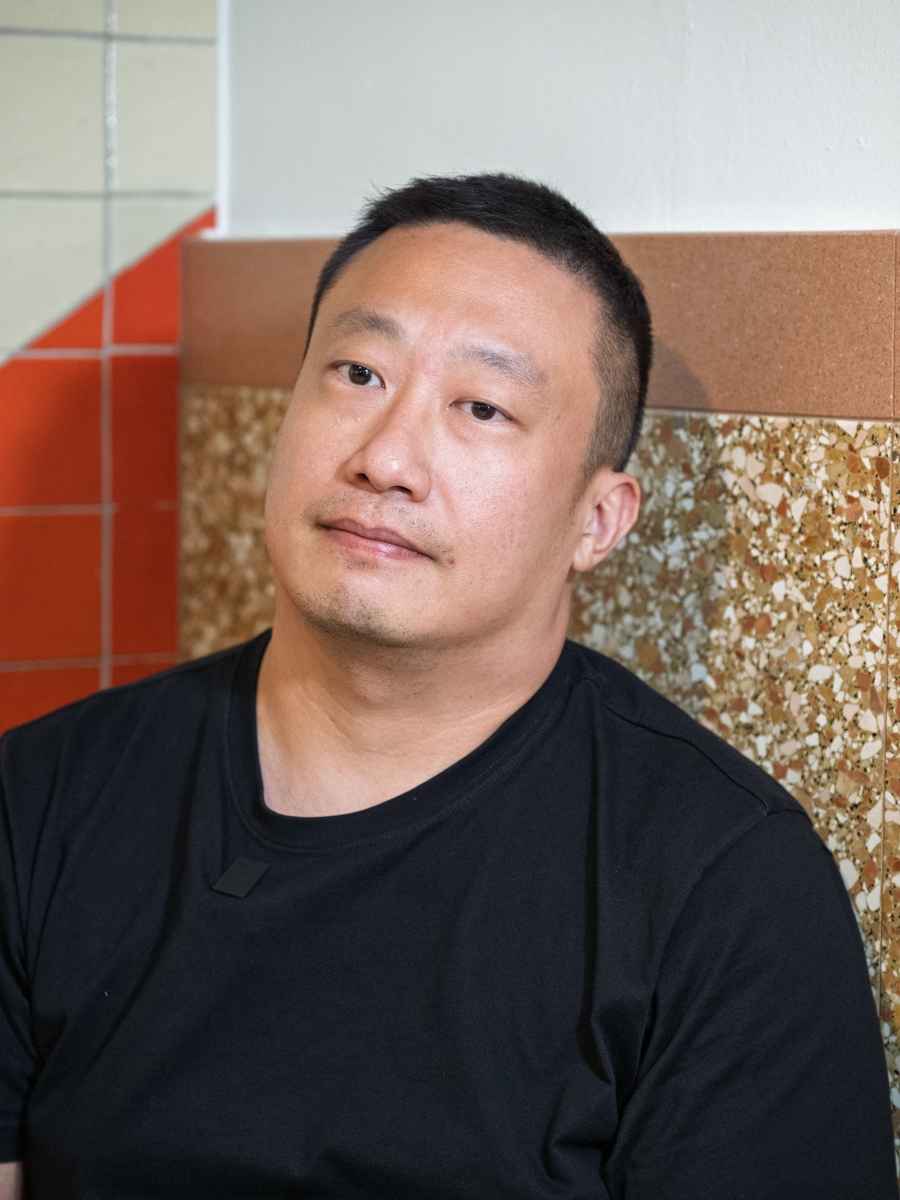
“You see the work the previous generation has done, and it feels a bit of a waste to let it go,” he says.
“Claypot rice is one of Singapore’s disappearing dishes. There aren’t many left nowadays, but amongst them, we still have many worthy competitors.”
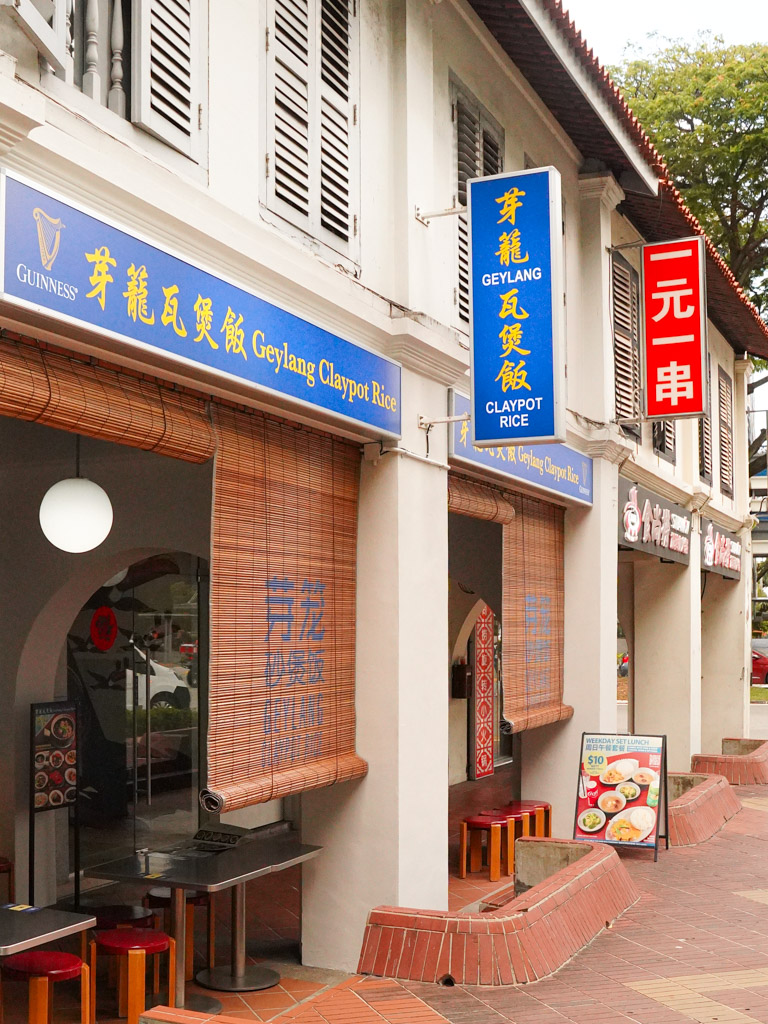
With him at the helm, Geylang Claypot Rice has grown and expanded, and even relocated to a cushier, air-conditioned spot.
From F&B to F&B
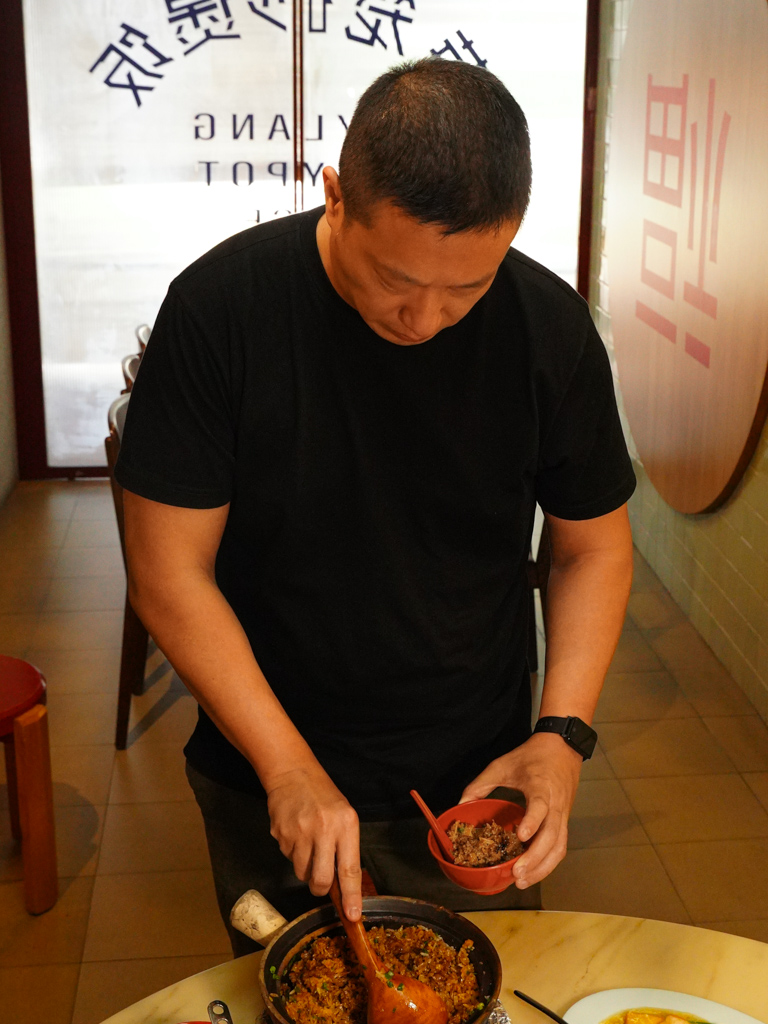
As the bossman of Geylang Claypot Rice, you can say that Chris is still in F&B: Food & beverage, rather than finance & banking.
Does he regret the switch now, after more than a decade running this F&B brand?
Chris does not, and he gives credit to the Geylang Claypot Rice team for that: “I think to keep it enjoyable, you really need to have a good team.”
He also quips that being on the floor on Geylang Claypot Rice was his exercise and you could lose quite a bit of weight from service.
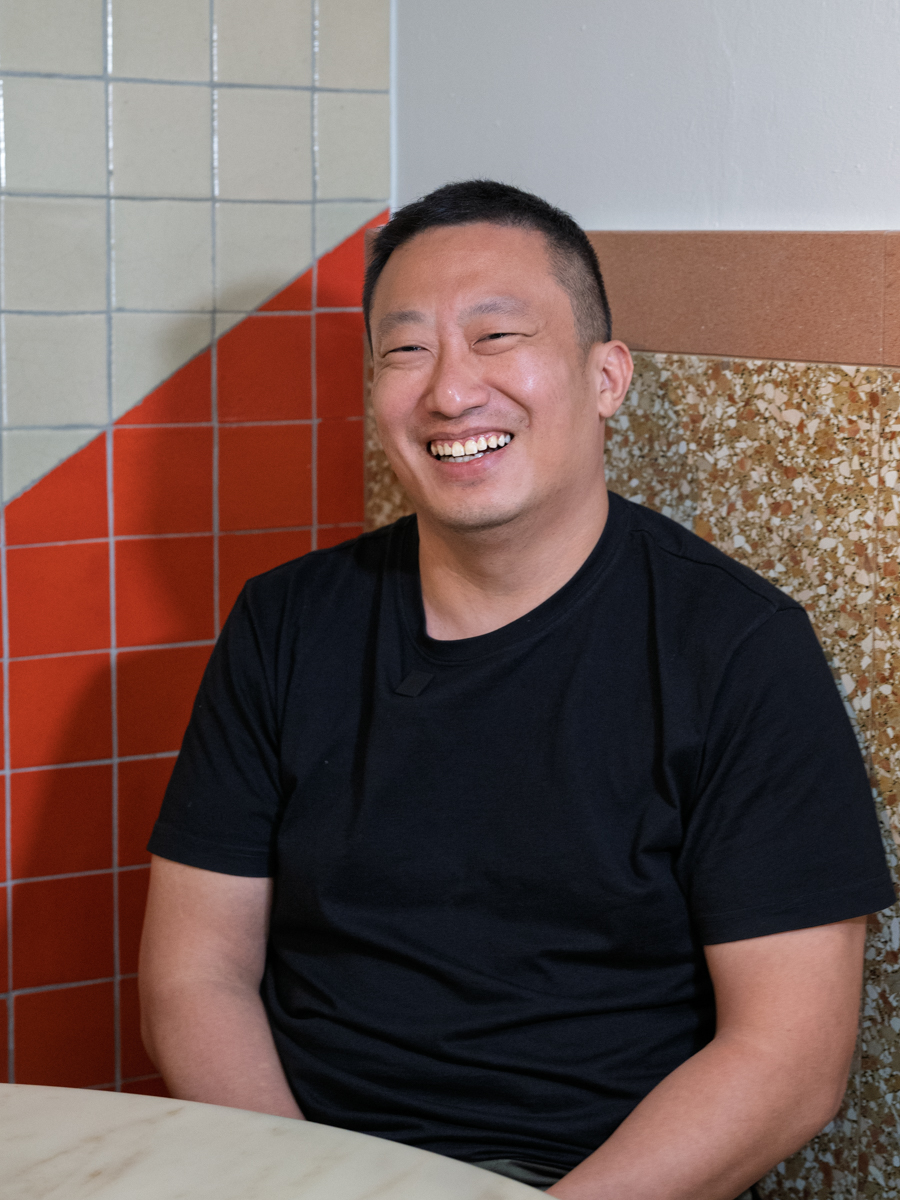
To him, as a business owner, doing the hard work helps you understand the pain points of your staff and help with overall operations.
“The staff and I actually got into a lot of fights during the earlier days in Geylang, but not a big deal, mostly verbal jousting, lah!” he remarks with a chuckle.
On the other hand, there is one aspect to F&B that he does not relish: Uncertainty and 24/7 worrying.
“There are many things that you cannot control. Plans are always changing and you have to worry about costs all the time — but that’s part of running a business in Singapore, I guess,” he admits.
To put it simply, the down-to-earth boss finds the operational side of the business more fun and rewarding than managing it. Who would have expected that from a former banker?
Evolution and facing modern tastebuds
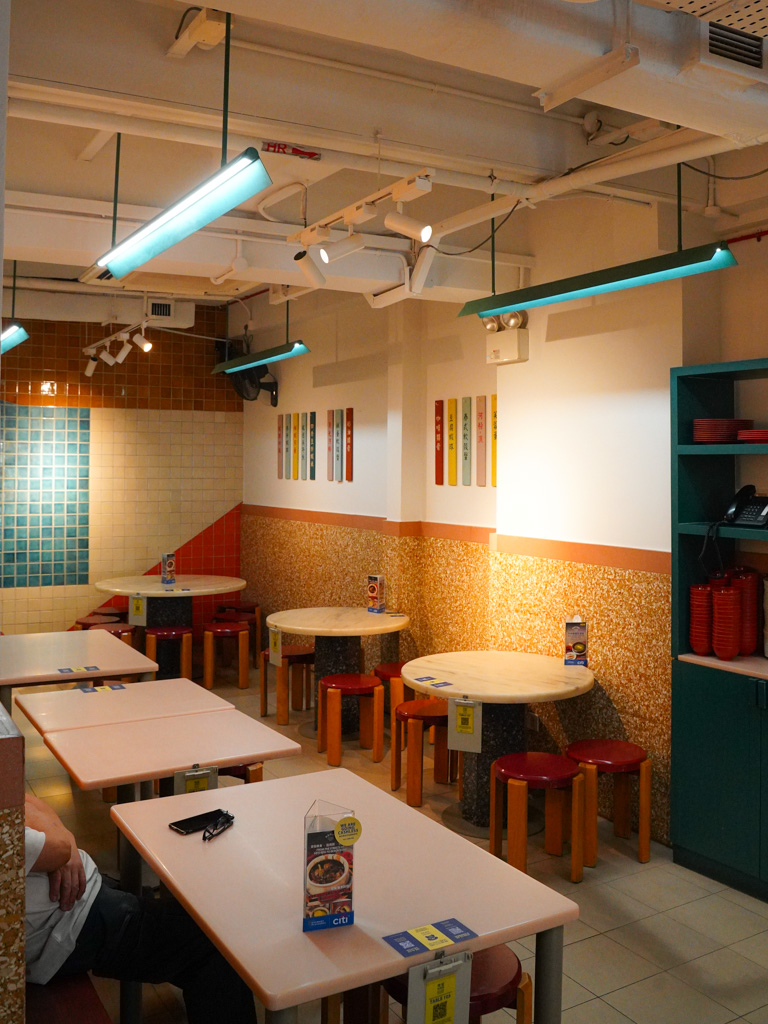
With Chris at the head of the business, it’s fallen to him to keep Geylang Claypot Rice relevant — there is a need for long-term planning in the competitive F&B space, where even the biggest brands can shutter any time.
In 2019, he decided it was time for Geylang Claypot Rice to leave Lorong 33 in Geylang — its long-time home since 1982 — and migrated the entire operation to Beach Road.
Chris understands the need for retaining many of the old practices that make Geylang Claypot Rice the beloved brand it was. Just because the brand needs to evolve doesn’t mean that it should expand recklessly, or gut what people love about it, for efficiency’s sake — a mistake we see all-too-often.
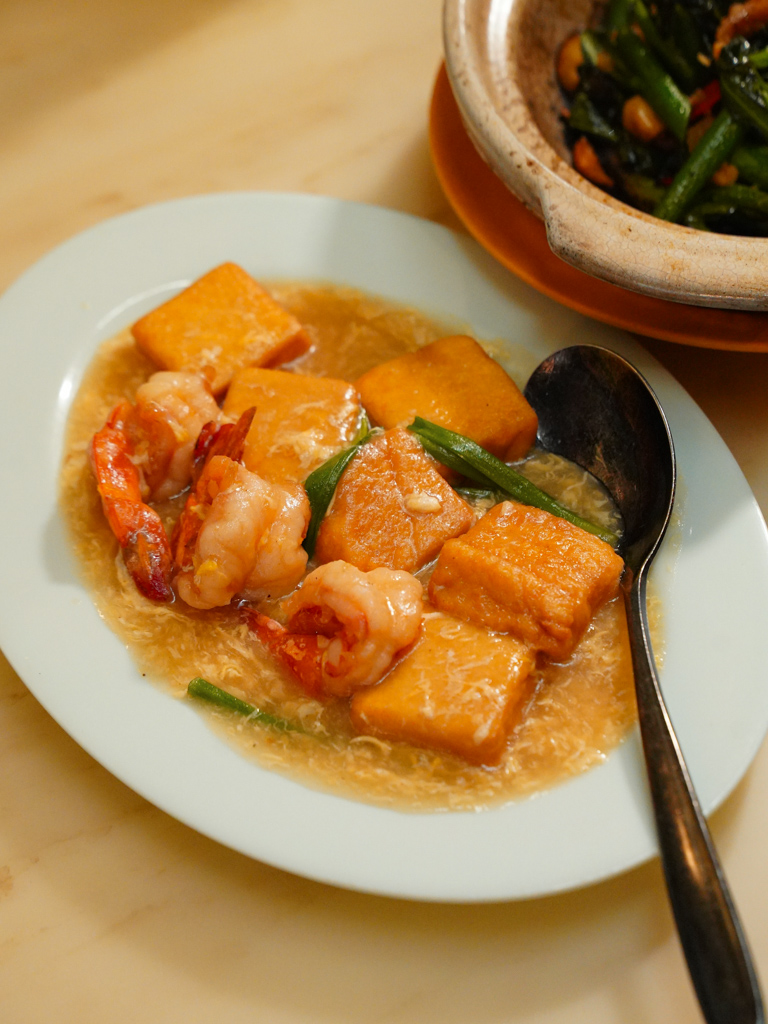
“We always just wanted to keep our footprint small, and make good food. And we cannot just cut corners. Nowadays, we still handmake a lot of our ingredients, like the tofu,” he tells us.
But the hard truth is many Singaporeans also have pre-conceived notions about hawker food, and price points have to be carefully managed, and “kept palatable”, as Chris puts it.
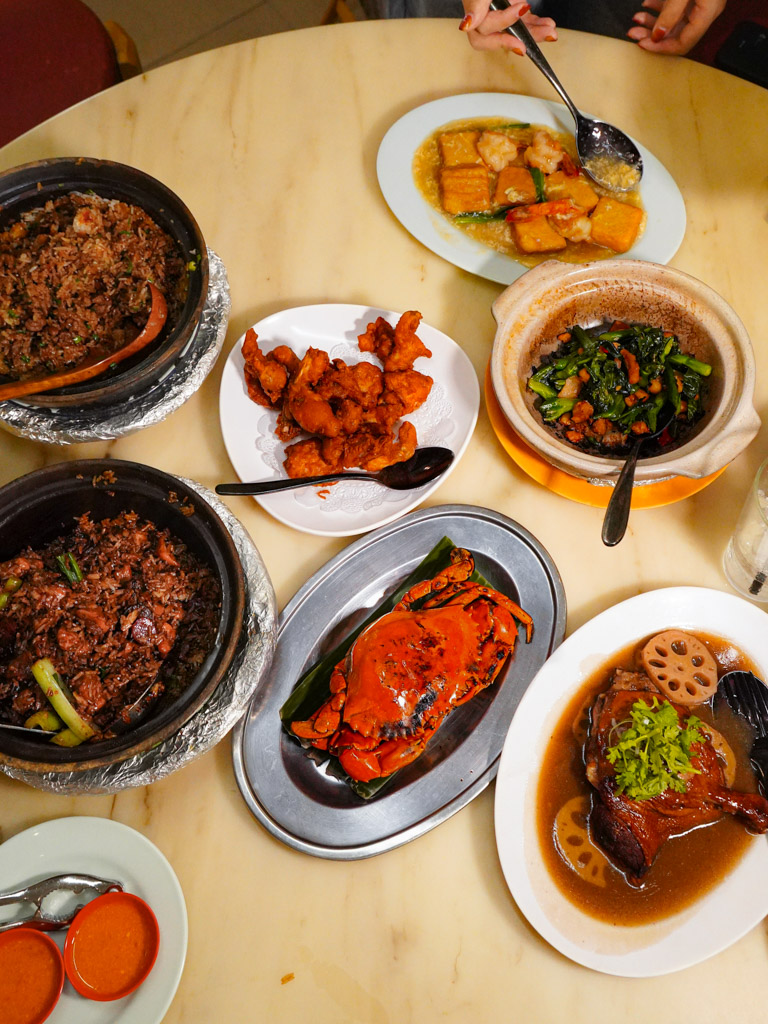
Ultimately, rental is a big factor whenever hawkers raise their prices, and Chris thinks Singaporeans should be more open to paying more for hawker food.
In fact, part of the rationale behind Geylang Claypot Rice’s move was Chris’s hope that he could demonstrate how hawker food can be modernised — presented in a more comfortable environment — at a slight premium.
To him, modernisation is evolving, but not so much that old customers cannot recognise you.
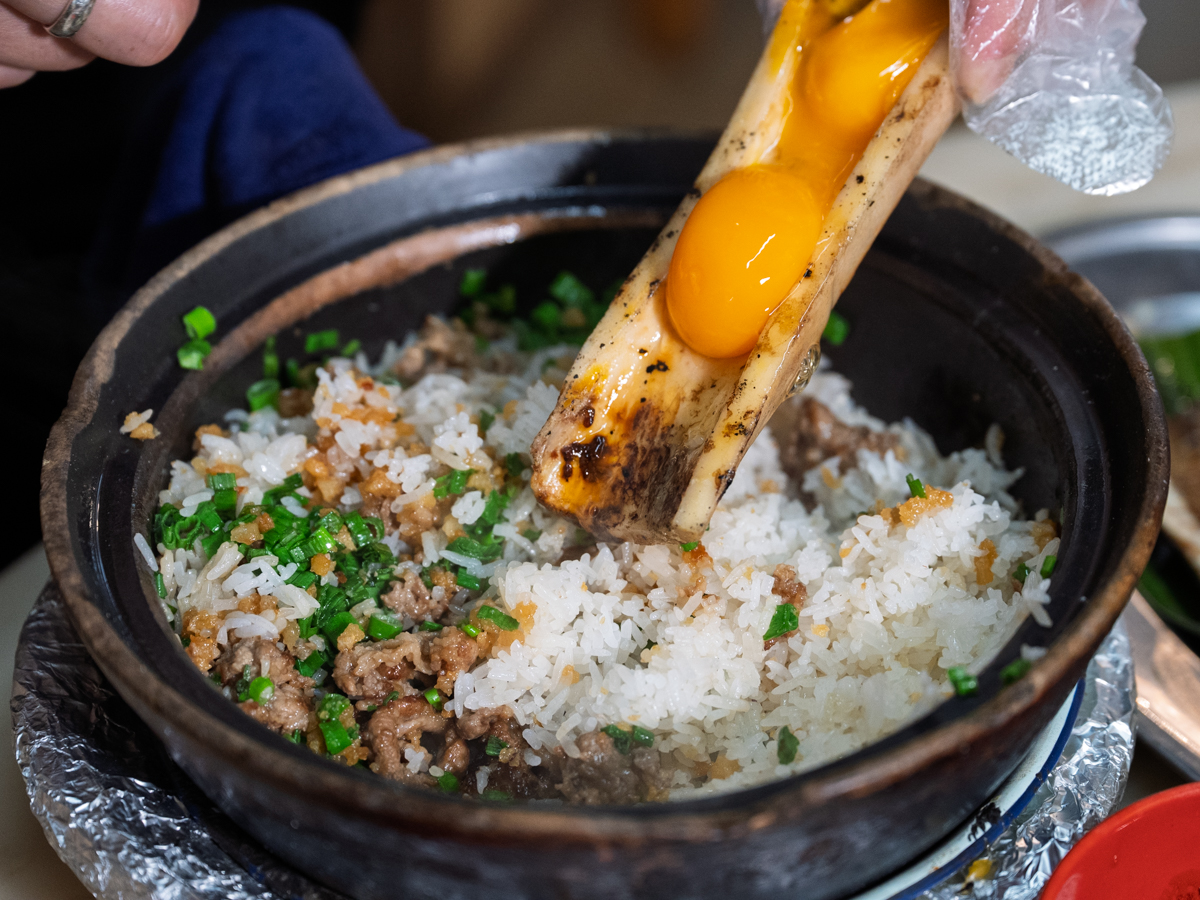
And that strategy has worked for Geylang Claypot Rice, since Chris notes much more a younger crowd coming in nowadays — as well as the added boost of tourists trawling the Beach Road area.
Chris sees this as a necessary part of survival: “We had to make changes. I think if we stayed in Geylang, we wouldn’t be around today.”
“Back then in Geylang, on any given day, the crowd was more likely to be close to retirement age,” he jokes.
But besides the location, what else is Chris doing to keep Geylang Claypot Rice relevant?
One is the newly launched bone marrow claypot rice (S$42), which he sees as a tweak that will interest many people — in fact, Chris hopes to appeal to those on keto diets.
What makes good claypot rice?
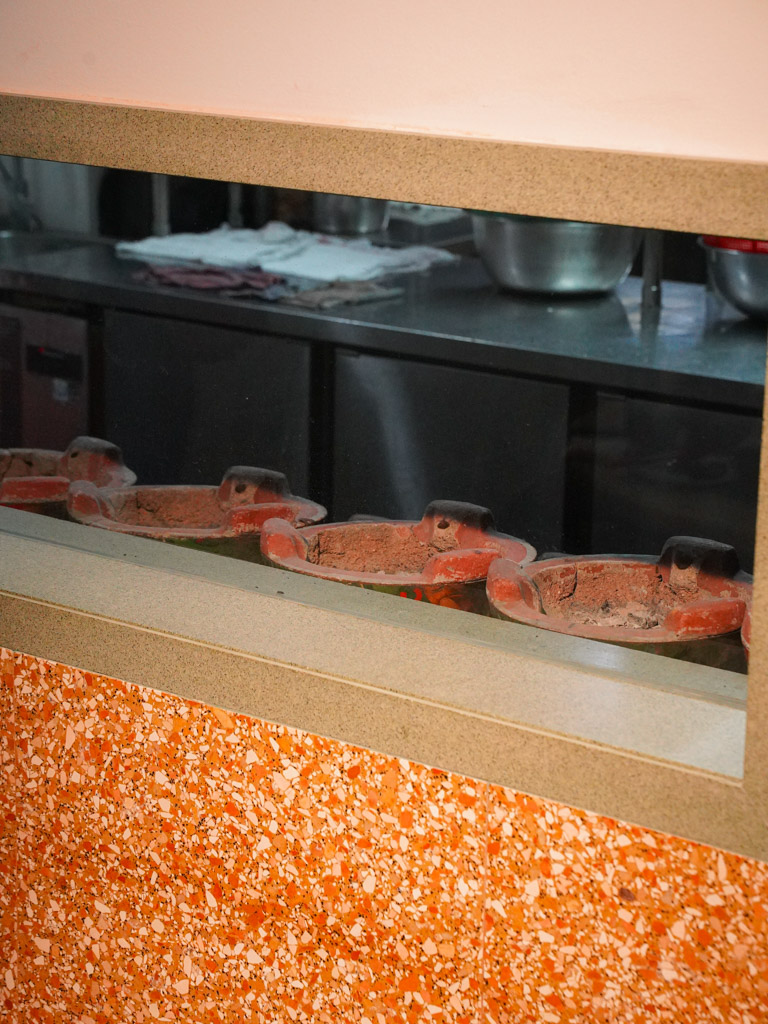
To Chris, what is important for good claypot rice is… Well, the rice. Duh.
Geylang Claypot rice usually mixes different types of rice grains, and even rice of different ages, which gives you the right texture and aroma.
And obviously: Doing it over charcoal.
Charcoal is critical since the guo ba (crusty bits formed on the edges of the claypot) is mostly formed through cooking it this way.
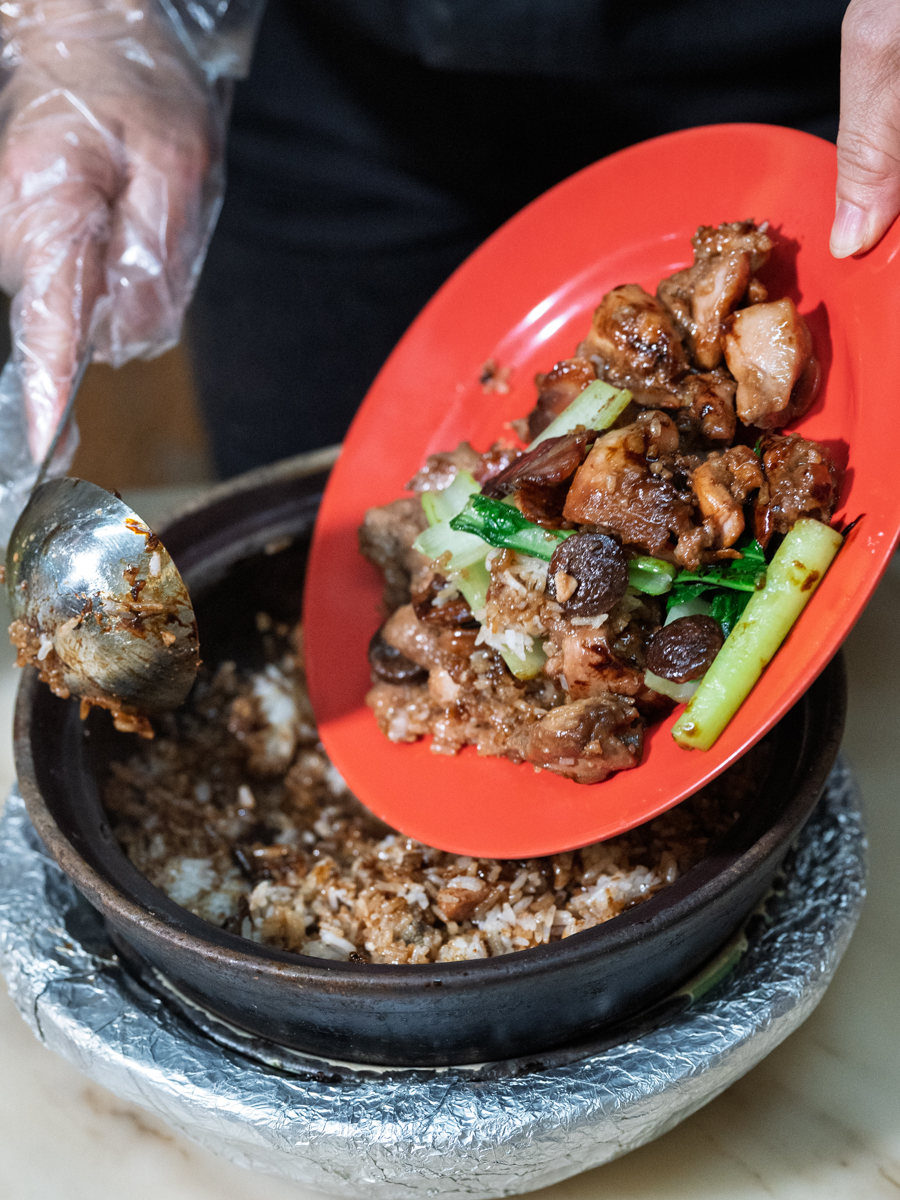
On top of that, mixing is an equally crucial element in achieving good texture and flavour — something he emphasises with his staff at Geylang Claypot Rice.
Once the rice gets to the table, the clock starts ticking, says Chris.
Timing is important since there is only a small window between service and the guo ba turning hard and losing its crisp, and the moisture can also affect the final texture.
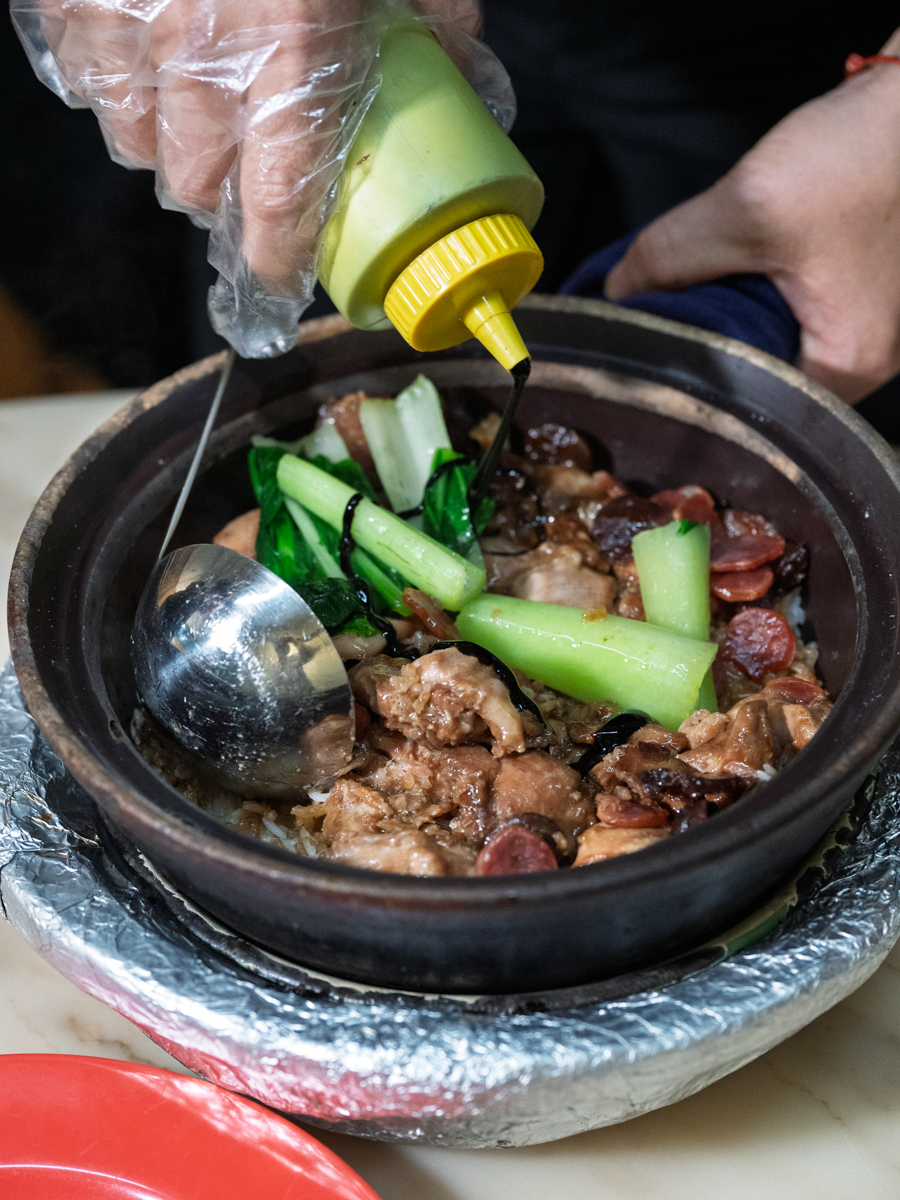
So he drills a sense of urgency into his staff to make sure the rice doesn’t become too soggy, so you can still taste the individual rice grains.
On top of that, the amount of sauce is also important: Chris says excess sauce will cover the fragrance of the rice and the guo ba.
Another thing to note is the chicken. He explains how the customers at Geylang Claypot Rice praise their boneless chicken and how silky it is.
The satisfying flavours of Geylang Claypot Rice
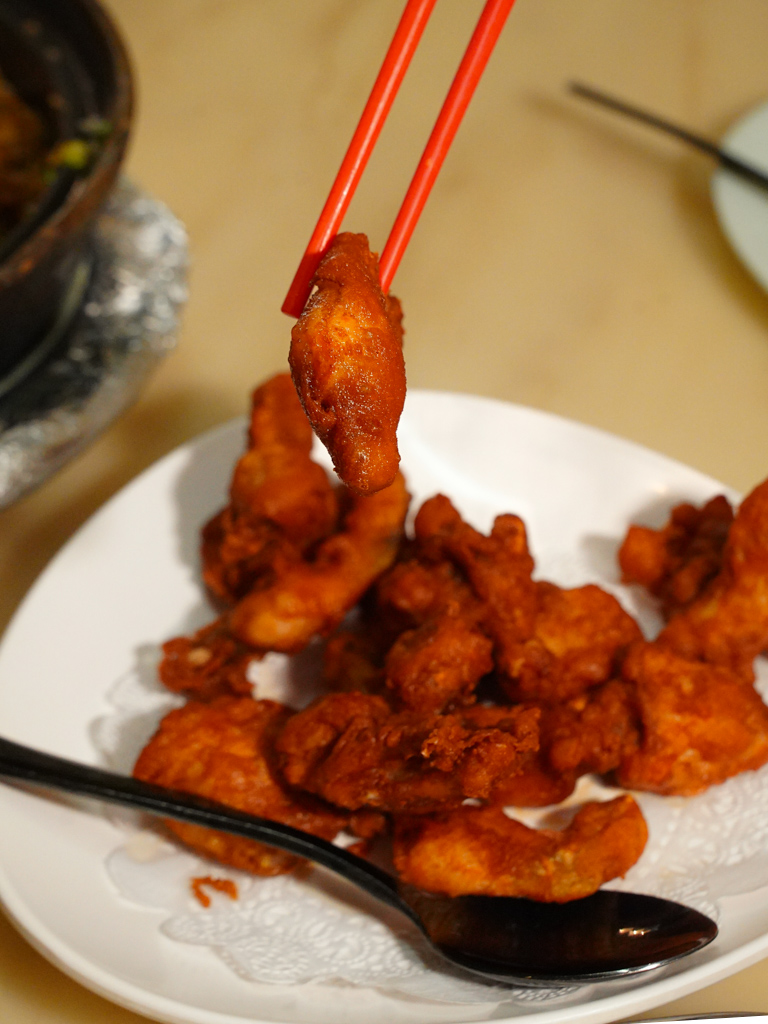
When we asked Chris what makes Geylang Claypot Rice stand out from other spots also known for serving some of the best claypot rice in Singapore, he says it’s the variety of dishes.
Besides its signature dish, the menu spans an entire gamut of zi char favourites.
One starter we would recommend is the prawn paste frog leg (S$16.80), where silky and juicy frog meat is encrusted in a fragrant and crackling har cheong gai-style batter — a great way to wait for your main course.
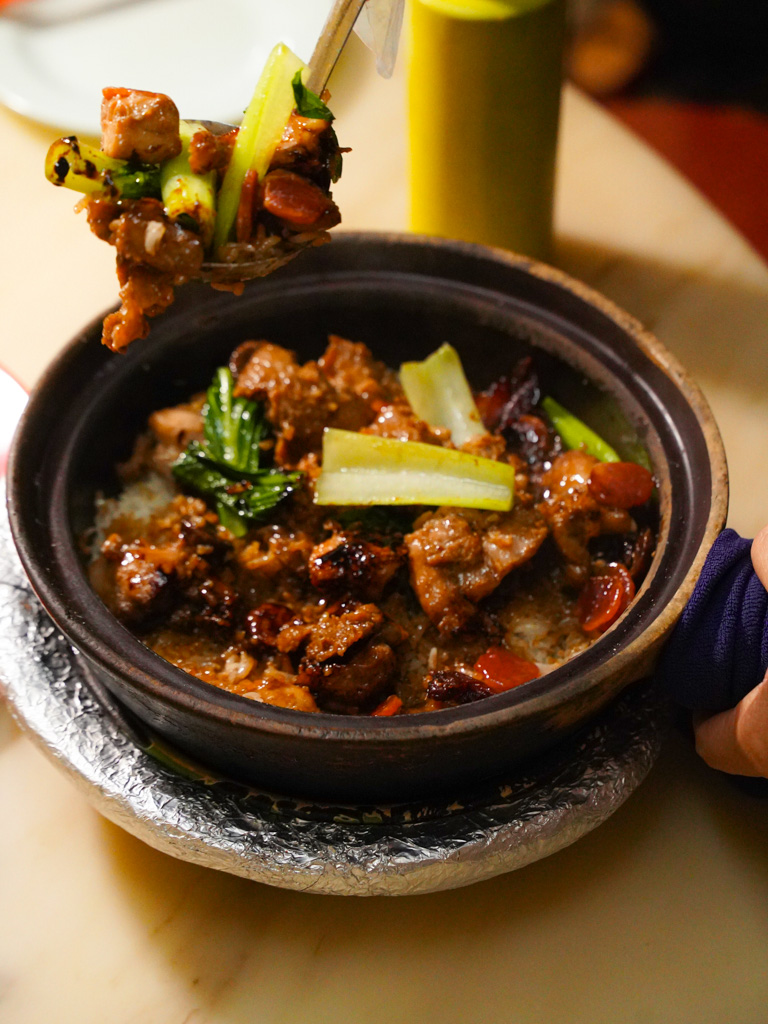
Still, the star of the show is unquestionably Geylang Claypot Rice’s legendary signature, the signature claypot chicken rice (S$22.80).
This is as good as any other claypot rice we’ve tried so far. It’s brimming with fragrant smokiness, delectably complemented by the juicy boneless chicken chunks and perfectly dosed dark sauce.
Most importantly: The guo ba with all its glorious crunch and char. Heavenly.
What Chris detailed is necessary for making a good claypot rice? We taste all of that here.
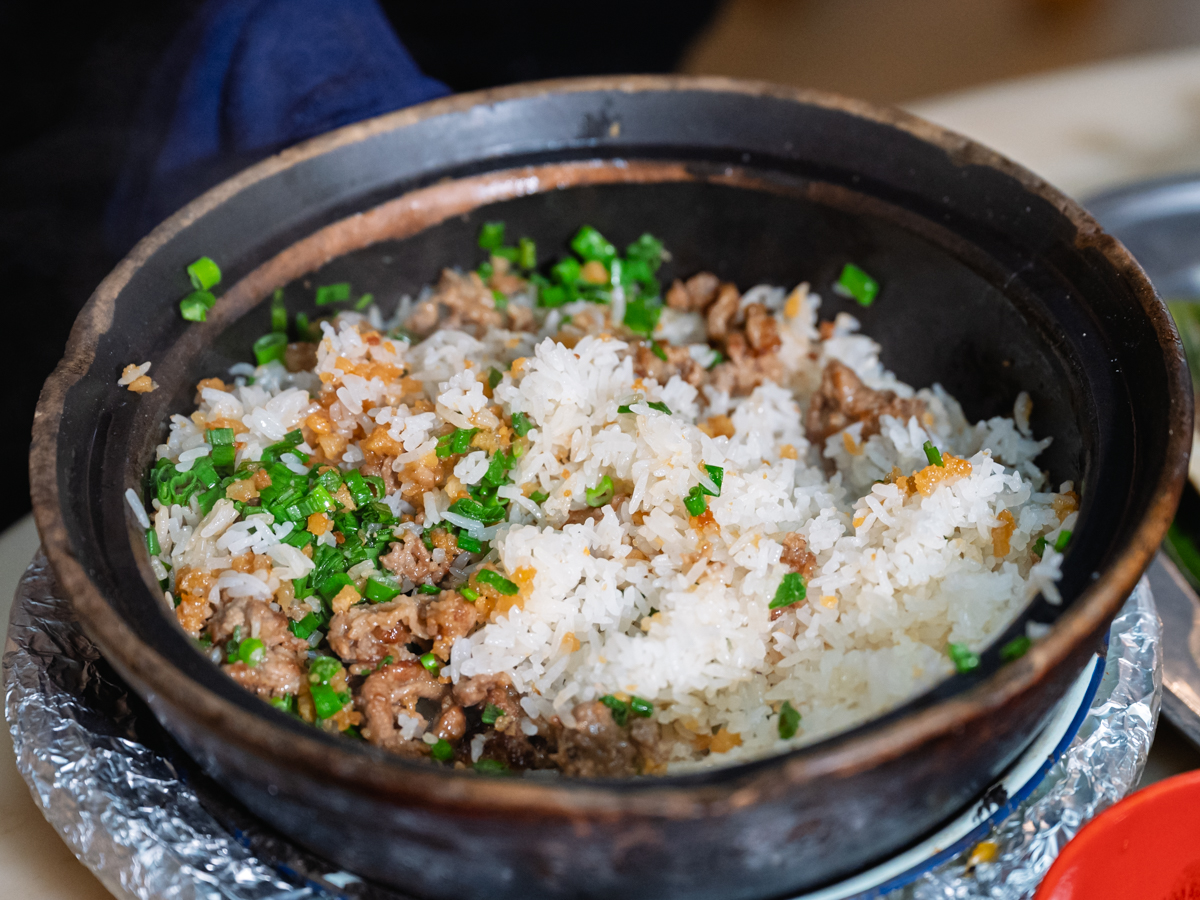
And then there’s the bone marrow claypot rice (S$42), a new creation that has captured many eyeballs on social media.
If umami is your end game, this creation by Geylang Claypot Rice has it in spades.
Chris says he was trying to get beef into every bite and that’s worked out: The succulent beef pairs spectacularly with the decadence of smoke and bone-marrow umami.
Definitely not conventional, but as long-time claypot rice lovers, we loved it just as much as the traditional style!
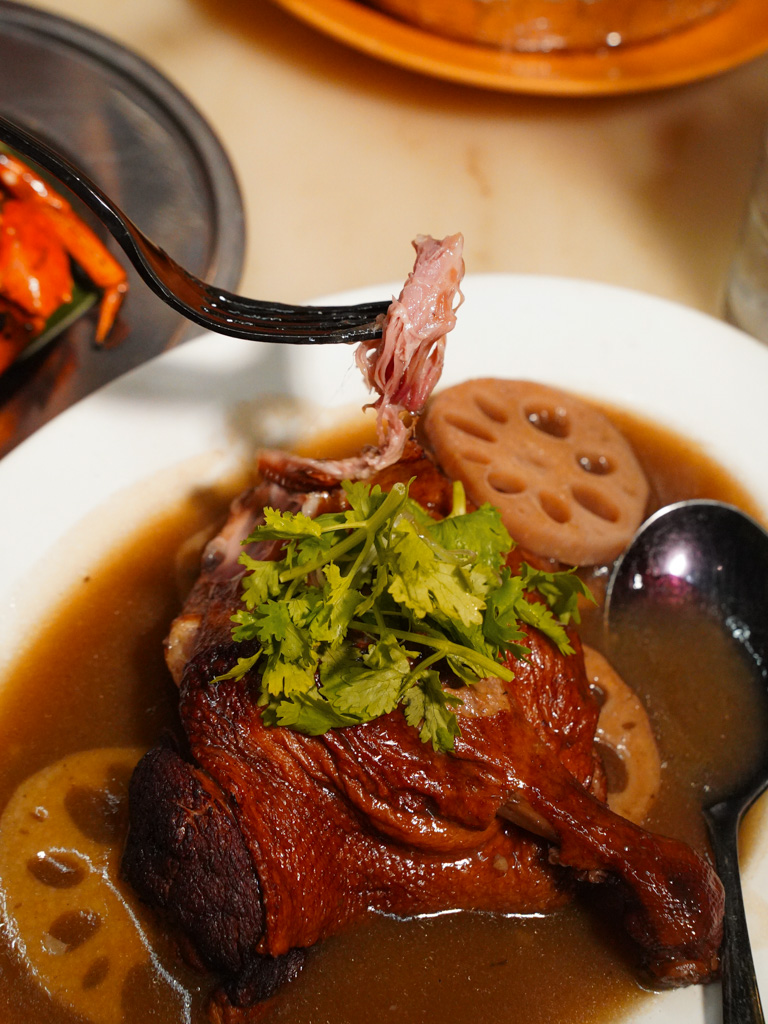
If you’re not sure of what else to add to the table, one of the bestsellers is the signature braised lotus root duck (from S$18.80).
Most people are apprehensive about duck’s gameyness, but this one was clean-tasting and tender, and the sauce brought a nice lotus-tinged earthiness to the ensemble.
We can see how this became one of Geylang Claypot Rice’s top 10 dishes!
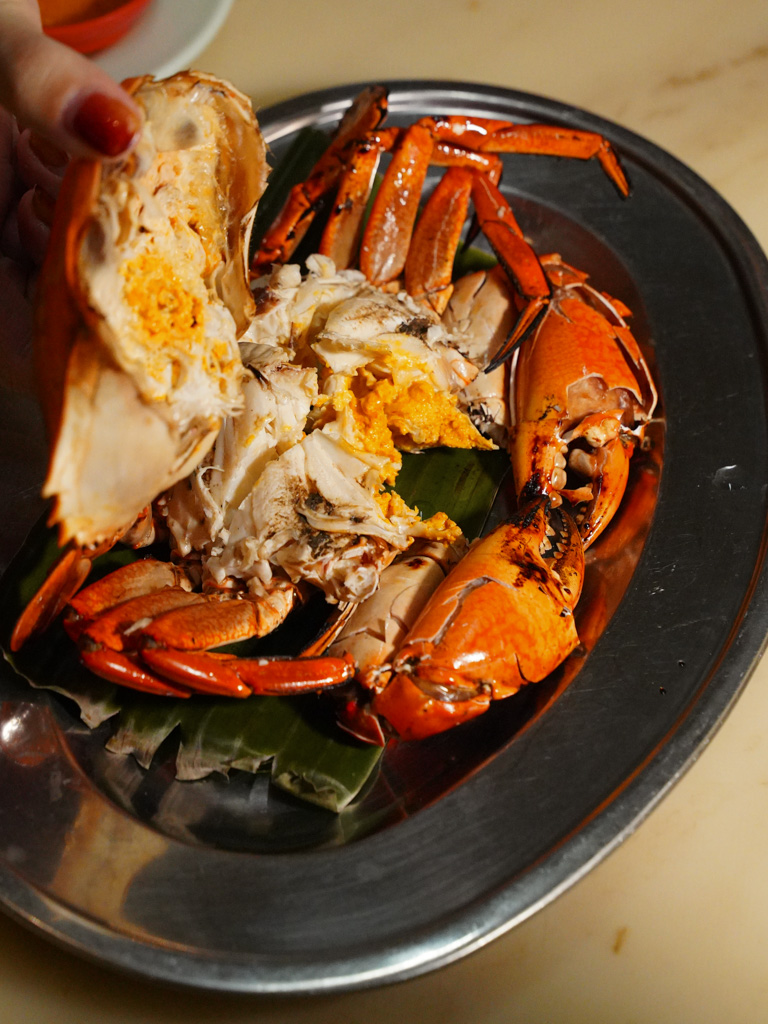
Another top dish is the BBQ crab (male) that’s quite affordably priced at S$18 for one, and S$35 for two.
It’s honestly a good deal, but roe lovers might want to shell out a bit more cash for the BBQ crab (female) at S$28 for one, and S$55 for two.
These aren’t the biggest crabs, but the flesh is juicy and silky — no real complaints here!
With its great range of dishes, a nice air-conditioned location, and some of the best claypot rice in Singapore, Geylang Claypot Rice is a spot worth your calories.
Should there be a day you’re craving claypot rice, head down to Beach Road. Don’t let our heritage dishes and legacy brands die out!
This was a hosted tasting.
For more ideas on what to eat, read our stories on the best hawker eats at popular ABC Brickworks Food Centre and the new Michelin-recognised Osaka tonkatsu brand that arrived in Singapore!
Tue 12pm - 2.30 pm, 5pm - 10pm
Wed 12pm - 2.30 pm, 5pm - 10pm
Thu 11.30am - 2.30 pm, 5pm - 10pm
Fri 11.30am - 2.30 pm, 5pm - 10pm
Sat 12pm - 2.30 pm, 5pm - 10pm
Sun 12pm - 2.30 pm, 5pm - 10pm
- Nicoll Highway
- Bugis





Evan started off writing about food on Instagram, before joining outlets such as Buro and Confirm Good to pursue his passion. His best work usually comes after his first whisky shot in the morning.
Read more stories from this writer.