On the Table: Mee rebus, a tangle of traditions

On the Table is a HungryGoWhere series about the stories behind Singapore’s plates. It dives into the “past lives” of our food and the people who keep it alive today. Read its first instalment on char kway teow.
The first time I really appreciated mee rebus, I was standing in the queue of Haig Road Market, watching a middle-aged man ladle thick, golden-brown gravy over yellow egg noodles.
As a Chinese-Singaporean, this wasn’t a dish that featured heavily in my childhood — I’d always associated it more with my Malay friends, who seemed to gravitate toward it with the same familiarity I reserved for wonton mee or chicken rice.
That bowl at Afandi & Family Mee Rebus would become my benchmark for what good mee rebus should taste like — bold and complex, with a pronounced sweetness balanced by heat and umami.
Since then, I’ve had mee rebus many times, all over Singapore, and you can find it everywhere: Hawker centres, kopitiams, and even at Toast Box in shopping malls.
It also sparked a question that would send me on an eating journey across Singapore last year: What exactly defines mee rebus, and why does it taste so different, depending on where you order it?
Not just a Malay noodle dish in brown gravy
The name itself offers the first clue to its origin: Mee (noodles in Chinese) rebus (boiled in Malay). It’s also a deceptively simple description, for what is arguably a very tedious dish to prepare.
While common consensus is that mee rebus is clearly from the Malay Archipelago, there’s no firm agreement on where the dish actually originated from.
A quick search on Google shows many differing opinions: Some say mee rebus is directly derived from mee jawa (though it bears little resemblance to mee rebus as we know it) from Indonesia, while others say it’s an Indian-Muslim dish from the north of the Malay Peninsula.
There are also reports that suggest it was first made by the Peranakan-Chinese who lived in Penang, which wouldn’t be particularly surprising, given the use of Chinese yellow noodles.
According to food historian Khir Johari, mee rebus may have been created in Singapore itself, back in the 1930s. In his book, The Food of Singapore Malays: Gastronomic Travels Through the Archipelago, he says mee rebus was created by Javanese immigrants working in a central kitchen that supplied satay to various stalls around the city, while trying to come up with a noodle dish that locals could enjoy for breakfast. This resulted in a dish of yellow noodles served in a thick gravy made from krill, tau cheo (fermented soybeans), and sweet potatoes.
From the 1960s, mee rebus gradually found its way into Singapore’s hawker culture (if we were to follow Khir Johari’s work, presumably through the cooks who learnt the recipe from the Javanese immigrants), becoming a daily staple in not just hawker centres, but also kopitiams and even some modern food courts.
A dish of many stories
To properly understand mee rebus, you have to start with its thick, umami-rich sauce. Unlike many Asian noodle soups that rely on some kind of added starch (usually corn or tapioca) or coconut milk, mee rebus gravy gets its distinctive consistency through the patient cooking-down of sweet potatoes, until it reaches the right mouthfeel.
Then there’s the spice base — the rempah — that gives each version its character. Classic ingredients include dried shrimp and anchovies, chillies, shallots, garlic, galangal, tau cheo, sometimes tamarind for tanginess. Mee rebus is always served with a slice of calamansi that transforms the dish with its bright acidity, without which the dish can sometimes feel sweet and heavy.
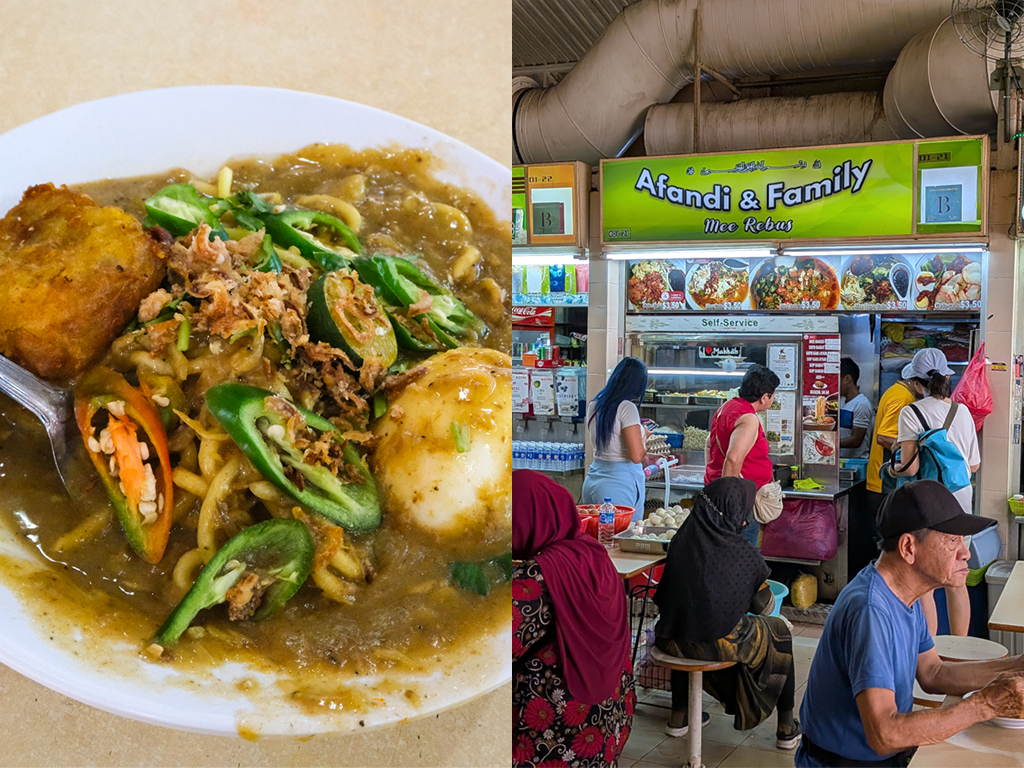
Mee rebus is all about the gravy, yet every gravy is different. The one (S$3.50) at Afandi & Family Mee Rebus, which was first founded by Afandi Hawa at the old Paya Lebar Airport in 1967, strikes you from the get-go with a spicy crustacean flavour.
I later learn from the second-generation owner Ahmad that he uses flower crab in the gravy, alongside mutton for earthiness and a copious amount of dried shrimp and anchovy, which you’ll find in almost scoop.
“That’s why it’s got that depth and layer,” he says.
Just 12 minutes away at Bedok Interchange Hawker Centre, Inspirasi has been selling its mee rebus at just S$2.50 for the longest time, a decision made by the stall’s original owner Madam Saoana (she’s since handed over the stall to her brother) to keep it accessible for the elderly regulars who’ve been eating there for nearly five decades.
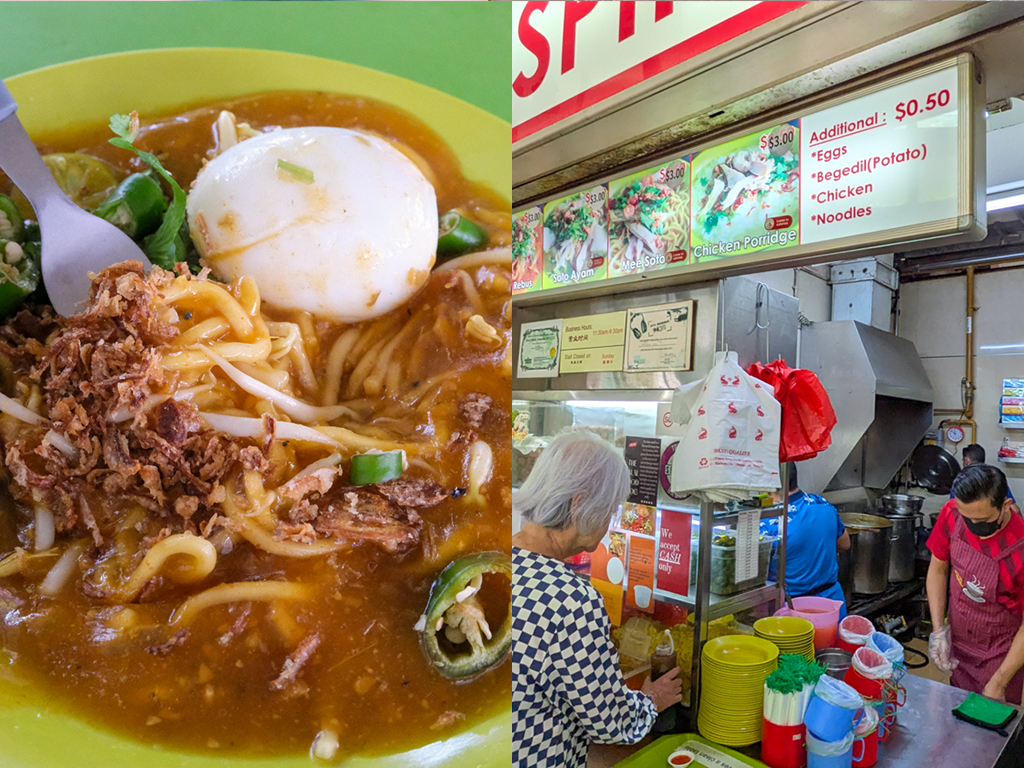
The price has since increased to S$3 from 2022, but it’s still great value. Inspirasi’s mee rebus is milder in spice, but rich in flavour, and has the thickest gravy — with a strong sweet potato taste — among all the mee rebus I ate that week.
Crossing borders, crossing cultures
The diversity within Malay mee rebus is already striking, but venture into other interpretations and the variations become even more pronounced. Pondok Makan Indonesia, in the recently renovated Albert Centre, is best known for its satay (and is even listed on the Michelin Guide for them), but also has delicious mee rebus.
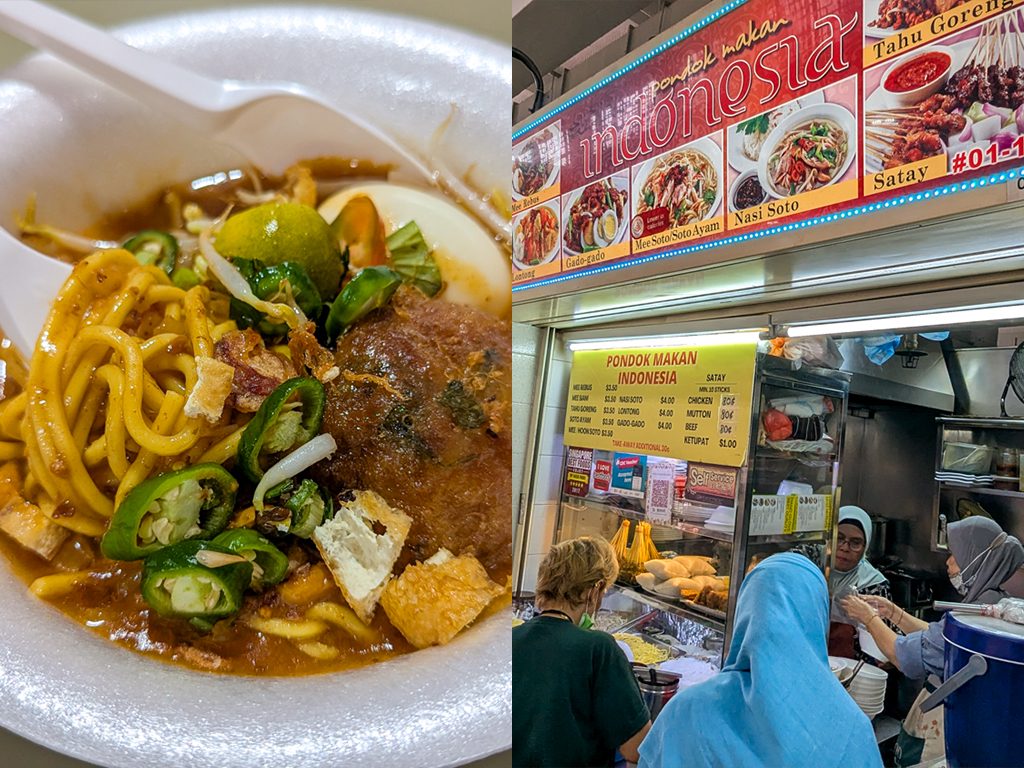
Like Afandi & Family, the stall is now run by the second generation — the daughter of the original owner — who makes a very fragrant and intricately balanced version (S$3.50) — sweet, salty, and a little tangy. She throws in deep-fried tofu cubes in the thin gravy for texture and sweetness.
But nowhere is this more evident than at Delicious 美味, run by a Chinese couple who’ve been serving their interpretation of mee rebus (as well as mee siam and lontong) in Tanjong Pagar Plaza since 2018. It’s worth noting that while not halal-certified, they don’t use any pork or lard in their food.
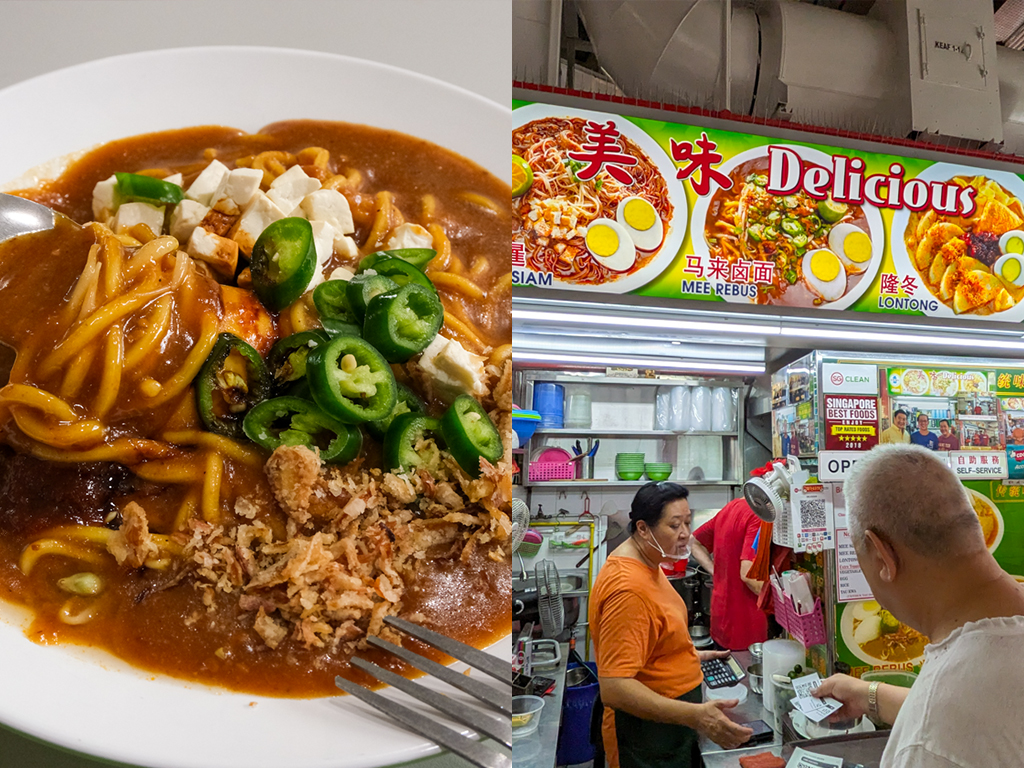
Before handing over my plate, the lady boss squeezed in some calamansi and plops on a dollop of sweet sambal. Delicious 美味’s mee rebus (S$4) carries a tangier and nuttier profile than all the others I tried, with a refreshing sourness that cuts through the inherent sweetness of the sweet potato base. The sweet chilli and tofu cubes are a nice touch that adds more depth to the dish.
Innovation within tradition
Mee rebus has never quite achieved the global recognition of chicken rice or chilli crab, but this relative obscurity might actually be its strength, allowing the dish to evolve organically without the pressure of representing “national cuisine” to tourists.
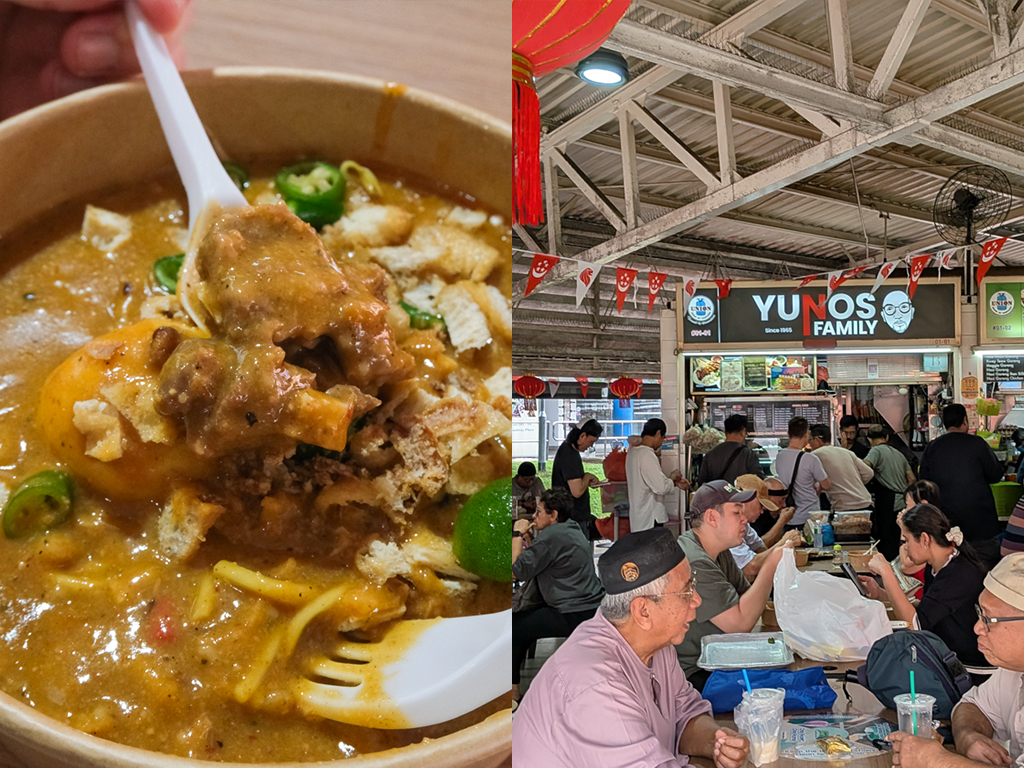
That balance between respect and reinvention is perhaps most evident at Yunos N Family, a stall that has been operating since Singapore’s independence year, as its stall sign proudly proclaims. The queue circles around the stall during my visit on a Friday afternoon, and it moves fast, but not before I manage to ponder over the lengthy menu.
There’s a whopping nine mee-rebus options to choose from, including the basic version at S$4.30 and add-ons such as chicken wing, tripe, oxtail, beef ribs, and something called rewang, which the second-generation owner Ezzat tells me comes with satay, ketupat (steamed rice cake), and keropok. The mee rebus with ribs (S$8.30) is absolutely dreamy with the savoury-sweet golden sauce slathered over bone-sliding tender beef ribs.
Less than a kilometre away, Rahim Muslim Food has also been around even earlier since 1957, moving several times before it settled in Chong Boon Market & Food Centre. Here, it innovates its mee rebus based on more personal circumstances.
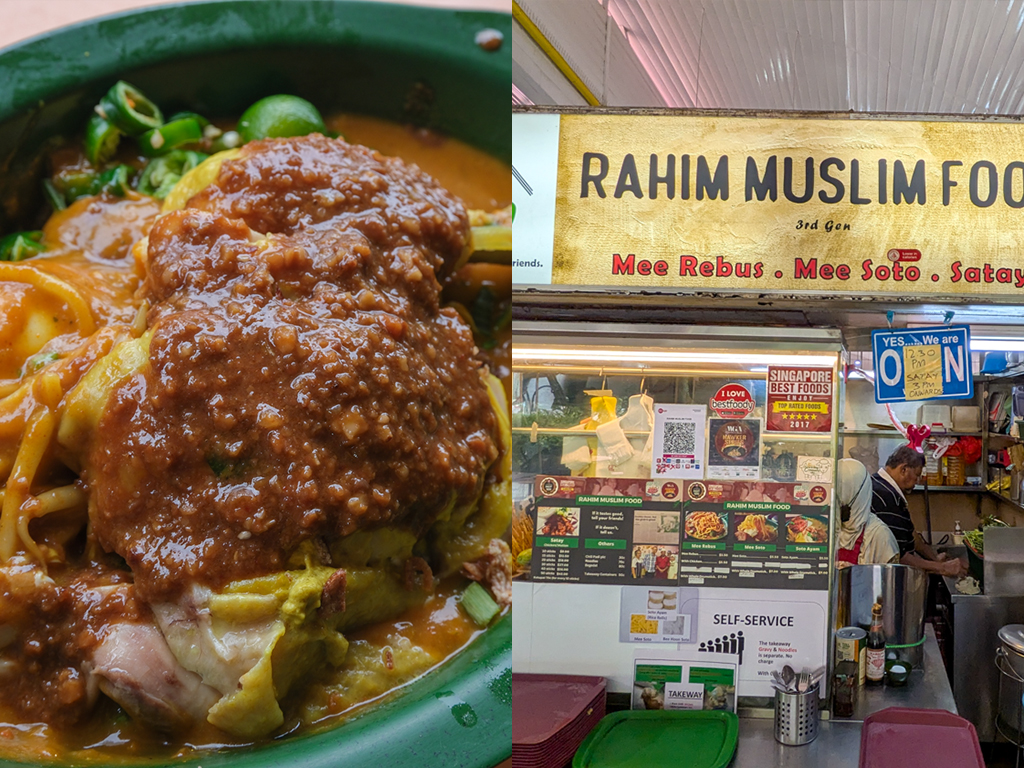
Third-generation hawker Rahim’s father first sold satay while his mother specialised in mee rebus, and now he adds a ladleful of sweet peanut gravy (or what we commonly call satay sauce) to each bowl (S$3.50).
It makes a world of difference and looks great too, the chunky red gravy sliding over the already-thick sweet potato gravy to add a rich sweet nuttiness to the dish. Calling this Singapore’s most indulgent and heavy mee rebus might not be an overstatement. And that’s before you add on a juicy chicken thigh (extra S$2) or whole leg with drumstick (extra S$3.50).
The search for the “perfect” mee rebus
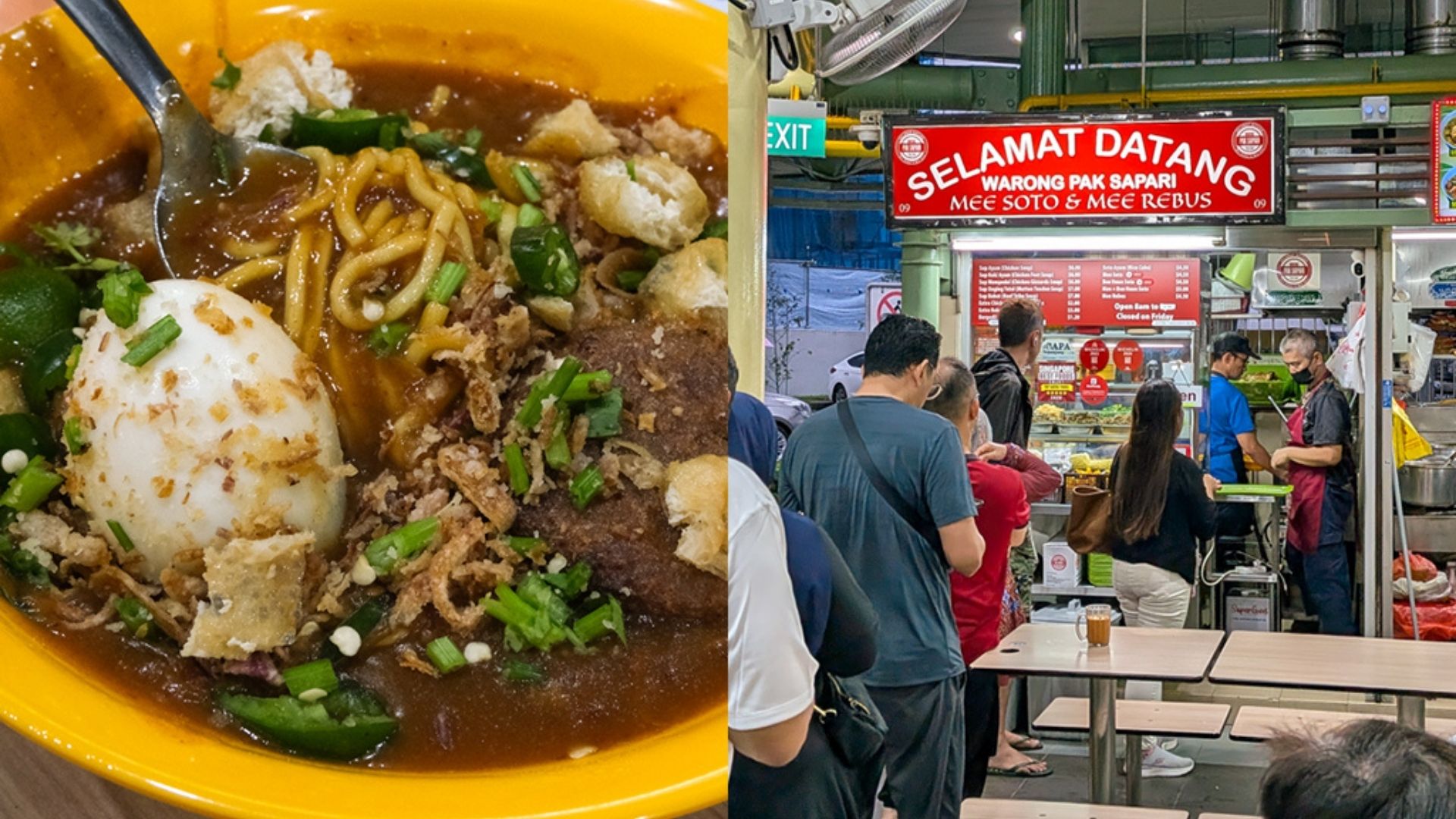
If you head to Adam Food Centre, you’ll find Selamat Datang Warong Pak Sapari, the only mee rebus stall in Singapore to receive the Michelin Bib Gourmand award. This is likely Singapore’s hottest bowl of mee rebus, where — as I found out the hard way — they sell out by 10.30am every day.
I made a point to visit the next morning at 7.50am, and already found a long queue waiting for them to open up.
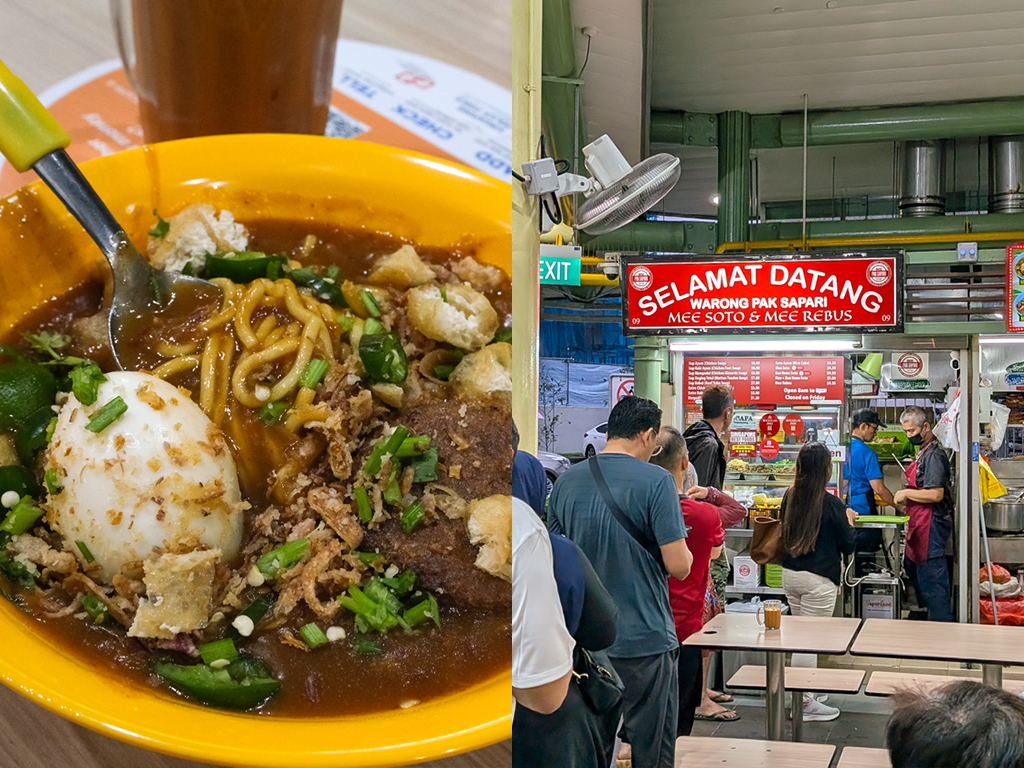
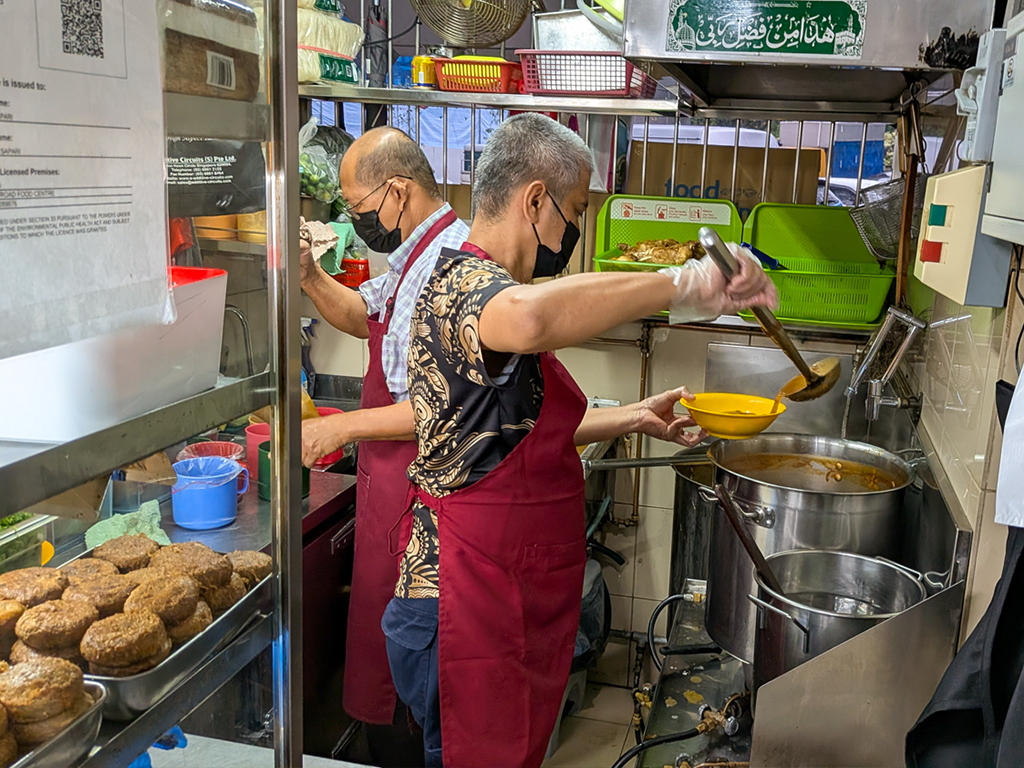
Here, former engineer Sumadi Sapari and the third-generation owner of the stall, whips up an absolutely delicious bowl (S$4.50) that’s, interestingly, the soupiest mee rebus I’ve ever eaten. Rather than a thick gravy, Warong Pak Sapari’s version is very drinkable and savoury, its umami a few notches higher than your average mee rebus. The stall also sells its spice paste in packets, for anyone game enough to try replicating its Michelin-quality mee rebus at home.
After a whole week of eating my way through so much mee rebus, I find myself returning to the fundamental question: What makes the “best” version? The answer, I realise, might be beside the point.
If anything, mee rebus is interesting precisely because it hasn’t been flattened into a single “authentic” version. The diversity in how it tastes — sweeter, lighter, starchier, spicier — reflects the actual diversity of people making mee rebus and in some way, tells a story of families preserving recipes across the generations and of communities adapting the dish to local tastes.
I think back to that day at Yunos N Family, where I had asked Ezzat what “mee rebus babat” was. As he ladled up my order of golden gravy and ribs over fresh noodles, he replied, “Babat is tripe, Chinese food also got right? Next time you try la.” And now, I definitely will.
For more ideas on what to eat, check out the Big Mouth Bakery at Geylang Serai, or Third Floor Social, in the heart of town.



Gary eats and knows things, which he attributes to over 30 years of eating and drinking — surely that must count for something, he surmises. He was previously the deputy editor at City Nomads and content lead at Burpple.
Read more stories from this writer.