Review: Hup Lok proves the best seafood restaurants aren’t always the fanciest ones

- Hup Lok is a no-frills seafood restaurant on Havelock Road, run by the owner of Nude Seafood.
- Expect hearty, affordable seafood comfort dishes that go back to basics.
- Dishes we recommend include the Teochew pomfret fish soup, claypot Hokkien mee, and seafood pao fan.
A lot of restaurant stories start like this: An eatery does well, then opens a proper restaurant with a fancy concept. Hup Lok runs sort of backwards, though not in as dramatic a fashion.
The backstory
Before Hup Lok, Hong Junchen ran Nude Seafood, a contemporary seafood restaurant at Marina Bay Financial Centre, picking up recognition along the way including laurels as the best seafood restaurant at the RAS Epicurean Awards in 2017. Then the concept closed in 2025.
Hup Lok is what came next, opened August 2025, and it’s a bit of a different instinct — while Nude would dress its seafood up, Hup Lok lets the quality speak for itself.
After all, Junchen’s family also runs a seafood wholesale business, Hai Sia Seafood, with a sister outfit called Gyoren SG — where the ingredients at Hup Lok are primarily sourced from.
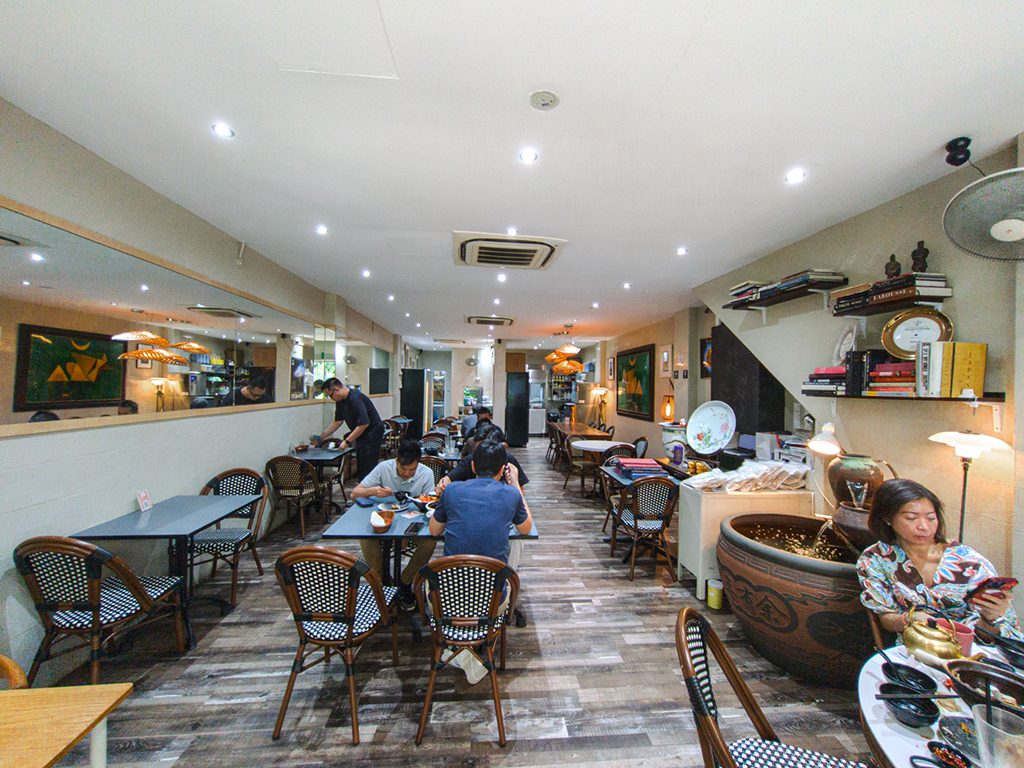
Hup Lok has all the hallmarks of a hidden gem: low footfall in the relatively quiet neighbourhood, an unassuming shopfront on Havelock Road, and a no-frills space that doesn’t try to dress up too much.
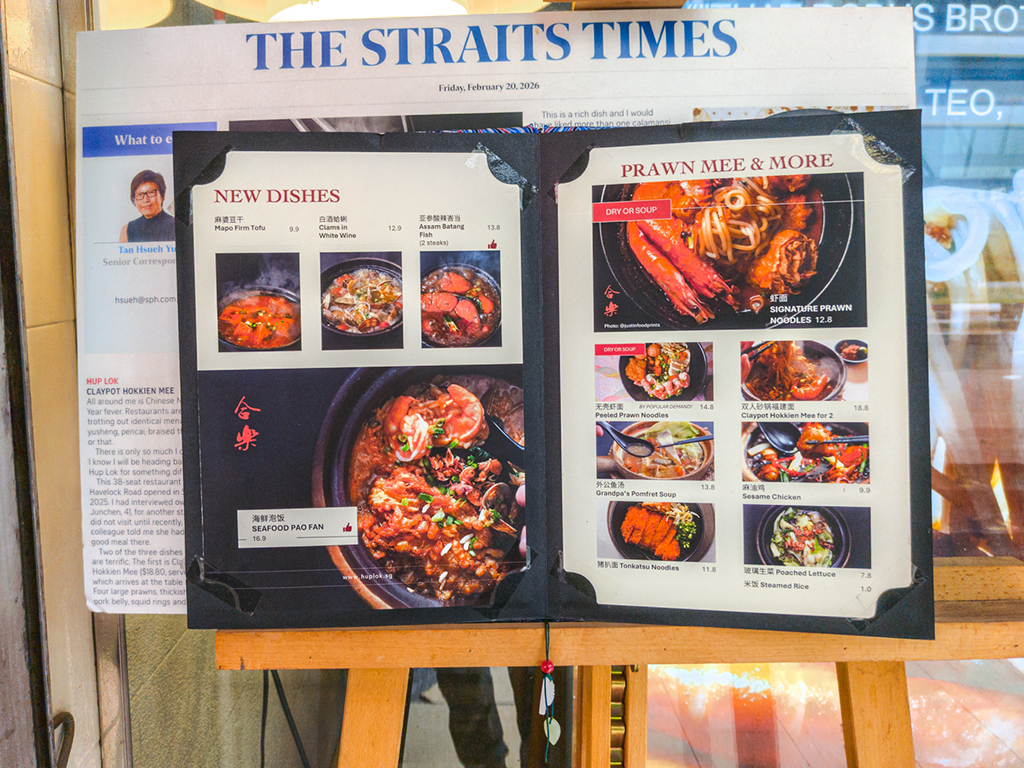
The menu leans hard into comfort with most dishes in the S$10 to S$20 range, with a dedicated prawn-noodle menu featuring its signature “kami no ebi” prawns — known as “the god of prawns” — that are seen across many of the dishes here. There are also several chef signatures, some fried starters, and also a range of new claypot dishes that I try for this review.
Our verdict
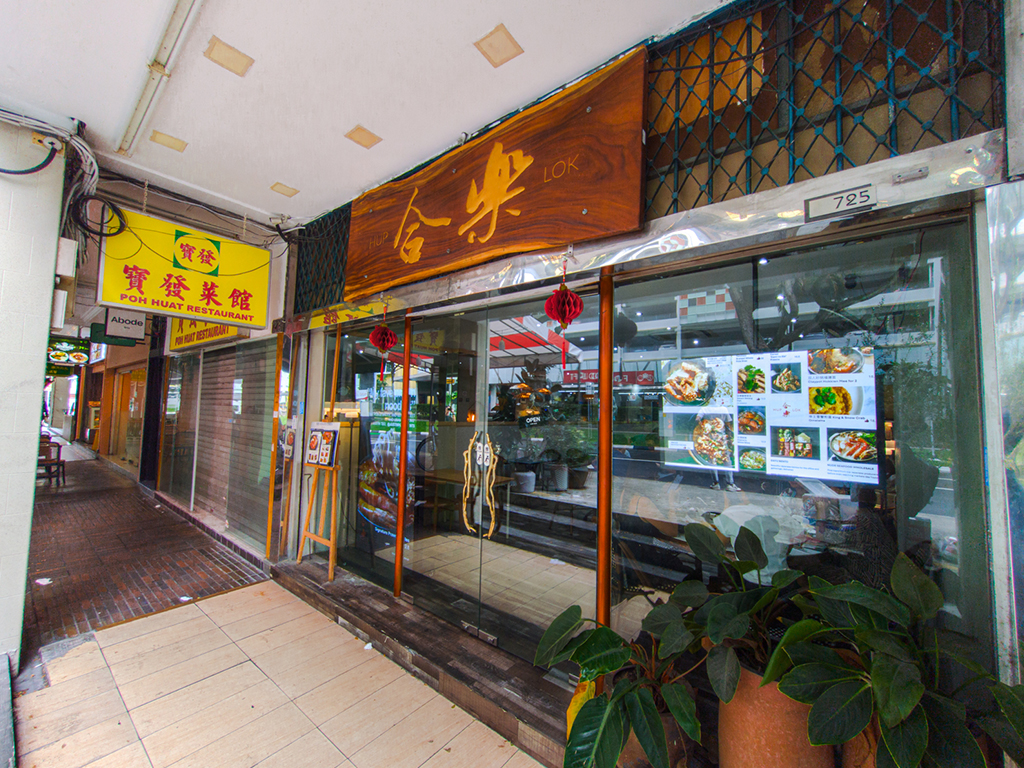
Hup Lok might be relatively quiet for now, but I’m sure given enough publicity, it’ll see throngs of loyal regulars streaming in.
For one thing, the seafood, with its excellent quality, feels like it would easily cost more somewhere else — kudos to its sourcing advantage. The claypot format adds both nostalgia and flavour to the already good seafood, giving the dishes a richer — and slightly smoky even — taste.
Not every plate is perfect — the deep-fried starters could use some work, but the menu is otherwise very impressive. For the price and service that goes further than it needs to, that’s more than enough for me.
What it’s good for
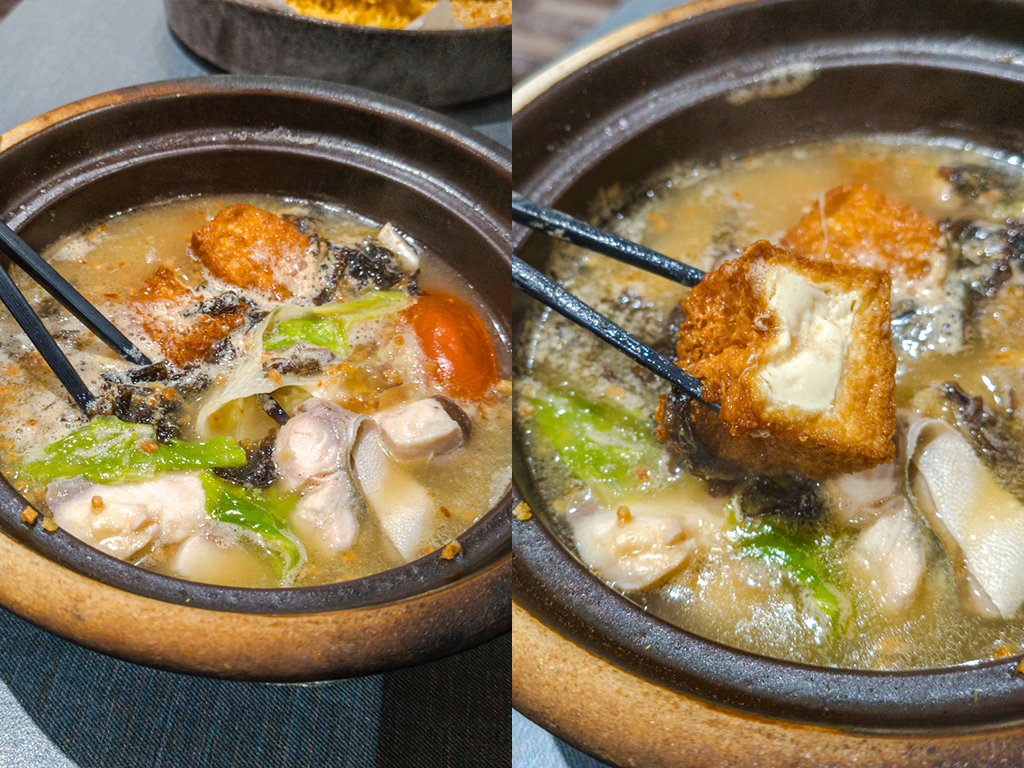
Grandpa’s comfort soup (S$13.80) is the dish that comes up again and again in reviews as the one to order. This is essentially a Teochew fish soup, and everything I heard turned out to be true, from the generous portions of pomfret, to the rich broth with a visible layer of collagen on top.
There’s a balance of umami, sweetness, and savouriness from seaweed, shiitake, and lettuce, rounded out by the gentle tang of salted plums, tomatoes, salted mustard, and that unmistakable touch of hua tiao wine.
You also get fresh pomfret slices that are tender and free of any fishy edge, and even the fried soft tofu cubes taste clean and delicate.
I’ve had plenty of fish soup over the years, and I can confidently say this is one of the best ones out there, with an unmistakable warmth of a proper Teochew soup.
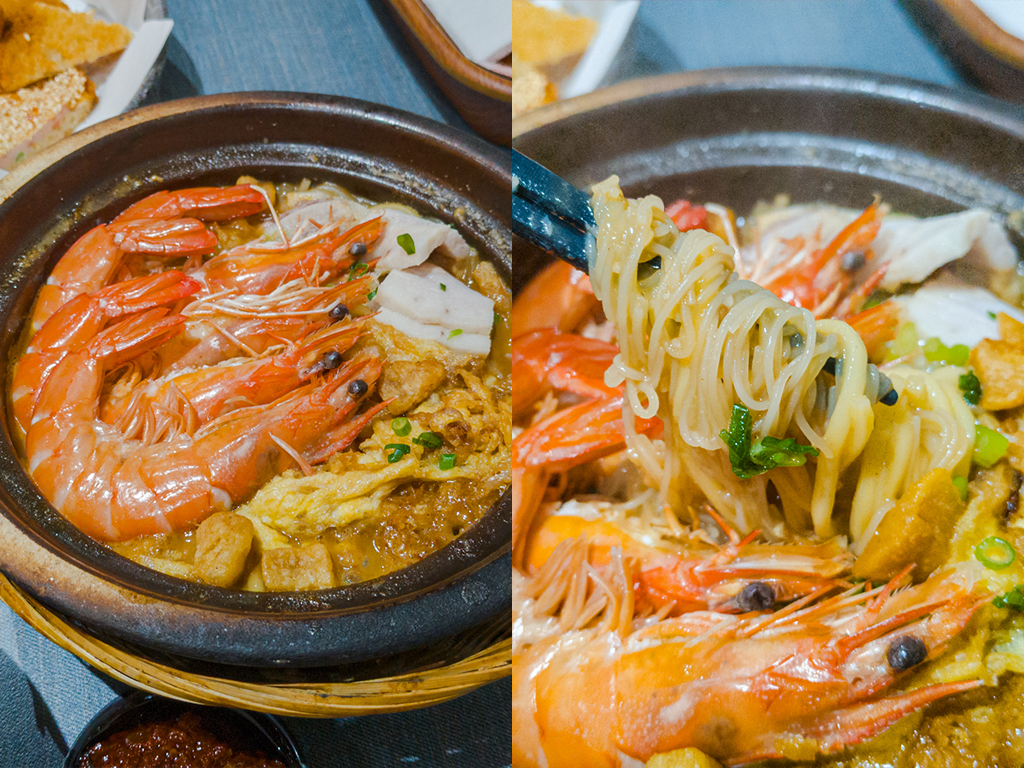
I admit, when I first heard Hup Lok was doing claypot Hokkien mee (S$18.80), I was reminded of the delicious one I had at Zhup Zhup two years back.
Hup Lok’s version is closer to the traditional style, with thin slices of pork belly, squid, crispy lard, and the classic mix of yellow noodles and vermicelli that soaks up the gravy — it arrives still simmering with prawn stock, but fully soaks in within minutes.
The highlight is, of course, the four plump kami no ebi prawns sourced from Japanese producers, which are naturally sweet and briny in flavour, thanks to being farmed in waters with higher salinity.
There’s also a lacy omelette on top that adds a touch more depth to the dish — tasty enough on its own, or with some of the garlicky sambal ikan bilis on the side.
This is supposed to feed two, but I reckon one properly hungry person could finish this solo.
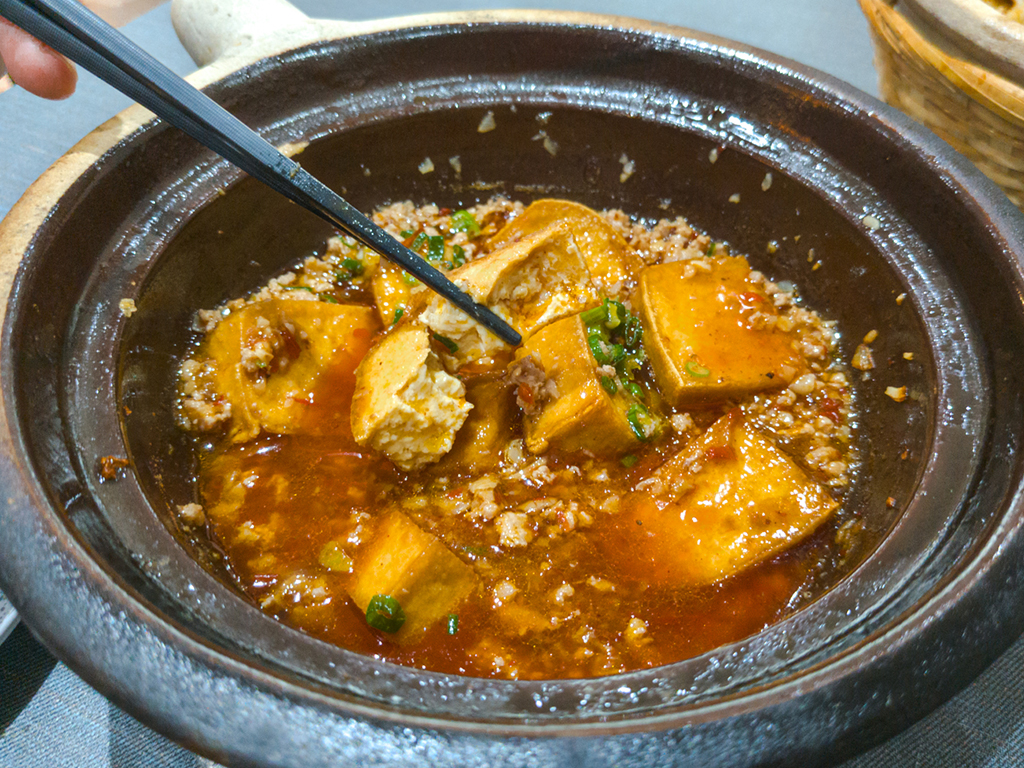
The mapo tofu (S$9.80) is one of the newer additions to the menu, arriving in a claypot properly sizzling with cubes of fried firm tau kwa inside. It’s a fresh departure from the usual soft, silken tofu you’d expect in a classic mapo tofu, holding up nicely within the spicy sauce that’s fragrant with fermented bean paste and numbing Sichuan peppercorns.
There’s plenty of minced pork that comes a bit fatty and soft, such that they almost melt away on the tongue. The dish is spicy enough to keep me reaching for more, and I could probably be plenty satisfied with this dish on its own, and just a bowl of rice.
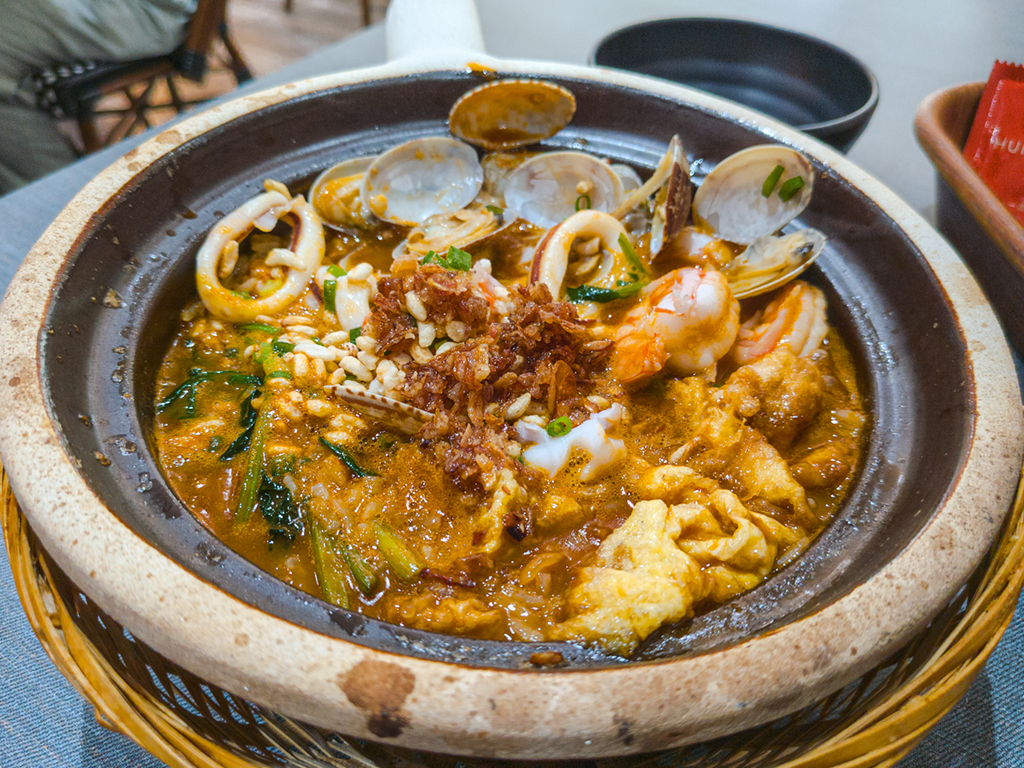
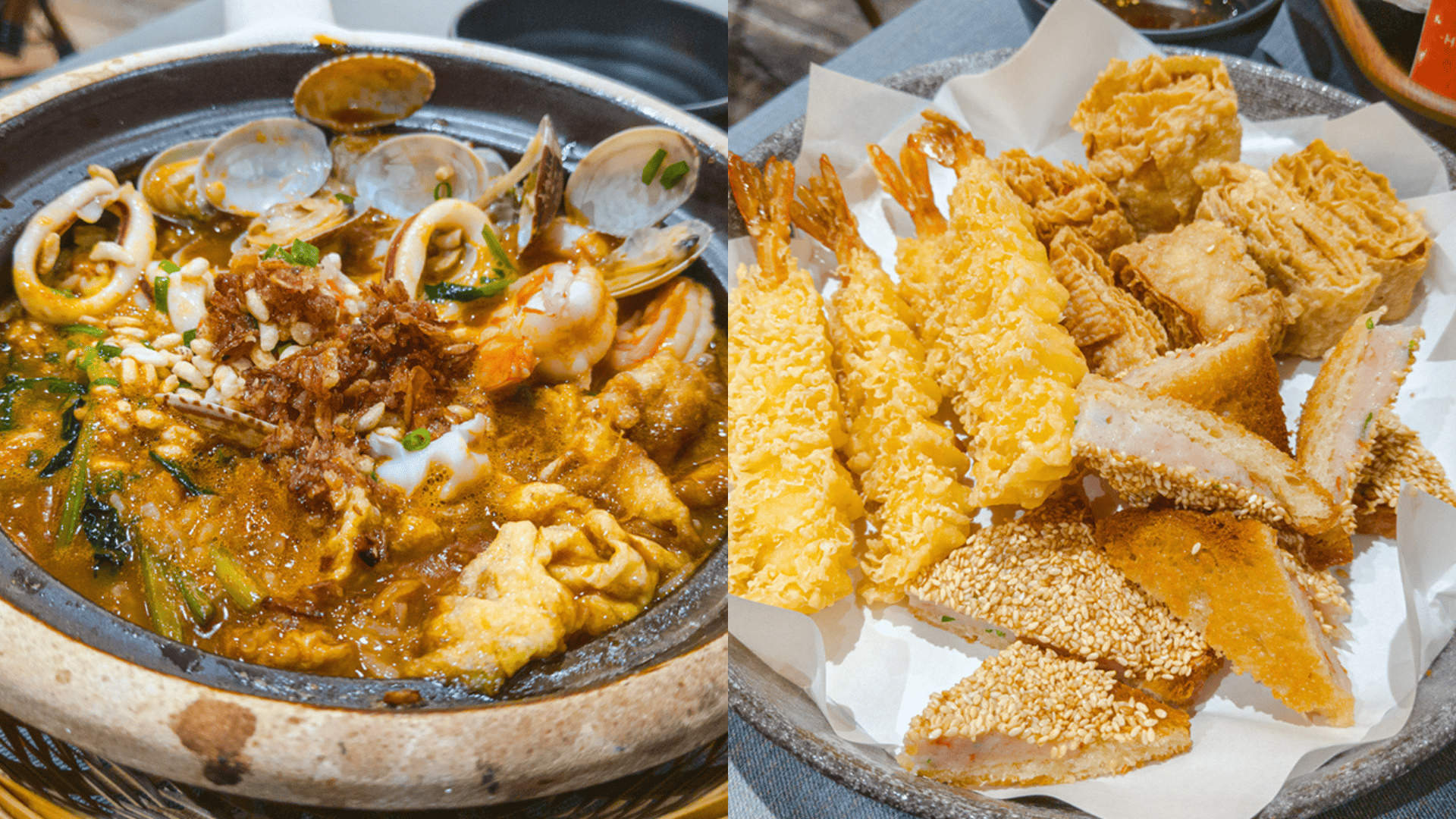
Also new, and just as comforting, is the seafood pao fan (S$16.80), laden with no less than seven peeled prawns and plenty of clams and squid rings. Hup Lok nails the balance of texture and warmth here: the seafood tastes and feels fresh, and the broth is savoury and rich, but not salty. This is the kind of nourishing dish you’d want on a rainy day, or really any time.
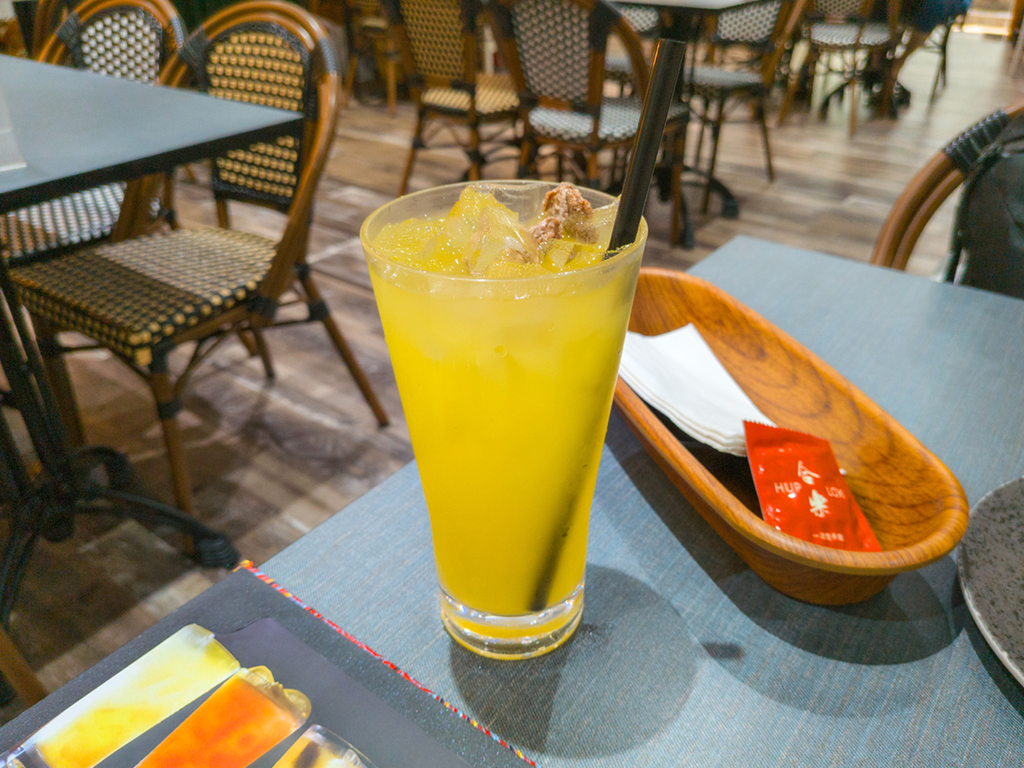
Making a good housemade calamansi and sour plum drink (S$3.80) is all about the balance, and here it’s refreshing and delightful in the way you want, after a table full of rich seafood dishes: bright, tart, aromatic with sour plum, and a solid palate cleanser in between bites.
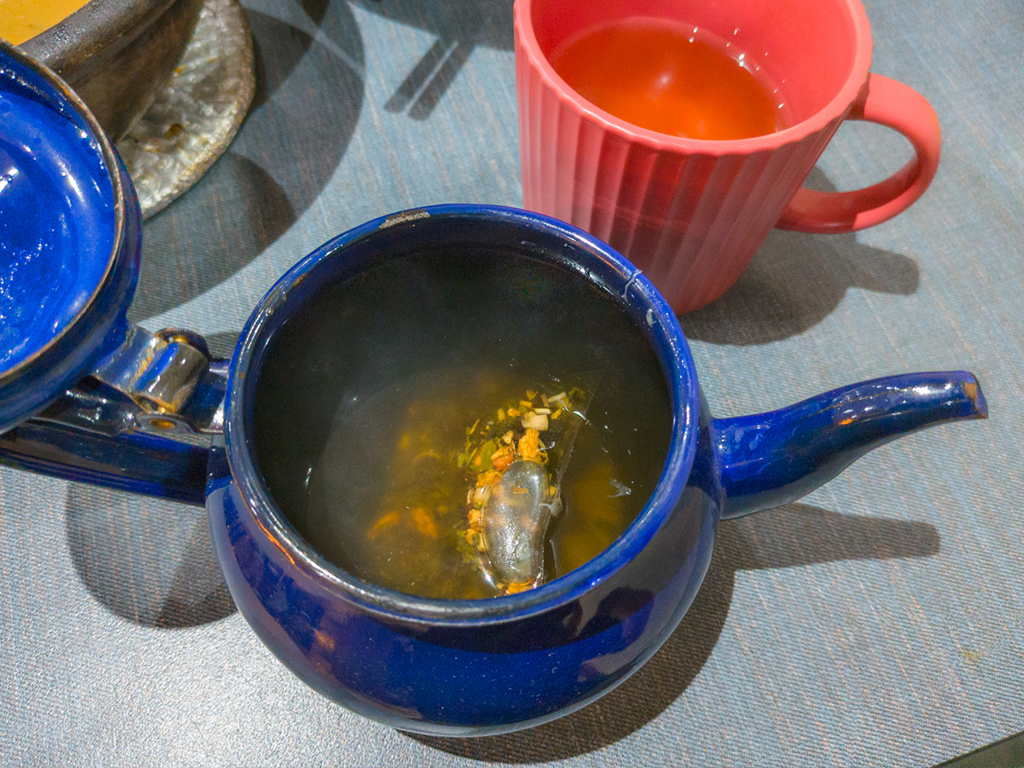
The staff clearly noticed how much we were eating — the fried platter especially, which I’ll come to later — and brought over a complimentary pot of yuzu ginger tea without us asking, which my slightly bulging stomach was thankful for. It’s a nice gesture and tasty too, the tart and floral yuzu notes rounding out the spicy and warming ginger.
What it could improve on
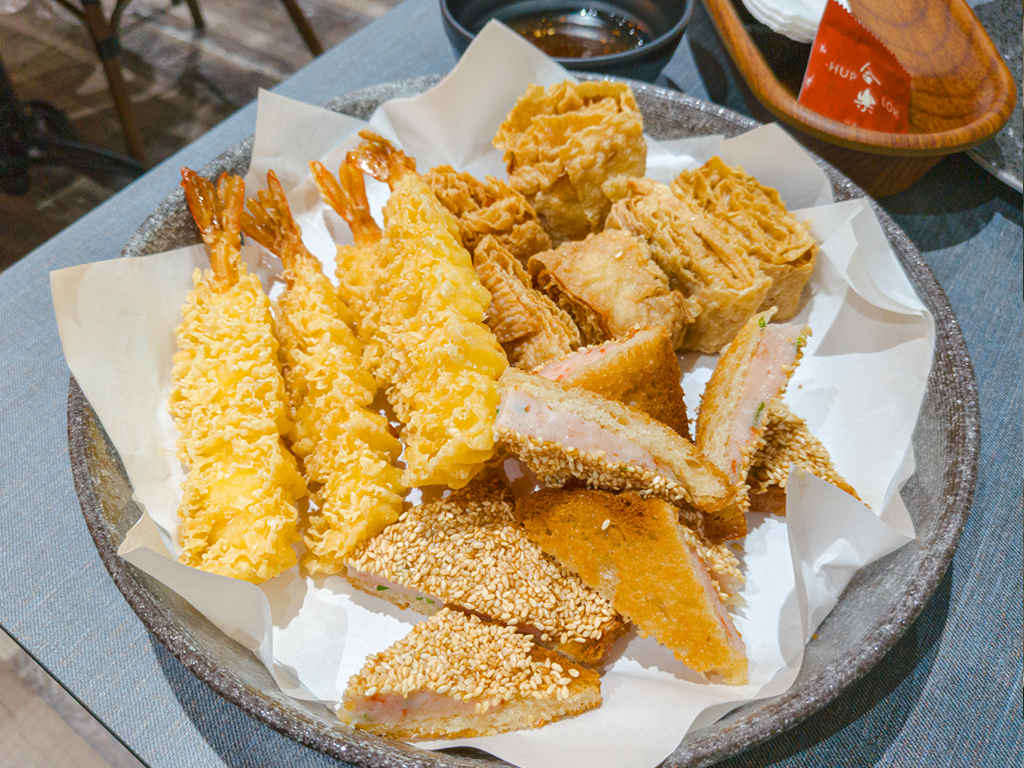
If you want a way to sample Hup Lok’s fried snacks in one go, you can get the grand platter (S$20.80), though some items are better than others. The beancurd skin roll (S$6.90 a la carte) is my favourite here: light, airy, crispy, a satisfying crunch, and generally a solid vegetarian-friendly starter.
Hup Lok’s signature kami no ebi also comes deep-fried in the tempura kami (S$4.90 for two, a la carte). Despite the name, the batter here is thick and doughy rather than the thin, delicate coating you’d expect from proper tempura. Plus, the prawns cooked this way makes the flesh tougher than they were in the claypot dishes. Edible, but nothing special.
The real letdown is the kami prawn toast (S$6.90, a la carte) though, at least in execution.
I like the concept: toast topped with a generous layer of minced prawns, deep-fried until crispy and golden, then finished with sesame seeds for aroma — but it somehow comes out too oily, with a layer of grease left on my lips with each bite.
Beyond the platter, it’s otherwise a very strong menu at Hup Lok. This is a kitchen that knows exactly what it’s doing with seafood…when it isn’t reaching for a deep fryer.
Our quick takes
Is it conducive to conversation? Hup Lok is relatively quiet and it’s easy to talk here.
Is a reservation necessary? Good to have on weekends, especially for dinner, or if you’re coming in a big group.
How to get there? Hup Lok is an eight-minute walk from Tiong Bahru MRT Exit B.
HungryGoWhere paid for its meal at this restaurant for this review.
Wed 11.30am - 2.30pm, 5.30pm - 8.30pm
Thu 11.30am - 2.30pm, 5.30pm - 8.30pm
Fri 11.30am - 2.30pm, 5.30pm - 8.30pm
Sat 11.30am - 2.30pm, 5.30pm - 8.30pm
Sun 11.30am - 2.30pm, 5.30pm - 8.30pm
- Tiong Bahru




Gary eats and knows things, which he attributes to over 30 years of eating and drinking — surely that must count for something, he surmises. He was previously the deputy editor at City Nomads and content lead at Burpple.
Read more stories from this writer.